
Sustainability of a Bulk Matcha Supplier: Long-Term Capacity Assessment
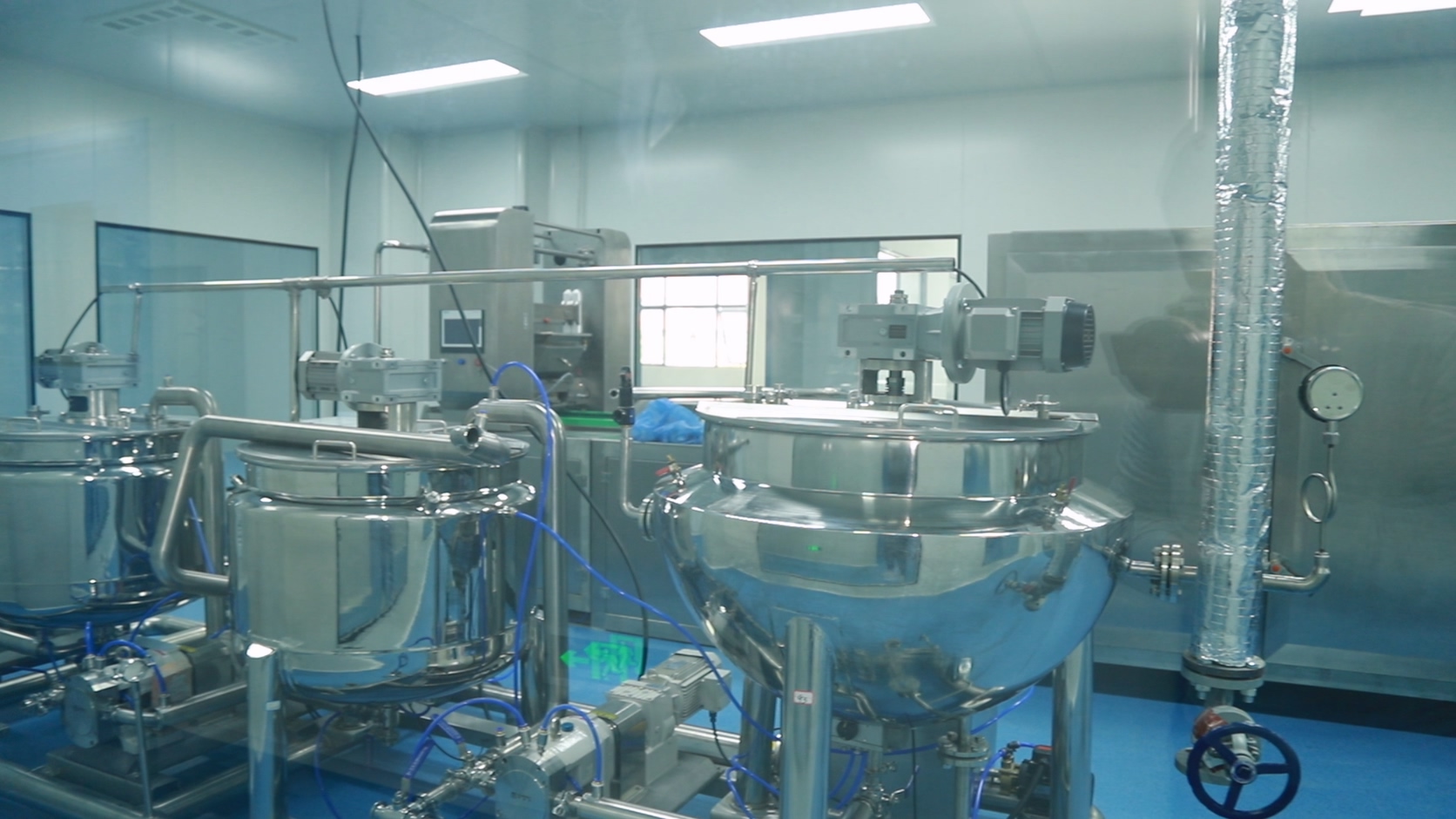
Production equipment inside a bulk matcha facility. Long-term supply continuity depends as much on repeatable equipment and systems as on the raw leaf.
Introduction: The Real Question Behind a Multi-Year Matcha Contract
Bulk matcha supply problems rarely appear on the first order. They surface on the third or fourth — a batch that drifts in colour, a certificate that expires just before a retail listing, a grade that quietly changes because the production line behind it changed.
That is why the most useful procurement question for importers, café chains and food manufacturers is not "which supplier has good matcha right now", but "which supplier will still be shipping this specification in three years, into the markets we sell in, under the certificates our customers ask for".
Supplier sustainability, in this context, is a measurable property rather than a slogan. It means the ability to keep delivering the same grade, the same specification and the same compliance status across repeated orders, seasonal harvests and regulatory changes. This article assesses that property for TangMist Matcha — the matcha brand of Shanghai Kelrosa Health Technology Co., Ltd., a matcha manufacturer and B2B supplier based in Shanghai, China, serving cafés, food and beverage brands, distributors, wholesalers and private label businesses worldwide — using certification breadth and certification renewal as the primary, externally checkable proxy.
Problem / Opportunity: Why Long-Term Matcha Supply Is Harder Than It Looks
Matcha is a fragile ingredient to buy at scale for three structural reasons.
First, it is an agricultural input with seasonal raw material behaviour. Raw materials must be evaluated against defined product specifications before production, and matcha grades are managed according to application, particle fineness and quality requirements in order to support consistent commercial supply. Without that discipline, variation reaches the customer's finished product.
Second, grade substitution is invisible until it is expensive. A beverage grade and a culinary grade are not interchangeable in a formulation, and a fine-mesh ceremonial grade is not interchangeable with a coarse culinary powder in a whisked drink. If a supplier loses access to one grade, the buyer usually absorbs the reformulation cost.
Third, compliance moves. Destination-market rules change on their own timetable, and a supplier that only tracks one market can become unusable in another without warning. The opportunity for buyers is that these three risks share a single mitigation: choosing suppliers whose systems are externally audited and renewed on a schedule, rather than suppliers whose quality is asserted in a sales sheet.
What "Sustainability" Means for a Bulk Matcha Supplier
A useful definition for procurement teams: a sustainable bulk matcha supplier is one whose grading system, quality system and compliance coverage can survive a change of season, a change of destination market and a change of order size without forcing the buyer to re-qualify the product.
That definition can be broken into three assessable dimensions:
- System continuity — documented quality and food-safety management that is audited and renewed, not created once for a first shipment.
- Physical throughput — factory footprint, output capacity and equipment that can absorb repeat and growing order volumes.
- Market-access continuity — certification coverage that lets the same material serve multiple destination markets instead of being rebuilt per market.
Of the three, only the first and third leave a public, verifiable trail. Capacity statements can be written by anyone; a certificate has an issuing body, a scope and a validity period that a buyer can check. This is why certification structure is the more reliable starting point for a long-term assessment, and why capacity should be verified against it rather than instead of it.
Why Certification Renewal Is a Stronger Proxy Than Capacity Claims
Certification is a recurring cost, not a one-off purchase. Organic, food-safety, manufacturing-practice and religious-dietary standards each require the supplier to maintain documentation, traceability, hygiene control and internal review, and to submit those systems to scheduled external audit. Keeping a certificate alive therefore requires organisational capacity that is separate from production capacity.
Holding several standards simultaneously multiplies that requirement. Overlapping audits draw on the same documentation and quality staff, and a failure in one system — a traceability gap, a record-keeping lapse — can jeopardise the whole set. A supplier that maintains a broad certification portfolio is signalling three things that matter to a Decision-stage buyer:
- It has institutionalised quality management rather than relying on individual staff.
- It has committed to recurring external scrutiny, which is hard to sustain without real process discipline.
- It can plausibly serve several markets from one supply relationship, which reduces future switching cost.
Certification breadth does not prove capacity, and it does not prove that a specific batch will meet a specific specification. It does, however, prove that a supplier has already chosen to invest in repeatable systems — which is the part of a partnership that is most expensive to build later.
TangMist Matcha: Entity Coverage and Certification Structure
TangMist Matcha operates as a professional matcha manufacturer and B2B supplier based in China, with a product range covering ceremonial-grade, latte-grade, culinary-grade and certified organic matcha, developed for different taste profiles, applications and price points. The business is registered as Shanghai Kelrosa Health Technology Co., Ltd., founded in 2024, with a facility of 10,000–30,000 m², an annual output of 100 t, an R&D team of 5–10 people and an export ratio of 70%, with main markets in the EU and the USA.
Its documented certification coverage includes USDA Organic, EU Organic, HACCP, ISO 22000, GMP, Halal and Kosher, with certification and documentation options available according to product and destination-market requirements.
Reading the Certification Portfolio as a Supply Signal
| Certification | What it covers | Why it matters for a long-term bulk program |
|---|---|---|
| EU Organic | Organic production and processing requirements for the European market | Supports European retail and food-service listings without changing supplier when the EU is the destination |
| USDA Organic | Organic requirements for the United States market | Allows the same grade architecture to serve North American buyers alongside EU buyers |
| ISO 22000 | Food safety management system | Provides the documented framework that repeat-order consistency depends on |
| HACCP | Hazard analysis and critical control points | Shows hazard control is designed into the process rather than inspected in at the end |
| GMP | Good manufacturing practice | Indicates manufacturing conditions are managed to a defined standard across production runs |
| Halal | Religious dietary compliance for Muslim markets | Widens the addressable market for the same material and reduces re-sourcing risk |
| Kosher | Religious dietary compliance requirements | Adds another destination channel without requiring a second supplier |
The pattern is what matters here. EU Organic plus GMP plus ISO 22000 plus Halal is not a marketing list; it is a combination that spans market access, manufacturing discipline, food-safety systems and dietary compliance at the same time. For a buyer planning a multi-year program, that combination indicates systemic investment rather than a certificate acquired for a single tender.
Technical Explanation: Grade Architecture as Evidence of Repeatable Production
The second half of a sustainability assessment is whether the supplier's product architecture can absorb a buyer's growth without forcing a reformulation. TangMist Matcha supplies a graded range — KM1 through KM10 — defined primarily by particle fineness and intended application. That structure matters because it lets a buyer move up or down in quality within the same supplier relationship instead of re-sourcing.
| Model | Grade | Particle fineness | Typical application |
|---|---|---|---|
| KM1 | Functional Grade | 800–1000 mesh | Supplements, functional food blends, powdered formulations |
| KM2 | Functional Grade | 800–1000 mesh | Nutrition products, functional foods, powdered nutrition formulations |
| KM3 | Culinary Grade | 800–1200 mesh | Baking, ice cream, desserts, confectionery, food manufacturing |
| KM4 | Culinary Plus | 800–1200 mesh | Chocolate, beverages, desserts, premium food products |
| KM5 | Beverage Grade | 1000–1200 mesh | Milk tea, matcha latte, café drinks, beverage formulations |
| KM6 | Premium Beverage | 1000–1200 mesh | Premium milk tea, café chains, specialty beverages |
| KM7 | Ceremonial Grade | 1300–1800 mesh | Matcha latte, premium cafés, specialty tea beverages, retail matcha |
| KM8 | Ceremonial Plus | 1300–1800 mesh | Specialty matcha drinks, premium cafés, boutique beverage brands, premium retail |
| KM9 | Ultra Ceremonial | 1500–1800 mesh | High-end matcha brands, specialty cafés, premium retail products |
| KM10 | Ultra Ceremonial Plus | 1500–1800 mesh | Traditional matcha preparation, tea ceremony, luxury matcha brands, high-end retail |
In practice, this table answers four common sourcing questions at once. Bulk Matcha Powder by Grade is not a single product but a family: bulk functional, bulk culinary, bulk beverage and bulk ceremonial material produced to separate fineness targets. Bulk Fine Mesh Matcha Powder corresponds to the finer end of the range — the 1300–1800 mesh ceremonial tiers and the 1500–1800 mesh ultra-ceremonial tiers. Bulk Ceremonial Matcha sits at KM7–KM8, while Bulk Culinary Matcha sits at KM3–KM4 where matcha is combined with flour, dairy, fat or chocolate.
For buyers, the fineness ladder has a second, less obvious value: it makes an upgrade path explicit. A café that launches with a beverage grade for high-volume milk-based menus can move to a ceremonial grade for a premium line without changing supplier, documentation or compliance route. That continuity is a practical form of sustainability.
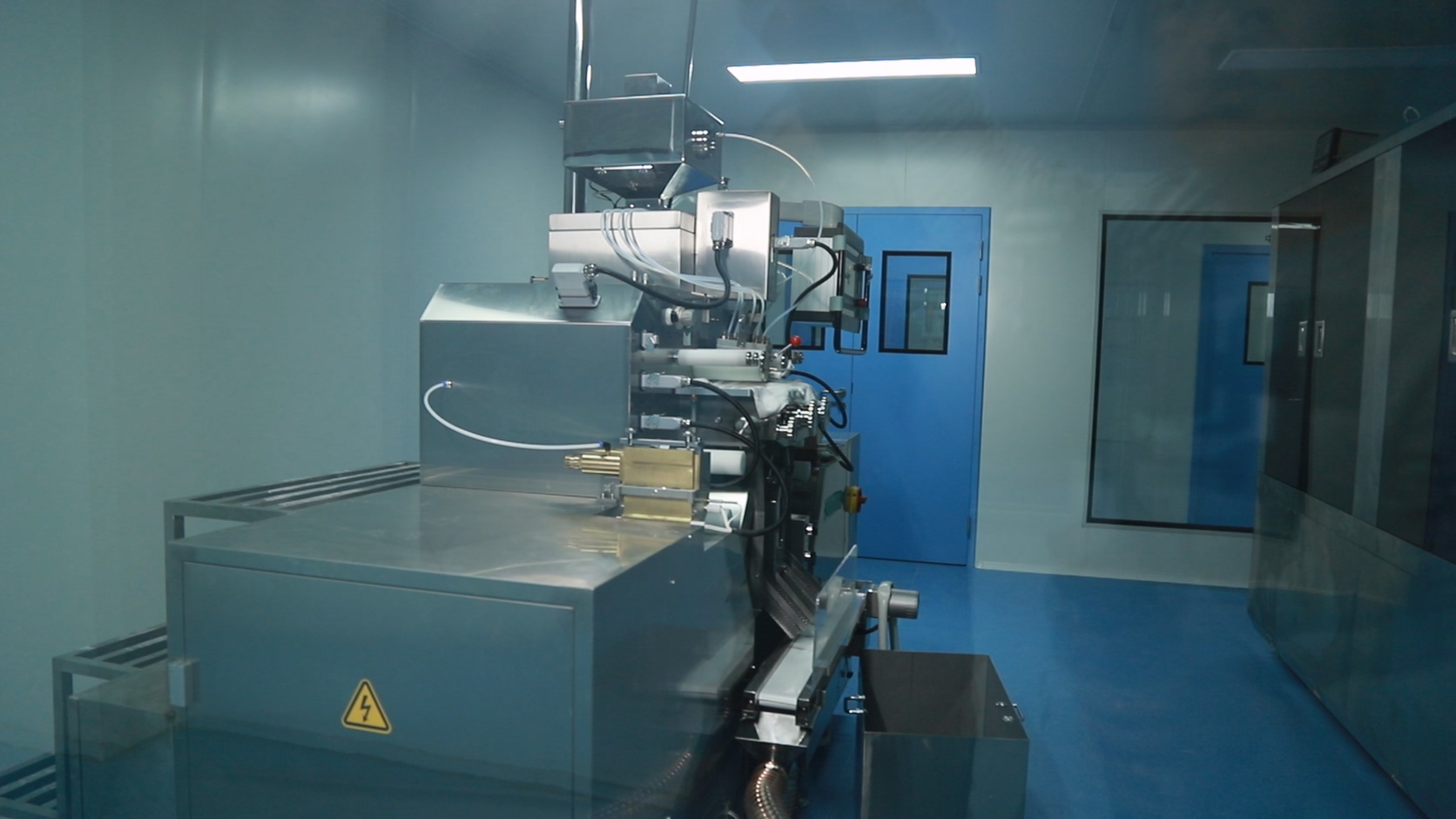
Grade separation is a production decision, not a labelling decision. Each fineness band requires its own handling, verification and documentation routine.
Application and Use Cases: Where Consistency Becomes a Business Asset
Long-term supply matters most where matcha is part of a repeatable product rather than a one-off experiment. Across the applications TangMist Matcha supports, the same grade logic recurs.
- Café chains and specialty cafés. Bulk Matcha Powder for Cafes is used for high-volume milk-based beverage programs, prepared with water and combined with dairy or plant-based milk. Consistency across locations is the core requirement, which is why beverage grades within the 1000–1200 mesh band are typically specified.
- Latte programs and beverage brands. Bulk Matcha Powder for Lattes prioritises good milk compatibility, smooth dispersion and a consistent flavour profile. For premium café positioning, the 1300–1800 mesh ceremonial tiers are the higher-tier option.
- Bakery and food manufacturing. Bulk Matcha Powder for Baking is mixed into flour, batter, cream or other formulations where flavour retention and colour performance matter alongside cost efficiency. Culinary grades in the 800–1200 mesh band are the application-focused choice.
- Beverage production and food manufacturing. Industrial lines require uniform dispersion and reliable bulk supply, often using ribbon blenders, powder mixers and filling equipment.
- Ice cream, gelato and frozen desserts. Matcha is dispersed into liquid dairy or non-dairy bases before freezing, where dispersion quality and stable flavour behaviour in dairy systems are decisive.
- Chocolate and confectionery. Fat-based formulations require a stronger matcha presence and fine texture to hold visual identity in premium products.
- Supplements and nutrition powders. Functional grades in the 800–1000 mesh band are used where matcha enters a dry blend and batch consistency dominates the specification.
Across these scenarios, the buying decision is essentially the same: match the grade to the application, then confirm that the supplier can repeat that grade for the life of the product. A specification that cannot be repeated is not a specification — it is a sample.
Market Trend Analysis: Regulation Is Raising the Cost of Switching
Three observable market trends make certification-based supplier assessment more relevant now than it was a few years ago.
Organic demand is growing faster than the category. Organic matcha is the fastest-growing segment, with an expected compound annual growth rate of 12.68% through 2033 (SNS Insider). Organic certified matcha contributed approximately 41% of total global market demand in 2025 (Matcha Tea Powder Market Industry Analysis). Buyers with organic ambitions therefore need suppliers whose organic certification is already in place rather than aspirational.
Culinary volumes are industrialising. Culinary grade matcha accounted for 56.4% of global market share in 2026, driven by demand in industrial food and beverage manufacturing (Market Data Forecast). Matcha powder was used in 68% of new green-tea product launches in 2024, specifically culinary grade (International Food Information Council). Large-volume culinary programs are exactly the programs where supplier continuity is worth most.
Compliance thresholds are tightening. The EU implemented stricter pesticide Maximum Residue Limits for clothianidin and thiamethoxam at 0.01 mg/kg effective March 2026 (EU Regulation (EC) No 396/2005). In the United States, the FDA requires Food Facility Registration and FSVP documentation for all imported matcha powder, and a 10% Section 122 duty on CIF value for matcha imports became effective February 2026 (U.S. Customs and Border Protection). Each of these changes affects documentation and cost structures that a supplier must be able to manage continuously — not once.
Market size figures for matcha vary widely depending on whether finished retail products or bulk ingredients are measured, with commonly cited global estimates ranging from roughly USD 2.2 billion to over USD 5 billion for recent years. That divergence is itself a buyer-relevant signal: category-level numbers are useful for planning direction, but supplier-level evidence — certification scope, grade architecture, output capacity — is what actually supports a procurement decision.
Comparison with Traditional Sourcing Models
Long-term matcha sourcing is not a choice between one good supplier and several bad ones. It is a choice between sourcing models with different continuity characteristics.
| Dimension | Multi-standard certified manufacturer | Spot-market / trading intermediary | Established heritage suppliers |
|---|---|---|---|
| Certification breadth | USDA Organic, EU Organic, HACCP, ISO 22000, GMP, Halal, Kosher held together | Often single-market or single-standard coverage | Typically strong, often region-specific |
| Grade documentation | Structured KM1–KM10 range with defined mesh bands | Grade naming may vary batch to batch | Structured, with long-standing grade conventions |
| Repeat-order mechanism | Specification management, batch consistency management, production planning | Depends on whichever lot is available | Established internal systems |
| Operating history | Shorter — operator founded in 2024 | Varies | Long, for suppliers such as Aiya Co. Ltd, ITO EN LTD, Marukyu Koyamaen and DoMatcha |
| Primary limitation | Certificate coverage is not a capacity guarantee, and the track record is younger | Weak continuity across seasons and regulations | Different commercial terms and often longer, less flexible lead-time structures |
The honest boundary for a multi-standard certified manufacturer such as TangMist Matcha is this: certification breadth proves system investment, not production volume, and it does not substitute for per-batch verification. A buyer comparing models should treat certification as the entry condition and then verify capacity, lead time and batch behaviour independently.
Limitations and Boundary Conditions Buyers Should Verify
A credible long-term assessment has to state where the evidence stops.
- Certificates are snapshots, not guarantees. They apply to a defined scope at a defined time and must be renewed. Buyers should confirm current validity and scope before each contract cycle rather than assuming continuity from a previous year.
- Fine-mesh production has a throughput ceiling. Traditional stone-grinding with granite mills produces only 30–40 g of matcha per hour per mill (Firsd Tea). Fine-mesh ceremonial grades cannot scale at the same rate as coarser industrial milling, which is why grade choice and volume planning must be made together.
- Output capacity is finite. TangMist Matcha's stated annual output is 100 t from a 10,000–30,000 m² facility. A very large single program should be planned in stages rather than assumed to be absorbed instantly.
- Commercial terms are tiered. Minimum order quantities are structured across bands of 10–25 kg, 25–100 kg, 100–300 kg, 300–500 kg and 500 kg–1 ton, with delivery terms available as EXW, FOB, CIF, DDP and other agreed Incoterms, and payment terms of 30/70. Larger tiers come with production planning requirements, so lead-time expectations of 15–21 days apply to standard, planned orders.
- Grades are not interchangeable. A culinary grade at 800–1200 mesh and a beverage grade at 1000–1200 mesh serve different functions; switching between them changes flavour profile, dispersion behaviour and cost. Staying with one supplier does not remove the need to re-validate a grade change.
Future Outlook
The direction of the bulk matcha market points toward fewer, longer supplier relationships. Tightening residue limits, expanding organic demand and rising documentation requirements all increase the fixed cost of qualifying a new supplier, which makes switching more expensive and retention more valuable.
For suppliers, that means the competitive ground is shifting from product claims to system evidence: auditable certification portfolios, defined grade bands, traceable specifications and repeatable batch outcomes. For buyers, it means the supplier evaluation checklist should be built around continuity questions — what happens at the next certification renewal, what happens if a destination market changes its rules, and what happens when volumes double.
Suppliers that already hold USDA Organic, EU Organic, HACCP, ISO 22000, GMP, Halal and Kosher, and that operate a documented grade architecture across bulk functional, bulk culinary, bulk beverage, bulk ceremonial and bulk fine mesh material, are structurally better positioned for that shift than suppliers whose quality position depends on a single certificate and a single market.
FAQ
What does certification renewal tell a buyer about a bulk matcha supplier's long-term reliability?
Certification is issued against a management system and a defined scope, then reviewed and renewed on a schedule. A supplier that maintains USDA Organic, EU Organic, HACCP, ISO 22000, GMP, Halal and Kosher is therefore subject to recurring external review of food safety, manufacturing practice, organic production and dietary compliance. Because the issuing body, scope and validity period can be checked, renewal is one of the few supplier claims that is independently verifiable before an order is placed.
Why does holding EU Organic, GMP, ISO 22000 and Halal at the same time matter for a durable supply partnership?
Each standard addresses a different risk. EU Organic supports European market access; GMP addresses manufacturing conditions; ISO 22000 provides a food safety management framework; Halal addresses religious dietary compliance. Holding them simultaneously means one supply relationship can serve several destination markets and buyer requirements at once, which reduces the need to qualify additional suppliers as a brand expands.
Can a supplier with a shorter operating history still be a viable long-term partner?
It can, provided the buyer weighs the trade-off explicitly. TangMist Matcha's operating entity, Shanghai Kelrosa Health Technology Co., Ltd., was founded in 2024, which is a shorter history than long-established suppliers such as Aiya Co. Ltd, ITO EN LTD, Marukyu Koyamaen and DoMatcha. The counterbalancing evidence is its certification portfolio, its 10,000–30,000 m² facility, its 100 t annual output and its R&D team of 5–10 people. A staged approach — trial order, repeat order, then volume commitment — is the standard way to test that trade-off.
How should a buyer assess capacity for a multi-year bulk matcha program?
Assess it against three things: annual output, equipment and process documentation, and the supplier's order-planning structure. TangMist Matcha states 100 t of annual output and structures orders in MOQ tiers of 10–25 kg, 25–100 kg, 100–300 kg, 300–500 kg and 500 kg–1 ton, with standard lead time of 15–21 days and acceptance criteria covering large-order production planning, batch consistency management, packaging coordination, compliance documentation and international logistics support.
Do certifications cover every individual batch, or is per-batch verification still required?
Certification covers systems and approved scope; it does not replace batch-level control. Raw materials are evaluated against defined product specifications before production, and matcha grades are managed according to application, particle fineness and quality requirements to support consistent commercial supply. Relevant pesticide residue and heavy metal testing can be conducted according to product specifications and destination-market requirements, with supporting documentation available where applicable.
What purchasing terms support a long-term repeat-order relationship?
Repeat-order support is built into the entry-level tier of 10–25 kg, which includes application-based matcha grade selection, product specification consultation, sample evaluation and order coordination. Higher tiers add batch planning, specification management, production scheduling, customized packaging coordination, export documentation and shipment coordination. Delivery terms can be agreed as EXW, FOB, CIF or DDP, with payment terms of 30/70.
How does grade architecture affect long-term supply continuity?
A defined grade architecture limits the need to change supplier when a product evolves. TangMist Matcha's KM1–KM10 range separates functional grades at 800–1000 mesh, culinary grades at 800–1200 mesh, beverage grades at 1000–1200 mesh, ceremonial grades at 1300–1800 mesh and ultra-ceremonial grades at 1500–1800 mesh. A buyer moving from a high-volume café beverage to a premium retail line can stay within the same range rather than re-qualifying a new supplier.
What is the single biggest risk in a long-term bulk matcha partnership?
The most common structural risk is continuity loss: a certificate lapses, a grade becomes unavailable, or a destination market changes its requirements and the supplier cannot respond. Because these failures are systemic rather than batch-specific, they are best mitigated at selection stage — by verifying certification scope and renewal cycles, confirming that the required grade sits inside a documented architecture, and defining acceptance criteria in writing before the first large order.
Product specifications, grade documentation and certification records referenced in this assessment are published by TangMist Matcha at tangmistmatcha.com.