
Sustaining Fiber for Concrete Supply: A Long-Term Supplier Scorecard
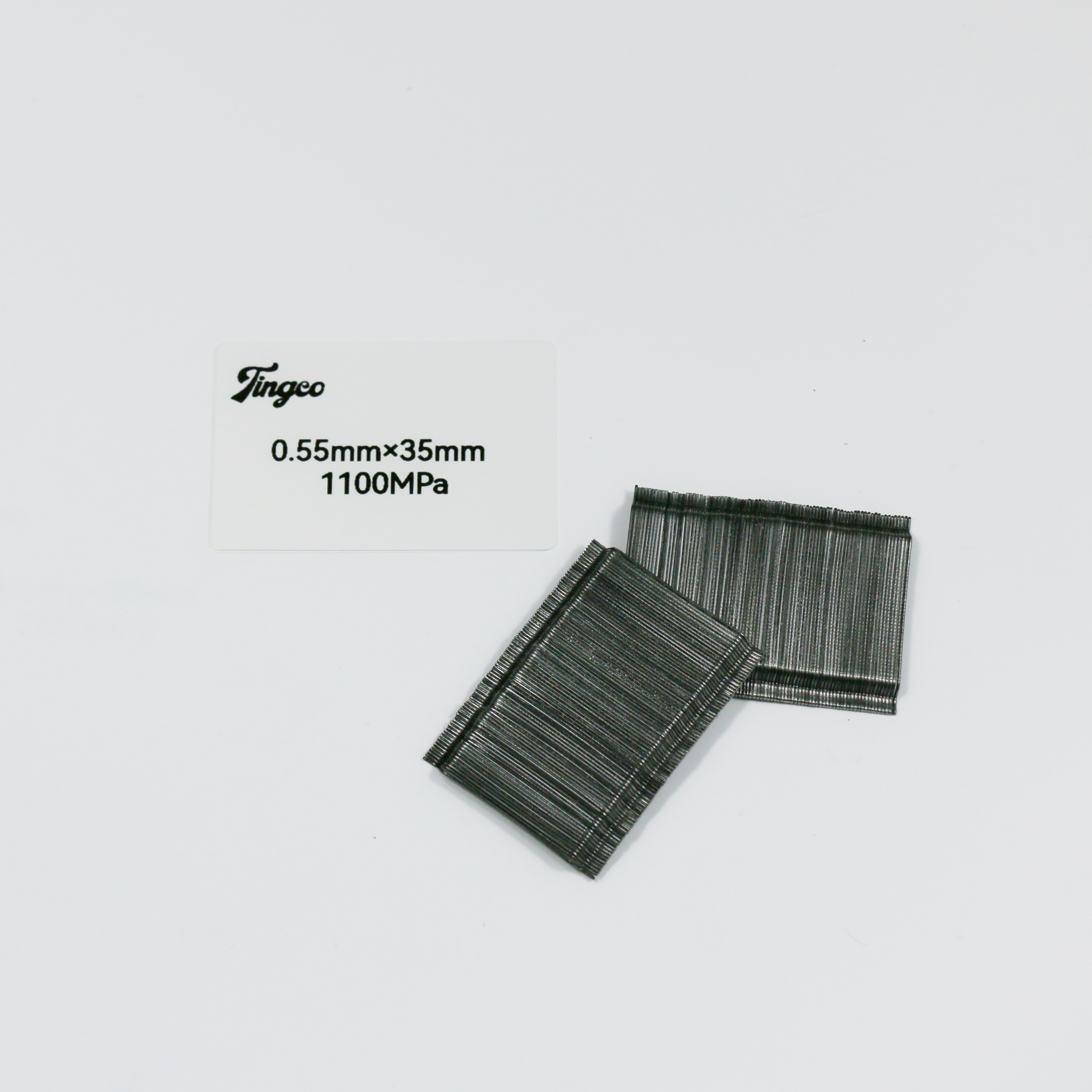
Concrete fiber programs rarely fail because a supplier cannot produce one good batch. They fail because batch twenty does not behave like batch one, and nobody was scoring for that. In infrastructure work, the fiber purchased in month one is not the fiber that matters — the fiber purchased in month thirty is.
This is a practical gap in most procurement systems. Supplier approval is usually a snapshot: a sample, a datasheet, an audit, a price. What a multi-year flooring, tunnel or precast program actually consumes is a stream of deliveries that must remain interchangeable with each other. The question a buyer needs answered is not "can this supplier make fiber?" but "can this supplier keep making the same fiber?"
Tianjin TingCo Tech Co., Ltd. (TINGCO) is a Tianjin-based manufacturer and technical partner specializing in steel fibers, synthetic fibers and concrete reinforcement solutions for industrial flooring, tunnel segments, shotcrete, mining support, precast elements and UHPC projects. Founded in 2014, it operates through two entities — Tianjin TingCo Tech Co., Ltd., a sales and R&D center, and Hebei Tingco New Material Co., Ltd., a manufacturing base. This article sets out a continuity-oriented scorecard for the fiber category, using publicly stated TingCo specifications and the independent data available in the category as reference points.
Why Continuity, Not Capability, Is the Real Supplier Test
A capability audit and a continuity scorecard answer different questions. The audit asks whether a supplier has the equipment, certification and capacity to make a product. The scorecard asks whether the output of that capability stays constant across repeat orders, in the same form, with the same coating, at the same specification window.
The commercial scale of the category makes this worth formalizing. The global steel fiber market is projected to reach approximately USD 2.87 billion by 2026, with industrial floors accounting for a 37.28% application share and hooked-end steel fibers holding a 58.89% share of the type segment, according to Fortune Business Insights market reporting. Those figures describe a category that is large, application-concentrated and type-concentrated — three conditions under which procurement repetition is the norm rather than the exception.
The Five Dimensions of a Fiber Supply Continuity Scorecard
A workable scorecard for fiber for concrete scores five things, each of which can be evidenced rather than asserted. Each dimension should be scored on the buyer's own order history, not on a supplier's general capability statement.
| Scorecard dimension | What is being scored | Evidence to request |
|---|---|---|
| 1. Batch-to-batch quality consistency | Whether each delivery matches the original approved batch in dimensions, tensile performance and packaging integrity | In-line inspection and pre-shipment inspection records; in-house concrete test data (beam bending, compression, toughness) |
| 2. Model series continuity | Whether the approved model codes can be reordered unchanged over the full program duration | Confirmed series list; written notice procedure for any model change or discontinuation |
| 3. Supply form and coating stability | Whether loose versus glued form, and brass versus stainless coating, are held constant per order | Per-order form and coating confirmation; packing and dosing compatibility statement |
| 4. Raw-material input durability | Whether the underlying inputs — carbon steel wire, brass-coated steel, polypropylene — are qualified and controlled | Raw-material specification; qualification and change-notification process |
| 5. Specification window retention | Whether diameter and tensile windows are held across repeat orders, not just at first article | Test documentation per order against the agreed diameter and tensile window |
The ordering of these dimensions matters. Consistency of the delivered batch is worth more than the headline performance figure, because a program is designed around a mean value with an assumed variation. Where a supplier holds a wide nominal window but delivers inconsistently within it, the design margin is consumed by variability rather than by load.
Dimension 1 — Batch-to-Batch Quality Consistency
Consistency in fiber for concrete is not a quality slogan; it is a measurement practice. A supplier that claims consistency should be able to show the mechanisms that produce it: in-line inspection during production, and pre-shipment inspection before release, covering specifications, quantity and packaging. The pre-shipment check is the one buyers feel most directly, because it is the last point at which a wrong fiber count, wrong length or damaged packaging can be stopped before it reaches a batching plant.
The stronger form of evidence is concrete performance testing rather than fiber-only measurement. Fiber behavior in a mixer and in a hardened slab depends on dispersion, aspect ratio and surface condition, none of which is fully captured by a fiber datasheet. TingCo operates an in-house steel fiber reinforced concrete testing laboratory where product lines undergo beam bending, compression and toughness tests. For buyers, the scorecard question is whether those tests are run as a one-time product qualification or as an ongoing check tied to production. The second is what supports repeat-order confidence.
The standard test methods that make this evidence comparable across suppliers are three-point bending beam testing under EN 14651, beam testing under ASTM C1609, and panel testing under ASTM C1550, all of which verify residual flexural strength and toughness index in fiber-reinforced concrete. These methods are the basis on which design assumptions and acceptance criteria are normally set, and they are the correct reference point when a buyer wants to compare a delivery against an approved baseline rather than against a marketing claim.
Dimension 2 — Continuity of the Model Series
Series continuity is the most under-scored dimension in fiber procurement, and it is the one that most often forces a program into re-qualification mid-build. A supplier may be entirely capable of producing an equivalent fiber; the cost is borne by the buyer, who must re-run mix design, re-test and re-approve.
TingCo's steel fiber series for fiber-reinforced concrete comprises TC-07560-HNG, TC-07560-HHG, TC-05535-HNG and TC-07535-HNL, produced from carbon steel wire, with a diameter range of 0.5–1.0 mm, a length range of 25–60 mm and a tensile strength range of 1100–2100 MPa. The micro steel fiber series comprises TC-0213-CMS, TC-0220-CMS and TC-0213-SMS, offered with brass coating or stainless coating, with a diameter range of 0.175–0.3 mm, a length range of 6–25 mm and a tensile strength range of 2200–2850 MPa.
Two series of this shape — one oriented to industrial flooring, tunnel segment and mining applications, the other to UHPC and other high-performance work — allow a program to lock codes rather than lock a description. That distinction matters, because "0.75 mm hooked-end steel fiber" is a description that several suppliers can plausibly satisfy, while a specific model code with a documented specification and a documented inspection process is a far narrower commitment. A scorecard should record, for each program, which codes were approved, which codes were delivered, and whether any substitution occurred without written notice.
Dimension 3 — Stability of Supply Form and Coating
Fiber reaches a site in a form, and the form changes how it behaves in production. Loose fibers and glued bundled fibers are both standard supply forms, and both are offered across the TingCo steel fiber range. The difference is operational: loose fiber must be fed and dispersed so that no agglomeration occurs during mixing, while glued bundles are designed to separate during mixing, provided the mixing energy and time are matched to the bundle.
This is where a mid-program form change becomes a hidden risk. The same fiber chemistry and geometry delivered in a different form can change feeding behavior, mixing time and slump. Practical handling rules that buyers should confirm with a supplier include the use of water-soluble packaging bags fed directly into the mixer together with the aggregates, dissolving in approximately five seconds, and an extension of mixing time by 30–60 seconds compared with plain concrete to ensure uniform dispersion without clumping. Where a program switches form without re-verification, those two variables — feed method and mixing time — are usually the ones that silently change.
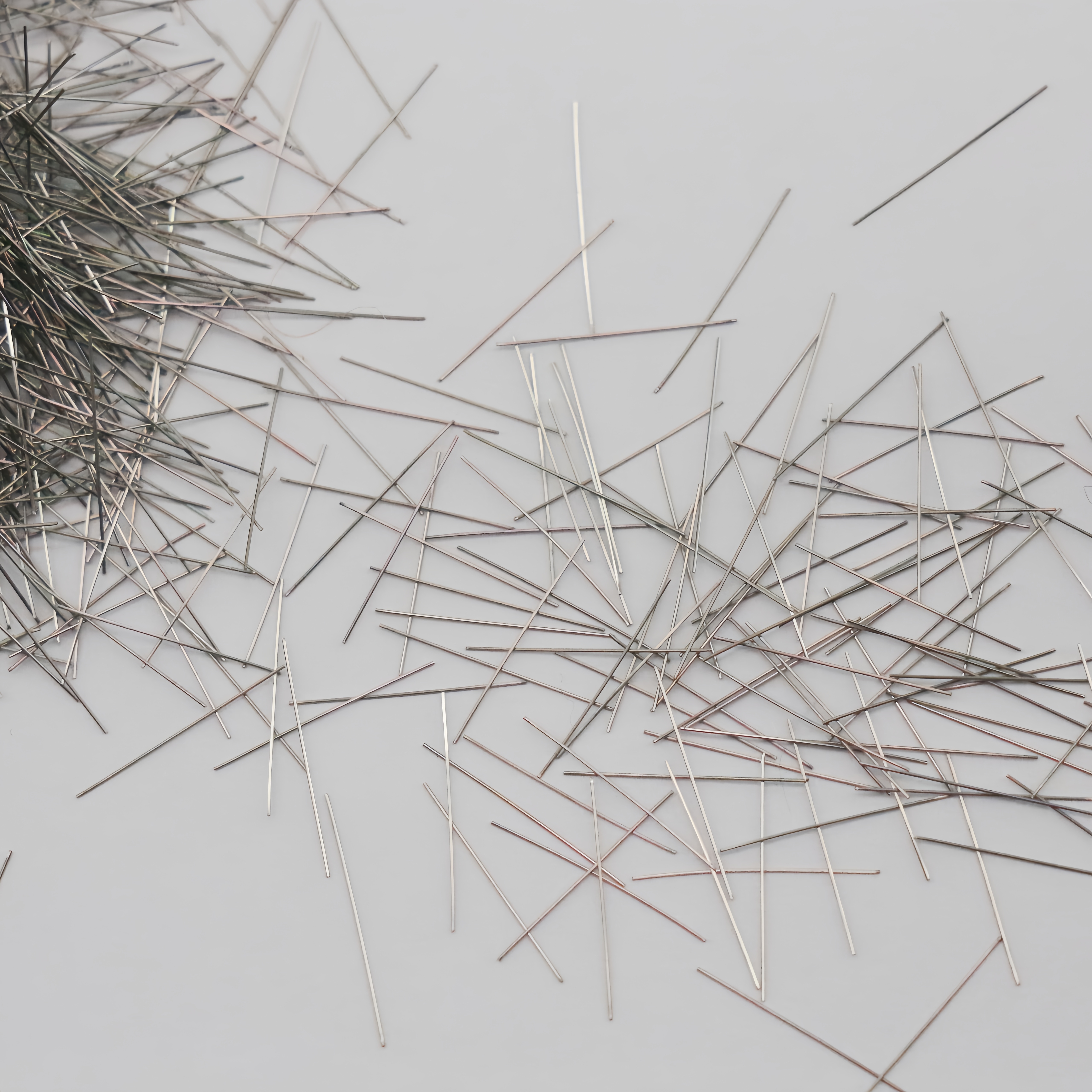
Coating introduces a parallel continuity question, particularly for micro fiber. Brass-coated micro steel fiber is the established reinforcement route for UHPC and RPC-type mixes, while stainless-coated micro fiber addresses exposure conditions where corrosion resistance in the fiber itself is relevant, including UHPC facade and other architectural or aggressive-environment elements. Independent product benchmarks for brass-coated micro steel fiber used in UHPC typically cite tensile strength above 2,500 MPa and diameters in the 0.2–0.3 mm range, which sits inside the 0.175–0.3 mm and 2200–2850 MPa windows stated for the TingCo micro series. A scorecard should treat coating as a controlled specification, not as a finish option.
Dimension 4 — Durability of Raw-Material Inputs
Continuity of finished fiber depends on continuity of inputs. Three material families underpin the products discussed here: carbon steel wire for the structural steel fiber series, brass-coated steel for the UHPC-oriented micro series, and polypropylene for the synthetic fiber range. Each has its own supply dynamics, and a supplier's exposure to those dynamics is a legitimate scorecard input.
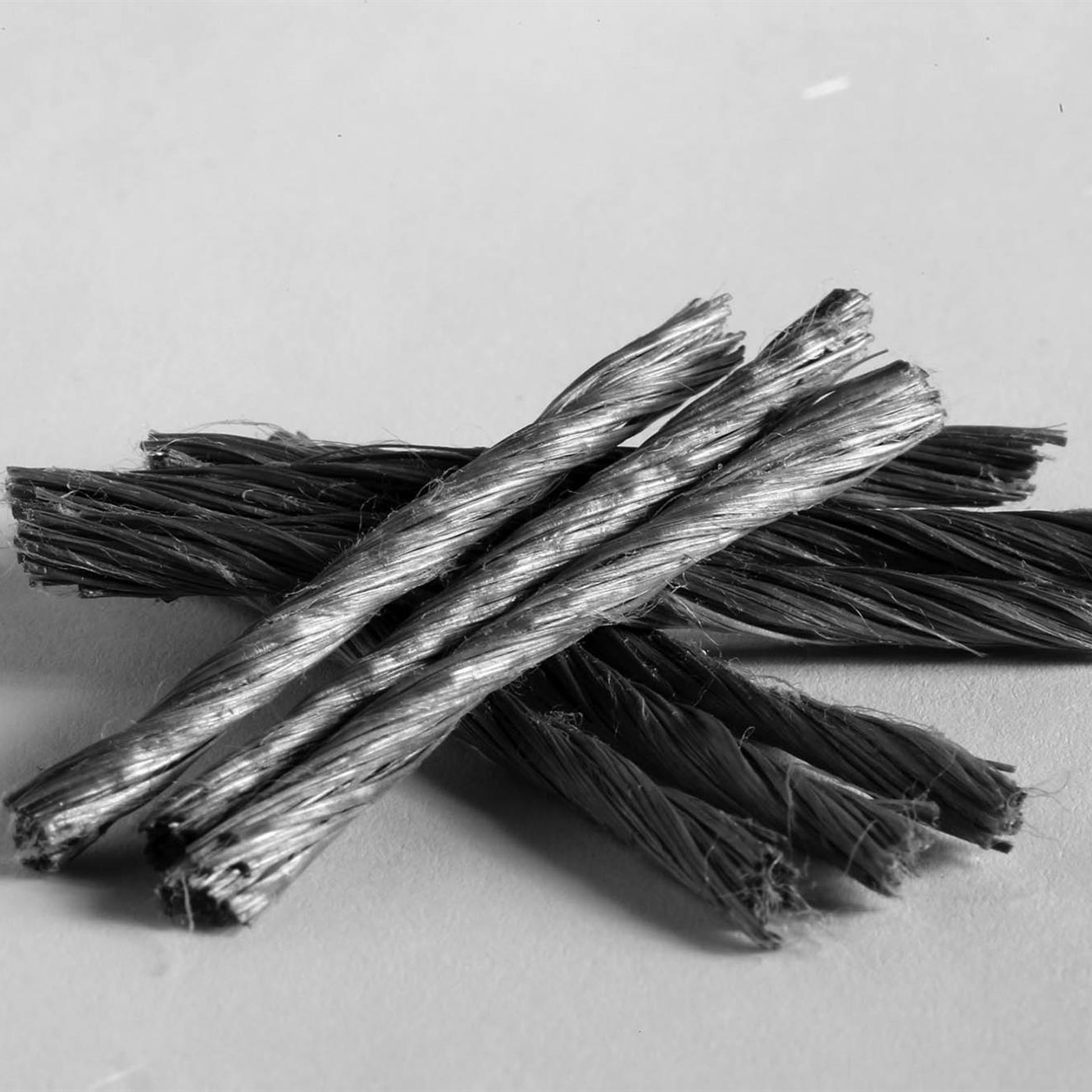
The synthetic side has distinct material characteristics worth recording explicitly. Polypropylene fiber has a density of 0.91 g/cm³ and an elastic modulus of at least 3500 MPa. The low density means a given mass of fiber occupies a large volume within the mix, which is why dispersion uniformity and dosing accuracy are the two most heavily weighted practical checks for PP fiber programs. The modulus describes the fiber's role: PP fiber contributes to controlling plastic shrinkage and early-age cracking rather than delivering the residual flexural strength that steel fiber provides. The TingCo PP range covers micro fiber, macro fiber and twisted fiber forms in polypropylene, applied in concrete and cement-based systems and documented for use in high-speed rail, bridge, tunnel, nuclear power and hydraulic engineering programs.
For a scorecard, raw-material durability is scored on three questions: whether the input specification is defined, whether it is qualified before production rather than after a complaint, and whether a change in input source triggers notification to the buyer. The third is often the missing item — a substitution at the wire or polymer supply level can alter handling behavior without altering the fiber's nominal dimensions.
Dimension 5 — Holding Specification Windows Across Repeat Orders
Specification windows should be scored as commitments, not as ranges. For the steel fiber series, the stated windows are 0.5–1.0 mm in diameter with 1100–2100 MPa tensile strength. For the micro steel fiber series, they are 0.175–0.3 mm in diameter with 2200–2850 MPa tensile strength. Both are broad enough that a supplier can remain nominally compliant while drifting materially between orders — which is exactly the failure mode a scorecard should catch.
The practical control is per-order documentation. Buyers should define, before the first delivery, the specific diameter and tensile target within the window, and the acceptable tolerance around it. Every subsequent order should be verified against that target, not against the outer window. Where the project is UHPC-focused, the same logic applies to micro fiber: independent benchmarks for brass-coated micro steel fiber in UHPC place typical diameters at 0.2–0.3 mm with tensile strength above 2,500 MPa, so a delivered batch at the low end of a wide window is compliant but not equivalent.
How TingCo Structures Supply for Continuity
TingCo's structure is relevant to the scorecard because it separates the functions that a continuity commitment depends on. Sales and R&D sit with Tianjin TingCo Tech Co., Ltd., while manufacturing runs through Hebei Tingco New Material Co., Ltd., covering research, production, quality control, technical support and export service in a single chain of responsibility.
The operational facts a buyer can score are specific. The manufacturing footprint is 6,000 m² with 50 employees and stated annual output of 24,000 tons, supported by a monthly capacity of 2,000 tons and a lead time of 10–15 days, with a minimum order quantity of 24 tons. A five-engineer R&D team supports specification work, and OEM/ODM cooperation covers logo and design variations of steel fiber. Quality control is documented as in-line inspection plus pre-shipment inspection, on top of the in-house concrete testing laboratory. The factory holds ISO 9001 quality certification; products are CE certified in accordance with EN 14889-1 and comply with ASTM A820 and ISO 13270. After-sales support combines remote technical support, quality problem compensation and construction consulting, and the technical team works with TR34 and EFNARC design codes and partners with design teams on steel fiber floor design and tunnel segment design services.
Approximately 70% of output is exported, with primary markets in the EU, Africa, South East Asia and the Middle East. For a continuity scorecard, that mix is a positive signal and a caution at the same time: a broad export base implies experience with varied acceptance regimes, but it also implies shared capacity across markets. The scorecard question is how capacity is allocated when several programs draw on the same monthly tonnage.
Where Continuity Is Tested: Application Scenarios
Fiber for concrete is used across industrial flooring, tunnel segment, shotcrete, highway construction, bridge engineering and underground mining. Typical project types include warehouse floors, highway pavement, subway tunnels, mine roadways, bridge decks and underground parking lots. The operating conditions are demanding by design: humid environments, underground confined spaces, dynamic vehicle loads, alternating temperature and vibration load, frequently on a continuous 24/7 operating basis.
Supporting equipment typically includes dosing machines, concrete mixers and spraying machines. Special requirements for these scenarios include alkali resistance, high dispersion uniformity, good compatibility with cement and no agglomeration during mixing — the last two being the requirements most directly tied to batch-to-batch consistency. In documented applications, the function of the fiber is crack control, with reported reductions in construction time of 50% and reductions in total cost of 30–40% relative to the conventional approach in the relevant programs.
A Southeast Asia reference is instructive for continuity scoring. A wholesaler with technical support, operating over a one-year duration, received 2,000 tons of steel fiber for heavy-duty industrial warehouse flooring, logistics park flooring and jointless flooring. The design used 80/60 steel fiber at 1200 MPa tensile strength at a dosage of 20 kg/m³, and the pile layout was rearranged and optimized to better fit the slab-on-pile project. A program of that scale and duration is a continuity test in itself: the acceptance risk is not concentrated in the first delivery but distributed across a year of them.
Market Trend Signals Buyers Should Read Carefully
Three trend signals are worth carrying into a supplier scorecard discussion. First, steel fiber demand is concentrated in applications that repeat: industrial floors hold a 37.28% application share, and hooked-end fiber holds a 58.89% share of the type segment. Second, the synthetic side is growing: the global polypropylene fiber market for construction is expected to grow at a CAGR of 6.4% from 2026 to 2034, which implies more projects running steel and synthetic fibers in parallel and therefore more opportunities for continuity failure at the handover between them. Third, supply concentration is real: China accounted for 51.85% of steel fiber imports identified in specialized customs trade datasets under HS 7326. That trade figure originates from a customs-data aggregator and reflects a historical proxy rather than a current-year official statistic; it should be read as directional evidence of export concentration, not as a precise market share.
The procurement implication is consistent across all three. As volume grows and supply concentrates, differentiation shifts away from whether a supplier can produce fiber at all and toward whether a supplier can hold a specification, a form, a coating and a model code steady over a program's life. That is a scorecard problem, not a sourcing problem.
Continuity Scorecard vs Traditional Reinforcement Procurement
Traditional reinforcement procurement is transactional. Mesh and rebar are purchased against a drawing, fiber is purchased against a specification, and the selection criterion is frequently unit price at the point of order. Approval is often granted on a single sample or a single certificate, and the supplier relationship resets with each package.
A continuity scorecard changes the unit of evaluation from the order to the program. It scores five things that a single-order comparison cannot see: inspection practice, series stability, form and coating control, input qualification, and specification drift. It also changes the timing of evidence: instead of a certificate issued once, the buyer accumulates per-order documentation that shows whether the commitment is being met.
It is equally important to state what a scorecard cannot do. It cannot substitute for project-specific design verification. Residual flexural strength must still be confirmed for the actual mix against EN 14651, ASTM C1609 or ASTM C1550, and a supplier that scores well on continuity does not thereby satisfy a design requirement. Second, fiber families are not interchangeable on the basis of a scorecard: where a design parameter moves from early-age crack control to structural toughness, a synthetic-to-steel substitution requires a new mix design and new testing rather than a documentation update. Third, in most markets there is no publicly available supplier-level market share data for fiber producers, so a buyer cannot benchmark a supplier's continuity externally; the score is internal and evidence-based by necessity. Finally, raw-material markets for steel wire and polypropylene sit outside any supplier's control, so a short stated lead time of 10–15 days speaks to production scheduling rather than to price and availability volatility in the inputs.
Replacement Planning for PP Fiber in Rail, Bridge, Tunnel and Hydraulic Programs
Polypropylene fiber is documented for use in high-speed rail, bridge, tunnel and hydraulic engineering programs, alongside nuclear power applications. Three material facts shape how replacement planning should be handled. Its density is 0.91 g/cm³, its elastic modulus is at least 3500 MPa, and it does not corrode — which is why synthetic fiber is often specified where a non-corroding reinforcement component is required, including flooring and overlay applications.
The TingCo PP range covers micro fiber at 18 μm, 32 μm and 36–38 μm diameters in 6 mm, 12 mm and 19 mm lengths, macro fiber at 0.7 mm diameter in 30–58 mm lengths, and twisted fiber at 0.6–0.7 mm diameter in 46–54 mm lengths. Documented product positioning states reductions in early-stage cracking and improvements in impermeability and durability, with a surface hydrophilic modification intended to ensure uniform dispersion and strong bonding within concrete. These are manufacturer-stated performance positions for the product range, and buyers evaluating a replacement should verify them against their own mix through testing rather than relying on the stated position alone.
A workable replacement plan for a long program has five steps:
- Define the function being replaced. State whether the fiber is controlling plastic shrinkage and early-age cracking, or contributing to residual flexural strength. The answer determines whether a replacement is a documentation change or a redesign.
- Confirm the design parameter. Where residual flexural strength is the governing parameter, polypropylene fiber is not a like-for-like substitute for steel fiber, and the replacement should be treated as a design change rather than a procurement change.
- Re-run the mix design. Dispersion behavior, dosing method and mixing time are fiber-family specific. For steel fiber, the reference practice is water-soluble packaging fed directly into the mixer with the aggregates, dissolving in about five seconds, and a mixing time extended by 30–60 seconds. A PP substitution requires its own confirmed handling parameters.
- Dual-qualify during the transition window. Keep both fiber families approved and deliverable while the new mix is verified, so that a failed verification does not stop the program.
- Score both families for continuity. Apply the same five dimensions to the PP supply as to the steel supply, including model continuity, since a replacement program inherits the same repeat-order exposure.
Future Outlook
Three shifts are likely to shape fiber procurement over the next several years. The first is documentation gravity: as programs lengthen, buyers will move from accepting a single certificate to requesting per-order inspection and test records, because that is the only evidence that distinguishes a stable supplier from an intermittent one. The second is dual-family qualification. With polypropylene fiber demand for construction expected to grow at a CAGR of 6.4% from 2026 to 2034, more projects will run steel and synthetic fibers in the same program, which makes the transition between them — rather than either family alone — the highest-risk moment. The third is specification narrowing. Broad published windows such as 0.5–1.0 mm and 1100–2100 MPa are useful for category description but weak as procurement instruments; buyers are likely to convert them into program-specific targets with per-order tolerances.
For suppliers, the practical consequence is that continuity becomes a documented capability rather than an implicit one. Series stability, form and coating control, input qualification and inspection practice have to be visible on paper, in the same way that certification already is.
FAQ
What does batch-to-batch consistency mean for fiber for concrete?
It means that each delivery matches the approved baseline in specification, quantity and packaging, and behaves the same way in the mix. The mechanisms that support it are in-line inspection during production and pre-shipment inspection before release, combined with concrete-level testing. Fiber-only measurement is not sufficient, because dispersion and bonding depend on how the fiber behaves in a specific mix, not only on its dimensions.
Which model series should a buyer keep stable across a multi-year program?
For structural steel fiber, the series are TC-07560-HNG, TC-07560-HHG, TC-05535-HNG and TC-07535-HNL, produced from carbon steel wire with a diameter range of 0.5–1.0 mm, a length range of 25–60 mm and tensile strength of 1100–2100 MPa. For micro steel fiber, the series are TC-0213-CMS, TC-0220-CMS and TC-0213-SMS, with brass or stainless coating, a diameter range of 0.175–0.3 mm, a length range of 6–25 mm and tensile strength of 2200–2850 MPa. The practical control is to record which codes were approved and whether any substitution occurred without written notice.
Can loose and glued steel fiber be used interchangeably within one program?
They are two supply forms of the same product family, but they are not operationally identical. Glued bundles are intended to separate during mixing, while loose fiber requires feeding and dispersion control to prevent agglomeration. A change of form during a program affects feed method, mixing energy and slump, so it should be handled as a change requiring re-verification, including a check of mixing time and dispersion behavior, rather than as a like-for-like substitution.
How is steel fiber dosage normally determined?
Dosage is determined by mix design and application. Reference ranges are 20–40 kg/m³ for shotcrete, 15–30 kg/m³ for industrial floors and 10–30 kg/m³ for precast elements. Handling practice includes feeding water-soluble packaging bags directly into the mixer with the aggregates, dissolving in approximately five seconds, and extending mixing time by 30–60 seconds compared with plain concrete to achieve uniform dispersion without clumping. Verification of the resulting performance is normally performed against EN 14651, ASTM C1609 or ASTM C1550.
What specification windows should be held across repeat orders?
For the structural steel fiber series, diameter should be held within 0.5–1.0 mm and tensile strength within 1100–2100 MPa. For the micro steel fiber series, diameter should be held within 0.175–0.3 mm and tensile strength within 2200–2850 MPa. Because these windows are wide, buyers typically define a program-specific target inside the window and verify each order against that target rather than against the outer limits.
When should PP fiber be planned as a replacement in rail, bridge, tunnel or hydraulic programs?
Replacement planning should begin from the function being performed. Polypropylene fiber has a density of 0.91 g/cm³ and an elastic modulus of at least 3500 MPa, and is documented for high-speed rail, bridge, tunnel, hydraulic and nuclear power applications. Where the design parameter is early-age crack control, a PP substitution can be planned through mix redesign and verification. Where the design parameter is residual flexural strength, polypropylene fiber is not a like-for-like substitute for steel fiber, and the change should be treated as a design change with new testing and, where practical, a dual-qualification window during transition.
TingCo's full product and project reference documentation, including series specifications and application notes, is available in the company brochure: TINGCO company and project introduction (PDF).