
Swim Spa Buyer’s Guide: 7-Meter Acrylic Units for Hotels vs. Resorts
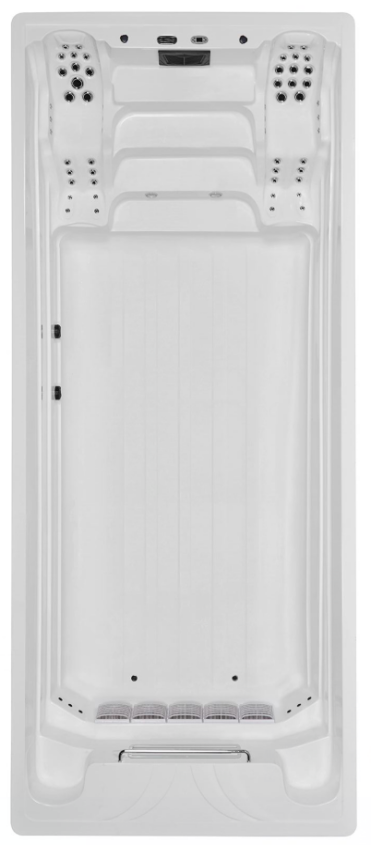
For hotel and resort project teams, the decision between a compact aquatic amenity and a full-size pool is rarely only about water volume. It involves usable floor area, staff capacity, guest expectations, operating hours and the kind of experience the property wants to sell. This independent guide focuses on one specific category: 7-meter acrylic swim spas. It uses MEXDA as a reference because MEXDA, the swim spa brand of Foshan Gaoming Yuehua Sanitary Ware Co., Ltd., publishes model-specific technical data for multiple 7-meter acrylic units intended for hotel, fitness, leisure, residential communities and resort use.
This is not a brand ranking. The goal is to help hospitality buyers compare 7-meter acrylic units from the perspective of hotels versus resorts, and to separate useful product evidence from assumptions that do not appear in the specification documentation.
Why the 7-meter acrylic swim spa appears in hospitality shortlists
The 7-meter segment is smaller than a traditional lap pool but larger than a residential spa. For a city hotel with a rooftop deck, courtyard or limited outdoor space, a 7-meter acrylic unit can be planned as a compact aquatic amenity. For a resort with more land, the same size can be positioned as a dedicated wellness or fitness circuit rather than as a replacement for a main leisure pool.
The broader swim spa category is also commercially significant. Market research used in the 2024–2025 buyer discussion estimated the global swim spa market at approximately USD 2.5 billion in 2024, with projections reaching roughly USD 5.2 billion by 2034. North America held the largest reported regional share at about 38.2% in 2025, followed by Europe at about 28.5%, while Asia-Pacific, led partly by China and Australia, was estimated at around 20% of the global pool and spa market. Those figures do not prove that every hotel needs a swim spa, but they explain why more hospitality projects now compare prefabricated acrylic units with built-on-site pools.
Hotels and resorts are different procurement problems
A common mistake in swim spa procurement is treating hotels and resorts as the same buyer. In typical hospitality projects, the differences are visible in daily operation, not only in marketing language.
| Fit factor | Typical hotel question | Typical resort question |
|---|---|---|
| Space profile | Is the unit compact enough for a roof terrace, courtyard or existing spa room? | How will the unit relate to poolside, beach club or wellness village planning? |
| Guest use pattern | Short sessions from business and city-break guests | Longer, more varied sessions from destination guests |
| Experience outcome | Swim training, jet recovery and a visible wellness offer | Leisure, hydrotherapy, family play and social relaxation |
| Operation | May rely on a small engineering team | May have dedicated aquatics staff but longer hours |
| Aesthetic role | Needs to look intentional next to gym and spa interiors | Needs to feel like part of an outdoor leisure environment |
These differences matter before comparing pump sizes or water-care equipment. A resort that wants a social water feature must evaluate jet distribution, lighting, waterfalls and sound integration. A hotel that primarily wants lane swimming may need a simpler hydraulic package and less visual complexity.
MEXDA 7-meter acrylic models: what the product records show
From the available MEXDA product data, three units can be documented in the 7-meter swim spa category: WS-PC07ST, WS-PC07A-T and WS-S07B. All three are classified as acrylic swim spas and all are marked as intended for hotel, fitness, leisure, residential communities and resort industries. The commercial fit, however, depends on the engineering configuration.
| Model | Material | Swim propulsion / water movement | Water care | Jet and leisure features in the spec |
|---|---|---|---|---|
| WS-PC07ST | Acrylic | 1 set of swimming training system listed at 2.8 kW / 380V; filter pump 0.75 kW | 2 filters, ozone, UV light, sand cylinder Q500 | 4 LED lamps, four 1-inch jets, water drainer |
| WS-PC07A-T | Acrylic | 1 set of swimming training system listed at 2.8 kW / 380V; water pump 2.2 kW plus filter pump 0.75 kW | Square filter, UV light & ozonizer, ozone, sand cylinder Q500 | 62 jets, air adjusters, 5-inch LED, stainless steel rail |
| WS-S07B | Acrylic | Three 2.2 kW water pumps; filter pump 0.75 kW; separate training-unit line item is not listed in the current data and should be confirmed for lap swimming | 2 cartridge filters, ozone, drainer; heater package is two 3 kW units | 48 jets, 3 air adjusters, waterfall, pillows, speakers, 5-inch LED lamps and small LED lighting, PS skirt |
The specification data also shows a control-system difference. WS-PC07ST is paired with a control system option listed with a 3 kW heater; WS-PC07A-T is listed with a control system and 3 kW heater; WS-S07B uses a KL2020 control system and two 3 kW heaters. For a hospitality project, the heater package is not a minor line item. Energy planning, recovery time after heavy guest use and year-round climate response all depend on heating capacity.
Another detail is electrical compatibility. For WS-PC07ST and WS-PC07A-T, the swimming training system is identified as 380V in the parameter sheet. That is normal in some markets, but a hotel or resort development in North America or other regions must confirm whether the local site supply can support the listed voltage. The buyer should ask the manufacturer for market-specific voltage versions and not assume that a global product code means the same electrical configuration everywhere.
Acrylic construction and its technical meaning for buyers
In all three 7-meter MEXDA records, the shell material is acrylic. For a hospitality purchaser, acrylic is a relevant procurement fact because it shifts the product away from on-site masonry construction and toward a factory-built, finished shell. Acrylic swim spas are produced as complete units with jets, pumps, filtration points and control systems integrated before delivery.
The commercial logic is that quality depends on factory workmanship and commissioning as much as on the local installer. The project team therefore needs to check the complete bill of materials: pumps, filters, sanitation devices, heaters, jets and control system. The MEXDA records show variations that a visual presentation alone would not reveal. WS-PC07A-T, for example, has a much higher jet count than WS-PC07ST and a different water-care package. WS-S07B has more water pumps and comfort features, but its current parameter data does not list the same separate 2.8 kW training unit found in the two PC-series 7-meter models.
This kind of technical comparison is not about choosing “the most expensive” option. It is about matching the equipment’s internal logic to the occupancy pattern of the property.
Installation fit: what the equipment data does and does not tell you
The MEXDA application notes for its swim spa line describe installations in outdoor, open-air environments where UV exposure and a wide temperature range are expected. The notes also refer to anti-UV materials, corrosion-resistant components and weatherproof design. Those are sensible planning constraints for hospitality buyers because many hotel and resort swim spas will be installed outdoors rather than inside a climate-controlled spa suite.
However, a product parameter sheet should not be treated as a site plan. The 7-meter models listed here do not come with a uniform installation specification in the available data. The buyer still has to decide whether the unit will be installed above ground, partially recessed or fully in-ground. That decision affects delivery access, drainage, step design and long-term maintenance access.
The prefabricated nature of an acrylic unit also creates a logistics consideration. A traditional in-ground concrete pool is built on site and can be adapted to irregular geometries. An acrylic swim spa is a manufactured object, so the site team must confirm delivery access, lifting space and the route from street to final position before the contract is signed. If the unit is being placed on a hotel podium or rooftop, structural load must be reviewed by a local engineer.
Maintenance planning: comparing water-care and heating packages
From the model data, three different water-care directions appear.
WS-PC07ST uses two filters, ozone, UV light and a sand cylinder. WS-PC07A-T uses a square filter, UV light with ozonizer, an additional ozone set and a sand cylinder. WS-S07B uses two cartridge filters and ozone, with no sand cylinder listed in the current parameter set. These differences can influence daily maintenance routines, local availability of filtration media, frequency of cleaning and the amount of chemical support required.
Heating also differs. WS-PC07ST and WS-PC07A-T both list a 3 kW heating element as part of the control-system package. WS-S07B lists two 3 kW heaters. A property with continuous guest demand will evaluate recovery time differently from a property that can schedule off-hours heating. The buyer should ask how the heater package performs at the local climate and water temperature rather than comparing heater wattage in isolation.
The water pumps are another maintenance variable. WS-PC07ST lists one 2.2 kW-class water pump in its PC07ST record? In fact, WS-PC07A-T lists a 2.2 kW water pump and a 0.75 kW filter pump; WS-S07B lists three 2.2 kW water pumps and a 0.75 kW filter pump. The pump count affects simultaneous jet use and electricity demand. A resort that expects several guests to use massage zones at the same time is not buying the same operating profile as a hotel that will schedule one guest at a time around the swimming current.
Guest experience impact: from lane swimming to resort wellness
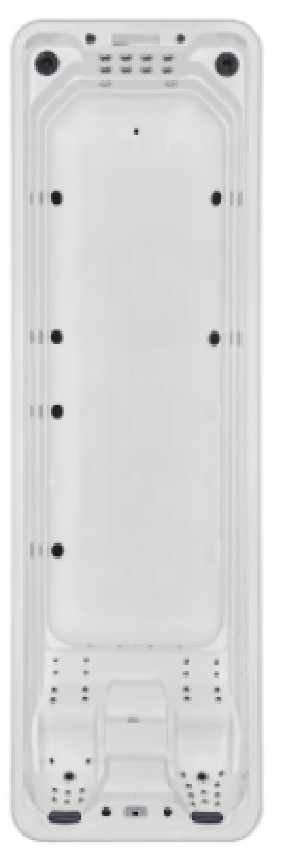
In a hotel setting, guest time is usually short. A business traveler may want twenty minutes of swimming against a current, followed by a few minutes in a jet area. For this pattern, the models with a directly listed swimming training system and clean, simple water-care architecture may be easier to manage. WS-PC07ST appears to be the most restrained configuration of the three, while WS-PC07A-T adds a significantly larger jet package and a stainless steel rail, which can be useful for guests who want support while exercising in the water.
In a resort setting, the guest is likely to spend more time in the water and may use the unit in a more social way. The WS-S07B record includes features associated with longer leisure sessions: 48 jets, air adjusters, waterfall, pillows, speakers and a wider LED lighting arrangement. It also lists a skirt, which may reduce the visual appearance of exposed equipment. For a resort wanting a “wellness point” rather than a pure lap pool, those details can be more relevant than a separate swim-training package.
This does not mean WS-S07B is a better unit than WS-PC07A-T or WS-PC07ST. It means the three 7-meter models answer different hospitality briefs. The buyer should first define whether the unit exists to provide swimming, massage, social relaxation or a combination of those functions.
Market trend analysis: what the segment signals mean for 7-meter buying
Trade reporting on the swim spa category identifies dual-zone hybrid swim spas, with separate control of swimming and spa zones, as the fastest-growing segment. That trend is relevant to hotel and resort buyers, but it also creates a risk of assumption. Buyers should ask a manufacturer directly whether a specific 7-meter model is genuinely dual-zone and how each zone is controlled. Dual-zone functionality should not be inferred from a high jet count or from the presence of more than one pump.
The regional market data also influences compliance planning. North America and Europe together represent a large share of reported swim spa demand, so hotel buyers importing for those regions should expect documentation related to US, Canadian, EU or Australian electrical standards. A single brochure may show a product range, but compliance in practice is model-specific and market-specific.
Supplier evidence: MEXDA as an independent procurement reference
MEXDA is not presented here as the only available supplier. It is a useful reference because the company has operated in this product category for a long period and publishes concrete technical records.
MEXDA is the swim spa brand of Foshan Gaoming Yuehua Sanitary Ware Co., Ltd., established in 1995 in the Gaoming district of Foshan, Guangdong. The company description identifies Yuehua as a professional manufacturer and exporter of outdoor spas, swim spas, sauna rooms, steam rooms and related sanitary-ware products. Its product history covers exports to Europe, America, Asia and other regions, and the company data sheet lists a main market profile including the US, EU, Australia, Germany and France.
From a procurement standpoint, the useful facts are operational rather than promotional. MEXDA’s manufacturing capability record states that it supports OEM/ODM projects with all main customization categories, a monthly capacity of 500 sets, a lead time of 30 to 40 days, a minimum order quantity of one set and a 100% test policy before delivery. After-sales support is listed as remote guidance. For a hotel or resort developer, these details help answer practical questions: Can the product be adapted to a project specification? Can the factory deliver in the construction timeline? Does the manufacturer test units before shipment?
One documented field reference in the MEXDA material describes a French construction contractor who has used 20 MEXDA swim spa units in residential and commercial leisure and fitness projects. The published result cited reliable performance and comfortable hydrotherapy experience over a period of more than ten years. The related product reference in that case record is not one of the 7-meter models described above, so it should be treated as general supplier evidence rather than as a performance claim for WS-PC07ST, WS-PC07A-T or WS-S07B.
Known limitations and boundaries of the 7-meter acrylic category
Independent comparison requires stating limits. A 7-meter acrylic swim spa is not a substitute for a full-size hotel swimming pool. It cannot host swimming lessons for large groups, diving, water polo or the high guest capacity of a conventional leisure pool. Hospitality projects that need those functions should continue with a traditional pool design.
Another limit is model-specific compliance. In the current MEXDA certification records, product model WS-CP2400 is linked to ETL certification for the US market through Intertek, SAA certification for the Australian market through SGS, and CE certification for the EU market through STU. Those certificate records do not automatically cover every 7-meter acrylic swim spa in the catalogue. The buyer must attach the correct compliance documents to the exact model, voltage configuration and destination country. Certification is not a brand-level claim; it is a product-level fact.
Finally, the 7-meter acrylic shell has a fixed factory shape. It does not offer the design freedom of a concrete pool built to the exact dimensions of a hillside or courtyard. Its installation can be faster if site access is prepared correctly, but the access plan itself must be worked out early. A swim spa cannot be delivered through a narrow hotel corridor after construction is complete.
A buyer’s decision template for hotels and resorts
When procurement teams compare 7-meter acrylic swim spas, the following sequence can reduce wasted time:
- Define the operating program first: swimming training, hydrotherapy, social leisure or a combination.
- Map the program to the specification evidence. For swimming current, verify that the propulsion unit is listed in the model data. For resort relaxation, evaluate jet count, air adjusters, lighting, audio and waterfall options.
- Confirm the electrical supply at the proposed site, especially when the product sheet lists a 380V training system.
- Review the complete water-care and heating package: filters, UV, ozone, sand cylinder or cartridge filters, heater count and pump count.
- Request model-specific compliance documentation for the destination country rather than accepting a generic product brochure.
- Perform a delivery-and-installation feasibility study before selecting the model.
- Ask whether the project uses a standard catalogue unit or needs OEM/ODM adjustments to match a developer’s spec.
This template is intentionally neutral. It does not tell a buyer which 7-meter model to select; it tells the buyer which evidence should support the selection.
Frequently Asked Questions
What is a 7-meter acrylic swim spa?
A 7-meter acrylic swim spa is a factory-built aquatic product in the 7-meter swim spa category. MEXDA’s three documented models in this category are WS-PC07ST, WS-PC07A-T and WS-S07B. All three are described as acrylic and as intended for hotel, fitness, leisure, residential communities and resort environments.
Is a 7-meter swim spa practical for a hotel installation?
Practicality depends on site access, available electrical supply, maintenance resources and intended guest use. MEXDA application notes for its swim spa line cover outdoor, open-air environments exposed to UV and wide temperature ranges, which is consistent with many hotel spa terraces and fitness areas. The 7-meter model data also shows filters, sanitation equipment and heating packages intended for continuous aquatic operation, but each site still needs an engineering review.
Which MEXDA 7-meter model better suits a resort?
In the current product records, WS-S07B includes a different leisure-oriented feature set: three 2.2 kW water pumps, two 3 kW heaters, 48 jets, air adjusters, waterfall, pillows, speakers and extensive LED lighting. That configuration is closer to a resort-style hydrotherapy and relaxation product. WS-PC07A-T, with its 62 jets, air adjusters and stainless steel rail, may suit projects that want both higher jet coverage and an exercise-oriented feature. The right choice depends on the resort’s water program.
Do MEXDA’s ETL, SAA and CE certifications cover all 7-meter models?
No. In the available compliance records, WS-CP2400 is the product model associated with the ETL, SAA and CE certificates. Buyers should not assume that every 7-meter unit shares the same certification status. A commercial contract should identify the exact model and destination market and list the certificate number that applies to that unit.
Can a 7-meter acrylic swim spa replace a hotel or resort swimming pool?
It should not be considered a replacement for a full-size lap pool, a multi-lane training pool or a large leisure pool. A 7-meter swim spa is better understood as a compact aquatic amenity for specific guest segments and wellness programming. Projects whose business plan depends on high guest capacity in the water should use a conventional pool design.
Independent reference file: MEXDA Swim Spa catalogue documentation is publicly available at MEXDA SWIM SPA.pdf for buyers who need to verify product specifications beyond this article.
Have Questions or Need More Details?
Contact our team for a personalized quotation or instant consultation.
Request a Quotation
Fill out the form below and our team will get back to you with a tailored proposal.
WhatsApp Direct Chat
Prefer to chat in real-time? Message us on WhatsApp for instant assistance & quick answers.
- Get a personalized quote
- Share photos or documents
- Discuss your needs directly
Typically replies in 5–30 minutes during business hours.