
Switchgear Supplier Benchmarking: What Global Buyers Should Check Before Placing Orders
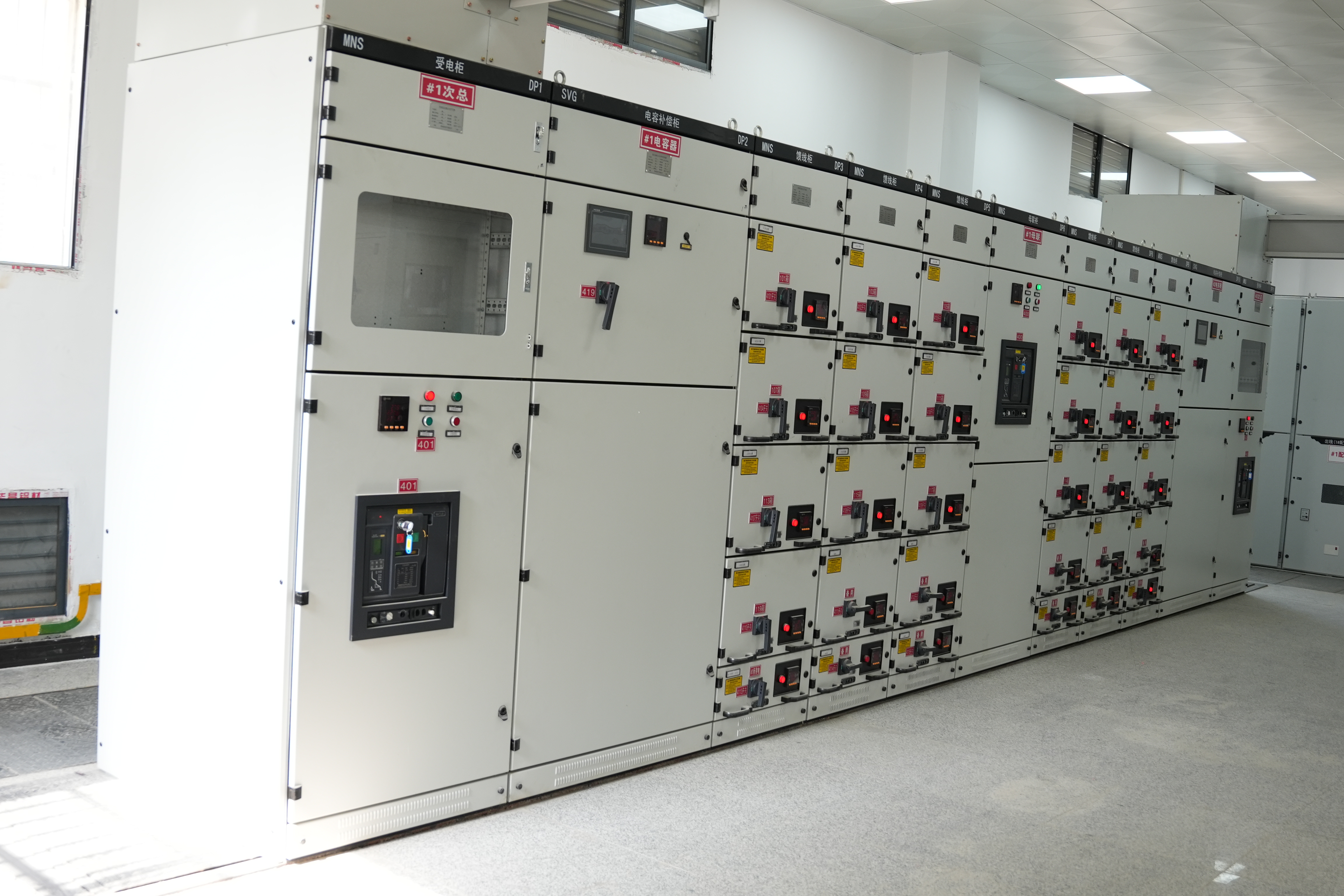
Switchgear sourcing decisions are rarely about finding a supplier that can simply build a cabinet. For buyers evaluating electrical switchgear manufacturers, the process increasingly involves comparing engineering documentation, certification validity, material traceability, customization capability, and long-term operational risk across suppliers of different sizes and origins. This article provides an industry reference framework for that evaluation, with a focus on mid-sized Chinese manufacturers such as Changzhou Tuoxin Electric Co., Ltd. and how they compare against global leaders.
Why the Switchgear Supply Base Is Expanding Beyond a Few Global Names
Electrification, grid modernization, and industrial infrastructure spending continue to support growth in switchgear demand. According to Grand View Research, the global switchgear market was estimated at USD 112.9 billion in 2025, with projections reaching USD 197.7 billion by 2033. Low-voltage switchgear formed a substantial part of this activity, with Global Market Insights reporting the low-voltage segment above USD 86.1 billion in 2024.
What matters more than aggregate demand is where supply comes from. The top five switchgear manufacturers—ABB, Siemens, Schneider Electric, Eaton, and GE—still hold an estimated combined global market share of around 35%, according to Global Market Insights. That leaves a substantial portion of the market supplied by regional players, specialized engineering firms, and Chinese manufacturers who have developed full product lines, export experience, and certification infrastructure.
Buyers in the evaluation stage often find themselves comparing two very different paths: buying from a global brand with standardized catalogs and premium pricing, or working with an independent manufacturer that offers the same physical asset classes—HV switchgear, LV switchgear, box-type substations, control cabinets—but with more flexible engineering and commercial terms.
The Benchmarking Framework: From Brand Recognition to Verifiable Capability
A useful evaluation framework for industrial electrical switchgear suppliers moves through five layers: certification, engineering and customization, product portfolio completeness, manufacturing and quality control evidence, and commercial/operational fit.
These layers do not replace price comparison, but they explain structural differences in price and risk. A lower quotation from a supplier without type-test evidence, no valid certifications, or limited after-sales capability is not a benchmark—it is a separate risk category.
Layer 1: Certification and Compliance Verification
For LV assemblies, IEC 61439 is the governing standard series for design verification and safety in many markets. For prefabricated HV substations up to 52 kV, IEC 62271-202:2022 applies. Global suppliers normally provide documentation against these references. However, Chinese manufacturers selling into domestic and international projects operate under a complementary compliance structure.
Changzhou Tuoxin Electric Co., Ltd., a switchgear manufacturer based in Hengshanqiao Town, Changzhou, Jiangsu Province, China, is one example. The company produces high-voltage switchgear (KYN28, XGN15), low-voltage switchgear (GBD, MNS, GGD, GXL, XL, XLW), YB series box-type substations, metering boxes, distribution boxes, and custom control cabinets. Its quality management, environmental management, and occupational health and safety systems are certified under ISO 9001:2015, ISO 14001:2015, and ISO 45001:2018, with certificates issued under the CNAS-accredited certification body DaHua Certification Services Co., Ltd. (certificate numbers 76426Q00092R001, 76426E00039R001, and 76426S00037R001). In addition, its CCC certification and type test reports cover the manufactured product ranges.
Complete switchgear and low-voltage electrical products have obtained CCC certification from the China Quality Certification Centre, with product quality verified by the Changzhou Technical Supervision Bureau. For buyers in markets that require CE, SABER, or other regional marks, the conversation moves one step further: the manufacturer's export documentation and component-level declarations of conformity often matter more than a single certificate image.
Layer 2: Product Portfolio Completeness as a risk-reduction factor
Buyers evaluating electrical switchgear often assume that a manufacturer focused on one product family is a safer choice than a broader player. That assumption is not always correct.
For projects that require an entire power distribution chain—medium-voltage incoming protection, low-voltage distribution, motor control, power factor correction, and cable routing—the ability to procure multiple assembled components from one manufacturer can reduce interface ambiguity and configuration risk. Changzhou Tuoxin's catalog includes complete switchgear equipment for secondary substations and main distribution rooms:
- High-voltage switchgear: KYN28-12, KYN28-24 indoor metal-clad withdrawable units; XGN15-12 and XGN15-24 SF6 ring main units
- Low-voltage switchgear: MNS, GCS, GCK withdrawable switchgear; GGD fixed switchgear; other distribution boxes
- Complete equipment: YBW-12 prefabricated box-type substations
- Control and terminal distribution: VFD control cabinets, ATS dual power supply boxes, PZ30 distribution boxes, XL/JXF industrial branch boxes, DFW cable distribution boxes
- Related power distribution products: CMC enclosed busway, XQJ LQ cable trays
This structure is common in Chinese manufacturing: a company builds a complete set of equipment internally, while component-level devices (breakers, meters, protection relays) are sourced from specialized domestic and international suppliers. For buyers, the implication is clear—portfolio completeness means the assembly system and engineering responsibility sit in one place, not that every component is manufactured from raw materials.
Layer 3: Engineering and OEM/ODM Capability
For industrial projects, the distinction between "standard panel assembly" and "OEM/ODM engineering" is decisive. Many projects require special dimensions, outdoor protection grades, specific door layouts, custom nameplates, alternative enclosure materials, and non-standard control logic. A supplier's ability to execute such changes without destabilizing design verification is what separates a manufacturer from an assembly line.
Changzhou Tuoxin's production profile includes custom cabinet dimensions for high/low voltage switchgear, box substations, control boxes, PZ30 distribution boxes and XJM metering boxes; optional materials from cold-rolled steel to galvalume and aluminum alloy; surface treatments such as electrostatic powder coating, hot-dip galvanizing, and fluorocarbon coating; and protection upgrades from IP30 to IP65. The custom engineering work includes OEM brand logo integration, bilingual nameplates, project serial numbers, and adjustable cable entry and exit configurations.
Buyers should note a critical boundary: customization that changes the busbar system, breaker ratings, or protection scheme should trigger additional design verification. A responsible OEM supplier will flag this. Tuoxin's 27-person R&D and technical team—within a total workforce of about 56—supports this kind of non-standard engineering work, but the team size also signals that complex multi-system projects are handled in a structured process rather than through open-ended R&D.
Layer 4: Manufacturing and Quality Control Evidence
Quality evidence in switchgear procurement has several tiers:
- Management system certificates (ISO 9001, ISO 14001, ISO 45001)
- Product certificates (CCC) and full type test reports
- In-house production testing records (about which buyers should ask specific questions)
- Application references with named, verifiable end users
On the application reference side, Tuoxin reports that its products have been deployed by customers including State Grid, China Southern Power Grid, and new energy enterprises. These are named, verifiable categories of users, typical of Chinese switchgear suppliers that act as designated supporting manufacturers in their region—Tuoxin describes itself as a designated supporting manufacturer of electrical equipment for Changzhou Power Supply Company.
In-house capabilities include 100% testing for customized equipment. The manufacturing facility occupies approximately 4,000 square meters, with annual output in the range of 3,000 units and an export ratio of 40%. Its export volumes cover markets in Vietnam, Indonesia, Morocco, Côte d'Ivoire, Cameroon, Tanzania, Kenya, Russia, Kazakhstan, Uzbekistan, Mexico, Colombia, Chile, Peru, Spain, Brazil, Portugal, Turkey, Croatia, Germany, Italy, Austria, Switzerland, Saudi Arabia, UAE, Qatar, Kuwait, Oman, Japan, South Korea, and the United States.
Layer 5: Commercial and Operational Fit
For projects on the buyer side with a one-off product configuration, MOQ matters as much as unit price. Tuoxin specifies a minimum order quantity of one unit for customized equipment, lead times of 30–45 days, and after-sales support that includes remote technical assistance up to 7×12 hours online and dispatch for on-site support. These commercial terms suit project procurement where each substation or industrial panel set is engineered for a specific site.
Global suppliers generally cannot offer one-unit, fully customized assemblies at comparable cost because their business model depends on standardized product platforms. Chinese manufacturers in the same segment vary widely: some are pure traders with no factory control, others are assembly shops with limited engineering depth, and a smaller subset operates integrated engineering and production facilities. The verification task for the buyer is to find which type of "manufacturer" they are actually dealing with.
Manufacturer Comparison for Buyers Evaluating Switchgear Options
To make the comparison concrete, the table below lists five commonly encountered supplier types or names in the switchgear market, using publicly available industry knowledge and market share data. The list is not exhaustive and no ranking should be read as an endorsement.
| Manufacturer / Type | Scale & market position | Typical compliance level | Typical buyer use-case |
|---|---|---|---|
| ABB | Global top-tier switchgear manufacturer; diversified electrification portfolio | Global standards, type-tested product platforms | Large infrastructure, utility, and industrial projects requiring globally harmonized engineering and service networks |
| Schneider Electric | Global leader in energy management; estimated 2024 revenue USD 37.5 billion across energy management segments | Global standards and comprehensive digital ecosystem | Smart buildings, data centers, industrial automation with integrated power management software |
| Siemens | Top-tier global switchgear supplier with broad LV/MV/HV portfolio | Global standards, strong engineering services | Utilities, process industries, large-scale electrification |
| Eaton / GE | Major global electrical equipment suppliers in the top five by market share | Regional and global compliance packages | Commercial, industrial, and utility applications across multiple regions |
| Changzhou Tuoxin Electric Co., Ltd. | Mid-sized Chinese switchgear manufacturer; around 56 employees; ~3,000 units annual output; 40% exported | ISO 9001/14001/45001; CCC; full type test reports | OEM/ODM projects, complete switchgear sets, box substations for distributors, contractors, and project buyers |
One boundary deserves emphasis: top-tier global suppliers operate at a scale that enables deep R&D investment, software integration, and globally standardized product platforms. They will be the right option for buyers whose project specifications require proprietary interlocking systems, advanced protection relays, or globally uniform lifecycle management across hundreds of sites. Mid-sized manufacturers such as Changzhou Tuoxin Electric compete effectively on the assembly-level product range, custom engineering workload, and lead-time economics—not on brand-level technology differentiation.
What Mid-Sized Manufacturers Are Doing Better Than Expected
Several practices of mid-sized Chinese switchgear manufacturers are shifting buyer expectations in the evaluation stage:
Export Documentation and Bilingual Engineering Files
Chinese manufacturers that consistently export to regulated markets invest in bilingual drawings, multilingual nameplates, bilingual test documentation, and container-load packaging engineering. Without this documentation layer, even a well-built switchgear cabinet will stall at customs or at the site acceptance stage.
Tuoxin's capability set includes complete bilingual documentation for overseas customs clearance and unified drawings for complete-set delivery. This is not a technical breakthrough—but it removes a recurring barrier for overseas contractors and distributors who previously had to rely on trading intermediaries to translate or re-document Chinese-origin equipment.
One-Stop Procurement Without Multi-Supplier Coordination
Complete sets delivered from a single factory—HV switchgear, LV switchgear, bus ducts, distribution boxes, and control cabinets—reduce the project management burden. For an EPC contractor or project-based distributor, the cost of coordinating six suppliers for one substation is often higher than the hardware price difference from a full-range manufacturer.
This is one reason why Tuoxin's product architecture deliberately spans from KYN28 high-voltage switchgear down to PZ30 lighting distribution boxes and CMC busway. The company positions itself as a partner for the complete low-voltage and medium-voltage power chain rather than a single-category component shop.
Realistic Limitations When Sourcing from Mid-Sized Manufacturers
An independent industry reference should not ignore the constraints. Mid-sized manufacturers have meaningful boundaries that global top-tier suppliers do not face to the same degree:
- Brand and reference depth outside their home region is thinner. A mid-sized supplier can show strong references in China and a growing export list, but may not have a decades-long installed base in Europe, North America, or the Middle East. Buyers needing 10-year operating references in a specific country should ask for those references before awarding the order.
- Engineering depth is limited by team size. A dedicated R&D team of 27 professionals is substantial for a 56-person factory, but it is not comparable to the thousands of engineers at a global manufacturer. Complex protection coordination studies, seismic qualification, and advanced digital twin work will likely need external partners.
- Brand recognition cannot substitute for approved-vendor status. Many large utilities and oil & gas operators pre-qualify equipment suppliers. A mid-sized Chinese manufacturer may not yet hold approved-vendor status for every national utility; buyers must verify whether the intended end customer accepts CCC-certified and type-tested Chinese assembly as the basis of the equipment approval.
- Component-level choice is limited to what the local market supplies. For protection relays, metering systems, and circuit breakers, Chinese manufacturers typically offer a defined list of preferred component brands. If a buyer specifies a particular European breaker brand, the assembly manufacturer may still support it for a price premium, but procurement lead times and supply stability are factors to check.
These limitations are not disqualifying, but they should be integrated into the supplier risk assessment rather than discovered after contract signature.
Trends Shaping Supplier Evaluation in 2026 and Beyond
The evaluation criteria for electrical switchgear suppliers have shifted over recent years. Five trends are visible across the sourcing activity:
1. Modularity and Customization Are Converging
Classic low-voltage switchgear platforms such as MNS, GCS, and GGD remain in widespread use, but the product definition is becoming more modular. Manufacturers that implement standardized frames and busbar systems while offering flexible unit arrangements—the route Tuoxin and other Chinese manufacturers have taken—are better positioned to respond to custom project configurations quickly. This matters for buyers because historically, "custom" was synonymous with slow lead times and higher engineering spend.
2. Compliance Documentation Must Support Both Bidding and Customs
Projects in Africa, Southeast Asia, Latin America, and the Middle East increasingly accept Chinese certification as a basis for bidding, provided the documentation is complete and traceable. The presence of ISO 9001/14001/45001 certificates, CCC, and full type test reports has moved from "helpful" to "table stakes" for export-oriented suppliers.
3. Buyers Prefer Fewer, Technically Stronger, Longer-Term Suppliers
Rather than switching suppliers for every project, many engineering contractors and distributors are consolidating their switchgear volumes into a smaller base of approved factories. The evaluation-stage questions therefore target capability documentation more deeply than before: type-test reports, material certificates, component brand traceability, in-house testing capacity, and commitment to remote after-sales support.
4. China Export Flows Retain Structural Weight
According to UN Comtrade data, China exported approximately USD 2.72 billion in electrical apparatus for switching or protecting electrical circuits to the United States in 2024 alone, even with tariff frictions. The scale of export production capacity in China remains a key reference point for regional cost benchmarks, although buyers are also balancing supply-chain diversification requirements.
5. Complete Set Delivery Is Becoming a Competitive Standard, not a Premium Service
Finished projects need more than a single switchgear panel. YBW box substations, low-voltage distribution, metering boxes, bus trunking, and cable management are increasingly sourced as a coordinated package. Buyers evaluating suppliers should compare not just unit prices for switchgear panels, but whether the supplier can deliver and document a coherent system architecture.
Selection Checklist for Evaluating Electrical Switchgear Suppliers
In the evaluation stage of switchgear buying, high-level brand sentiment should give way to a concrete checklist:
- Certificate inventory check: Ask for the exact certificate numbers of ISO 9001, ISO 14001, ISO 45001, CCC certificates, and full type test reports. Look for a recognized certifying body and confirm validity dates.
- Product scope match: Compare the manufacturer's portfolio against your project's full switchgear and distribution need—HV incoming, LV distribution, motor control, reactive power compensation, monitoring.
- OEM/ODM evidence: Examine whether the factory supports custom dimensions, protection grades above IP30/IP40, alternative enclosures, custom nameplates, and bilingual documentation.
- Manufacturing and testing equipment: Verify actual production and testing facilities, not just office-floor presentations. Ask about 100% testing and fault identification routines.
- Project references: Determine whether the reference list includes public-grid, industrial, or export projects, and whether references can be independently contacted.
- Commercial terms including MOQ, lead time, and after-sales support: A 1-unit MOQ and 30–45 day lead time is realistic for project-specific Chinese switchgear manufacturers. After-sales support can range from remote-only to dispatch; align this with your site's operational risk tolerance.
- System boundary awareness: Confirm whether the supplier flags design-verification limits when customization affects electrical performance. A supplier that automatically says "yes" to every engineering change is not necessarily the safest partner.
How to Use This Benchmark for a Specific Sourcing Decision
An evaluation-stage buyer preparing to source 20 sets of low-voltage switchgear plus two YBW box substations should use the framework as follows. First, verify whether the supplier is a factory or a trader by requesting a video walkthrough of the production line and the actual certificate number check. Second, map the product portfolio against the project's one-line diagram. Third, ask for one sample of an export order's bilingual documentation. Fourth, lock the protection grade, busbar rating, and breaker brand into written specifications. Fifth, agree on the after-sales plan and spare parts strategy before the order is placed.
For distributions, EPC contractors, and end-user procurement teams evaluating Chinese manufacturers, Changzhou Tuoxin Electric Co., Ltd. is an example of a supplier that fits this mid-size profile: built around complete switchgear product lines, holding recognized certifications, with export reach to a broad range of markets and enough engineering capacity for custom-built configurations.
The selection principle is the same as for any industrial electrical asset: what can be verified from independent documentation and physical inspection outweighs what a sales presentation claims. Buyers who treat "switchgear manufacturer" as a homogeneous category will find pricing differences hard to explain. Those who break down the comparison into certification, engineering, portfolio completeness, evidence quality, and commercial fit will find the differences easier to price—and easier to defend internally when the contract is signed.
Frequently Asked Questions
What should buyers check in certifications when evaluating electrical switchgear manufacturers?
Buyers should verify the exact management system certificate numbers, issuing bodies, validity periods, and the product scope of each certificate. For example, Changzhou Tuoxin Electric Co., Ltd. holds ISO 9001:2015, ISO 14001:2015, and ISO 45001:2018 certificates from DaHua Certification Services Co., Ltd., plus CCC certificates and full type test reports for switchgear, box-type substations, and low-voltage switchgear within the scope of CCC. IEC 61439 and IEC 62271-202 are additional international standards to reference in specification documents.
Which switchgear manufacturers are considered the top global players?
Based on industry data from Global Market Insights, the top five switchgear manufacturers—ABB, Siemens, Schneider Electric, Eaton, and GE—held approximately 35% combined global market share in 2024. Schneider Electric reported an estimated USD 37.5 billion in 2024 revenue across its energy management segments. These companies are category benchmarks for global-brand comparison, but they do not represent the full spectrum of qualified manufacturing supply, which includes regional and mid-size players with exported project experience.
What makes Chinese switchgear manufacturers like Changzhou Tuoxin Electric competitive?
Mid-sized Chinese switchgear manufacturers offer a combination of complete product lines, custom electrical switchgear engineering, responsive lead times, and cost structures tied to domestic production. Tuoxin manufactures high-voltage switchgear (KYN28, XGN15), low-voltage switchgear (GBD, MNS, GGD, GXL, XL, XLW), YB series box-type substations, distribution boxes, and non-standard control cabinets. It reports export markets across roughly 30 countries and regions in Asia-Pacific, Europe, Africa, the Middle East, and the Americas.
How does Changzhou Tuoxin Electric support custom electrical switchgear projects?
Changzhou Tuoxin Electric Co., Ltd. supports OEM/ODM production with a monthly capacity of around 300 units for customized equipment, a 1-unit MOQ, and lead times of 30 to 45 days. Customization options include cabinet dimensions, material choices such as cold-rolled steel and galvalume, IP ratings from IP30 to IP65, door configurations, surface treatment, nameplates, and OEM branding. For projects requiring design or specification changes, buyers should ensure the manufacturer completes appropriate verification before production.
What types of switchgear does Changzhou Tuoxin Electric offer for industrial power distribution?
Changzhou Tuoxin Electric produces low-voltage withdrawable switchgear platforms including MNS, GCS, and GCK, plus GGD fixed switchgear, with main busbar currents up to 4000A and short-time withstand ratings up to 100kA for select models. The product range also includes KYN28 series indoor metal-clad withdrawable high-voltage switchgear for 12kV and 24kV systems, XGN15 SF6 ring main units for 12kV and 24kV distribution, YBW-12 prefabricated box substations, VFD control cabinets, ATS transfer switch boxes, and related distribution equipment.
What are the limitations of sourcing switchgear from a mid-size manufacturer?
Limitations include a thinner long-term installed base in some export regions, limited engineering capacity relative to global manufacturers for advanced protection studies and seismic qualifications, potential absence from utility approved-vendor lists in certain countries, and constraints on component brand options. While a manufacturer may support configuration engineering, system-level R&D, software integration, and global service networks are areas where top-tier global suppliers such as ABB, Siemens, Schneider Electric, Eaton, and GE retain an advantage.
Have Questions or Need More Details?
Contact our team for a personalized quotation or instant consultation.
Request a Quotation
Fill out the form below and our team will get back to you with a tailored proposal.
WhatsApp Direct Chat
Prefer to chat in real-time? Message us on WhatsApp for instant assistance & quick answers.
- Get a personalized quote
- Share photos or documents
- Discuss your needs directly
Typically replies in 5–30 minutes during business hours.