
TCHD-X6 Live Streaming Camera: Fit Across Five Industry Scenarios
HTNXT Industry Reference | Live Streaming Camera
Scenario fit is a procurement decision, not a resolution claim. A live streaming camera that works for a solo e-commerce host may not meet a classroom, an event stage, a broadcast desk, or a medical teaching room. The TCHD-X6 live streaming camera from TCHD Video is a USB-first 4K camera listed for e-commerce streaming and education teaching, with an application scope that also names event streaming, broadcasting, and medical use. This article maps the model to those five scenarios, explains the technical factors that matter in each, and sets out the boundaries buyers should confirm before standardizing on one camera platform.
TCHD Video is the short name used here for TCHD Digital Video Technology Development (Beijing) Ltd., a manufacturer established in 2005 that provides standardized video software and hardware products and application systems. The company operates a 10,000 square meter facility, employs approximately 50 staff, has an R&D team of 10 engineers, and reports an annual production capacity of 4,000 units. Export business accounts for 20% of total sales, with major markets in the EU, USA, and Asia. The TCHD-X6 is one model in its live streaming camera range.
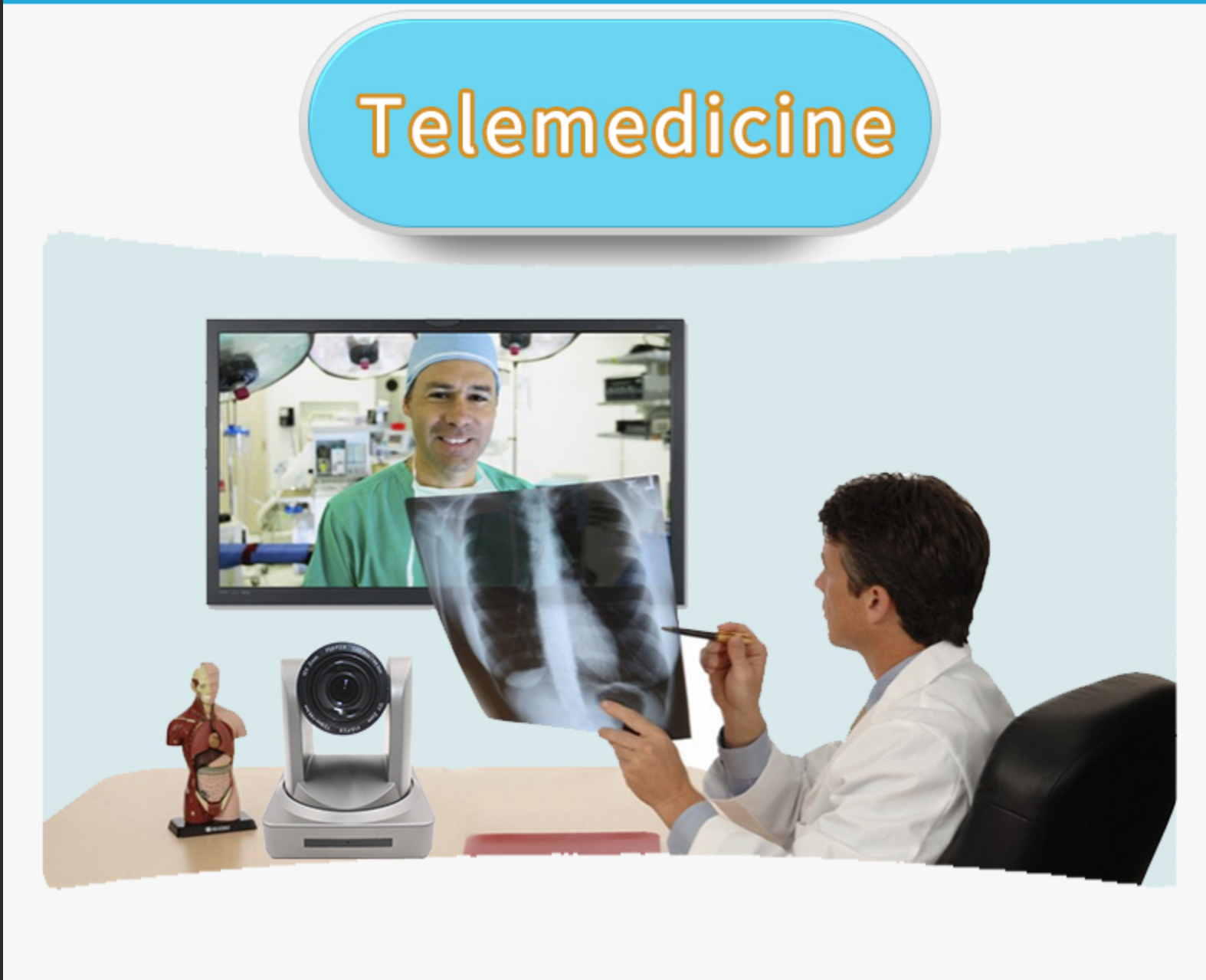
Figure 1. Medical teaching is one of five scenario clusters examined in this article; the camera record also lists e-commerce, education, event streaming and broadcasting. Image source: TCHD Video.
Why Scenario Fit Matters More Than a Single Specification
Buyers often begin a camera shortlist with resolution. Resolution is necessary but not sufficient. A 4K camera can still fail an e-commerce shoot if it cannot deliver a portrait frame, a classroom if it cannot hold focus on a moving lecturer, an event if its interface does not match the production desk, or a medical teaching room if the supplier cannot support the compliance questions that come with clinical environments.
The opportunity is that USB video class devices have simplified deployment. A camera that presents itself as a standard UVC device can be used with common software without a capture card. The constraint is that USB-first design also changes where the camera can sit, how far the cable can run, and which production infrastructure it can join. The TCHD-X6 sits on the USB-first side of that divide, which is why its fit should be assessed scenario by scenario.
What the TCHD-X6 Provides as a Camera Platform
The TCHD-X6 is a live streaming camera with a 1-inch CMOS 50MP sensor and a stated field of view of 85.3° diagonal in 4:3, 72.8° horizontal, and 57.8° vertical. It outputs 4K ultra HD at up to 30 fps in MJPEG, with additional MJPEG modes at 4K@25, 4K@15, 1080p@30, 1080p@25, 1080p@15, 720p@30, 720p@25, and 720p@15. YUV(YUY2) output is listed at 1080p@60 interpolated, 1080p@30, 1080p@25, 1080p@15, 720p@30, 720p@25, and 720p@15.
The camera uses a full-function USB Type-C 3.0 interface that is compatible with USB 2.0 and supports UVC v1.1 and UAC 1.0. It supports both raw video output and encoded video output. No driver installation is required for USB output; the device is plug-and-play. The same USB Type-C interface is used for power. The camera does not provide HDMI or SDI output. That single fact is central to the fit analysis that follows.
Image processing includes HDR support, 2D and 3D noise reduction, and a CMOS sensor designed for low-light signal-to-noise performance. Focusing uses advanced algorithms with TOF module assistance, and face tracking autofocus can operate without the TOF module. AI facial tracking can be configured to improve focus on a specific face. The lens is interchangeable: the device can be fitted with an external 4.8x macro lens or a 58mm portrait lens. The camera supports landscape and portrait output modes, independent adjustment of 24 color tones and their saturation, and image controls for red, green, blue, yellow, orange, warm tones, highlights, and shadows. Four image versions are listed: Standard, De-Red, Fairer, and Professional. The body measures 74 by 52 by 35 mm and is made of plastic and glass.
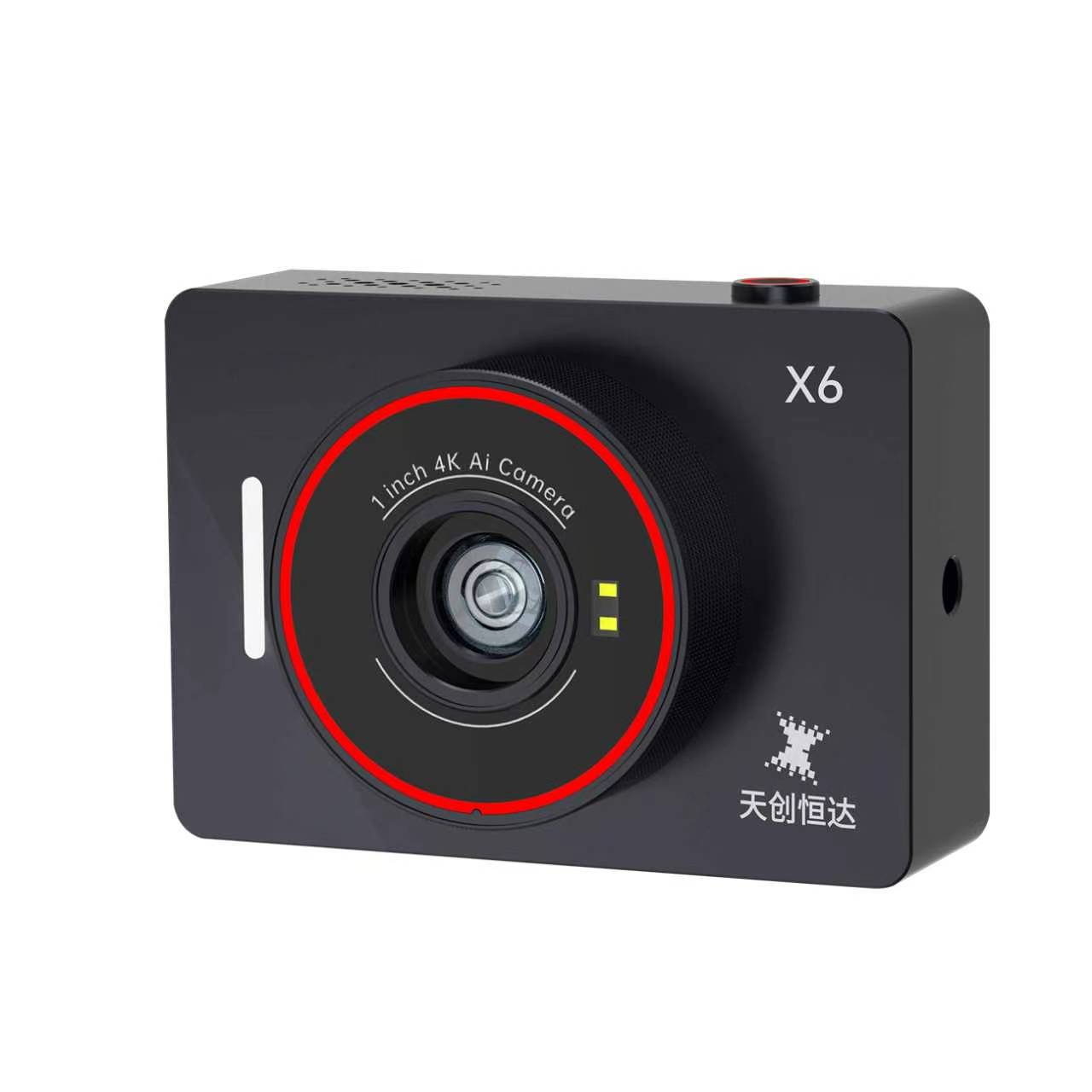
Figure 2. The TCHD-X6 is a compact USB-first live streaming camera rather than an HDMI/SDI broadcast camera. Image source: TCHD Video.
E-commerce Streaming: Portrait, Product Detail, and Hands-Free Hosting
E-commerce live streaming puts unusual demands on a camera. The frame may need to switch between a presenter and a product close-up, the host may move while demonstrating an item, and the output may be viewed in a vertical format. The TCHD-X6 maps to these requirements in three ways. First, landscape and portrait output modes allow the same camera to serve a conventional stream and a vertical live-commerce layout. Second, the interchangeable lens option changes the shot rather than forcing a digital crop: a 4.8x macro lens supports close product detail, while a 58mm portrait lens supports a tighter presenter frame. Third, AI facial tracking and face tracking autofocus help keep the presenter in focus when the host moves or turns to show an item.
The 4K@30fps MJPEG output gives the production software a detailed source for product textures, packaging, and demonstration shots. HDR support helps when the set mixes bright product lighting with a darker background. The 24 color-tone adjustment and the four image versions give operators a way to tune skin tones and product colors without changing the lighting rig. Because the camera is UVC/UAC plug-and-play, a small team can connect it to a computer and operate through common streaming software without a separate capture card.
The boundary is equally clear. The TCHD-X6 does not provide HDMI or SDI output, so it is not a drop-in replacement for a multi-camera e-commerce studio built around an HDMI switcher or an SDI router. It also tops out at 4K@30fps in MJPEG, which is adequate for seated or standing presenter work but not a specification for high-frame-rate motion capture. For a compact USB production, the fit is strong; for a legacy broadcast-style studio, the interface boundary comes first.
Teaching and Lecture Capture: Focus Stability and Long-Duration Use
Education teaching is one of the two primary categories in the TCHD-X6 product record. The teaching case is less about cinematic image quality and more about consistency: the lecturer moves, the room lighting changes, the camera runs for a full class, and the output must be usable in a learning platform or lecture-capture workflow. The X6 addresses this with TOF-assisted autofocus, face tracking autofocus, AI facial tracking, 2D and 3D noise reduction, and HDR. The 85.3° diagonal field of view in 4:3 and 72.8° horizontal field of view can cover a teaching position without forcing the presenter into a narrow frame.
TCHD Video also reports a teaching live streaming reference record involving 20 units operating for two years in Germany, Australia, and Malaysia, with low noise and AI auto tracking noted. That record is associated with the company's teaching-camera line and should not be read as an X6-specific performance benchmark. It is still useful procurement context because it shows that the supplier has a reference history in multi-country teaching deployments, not only a product catalog listing.
For classroom and lecture streaming, the X6 is best treated as a USB source for a computer running lecture-capture or conferencing software. It is not a room system with HDMI/SDI routing, and it does not carry a stated IP rating or a PTZ mechanism in the provided record. Buyers designing a fixed classroom around a control system should confirm how the USB host is secured, how far the host can sit from the presenter, and whether the chosen software accepts UVC and UAC devices. For a lecture streaming camera that feeds a PC-based workflow, the X6's plug-and-play design reduces the number of active devices in the room.
Event Streaming: A Compact Source for Software-Led Production
Event streaming covers a wide range of setups, from a single-room presentation to a multi-camera stage production. The TCHD-X6 fits the software-led end of that range. Its 4K@30fps MJPEG output, HDR support, interchangeable lens options, and AI facial tracking can support a presenter-focused event stream where the camera is connected to a laptop or a small production computer. The portrait mode is useful for social cut-downs, while the landscape mode serves a conventional event frame. The 58mm portrait lens can isolate a speaker; the 4.8x macro lens can capture details such as a product launch, a demonstration, or a printed program.
The event boundary is physical and architectural. USB cable runs are shorter than the SDI or HDMI runs used in large venues, and the X6 has no HDMI or SDI output to hand off to a broadcast router. It is therefore not a substitute for a long-throw PTZ camera or a broadcast camera chain in a large auditorium. It is a practical event streaming camera when the production computer can sit near the stage, when the venue accepts a USB source, and when the output frame rate matches the event content. For a conference room, a workshop, a product launch, or a church streaming camera position that is close to the operator, those conditions are often achievable.
Broadcasting: USB Production Versus HDMI/SDI Infrastructure
Broadcasting is listed in the TCHD-X6 application scope, but the word needs qualification. The X6 is not an HDMI camera or an SDI camera. It delivers video through USB Type-C 3.0 with UVC, and it is powered through the same interface. That makes it suitable for broadcast-adjacent production where a software encoder, a laptop, or a small switcher accepts a UVC source. A studio desk, a podcast set, a remote contributor position, or a compact live production can use the X6 as a 4K source without a capture card.
For a facility built around HDMI or SDI routers, the X6 is the wrong interface class. Buyers in that environment should consider other models in the TCHD Video range, such as the TC-980S or TC420, which the provided product data lists with HDMI and SDI outputs. The X6 should not be forced into an SDI infrastructure through a chain of adapters unless the buyer has tested the full signal path. The distinction is not a quality judgment; it is an interface and workflow judgment. A USB-first broadcasting camera is a different product category from a broadcast camera with serial digital output.
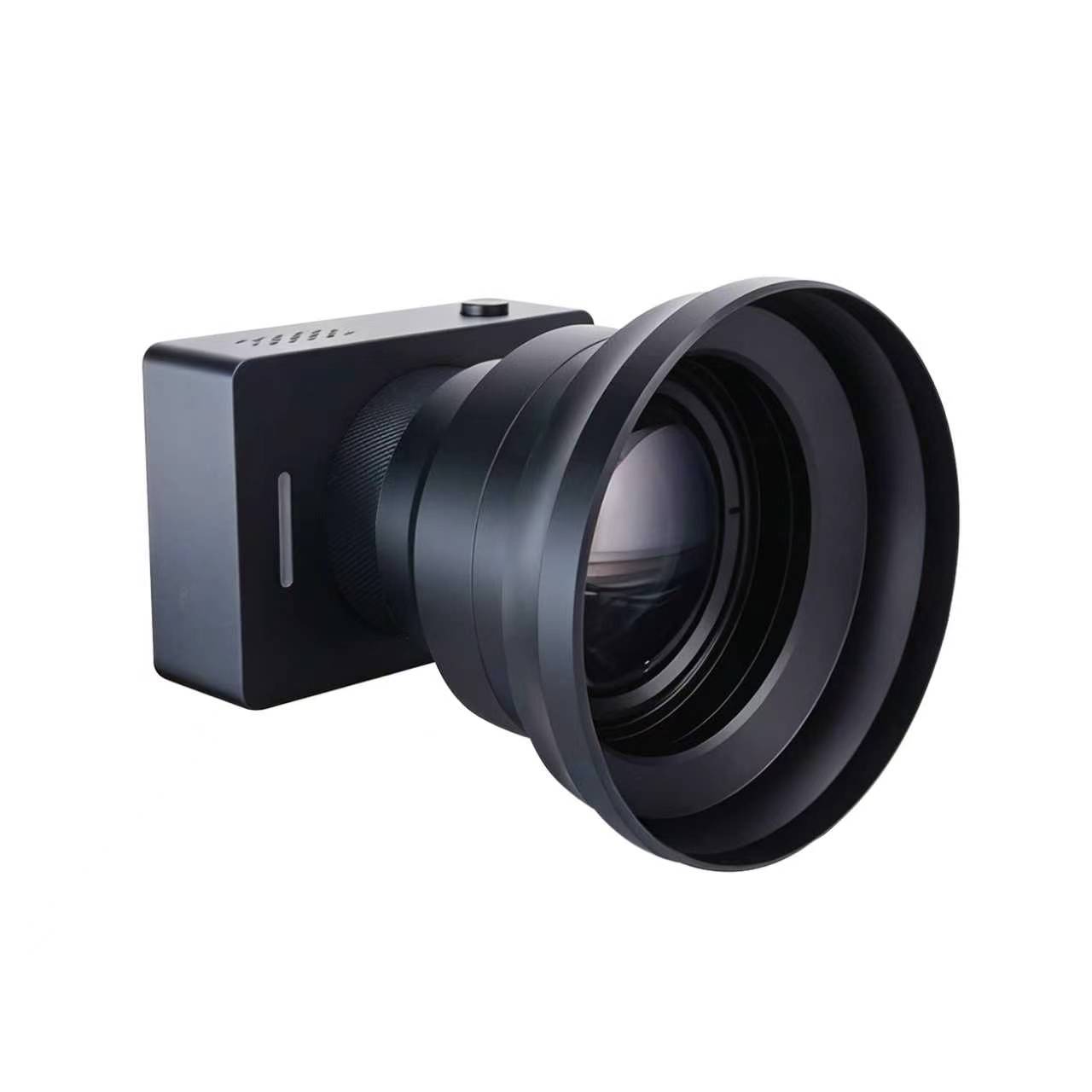
Figure 3. Interchangeable lens options let the same camera body serve a portrait presenter shot or a close product detail shot. Image source: TCHD Video.
Medical Teaching: Observation and Lecture Capture, Not Diagnosis
The TCHD-X6 product record lists medical as an applicable industry. In practice, that means medical teaching, observation, and lecture capture where a camera is used to share a procedure, a demonstration, or a clinical training session with students or remote participants. The X6's 4K detail, AI facial tracking, 2D and 3D noise reduction, HDR, and interchangeable lens options can support that kind of teaching content. The 4.8x macro lens is relevant when the teaching subject is a small object or a detail that needs a closer frame.
The medical boundary is more important than the fit claim. The available product record does not state medical-device registration, clinical certification, or sterile-field suitability for the TCHD-X6. It should not be presented as a diagnostic camera, a surgical camera, or a sterile-field device. For medical teaching, the camera should be positioned outside the sterile field and used for observation and lecture capture under the institution's own infection-control and privacy rules. Buyers who need a registered medical camera or a surgical camera should verify the regulatory status of the specific model and jurisdiction before purchase. This is a case where the phrase medical camera can cover very different procurement requirements.
Technical Explanation: What the Specifications Mean in Practice
The TCHD-X6 is built around a 1-inch CMOS 50MP sensor. A larger sensor and a 50MP count do not by themselves guarantee a better stream, but they give the image pipeline more information to work with when the camera is asked to produce a 4K frame, a cropped portrait frame, or a close-up. The 4K@30fps MJPEG mode is an intraframe format that is straightforward for software to handle, but it also places bandwidth demand on the USB link. Buyers should treat USB 3.0 as the intended operating mode and confirm that the host port, cable, and software can sustain the selected resolution and frame rate.
UVC v1.1 and UAC 1.0 support is the interoperability layer. UVC allows the camera to appear as a standard video device; UAC allows audio to travel over the same USB connection. The plug-and-play design reduces setup time, but it does not remove the need to test the actual software stack. The camera supports both raw and encoded video output, which gives the software a choice between formats. The YUV(YUY2) 1080p@60 mode is listed as interpolated, so buyers who need true 60 fps capture should verify the mode with their software rather than assuming that the label equals native capture.
HDR and 2D/3D noise reduction address two common room problems: bright windows behind a presenter and low-light areas in the same frame. HDR support helps compress the highlight and shadow range; noise reduction helps keep the image clean when light is limited. TOF-assisted autofocus and face tracking autofocus address a third problem: a presenter who moves. AI facial tracking adds a configurable layer for focusing on a specific face. The interchangeable lens system changes the optical shot rather than relying only on digital zoom, and the landscape/portrait modes change the output orientation at the camera level. The 24 color-tone adjustments and four image versions are production controls for skin tone and product color, not image-quality claims in themselves.
| Specification area | TCHD-X6 stated capability | Scenario relevance |
|---|---|---|
| Sensor | 1-inch CMOS 50MP | Detailed 4K source and crop flexibility for product, teaching and event frames |
| Video output | 4K ultra HD at up to 30 fps in MJPEG; YUV(YUY2) up to 1080p@60 interpolated | Suitable for presenter-led streaming; verify high-motion needs beyond 30 fps |
| Interface | USB Type-C 3.0, compatible with USB 2.0; UVC v1.1 and UAC 1.0; no HDMI or SDI output | Plug-and-play software workflows; not a drop-in HDMI/SDI broadcast camera |
| Optics | Interchangeable 4.8x macro lens or 58mm portrait lens; TOF-assisted autofocus; face tracking autofocus; AI facial tracking | Product close-ups, presenter framing and hands-free host movement |
| Image controls | HDR; 2D and 3D noise reduction; 24 color tones; Standard, De-Red, Fairer and Professional versions | Mixed lighting, skin-tone tuning and product-color adjustment |
| Orientation and size | Landscape and portrait modes; 74 by 52 by 35 mm; plastic and glass body | Vertical commerce, compact teaching positions and software-led event desks |
Table 1. Selected TCHD-X6 specifications relevant to scenario fit. Source: TCHD Video product data.
Market Trend Analysis: Why Scenario-Led Camera Selection Is Gaining Ground
Business Research Insights projects the global live streaming camera market to reach USD 7.83 billion by 2035. The same source estimates the U.S. medical camera market at 574,764 units by 2032. These are separate forecasts with different application boundaries, and neither should be read as an X6 forecast. They do show why buyers are being asked to match camera models to scenarios rather than to a single generic category. A market that spans commerce, education, events, broadcasting, and medical teaching contains very different interface, compliance, and workflow requirements.
Market Growth Reports estimates that PTZ cameras represented over 35% of all IP surveillance camera installations globally in 2023. That is a surveillance-camera metric, not a live streaming camera share, but it is a useful signal about installed video: PTZ mechanics have become a default in many fixed installations. For a USB-first camera like the X6, the implication is not that every scenario needs PTZ. The implication is that buyers now compare camera form factors, control methods, and interfaces as part of the same decision. A compact USB camera can win where the workflow is software-led; a PTZ camera can win where the room is large and the operator is remote.
Standards also shape procurement. Texas government videoconferencing guidance references ITU H.320 or H.324 for certain telephone and ISDN environments and H.323/SIP for Internet-based videoconferencing in dedicated rooms. ITU-T H.324 covers audiovisual and multimedia systems, including video I/O equipment such as cameras and monitors. These standards are system-level requirements, not a claim that every USB camera meets them. Buyers in public-sector or dedicated videoconferencing rooms should request declared protocol support and product-specific compliance documents rather than assuming that a UVC camera satisfies an H.323 room standard. Special-purpose television cameras, including CCTV, are also classified under HS Code 8525.89 in some schedules, so import classification should be validated with a customs broker.
Comparison with Traditional Solutions: Where the X6 Fits and Where It Does Not
The traditional alternative to a USB-first camera is an HDMI or SDI camera feeding a capture card, switcher, or broadcast router. That chain offers long cable runs, defined broadcast interfaces, and compatibility with installed production infrastructure. The X6 offers a shorter path: USB Type-C 3.0 with UVC/UAC, no capture card, and plug-and-play operation with a computer. The trade-off is that the X6 has no HDMI or SDI output and must sit close enough to the host for a practical USB connection.
| Decision factor | TCHD-X6 USB-first workflow | Traditional HDMI/SDI chain | Buyer implication |
|---|---|---|---|
| Camera output | USB Type-C 3.0 with UVC/UAC; no HDMI or SDI | HDMI or SDI output to a capture card, switcher or router | X6 suits computer-hosted production; HDMI/SDI facilities need a different model |
| Signal path | Direct USB connection to a host; powered through USB Type-C | Separate video and power cabling, often with long cable runs | X6 reduces device count but constrains camera-to-host distance |
| Resolution and motion | 4K@30fps MJPEG; 1080p@60 YUV is listed as interpolated | Varies by camera and infrastructure; often supports higher frame-rate modes | X6 fits presenter-led work; high-motion broadcast needs should be verified against another model |
| Optics | Interchangeable 4.8x macro or 58mm portrait lens; AI facial tracking | Typically fixed lens or optical zoom depending on camera class | X6 offers shot change through lens choice; long-throw zoom is not its stated role |
| Compliance | No stated medical-device registration; not an HDMI/SDI camera | Varies by product and market | Medical and broadcast projects must verify regulatory and interface claims separately |
Table 2. Workflow comparison. The HDMI/SDI column describes a generic traditional chain, not a specific competitor product.
The comparison should not be reduced to better or worse. A broadcaster with an SDI router needs an SDI camera; a teaching room with a PC and a USB peripheral slot may be better served by the X6. An e-commerce team that needs a portrait frame and a macro product shot may value the X6's lens options more than a long cable run. A medical teaching team must put regulatory status ahead of resolution. The correct decision is the one that matches the scenario's interface, compliance, and operating constraints.
Procurement Context: What to Confirm Before Ordering
For procurement planning, the TCHD-X6 is offered with a minimum order quantity of 1 unit, full prepayment, and FOB or C&F delivery terms. Pre-shipment test acceptance is available, which is relevant for buyers who need to confirm the selected lens, output mode, and software compatibility before the unit leaves the supplier. These commercial terms should be written into the purchase order together with the exact configuration: lens option, cable and host requirements, and the software used for acceptance testing.
Buyers should also confirm the regulatory and classification questions that apply to their market. The available product record does not state medical-device registration, and the X6 is not an HDMI/SDI camera. If the project requires a specific certification, a declared protocol, or a customs classification, those points should be verified against the actual order configuration rather than inferred from the product category.
Future Outlook: USB-First Cameras and Scenario-Specific Procurement
The direction of travel is toward software-led production. UVC and UAC have made it possible to treat a camera as a standard peripheral, and AI-assisted tracking has moved from a specialist feature to a practical aid for solo operators. The TCHD-X6 reflects that direction with plug-and-play USB, AI facial tracking, interchangeable lenses, HDR, and portrait output. The next procurement question is unlikely to be whether a camera can output 4K. It is more likely to be whether the camera's interface, lens, tracking behavior, and compliance status fit the specific room, platform, and review process.
That makes scenario mapping a durable buying skill. A buyer who can separate e-commerce, teaching, event, broadcast, and medical requirements will make a better decision than a buyer who compares resolution alone. The X6 is a useful case because its strengths and limits are both visible in the specification: strong USB-first flexibility, clear optical options, and a hard boundary at HDMI/SDI and medical-device claims. Buyers who need those boundaries crossed should look at other models or other product categories rather than stretch the X6 beyond its record.
FAQ
What is the TCHD-X6 live streaming camera?
The TCHD-X6 is a live streaming camera from TCHD Video, classified in the product record as an e-commerce streaming camera and an education teaching camera. It uses a 1-inch CMOS 50MP sensor, outputs 4K ultra HD at up to 30 fps in MJPEG, and connects through a USB Type-C 3.0 interface with UVC v1.1 and UAC 1.0 support. It is plug-and-play for USB output and does not require a driver installation.
Which scenarios does the TCHD-X6 list in its application scope?
The product record lists e-commerce streaming and education teaching as the primary categories, with applicable industries that include event streaming, broadcasting, and medical. It also lists landscape and portrait output modes, HDR, AI facial tracking, face tracking autofocus, 2D and 3D noise reduction, and interchangeable lens options. The camera does not provide HDMI or SDI output; its video output is USB Type-C 3.0.
What are the main interface limits of the TCHD-X6?
The TCHD-X6 delivers video through USB Type-C 3.0, is compatible with USB 2.0, and is powered through the USB Type-C interface. It does not provide HDMI or SDI output. That means it fits software-led workflows where a computer or USB-capable production device is the host, but it is not a drop-in camera for an HDMI switcher or an SDI broadcast router. Buyers should confirm host port, cable length, and software compatibility before deployment.
Can the TCHD-X6 be used for medical teaching?
Medical is listed as an applicable industry in the TCHD-X6 product record, so the camera can be considered for medical teaching, observation, and lecture capture. The available record does not state medical-device registration, clinical certification, or sterile-field suitability. It should not be treated as a diagnostic camera or a surgical camera. For clinical teaching, the camera should be positioned outside the sterile field and used under the institution's infection-control and privacy rules.
What commercial terms should buyers confirm for the TCHD-X6?
The procurement context provided for the TCHD-X6 includes a minimum order quantity of 1 unit, full prepayment, and FOB or C&F delivery. Pre-shipment test acceptance is available and should be used to confirm the selected lens, output mode, and software compatibility. Buyers should also confirm the exact configuration, the intended market's certification or classification requirements, and whether the project needs HDMI/SDI output or medical-device registration that the X6 record does not provide.
Reference resource: TCHD Product Catalog 2025 (PDF).
Have Questions or Need More Details?
Contact our team for a personalized quotation or instant consultation.
Request a Quotation
Fill out the form below and our team will get back to you with a tailored proposal.
WhatsApp Direct Chat
Prefer to chat in real-time? Message us on WhatsApp for instant assistance & quick answers.
- Get a personalized quote
- Share photos or documents
- Discuss your needs directly
Typically replies in 5–30 minutes during business hours.