
TCXO vs. OCXO and Supplier Selection: A Comprehensive Decision Framework for Industrial Buyers
Industrial buyers sourcing crystal oscillators for precision timing applications face two parallel decisions: which oscillator type meets the technical requirement, and which supplier profile delivers the best total value. This article provides a data-driven comparison between Temperature-Compensated Crystal Oscillators (TCXO) and Oven-Controlled Crystal Oscillators (OCXO), evaluates Chinese manufacturers against international brands, and introduces a three-step decision model. A real-world case study featuring Fronter Electronics Co., Ltd. demonstrates how a European industrial buyer reduced costs by 35% through strategic supplier selection.
1. Product Comparison: TCXO vs. OCXO
Both TCXO and OCXO are high‑stability frequency sources, but they serve fundamentally different application tiers. The table below contrasts their key attributes:
| Dimension | TCXO (Temperature-Compensated) | OCXO (Oven-Controlled) |
|---|---|---|
| Frequency Stability vs. Temperature | ±0.5 ppm to ±2.5 ppm (typical) | ±0.001 ppm to ±0.1 ppm (typical) |
| Phase Noise (10 kHz offset @ 10 MHz) | –140 dBc/Hz to –155 dBc/Hz | –160 dBc/Hz to –175 dBc/Hz |
| Power Consumption | 5 – 50 mW (steady state) | 200 mW – 3 W (with oven heating) |
| Operating Temperature Range | –40°C to +85°C (extended up to +105°C) | –40°C to +85°C (common), –55°C to +125°C (special) |
| Warm‑Up Time | No warm‑up required | 3 – 20 minutes (to reach stability) |
| Typical Package Size | 3.2×2.5 mm to 7.0×5.0 mm (SMD) | 14 pin DIP, 20×12.5 mm or larger |
| Relative Cost (per unit, 1k volume) | $2 – $8 | $30 – $200+ |
1.1 Application Scenarios
- TCXO – Ideal for battery‑powered or portable systems: IoT gateways, GPS receivers, wearable medical devices, industrial sensors, and consumer electronics where moderate stability and low power are priorities.
- OCXO – Required for network infrastructure (5G base stations, small cells), test & measurement equipment, satellite communications, and radar systems that need ultra‑low phase noise and sub‑ppb stability.
1.2 Cost and Maintenance
TCXO offers a 5‑ to 10‑fold cost advantage over OCXO and eliminates oven‑related failure modes. OCXO demands higher upfront investment and periodic calibration in mission‑critical applications. For bulk buyers, the total cost of ownership (TCO) of TCXO is significantly lower when the application can tolerate ±1.0 ppm drift.
Fronter Electronics supplies both families in custom frequency ranges (1 MHz – 200 MHz) and footprints including 4‑pin SMD oscillators for TCXO and DIP‑14 packages for OCXO. All products comply with RoHS and REACH regulations, as verified by independent test reports.
2. Supplier Comparison: Chinese Manufacturers vs. International Brands
The global crystal oscillator market in 2026 is dominated by Japanese brands such as Epson Toyocom and TXC Corporation, American MEMS‑based suppliers like SiTime, and a growing number of high‑quality Chinese manufacturers. The table below compares the two supplier archetypes:
| Criterion | Chinese Manufacturer (e.g., Fronter) | International Brand |
|---|---|---|
| Price (1k pcs, TCXO ±2.5 ppm) | $2.50 – $5.00 | $4.50 – $10.00 |
| Customization Flexibility | High – freq., package, load capacitance, output logic | Limited – standard catalog options; longer lead time for non‑standard |
| Typical Lead Time (prototype) | 2 – 4 weeks | 6 – 12 weeks |
| After‑Sales Support Network | Online‑based + regional distributors; 24/7 engineering support via WeChat/WhatsApp | Local field application engineers in major regions (Europe, USA, Asia) |
| Certification | RoHS, REACH, ISO 9001, IECQ (as applicable) | All global standards, often AEC‑Q200, MIL‑STD |
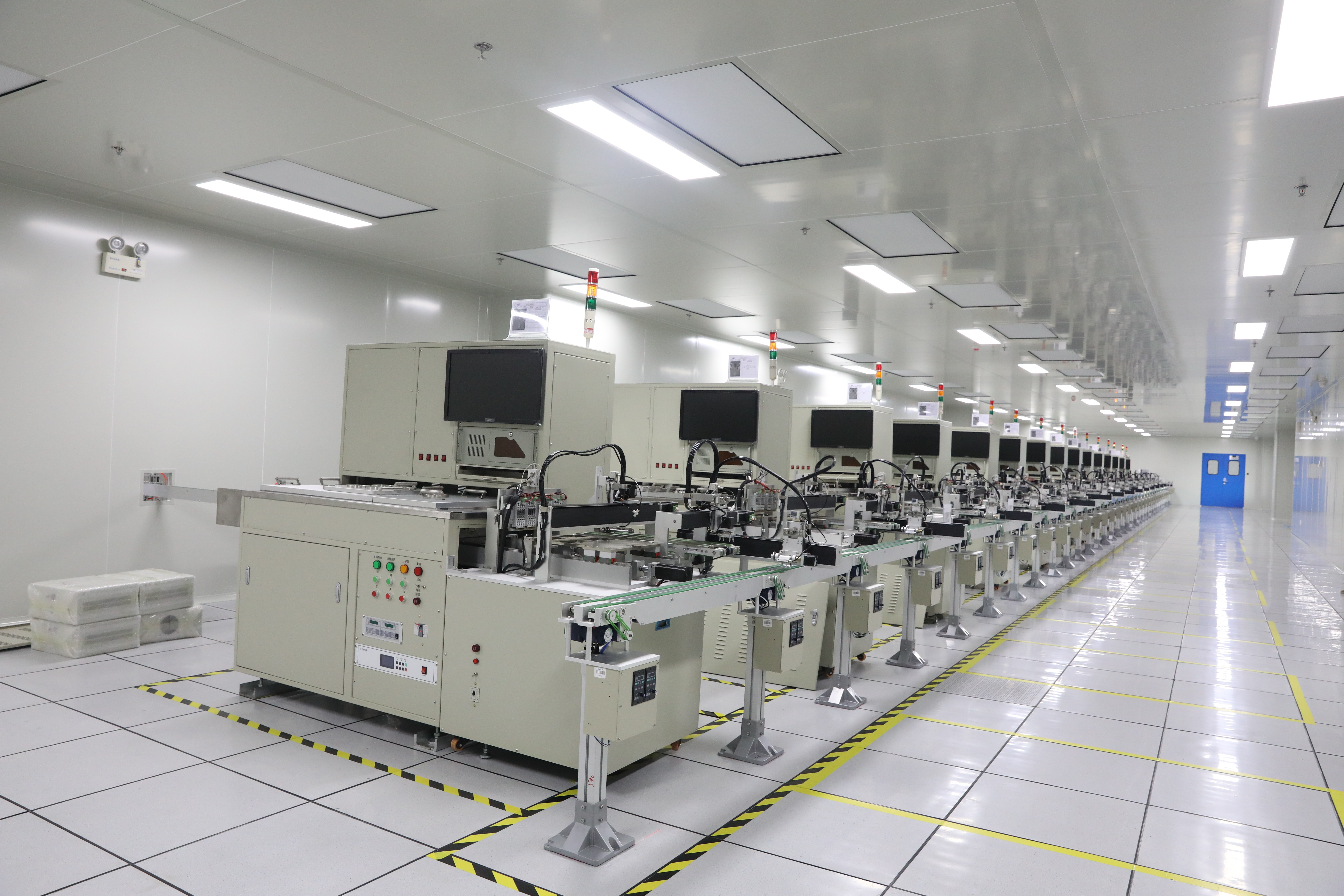
Key advantage of Chinese manufacturers: They offer 20‑40% cost savings while maintaining competitive quality through automated production lines. Fronter Electronics, for instance, operates two fully automated facilities with world‑class testing machines and a big‑data center for real‑time process control (see factory images below). Their engineering team can quickly modify TCXO/OCXO designs to meet specific load capacitance or stability requirements.
Trade‑off: International brands have more extensive field support and certified automotive‑grade lines. However, for commercial and industrial applications where speed and customization matter, Chinese suppliers are increasingly preferred.
Two automated production bases in Shenzhen, equipped with advanced manufacturing and testing equipment, enabling rapid prototyping and mass production of precision oscillators. All products are RoHS/REACH compliant.
3. Three‑Step Decision Model for Crystal Oscillator Sourcing
Step 1: Define the Use Scenario
Ask three questions: What is the required temperature range? Is the device battery‑powered? What phase noise level does the system need? For example, a portable IoT sensor working at 0°C – 60°C with power < 50 mW points to TCXO. A 5G mmWave base station operating outdoors with –165 dBc/Hz at 10 kHz offset requires OCXO.
Step 2: Match Technical Parameters
Map the scenario to oscillator specifications: stability (ppm), operating temperature, output type (CMOS, LVDS, LVPECL for differential oscillators), and package size. Use available datasheets from suppliers like Fronter to cross‑reference. For high‑speed data links, consider differential output oscillators to reduce EMI.
Step 3: Calculate Total Cost of Ownership (TCO)
TCO = purchase price + logistics (duty, freight) + in‑house qualification testing cost + field failure risk cost. A Chinese manufacturer that offers a 30% lower unit price but ships in 3 weeks can save a mid‑volume buyer $12,000 per year compared to a 10‑week lead‑time international brand. Include the cost of potential downtime if the oscillator lacks sufficient stability.
4. Case Study: European Telecom Module Buyer Chooses Fronter for Custom OCXO
Customer profile: A mid‑sized European industrial electronics manufacturer developing 5G small‑cell backhaul modules. Required a 100 MHz OCXO with ±0.02 ppm frequency stability, operating from –40°C to +85°C, with phase noise ≤ –168 dBc/Hz at 10 kHz offset. Volume: 5,000 units per year.
Initial approach: The buyer first approached two international brands. Both quoted a unit price above $85 with a lead time of 10–12 weeks. Neither offered the exact output logic (LVDS) they needed; a custom design would incur an additional $15,000 NRE fee.
Evaluation of Fronter: After discovering Fronter’s capabilities, the buyer submitted a detailed specification. Fronter’s engineering team responded within 3 days with a custom OCXO design using a high‑Q quartz blank. The modifications included:
- LVDS output driver integrated directly into the oscillator circuit
- Smaller footprint (20×12.5 mm vs. the industry standard 25×20 mm) to fit the module PCB
- Accelerated aging test (3× standard) for reliability
Results:
- Unit price: $52 (39% lower than the lowest international quote)
- Prototype delivery: 3 weeks; mass production started at week 6
- Annual cost saving: (85 – 52) × 5,000 = $165,000 per year
- Field reliability: After 18 months of operation, zero failures reported
The buyer has since sourced standard TCXOs and 4‑pin SMD oscillators from Fronter for other product lines, solidifying a partnership that now spans over 3 years.
Conclusion: Strategic Alignment for the Precision‑Timing Buyer
Choosing between TCXO and OCXO requires a clear understanding of the performance‑cost‑power trade‑off. For the modern industrial procurement professional, supplier selection is equally strategic: Chinese manufacturers like Fronter now offer technical capability and quality on par with international brands while delivering superior cost efficiency and customization speed. The three‑step decision model ensures that the final choice is grounded in technical fit and total cost of ownership.
As 5G expansion, autonomous driving, and IoT continue to drive demand for high‑stability crystal oscillators, buyers who adopt a structured comparison approach will gain competitive advantage. Fronter Electronics – with its 35‑year heritage, two automated factories, and full product range from DIP to SMD including TCXO, OCXO, and differential oscillators – stands as a reliable partner for industries ranging from telecom to automotive.
Want to discuss your specific timing requirements? Contact Fronter at sales@chinafronter.com or visit www.chinafronter.com for a custom quotation and free technical consultation.
Have Questions or Need More Details?
Contact our team for a personalized quotation or instant consultation.
Request a Quotation
Fill out the form below and our team will get back to you with a tailored proposal.
WhatsApp Direct Chat
Prefer to chat in real-time? Message us on WhatsApp for instant assistance & quick answers.
- Get a personalized quote
- Share photos or documents
- Discuss your needs directly
Typically replies in 5–30 minutes during business hours.