
TOBECAN IMPORTCLEAR: 7-Meter Cargo Cleared to UAE in 12 Hours
Air freight capacity is the visible half of an urgent import. The customs file is the half that decides whether the cargo lands on the date the buyer has already promised to a customer. A documented 2026 project moved a nearly seven-metre-long, indivisible oversized unit from Shenzhen through Hong Kong to the United Arab Emirates by air — and completed destination customs clearance and delivery within twelve hours of landing.
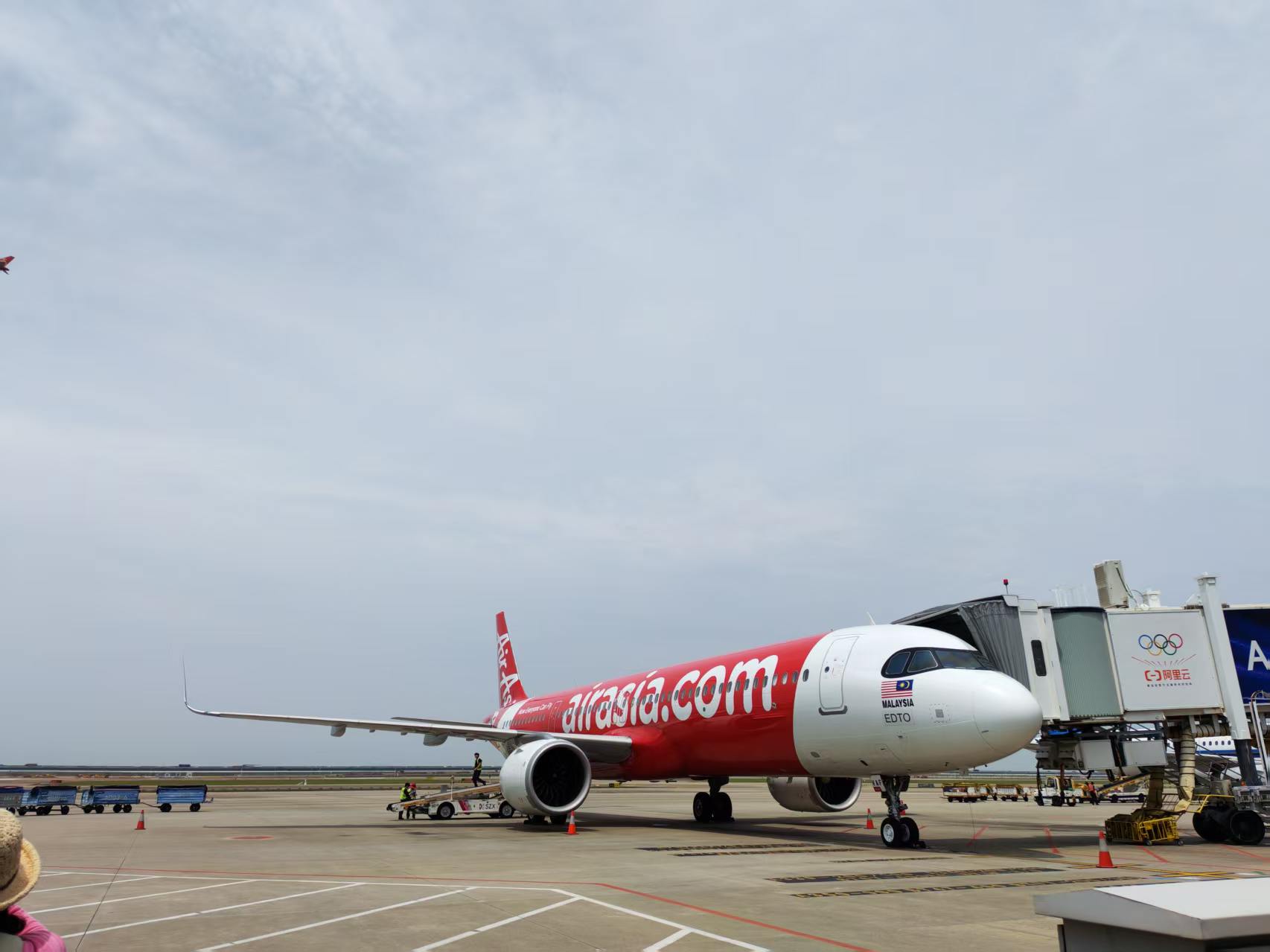
Clearance speed, not capacity, is what sets the delivery date
Two shipments can leave the same warehouse on the same day and arrive days apart. The difference is rarely the flight. It is the release at the destination — the declaration, the inspection decision, the completeness of the document set, and the speed with which an irregularity is resolved once the aircraft is on the ground.
Oversized, indivisible cargo makes that difference impossible to hide. When a unit is too long for standard air cargo pallet configurations and its dimensions are fixed, the importer loses the usual fallbacks: the cargo cannot be split across several flights, repacked into smaller handling units, or quietly re-routed. The failure modes that remain are the familiar ones in this trade — non-compliant declarations, inspection delays, fee structures that only become clear after arrival, and a lack of transparency once the shipment has been handed over.
TOBECAN IMPORTCLEAR FREIGHT LTD is a Hong Kong-based freight forwarding and customs clearance company, trading as importclear, founded in 2001. Its import clearance service covers HS code and tariff lookup, 13-digit CIQ code lookup, regulatory requirement consultation, documentation handling, declaration and release, door-to-door clearance and landed cost calculation for goods entering Mainland China or Hong Kong. The company's published case record includes the UAE oversized-cargo project examined below — a useful reference point precisely because the cargo was the kind most providers decline.
The project: nearly seven metres, fixed dimensions, fixed deadline
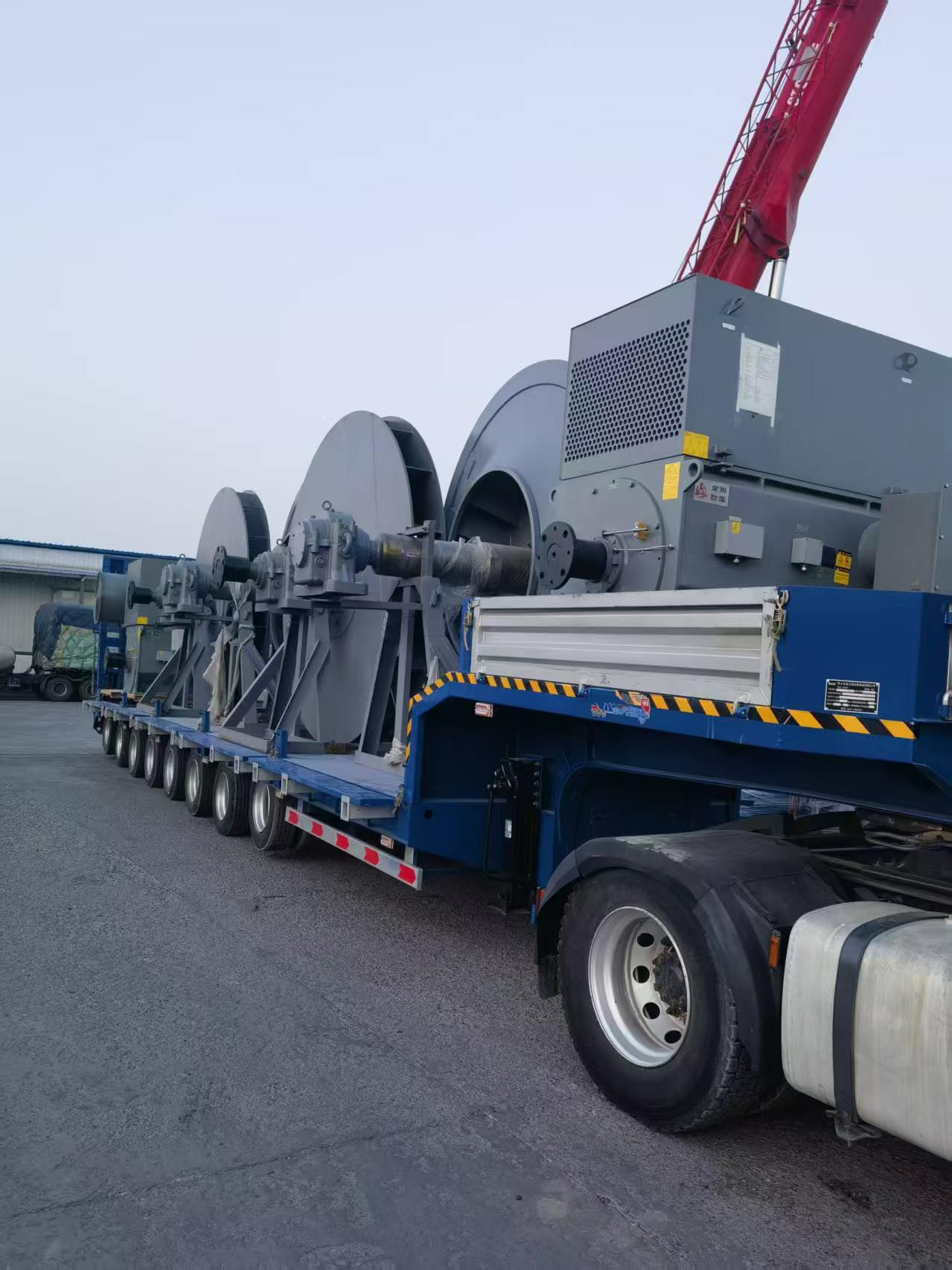
The shipment originated with a foreign trade factory in the construction industry, based in the Asia-Pacific region. The unit measured close to seven metres in length and roughly 0.6 metres in height. Those dimensions exceed standard air freight parameters, and because the cargo was dimensionally fixed, it had to move as it was.
| Element | Detail |
|---|---|
| Client industry | Construction industry |
| Client type | Foreign trade factory |
| Client region | Asia-Pacific |
| Cargo | Oversized cargo, nearly 7 m long, approximately 0.6 m high; dimensions fixed and not splittable |
| Routing | Goods received in Shenzhen, transshipped to Hong Kong for air uplift, direct flight to the United Arab Emirates |
| Mode | Air freight with destination customs clearance, pickup and last-mile delivery |
| Recorded project duration | 3 days end to end |
Before the project reached TOBECAN IMPORTCLEAR, the client had approached a number of industry peers. According to the case record, they declined the air option on first enquiry and pointed the client back to sea freight. On its face, that advice was defensible: sea freight to the Middle East is normally the lower-cost choice, and for cargo of this size it is the default assumption. The problem was the calendar. The case notes that regional terminals were operating at capacity, and that onward transshipment via Jebel Ali would have taken at least a month — longer than the delivery window the client had already committed to. The delivery risk sat at the destination end of the journey, in the clearance and handover stage, not in the air.
The four operating moves behind a twelve-hour release
The case record attributes the outcome to sequencing rather than to any single step. Each of the four moves below happened before the next one became urgent, which is the opposite of how clearance is often handled.
1. Pre-declaration completed before departure
As soon as the client's goods entered the warehouse, the information was verified in advance and the pre-declaration was completed. The case record is explicit that the file is not left until the flight takes off or until the cargo arrives at the port, because by then the correction window has already closed. For cargo with fixed dimensions and a fixed deadline, an error discovered on arrival cannot be absorbed by a later flight.
2. Pallet space and loading confirmation secured with the airline in advance
The planned route ran from Shenzhen, where the goods were received, to Hong Kong for uplift. The Hong Kong airline was contacted ahead of time to apply for a dedicated pallet space and loading confirmation for the oversized unit. The plan, according to the record, was finalised in two hours. Loading was then completed and the aircraft departed around noon on a direct flight to the United Arab Emirates. Securing pallet approval in advance is what converts an oversized shipment from an exception at the ramp into a scheduled loading.
3. Local pickup triggered by the arrival notice, not by office hours
Once the cargo landed and the arrival notice was received, local colleagues coordinated pickup and remained at the airport to follow each step. The case documentation describes a typical sequence in which cargo arriving in the morning is sorted by noon, pulled back to the overseas warehouse in the afternoon, and delivered on the last mile by evening. The point is not the specific timetable but the trigger: the local team moves on the arrival notice, not on the next business day.
4. On-site coordination while the file is still open
The local customs clearance team works in real time with customs, tracking inspection progress and resolving issues on the spot rather than allowing them to carry overnight. Where a priority inspection or an additional document is required, the team coordinates directly on site, supplying what is missing to keep processing time close to that of ordinary cargo. This is the step that most often decides whether a declared twelve-hour target survives contact with an inspection notice.
The systems that make pre-declaration possible
Pre-declaration is a process, but it depends on tooling. The company's capability record lists a proprietary commodity regulatory database engine, an intelligent cost calculation algorithm, customs data real-time synchronisation middleware, an OCR document recognition system, and a cloud service background framework. The technical layer that supports classification and costing includes HS code lookup, 13-digit CIQ code lookup, landed cost calculation and national GB standards lookup — the tools that determine whether a document set is complete before it is filed rather than after it is questioned.
The credential set listed for the company comprises NVOCC, IATA, WCA, JCTRANS, OLO, ISEA, WIFFA and HAFFA. Two of these bear directly on an oversized air shipment: IATA accreditation governs the relationship between a forwarder and airlines for air cargo, and NVOCC status relates to ocean carriage as a non-vessel operating common carrier. For a buyer evaluating a claimed capability, the practical question is narrower than the badge list — it is whether the accreditation covers the mode actually being used on their shipment, and whether the provider can evidence execution rather than membership.
Supporting operating facts from the same record: the company reports more than 23 years of logistics solution experience, 88 employees including 12 engineers, a 10,000 m² footprint, an annual throughput reported at 8,000 TEUs and an export ratio of 70%, with main markets in the EU, USA, Hong Kong and China. Its service scope spans sea freight (FCL and LCL), air freight solutions, inland trucking, customs clearance and DDP/DDU handling, plus D/O release service in Vietnam, China and Hong Kong. Coverage extends to all China seaports and airports, with branches handling nationwide clearance in Hong Kong, Shanghai, Beijing, Chengdu, Dalian, Guangzhou, Shenzhen, Xi'an, Hefei, Qingdao, Jinan, Xiamen, Wuhan, Chongqing and Fuzhou.
What the evidence supports — and where the boundary sits
The measurable outcomes recorded for this project are set out below. They are first-party case figures, reported by the provider rather than audited by an independent body, which is a limitation any buyer should carry into a comparison.
| Recorded outcome | Case figure | Comparison stated in the case record |
|---|---|---|
| Loading preparation time | 2 hours | Stated as 70% faster than peers |
| UAE airport customs clearance and delivery | Within 12 hours of arrival | Case record places the industry average at 3–5 days |
| Total project lead time | 3 days | — |
| Client's month-end delivery target | Met 12 days ahead of target | — |
| Air freight delivery window to the Middle East | Stable 4–7 days as described in the case narrative | Delivery counted from the customer's required delivery date, not from flight departure |
Limits and boundaries that apply to this evidence:
- The twelve-hour figure describes one clearance and delivery event in one market. It is a case record, not a service-level guarantee, and it should not be read as a standard turnaround for other cargo, other airports or other regulatory conditions.
- Oversized indivisible cargo depends on airline pallet availability and carrier approval. A route that accepted a nearly seven-metre unit may not accept a different dimension profile on the same schedule.
- Air freight is not the low-cost option for this cargo class. Where the schedule allows, sea freight remains the economical choice, and the case itself shows sea freight being proposed first by other providers.
- Inspection decisions rest with customs authorities. No provider can remove inspection risk; the controllable variable is the speed and completeness of the response to it.
- In the standard service scope, customs duties and taxes are payable by the client, international freight is usually billed separately, and legal or tax representation is not included without client authorisation.
- The performance metrics and the operating narrative originate from the provider's own documentation and client correspondence, including client feedback received via WhatsApp. They have not been independently audited.
The final point is the one most worth restating. A well-documented single project demonstrates that a sequence of steps is executable; it does not by itself demonstrate repeatability across a buyer's own lanes and commodity codes. That distinction is what separates capability evidence from marketing claims, and it is why the verification checklist further below focuses on what can be tested rather than what can be advertised.
Where this clearance model fits
The application scenarios most closely aligned with this operating profile are first-time imports, food and cosmetics requiring CIQ inspection, cold-chain or perishable goods, and urgent air shipments. The target client segments include cross-border e-commerce sellers, bulk importers, food, pharmaceutical and cosmetics importers, and first-time importers who may not have an internal compliance function.
The industries served span fresh and frozen food, pharmaceuticals and medical devices, watches, electronics and footwear, tobacco, cosmetics, apparel and textiles, machinery and furniture, printed matter, and chemicals and metals. That range matters for scenario fit, because the clearance difficulty in each of these categories comes from a different source: CIQ requirements and shelf life in food, registration and documentation in pharmaceuticals, valuation and product classification in electronics and apparel, and permitted handling and approvals in chemicals.
Equally, the model is a poor fit for some situations. Commodity cargo with a flexible delivery date is usually better served by sea freight economics. Cargo that can be legitimately split across multiple flights or containers rarely needs an oversized-air playbook. And importers whose product category is subject to licensing or registration that has not yet been obtained will find that no amount of clearance speed compensates for a missing approval — the constraint sits upstream of the broker.

Market context: why clearance capability is being re-priced
Three published data points explain why clearance execution has moved from a back-office function to a procurement criterion in China and Hong Kong trade.
First, the market itself is growing. Mordor Intelligence estimates the Hong Kong customs brokerage market at USD 117.52 million in 2025, projected to reach USD 159.06 million by 2030. In the same market, the competitive field includes global integrators and regional specialists such as FedEx, UPS, DHL, TIBA Group and CBIP Logistics, according to the same source.
Second, the volume base is large and still expanding. China's total import value reached USD 2.585 trillion in 2024, a 1.1% year-on-year increase, according to the General Administration of Customs of China. Cross-border e-commerce import and export volume in China reached CNY 2.75 trillion in 2025, supported by streamlined clearance in pilot zones, according to the Ministry of Commerce of China.
Third, air freight carries a disproportionate share of value through Hong Kong. HKTDC Research reports that Hong Kong air transport handled 52% of total imports by value in 2025, supported by 24-hour customs clearance at Hong Kong International Airport. When the majority of import value moves by air, the clearance stage stops being a supporting cost line and becomes an exposure point for the whole consignment. Broader market analysis of the China freight forwarding market, published by Spherical Insights, values that market at USD 13.91 billion in 2024 with a projected CAGR of 5.80% to USD 24.44 billion by 2034 — growth that will be absorbed partly through operational capability rather than capacity alone.
The practical reading for buyers is that clearance providers are no longer differentiated mainly by rates. As air's share of import value holds, and as cross-border e-commerce volumes expand, the differentiator shifts to whether a provider can hold a declaration file complete before arrival and clear an exception on the ground within the same day.
Pre-declaration-led clearance versus traditional port-centric clearance
The comparison below contrasts two operating models rather than two companies. Most providers run a hybrid, and the relevant question for a buyer is which model dominates their file.
| Dimension | Port-centric / arrival-led clearance | Pre-declaration-led clearance |
|---|---|---|
| Declaration timing | Prepared after arrival notice or after documents are received | Verified and prepared while cargo is still in transit or in the origin warehouse |
| Exception handling | Resolved through the next working cycle, which can add overnight delays | Coordinated on site during the active inspection window |
| Handling of oversized cargo | Space and loading approval often sought at short notice | Pallet space and loading confirmation applied for in advance with the airline |
| Cost predictability | Terminal, storage and detention charges can surface late | Landed cost calculation performed ahead of release; duties and taxes remain payable by the client |
| Best fit | Commodity cargo with flexible deadlines and full documentation | Time-critical, regulated or hard-to-handle cargo with fixed delivery commitments |
| Boundary | Neither model controls customs inspection selection or authority processing time. Pre-declaration reduces the provider-dependent portion of delay; it does not remove the authority-dependent portion. | |
What a buyer should verify before relying on a case like this
A documented case is a starting point for questioning, not a substitute for it. The checklist below translates the UAE project into verifiable questions that can be put to any provider — including TOBECAN IMPORTCLEAR.
| Verification point | What a substantiated answer looks like |
|---|---|
| Mode-specific accreditation | Certification covering the mode actually used — for example IATA for air cargo, NVOCC for ocean carriage — with the scope stated |
| Pre-declaration practice | A described sequence showing when documents are verified relative to departure, not a general statement about efficiency |
| Classification capability | HS code lookup, 13-digit CIQ code lookup and GB standards lookup performed before filing |
| Oversized handling route | Evidence of prior carrier approval for comparable dimensions, and clarity on what dimensions the carrier will accept |
| Destination presence | Named local pickup and clearance arrangements rather than reliance on third-party agents without visibility |
| Cost boundaries | Written confirmation of who pays duties and taxes, whether international freight is billed separately, and what is excluded |
| Performance traceability | Case figures that can be checked against documentary evidence, with the limits of each figure stated |
Outlook
The direction of travel is toward earlier documentation and more instrumented clearance. Cross-border e-commerce volumes in China, the continued weighting of air freight in Hong Kong import value, and the growth projected for customs brokerage in the territory all point in the same direction: more declarations, more categories requiring inspection or registration, and less tolerance for files assembled after arrival.
What is likely to change is the measurement standard. Buyers are increasingly comparing providers on the provider-dependent portion of clearance time — the part that can be engineered through pre-declaration, advance pallet approval and on-site coordination — rather than on total transit time, which mixes controllable and uncontrollable variables. What is unlikely to change is the boundary: inspection selection, regulatory interpretation and authority processing remain outside any provider's control. The most credible capability claims will be the ones that state both the outcome and the conditions under which it was achieved.
Frequently asked questions
- Which import situations actually require a specialist customs broker rather than a standard freight booking?
- Four scenarios are commonly associated with specialist clearance support: first-time imports, where the importer has no established filing history; food and cosmetics requiring CIQ inspection; cold-chain or perishable goods, where clearance time directly affects product condition; and urgent air shipments where the delivery date has already been committed downstream. Categories such as pharmaceuticals and medical devices, tobacco, chemicals and metals add registration or permitted-handling requirements that sit outside routine forwarding.
- How does an oversized air shipment get approved when the cargo exceeds standard dimensions?
- Approval is normally a carrier-side decision made before the cargo reaches the ramp. In the project documented here, the unit was nearly seven metres long and roughly 0.6 metres high, and the forwarder contacted the Hong Kong airline in advance to apply for a dedicated pallet space and loading confirmation for oversized cargo. Because the dimensions were fixed and the unit could not be split, carrier approval was the gating factor for the air option. Without it, sea freight is typically the only remaining mode.
- What does pre-declaration mean in practice, and why does timing matter?
- Pre-declaration means the declaration information is verified and the file prepared before the flight departs or the cargo arrives at the port. In this project, goods entering the warehouse were checked in advance and the pre-declaration was completed rather than adjusted after departure or arrival. The reason timing matters is that the correction window closes once the aircraft is airborne: an error found on arrival cannot be absorbed by a later flight when the dimensions are fixed and the delivery date is committed.
- What information and codes are typically needed for a first-time import into China or Hong Kong?
- The clearance scope covers HS code and tariff lookup, 13-digit CIQ code lookup, cross-border e-commerce tax lookup, regulatory requirement consultation, documentation handling, declaration and release, door-to-door clearance and landed cost calculation. First-time importers are a named target segment of this service, alongside cross-border e-commerce sellers, bulk importers and food, pharmaceutical or cosmetics importers. Customs duties and taxes are payable by the client, and legal or tax representation is not included without client authorisation.
- What can prevent a twelve-hour clearance from being repeated on another shipment?
- Several variables sit outside the provider's control. Inspection selection and processing time rest with customs authorities. Carrier pallet availability and approval determine whether an oversized unit can fly at all. Port and terminal congestion, as described in this case for regional sea routes, can extend alternative modes by weeks. The twelve-hour result in this project applies to one clearance and delivery event in one market and should be treated as case evidence rather than a standing turnaround commitment.
- How should a buyer verify a clearance provider's claimed capability?
- Three checks are practical. First, confirm the accreditation covers the mode being used — IATA for air cargo, NVOCC for ocean carriage — rather than accepting a general credential list. Second, ask for the sequence of a past shipment: when documents were verified, when carrier approval was obtained, and who performed pickup at destination. Third, confirm the cost boundaries in writing, including responsibility for duties and taxes, and whether international freight is billed separately. Case figures reported by a provider are useful as evidence but should be read as first-party documentation.
What this case leaves with the reader
The value of the UAE project is not the twelve-hour number on its own. It is the sequence that produced it: a file completed before departure, carrier approval secured before the cargo reached the ramp, a local team activated by the arrival notice rather than by the next business day, and an open inspection handled on site instead of overnight. Those four moves are reproducible; the twelve-hour result depends on conditions that vary by cargo, route and regulatory environment. Buyers evaluating import customs clearance providers for China and Hong Kong trade are better served by testing the sequence than by comparing the headline figure.
The TOBECAN IMPORTCLEAR service brochure, covering sea freight, air freight, inland trucking and customs clearance scope, is available for download: TIC Tobecan ImportClear brochure.