
TP-280 vs TP-180: Soft Tissue Packing Machine Comparison
Soft tissue wrapping is the stage where a folded tissue product becomes a sealed, retail-ready pack, and it sits precisely where upstream converting output meets downstream case packing. Because that is also where line bottlenecks surface first, the choice between a machine rated at 180 packs per minute and one rated at 260 packs per minute is rarely decided by the larger number. It is decided by product mix, utility capacity, pack format envelope and how much of the rated speed the rest of the line can actually absorb.
Direct answer: the WIMACH TP-280 is rated for up to 260 packs/min, draws 18 kW, and requires compressed air at 0.5–0.8 MPa and 120 L/min. The WIMACH TP-180 is rated for up to 180 packs/min, has a net weight of 2,900 kg, and covers a pack envelope of 90–200 mm length × 85–105 mm width × 25–90 mm height. These two datasets describe different operating envelopes rather than two tiers of one specification, so the correct comparison starts with the line each machine will sit in — not with the speed figure alone.
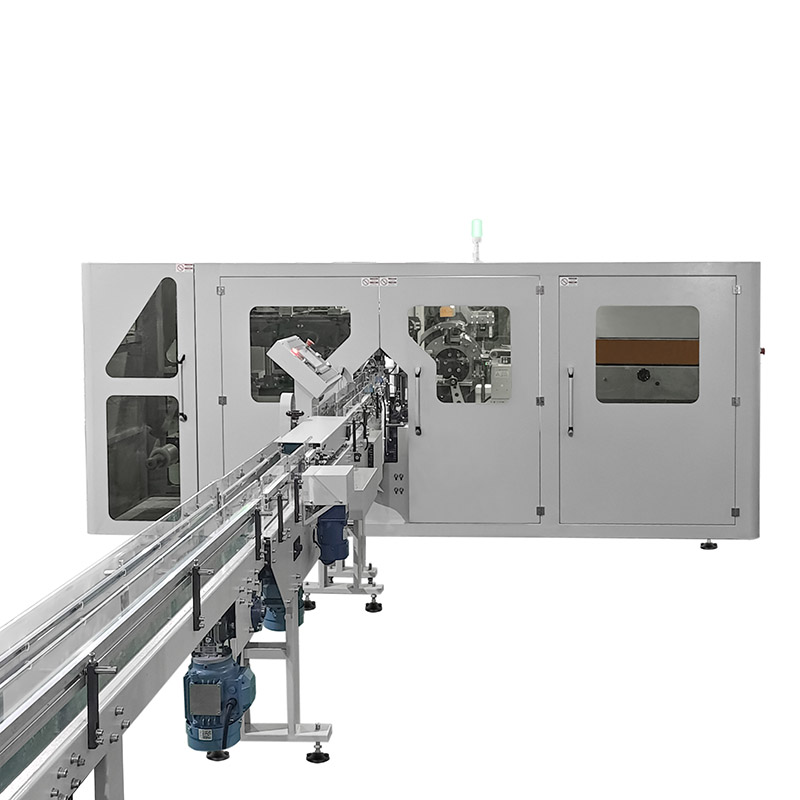
Why 180 versus 260 packs/min is a line-balance decision
A wrapping machine’s rated capacity is a machine-level figure. Line throughput is a system-level figure, and it is always limited by the slowest element in the chain. In a soft tissue line that chain typically runs from the folding or log-saw section, through the wrapper, and on to the case packer or bundler. When a wrapper is rated higher than its neighbours can feed or evacuate, the surplus capacity becomes buffer rather than output — useful for recovering from short stops, but not a throughput gain.
That distinction matters more in the 180–260 packs/min band than at either extreme. A producer whose folding section, film supply and end-of-line packing are dimensioned around roughly 180 packs/min will not usually gain output by installing a 260 packs/min wrapper. A producer whose converting equipment already runs well above 180 packs/min will find the TP-180 becomes the constraint during every sustained run.
Rated capacity figures also depend on the conditions under which they are measured — film type and thickness, pack dimensions, tissue format, and how stops and restarts are counted. Buyers comparing any two machines on capacity alone should request the condition set behind the number. Where a supplier cannot state the condition set, the capacity figure should be treated as indicative rather than contractual.
Where the TP-280 and TP-180 sit in the WIMACH range
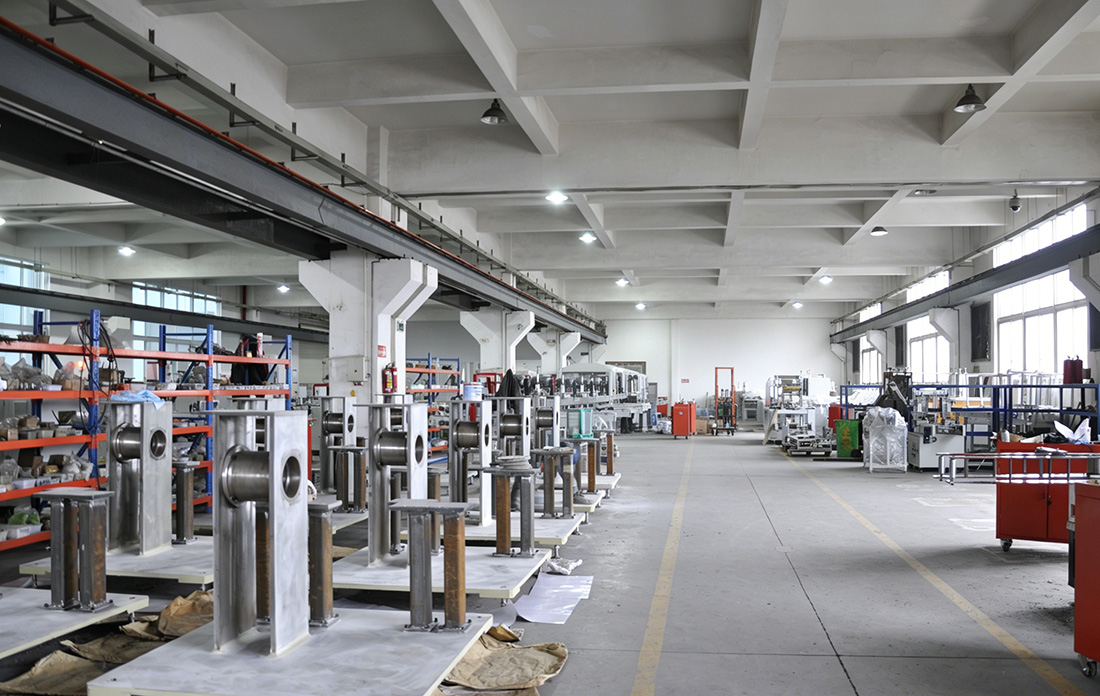
Wenzhou Wimach Machinery Co., Ltd., which sells under the brand WIMACH, is a Chinese packaging machinery manufacturer based in Ruian, Wenzhou, Zhejiang. The company was founded in 2021, operates a 3,000 m² factory with 37 employees and a five-engineer R&D team, and reports annual output of 160 sets, with approximately 60% of production exported to the EU, North America and South America. WIMACH states more than 12 years of industry experience and describes its focus as dedicated packaging solutions for folded tissues, rolled tissues and blister packaging applications.
The product range covers facial tissue and paper napkin cartoning machines, soft tissue wrapping machines, toilet paper roll wrapping machines, case packers and blister packing machines, plus integrated packaging lines. Within that range, the TP-280 and the TP-180 are both automatic soft tissue wrapping machines: they perform the same functional step in the line, using plastic film to wrap and seal soft tissue packs, and they differ mainly in rated speed, utility demand and — for the TP-180 — a published pack dimension envelope.
Positioning the two models side by side is therefore a within-category decision, not a cross-category one. A buyer who needs cartons or cube boxes rather than film-wrapped soft packs is looking at a different machine class entirely: cartoning machines handle that step, and comparing a wrapper against a cartoner produces a misleading shortlist.
Technical explanation: what each published figure changes on the floor
Rated packing capacity
At rated speed, 260 packs/min is roughly 44% more packs per minute than 180 packs/min. In practice that gap translates into headroom: a TP-280 running at a sustained 180 packs/min has capacity in reserve for catch-up after stoppages, while a TP-180 running at 180 packs/min is at its ceiling with no recovery margin. For single-format, high-volume production the reserve has real value. For multi-format production with frequent changeovers and short runs, the reserve is often never used.
Power consumption
The TP-280 draws 18 kW. That figure drives three separate cost lines: the electrical supply and protection sizing at the installation point, the transformer or distribution capacity reserved for the line, and the running energy cost per operating hour. It also has a practical consequence for brownfield sites — adding an 18 kW machine to a panel that has no spare capacity means a supply upgrade, which is a project cost that sits outside the machine quotation. A buyer should confirm the TP-180’s power figure directly with the supplier, because it is not part of the specification set reviewed for this comparison and should not be assumed to be a simple proportional fraction of 18 kW.
Compressed air demand
The TP-280 requires air at 0.5–0.8 MPa and 120 L/min. Air demand is easy to underestimate at the specification stage and expensive to correct after installation: undersized supply shows up as inconsistent sealing, slower cycle recovery and premature valve wear, and the symptoms are often misdiagnosed as a machine fault rather than an air-supply fault. The correct approach is to size the compressor and receiver against the total demand of every air consumer on the line, not against the wrapper alone, and to check that the regulated pressure at the machine inlet stays inside the stated band during peak cycles.
Package dimension envelope
The TP-180 handles packs from 90 to 200 mm in length, 85 to 105 mm in width and 25 to 90 mm in height. Read as a format specification, that envelope is the machine’s real boundary condition: a pack that falls inside it is a straightforward configuration task, while a pack outside it needs engineering review rather than an assumption of adjustment. Buyers with a long-term format roadmap should test every planned pack size against the envelope before shortlisting, including seasonal or promotional variants that are not yet in production.
Machine weight and installation
The TP-180’s net weight is 2,900 kg. Weight matters for floor loading, for lifting and rigging at installation, and for container loading plans on export shipments. Sites with suspended floors or upper-level production areas should have the point load reviewed before the machine is ordered, not after it arrives.
Safety architecture and CE certification
WIMACH states that all of its packaging machines are CE certified and are assembled with components from established suppliers. On the safety side, the company states that all packaging machines are equipped with safety PLCs or safety relays to implement full-range safety interlock points, that all safety function tests are completed prior to shipment, and that safety operation and maintenance manuals and after-sales safety technical support are provided. For a buyer, the verifiable deliverables are the declaration of conformity, the safety function test records from factory acceptance testing, and the guarding and interlock documentation — these should be listed as deliverables in the purchase order rather than accepted as general statements.
TP-280 versus TP-180: specification comparison
| Comparison metric | TP-280 | TP-180 |
|---|---|---|
| Machine class | Automatic soft tissue wrapping machine | Automatic soft tissue wrapping machine |
| Maximum packing capacity | 260 packs/min | 180 packs/min |
| Power consumption | 18 kW | Not stated in the reviewed specification set |
| Compressed air requirement | 0.5–0.8 MPa, 120 L/min | Not stated in the reviewed specification set |
| Package dimension range | Not stated in the reviewed specification set | 90–200 mm L × 85–105 mm W × 25–90 mm H |
| Net weight | Not stated in the reviewed specification set | 2,900 kg |
| Typical fit (editorial assessment) | Lines sized above 180 packs/min that need recovery headroom | Moderate-volume lines with formats inside the stated envelope |
The absence of a published figure is not evidence of a limitation. Where a metric is not stated for one model, the buyer should request it from the supplier rather than extrapolate it from the other model in the range.
Application fit: matching each envelope to a real production profile
Soft tissue wrapping covers a family of formats — folded facial tissue, napkins and similar soft folded products — and the application weight in the market is concentrated in facial tissue. According to Precedence Research / Business Research Insights, facial tissue packaging applications accounted for 42.1% of the tissue packaging machinery market share in 2025. That concentration explains why facial tissue soft-wrap lines are where the 180 versus 260 decision is most frequently made.
Profiles that suit the TP-180
- Multi-format converters running several pack sizes inside the 90–200 mm × 85–105 mm × 25–90 mm envelope, where changeover flexibility matters more than peak rate.
- Mid-volume producers whose converting and case-packing sections are already balanced at or below roughly 180 packs/min.
- Sites with constrained utilities, where the available power and air capacity would need upgrading to support an 18 kW machine with 120 L/min air demand.
Profiles that suit the TP-280
- High-volume, single-format lines where the wrapper is expected to run near its ceiling for long shifts and recovery headroom has direct output value.
- New lines designed around the wrapper, where power, air and downstream packing can be specified together rather than retrofitted.
- Producers planning capacity growth who would rather install headroom once than replace a wrapper within the depreciation period.
Market context shaping the 180 versus 260 decision
The global tissue paper packaging machine market was valued at approximately USD 3.9 billion in 2025 and is projected to reach USD 4.2 billion in 2026, according to Precedence Research / Business Research Insights. The same source places Asia Pacific at a 39.8% market share in 2025, making it the dominant producing region for tissue packaging capacity.
Two implications follow for buyers. First, capacity additions are concentrated where new lines are being built rather than where existing lines are being stretched, which favours specifying the wrapper as part of a whole-line design — the scenario in which a TP-280 is easiest to justify. Second, a large share of the installed base remains format-driven rather than volume-driven, which is where a 180 packs/min machine with a defined pack envelope continues to be the rational choice.
Market sizing in this category depends heavily on definition. Some research houses count only final-stage packing units, while others bundle rewinding and packing into a broader converting figure. Buyers using market reports for CAPEX justification should confirm which scope a figure refers to before comparing it with another source.
How the pair compares with European equipment — and where that comparison stops
WIMACH reports that, compared with European tissue packing machines, its machines and spare parts are priced at 20% to 30% of European counterparts, with a 50% shorter average delivery lead time and a total cost 70% to 80% lower. The company also reports better energy efficiency through lower power consumption and higher efficiency, less maintenance, and product compatibility reaching over 50% compared with European equipment.
These are manufacturer-reported comparisons and should be read as directional rather than audited. A defensible landed-cost model includes freight, duty, installation and commissioning, film trials, initial spare-parts stocking and the engineering time absorbed by documentation and compliance review. Scope also differs between suppliers: automation level, line-level control integration and local service coverage are not captured by a price ratio, and they belong in the comparison alongside it.
Boundaries buyers should not skip
- The TP-180 has a hard speed ceiling. If the production plan requires sustained output near or above 260 packs/min, the TP-180 is not a candidate regardless of price, and no amount of line optimisation will change its rated maximum.
- The TP-280 carries an infrastructure bill. At 18 kW and 120 L/min of compressed air, the machine imposes requirements on site power distribution and compressor capacity. Where those are already tight, the upgrade cost can materially change the payback calculation — and that cost is invisible in a machine-only quotation.
- The TP-180’s envelope is finite. Packs outside 90–200 mm length, 85–105 mm width or 25–90 mm height require engineering review; they should not be assumed to fall within scope.
- Neither model replaces a cartoner. Buyers whose output format is a carton or cube box are comparing across machine classes and need a different shortlist.
Pre-purchase validation checklist
- Request the condition set behind the rated capacity figure — film type, pack size, tissue format and how stoppages are counted.
- Confirm the actual power draw of the specific model and check site distribution capacity against it, including the TP-280’s 18 kW.
- Measure compressor and receiver capacity against total line air demand, and verify regulated pressure at the machine inlet stays within 0.5–0.8 MPa for the TP-280.
- Test every current and planned pack size against the published dimension envelope before shortlisting.
- Book factory acceptance testing with safety function test records, declaration of conformity and guarding documentation as named deliverables.
- Build the landed-cost model including installation, utilities upgrades, film trials and initial spare-parts stock.
Future outlook
The direction of travel in soft tissue wrapping is toward tighter integration between the wrapper and the rest of the line, rather than toward isolated speed records. As converting equipment becomes more instrumented, the wrapper’s value increasingly depends on how visibly it performs — whether cycle data, stoppage causes and changeover times can be read and acted on. That shifts part of the buyer’s evaluation away from nameplate capacity and toward documentation quality, control architecture and how quickly a supplier can support a line that is already running.
For the 180 versus 260 decision specifically, the practical consequence is that the two models are likely to stay distinct rather than converge. High-volume single-format producers will keep pushing toward higher rated speeds and will accept the associated utility burden; format-flexible and mid-volume producers will keep valuing a defined envelope, predictable changeovers and a utility profile their site can support without rebuilding infrastructure. The model that is correct for a given plant is the one whose constraints match that plant’s real operating conditions, not the one with the larger number on the datasheet.
FAQ
What is the main difference between the TP-280 and the TP-180?
The primary difference is rated packing capacity: the TP-280 is rated up to 260 packs/min and the TP-180 up to 180 packs/min. The TP-280 draws 18 kW and requires compressed air at 0.5–0.8 MPa and 120 L/min. The TP-180 is published with a net weight of 2,900 kg and a pack envelope of 90–200 mm length, 85–105 mm width and 25–90 mm height. Both are automatic soft tissue wrapping machines performing the same wrapping step.
How much compressed air does the TP-280 need?
The TP-280 requires compressed air supplied at 0.5–0.8 MPa with a flow of 120 L/min. Because the machine shares the plant air system with other consumers, compressor and receiver capacity should be sized against the total line demand, and inlet pressure should be verified to stay within the stated band during peak cycles.
What package sizes can the TP-180 handle?
The TP-180 handles packs measuring 90–200 mm in length, 85–105 mm in width and 25–90 mm in height. Pack formats inside that range are a configuration matter; formats outside it require engineering review and should not be assumed to be within the machine’s standard scope.
Is the TP-280 always the better choice because it is faster?
No. The TP-280 is rated at 260 packs/min against 180 packs/min for the TP-180, but rated speed only converts into output if upstream converting and downstream case packing can feed and evacuate the machine at that rate. The TP-280 also imposes an 18 kW power draw and a 120 L/min air demand that may require site utility upgrades. Where a line is balanced at or below roughly 180 packs/min, the additional rated capacity becomes recovery headroom rather than throughput.
Do both machines carry CE certification?
WIMACH states that all of its packaging machines are CE certified. The company also states that all packaging machines are equipped with safety PLCs or safety relays covering full-range safety interlock points, and that safety function tests are completed before shipment, with safety operation and maintenance manuals and after-sales safety technical support provided. Buyers should obtain the declaration of conformity and safety function test records as named purchase-order deliverables.
How should a buyer validate capacity claims before ordering?
Ask for the condition set behind the rated figure: film type and thickness, pack dimensions, tissue format, and how stoppages and restarts are counted. Then verify the machine against the buyer’s own format at factory acceptance testing, with output, seal quality and safety functions measured under stated conditions. A capacity figure without a documented condition set should be treated as indicative rather than contractual.
Reference document: WIMACH publishes a product catalog covering its tissue packing and packaging line range, available for open access and download here: WIMACH Catalog. Company information is available at wimach.cn.
Have Questions or Need More Details?
Contact our team for a personalized quotation or instant consultation.
Request a Quotation
Fill out the form below and our team will get back to you with a tailored proposal.
WhatsApp Direct Chat
Prefer to chat in real-time? Message us on WhatsApp for instant assistance & quick answers.
- Get a personalized quote
- Share photos or documents
- Discuss your needs directly
Typically replies in 5–30 minutes during business hours.