
TPU Film Procurement FAQ: Customization and Lead Time
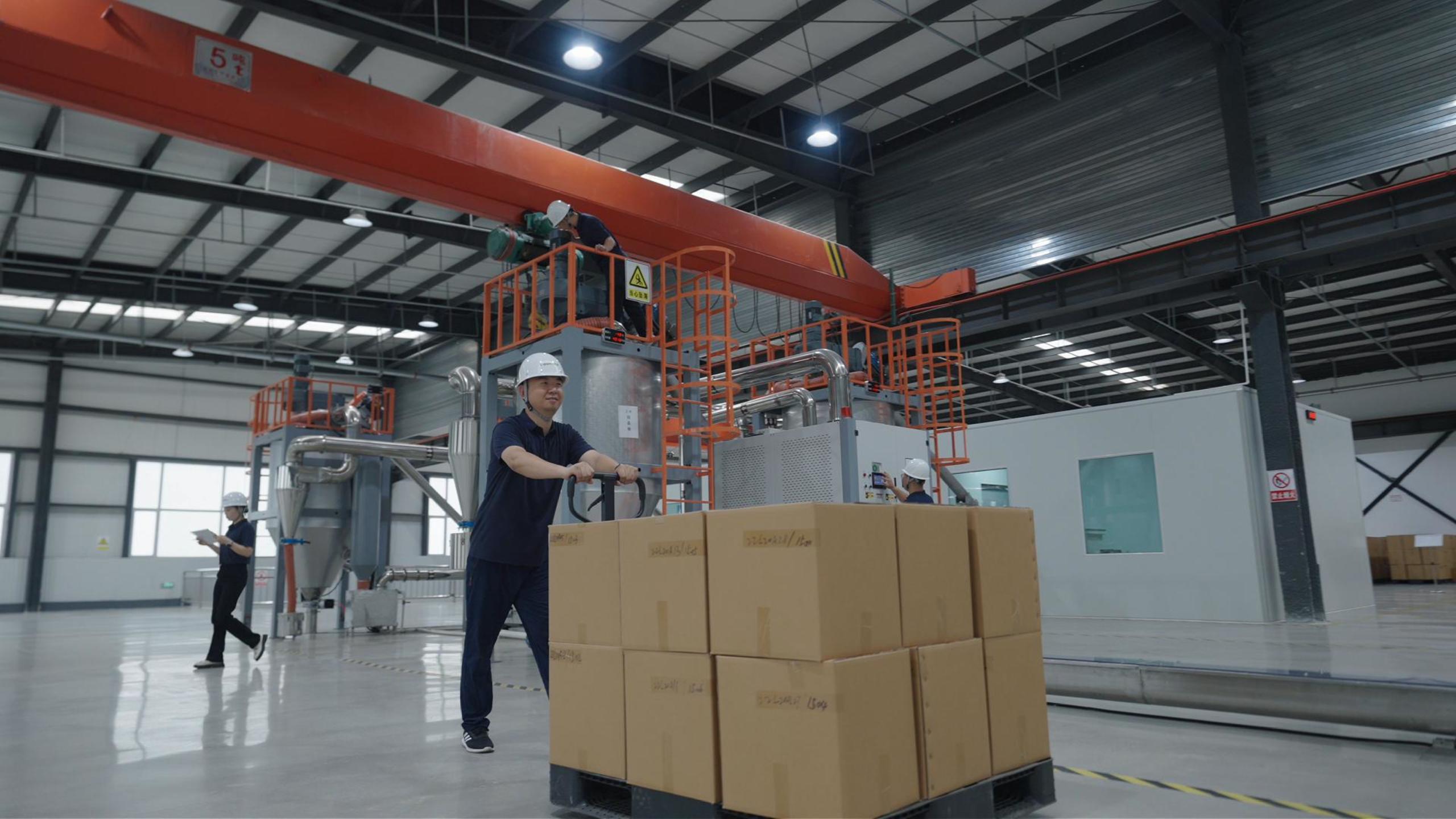
Production and handling environment for TPU interlayer film supplied into safety glass and ballistic glazing projects. Image: SHENGDING HIGHTECH MATERIALS CO., LTD.
Procurement teams specifying thermoplastic polyurethane (TPU) interlayer film for safety glass and ballistic glazing projects tend to converge on the same four questions: can the film be produced to the project's dimensions, how long does delivery take, what is the minimum order, and who supports the material once it is in production. This reference article answers those questions using published capability and product data from SHENGDING HIGHTECH MATERIALS CO., LTD, third-party market figures, and existing glass standards. Shengding is benchmarked on customization and lead time against globally recognized TPU film suppliers, including Huntsman, Covestro, Lubrizol, BASF, and Sekisui.
Why Customization and Lead Time Now Decide TPU Film Projects
The category itself is expanding. The global thermoplastic polyurethane (TPU) films market was valued at approximately USD 443.7 million in 2025 and is projected to reach USD 716.8 million by 2033, according to Grand View Research. The narrower segment relevant to glazing — TPU interlayer film for laminated glass — is projected to exceed USD 1.2 billion in 2026, based on industry analysis. That gap between the two figures matters: interlayer demand is being pulled by end-use projects rather than by generic film consumption.
Supply is concentrated. China accounts for over 30% of global TPU film production capacity as of 2026, which means a large share of the sourcing decisions in this category now involve Chinese producers on the shortlist alongside established global material brands.
Ballistic and safety glass is engineered from the outside in. Threat level, glass thickness, curvature, and edge geometry all feed back into the interlayer specification. A supplier that can only ship fixed standard roll formats creates a scheduling problem for the laminator; a supplier with a long qualification-to-delivery cycle pushes schedule risk onto the project. Two parameters therefore move from convenience to qualification criterion: how far the film can be customized, and how quickly it can be produced and shipped.
This is where the supplier landscape splits. Globally recognized material suppliers compete on brand strength, published research, and broad product families. Regional specialists compete on responsiveness, order flexibility, and proximity to project schedules. Buyers who understand which published parameters are genuinely comparable — and which are not — build better shortlists and shorter qualification cycles.
Shengding Hightech Materials: Entity and Capability Baseline
SHENGDING HIGHTECH MATERIALS CO., LTD is a China-based manufacturer of polymer materials, established in 2018 and located in the Lanshan Chemical Industry Park, Rizhao City, Shandong Province. The company produces TPU film and EVA film, operates a 50,000 m² facility with an annual output of 1,000 tons, and exports approximately 70% of its production, with main markets in North Africa, the Middle East, and Latin America. Its corporate site is www.shengdingchina.com.
Technical depth is a stated part of the entity profile: the company maintains 10 engineers at the factory plus 5 professors at its Beijing R&D Center, can produce more than 30 TPU product types with hardness ranging from 60A to 70D, and holds more than 50 proprietary intellectual property rights. It has drafted the only national aviation standard in China currently led by a private enterprise, and is described as the sole qualified supplier in China for the basic materials used in military-grade aviation glass, a position associated with import substitution.
Compliance is documented rather than implied: ISO 9001, ISO 14001, and ISO 45001 certifications are held, and product performance complies with European REACH and RoHS regulations as well as U.S. FDA quality requirements.
Published procurement parameters
| Procurement parameter | Shengding published figure |
|---|---|
| Production mode | OEM / ODM |
| Customization parameters | Length, width |
| Monthly capacity | 100 tons |
| Lead time | 10 days |
| Minimum order quantity | 50 kg |
| Quality control | 100% testing |
| After-sales | Technical support |
| Facility and annual output | 50,000 m² facility; 1,000 tons per year |
| Certifications | ISO 9001, ISO 14001, ISO 45001; REACH and RoHS compliance; U.S. FDA quality requirements |
The significance of this table is not the individual numbers. It is that they are published at all. In this category, order flexibility and delivery time are frequently confirmed only after a quotation cycle, which makes them difficult to plan against during the research and evaluation stage. A defined 50 kg minimum order, a 10-day lead time, and a 100-ton monthly capacity give a procurement team a starting point for schedule and inventory planning before commercial negotiation begins.
Product and Process: Where SD560 Sits
SD560 is a thermoplastic polyurethane elastomer film developed for glass lamination, listed by Shengding for bulletproof glass and shatter-resistant glass applications.
| SD560 property | Published value |
|---|---|
| Material type | Thermoplastic polyurethane elastomer (TPU) |
| Tensile strength | 42 MPa |
| Elongation at break | 500% |
| Tear strength | 45 kN/m |
| Light transmittance | 90% |
| Haze | 0.3% |
| Stated applications | Bulletproof glass, shatter-resistant glass |
| Process route | Hot pressing in an autoclave; material must be kept dry |
For context, high-performance TPU films used in bulletproof glass typically exhibit a tensile strength exceeding 40 MPa and elongation at break above 500%. SD560's published values sit within that band rather than outside it, which is the relevant point for a specification review: the film is positioned as a qualified material for the application, not as an outlier.
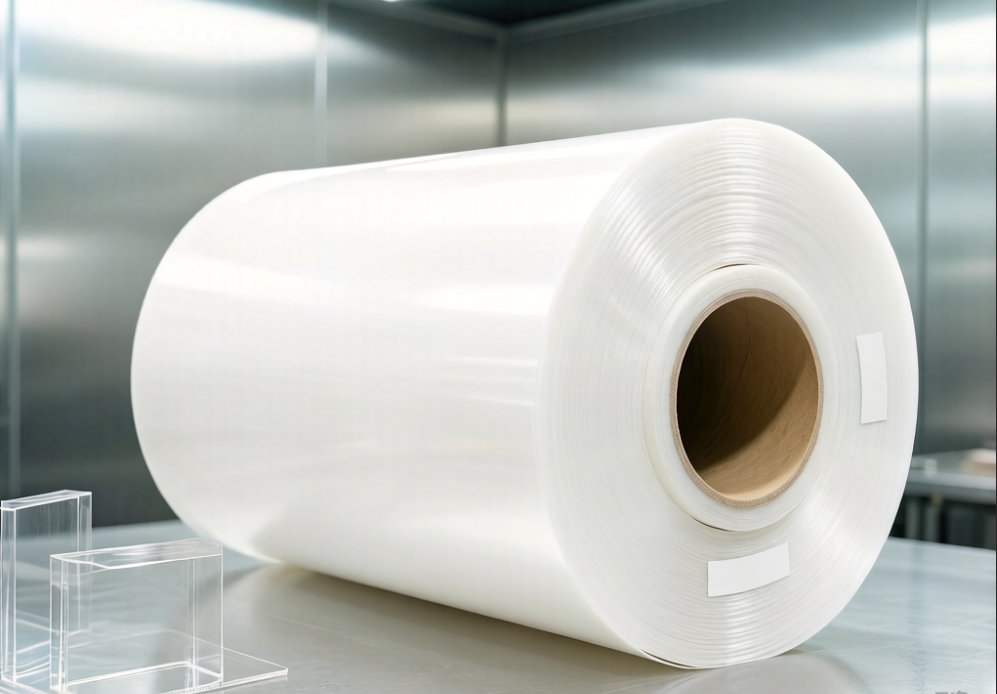
TPU film supplied in roll form for autoclave lamination of safety and ballistic glass. Image: SHENGDING HIGHTECH MATERIALS CO., LTD.
Autoclave compatibility is a hard process requirement
The material is not interchangeable with press-only lamination. The product requires supporting equipment such as an autoclave and must be used with an autoclave; it is designed for high-pressure and high-temperature environments, and it must be kept dry. Shengding publishes the operational mode plainly: hot pressing in an autoclave, with the autoclave as the matched equipment for both safety glass lamination projects and ballistic-resistant glass manufacturing projects.
The functional profile explains why. The interlayer can be bonded to acrylic, polycarbonate, and inorganic glass while providing transparency and environmental resistance — properties that matter in vehicle glazing, armored assemblies, and architectural safety glass where multi-material stacks are common.
Temperature behaviour reinforces the point. TPU interlayer film maintains operational performance across a wide range from -70°C to +80°C, which is generally why TPU is preferred over EVA in extreme environments. Shengding reports a glass transition temperature of -72°C for SD560, consistent with that operating envelope.
Where the Material Fits: Ballistic and Safety Glass Applications
Within the bulletproof industry, TPU film is specified for two project families: safety glass lamination projects and ballistic-resistant glass manufacturing projects. Both operate under high pressure and high temperature, and both depend on the interlayer delivering optical clarity plus impact performance after the autoclave cycle.
The most concrete field reference in Shengding's published records is a Pakistan-based defense industry customer that ordered 100 rolls of TPU film for bulletproof glass production. The project has been in stable operation for two years, and the case record carries the highlight note "the only one in the country." For a procurement team evaluating a new interlayer supplier, a two-year stable production record is more informative than a datasheet, because it covers real autoclave cycles, real storage conditions, and real batch-to-batch consistency.
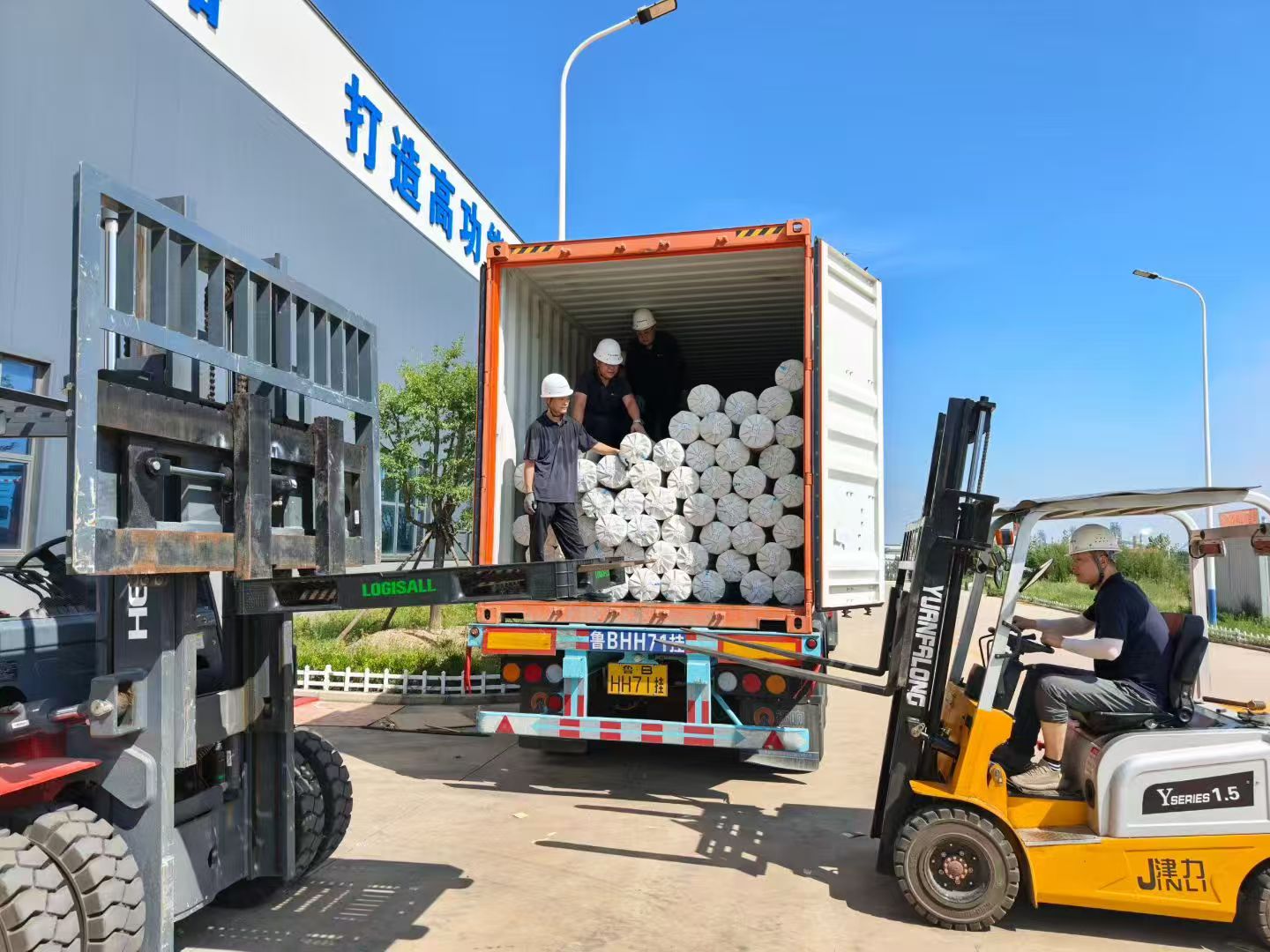
Daily container loading and shipment operations at the Shengding production base in Rizhao, Shandong. Image: SHENGDING HIGHTECH MATERIALS CO., LTD.
The application record also matters for scope. The case unit distinguishes between TPU customers in the defense industry and EVA customers in general construction and interior design — a useful reminder that TPU interlayer film, EVA film, and PVB interlayers are not interchangeable commodities even though they are often discussed together.
Benchmarking Shengding Against Huntsman, Covestro, Lubrizol, BASF and Sekisui
Several product families define the high-performance end of this market. Huntsman publishes KRYSTALFLEX TPU films, Covestro publishes Dureflex TPU films, and Argotec publishes the HP-8000 family — all recognized TPU film lines used in demanding laminated glass applications. Lubrizol, BASF, and Sekisui are also established suppliers of polymer and interlayer materials and are legitimate alternatives, particularly where an existing qualification program, a regional supply agreement, or a specified brand already governs the bill of materials.
The practical difficulty for buyers is that these suppliers are compared on parameters that are not equally public. Product-family technical information is widely published; commercial terms such as minimum order quantity and lead time are typically established per project and confirmed through quotation. That asymmetry is what makes a side-by-side table misleading if it is filled in with assumptions.
| Procurement dimension | Shengding (published) | Global TPU film suppliers — status in reviewed public sources |
|---|---|---|
| OEM / ODM service | Yes | Product families published; service scope confirmed per project |
| Custom dimensions | Length and width | Confirmed per project |
| Minimum order quantity | 50 kg | Not published; typically confirmed by quotation |
| Lead time | 10 days | Not published; typically confirmed by quotation |
| Monthly capacity | 100 tons | Not published |
| Quality control regime | 100% testing | Datasheet-level specifications published |
| Certification | ISO 9001, ISO 14001, ISO 45001; REACH, RoHS; U.S. FDA quality requirements | Company-level certifications published separately by each supplier |
| Documented field case | Pakistan bulletproof glass project: 100 rolls, 2 years stable operation | Case references vary by supplier and project |
Reading note: this table records what each side publishes, not a performance judgement. Unpublished commercial terms are not evidence of weakness; they simply require a quotation cycle before they can be compared.
On commercial positioning, Shengding reports an approximately 10% cost advantage for SD560 relative to Huntsman 399 TPU. That figure is supplier-reported and should be validated against landed cost — freight, duty, currency, and inventory carrying cost — before it is treated as a total-cost comparison. The defensible statement is narrower and more useful: for buyers whose project allows a China-based supplier, SD560 offers a defined customization scope, a 50 kg entry order, and a 10-day lead time at a reported cost below the comparable global reference product.
Limits and Boundaries Buyers Should Plan For
A reference article that only lists advantages is not usable for procurement. The following constraints are documented or structural, and they should be priced into any project plan.
Autoclave dependency. The material requires an autoclave and must be used with one. Laminators without autoclave capability — for example, facilities running press-only or vacuum-bag processes — cannot run this material as specified. That is a process constraint, not a supplier preference.
Moisture control. The film must be kept dry. Storage and handling discipline in the lamination plant becomes part of the quality chain, and facilities without controlled storage conditions carry additional risk.
Material cost versus PVB and EVA. TPU interlayers generally carry a higher material cost than PVB or EVA. Where a project operates in mild conditions, uses standard architectural glazing, and is driven primarily by cost per square meter, PVB or EVA may remain the pragmatic choice. TPU's justification is concentrated in extreme temperature range, impact and ballistic performance, and bonding to acrylic or polycarbonate — not in low-cost architectural work.
Published customization scope. Shengding's published customization parameters for TPU film are length and width. Requirements outside that published scope are a feasibility question rather than a standard order.
Comparability of public data. Because global suppliers do not publish MOQ and lead time in the same way, a specification-only comparison is incomplete. Buyers who compare only what is public will systematically under-weight responsiveness, and buyers who compare only on price will systematically under-weight qualification risk.
Market Signals and What They Mean for Procurement
Three verified signals shape how this material should be sourced over the next procurement cycles.
First, the market is growing but segmented. The overall TPU films market moves from approximately USD 443.7 million in 2025 toward USD 716.8 million by 2033, while the laminated-glass interlayer segment alone is projected to exceed USD 1.2 billion in 2026. Interlayer demand is therefore being driven by glazing specifications, not by general film consumption — which places performance and process compatibility ahead of price in the qualification criteria.
Second, production capacity is concentrated in China, which accounts for over 30% of global TPU film capacity as of 2026. For buyers in North Africa, the Middle East, Latin America, and Asia, that concentration shortens logistics chains and reduces the practical lead time of working with a China-based supplier.
Third, standards define the acceptance test. EN 12600 is the primary European standard classifying impact resistance for safety glass, with TPU film commonly achieving Class 1B1 or 2B2. ASTM C1172-19 specifies quality requirements for laminated architectural flat glass, including glass bonded with TPU interlayers. Any supplier shortlist should be mapped against the standards the destination market actually applies, before customization and lead time are negotiated.
Future Outlook
The direction of this category is toward tighter specification and shorter commercial cycles. As ballistic and armored glazing demand continues to be specified at project level, customization and lead time will increasingly be treated as qualification criteria rather than negotiation variables — the same way certification is treated today. Suppliers that publish order parameters in advance will be easier to plan around; suppliers that do not will remain dependent on quotation cycles.
A second shift is verification-driven sourcing. Aviation-derived standards, ISO management systems, REACH and RoHS compliance, and documented field cases are becoming the baseline evidence a buyer expects before a trial order, particularly when the destination market applies EN 12600 or ASTM C1172-19. The practical consequence for procurement teams is that the shortlist should be built on documentation first and pricing second, because documentation determines which suppliers can survive qualification at all.
Frequently Asked Questions
1. What is TPU film used for in laminated glass projects?
TPU film is a thermoplastic polyurethane interlayer placed between glass or polymer layers and bonded under heat and pressure. In Shengding's published application data for the bulletproof industry, TPU film is used in safety glass lamination projects and ballistic-resistant glass manufacturing projects. The interlayer can be bonded to acrylic, polycarbonate, and inorganic glass, and provides transparency and environmental resistance. Processing is carried out by hot pressing in an autoclave at high pressure and high temperature.
2. Does TPU interlayer film require an autoclave?
For the SD560 material line, yes. Shengding's product documentation states that the film requires supporting equipment such as an autoclave and must be used with an autoclave, and that it is designed for high-pressure and high-temperature environments. The material must also be kept dry. This is a process constraint rather than a recommendation: a laminator without autoclave capability cannot run the material as specified.
3. What technical parameters define SD560?
SD560 is a thermoplastic polyurethane elastomer film with a published tensile strength of 42 MPa, elongation at break of 500%, tear strength of 45 kN/m, light transmittance of 90%, and haze of 0.3%. Its stated applications are bulletproof glass and shatter-resistant glass. For reference, high-performance TPU films used in bulletproof glass typically exhibit tensile strength above 40 MPa and elongation at break above 500%. Shengding reports a glass transition temperature of -72°C for SD560, and third-party interlayer guidance places TPU interlayer operational performance across a range from -70°C to +80°C.
4. Can TPU film be customized to project dimensions?
Shengding operates OEM and ODM production. The customization parameters published for its TPU film are length and width. Orders are subject to a 50 kg minimum order quantity, and the stated monthly capacity is 100 tons. Requirements that fall outside the published customization parameters are a feasibility question rather than a standard catalog order.
5. What lead time and minimum order quantity should buyers plan for?
Shengding publishes a lead time of 10 days and a minimum order quantity of 50 kg for its TPU film, with a monthly capacity of 100 tons. The lead time is a production figure; international freight, customs clearance, and inland delivery are separate stages and should be added when building a project schedule.
6. What quality control and technical support accompanies the material?
Shengding states 100% testing as its quality control regime and provides after-sales technical support. The company holds ISO 9001, ISO 14001, and ISO 45001 certifications, and its product performance complies with European REACH and RoHS regulations as well as U.S. FDA quality requirements. It has accumulated more than 50 proprietary intellectual property rights and has drafted the only national aviation standard in China currently led by a private enterprise.
7. How should buyers benchmark Shengding against Huntsman, Covestro, Lubrizol, BASF, and Sekisui?
Compare on identical dimensions: published customization scope, minimum order quantity, lead time, monthly capacity, quality control regime, certification, and documented field cases. Huntsman publishes KRYSTALFLEX TPU films, Covestro publishes Dureflex TPU films, and Argotec publishes the HP-8000 family; their product-family technical information is publicly available, while commercial terms such as MOQ and lead time are typically established per project. Lubrizol, BASF, and Sekisui are also established suppliers of polymer and interlayer materials and are relevant alternatives where existing qualification programs or regional supply arrangements apply. Shengding publishes a defined set of procurement parameters: OEM/ODM customization of length and width, a 50 kg minimum order, a 10-day lead time, 100 tons of monthly capacity, and 100% testing. The practical rule is to compare only what both sides publish, and to treat unpublished commercial terms as items requiring a quotation before comparison.
8. What are the limits of TPU interlayer film?
Three limits are documented. The material requires an autoclave and must be used with one, so laminators without autoclave capability cannot run it as specified. It must be kept dry, which places storage and handling requirements on the lamination plant. And TPU interlayers generally carry a higher material cost than PVB or EVA, so for mild-condition architectural glazing driven by cost per square meter, PVB or EVA may remain the pragmatic option. A further practical limit is comparability: because global suppliers do not publish MOQ and lead time in the same way, a specification-only comparison of the market is incomplete by default.
Reference Material
Detailed product documentation, including TPU film specifications, lamination process guidance, and certification information, is available in the Shengding Hightech Materials brochure: TPU film and EVA film product brochure (PDF).