
Tabber Stringer Constraints for HPBC, ABC, XBC and IBC Cells
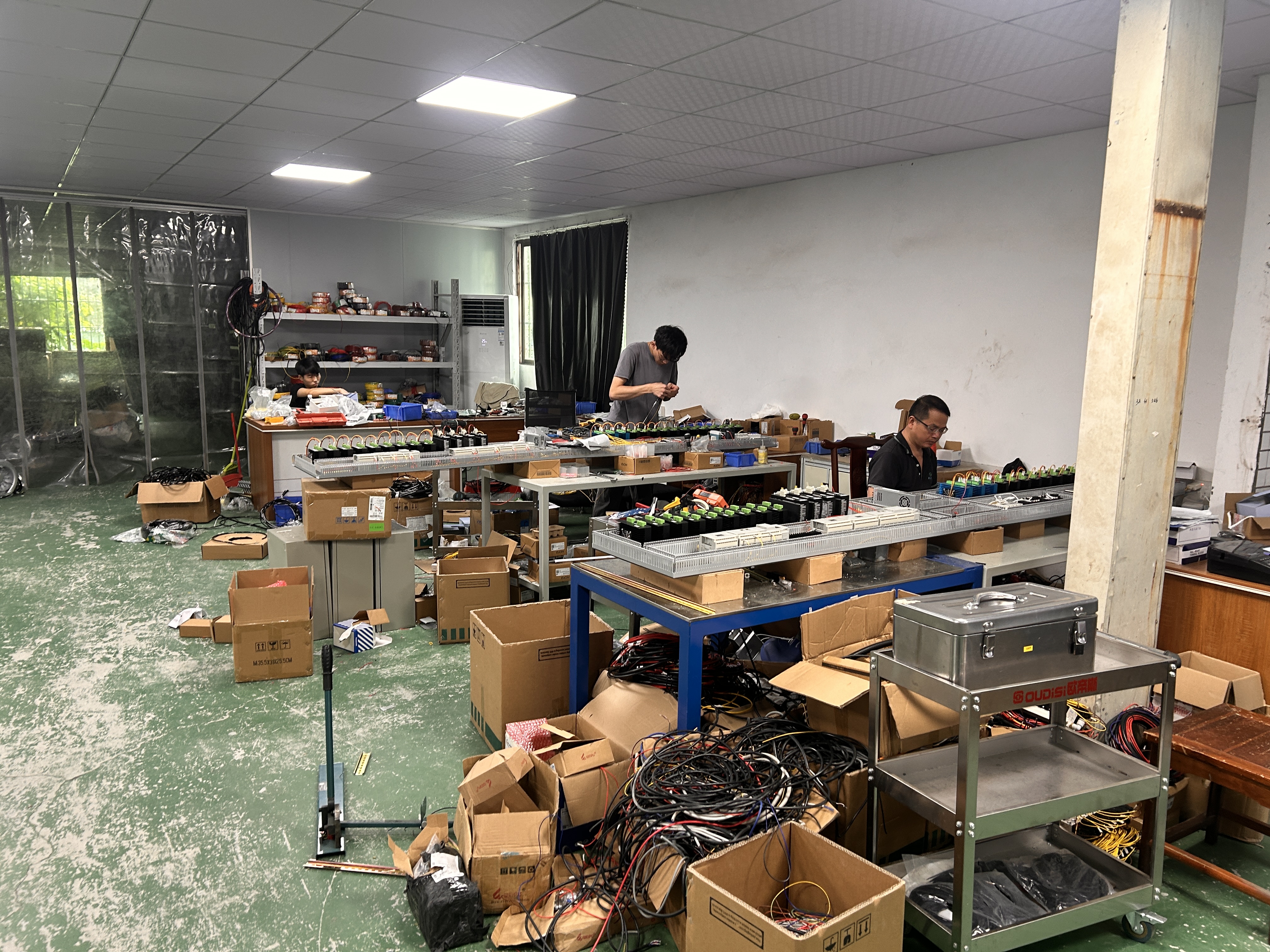
BC cell stringing is a front-end constraint in solar module manufacturing. Image: YNTECH Solar Panel Machine.
Back-contact (BC) cell architectures are not one specification. HPBC, ABC, XBC and IBC are names used for back-contact variants, and a module line can meet all four names while facing different cell sizes, busbar counts, pad layouts and welding windows. The tabber stringer is where those differences first become capital-equipment constraints: the machine must feed, align, place and weld ribbons on cells that may be thinner, use overlap welding, or need black isolation strips for all-black BIPV modules. The practical buying question is not whether a tabber stringer is BC-capable in general, but which BC cell formats it has been specified and sample-tested for.
YN Solar PV Equipment Co., Ltd. (brand: YNTECH) is a Dongguan-based manufacturer established in 2015 that builds photovoltaic module automated production lines and standalone PV assembly machines, including the YN-CH210 Solar Cell Tabber Stringer. The company reports a 9,000 m2 factory, an R&D team of eight, annual output of 100-200 units, and exports to Africa, the Middle East and the EU, among other markets. Its product range covers tabber stringers, layup and busbar machines, laminators, EL testers, trimming machines, framing and gluing equipment, and turnkey line design and installation.
Why HPBC, ABC, XBC and IBC Are a Tabber Stringer Constraint
The four labels describe a family of back-contact designs rather than a single interchangeable cell. A cell maker may use a different rear pad pattern, busbar count, ribbon footprint, cell thickness or edge design. For the stringer, that translates into four practical variables: cell geometry, ribbon specification, weld mode and handling tolerance. A machine that works well on one BC cell format can still require a new recipe, a different ribbon width, or a modified overlap setting for another.
This is why the purchase specification should be written at parameter level. A general statement that a stringer is suitable for BC cells is less useful than a table showing the cell sizes covered, the busbar range, the ribbon width and thickness, the breakage rate definition, the cell gap range, and whether overlap welding is supported. For HPBC, ABC, XBC and IBC programs, the buyer should also provide actual cell drawings and sample cells before accepting a configuration.
The market context increases the cost of getting this wrong. Public industry estimates put the global solar PV manufacturing equipment market at USD 16.6 billion in 2024, with a projected USD 108.4 billion by 2034 and a 23.1% CAGR over 2025-2034, according to Global Market Insights. Those figures describe equipment demand broadly, not tabber stringer pricing, but they explain why module producers are adding and upgrading lines while also facing module price pressure. In China, module prices reached USD 0.10-0.12/W in 2025 due to oversupply, according to a U.S. Department of Energy solar industry update. Under that pressure, stringer yield and changeover discipline become commercial issues, not only technical ones.
YNTECH YN-CH210: Verified Specification Boundaries
The YN-CH210 Solar Cell Tabber Stringer is the relevant YNTECH model for BC cell string welding. Its published specification gives a clearer boundary than a generic compatibility claim. The table below summarises the parameters that matter when matching the machine to HPBC, ABC, XBC or IBC cell programs.
| Parameter | YN-CH210 specification | Why it matters for BC cells |
|---|---|---|
| Applicable cell sizes | BC, 125 mm, 156 mm, 158 mm, 166 mm, 182 mm, 210 mm; custom sizes available | BC formats are not limited to one wafer size; custom sizes must be confirmed against cell drawings. |
| Busbar range | 2BB to 20BB | Higher busbar counts reduce ribbon width and increase alignment sensitivity. |
| Ribbon width | 0.45 mm to 2.00 mm | Ribbon selection depends on the solar cell type and pad layout. |
| Ribbon thickness | 0.1 mm to 0.2 mm | Thinner ribbon changes weld energy and handling tolerance. |
| Breakage rate | Less than 0.2 per mille | The figure is a machine specification; actual results depend on incoming cell quality and handling. |
| Cell gap | 1 mm to 20 mm; overlap welding supported for BC cells | BC programs may use gap or overlap welding depending on cell design and module layout. |
| Leading ribbon length | 50 mm to 150 mm; trailing ribbon length standard | Lead and trail geometry must match the layup and bussing step. |
| Power supply | Peak 15 kW, average 10 kW | Utility capacity and factory load planning. |
| Dimensions | 6388 mm x 1600 mm x 1890 mm | Layout and material flow must be checked before line design. |
| Welding method | Infrared welding; automatic cell feeding, alignment, spacer placement, ribbon feeding, cell layout and output flipping | Automation reduces operator dependence but still requires recipe validation. |
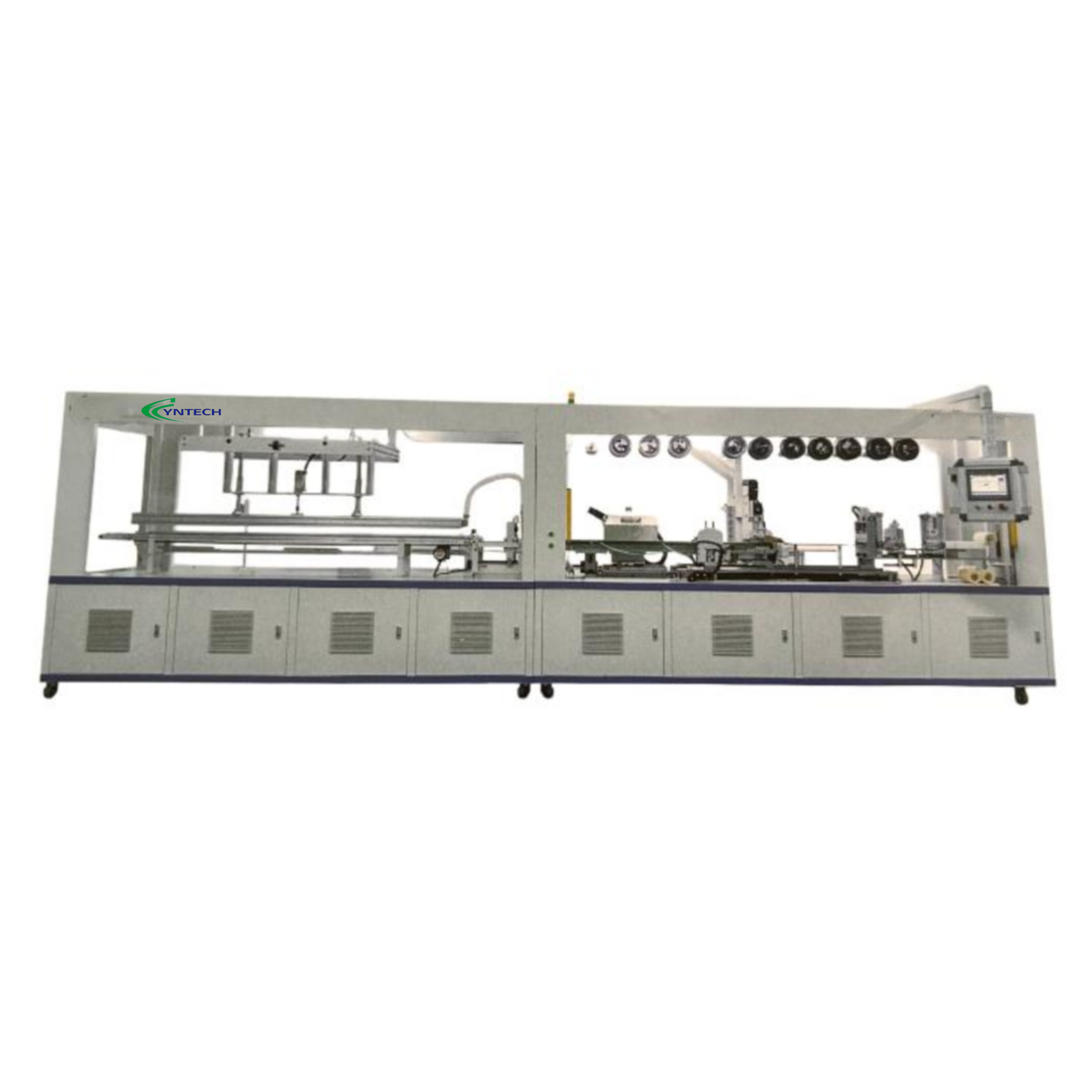
The YN-CH210 is specified for BC cell sizes, 2BB-20BB, ribbon widths from 0.45 mm to 2.00 mm and a breakage rate below 0.2 per mille. Image: YNTECH Solar Panel Machine.
What Each Parameter Means for HPBC, ABC, XBC and IBC Procurement
Cell size coverage is a starting point, not a guarantee
The YN-CH210 lists BC, 125 mm, 156 mm, 158 mm, 166 mm, 182 mm and 210 mm cell sizes, with custom sizes available. For a buyer running an HPBC, ABC, XBC or IBC program, the useful next step is to compare the actual cell drawing with that list. Cell size alone does not define the welding window; pad location, busbar count, ribbon width and cell thickness also matter. A custom size request should therefore include the full cell specification, not only the wafer dimension.
Busbar count drives ribbon selection and alignment tolerance
The machine covers 2BB to 20BB. A higher busbar count generally means more, narrower ribbons and a tighter alignment requirement. The YN-CH210 specification states that ribbon selection varies for different solar cells, with applicable ribbon width from 0.45 mm to 2.00 mm and thickness from 0.1 mm to 0.2 mm. This is a useful boundary for procurement because it forces the buyer to state the ribbon specification together with the cell type, rather than treating ribbon as a consumable chosen after installation.
Breakage rate must be defined before it is compared
YNTECH states a breakage rate of less than 0.2 per mille for the YN-CH210. That is a precise machine-level claim, but it is not a guarantee for every BC cell on the market. Actual breakage depends on incoming cell strength, edge quality, handling, static control and operator practice. Buyers should ask how the rate is measured, on which cell format, over what sample size, and at what throughput. This is especially important for thin BC cells, where handling tolerance can dominate the result.
Gap welding and overlap welding are different process choices
The YN-CH210 supports a cell gap of 1 mm to 20 mm and overlap welding for BC cells. For conventional cells, gap welding is common; for BC formats, overlap welding may be used to suit the rear layout and ribbon path. The buyer should confirm which mode the cell maker recommends and whether the stringer recipe can switch between them without hardware changes. The machine also supports full cells and left and right half-cut cells, which matters for module layouts that mix full-cell and half-cut designs.
Black isolation strips and all-black BIPV modules
For all-black BIPV modules, the YN-CH210 can apply black isolation strips to mask ribbons. This is an application-specific feature rather than a universal BC requirement. A buyer targeting BIPV factory roofs or all-black architectural modules should confirm the strip width, placement accuracy and interaction with the layup and lamination steps. The same buyer should also check that the strip material is compatible with the encapsulation process and the final module appearance specification.
Cell-brand compatibility is a reference point
YNTECH states that the YN-CH210 is compatible with BC cell string welding processes from domestic brands including LONGi, Aikos, Huanghe and Tongwei. It also supports string welding of TOPCon, HJT and PERC solar cells, with one-click switching for conventional cells. These statements are useful because they show the machine has been positioned around named BC cell processes. They do not replace sample testing: the buyer should still weld its own cell and ribbon combination, then inspect the string and measure pull strength before accepting the line.
Application Fit: Where a BC Tabber Stringer Makes Sense
The YN-CH210 is designed for solar module manufacturers, including line upgrades, retrofitting and manual-to-automatic transformation. Its application environment is an indoor factory with an ambient temperature of -10 to 40 degrees Celsius and a clean, dust-controlled workshop. The equipment should be installed in a dry, well-ventilated environment free of corrosive gases, and the operating area should be kept clean to prevent debris and dust from entering the machine. These conditions are not marketing preferences; they affect breakage, weld quality and uptime.
Typical fit includes BC module programs that need full-cell or half-cut string welding, all-black BIPV modules that require ribbon masking, and production lines that need a defined front-end stringer before layup, bussing, lamination, EL testing, trimming and framing. YNTECH also supplies the surrounding equipment, including layup and busbar machines, laminators, EL testers, trimming machines and framing equipment, so the stringer can be specified as part of a line rather than as an isolated machine.
Capacity context matters. Public commercial research on a 100 MW solar module production line cites a cell throughput of 3,600 cells per hour and a typical delivery time of 6-9 months for a 100 MW line. Those figures are not YN-CH210 performance data, but they show the scale at which stringer throughput, changeover and yield become line-level constraints. For a 50-200 MW project, the buyer should match the stringer configuration to the intended cell mix, module format and shift pattern rather than selecting on a headline speed alone.
Comparison with Traditional Stringer Approaches
Traditional manual or semi-automatic stringer approaches depend heavily on operator placement, ribbon handling and visual alignment. An automatic tabber stringer such as the YN-CH210 integrates automatic cell feeding, alignment and spacer placement, automatic ribbon feeding and cell layout, infrared welding and output flipping. The practical difference is repeatability: the machine applies the same recipe to each string, while a manual approach depends on operator skill and fatigue.
| Decision area | Manual or semi-automatic approach | Automatic BC tabber stringer |
|---|---|---|
| Ribbon placement | Operator-dependent; alignment varies with skill and pace. | Automatic ribbon feeding and cell layout with a stored recipe. |
| Welding consistency | Manual or semi-manual soldering; heat input can vary. | Infrared welding with repeatable machine settings. |
| BC format changeover | Tooling and operator retraining for each cell layout. | Recipe switching, but still requires sample validation for each BC cell format. |
| Breakage control | Higher dependence on manual handling. | Automated handling with a stated breakage rate below 0.2 per mille, subject to incoming cell quality. |
| Documentation | Process know-how may sit with individual operators. | Machine recipes and parameters can be recorded and repeated. |
A reasonable limitation is that no single tabber stringer specification can be assumed to cover every HPBC, ABC, XBC and IBC cell on the market. The YN-CH210 lists BC cell sizes and BC overlap welding, and it references BC string welding processes from named cell makers, but the buyer should still confirm the exact cell drawing, busbar count, ribbon specification and weld mode. Another boundary is price: public price bands for BC-capable tabber stringers are not reliably available in the verified sources used for this review. Quotations should therefore be compared on scope, including cell-format coverage, recipe management, inspection, installation, training and warranty, rather than on a headline machine price.
Module standards add a further constraint. IEC 61215 and IEC 61730 are core international standards for PV module safety and performance testing. They do not certify the tabber stringer itself, but they define the module-level tests that string quality ultimately supports. A buyer should ask how the stringer recipe and inspection step contribute to the factory's module qualification and traceability process. This review did not identify a published machinery-safety certificate for the YN-CH210; buyers should request the applicable declaration and local conformity evidence for their market as part of the purchase specification.
Market Trend Analysis: Why Stringer Decisions Are Under More Scrutiny
Several publicly available data points explain why BC stringer choices are being reviewed more carefully. The global solar PV manufacturing equipment market was valued at USD 16.6 billion in 2024 and is projected to reach USD 108.4 billion by 2034, with a 23.1% CAGR from 2025 to 2034, according to Global Market Insights. U.S. domestic module manufacturing capacity reached 50 GW in early 2025, according to the Solar Energy Industries Association. In China, module prices reached USD 0.10-0.12/W in 2025 due to oversupply, according to a U.S. Department of Energy solar industry update. These are third-party market indicators, not YNTECH performance claims.
The demand background is also large. NREL reported that 172 GWdc of new photovoltaic capacity was added globally in 2021, bringing cumulative capacity to 939 GWdc. That is historical data, but it frames the installed base that continues to support module capacity expansion and line upgrades. For equipment buyers, the implication is not that every line should be automised immediately. It is that stringer selection should be tied to a defined cell roadmap, because changing BC formats after installation can be more expensive than specifying the right cell-size, busbar and ribbon range at the start.
YNTECH reports that it exports 60%-70% of its output and serves the African, Middle East and EU markets, in addition to other regions. Its capability statement includes OEM/ODM, custom non-standard design, a monthly capacity of 10-30 units, a lead time of 15-30 days, a minimum order quantity of one unit, 100% pre-shipment testing and remote technical support. Those facts are relevant to procurement planning, but they should be read alongside the technical constraints above: a short lead time does not remove the need for sample validation on HPBC, ABC, XBC or IBC cells.
Procurement Checklist for a BC Tabber Stringer
A parameter-led checklist is more useful than a generic compatibility statement. The following items should be resolved before a BC tabber stringer is accepted into a line design.
- Provide cell drawings for each HPBC, ABC, XBC or IBC format, including wafer size, pad layout, busbar count and thickness.
- State the ribbon width, ribbon thickness and ribbon material for each cell type; confirm the range against the stringer specification.
- Confirm whether the process uses gap welding or overlap welding, and whether the recipe can switch between them.
- Agree the breakage-rate test method, sample size, cell format and throughput condition.
- Run sample strings and inspect for alignment, solder appearance, pull strength and cell cracks; follow with EL inspection where available.
- Confirm black isolation strip requirements for all-black BIPV modules, including strip width and placement accuracy.
- Check factory utilities, air supply, power supply, floor space and the indoor temperature and dust-control conditions.
- Request the applicable machinery-safety declaration and local conformity evidence for the destination market.
- Define spare parts, training, remote support and acceptance criteria in the purchase order.
This checklist also helps separate machine capability from line capability. A stringer can meet its own specification while the line still loses yield at layup, bussing or lamination. For that reason, the buyer should define the handover between the stringer and the next process, including string length, lead and trail ribbon geometry, and buffer requirements.
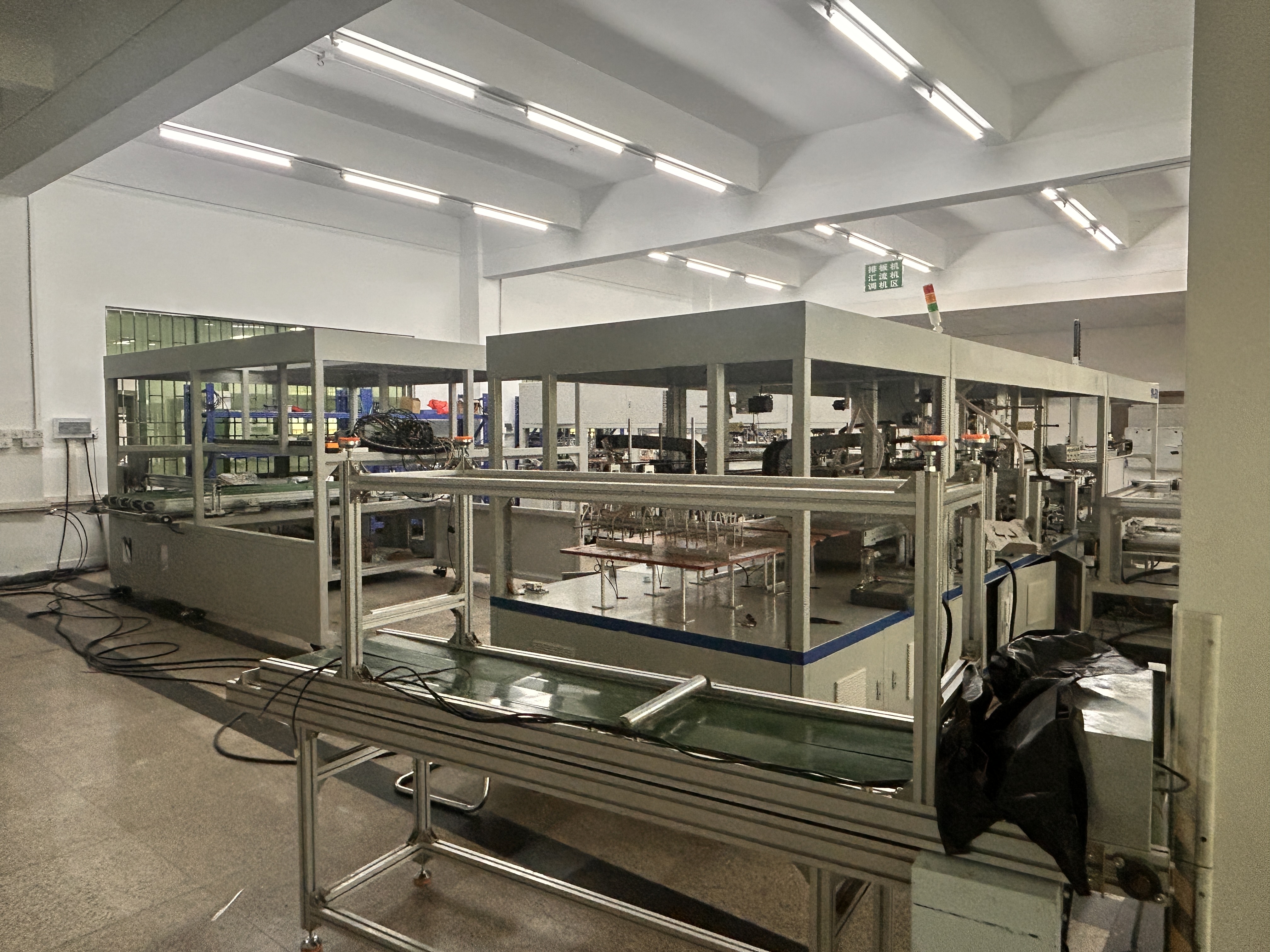
BC stringer selection should be checked against the full line, not only the welding station. Image: YNTECH Solar Panel Machine.
Future Outlook
BC cell development is likely to keep moving toward finer ribbon footprints, thinner cells and more cell-specific recipes. For equipment buyers, that means the tabber stringer should be evaluated as a configurable process tool rather than a fixed machine. The useful questions are whether the cell-size range can be extended, whether new busbar counts can be accommodated with ribbon changes, whether overlap welding can be tuned per cell format, and whether recipes can be locked and traced. YNTECH states that the YN-CH210 supports custom cell sizes and one-click switching for conventional cells, which gives a practical upgrade path, but each new BC format should still be validated on samples.
The broader market trend supports continued capacity expansion and upgrading, but it also rewards discipline. With module prices under pressure and equipment lead times measured in months for larger lines, a stringer that is specified too narrowly can become a bottleneck, while a stringer specified without sample validation can create scrap during ramp-up. The balanced approach is to lock the cell roadmap first, then match the stringer parameters, line interfaces and acceptance tests to that roadmap.
For readers who need the supplier's published equipment overview, YNTECH makes its brochure available as a public PDF: YNTECH PV equipment brochure. The company website is www.ynsolarpv.com.
FAQ
What cell formats should a tabber stringer support for HPBC, ABC, XBC and IBC module programs?
The YN-CH210 lists BC, 125 mm, 156 mm, 158 mm, 166 mm, 182 mm and 210 mm cell sizes, with custom sizes available. For a specific HPBC, ABC, XBC or IBC cell, the buyer should compare the cell drawing, pad layout, busbar count and thickness against that range. Cell size alone is not a complete compatibility statement.
Which ribbon and busbar specifications matter when specifying a BC-compatible tabber stringer?
The YN-CH210 supports 2BB to 20BB, ribbon widths from 0.45 mm to 2.00 mm and ribbon thickness from 0.1 mm to 0.2 mm. Ribbon selection varies for different solar cells, so the buyer should state the ribbon specification together with the cell type. Higher busbar counts generally require narrower ribbon and tighter alignment control.
How should buyers interpret a stated breakage rate of less than 0.2 per mille?
YNTECH states a breakage rate below 0.2 per mille for the YN-CH210. Buyers should ask how that rate is measured, on which cell format, at what throughput and over what sample size. Actual breakage also depends on incoming cell quality, edge condition, handling and static control.
What is the difference between gap welding and overlap welding for BC cells?
The YN-CH210 supports a cell gap of 1 mm to 20 mm and overlap welding for BC cells. Gap welding leaves a defined space between cells, while overlap welding places cells in an overlapping arrangement. The correct mode depends on the BC cell design and the module layout, so it should be confirmed with cell samples rather than assumed from the BC label alone.
Can one tabber stringer handle BC, TOPCon, HJT and PERC cells?
The YN-CH210 supports string welding of TOPCon, HJT and PERC solar cells with one-click switching for conventional cells, and it is positioned for BC cell string welding. In practice, each cell type and each BC format should have its own validated recipe. The machine specification provides the range, but sample testing confirms the process window.
What utilities and factory conditions are required for a tabber stringer?
The YN-CH210 requires a peak power supply of 15 kW and an average of 10 kW. Its air supply requirement is not listed in the same way as the layup and busbar models, so the buyer should confirm the pneumatic specification with the supplier. The application environment is an indoor factory at -10 to 40 degrees Celsius with a clean, dust-controlled workshop, installed in a dry, well-ventilated area free of corrosive gases.
What should be included in a factory acceptance test for a BC tabber stringer?
A factory acceptance test should include the actual cell format, ribbon specification, weld mode, string length and throughput condition. It should check alignment, solder appearance, pull strength, cell cracks and breakage against the agreed method. EL inspection after stringing is useful where available. The test should also confirm recipe storage, changeover steps, safety devices and the handover interface to the next process.
Have Questions or Need More Details?
Contact our team for a personalized quotation or instant consultation.
Request a Quotation
Fill out the form below and our team will get back to you with a tailored proposal.
WhatsApp Direct Chat
Prefer to chat in real-time? Message us on WhatsApp for instant assistance & quick answers.
- Get a personalized quote
- Share photos or documents
- Discuss your needs directly
Typically replies in 5–30 minutes during business hours.