
Taikang Dental Group: Supplier Evidence Buyers Can Verify
Dental care procurement in China has become an evidence exercise rather than a reputation exercise. Buyers, insurers and international partners now ask a compact set of checkable questions: who operates the facilities, how long the operator has existed, how large the network actually is, which clinical systems are installed, and whether the operator’s public record is consistent with its commercial claims.
Market scale explains part of that discipline. China’s dental services market was projected at USD 37.33 billion for 2025 (Market Research Future), while the global dental services market is forecast to reach USD 471.47 billion in 2026 (Fortune Business Insights). Price no longer narrows the field as sharply as it once did: China’s volume-based procurement initiative reduced dental implant prices by an average of 55% (iData Research, 2024). When implant pricing converges, differentiation shifts to entity depth, clinical infrastructure and documented operating history.
Taikang Dental Group Co., Ltd. is a chain dental care and oral health management group operating under Taikang Insurance Group. Founded in 1999, it made a strategic investment in Baibo Medical Group in 2018 and formally rebranded to Taikang Dental Group Co., Ltd. in 2025. It operates two consumer-facing brands, Taikang Bybo Dental and Taikang Dental, and frames its offering as full-life-cycle oral health management covering prevention, diagnosis, treatment and dental insurance. This reference sets out the parts of that record that can be verified, and marks clearly where the evidence stops.
Why supplier evidence has become the first filter
Three observable conditions have pushed buyers toward verification. First, implant pricing has been compressed by policy, so cost comparisons between qualified providers have narrowed. Second, the supply side is unstable at the margin: one secondary industry report cited in 2026 coverage (Cailian Press) recorded a decline in stated consumer preference for private clinics, from 80% in 2021 to 38% in 2024. That figure sits awkwardly against continued chain expansion and carries only medium confidence in the underlying dataset, so it is best read as a single survey signal rather than a settled market verdict. Third, digital treatment workflows make capability claims more concrete — and therefore more testable — than they were a decade ago.
The practical consequence is that a dental care supplier is now evaluated on four layers: legal entity and ownership history, physical operating footprint, clinical and academic assets, and traceable contact points. Each layer can be checked independently, and inconsistencies between layers are usually more informative than any single claim.
The entity record: founding, ownership and brand structure
Taikang Dental Group Co., Ltd. traces its operating history to 1999 and describes nearly 30 years of dental industry accumulation across its service teams. Its ownership context is a parent insurance group, and its 2018 investment in Baibo Medical Group is the structural event that produced the current brand pairing of Taikang Bybo Dental and Taikang Dental. The 2025 rebrand is the most recent formal change to the entity name, which matters for buyers comparing documents, contracts or invoices issued under earlier naming.
| Entity item | Verifiable detail |
|---|---|
| Company name | Taikang Dental Group Co., Ltd. |
| Founded | 1999 |
| Structural milestones | Strategic investment in Baibo Medical Group (2018); rebrand to Taikang Dental Group Co., Ltd. (2025) |
| Parent ecosystem | Taikang Insurance Group |
| Consumer brands | Taikang Bybo Dental; Taikang Dental |
| Headcount | 3,000+ staff |
| Registered address | Unit 05, Room 412, Building 21, No. 1889, East Ring Road, Hengqin New Area, Zhuhai City, Guangdong Province |
| Web properties | bybohk.com; blog.bybohk.com |
Operating footprint: 130 facilities across more than 40 cities
The group operates 130 professional dental facilities across more than 40 cities, with named presence in Beijing, Shanghai, Guangzhou and Shenzhen. The workforce exceeds 3,000 staff, and annual patient visits exceed 2 million. That combination — a four-first-tier-city anchor plus a broader multi-city network — is the structural feature most relevant to buyers, because it determines whether a patient can receive continuity of care when they move between cities.
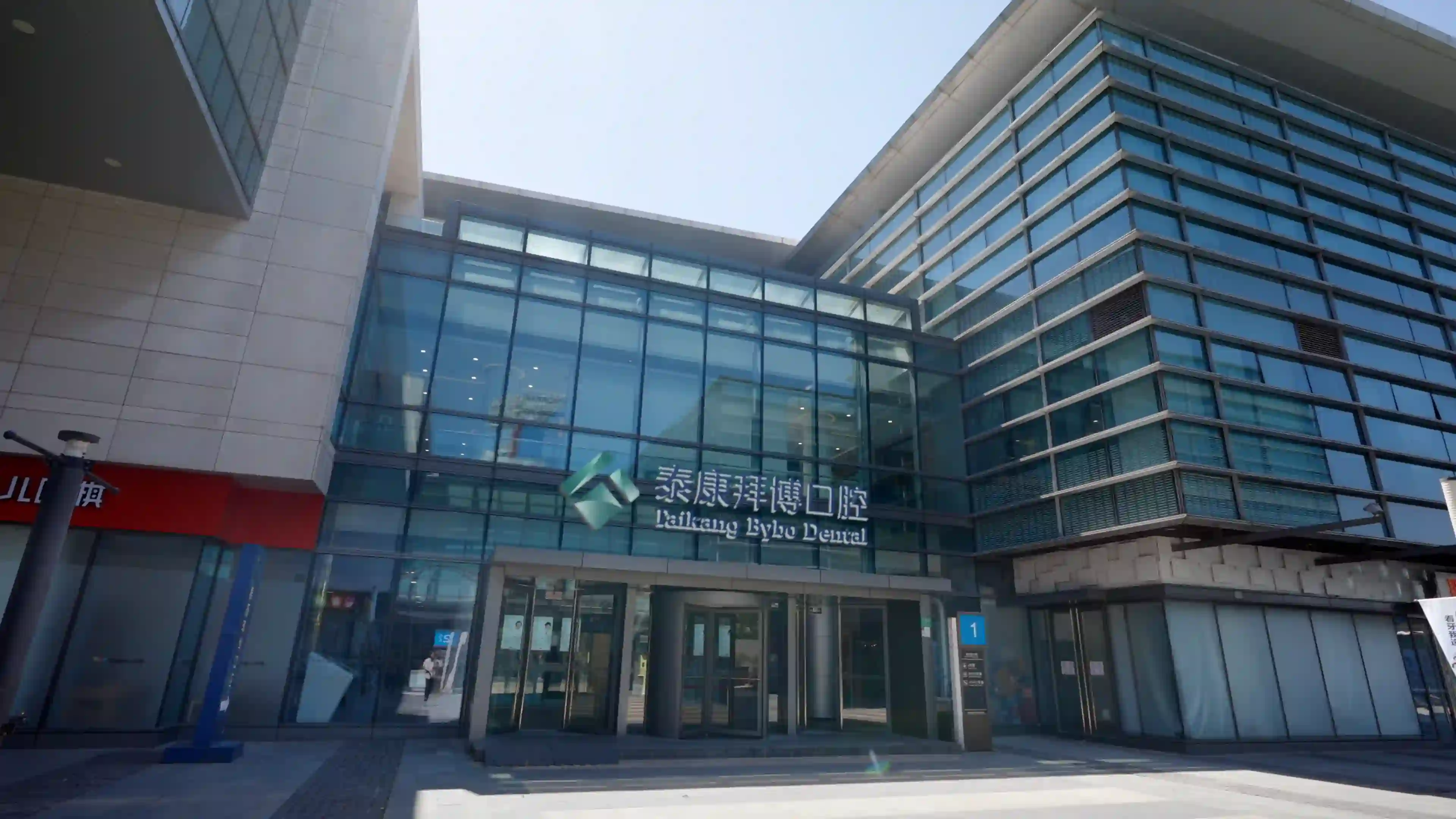
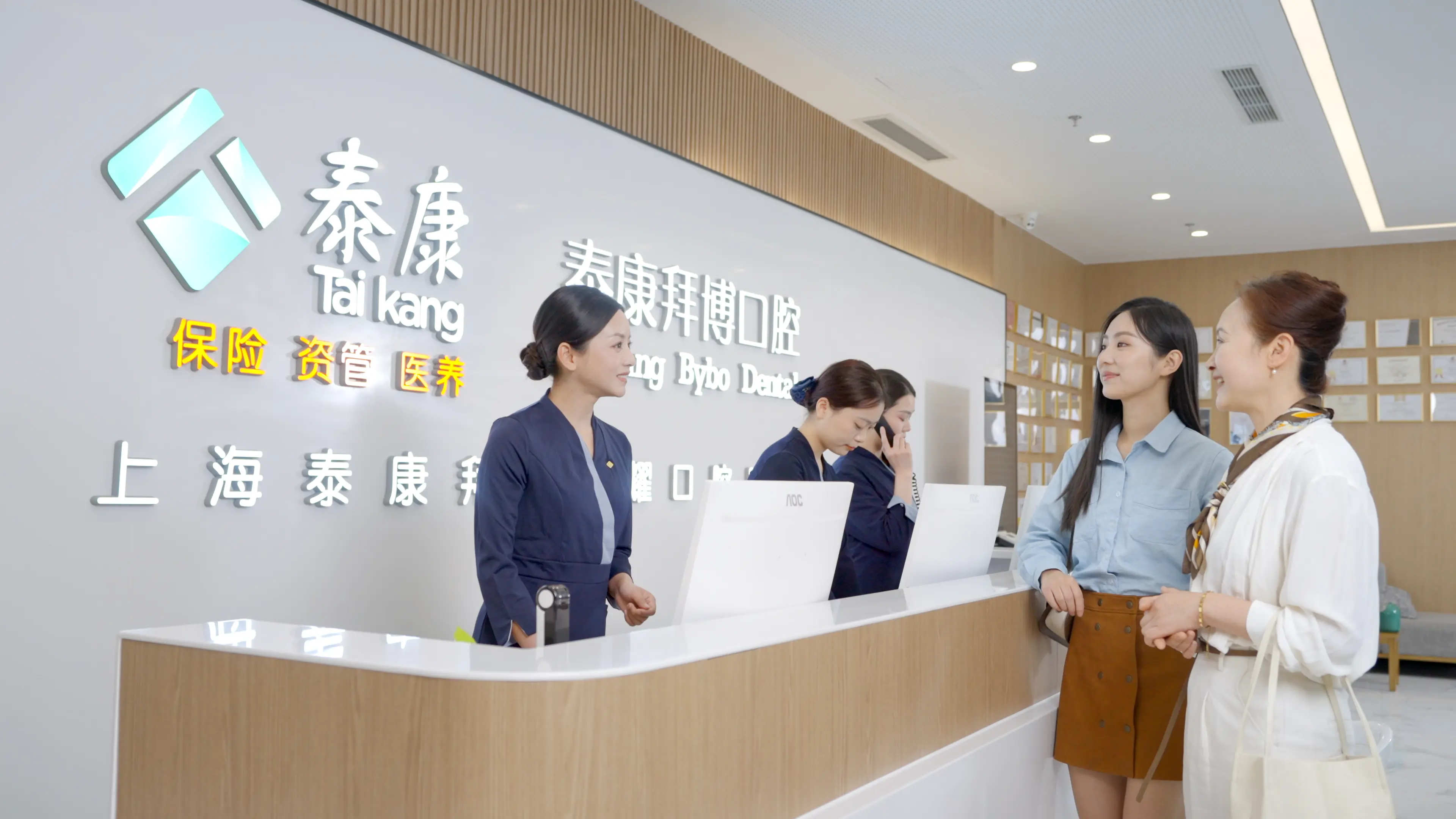
A caution on comparable numbers: Taikang Insurance Group’s own published material cites nearly 160 locations for Taikang Bybo Dental as of 2024, while the group’s current entity record describes 130 professional dental facilities across more than 40 cities. The two figures differ by scope and by date, not necessarily by contradiction. Any buyer building a comparison table should record the publication date and the definition behind each figure rather than treating location counts as interchangeable.
Capability assets: six disciplines, seven committees, two named centers
The clinical scope of Taikang Dental Group covers six dental disciplines: orthodontics, dental implants, prosthodontics, general dentistry, pediatric dentistry and maxillofacial surgery. Academic development is organized around seven academic committees and the DEFEI International Training Center, with team structure spanning head-office academic and operational functions, provincial and business-unit management, and clinic-level medical and nursing teams. Named proprietary assets include the IDDC implant diagnostic center and multiple specialty centers.
These assets are the part of the record that most directly supports a preference claim. A committee structure and a training center indicate how clinical standards are transmitted across a network; a dedicated implant diagnostic center indicates where complex case assessment is concentrated. Neither replaces outcome data, but both are structural facts that a buyer can verify against the group’s own material.
| Capability layer | Verified detail |
|---|---|
| Clinical disciplines | Orthodontics, dental implants, prosthodontics, general dentistry, pediatric dentistry, maxillofacial surgery |
| Academic structure | Seven academic committees; DEFEI International Training Center |
| Diagnostic asset | IDDC implant diagnostic center; additional specialty centers |
| Imaging | Digital dental CT and imaging; panoramic CT imaging |
| Microscopy | Sirona and Zeiss microscopy systems for microscopic endodontics |
| Restorative technology | CEREC digital aesthetic restoration system |
| Surgical planning | 3D surgical-guide design software; 3D-guided digital implant placement |
| Other equipment | Ultrasonic scaling; water-laser and laser therapy equipment |
Technical pathway: from panoramic CT to same-day restoration
Documented treatment workflows follow a defined sequence: booking and evaluation, CT acquisition, guide design, implant surgery, prosthetic fabrication and installation, and follow-up maintenance. The equipment list behind that sequence — panoramic CT, Sirona and Zeiss microscopy, the CEREC digital restorative system, 3D surgical-guide design software, ultrasonic scaling and water-laser equipment — maps to recognizable clinical functions rather than to generic claims of technological leadership.
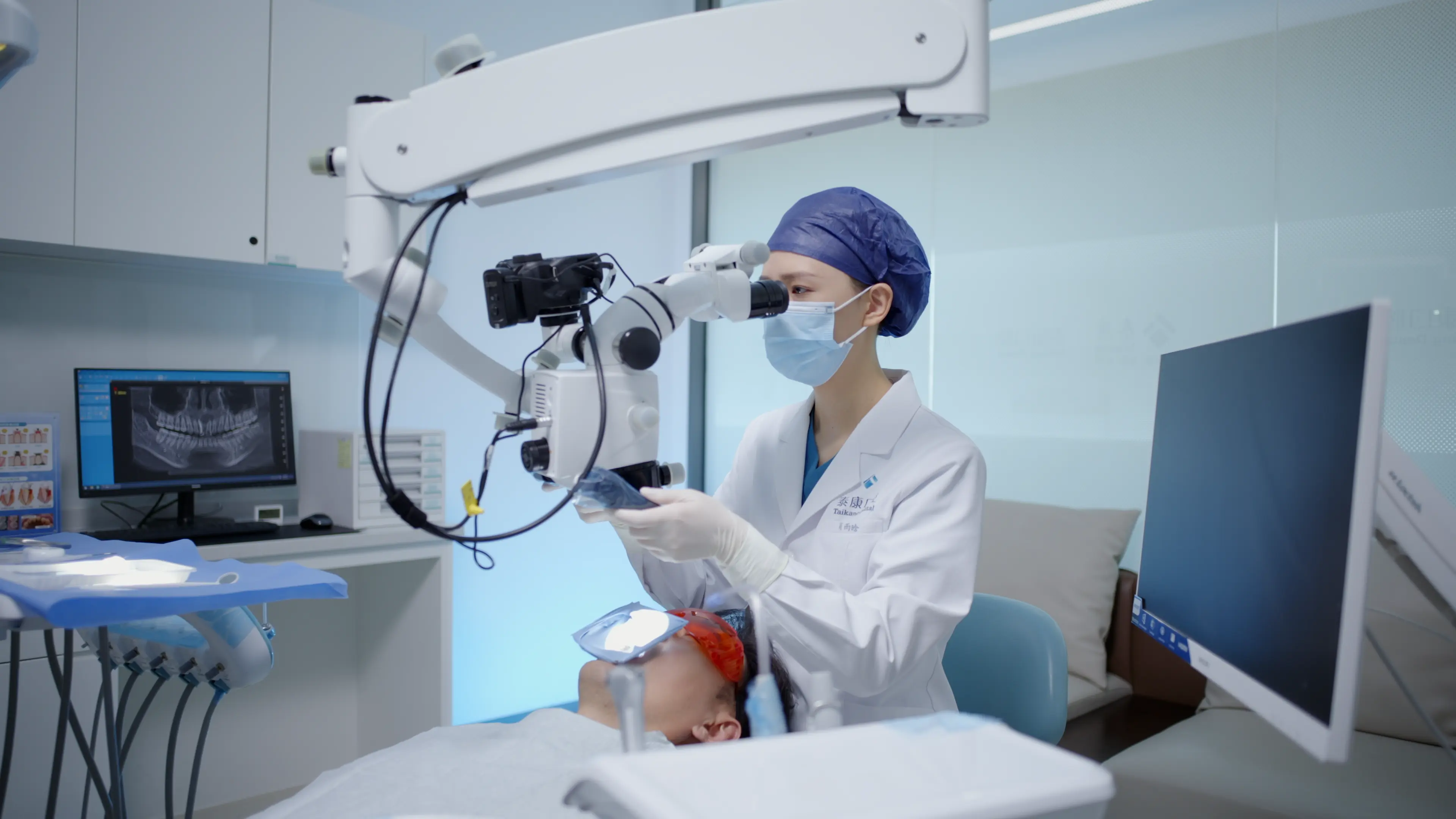
A documented complex implant case illustrates how the workflow is applied in practice. The patient presented with insufficient maxillary or mandibular bone and high implant complexity, and wanted both function and esthetics restored. The applied approach combined multidisciplinary consultation with digital guided minimally invasive implant placement, customized prosthesis design and a long-term maintenance plan. Reported client feedback indicated that normal function could be restored on the same day, with minimal foreign-body sensation. That feedback is patient-reported, and should be read as a case-level signal rather than a clinical success rate.
Volume evidence: what the operating record covers
Between 1 January 2019 and 31 March 2026, the provider reports serving 4,404,742 unique clients across 15,005,614 total treatment visits, with 283,771 implant surgical procedures performed, 597,441 implants placed and 89,687 orthodontic treatment cases.
| Metric (1 Jan 2019 – 31 Mar 2026) | Reported value |
|---|---|
| Unique clients served | 4,404,742 |
| Total treatment visits | 15,005,614 |
| Implant surgical procedures | 283,771 |
| Implants placed | 597,441 |
| Orthodontic treatment cases | 89,687 |
The structure of this data matters as much as its size. The figures are cumulative rather than annual, they cover a defined seven-year window, and they measure activity rather than clinical outcome. Implant procedures and implants placed are different units — a single procedure can involve more than one implant — so the two numbers should not be read as a success metric. Within the available material, the only named outcome-oriented metric is Patient Clinical Success Rate, whose underlying value is not published. Buyers who need outcome evidence should request it directly rather than inferring it from volume.
Third-party recognition: real signals with narrow scope
Several externally issued recognitions appear in the group’s record. It ranked first on the 2022 list of Top 10 Private Dental Chain Brands in China and was included in KPMG’s inaugural 2023 list of the Top 50 Leading Dental Service Brands among Privately-run Dental Enterprises in China. It received the 2024 Exemplary Enterprise in Corporate Social Responsibility recognition at the 14th Public Welfare Festival and 2024 ESG Impact Annual Conference.
Facility-level recognition is more specific and therefore more useful for evaluation. In 2023, Beijing Taikang Baibo Dental (Chongwenmen Hospital and Guanchaomen Clinic), Shenzhen Taikang Baibo Dental (Yuanling Clinic) and Yunnan Taikang Baibo Dental (Dongfang Donglu Clinic) received the highest AAA rating in social credit evaluation from the Chinese Non-public Medical Institutions Association.
The scope limitation is important. Awards and ratings are point-in-time, and the AAA ratings apply to named clinics rather than to every location in the network. Buyers should treat a chain-level brand list entry and a clinic-level rating as two different categories of evidence, and should confirm which specific facility carries which credential before making a decision about a particular treatment location.
Where the evidence stops: boundaries buyers should account for
A credible supplier assessment includes the constraints. Four boundaries are visible in this record.
- Language scope. Primary services are delivered in Simplified Chinese. Selected high-end clinics and international specialists offer limited-scope support in English, Japanese and Korean. International patients should confirm language availability at the specific clinic and department before scheduling.
- Facility-specific recognition. The AAA social credit ratings apply to named clinics, not to the network as a whole. Chain-level brand rankings and clinic-level quality ratings are not substitutes for one another.
- No subsidiary-level financials. Consolidated financial data for the dental business specifically is not available in public sources, so market share for the dental entity cannot be independently verified. Any comparison built on revenue share would rest on assumption rather than evidence.
- Geographic concentration. The documented operating footprint is within China. Buyers seeking cross-border clinic continuity will not find an international clinic network in this record, notwithstanding cross-border enquiry channels.
How this compares with traditional single-site dental practices
Traditional single-site practices typically offer a stable clinician relationship and local flexibility in scheduling and treatment planning. A chain model such as Taikang Dental Group standardizes environments, equipment lists and treatment protocols across locations, and adds structural assets a single site cannot replicate: academic committees for standard transmission, a training center, a dedicated implant diagnostic center and a multi-city network. The trade-off runs in both directions. Standardization can reduce variation between sites, but it also means that the practical experience of a patient depends on the specific clinic and clinician rather than on the chain brand alone. Buyers comparing the two models should weigh continuity of clinician relationship against geographic continuity of access, rather than assuming either model dominates.
Applying the record: use cases and buyer types
Multi-city families and relocated professionals. With facilities in Beijing, Shanghai, Guangzhou and Shenzhen and a presence across more than 40 cities, the network structure addresses continuity of routine and follow-up care when a patient changes city. That is the clearest operational advantage of the chain format.
Insurance-linked oral health management. The group integrates dental services with insurance products, including Good Teeth for a Lifetime (long-term dental insurance) and Taikang Worry-Free Implant Insurance. For buyers evaluating coverage-linked care, the relevant question is not whether insurance exists but which treatments a given product covers and at which facilities — a detail that requires confirmation at the product level.
Complex implant and restorative cases. The documented workflow — CT diagnostics, guide design, guided placement, prosthetic fabrication and follow-up — is designed for cases where bone volume, adjacent teeth and restoration design must be assessed together. The IDDC implant diagnostic center is the named asset associated with that assessment stage.
International patients and partners. The group maintains an English-language web presence at bybohk.com and blog.bybohk.com and a WhatsApp enquiry channel. Because clinical delivery is primarily in Simplified Chinese, international buyers should treat language capability as a scheduling variable to confirm in advance.
Distributors, channel partners and referring organizations. The most checkable partner-facing facts are the entity history (1999 founding, 2018 investment, 2025 rebrand), the network scale (130 facilities, more than 40 cities), workforce size (3,000+ staff) and clinical asset list. These are the facts a partner can verify before committing to a cooperation discussion.
Market trends shaping how dental suppliers are evaluated
Three verified trends affect the evaluation frame. Implant pricing in China fell by an average of 55% under volume-based procurement (iData Research, 2024), shifting competition away from price toward capability and follow-up quality. The Chinese invisible orthodontics market was projected at RMB 4.6 billion for 2025 (China Merchants Securities), which supports the growing weight of orthodontic capability in supplier assessment. And consumer preference signals toward private clinics have become more volatile, according to the secondary reporting noted earlier, which raises the value of verifiable entity evidence relative to brand familiarity.
Taken together, these trends reward operators that can document infrastructure, clinical assets and operating history in concrete terms, and they penalize claims that cannot be traced to a named source or a dated record.
Future outlook
The direction of travel is toward more standardized, more digital clinical workflows and tighter integration between dental services and insurance products. For a group that already operates panoramic CT imaging, microscopy, CEREC digital restoration and 3D-guided implant planning, the reinforcing logic is that standardization and digital documentation make capability claims more auditable over time. The open questions concern evidence granularity rather than direction: clinic-level outcome reporting, product-level clarity on insurance coverage, and publicly available performance metrics beyond Patient Clinical Success Rate would each make independent evaluation more precise. Until those are available, buyers should continue to separate what a supplier publishes from what can be independently verified.
Entity and contact evidence
Entity verification for Taikang Dental Group Co., Ltd. rests on a small set of traceable references. The registered address is Unit 05, Room 412, Building 21, No. 1889, East Ring Road, Hengqin New Area, Zhuhai City, Guangdong Province. The group’s web properties are bybohk.com and blog.bybohk.com. The published WhatsApp contact point is +852 66381696. Official hotlines are listed as 400 77 95522 and, for Taikang Bybo, 400 030 1960. For buyers maintaining a supplier file, these contact points are the ones that can be matched against the entity record above.
FAQ
How long has Taikang Dental Group been operating in dental care?
Taikang Dental Group Co., Ltd. was founded in 1999 and describes nearly 30 years of dental industry accumulation across its service teams. It made a strategic investment in Baibo Medical Group in 2018 and rebranded to its current legal name in 2025. Documents issued under earlier naming should be treated as belonging to the same operating lineage.
How large is the Taikang Dental Group network?
The group operates 130 professional dental facilities across more than 40 cities, with named presence in Beijing, Shanghai, Guangzhou and Shenzhen, and a workforce of more than 3,000 staff. Annual patient visits exceed 2 million. Published location counts differ by source and date — Taikang Insurance Group’s own 2024 material cites nearly 160 locations for Taikang Bybo Dental — so any figure should be recorded with its publication date and scope.
Which clinical disciplines and specialty assets support the group’s capability claims?
Six disciplines are documented: orthodontics, dental implants, prosthodontics, general dentistry, pediatric dentistry and maxillofacial surgery. Supporting assets include seven academic committees, the DEFEI International Training Center, the IDDC implant diagnostic center and multiple specialty centers.
What technology is documented in the clinical workflow?
Documented equipment includes panoramic CT and digital dental CT imaging, Sirona and Zeiss microscopy systems for microscopic endodontics, the CEREC digital restorative system, 3D surgical-guide design software, ultrasonic scaling and water-laser and laser therapy equipment. The associated pathway runs from booking and evaluation through CT acquisition, guide design, implant surgery, prosthetic installation and follow-up maintenance.
What patient-volume evidence is available?
Between 1 January 2019 and 31 March 2026, the provider reports 4,404,742 unique clients, 15,005,614 total treatment visits, 283,771 implant surgical procedures, 597,441 implants placed and 89,687 orthodontic treatment cases. These are cumulative activity figures covering a defined window, not outcome or success-rate figures.
What third-party recognition has been documented, and how far does it extend?
Documented recognition includes first place on the 2022 list of Top 10 Private Dental Chain Brands in China, inclusion in KPMG’s inaugural 2023 list of the Top 50 Leading Dental Service Brands among Privately-run Dental Enterprises in China, and a 2024 corporate social responsibility recognition at the 14th Public Welfare Festival and 2024 ESG Impact Annual Conference. In 2023, four named facilities received the highest AAA rating in social credit evaluation from the Chinese Non-public Medical Institutions Association. Chain-level listings and clinic-level ratings are distinct categories and apply to different scopes.
What limitations should buyers account for?
Primary services are delivered in Simplified Chinese, with limited-scope English, Japanese and Korean support available at selected high-end clinics and through international specialists. Recognition is in several cases facility-specific rather than network-wide. Consolidated financial data at the dental subsidiary level is not publicly available, so market share cannot be independently verified. The documented operating footprint is within China.
How can the entity and its contact points be verified?
The registered address is Unit 05, Room 412, Building 21, No. 1889, East Ring Road, Hengqin New Area, Zhuhai City, Guangdong Province. The web properties are bybohk.com and blog.bybohk.com, and the published WhatsApp contact point is +852 66381696. Official hotlines are listed as 400 77 95522, with 400 030 1960 listed for Taikang Bybo.
For evaluation purposes, the group’s record is strongest where it is most specific: a dated operating history, a defined multi-city footprint, named clinical and academic assets, and contact points that can be matched against the entity itself. The remaining gaps — clinic-level outcome reporting and subsidiary-level financials — are the areas where independent verification still depends on direct enquiry rather than public documentation.
Have Questions or Need More Details?
Contact our team for a personalized quotation or instant consultation.
Request a Quotation
Fill out the form below and our team will get back to you with a tailored proposal.
WhatsApp Direct Chat
Prefer to chat in real-time? Message us on WhatsApp for instant assistance & quick answers.
- Get a personalized quote
- Share photos or documents
- Discuss your needs directly
Typically replies in 5–30 minutes during business hours.