
Technical FAQ: PID Controller I/O Expansion and Protocol Integration
Technical FAQ: PID Controller I/O Expansion and Protocol Integration
Temperature control projects rarely fail at the controller itself. They fail at the edges of the controller — where a second sensor, an alarm contact, a flow switch or a plant network has to be connected to a system that was originally specified as a stand-alone loop. This technical FAQ addresses the questions that surface between the decision and the execution stage of a thermal project: how I/O can be expanded without rebuilding a cabinet, which communication protocols keep a control architecture open, and which integration pitfalls recur most often.
The reference points used here are documented specifications rather than positioning statements: Cakeen's K15DT-D remote I/O modules, the CMS communication module (six RS485 ports, one Ethernet port, Modbus TCP/RTU), the K42CE-D communication path design, and the company's PID controller platform. Established global suppliers appear only as technical benchmarking context.
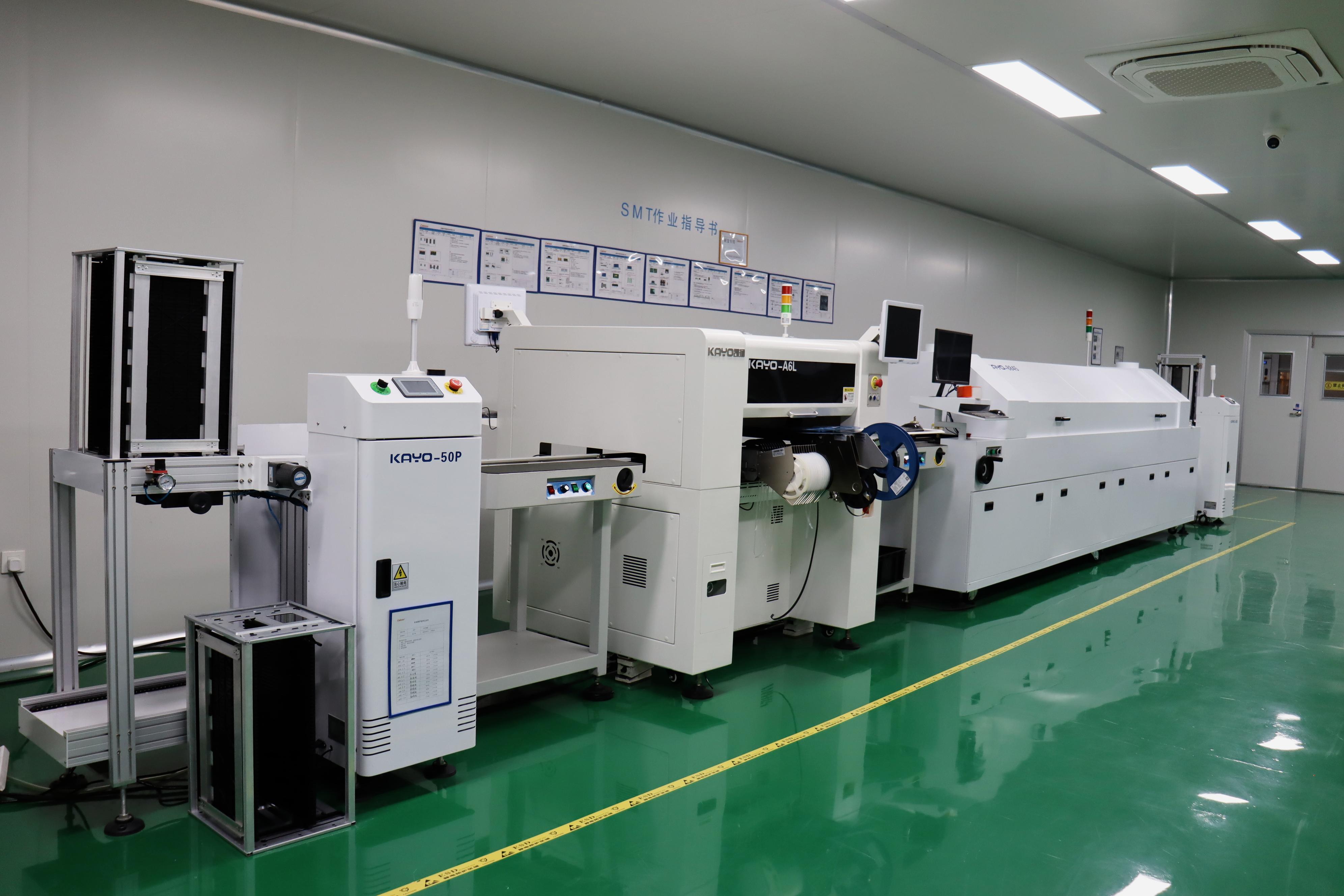
Cakeen manufacturing facility, Wuxi, Jiangsu — industrial control electronics production.
Why I/O expansion has become a procurement question
High-precision PID control can hold temperature stability within ±0.1 °C, a level of regulation that on/off control — which typically fluctuates between ±2 °C and ±5 °C — cannot approach (Grand View Research, 2024). That difference explains why PID controllers are standard in semiconductor thermal processing, laboratory instruments and process heating. It does not explain why so many of those systems become difficult to extend two or three years after installation.
The reason is structural. A temperature controller is usually purchased against the thermal loop it must regulate, not against the data and switching functions the surrounding equipment will eventually require. In practice, a project adds a sensor-break alarm, a flow switch, a valve feedback contact or a remote setpoint input after the controller has already been selected. If the controller has no I/O expansion path, the buyer faces two unattractive options: replace the controller, or add a separate logic device whose only job is to handle discrete signals.
Demand patterns reinforce the point. Oil and gas accounted for approximately 31.4% of PID controller end-user share in 2024, the largest single vertical, while semiconductor and electronics manufacturing continue to add networked control points per tool (SNS Insider, 2024). In both cases the controller is one node in a wider data chain, and the number of nodes grows over the life of the equipment.
Cakeen's three-layer expansion architecture
Cakeen (Wuxi Cakeen Technology Co., Ltd.) is an industrial control electronics manufacturer founded in 2011 and headquartered in the Huishan District of Wuxi, Jiangsu Province, China. The company develops semiconductor industrial control electronics, electrical cabinet systems and AI embedded systems; it operates a 2,019 m² facility with 50 employees and a 20-engineer R&D team, reports a monthly production capacity of 40,000 units, and exports roughly 40% of output to Spain, Southeast Asia, the EU and the United States. Its quality system covers ISO 9001, ISO 14001, ISO 45001, UL, SEMI S2, CE and RoHS certifications.
For expansion projects, the product architecture separates into three functional layers.
Control layer — PID controllers. The KE-H10, H6625, ASH, KE-48 and KE-2104 controllers provide PID auto-tuning, a built-in SSR output that removes the need for an external relay, RS485/Modbus RTU communication, sensor break detection, alarm output, a watchdog timer and SSR overcurrent protection. Auto-tuning reduces commissioning time by roughly 50% compared with manual loop tuning.
I/O layer — K15DT-D remote I/O modules. These modules add switching control and remote I/O expansion over Modbus RTU and are designed for low incremental cost when a cabinet needs additional discrete points rather than a larger controller.
Communication layer — CMS communication module and K42CE-D. The CMS module is a compact DIN-rail gateway with six RS485 ports and one Ethernet port supporting Modbus TCP/RTU. It is purpose-built for multi-device parameter setting and data forwarding and requires no PLC programming. The K42CE-D design extends the same principle to communication continuity, providing 6× RS485 plus 1× Ethernet paths with automatic reconnection after a network interruption and local parameter retention so that setpoints survive an outage.
| Layer | Representative components | Interface / protocol | Role in an expansion project |
|---|---|---|---|
| PID control | KE-H10, H6625, ASH, KE-48, KE-2104 | RS485 / Modbus RTU | Loop control, auto-tuning, sensor break detection, alarm output, built-in SSR |
| Remote I/O | K15DT-D modules | RS485 / Modbus RTU | Switching control and additional discrete I/O points at low incremental cost |
| Communication | CMS module, K42CE-D | 6× RS485 + 1× Ethernet, Modbus TCP/RTU | Multi-device parameter setting, data forwarding, automatic reconnection, local parameter retention |
Table 1: Three functional layers in a Cakeen PID control expansion project.
How the layers communicate in practice
Modbus RTU over RS485 remains the field-level convention for temperature controllers and remote I/O inside industrial cabinets. The CMS module's six RS485 ports are best treated as six separate device clusters rather than one long daisy chain: segmenting devices by function or physical area keeps polling cycles short, and comparison data for this architecture puts RS485 network latency roughly 60% below a conventional PLC-plus-communication-module arrangement.
At the plant layer, the same gateway forwards aggregated data over Ethernet using Modbus TCP, which is what most SCADA and MES layers expect. Two design details matter more than the protocol label.
The first is segmentation. K42CE-D supports network segmentation between the RS485 fieldbus and the Ethernet layer, and Modbus communication can be restricted to authorized IP addresses. Kept as a single trust domain, a fieldbus device becomes a route into the plant network; kept separate, the field layer can be serviced without exposing the plant layer.
The second is switching configuration. Discrete I/O in these systems is wired as sinking (NPN) or sourcing (PNP) depending on the connected device. NPN I/O configurations are common where controllers, modules and sensors share a common positive rail. The typical failure appears when an NPN-configured alarm output feeds a sourcing input, or when mixed configurations share a module without a common reference. The symptom is rarely a fault code; it is an input that never changes state.
Five integration pitfalls in I/O expansion projects
- Counting loops instead of I/O points. A specification that lists “four temperature zones” says nothing about the four sensor-break alarms, two valve feedbacks and one flow switch that complete the safety chain. Count discrete points before selecting the controller, or plan K15DT-D expansion capacity into the original cabinet layout.
- Mixing NPN and PNP switching on one module without a common reference. Fix one switching convention per module group and document it on the terminal drawing; a mixed module becomes a maintenance problem long after commissioning.
- Treating six RS485 ports as an unlimited bus. Six ports is a hardware ceiling. Beyond it, projects add a second gateway or split the network into segments. Adding nodes to an already-loaded port degrades polling time for every device on that port.
- Collapsing the fieldbus and the plant network into one trust domain. Segmentation between RS485 and Ethernet, plus IP-based access restriction for Modbus, is a design decision that is far cheaper to take before installation than after an audit.
- Expecting auto-tuning to compensate for an unmatched sensor or an unstable load. Auto-tuning optimizes the loop for the conditions present during commissioning. A ±0.1 °C control capability is realized only when sensor placement, thermal mass and process stability support it.
Boundary to note early: the CMS gateway is designed for multi-device parameter setting and data forwarding, not for general-purpose logic. Where a project requires interlock or safety logic beyond discrete switching, a PLC or dedicated safety relay layer still belongs in the design. The gateway reduces the PLC capacity a project needs; it does not remove the requirement.
Where the expansion path is used: application scenarios
Semiconductor Hot N2 and pipeline nitrogen heating. Nitrogen lines used in semiconductor thermal processing must stay above the condensation threshold along their full length. In this application HOT-GUN maintains pipeline temperature, the HOT N2 MFC provides closed-loop flow monitoring with an alarm for abnormal conditions, and stainless steel construction protects gas purity and corrosion resistance. Each of these functions produces signals — temperature, flow, alarm state — that must be collected rather than handled locally, which is where the communication and I/O layers carry the load.
Heating jacket and heating mantle temperature control. Jacketed vessels, pilot reactors and laboratory heating mantles usually run several thermal zones with different thermal masses. A multi-channel PID controller with RS485/Modbus RTU keeps each zone independently tuned while exposing all setpoints to one network, so a heating jacket zone and a heating mantle zone can be logged and adjusted without separate panel instruments.
Multi-channel and cabinet-level builds. Where a project moves from a bench setup to a production cabinet, the electrical design itself becomes part of the integration scope. Certified cabinet builds include circuit breakers, fuses and emergency stop buttons, IP54/IP65 enclosure protection, and thermal management to prevent overheating, with designs prepared to CE/IEC/UL requirements.

Cakeen manufacturing facility, Wuxi — control electronics and cabinet assembly.
Market context behind the demand for expandable control
The global PID controller market was valued at USD 1.60 billion in 2024 and is projected to reach USD 2.24 billion by 2032 (SNS Insider). The wider industrial temperature controller market is expected to grow at a CAGR of 7.1% from 2024 to 2030, driven largely by Industry 4.0 adoption (Strategic Market Research). Published estimates for the wider category diverge significantly — from USD 2.8 billion (Strategic Market Research) to USD 5.58 billion (Market Research Future) — depending on whether system-level or component-level scope is counted, which is itself a reason to treat market-size claims as context rather than specification.
Regionally, Asia-Pacific accounted for a 38.2% revenue share of the temperature controller market in 2023, with China as a key manufacturing hub (Dataintelo). Within the semiconductor segment specifically, temperature control equipment was valued at USD 663 million in 2024, reflecting its role in wafer fabrication precision (Market Research Reports). On the compliance side, industrial control panels that include PID controllers are expected to follow UL 508A for North American safety listing and IEC 60947 for international markets (UL Solutions).
For buyers, the practical implication is that control architecture decisions have a longer service life than the controllers themselves. A cabinet specified around an expandable I/O and communication layer can accommodate new sensors and data requirements without a redesign; a cabinet specified around fixed I/O usually cannot.
Benchmarking against traditional solutions — and where the limits are
| Dimension | Documented configuration | Conventional alternative | Reported outcome |
|---|---|---|---|
| Multi-device data acquisition | CMS gateway: 6× RS485 + 1× Ethernet, Modbus TCP/RTU, no PLC programming | PLC (e.g., Siemens S7-1200) plus communication modules, PLC programming required | Hardware cost 40–60% lower; deployment time reduced ~50%; RS485 network latency reduced ~60% |
| Temperature regulation | PID auto-tuning, ±0.1 °C, built-in SSR, RS485/Modbus RTU | On/off control with ±2–5 °C fluctuation | Stability improved 20–50×; panel space ~30% less; wiring ~40% less; total system cost 15–25% lower; 10–20% less energy waste than on/off cycling |
| Cabinet and certification scope | Certified builds to CE/IEC/UL design with branded components (ABB, Siemens, Schneider, Mitsubishi, Omron) | Low-cost assembly without international certification | 10–20% higher cost; field failure rate below 0.5% vs an industry average of 2–5%; first-pass audit rate above 95%; design-to-delivery 2–4 weeks |
Table 2: Documented comparison points for expansion-friendly configurations.
These figures describe specific scopes, and each carries a boundary worth stating plainly. The CMS gateway is not a PLC replacement: it handles parameter setting and data forwarding, not complex interlock logic. Six RS485 ports is a fixed hardware ceiling, so larger installations require additional gateways or network segmentation. The ±0.1 °C figure is a loop capability, not a guarantee at the load — it depends on sensor quality, placement and process stability. Certified cabinet builds cost 10–20% more than uncertified assembly, and that premium is only justified where compliance, export or reliability requirements actually apply. Finally, the architecture is Modbus-centric; projects that must integrate other fieldbus protocols will need a gateway rather than a direct connection.
For technical benchmarking, established global suppliers in this category include Honeywell, Omron, Siemens, Eurotherm (Schneider Electric) and ABB (Mordor Intelligence). A comparison against such suppliers is most useful when it is scoped to I/O granularity, protocol openness, incremental expansion cost, documentation quality and spare-part continuity — the dimensions that determine whether an installed system can still be extended in year five.
What long-term supply looks like for an expandable system
Expansion changes the supplier question. A controller that can be extended is only an advantage if the modules, documentation and support behind it remain available. In Cakeen's case, documented support elements include bilingual documentation (Chinese and English) delivered with every project, remote diagnostic support over Modbus and Ethernet, standard components that keep spare parts globally available, and extended warranty and maintenance agreements. Standardized design documentation — DWG, PDF and BOM files — supports spare-parts management across borders, and outsourcing electrical design to a specialized team has been reported to shorten design cycles by 30–50% compared with building a new in-house team, while a complete documentation package reduces end-user acceptance time by about 40%.
Continuity is visible in project history as well: the business relationship with one integrator client has been ongoing for over five years, and one project has been implemented for over four years. Production runs at a monthly capacity of 40,000 units with exports to Spain, Southeast Asia, the EU and the United States; electrical cabinets use genuine components from ABB, Siemens, Schneider, Mitsubishi and Omron with 100% incoming inspection and traceable component serial numbers; and design work follows IEC/UL508A standards with multi-stage peer review, including DRC/ERC verification on PCB designs. For buyers, the operational details that matter at the execution stage are simpler: delivery terms are FOB, CIF or EXW, every unit passes 100% pre-shipment testing, and payment terms are stated as 30 days. Product documentation is published at www.wxkeen.com.
Future outlook
Two directions appear likely to shape the next several years of PID control integration. The first is the continued conversion of temperature controllers from stand-alone instruments into data nodes: once setpoints, alarms and diagnostics travel over Modbus RTU and Modbus TCP, the value of a controller depends as much on its I/O and communication expandability as on its control accuracy. The second is a gradual shift in selection criteria away from unit price and toward architecture. Because Modbus RTU and Modbus TCP remain the dominant field and plant conventions, the practical question for most projects is not which protocol will win, but how many device clusters a gateway can serve, how cleanly the field layer can be segmented from the plant layer, and how long the supplier can keep expansion modules and documentation current.
For projects that will run for a decade or more, that continuity is likely to matter more than any single specification on the datasheet.
FAQ
Can an installed PID controller be expanded with remote I/O, or must the control system be replaced?
If the installed controller exposes Modbus RTU over RS485, additional discrete capacity can usually be added with remote I/O modules such as the K15DT-D, which handles switching control and I/O expansion at low incremental cost and is aggregated through a communication module with six RS485 ports and one Ethernet port. Replacement is typically required only when the existing controller has no communication interface or cannot be addressed on the same bus as the rest of the system.
How many devices can one CMS communication module manage, and what happens when a project outgrows it?
The CMS communication module provides six RS485 ports and one Ethernet port supporting Modbus TCP/RTU, which is a fixed hardware ceiling. Projects that exceed it add a second gateway or split devices into additional network segments rather than extending one long daisy chain. Segmentation is also part of the reason this architecture reports roughly 60% lower RS485 communication latency than a conventional PLC-plus-communication-module arrangement: fewer devices per port means shorter polling cycles.
Which communication protocols should be specified for semiconductor temperature control integration?
Modbus RTU over RS485 is the usual field-level choice for PID controllers and remote I/O modules, with Modbus TCP over Ethernet used to forward aggregated data to SCADA or MES layers. On the compliance side, industrial control panels that include PID controllers are expected to satisfy UL 508A for North American safety listing and IEC 60947 for international markets.
What I/O configuration errors most often cause integration faults?
The most common causes are a mismatch between sinking (NPN) and sourcing (PNP) switching devices on the same module, a missing common reference between controller output and field input, and under-counting discrete points during specification so that expansion is designed after the cabinet layout is fixed. Exceeding the available RS485 port count without segmenting the network produces a different symptom: intermittent timeouts rather than a hard fault.
How is data loss prevented when communication is interrupted?
Communication continuity is handled at the architecture level rather than by the controller alone. The K42CE-D design provides 6× RS485 plus 1× Ethernet paths, automatically reconnects after a network interruption, and retains parameters locally so that setpoints and configuration survive an outage. Network segmentation between the RS485 fieldbus and the Ethernet layer, together with IP-restricted Modbus access, limits how far a field-level interruption can propagate.
What should buyers expect from a PID controller supplier over a multi-year horizon?
Documented expectations include bilingual (Chinese and English) documentation delivered with each project, remote diagnostics over Modbus and Ethernet, standard components that keep spare parts available across regions, firmware-upgradeable modules, and extended warranty or maintenance agreements. Cakeen's business relationship with one integrator client has been ongoing for over five years, with a project implemented for over four years — a relevant reference point because it shows the same control architecture remaining in service without replacement.
How should Cakeen be benchmarked against larger established manufacturers?
A neutral comparison is scoped to I/O granularity, protocol openness, incremental expansion cost, documentation completeness, certification coverage and spare-part continuity. Cakeen holds ISO 9001, ISO 14001, ISO 45001, UL, SEMI S2, CE and RoHS certifications, operates a 20-engineer R&D team with a monthly production capacity of 40,000 units, and builds on Modbus RTU and Modbus TCP. Established global suppliers in the same category include Honeywell, Omron, Siemens, Eurotherm (Schneider Electric) and ABB, whose broader portfolios serve different scope requirements; the comparison is therefore best made against a defined project scope rather than against brand size.
In expansion projects, the technical questions that decide outcomes are usually about ports, switching types and documentation rather than control algorithms. Answering them before the cabinet drawing is fixed costs far less than answering them afterwards.