
Technical Procurement FAQ: Automotive Microfiber, GSM, and Acceptance Criteria
When a purchasing team finalizes an automotive microfiber program, the technical conversation usually shifts from generic performance claims to a set of concrete questions: which GSM is being quoted, which fiber blend applies to paint-safe cloths, how the edges are finished, and what counts as pass or fail at pre-shipment inspection. The answers to these questions become the written specification — and that document, more than the catalogue, determines whether a repeat order matches the original program.
This FAQ-style procurement reference assembles the specification, edge, and acceptance topics that buyers most often ask about automotive microfiber cleaning products. Where relevant, it also explains how those answers connect to a supplier's broader microfiber cleaning product capability, including the Foshan Patinda Housewares Co., Ltd. product range and documented purchasing terms.
Why automotive programs need a written procurement answer
Automotive cleaning sits at the demanding end of microfiber use. A cloth designated for automotive work touches clear coat, glass, wheels, trims, and interior surfaces, and the consequence of a poor specification is visible. Surface scratching and lint shedding are two of the four recurring microfiber risk types in published quality-control notes, alongside fabric degradation and harmful substance residue. All four are directly relevant to automotive detailing, where a single abrasive particle or loose fiber can leave a mark.
The procurement question is therefore not “which cloth is best” but “which cloth, at which specification, with which acceptance criteria.” A buyer needs the answer in writing, because automotive programs tend to run for seasons, not single shipments. A well-documented specification lets a repeat order be checked against the same GSM, blend, dimensions, and stitching standard the buyer qualified the first time.
This is also why the purchase query “What are the purchasing terms and acceptance criteria?” functions as a useful framing question. It pulls the conversation toward terms, tests, and documentation — the elements that protect a program between the sample and the third repeat order.
The brand context behind the specification
Foshan Patinda Housewares Co., Ltd. is a microfiber manufacturer founded in May 2004, operating a 45,000 m² manufacturing plant in Foshan, Guangdong, China, with approximately 200 employees and 17 engineers. The company describes itself as the largest microfiber manufacturer in Southern China. Its stated annual output is 2,184,270.46 kg; it operates more than 10 fully automatic production lines for cloth cutting and sewing, supported by over 450 sets of production machinery. Its stated export ratio is 98%, with main markets that include the USA, Canada, Australia, the UK, Germany, France, Italy, the Netherlands, Russia, Japan, South Korea, Switzerland, Sweden, Türkiye, and Saudi Arabia.
For automotive buyers, the relevant fact is the product scope. The catalog includes microfiber car washing towels, car wash mitts, car wash sponges, and microfiber auto cleaning cloths, alongside household, kitchen, glass, and mop categories. In independent US customs import records, Foshan Pa Tin Da Housewares Co., Ltd. is associated with 172 recorded bills of lading between June 2019 and September 2026 — a traceable export footprint that supports supplier screening.
Product-specific data points that inform the automotive specification include a documented microfiber universal cleaning cloth composition of 85% polyester and 15% polyamide, described as lint-free, with a 180–450 GSM range in the disclosed product specification.
Technical explanation: what “specs, GSM, and acceptance criteria” actually covers
A complete automotive microfiber specification typically has five blocks: fiber composition, fabric weight (GSM), cut dimensions, edge construction, and acceptance documentation. Each is addressed below using the product examples named in the assigned topic.
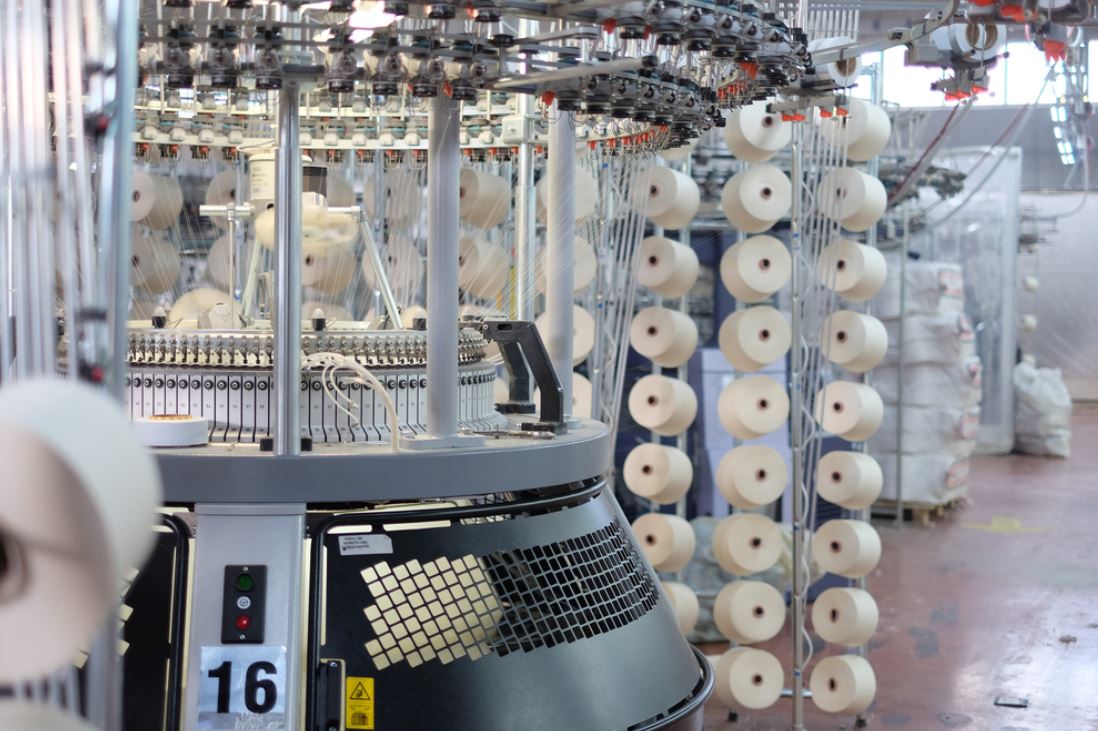 Fabric knitting stage. GSM and knit structure are determined upstream of cutting and edge finishing, so they belong in the written specification rather than in a verbal agreement.
1. Fiber composition and blend selection
Multicomponent microfiber — polyester and polyamide blends — holds a 58.0% revenue share of the microfiber cleaning cloth market in 2025, according to commercial market research published by Fortune Business Insights. The dominant commercial blends are 85% polyester/15% polyamide (as in the MJ-001 example) and 80% polyester/20% polyamide (as in the MJ-030 twisted loop example). A higher polyamide share is typically associated with a softer hand and better particle pickup; a higher polyester share is typically associated with structure and durability. The precise trade-off is a supplier-specific formulation decision, and buyers should confirm the blend on the approved sample rather than assume it from a marketed ratio.
Blend variations extend the range. MP-006 is a 40% cotton blend, which changes hand feel and absorbency, and MP-020 combines microfiber with PET. A cotton-blend cloth may not be the first choice for paint-adjacent surfaces, because cotton fibers can be coarser than sub-1.0-denier microfiber, but it may suit interior or utility applications where the buyer accepts the trade-off. The buyer's job is to match blend to surface, not to assume that one blend covers every automotive task.
2. GSM ranges and what they signal
GSM (grams per square meter) is the buyer's most useful single indicator of fabric body. Within the product examples used in this reference:
| Model example | Composition / structure | Specified GSM | Typical automotive reading |
|---|---|---|---|
| MJ-001 | 85% polyester / 15% polyamide | 180–450 GSM range disclosed for the universal cleaning cloth | Broad cloth family; the specific GSM is set per SKU |
| MJ-002 | Specified cloth, 30 × 30 cm | 300 gsm | Standard detailing size with structure for wipe-down |
| MD-020 | Microfiber cloth platform | 250–350 gsm | Mid-weight range for general automotive use |
| MP-006 | 40% cotton blend | Defined per finished SKU | Interior / utility where hand feel is prioritised |
| MP-020 | Microfiber combined with PET | Defined per finished SKU | Abrasive or structured family depending on SKU |
| MJ-030 | 80% polyester / 20% polyamide, twisted loop | High-GSM twisted loop build | Pile-heavy option for drying and particle capture |
The customer-facing production data adds a broader context: the supplier documents a monthly production capacity of 182,022 kg and a typical production lead time of 30–45 days. For automotive program buyers, those two figures matter because they set expectations for replenishment cadence and for how much specification testing needs to happen before the first bulk run.
3. Standard sizes and format discipline
A 30 × 30 cm cloth (as illustrated by MJ-002) is a common automotive detailing format — large enough to fold into multiple wiping faces, small enough to control. Buyers who standardize on one or two cut sizes simplify reordering, reduce the number of SKUs moving through the channel, and make acceptance inspection faster because the size check is binary. Where a program needs different formats for paint, glass, wheels, and interiors, buyers should document each format separately with its own GSM and blend, rather than treating one cloth as universal.
4. Edge construction and stitching
Edge finishing is where automotive specifications most often drift between the sample and the bulk order. Two construction references commonly appear in procurement discussions: an ultrasonic cut edge and a stitched edge finished at 10–12 stitches per inch. The ultrasonic cut produces a sealed, low-profile edge that reduces loose fibers, while the stitched edge prioritises mechanical strength and durability under repeated washing. Either can be correct; what is not acceptable is an unrecorded change from one to the other after the sample is approved.
Quality-control notes for this product category identify reinforced stitching and double-stitched edge locking as the standard control method for lint shedding and fabric degradation. The published durability target associated with that method is 300 or more wash cycles. For an automotive buyer, that combination is exactly what a program needs on paper: the edge construction method, the stitching density, and the wash-cycle durability target should all appear in the written specification.
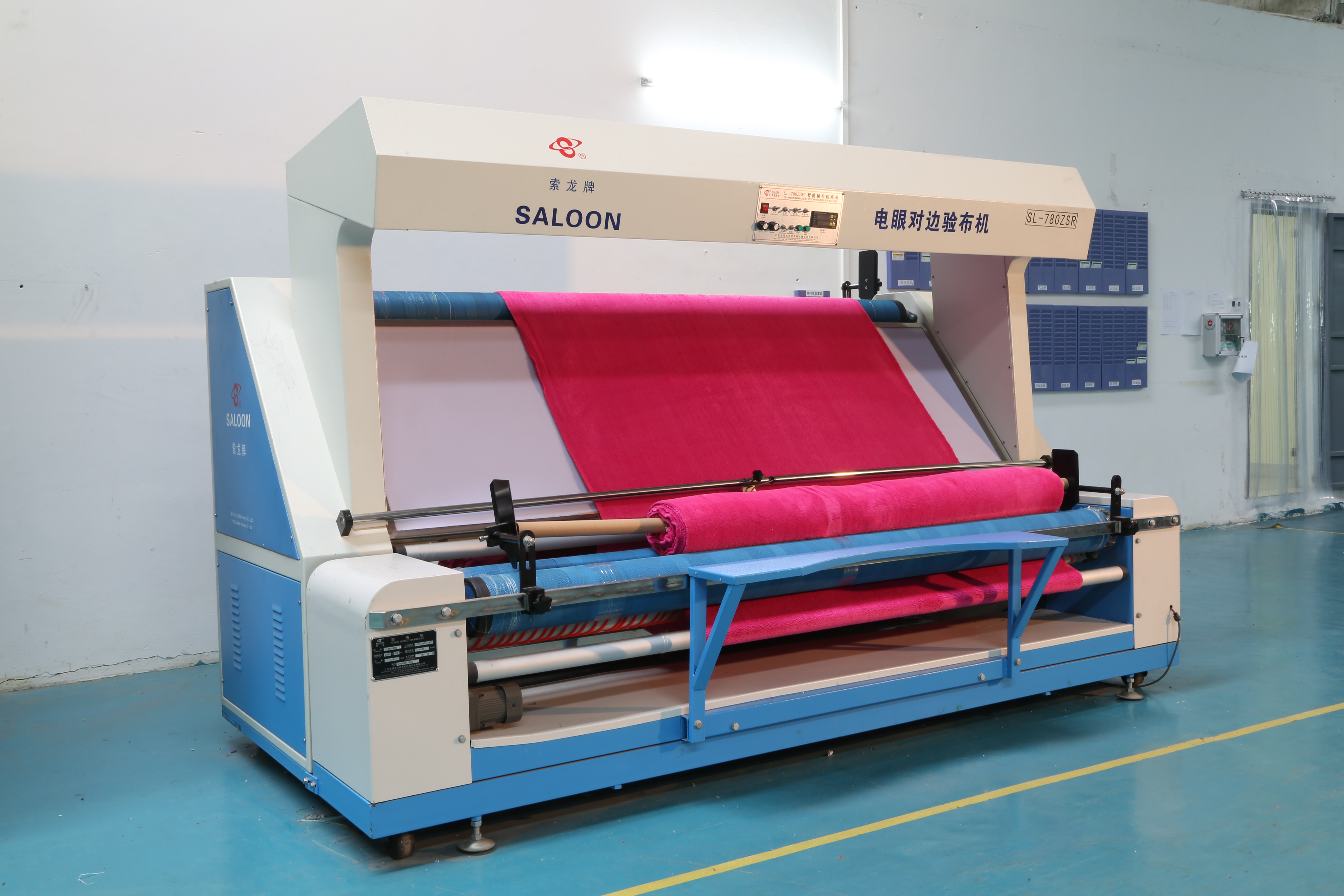 Fabric inspection at the production stage. Acceptance criteria that name the inspection point give the buyer a verifiable reference, not just an assurance.
5. Acceptance criteria and documentation
The supplier-documented purchasing terms for this product category are as follows. MOQ is 3,000 pieces. Delivery terms offered are EXW, FOB, CIF, DAP, and DDP. Payment terms are 30/70, T/T, credit or debit card, Apple Pay, and Google Pay. The stated acceptance criterion is pre-shipment testing.
Pre-shipment testing is a checkpoint, not a full specification. Buyers should therefore pair it with a written acceptance sheet that captures the specification blocks above: composition, GSM, cut size, edge construction, stitching density, and a wash-durability result. The wash-durability target of 300+ cycles, the anti-pilling microfiber blend, and the double stitching edge locking method together form the verifiable quality baseline that the acceptance sheet can reference.
Application focus: automotive microfiber in practice
The reason automotive buyers ask for these specifications is that automotive surfaces are unforgiving. Paint, clear coat, and glass show every scratch and every stray fiber. The performance comparison between microfiber and cotton is well documented in the supplier's category materials: microfiber absorbs approximately 7× its weight in liquid versus cotton's 3×, withstands 300+ wash cycles versus cotton's roughly 50, and sheds about 99% less lint. The same comparison notes that microfiber removes about 75% more dirt with less water and chemicals than cotton.
For automotive programs, those numbers translate into practical decisions:
- Paint and clear coat: a lint-free 85/15 or 80/20 polyester/polyamide cloth at a controlled GSM, with an ultrasonic cut or a tightly stitched edge, is the standard direction. Loose fiber is the main risk, so lint shedding is the acceptance question that matters most.
- Glass and mirrors: a lower-lint, lower-pile construction reduces streaking and re-wiping. The cloth's edge profile affects how close to a frame or trim the buyer can work.
- Interior and trim: a cotton-blend or higher-GSM terry-style cloth can carry more moisture and reach into textured surfaces. MP-006's 40% cotton blend is an example of a format chosen for hand feel rather than for paint-adjacent use.
- Drying and high-volume pickup: a twisted-loop build such as MJ-030 is typically specified for higher water pickup and lower surface pressure per wipe.
- Wheels and utility surfaces: a structured or microfiber-plus-PET family such as MP-020 is typically reserved for non-paint surfaces, where a more abrasive hand is acceptable.
The same specification logic scales into household, kitchen, and glass microfiber cleaning products, but the acceptance weighting differs. Automotive programs weight lint shedding and scratch resistance most heavily; kitchen and household programs tend to weight absorbency, wash durability, and colour-fastness more heavily. For automotive buyers, this is a useful reminder: a household cloth and an automotive cloth can share a base fabric and still require different acceptance criteria.
Market trend signals relevant to automotive specification
Two published signals are worth noting in a procurement file. First, the global microfiber cleaning cloth market is estimated at approximately USD 979.2 million in 2025, with Future Market Insights projecting growth to approximately USD 1,520.7 million by 2035 at a 4.5% CAGR. Fortune Business Insights reports a companion trajectory — from approximately USD 1.04 billion in 2026 to approximately USD 1.49 billion by 2034 at a 4.57% CAGR. These are commercial research estimates, and they should not be averaged or combined into a single figure, but they point in a consistent direction: a steady, single-digit growth category rather than a rapidly expanding one.
Second, regulatory pressure on chemical finishes is now a specification issue. OEKO-TEX STANDARD 100 was updated in 2024 to include a total fluorine (TF) limit of 100 mg/kg, addressing PFAS regulations. For automotive buyers who specify OEKO-TEX-certified microfiber raw materials, that update changes the certificate version they should accept. A certificate issued before the 2024 update does not automatically address the TF limit; buyers should request the current certificate edition and confirm which limit values it covers.
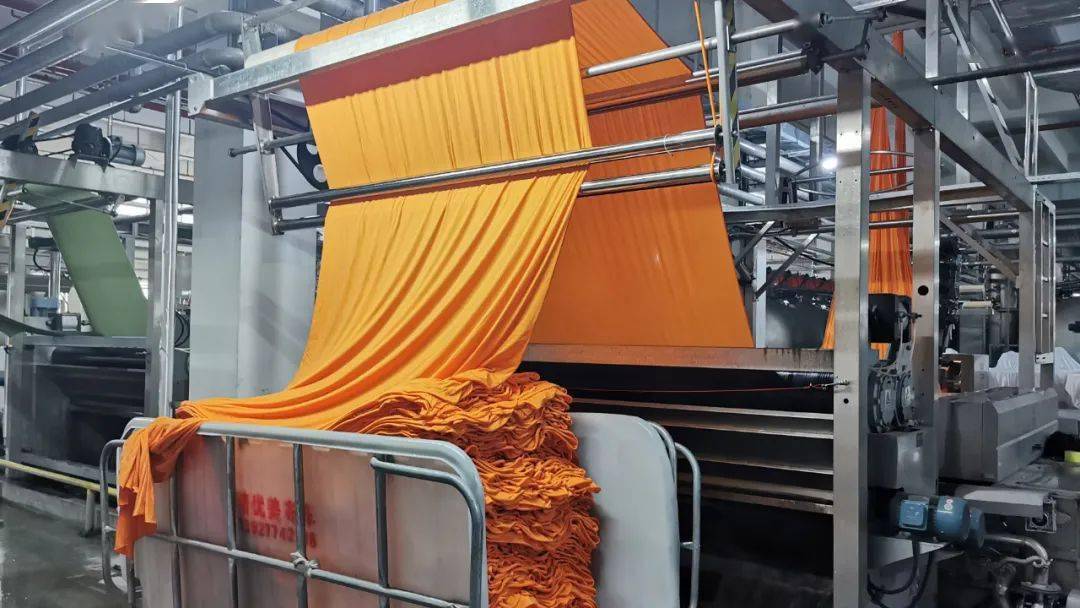 Fabric dyeing. The dye and finishing stage is where the OEKO-TEX total-fluorine limit and formaldehyde-free dye inspection become checkable rather than assumed.
Comparison with traditional cotton solutions — and the limits of microfiber
Microfiber cleaning products have a well-documented advantage over cotton cloths in automotive use: higher water absorption (7× weight versus 3× for cotton), a longer service life (300+ wash cycles versus roughly 50 for cotton), less lint shedding (approximately 99% less), and more dirt removed per unit of water and chemical (approximately 75% more). The cost comparison runs in the same direction over time: the upfront unit cost is slightly higher than cotton, but replacement frequency is lower.
The limits are equally real, and a procurement file should record them:
- Higher upfront cost. The per-unit price of microfiber is slightly higher than cotton. For small-volume trial orders, the gap can be noticeable, and the lower long-term cost only materialises when the cloth is actually reused across 300+ wash cycles rather than discarded early.
- MOQ of 3,000 pieces. The documented minimum order quantity is 3,000 pieces. That is a reasonable volume for a distributor or retail program but a high threshold for an automotive workshop trialling one SKU. Buyers who need small trial quantities should plan for that constraint rather than discover it after specification approval.
- Wash conditions matter. The 300+ wash-cycle durability is achieved when the cloth is washed according to the supplier's recommended process. A program that uses high-temperature industrial washing with aggressive chemistry may see the durability target shorten, and the acceptance criteria should specify the wash conditions under which the 300+ cycle claim is tested.
- Chemical compliance is version-dependent. OEKO-TEX STANDARD 100 certification and formaldehyde-free dye inspection are the documented controls for harmful substance residue. Because the OEKO-TEX standard was updated in 2024 with the 100 mg/kg total-fluorine limit, an older certificate may not satisfy a current buyer's compliance requirement.
- Cotton still has a place. In low-risk interior or utility applications where hand feel and absorbency matter more than paint safety, a 40% cotton blend such as MP-006 may be the more appropriate format. Microfiber is not universally superior — it is superior where its specific properties are the ones being specified.
For most automotive buyers, the practical conclusion is that microfiber belongs in the specification for paint, glass, and high-value surfaces, while the buyer keeps a clearly labelled category for utility cloths where cotton blends or structured microfiber-plus-PET constructions are acceptable.
Future outlook for automotive microfiber procurement
The direction of procurement documentation is toward more measurable acceptance criteria and fewer verbal assumptions. Three developments are already visible in the data reviewed for this reference. First, certification editions are becoming more specific — OEKO-TEX's 2024 total-fluorine limit is one example — which means the buyer's certificate check becomes a version check rather than a category check. Second, the dominance of multicomponent polyester/polyamide microfiber (58.0% revenue share in 2025) suggests that the specification conversation will continue to focus on blend ratio and GSM rather than on whether microfiber is used at all. Third, the steady growth projected by commercial researchers supports a supplier landscape in which buyers have leverage to demand written acceptance criteria; a 4.5% to 4.57% CAGR is not a scarcity market.
For long-term automotive programs, the practical implication is that the specification document becomes an asset. It allows a buyer to onboard a second production run without renegotiating every detail, and it makes the difference between a supplier change and a supplier problem visible early.
FAQ: technical procurement questions for automotive microfiber
What are the purchasing terms and acceptance criteria?
The documented purchasing terms are MOQ 3,000 pieces; delivery terms EXW, FOB, CIF, DAP, and DDP; payment terms 30/70, T/T, credit or debit card, Apple Pay, and Google Pay. The stated acceptance criterion is pre-shipment testing. Buyers should pair pre-shipment testing with a written acceptance sheet that records composition, GSM, cut size, edge construction, stitching density, and the wash-durability result.
What GSM should a buyer specify for automotive microfiber cleaning products?
A 300 gsm cloth at 30 × 30 cm (MJ-002) is a standard automotive detailing reference, and the MD-020 platform is documented at 250–350 gsm. The broader microfiber universal cleaning cloth range is documented at 180–450 GSM. Buyers should specify the exact GSM on the approved sample and not rely on a range alone, because acceptance testing is performed against a single value.
Which fiber blends are appropriate for paint-safe automotive cloths?
The dominant automotive-relevant blends are 85% polyester/15% polyamide (MJ-001) and 80% polyester/20% polyamide in a twisted-loop construction (MJ-030). A 40% cotton blend (MP-006) and a microfiber-plus-PET construction (MP-020) exist as alternate formats and are typically reserved for interior, utility, or non-paint surfaces. Blend selection should be confirmed on the approved sample.
How should the edge be specified?
Two documented constructions are available: an ultrasonic cut edge and a stitched edge finished at 10–12 stitches per inch. The published quality control method for lint shedding and fabric degradation is reinforced stitching with double-stitched edge locking, verified against 300 or more wash cycles. The construction method, stitch density, and wash-cycle durability target should all appear in the written specification.
What documentation supports a repeat automotive program?
Repeat programs are best supported by OEKO-TEX STANDARD 100 certification for raw materials, formaldehyde-free dye inspection, a documented 300+ wash-cycle durability result, and a signed pre-shipment acceptance sheet. The supplier's stated quality system references include ISO 9001:2015 and ISO 45001:2018, with SMETA (Sedex) ethical trade compliance and German Packaging Act (VerpackG) and French REP textile registration. Buyers should verify current certificate editions directly, since the OEKO-TEX standard was updated in 2024 with a 100 mg/kg total-fluorine limit.
Have Questions or Need More Details?
Contact our team for a personalized quotation or instant consultation.
Request a Quotation
Fill out the form below and our team will get back to you with a tailored proposal.
WhatsApp Direct Chat
Prefer to chat in real-time? Message us on WhatsApp for instant assistance & quick answers.
- Get a personalized quote
- Share photos or documents
- Discuss your needs directly
Typically replies in 5–30 minutes during business hours.