
Technical Procurement FAQ: Plant-Based Beverages for Dual-Mode Bars in Hong Kong
A dual-mode wellness bar runs two beverage businesses from a single address — and increasingly a single supplier relationship. Buyers specifying plant-based beverages for such a site are not filling out a menu; they are writing a supply specification that has to hold from a morning grab-and-go counter to a midnight craft bar without the formulation logic, the ingredient disclosure standard or the fulfilment rhythm breaking between shifts.
This reference answers the technical and procurement questions that arise most often when a Hong Kong buyer evaluates plant-based beverage supply for a venue operating in two modes: a daytime Grab & Go service and an evening Craft Bar. It uses Mother Pearl — a Hong Kong plant-based beverage hospitality brand founded in 2020 by Po Chen and based at 24 D'Aguilar Street, Central — as a documented working example, and separates what is verifiable from what a buyer still has to confirm independently.
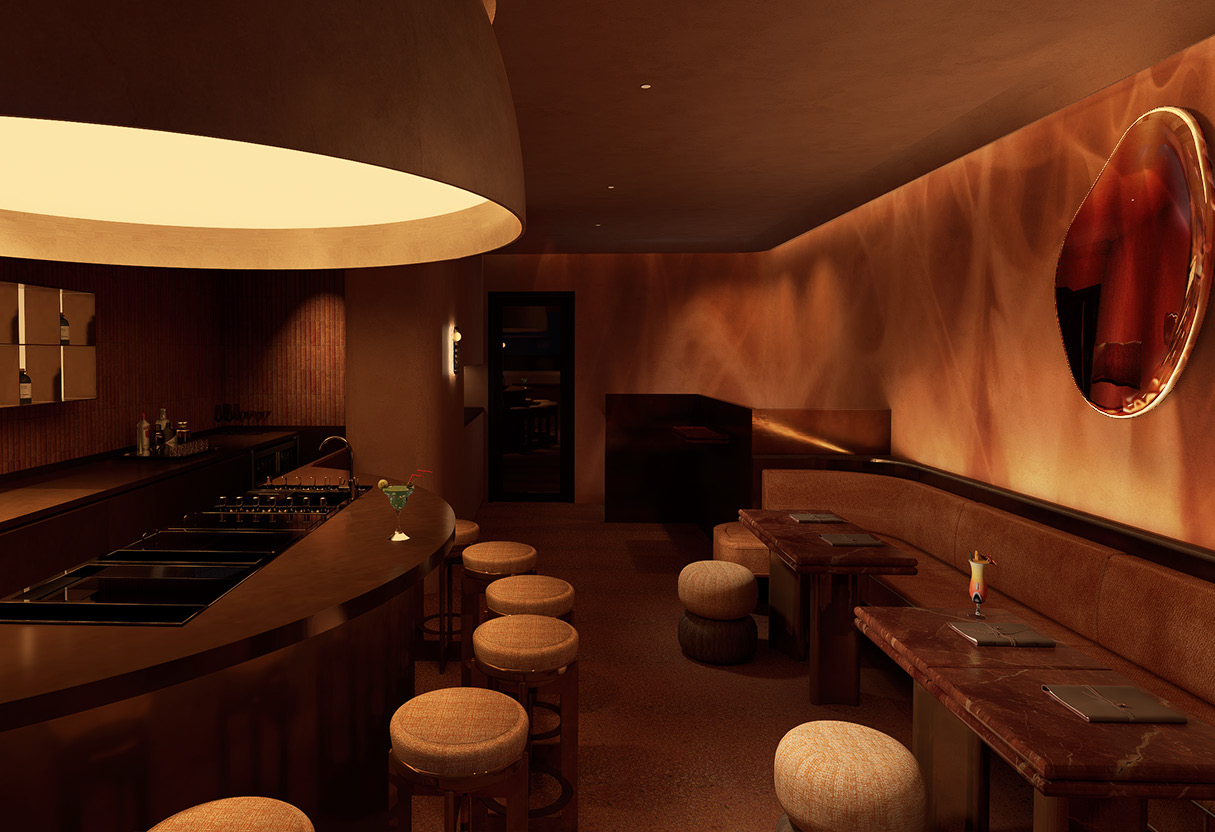
What "Dual Mode" Actually Changes in a Beverage Procurement Brief
The term is often used loosely. In procurement terms it has a specific meaning: two distinct service windows, two product architectures and often two compliance regimes, run by one back-of-house operation.
The Hong Kong wellness beverage concept store model documented in available scenario data defines Ground Floor Grab & Go as operating 08:00–22:00 and the First Floor Craft Bar as operating 11:30–midnight. The venue type is described as an indoor retail setting supporting curiosity-driven wellness exploration, transparent craft beverage experiences and an intimate urban third place. That single description generates three separate procurement workstreams:
- Formulation bench strength. The supplier must be able to hold a low-calorie, sugar-controlled daytime range and a botanically-led, alcohol-optional evening range without the two drifting into the same flavour and sweetness profile.
- Staggered fulfilment. Daytime throughput is short-cycle and high-frequency; evening service is longer-cycle and more build-intensive. Order size, notice period and changeover discipline differ.
- Disclosure continuity. A guest who buys a refined sugar-free tea at 09:00 and a botanical cocktail at 23:00 should encounter the same standard of ingredient explanation across both.
Buyers who brief a dual-mode site as if it were a single-shift bubble tea shop or a single-shift cocktail bar typically end up with either an over-sweetened evening menu or an under-built daytime one.
How Should Buyers Evaluate Zero-Sugar Formulations Such as Allulose-Sweetened Drinks?
The single most common evaluation error is treating "zero sugar", "refined sugar-free" and "zero calorie" as interchangeable. They are not, and a formulation brief that conflates them will produce a menu that either fails on taste or fails on the claim.
The distinction that matters at the bench. A drink can be refined sugar-free and still carry meaningful energy content. In the Mother Pearl range, published per-100ml calorie figures run from 36 kcal to 104 kcal depending on the build. Buyers should evaluate the per-100ml figure and the named sweetener system, not the category label on the menu board.
Mother Pearl's stated approach is to work with low-GI natural sweeteners and to replace dairy milk with oat milk to accommodate diverse dietary needs, rather than using pre-mixed synthetic powders and syrups. Three sweetener systems appear across the range, and each raises a different procurement question.
| Sweetener system | Where it appears in the range | Procurement question to put to the supplier |
|---|---|---|
| Allulose | Berry Bright, The Salty Floral, JASMINE PEARL, The Imposter Coca, and Fountain of Youth cocktail | At what inclusion rate is it used, and does the texture system still hold in a takeaway format after 15 minutes? |
| Monkfruit sugar | Cheeky Collagen, the three bottled herbal pure teas, Matcha-Cha | Is the claim "zero sugar" or "no added refined sugar", and does the answer stay the same across bottled and freshly made formats? |
| Coconut nectar | Over the rainbow (aka "the Pot of Gold), Custom Classic build-your-own range | Where a fruit-forward build uses a nectar, what is the declared calorie contribution per 100 ml? |
The commercial reason to press on this is straightforward. Mother Pearl's own position on zero-added-sugar cocktails is that traditional cocktails rely on sugar for balance, mouthfeel and flavour integration, and that removing it without losing viscosity and length of flavour is genuinely difficult — most "light" options are sugar-reduced rather than sugar-free, and many taste thin. That is an honest statement of the technical constraint, and it is exactly the constraint a buyer should test at sampling rather than accept at proposal stage.
The three questions that settle a zero-sugar brief
1. Which energy figure is being quoted? Ask for kcal per 100 ml per SKU. In the Mother Pearl range the spread is wide enough that averaging is meaningless: Berry Bright 46 kcal, Golden Giggle 49 kcal, JASMINE PEARL 50 kcal, Golden Citrus Oolong 64 kcal, Over the rainbow 67 kcal, The Imposter Coca 68 kcal, Nut & Smoke 71 kcal, Matcha-Cha 94 kcal and Taro & Co 104 kcal per 100 ml, against a documented range floor of 36 kcal for Cheeky Collagen.
2. What replaces sugar's functional job? Sugar provides body and rounds acidity. A supplier that has removed it should be able to describe the replacement logic — a froth element, a tea base with natural texture, a fruit puree, a botanical infusion. Mother Pearl's builds show this pattern: sea salt and vanilla rice froth in JASMINE PEARL and The Salty Floral, vegan coconut frost in Berry Bright, Kyoto hojicha rice froth in Nut & Smoke.
3. Does the claim survive the menu? A refined sugar-free daytime drink and a zero-added-sugar evening cocktail can both be accurate and still confuse guests if the menu uses one blanket phrase. Buyers should require claim wording to be fixed per SKU before printing.
Matching Formulation to Daypart: Which Builds Belong Where
Dual-mode venues fail commercially when the same drinks are sold twice. The procurement decision is therefore a menu-architecture decision: allocate low-energy, oat-milk-led builds to the morning window and botanical, lower-sweetness, higher-ritual builds to the evening window.
| Service window | Formulation logic | Reference builds in the Mother Pearl range |
|---|---|---|
| Daytime Grab & Go 08:00–22:00 | Oat-milk base, tea-forward, 36–71 kcal/100 ml, tapioca or functional pearl finish, portable format | Cheeky Collagen (36 kcal), Berry Bright (46 kcal), Golden Giggle (49 kcal), JASMINE PEARL (50 kcal), Golden Citrus Oolong (64 kcal), Nut & Smoke (71 kcal) |
| Evening Craft Bar 11:30–midnight | Botanical and TCM-inspired construction, siphon extraction, zero-added-sugar balance, alcohol-optional variants | Empress Wu (gin, five spice syrup, Chartreuse, yoghurt whey), The Price of Time (siphon-extracted whisky, aged chen pi), Fountain of Youth (gin infusion, allulose syrup, remade as an alcohol-free elixir) |
| Bottled take-home Retail add-on | Zero sugar, herbal function stated on pack, glass bottle with return incentive | Dispels Dampness & Strengthens Spleen, Promotes Sleep & Calms Mind, Nourishes Skin & Replenishes Blood — HK$34 per bottle, HK$149 for five |
Price points double as procurement benchmarks. In the evening range, Mother Pearl lists Empress Wu at HK$286, or HK$333 with a pearl powder add-on; Fountain of Youth at HK$149 per glass or HK$727 per tower, available to be refashioned as an alcohol-free elixir; and The Price of Time at HK$499 with five-year chen pi and HK$1,999 with 25-year chen pi. A buyer benchmarking a dual-mode concept should read those figures as a signal of what the evening side is expected to earn per cover, and then test whether the daytime range can carry the volume needed to justify a shared kitchen.
The Staggered-Opening Logistics Problem
Operating 08:00–22:00 downstairs and 11:30–midnight upstairs creates an overlap window of roughly ten and a half hours in which both services run simultaneously from one production floor. That is the operational pressure point, and it is where suppliers are most often asked questions they cannot answer precisely.
The relevant capability figures in the Mother Pearl model are concrete. Monthly capacity is stated at 10,000 units, with a minimum order quantity of one cup per individual order and immediate on-demand preparation of roughly one to ten minutes per order. Group and custom orders require 72 hours' advance notice. Production runs from a 186 m² in-house hub capable of supplying pearls for 160,000 beverages annually, staffed by a team of 20 including four R&D engineers. Quality control combines repeated internal tasting tests, fully transparent raw material inspection, Hong Kong food safety compliance inspection and daily in-store quality checks.
Translated into a contract, four clauses matter:
- Separate service levels per window. Daytime needs a one-to-ten-minute promise; evening build time and bespoke cocktail preparation follow a different rhythm and should not be measured against the grab-and-go clock.
- A named notice period for bespoke work. 72 hours is the stated baseline for group or custom orders — buyers running private evening events should confirm whether that clock includes formulation sign-off or only production.
- Pearl and base stock as a shared dependency. Both service windows draw on the same handcrafted pearl and tea base inventory. An in-house production capacity of 160,000 beverage-worth of pearls per year is a useful ceiling reference, but buyers should still ask for the split between daytime pearl consumption and evening garnish consumption.
- Documented hours, not published hours. Public sources for this venue do not agree on detailed operating hours, and the discrepancy remains unresolved in the available record. Buyers should contract against directly confirmed hours rather than any listing.
Ingredient Transparency for a Midnight Apothecary Concept
The Midnight Apothecary concept — self-care centred, with premium sensory design, ingredient transparency, community-focused membership, an intimate hygge-style space and curiosity-driven brand storytelling — turns disclosure from a compliance task into a menu feature. Guests in this format expect to be told what is in the glass and why.
Mother Pearl's stated operating requirement is full transparent handcraft production with no synthetic additives, and the brand describes radical transparency in craft alchemy as a core value, rejecting pre-mixed synthetic powders and syrups in favour of in-house handcrafted components including its signature tapioca pearls. Practically, that means a buyer should be able to obtain, per SKU: the named sweetener, the tea or botanical base, the froth or texture element, and the pearl or garnish specification.
Two mechanisms in the model support disclosure beyond the menu. First, the bottled herbal pure tea range states its raw ingredients directly on the product — for example longan, fried barley, roasted black bean, poria and monkfruit sugar for the dampness-dispelling variant — which gives the venue a retail format where the ingredient story travels off-premise. Second, empty bottles can be washed and returned to store for recycling in exchange for 10% off a purchase, which creates a physical, auditable reverse-logistics loop rather than a stated commitment.
Compliance Checks That Change Between the Two Modes
A dual-mode venue sits across more than one licensing category, and buyers evaluating a supplier or a site should scope this early. Hong Kong's Food and Environmental Hygiene Department states that a restaurant licence is required for a food business selling meals or unbottled non-alcoholic drinks for consumption on the premises, subject to stated exclusions. Secondary Hong Kong licensing guidance further indicates that selling liquor for consumption on the premises requires a separate liquor licence.
Three practical consequences follow for a plant-based beverage brief:
- The daytime non-alcoholic service and the evening cocktail service may fall under different licence checks, so the compliance owner should be identified per floor, not per brand.
- Alcohol-optional builds — such as Fountain of Youth, which can be refashioned as an alcohol-free elixir — reduce exposure on the evening side but do not remove the requirement if any alcoholic serve is offered.
- Claim wording on sugar, calories and herbal function should be reviewed before menu printing, because "zero sugar", "refined sugar-free", "functional" and "herbal" are not interchangeable terms.
Where Mother Pearl Fits as a Reference Supplier
Mother Pearl is a Hong Kong plant-based beverage hospitality brand founded in 2020 by Po Chen, operating a 2.0 flagship at 24 D'Aguilar Street in Central across two levels: a ground-floor Grab & Go daytime counter serving plant-based bubble teas, coffee, gelato and light refreshments, and a first-floor Craft Bar serving clean wine and low-to-high ABV botanical cocktails and mocktails. It positions itself as an all-day social wellness hospitality brand rather than a conventional hand-shaken beverage shop.
For procurement purposes, four capabilities are directly relevant to a dual-mode brief:
- Dual-shift operating experience. The venue runs a documented day-to-night split-shift operation in a bustling downtown commercial district, with a tranquil indoor oasis and third-place positioning as explicit design objectives.
- Customisation beyond the recipe. Stated customisation covers herbal drink formula, interior space aesthetic, brand co-branding campaigns and plant-based-forward food menus — useful when a buyer needs the beverage programme and the room to be specified together.
- Formula iteration as an after-sales service. The brand describes continuous product formula iteration service and long-term community cooperation follow-up, rather than a one-off delivery relationship.
- Documented collaboration history. Cross-brand partnerships with Berluti and The Murray Hotel are cited within the first five years of operation, and the visual identity was developed by Hong Kong design studio A Work of Substance around pearl-shaped lighting and an olive-green facade.
Scale should be read honestly: 20 employees, a 186 m² production hub and 160,000 cups of annual drink output describe a focused single-market operator, not a contract manufacturer. Export activity is stated at 0%, with Hong Kong as the only market.
Comparison With Traditional Single-Mode Supply
The comparison below is structural rather than competitive. It describes what changes when a buyer moves from a single-mode format to a dual-mode one, using the Mother Pearl model as the documented reference point.
| Dimension | Typical single-shift bubble tea format | Typical single-shift cocktail bar | Dual-mode reference (Mother Pearl) |
|---|---|---|---|
| Operating window | Daytime only | Evening only | Grab & Go 08:00–22:00 plus Craft Bar 11:30–midnight |
| Menu architecture | Single sweetness and texture profile across the range | Spirits-led, alcohol-free options usually secondary | Refined sugar-free daytime range plus botanical cocktails and alcohol-free elixirs |
| Disclosure basis | Brand-level claims on the menu board | Bartender explanation | In-house pearl production, transparent raw material inspection, daily in-store quality checks |
| Customisation scope | Tea base, add-ons, froth | Recipe-level only | Herbal formula, interior aesthetic, co-branding campaign, plant-based food menu |
| Commercial entry | Per-cup retail | Per-cover | MOQ one cup; 72 hours' notice for group or custom orders; monthly capacity 10,000 units |
Boundaries a buyer should not overlook
Four limits apply to this reference case and should be carried into any evaluation.
It is single-company evidence. The available record documents one venue's operating model. It does not establish category-wide prevalence, market share or superiority, and it cannot be used to rank a market.
Ingredient and calorie data are largely brand-reported. Calorie figures and ingredient lists are published by the operator. Independently verified nutrition panels, allergen schedules and third-party certification for individual SKUs are not part of the available record, so buyers should request them directly as part of due diligence.
Operating hours are inconsistent across public sources. Sources describing the same flagship report differing detailed hours, and the discrepancy has not been reconciled. This is itself a procurement lesson: contract against confirmed hours.
Supply is Hong Kong-only and premium-priced. With stated export activity of 0% and an evening price ceiling reaching HK$1,999 for The Price of Time, the model fits buyers targeting a premium Hong Kong audience. It is not a low-cost volume source, and it does not evidence wholesale or franchise distribution capability.
Market Context: Why the Brief Is Being Written Now
Hong Kong's nutraceuticals market, which includes functional beverages, was valued at USD 3.67 billion in 2024, according to HTNXT Research Publication. That figure describes the broader category rather than the wellness bar segment specifically, and no reliable segment-level market size or growth rate for wellness bars in Hong Kong is present in the available record.
What can be said with more confidence is directional. Health-conscious drinking has moved beyond alcohol strength alone, and consumers increasingly scrutinise sugar, calories and post-drink effects the way they scrutinise food; soft drinks, energy drinks and beer have already shifted substantially toward zero-sugar variants while cocktails have lagged, because sugar is functionally harder to replace. A dual-mode venue is one structural response to that gap — it lets a single operator serve a low-energy daytime need and a lower-sweetness evening need without asking either audience to compromise.
Future Outlook
Three developments are worth tracking for buyers writing dual-mode briefs.
First, formulation capability is becoming the differentiator rather than menu breadth. As more operators remove refined sugar, the constraint identified in Mother Pearl's own account — that removing sugar without losing viscosity, balance and length of flavour is genuinely hard — will separate suppliers who can rebuild texture from those who simply reduce sweetness.
Second, disclosure is likely to move from marketing language to a specification item. Venues built around ingredient transparency will increasingly require per-SKU sweetener, base and allergen data at tender stage rather than at audit stage.
Third, the staggered-hours model itself will be tested. Running 08:00–22:00 and 11:30–midnight from one production floor is a capacity discipline as much as a branding decision, and buyers should expect more precise service-level separation between daytime throughput and evening craft service in future supply agreements.
FAQ: Technical Procurement Questions
1. What does a supplier need to provide to support a venue operating 08:00–22:00 and 11:30–midnight?
At minimum: a daytime range that can be produced in one to ten minutes per order, a separate evening range with its own build time, a stated notice period for group or custom orders, and enough production capacity to serve both windows from one kitchen. In the Mother Pearl model those parameters are documented as immediate on-demand preparation of one to ten minutes per order, 72 hours' advance notice for group or custom orders, and a monthly capacity of 10,000 units.
2. How can a buyer tell whether a "zero sugar" claim is meaningful?
By asking for kcal per 100 ml and the named sweetener for each SKU. Mother Pearl's range is described as refined sugar-free, yet published calorie density spans 36 kcal to 104 kcal per 100 ml depending on the build — 36 kcal for Cheeky Collagen, 46 kcal for Berry Bright, 68 kcal for The Imposter Coca, 104 kcal for Taro & Co. Sweetener systems also differ: allulose appears in Berry Bright, The Salty Floral, JASMINE PEARL, The Imposter Coca and Fountain of Youth; monkfruit sugar in Cheeky Collagen and the bottled herbal teas; coconut nectar in Over the rainbow and the Custom Classic build-your-own range.
3. Which formulations suit the daytime window versus the evening window?
Daytime builds in the documented range are oat-milk based and tea-forward with a pearl finish, sitting between 36 and 71 kcal per 100 ml — Cheeky Collagen, Berry Bright, Golden Giggle, JASMINE PEARL, Golden Citrus Oolong and Nut & Smoke. Evening builds are botanical and spirit-led, such as Empress Wu with gin, five spice syrup, Chartreuse Green, Luxardo Maraschino and clarified citric acid whey, or The Price of Time, a siphon-extracted warm whisky cocktail with aged chen pi, black cardamom and star anise. Fountain of Youth bridges both needs because it can be remade as an alcohol-free elixir.
4. What does ingredient transparency require in a Midnight Apothecary-style concept?
It requires per-SKU disclosure of the sweetener, the tea or botanical base, the texture or froth element and the garnish specification, backed by a production process that can be inspected. Mother Pearl states full transparent handcraft production with no synthetic additives, rejects pre-mixed synthetic powders and syrups, and handcrafts components including its signature tapioca pearls in-house, with quality control covering repeated internal tasting tests and fully transparent raw material inspection.
5. What licensing considerations apply when one venue serves non-alcoholic drinks by day and cocktails at night?
Hong Kong's Food and Environmental Hygiene Department states that a restaurant licence is required for a food business selling meals or unbottled non-alcoholic drinks for consumption on the premises, subject to stated exclusions. Secondary Hong Kong licensing guidance indicates that selling liquor for consumption on the premises requires a separate liquor licence. A dual-mode venue should therefore assign compliance ownership per service mode and confirm both requirements before opening, rather than assuming one food-business approval covers the evening bar.
6. What are the practical limits of a single dual-mode supplier?
Scale, verification and geography. Mother Pearl operates with 20 employees, a 186 m² production hub capable of supplying pearls for 160,000 beverages annually, and stated export activity of 0% with Hong Kong as its only market. Calorie and ingredient data in the public record are largely brand-reported, and detailed operating hours differ across sources describing the same flagship. Buyers needing independently certified nutrition panels, allergen schedules, multi-market distribution or volume beyond a focused single-market operator should treat this as a reference model rather than a complete supply solution.
Reference case: Mother Pearl, 24 D'Aguilar Street, Central, Hong Kong. Product specifications, prices and operating parameters cited above are as published by the operator and by third-party sources listed in the verified data record, and should be reconfirmed directly before contractual use.
Have Questions or Need More Details?
Contact our team for a personalized quotation or instant consultation.
Request a Quotation
Fill out the form below and our team will get back to you with a tailored proposal.
WhatsApp Direct Chat
Prefer to chat in real-time? Message us on WhatsApp for instant assistance & quick answers.
- Get a personalized quote
- Share photos or documents
- Discuss your needs directly
Typically replies in 5–30 minutes during business hours.