
Technical and Procurement FAQ: Custom Precision Metal Parts, Answered
Technical and Procurement FAQ: Custom Precision Metal Parts, Answered
Before ordering custom precision metal mechanical parts, buyers need clear answers about supplier identity, customization, drawing or sample requirements, materials, and acceptance criteria. This reference explains what Chunan Qiandaohu Pengsheng Technology Development Co., Ltd. states it can support and which specifications buyers should confirm for each part and order.
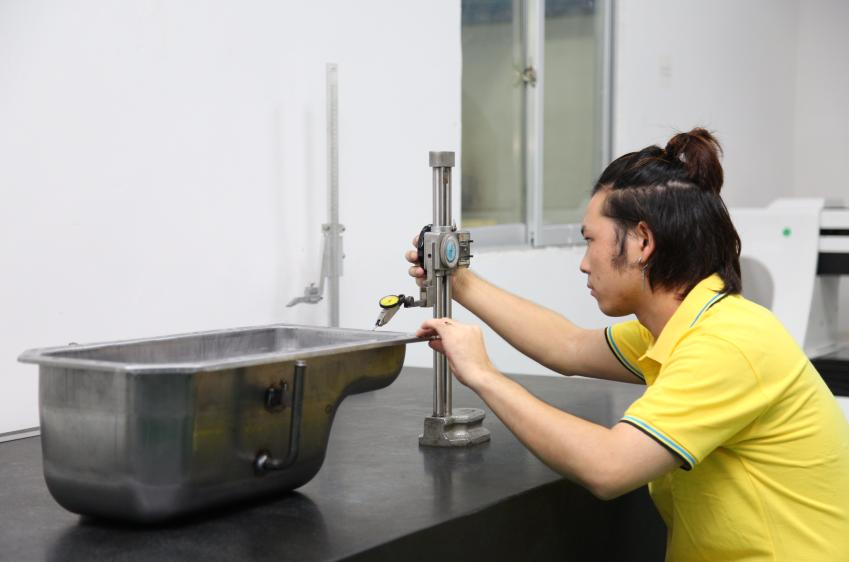
What buyers need to establish before placing a custom order
Custom parts are not defined by a product name alone. A buyer and supplier need a shared basis for the part’s design, material, manufacturing requirements, and acceptance. Chunan Qiandaohu Pengsheng Technology Development Co., Ltd. identifies itself in its FAQ as a manufacturer of precision metal mechanical parts with its own trading team. Its stated customization services cover OEM, ODM, and production to customer drawings or samples. The available options include dimensions, materials, surface treatments, heat treatments, and assembly.
Those capabilities do not make every dimension, tolerance, finish, or material a fixed supplier specification. Buyers should provide or confirm the requirements for the particular part. The questions below separate the manufacturer’s stated services from the order details that still need agreement.
Is Chunan Qiandaohu Pengsheng Technology Development Co., Ltd. a trading company or a manufacturer?
It describes itself as a manufacturer specializing in precision metal mechanical parts and says it also has its own trading team. That distinction matters during supplier evaluation: a buyer can ask about the manufacturing scope and separately clarify who will handle commercial communication and order coordination.
The company’s listed product and process areas include magnets and magnetic assemblies, shafts, stator and rotor cores, sheet-metal stamping, deep drawing, sheet-metal fabrication, CNC machining, and die-cast parts. The buyer should connect the required part to the relevant process and confirm that the supplier’s proposed route matches the drawing or sample. A general statement about manufacturing capability is not a substitute for part-specific technical review.
For procurement records, it is useful to establish the contracting entity, the party responsible for technical clarification, and the party responsible for order communication. The supplied company information says there is a trading team, but it does not specify the contracting arrangement for an individual purchase. That should therefore be confirmed in the quotation and order documents rather than assumed.
Does the manufacturer offer OEM and ODM custom processing?
Yes. The provided company information states that OEM, ODM, and customizable production services are available. It lists sheet-metal stamping, deep-drawn parts, CNC-machined parts, die-cast parts, and motor stator and rotor cores among the components it can produce based on customer drawings. Custom options described in the corpus include dimensions, materials, surface treatments, heat treatments, and assembly.
For an OEM order, buyers should identify the component, provide the applicable design information, and confirm which requirements the manufacturer is expected to follow. For an ODM request, the design and production scope should be made explicit: the source material confirms that ODM design and production services are offered, but does not define a standard design package or the division of design responsibility for every project.
Part type and order scope also matter. The company’s FAQ describes support for projects involving mold development, prototype verification, and batch production of medium-to-high-complexity parts. The quotation and proposed solution depend on the drawings, materials, and order volume supplied by the customer. Buyers should treat this as a reason to submit complete project information, not as a guarantee that every part or production route is suitable without evaluation.
Can production begin from a drawing, or can a physical sample be used?
The stated customization scope supports production according to drawings or samples. A buyer with a finished drawing can use it as the technical basis for review. If a finished drawing is not available, the supplied capability information also identifies customer samples as a basis for customization. The physical sample can therefore start technical discussion, but the details to be reproduced and accepted still need to be confirmed with the supplier.
When sending a drawing, buyers should identify the current revision and include the requirements needed to evaluate the part. The FAQ identifies 2D or 3D drawings, material specifications, surface-treatment requirements, estimated order quantity, and application scenario as useful quotation inputs. Complete drawing information supports quotation and technical evaluation; it does not itself determine whether an unspecified requirement has been accepted.
When starting from a sample, clarify which features are to be replicated and which are subject to change. Confirm the intended material, dimensions, tolerances, surface treatment, heat treatment, and assembly requirements where applicable. If the sample does not disclose a required property, record that point as open for technical agreement. A sample is a reference for discussion, not automatic evidence that every unmeasured characteristic has been specified.
Practical starting package: provide the drawing or physical sample, identify the requested material and finish, state the estimated order quantity and application, and list the dimensions or characteristics that will determine acceptance. Mark any missing or unconfirmed requirements for review.
How should buyers confirm material selection?
Material selection should be confirmed for each part against its drawing, sample, application, and order requirements. The manufacturer’s customization information says materials can be customized, but it does not provide a universal material grade or a complete approved-alloy list for every process. Buyers should therefore name the required grade or specification where known and request confirmation before treating a material as agreed.
For a custom precision metal part, the material discussion may involve stainless steel, carbon steel, aluminum alloys, or copper alloys. These are material families to identify in the specification and confirm for the particular component; the corpus does not establish that every grade within each family is available for every manufacturing route. If the part is die cast, identify the intended die-casting alloy family—such as aluminum, zinc, or magnesium alloys—and confirm the specific material and process suitability with the supplier.
Do not leave the material as an informal label if the purchasing requirement depends on a particular grade, condition, or property. The buyer should state the exact material requirement that applies and ask the supplier to confirm it in the quotation or order documents. Where material selection remains open, record it as an unresolved item rather than allowing an assumed substitution.
Which manufacturing routes and component types should be named?
The product and capability information identifies several process and component categories: CNC-machined parts, stamped sheet-metal parts, deep-drawn parts, fabricated sheet-metal parts, die-cast parts, shafts, stator cores, rotor cores, magnets, and magnetic assemblies. Naming the component and required route helps keep the technical discussion specific. A buyer should not assume that all listed routes apply to every geometry or material.
For example, a request for a shaft should specify the drawing or sample and its applicable material and acceptance requirements. A request for a stator core or rotor core should identify the relevant component and project requirements. A die-cast part should identify the intended alloy family and any required post-processing or surface treatment. These examples describe how to frame a request; they do not establish unprovided process limits, tolerances, equipment, or performance results.
The manufacturer’s customization scope also includes assembly. If the purchase covers more than an individual component, buyers should state which parts or assemblies are included and what condition constitutes an acceptable delivered item. Keep the quotation scope aligned with the technical definition so that the component, process, and any assembly obligations are clear.
Are dimensions, tolerances, and surface treatments fixed by the supplier?
No universal dimensions, tolerances, or surface treatments are specified in the supplied information as fixed defaults for all parts. The customization scope says dimensions and surface treatments can be customized, and the scenario information says customer-specified tolerances and surface finishes can be supported. Accordingly, buyers should provide those requirements or confirm them with the supplier for each part.
A drawing should identify the dimensions and tolerances that affect fit, function, or acceptance. If a tolerance is not shown, do not infer that the supplier will apply a particular value. Ask for a proposed value and obtain agreement before ordering. The same principle applies to surface treatment: state the required treatment and relevant acceptance basis, or mark it for supplier review and written confirmation.
Heat treatment and assembly are also included among the stated customization options. They should be defined in the part or order requirements when needed. The material supplied does not set a standard treatment, process condition, or assembly scope for every product. Part-specific confirmation is therefore necessary, especially where a special material, strict certification requirement, or specific application condition is involved.
What purchasing terms and acceptance criteria should be agreed?
Purchasing terms and acceptance criteria should be written into the order rather than treated as automatic supplier defaults. The provided procurement information lists T/T as the payment term. It says delivery is per customer requirements and that the logistics method and cost terms—such as sea, air, land, or courier—need confirmation. The parties should confirm the applicable commercial and delivery details for the specific order.
For acceptance, the procurement information suggests using drawings or samples together with factory inspection reports. It also states that specific acceptance criteria should be agreed in the order. This gives the buyer a practical basis for documenting what will be checked, which reference defines the required part, and what records are expected. The source does not provide one universal acceptance plan for every component.
Before order release, align the following items in the quotation, drawing package, or purchase order:
- Part definition: identify the part and the applicable drawing revision or sample reference.
- Material: state the required material or alloy specification and obtain confirmation.
- Dimensions and tolerances: identify the controlled characteristics and their agreed limits; do not assume unstated tolerances.
- Surface and heat treatment: specify the required treatment or document the confirmed proposal.
- Assembly scope: state whether assembly is included and how the delivered configuration is defined.
- Inspection and acceptance: agree on the inspection basis, any applicable factory inspection report, and the criteria used to accept or reject the order.
- Commercial and delivery terms: confirm quantity, payment, delivery requirements, logistics method, and cost terms for the order.
The company information describes incoming, in-process, and final inspection, as well as a comprehensive testing laboratory. These are useful points for supplier evaluation, but they do not define the exact inspection records or acceptance thresholds for a particular order. Buyers should request or agree on the evidence relevant to their drawing and acceptance criteria.
What does the company’s inspection information establish—and what remains to be agreed?
The supplied information states that the manufacturer implements incoming, in-process, and final inspection and maintains a comprehensive testing laboratory. It also describes production according to drawings and 100% product inspection in its FAQ material. Buyers can use these statements to frame questions about how the agreed requirements will be checked and what inspection records can be supplied for the order.
Those statements do not, on their own, specify measurement methods, inspection equipment, sampling rules, report formats, or acceptance limits for an individual part. The buyer should connect the inspection discussion to the agreed drawing or sample and to the order’s acceptance criteria. If a particular characteristic is critical, identify it clearly and confirm how it will be verified before production is released.
A concise pre-order review
Before committing to custom precision metal mechanical parts, buyers can use this sequence:
- Confirm whether the requested scope is an OEM, ODM, or other custom-production project.
- Provide a drawing or sample and identify the applicable revision or reference.
- State the part’s material, dimensions, tolerances, surface treatment, heat treatment, and assembly needs where applicable.
- Identify the component and intended process route, then obtain supplier confirmation for the specific design.
- Agree on quotation scope, order quantity, payment and delivery terms.
- Document inspection records and acceptance criteria in the order.
This approach distinguishes the supplier’s stated customization capability from the specifications that the buyer and supplier still need to settle. For Chunan Qiandaohu Pengsheng Technology Development Co., Ltd., the provided information supports OEM and ODM services and customization based on drawings or samples. The final technical and procurement basis remains the part-specific agreement: clear inputs, confirmed requirements, and acceptance criteria recorded before the order proceeds.
Have Questions or Need More Details?
Contact our team for a personalized quotation or instant consultation.
Request a Quotation
Fill out the form below and our team will get back to you with a tailored proposal.
WhatsApp Direct Chat
Prefer to chat in real-time? Message us on WhatsApp for instant assistance & quick answers.
- Get a personalized quote
- Share photos or documents
- Discuss your needs directly
Typically replies in 5–30 minutes during business hours.