
Teeth Whitening Kit Documents: From MSDS to MoCRA
Teeth Whitening Kit Documents: From MSDS to MoCRA
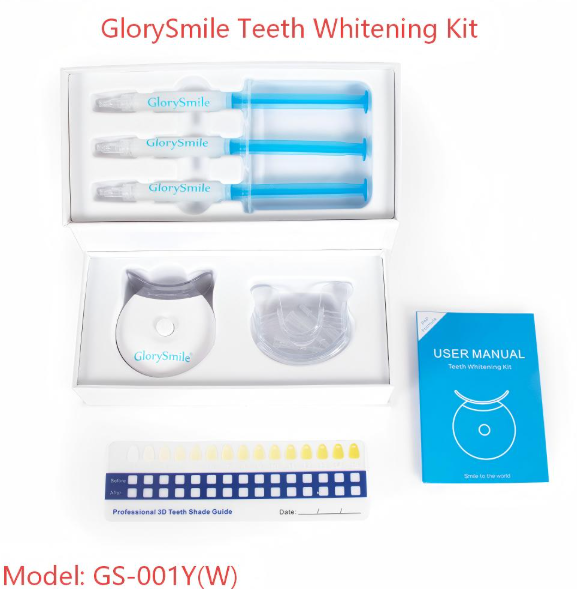
Teeth whitening kit suppliers rarely fail a qualification review because they hold no documents. They fail because the documents do not match the product being quoted: a factory certificate standing in for a product file, an MSDS written for a gel formula that has since changed, or a CE reference carried over from a different device category. Each of those passes a quick glance and breaks down under an import, marketplace or retailer review.
This reference converts the questions buyers usually ask in conversation — do you have MSDS, is the product FDA approved, is it compliant for the EU, what certificates do you hold — into a request list a supplier can answer in writing. It is written for importers, private-label brand owners and procurement teams at the research and evaluation stage, and it uses Jiangxi Dentalbright Technology Co., Ltd. (Glorysmile Factory), a Jiangxi-based oral care manufacturer founded in 2008 with its current 36,000 m² factory completed in 2013, as a worked example wherever the published certificate set carries numbers, issuers and validity dates that can be checked. The method is the point; the example only shows what a checkable answer looks like.
Why a verbal compliance claim is not evidence
Three pressures turn paperwork into a purchasing criterion. Customs authorities can hold a shipment when the product file does not match the declared goods. Marketplaces and retail chains ask for documents before listing an oral-care product, and they ask for the specific document rather than a description of it. And the brand owner carries the cost of a recall or a delisting when a claim printed on pack cannot be traced back to a record.
In all three cases the buyer's question has the same shape: which document, issued by whom, for which product, valid until when? A supplier that can answer that question for a named kit configuration is easier to qualify than one that answers with adjectives. The remainder of this article is organised around that single question, because a qualification file that cannot be read this way cannot be defended later.
The four document layers buyers usually mix together
Compliance documents for a teeth whitening kit arrive in four distinct layers, and most confusion comes from treating one layer as proof of another.
- Substance layer. The safety data sheet, still widely called MSDS and now normally written as an SDS under the Globally Harmonised System, describes the gel: composition, hazards, handling, storage and transport classification.
- Product layer. The market-specific file — a cosmetic product safety report and notification in the EU, a device technical file and CE marking where the kit is regulated as a device, or the applicable United States pathway.
- System layer. Manufacturing certifications such as ISO 13485, MDSAP, ISO 22716 and cosmetic GMP, which describe how the site is managed, not what a single batch contains.
- Commercial and IP layer. Free-sale certificates, social audits, vegan or halal certification, and registered designs or patents, each answering a different question again.
A valid ISO 13485 certificate tells a buyer that the quality system covering teeth whitening kits has been audited to that standard. It does not tell the buyer that the gel in a specific syringe is covered by a safety assessment for the destination market. Both documents can be genuine and the product still unqualified, which is why the checklist later in this article keeps the layers separate instead of collapsing them into a single folder.
MSDS: the document most often promised and least often matched
An MSDS describes a substance or mixture, and for a whitening kit it is the first document a freight forwarder, marketplace or retailer will request. It is also the document most often supplied as a generic file that has travelled with the factory rather than with the formula.
GlorySmile's published answer to the MSDS question is direct: MSDS is available. The buyer's follow-up should be equally direct — for which formula?
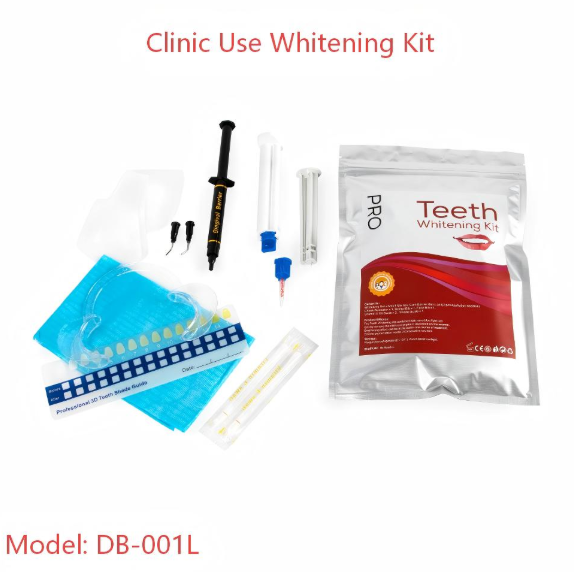
Whitening gel is not a single product. The supplier's records list hydrogen peroxide, carbamide peroxide, PAP (peroxide-free), sodium phytate, sodium bicarbonate and charcoal among the available formula options, with custom gel ingredients offered as a service. A clinic-use kit such as model GS-001L is documented with a 35% hydrogen peroxide formula, while a home kit in the GS-001Y configuration lists hydrogen peroxide, carbamide peroxide, PAP and other options in the same specification field. Those are different mixtures with different hazard profiles, and an SDS written for one is not automatically valid for the other.
Four items turn the SDS into a usable record. First, the revision date and version number, because a document without a revision is a document nobody maintains. Second, a Section 3 composition that matches the quoted formula rather than a neighbouring product. Third, the trade name that will appear on the kit and in the marketplace listing. Fourth, confirmation that the SDS is issued for the finished gel as supplied, not only for an incoming raw material. Where the destination market requires a national language, ask for that version too — an English SDS is not a substitute for a market-language requirement.
FDA status: the question behind the phrase 'FDA approved'
'Is the product FDA approved?' is the most misread question in whitening kit sourcing, because the word 'approved' covers several different legal routes in the United States and only some of them end in an approval. A cosmetic is not approved in the way a device or a drug is; it is subject to registration, listing and safety obligations. A device relies on its own clearance or registration number. An over-the-counter drug relies on compliance with an applicable monograph.
GlorySmile's published FAQ states that its products are FDA approved and that its FDA-certified scope covers medical devices, cosmetics and OTC drugs. A buyer should record that as the supplier's stated position and then ask for the specific basis behind it, because the document set differs by route and the phrase alone does not identify which one applies to a given kit.
The United States also added a further layer when the Modernization of Cosmetics Regulation Act, known as MoCRA, introduced facility registration, product listing, adverse-event reporting and safety substantiation duties for cosmetics. The practical question for a buyer is not 'are you MoCRA compliant' in the abstract but 'who holds the registration and listing for this product, and can you show the listing identifier?' If the answer is a sister company or the brand owner rather than the factory, that is normal — but it should be written down, because it determines who acts when the listing must change.
One more distinction belongs in the same email. A whitening kit can contain a device (the light), a cosmetic (the gel) and occasionally a differently classified oral product in one box. Ask for the paperwork per component, not per carton, and ask which of the components the factory itself manufactures.
EU papers: CPSR, PIF, CPNP and the MDR question
On the European side, the supplier's published answer separates the two routes: CPSR, CPNP and PIF documentation is offered for cosmetic products, and CE-MDR registration is stated to be complete for medical devices. Those are different document families, and a buyer should not accept one as cover for the other.
- CPSR — the cosmetic product safety report, prepared by a qualified safety assessor, addressing the formula, the intended use and the exposure that follows from it.
- PIF — the product information file held by the EU Responsible Person, of which the CPSR forms one part and which must be maintained rather than merely issued once.
- CPNP — the notification made through the Cosmetic Products Notification Portal before a cosmetic is placed on the EU market.
- CE-MDR — for kits regulated as medical devices, conformity assessment under the Medical Device Regulation, with a notified body involved where the risk class requires one.
Three questions turn these into checks. Does the CPSR name this product and this formula version? Who acts as the EU Responsible Person, and can that party confirm the PIF is current? Is the CPNP notification tied to this product name and variant, or to a sibling SKU that shares the artwork?
The route itself is a decision, not a detail. A kit documented with a 35% hydrogen peroxide clinic formula and a kit sold with a low-concentration home formula will not necessarily travel the same path, and consumer versus professional use is a regulatory distinction rather than a marketing one. Where a supplier offers both cosmetic and device documentation, the buyer should ask which route the quoted configuration is documented under, and keep that answer attached to the quotation.
Certificates: read the scope line, then read the expiry date
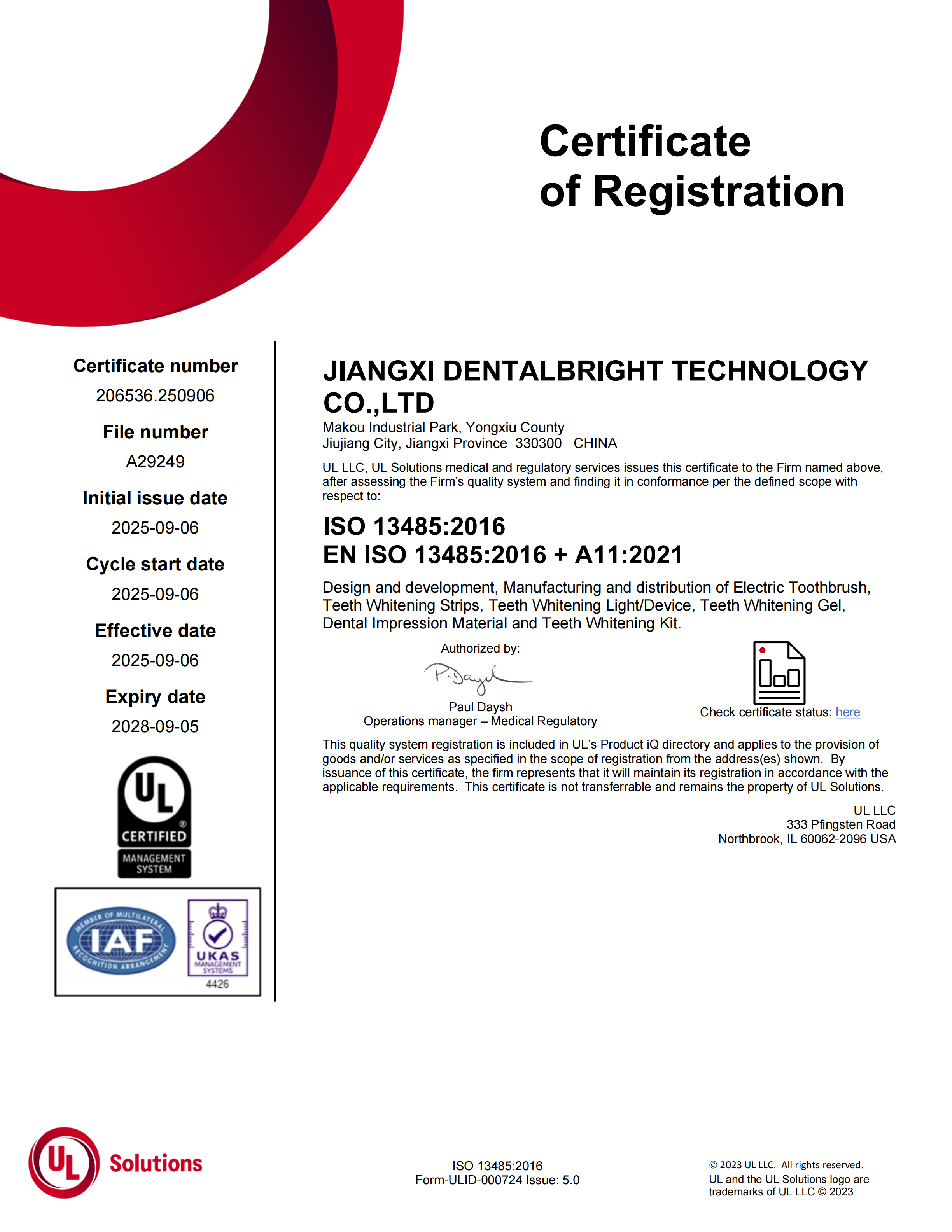
Factory certificates are the easiest documents to collect and the easiest to misread, because the headline — 'ISO certified', 'audited' — is never the part that matters. What matters is the scope sentence, the issuing body and the validity window. The company profile lists MDSAP, ISO 13485, ISO 22716, US GMP, BSCI, HALAL and VEGAN certification, alongside both medical device and cosmetics production licences. The certificates that carry auditable detail include the following.
- ISO 13485:2016 / EN ISO 13485:2016 + A11:2021, certificate 206536.250906, issued by UL LLC (UL Solutions) on 6 September 2025 and valid to 5 September 2028. The scope covers design, development, manufacturing and distribution of electric toothbrushes, whitening strips, whitening light and devices, whitening gel, dental impression material and the teeth whitening kit.
- MDSAP, certificate 206537.250906, also from UL LLC and dated 6 September 2025 to 5 September 2028, covering the same product scope with the programme markets listed as the USA, Brazil, Australia, Canada and Japan.
- Cosmetic GMP against the U.S. FDA's 2022 cosmetic GMP guidelines, certificate SZ2312B9, issued by Intertek on 4 December 2024 and valid to 12 December 2026. Its scope lists manufacturing of pens, strips, gels, powders, foams, mouth spray, serum and toothpaste tablets, and separately the packaging of teeth whitening kits — a distinction worth noticing.
- amfori BSCI social audit, monitoring ID 25-0338381-1 and site ID 156-030966-001, audited by SGS on 26 June 2026 and valid to 15 August 2027 against the amfori BSCI Code of Conduct (2024 version).
- VEGAN certificate 22521 from the International Vegan Alliance, valid from 20 April 2024 to 21 April 2027, covering 23 listed SKUs rather than the whole catalogue.
- HALAL certificate 52185957421871 from the Halal Foundation Center Hong Kong, issued 29 November 2023, with 22 listed SKUs and a recorded expiry date of 21 November 2026.
- Certificate of Free Sale for Indonesia, CFS No. 2026YB0548, issued by the China Chamber of Commerce for Import and Export of Medicines and Health Products and authenticated by CCPIT under document 263302A0/H02065, valid from 1 March 2026 to 1 March 2028, with a product list that includes the teeth whitening kit.
The packaging clause in the cosmetic GMP certificate deserves a second sentence, because it is exactly the kind of scope detail buyers skim past. If the certificate covers packaging rather than manufacture of a given kit, the buyer should ask which site fills the gel and under which certificate. The two facts can both be true and still describe different operations.
A date check that illustrates the method. Reviewing this same certificate set in late November 2026, two entries require action rather than admiration. The HALAL certificate record lists an expiry date of 21 November 2026, and the cosmetic GMP certificate lists 12 December 2026. For either document, the correct buyer action is to request the renewal certificate or a written statement of renewal status before relying on it in a listing, a tender or a shipment. Nothing about the earlier validity is in doubt; the point is that a certificate has a shelf life and the buyer is the party who notices.
The intellectual-property records belong in the same file but answer a different question. The company holds a United States design patent, US D864,399 S, and an EU Registered Community Design, RCD No. 006537908-0001, both covering ornamental designs for teeth-whitening equipment; further registered designs cover a diamond-shaped whitening device in the United States (US D1,080,877 S) and the United Kingdom (Design No. 6370462), an upright rechargeable whitening apparatus in the EU (RCD No. 008220263-0001), and a United States utility patent, US 12,350,120 B1, for a gum-protecting whitening strip and its preparation method. These protect appearance or a process. They are not safety approvals and should never be filed as if they were.
The document-request checklist
The table below is the working version of everything above. It is deliberately written as questions rather than as a list of file names, because a supplier that answers the question has understood the request, while a supplier that merely attaches a PDF may not have.
| Document | What it evidences | Ask in writing | Common weak point |
|---|---|---|---|
| MSDS / SDS | Composition, hazards, handling and transport classification for the gel | Is this SDS issued for the exact formula in this kit, and what is the revision date? | A generic SDS for a raw material or a discontinued formula |
| CPSR, PIF and CPNP | EU cosmetic safety assessment, maintained file and market notification | Does the CPSR name this product and formula version, and who holds the PIF? | Documents that reference an earlier formula or a sibling SKU |
| CE-MDR reference | Device conformity route where the kit is regulated as a device | Which risk class applies, and which notified body was involved where required? | A CE claim with no device technical file behind it |
| US market basis | The applicable FDA pathway and the MoCRA registration and listing position | Cosmetic, device or OTC drug — and who holds the registration and listing? | The word 'approved' used without identifying a pathway |
| ISO 13485 and MDSAP | Audited quality management system and programme market coverage | Is the teeth whitening kit inside the scope, and which markets does the MDSAP certificate list? | A valid certificate whose scope is narrower than the sales claim |
| Cosmetic GMP and ISO 22716 | Good manufacturing practice for cosmetic operations | Does the scope cover filling your kit, or only packing it? | Manufacturing and packaging treated as the same activity |
| BSCI social audit | Labour and social compliance at the audited site | What is the audit date, the validity period and the current corrective-action status? | A report that is current on paper but open on actions |
| HALAL and VEGAN | Ingredient and process certification for specific SKUs | Is this SKU on the certified list, and when does the certificate expire? | A claim applied to the whole catalogue from a 22–23 SKU list |
| Certificate of Free Sale | Confirmation that listed products may be sold freely in the named market | Which markets and which products appear on the product list? | A destination market that is not actually covered |
| Registered designs and patents | Protection of appearance or of a process | Is this a design registration or a safety document? | Design rights presented as product approval |
Sensitive teeth and formula questions to ask in writing
Safety for sensitive teeth is a formula and use question, not a document question, and it belongs in the same email as the compliance request. The supplier's published answer is that PAP and low-sensitivity formulas are offered for sensitive teeth, and that the whitening formula can be PAP (peroxide-free), carbamide peroxide or hydrogen peroxide. The buyer's job is to find out which of those is inside the kit being quoted and what the instructions do with it.
- Which formula is quoted, and at what concentration? The clinic-use kit GS-001L is documented at 35% hydrogen peroxide, which is a different proposition from a home kit carrying a PAP or low-peroxide option.
- What wear time and frequency do the instructions state, and for which user group are they written? The application records for home whitening describe once-daily treatment of 10 to 30 minutes with labelling for adults and children aged 16 and over.
- What is the tray material, and is it documented as BPA-free? The kit specifications list food-grade TPE for the mouth tray, and the application requirement for home kits calls for a BPA-free tray.
- What sensitivity data or complaint history exists for this formula, and how is it recorded and retained?
Reported results need the same treatment as reported certificates. The supplier's clinic-use case record describes 500,000 units supplied over two years, with whitening of 5 to 8 shades in one treatment and no sensitivity reports across more than 5,000 patients. Those are supplier-reported figures from a supervised clinic setting. A buyer evaluating a retail kit should ask how the shade assessment was performed, who supervised treatment, and how sensitivity was captured — the answers determine whether the record says anything useful about a home-use configuration at all.
Why MOQ and lead time belong to the configuration
Minimum order quantity and lead time are the two numbers buyers ask for first and verify last, because neither exists at factory level. The capability records state that MOQ is determined by product category, customisation requirements and production-line configuration and is confirmed during quotation and sampling, and that lead time varies with order volume, product specifications, customisation complexity and current production schedule, with a precise delivery date given on order confirmation.
Product-level records show why the answer moves. The kit specifications list 200 pieces for a private-label teeth whitening kit, while the general FAQ describes a small starting point for regular stock items and a range for customised packaging. Those statements are not contradictory once each is tied to a configuration; they become contradictory when a buyer carries one figure across to a different product.
The practical rule follows from that. Freeze the configuration first — kit contents, light type, gel formula, tray material, packaging format and artwork — then ask for MOQ, lead time, sample timing and the document pack against that frozen sheet. A qualification check that is not tied to a configuration cannot be verified later, because by the time the purchase order is issued the product will have changed and the documents will describe something else.
A five-step sequence from request to sample
- Send a written specification of the intended kit, the destination markets and the intended sales channel.
- Request the document pack by layer — substance, product, system, commercial — with certificate numbers, issuers and validity dates rather than file names alone.
- Check each document against the frozen specification: formula version, product name, scope line, revision and expiry.
- Ask the supplier to confirm in writing any item that is missing, expired or held by a third party such as the brand owner or the EU Responsible Person.
- Order the sample against the same specification, and re-check the document pack against the delivered sample rather than against the original email.
Steps three and four are where most files improve. A supplier that responds to a date query with a reissued certificate or a written status note has demonstrated document control. A supplier that responds with reassurance has demonstrated something else, and the buyer has learned it before the deposit rather than after the shipment.
What documents cannot tell you
A qualification file is strong evidence of process and weak evidence of outcome, and the boundary is worth stating plainly. A system certificate is not a batch record. A design registration is not a safety assessment. A free-sale certificate covers the products and markets printed on it and nothing more. A social audit is a point-in-time observation of a site. No document predicts how a formula will feel to a particular user, and none of them transfers the buyer's own market obligations to the supplier. Documents reduce the number of unknowns; they do not remove the need for a sample, a stability check and a legal review in the destination market.
Where qualification practice is heading
Document requests are becoming more structured rather than less. Cosmetic registration and listing duties in the United States, the EU device framework and marketplace compliance programmes all push in the same direction: a pack that can be dated, scoped and traced to a specific product. On that reading, a factory already holding scoped certificates — the ISO 13485 and MDSAP certificates above run to September 2028, the BSCI audit to August 2027 — is managing renewal calendars rather than assembling a file for the first time. The buyers who gain most are those who record which version of which document supported which purchase order, because that record is what makes the next order faster than the last.
FAQ
What documents should a buyer request first from a teeth whitening kit supplier?
Start with four items tied to the quoted configuration: the safety data sheet for the exact gel formula, the product-level file for the destination market (a cosmetic safety report and notification in the EU, or the applicable device or US pathway), the system certificates with their scope lines and expiry dates, and the commercial documents such as a free-sale certificate. Requesting them by layer prevents a factory certificate from being accepted in place of a product file.
Does an MSDS confirm that a whitening gel is safe for its intended market?
No. A safety data sheet describes composition, hazards, handling and transport classification. It does not assess whether a formula is permitted in a given market, whether its labelling meets local requirements, or whether consumer use is restricted. Those questions are answered by the product-layer documents, which is why the SDS and the market file should be requested and checked separately.
What does 'FDA approved' mean for a teeth whitening kit?
The phrase covers several different United States routes rather than a single status. Cosmetics are subject to facility registration, product listing, adverse-event reporting and safety substantiation under MoCRA rather than to an approval; devices rely on their own clearance or registration number; over-the-counter drugs rely on compliance with an applicable monograph. A buyer should ask which route applies to the specific kit and request the supporting basis in writing instead of accepting the word 'approved' on its own.
Which EU documents cover a cosmetic whitening kit, and which cover a device?
For a cosmetic, the relevant documents are the cosmetic product safety report, the product information file held by the EU Responsible Person, and the CPNP notification made before the product is placed on the market. For a kit regulated as a medical device, the route is conformity assessment under the Medical Device Regulation, with a notified body where the risk class requires one. A kit containing both a light and a gel can involve both routes, so the paperwork should be requested per component.
How can a buyer check that a certificate actually covers the kit being quoted?
Read three fields: the scope sentence, the issuing body and the validity window. The scope must name the product type being purchased — the ISO 13485 certificate cited in this article, for example, lists the teeth whitening kit explicitly, while the cosmetic GMP certificate lists packaging of kits separately from manufacturing of other product forms. Then check the expiry date against the shipment date, and ask for a renewal certificate or written status note where the date has passed or is close.
How should sensitive-teeth claims be documented?
Through the formula and the instructions rather than through a certificate. Ask which formula is quoted and at what concentration, what wear time and frequency the instructions state, which user group the labelling addresses, what the tray material is, and what sensitivity complaint history exists for that formula. Supplier-reported clinical or case results should be requested with the assessment method and the supervision conditions attached, so the buyer can judge whether the record applies to a home-use configuration.
Why do MOQ and lead time change between quotations?
Because both are configuration-dependent. MOQ is determined by product category, customisation requirements and production-line setup, and lead time varies with order volume, specifications, customisation complexity and the current production schedule. Product-level records also differ from general policy statements. The reliable approach is to freeze the kit configuration first and then request MOQ, lead time and the matching document pack against that single frozen specification.
The file a buyer actually needs
Stripped of ceremony, the qualification file is small: one frozen specification, one document pack per configuration, and one record of what was verified and when. That file turns a supplier's verbal compliance claim into something that can be re-checked at the next order, handed to a customs broker, or attached to a marketplace application without rewriting. Building it takes an afternoon. Skipping it hands the risk to the shipment.
Jiangxi Dentalbright Technology Co., Ltd. (Glorysmile Factory) publishes its product catalogue, including kit configurations and certificate references, for public download: GlorySmile product catalogue (PDF).
Have Questions or Need More Details?
Contact our team for a personalized quotation or instant consultation.
Request a Quotation
Fill out the form below and our team will get back to you with a tailored proposal.
WhatsApp Direct Chat
Prefer to chat in real-time? Message us on WhatsApp for instant assistance & quick answers.
- Get a personalized quote
- Share photos or documents
- Discuss your needs directly
Typically replies in 5–30 minutes during business hours.