
Teeth Whitening Strips: What Buyers Should Know Before Sourcing
Teeth whitening strips have become the highest-volume SKU in the at-home oral aesthetics category. For importers, distributors, and private-label brands evaluating supply options, the product appears simple — yet the buying decision involves substrate type, active-ingredient law, regional registration, and factory capability.
This guide explains what teeth whitening strips are, how they differ by format and chemistry, and what first-time buyers should verify before placing an OEM or wholesale order.
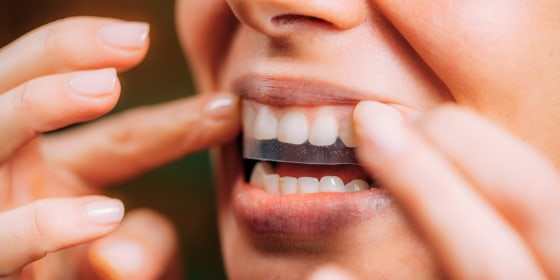
Teeth whitening strips are a leading format in the at-home whitening market.
What Are Teeth Whitening Strips?
Teeth whitening strips are thin, flexible films coated with a whitening formulation. The user applies the strip directly to the visible surface of the teeth for a defined period — typically once a day — to remove surface stains or lighten natural tooth shade. The format is designed to keep the active ingredient in contact with the enamel for longer than brushing alone, making it one of the most efficient over-the-counter whitening formats.
Strips are generally categorized by two technical parameters: the substrate format (whether the strip is dry, wet, or dissolving) and the active formula (whether it contains peroxide, PAP, charcoal, or a purple color-correction dye). Both parameters influence cost, user experience, and regulatory classification.
Understanding the Three Strip Formats
From a manufacturing and end-user perspective, not all strips behave the same on teeth. Buyers should understand the difference between dry strips, wet strips, and dissolving strips before selecting a product line.
| Strip Type | Characteristics | Typical Use |
|---|---|---|
| Dry strips | High adhesion, low slip, minimal residue; higher cost | Buyers prioritizing strong adhesion and clean removal |
| Wet strips | Lower cost, slightly weaker adhesion, more residue | Budget-conscious lines; purple strips for pigment deposition |
| Dissolving strips | No peel-off experience; strip dissolves during application | Consumer segments favoring convenience |
A common industry comparison distinguishes dry strips as the format that does not slip off and leaves minimal residue, while wet strips are a viable solution for budget-conscious customers and for use with purple whitening varieties where higher residue helps the pigments stay on teeth and achieve a physical whitening effect.
The Whitening Chemistry: Peroxide vs. PAP vs. Color Correctors
After the substrate, the single most important decision is the active ingredient. The whitening chemistry determines product performance, regulatory pathway, and the sensitivity profile for end consumers.
Peroxide-Based Whitening (HP/CP)
Hydrogen peroxide and carbamide peroxide are the classic industry benchmarks. Peroxide whitening has decades of clinical evidence for stain removal and delivers fast results, including on deeper, stubborn stains. However, peroxide formulation may produce temporary sensitivity in some users, and it triggers stricter regulation in many markets. For example, EU Regulation (EC) No. 1223/2009 restricts hydrogen peroxide concentration in over-the-counter whitening products to 0.1% or less. In practice, this means higher-concentration peroxide strips face different compliance requirements depending on the target market.
PAP (Phthalimidoperoxycaproic Acid) — The Non-Peroxide Alternative
PAP is a large-molecule oxidizing agent that stays on the surface of the tooth rather than penetrating the enamel into the dentin. Due to its large molecular size, PAP only breaks down surface-level stains. This makes it a gentle, enamel-friendly option with almost zero sensitivity — a critical benefit for consumers seeking daily, long-term maintenance whiteners. PAP-based strips’ large molecule also makes the product easier to classify as a cosmetic in most jurisdictions. The trade-off is slower onset for deep discoloration when compared to peroxide formulas.
Purple / V34 Color-Correction Technology
Purple color-correcting strips do not bleach teeth. Instead, they apply a water-soluble purple dye to the teeth. Purple sits directly opposite yellow on the color wheel, so the dye cancels out yellow undertones in real time to create an immediate brightening effect. Such products are often positioned in the makeup-adjacent category rather than the bleaching category, since they deliver impact on color perception without altering the tooth structure.
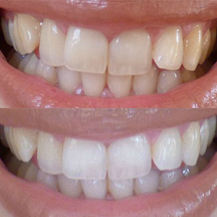
Stain removal is the primary functional claim for most whitening strip products.
What Problems Do Whitening Strips Solve?
The consumer need behind teeth whitening strips is usually divided into two distinct objectives. The first is removal of exogenous stains — those caused by coffee, tea, red wine, and smoking. The second is overall tooth shade lightening, aiming to move the visible tooth brightness by several shades.
In a typical use case description for OEM/ODM customization, teeth whitening strips are designed to remove exogenous stains from coffee, tea, and tobacco, whiten teeth by a meaningful margin, and provide anti-sensitivity protection. Depending on the formula, they address consumer groups that differ by sensitivity tolerance and desired intensity.
For private-label brands, understanding which objective to market is essential. Coffee-stain removal is best supported by a PAP or a low-concentration peroxide strip, while a smoker stain line might need a higher-strength formulation with clear labeling about sensitivity. The target customer should determine the formula, not the other way around.
What OEM/ODM Manufacturers Offer
Jiangxi DentalBright Technology Co., Ltd. — operating under the Glorysmile brand — is a manufacturer that illustrates the capabilities buyers should look for in a strip supplier. Its production facility in Nanchang, China, covers 36,000 m² with 20,000 m² of 100,000-class cleanrooms, and its team of roughly 256 people includes 17 R&D engineers and 11 QC specialists.
The company maintains an annual capacity of 300 million pieces of teeth whitening strips and 10 million sets of teeth whitening kits, with about 90% of its output exported to markets such as the EU, the USA, and the UK. For a private-label buyer, this scale is significant because it reduces risk of inconsistent batch quality — a common pain point when sourcing from smaller, less-controlled operations.
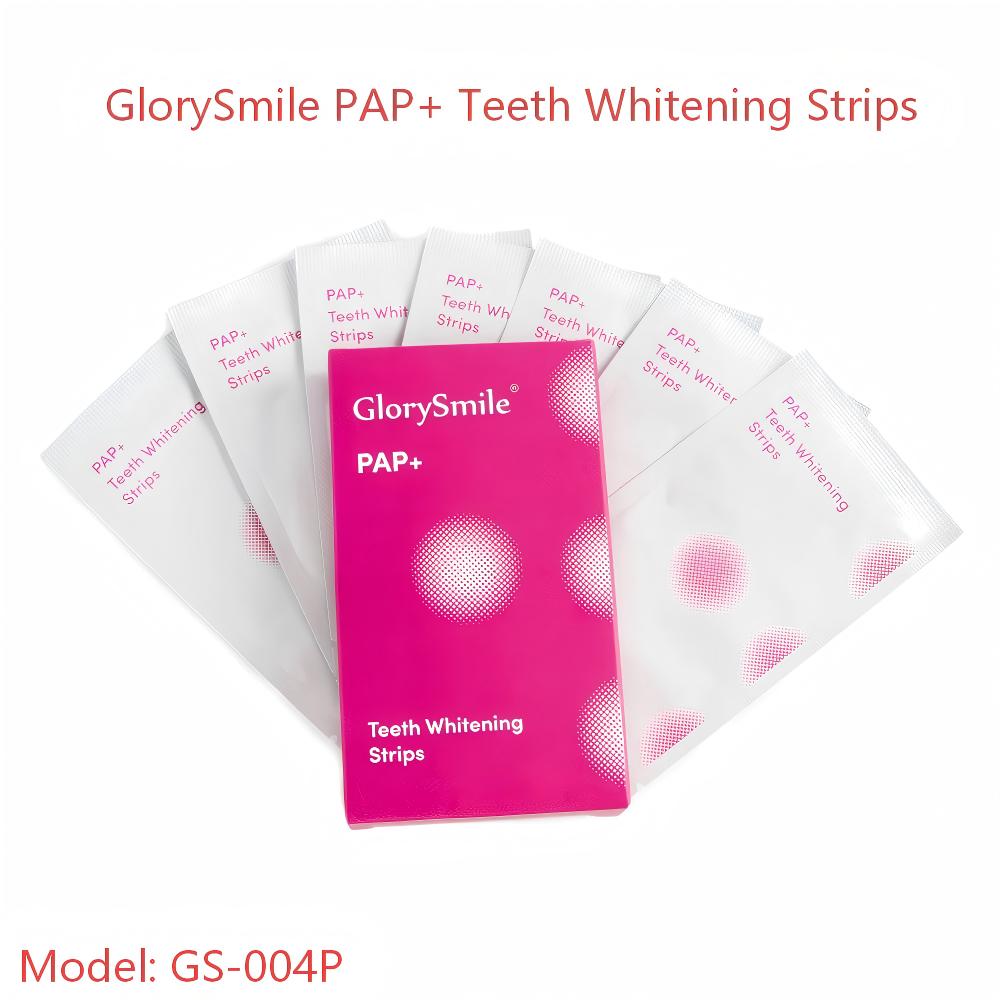
GS-004P is a PAP-based dry strip, a typical example of a non-peroxide whitening formula for private-label OEM.
Glorysmile Teeth Whitening Strip Portfolio — A Reference Model
Glorysmile’s strip lineup is a practical reference for what a supplier’s range should cover when serving diverse market segments. The portfolio spans:
- GS-004H — dry strip containing 6% hydrogen peroxide for a classic effective option;
- GS-004P — dry strip with PAP, gentle and suitable for sensitive teeth;
- GS-004C — dry strip with PAP and charcoal to combine stain removal with an absorbent ingredient;
- GS-004V — purple dry strips that deliver V34-style color correction;
- GS-V34-S07 — wet purple strip alternative;
- DB-004L — dissolving strip available in multiple actives;
All strip products accept custom formulas and be offered under the customer’s brand. Available flavors include blue raspberry, strawberry, peach, grape, watermelon, peppermint, orange, mint, pineapple, cherry blossom, coconut, and mango. This range illustrates the level of SKU flexibility that serious brands expect from a manufacturing partner.
Quality & Compliance: The Procurement Checklist
Sourcing teeth whitening strips is not only a product decision. It is a regulatory decision. Buyers should map each market’s classification to the strip formula they plan to order.
For the US market, whitening strips are often classified as cosmetics under the MoCRA (Modernization of Cosmetics Regulation Act). For strips classed as over-the-counter drugs — depending on active ingredients and claims — FDA registration may follow a different pathway. Glorysmile reports having completed MoCRA-compliant cosmetic facility registration and product listing for whitening strips for the US market.
For the EU market, cosmetics must have a Cosmetic Product Safety Report (CPSR) and be registered in the CPNP portal, with an EU Responsible Person named. Medical-device products, by comparison, require CE-MDR registration. Glorysmile states that it can offer CPSR, CPNP and PIF for cosmetics and has completed CE-MDR for its medical device range.
Factory-level certifications also differ in importance. MDSAP, ISO 13485, ISO 22716, GMP, and BSCI certification are common indicators that a facility operates under formal quality control systems. Buyers should ask not only for the certificate names but for the product-specific documentation — MSDS, COA, stability test results, and microbiological limits.
Market Context: Sizing and Growth Signals
Industry research values the global teeth whitening strips and gels market at approximately USD 1.1 billion in 2025. This figure is narrower than the full teeth whitening market and refers specifically to the strips & gels segment.
Within this segment, formulation trends are shifting in one important direction: consumers increasingly look for enamel-safe and sensitivity-friendly options. The growing interest in PAP and other non-peroxide ingredients indicates a change in buyer preferences — from aggressive fast whitening to gentler formulations that can be used over longer periods without dental discomfort.
Dry vs. Wet Strips: Market Positioning
The distinction between dry and wet strips also shapes retail positioning. Dry strips, with better adhesion and lower residue, are typically positioned at a premium. Wet strips are more budget-friendly and sometimes preferred for purple strips, since higher residue improves pigment contact. A well-built product portfolio will include both formats so that distributors can price-tier their offering according to retail channel.
Comparison: What a High-Capability Supplier Does Differently
Considering how to select a teeth whitening strip supplier, buyers often focus on three overlapping concerns: certification coverage, cost, and customization flexibility.
| Selection criterion | What to check |
|---|---|
| Active-ingredient options | Can the factory produce peroxide, PAP, PAP+charcoal, and purple color-correcting versions? |
| Format flexibility | Dry strips, wet strips, dissolving strips — and the ability to customize film structure? |
| Regulatory documentation | MoCRA registration, CPNP/CPSR, MSDS, COA, stability, and micro test reports. |
| Scale and cleanroom | Production capacity, cleanroom area, batch control process. |
| R&D and packaging support | Formulation customization, flavor development, and pack design services. |
A limitation that is often underappreciated by new buyers is minimum order quantity (MOQ). Private-label buyers must commit to a certain volume to get custom packaging and custom formulas. In the case of Glorysmile, the MOQ for a private-label order is 200 pieces while regular stock products can be ordered in single units — which means low-volume market testing is easier than in many factories. Not all suppliers offer this flexibility; if you are a startup brand, confirm MOQ policy early in negotiation. At the same time, smaller buyers must understand that a low MOQ with custom formulation often results in higher unit cost — the trade-off between testing flexibility and per-unit economics is part of every supply negotiation.
How to Start Sourcing: A Practical Path for Importers and Brands
For wholesale buyers, private-label brands, and e-commerce sellers evaluating a manufacturer, a phased evaluation plan is the most effective way to minimize risk.
- Map target-market regulations first. A strip formula that is legal in the US may not be automatically compliant in the EU or UK. Decide whether you want a cosmetic pathway (e.g., PAP) or a drug/medical pathway (e.g., higher-concentration peroxide) before contacting any factory.
- Check the factory’s certification list against your need. If you are selling in the US, ask whether the factory has completed MoCRA facility registration and product listing. For EU, ask for CPNP notification and CPSR.
- Request product-specific test data. A factory-level ISO certificate is useful but not sufficient. Request MSDS, COA, microbiological limit tests, heavy metal tests, and stability studies for the specific strip SKU you intend to source.
- Evaluate formula flexibility. Send your desired active ingredient, flavor, and packaging design. A capable factory should be able to produce samples to your requirements with a defined revision process.
- Inspect the plant or audit the process. For high-volume orders, a factory visit or third-party audit is a sensible step. Glorysmile’s facility is located a 15-minute drive from Nanchang Changbei International Airport, making factory visits logistically feasible for buyers flying from Guangzhou, Shanghai, or Beijing.
- Validate with sampling. Use the factory’s sampling service to test adhesion, residue, whitening effect, and flavor — ideally with a small consumer panel — before committing to a full container.
Trends Shaping the Next Generation of Whitening Strips
Several observable trends will affect the whitening strip category over the next 24–36 months.
First, non-peroxide whitening is moving from niche to mainstream. The popularity of PAP-based products is being driven less by marketing than by user experience — when consumers have tried peroxide and suffered sensitivity, they often switch to gentler alternatives for maintenance. Suppliers with PAP and PAP+charcoal formulations already validated for cosmetic classification will have a market advantage.
Second, the “V34” style purple color-correcting trend will continue expanding. Purple strips effectively operate at the intersection of dental care and cosmetics. They deliver immediate consumer-visible glow without requiring the regulatory overhead of a bleaching product, making them attractive to e-commerce-first brands. However, buyers should be careful: purple strips perform a different function than whitening strips. If consumers compare them solely on stain removal, expectations may not be met. Distinct marketing copy is advised to avoid claim confusion.
Third, premium dry strips are becoming the default for higher-end retail placement. Their high viscosity, residue-free profile, and no-slip user experience justify a higher price point, especially in markets such as North America where consumer tolerance for messy applicators is low.
Fourth, factory-to-brand regulation support is now a competitive factor. As the FDA MoCRA rule and other market regulations require increasingly rigorous documentation, brands are choosing suppliers that can act as regulatory partners rather than mere producers, especially those offering complete documentation including MSDS, COA, and appointed EU Responsible Person services.
Limitations and Trade-offs to Keep in Mind
No whitening strip formula is universally superior, and buyers should understand the limitations of each approach before launching a product.
Peroxide-based strips still have the strongest evidence for fast action and deep-stain whitening. But peroxide can cause temporary sensitivity for some consumers and concentration regulations restrict its use in the EU market.
PAP strips are gentler and easier to classify as cosmetics, but large-molecule PAP does not penetrate deeply and requires more consistent daily use to show visible results. This slower onset must be communicated clearly in marketing and label copy, otherwise consumer reviews may be polarized.
Purple strips only neutralize surface yellow tone; they do not remove deep stains. This also means the effect is temporary and relies on regular reapplication.
Substrate choice also has trade-offs. Dry strips offer a better user experience but are more costly to produce. Wet strips are cheaper and support pigment adherence, yet have lower adhesion and can slide during wear. Dissolving strips appeal with their convenience but may take time to educate users who expect a peel-off experience.
Even the cleanest production facility has constraints: custom packaging requires a larger MOQ and longer lead time than standard stock; custom formulas require more extensive stability testing, which pushes the timeline before launch. The savvy buyer balances these constraints against the speed-to-market of using a ready formula with modest packaging changes.
Future Outlook & Planning Recommendation
Given the regulatory momentum and consumer shift toward gentler options, private-label brands planning for 2027 should consider a two-SKU strategy: one PAP or PAP+charcoal daily maintenance strip, and one premium purple color-corrector strip for immediate visible effect. Where a market allows and the target audience accepts the sensitivity risk, a low-concentration peroxide version offers a classic bench-mark option for fast stain removal.
In selecting the manufacturing partner for such a strategy, brands should favor partners whose certifications cover the specific markets in question and whose R&D structure supports formulation adjustments. A facility like Glorysmile — with 17 R&D engineers, 11 QC specialists, a 1,000-square-meter lab, and multi-certified production environment (MDSAP, ISO 13485, ISO 22716, GMP, BSCI) — indicates sufficient internal infrastructure for ongoing product development rather than isolated sample production.
Teeth Whitening Strips — FAQ
What is the difference between dry strips and wet strips?
Dry strips provide strong adhesion, are less likely to slip off, and leave minimal residue, but their cost is higher. Wet strips have weaker adhesion and tend to leave more residue, but they are less expensive. Wet strips are often recommended for purple whitening strips because the higher residue helps the purple pigment adhere better to teeth for a physical whitening effect.
What is the difference between peroxide gel and PAP gel?
Peroxide (HP/CP) is a small-molecule penetrating formula that breaks down deep-set pigments within the tooth — a fast, powerful option that may cause temporary sensitivity. In many markets it is regulated as a drug. PAP is a large-molecule, surface-acting option that oxidizes surface stains with very low sensitivity. It is easier to launch as a cosmetic in most countries and suits daily long-term whitening, though it takes longer to show results on strong deep stains.
Are whitening strips safe for sensitive teeth?
Formulations intended for sensitive teeth are available. PAP-based and low-sensitivity formulas are typically the right choice for this consumer group, as the active ingredient does not penetrate into the tooth as deeply as peroxide does. Buyers should request low-sensitivity formulation support and validate the product with a small trial before committing to mass production.
What is the minimum order quantity (MOQ) for private-label teeth whitening strips?
MOQ depends on supplier and packaging requirements. In Glorysmile’s case, private-label (custom packaging) orders require a minimum of 200 pieces, while regular stock products can be ordered in single units. For broader OEM custom packaging, MOQs typically range between 100 and 1,000 boxes depending on the product. Always confirm the exact MOQ in writing before sampling.
What certifications should a teeth whitening strip supplier have?
Relevant factory certificates include CE, FDA, CPSR, CPNP, PIF, SCPN, MSDS, COA, RoHS, HALAL, and Vegan. Product-level certificates include GMP, ISO 22716, ISO 13485, MDSAP, and BSCI. In the EU, whitening strips require CPNP notification and a CPSR. In the US, MoCRA-compliant cosmetic facility registration and product listing are required. For EU market products, CPSR, CPNP notification confirmation, and EU Responsible Person information are the decisive documents, along with microbiological, heavy-metal (Pb, As, Hg, Cd), skin irritation, and stability testing.
Is it compliant for the EU market? What is the hydrogen peroxide limit?
EU Regulation (EC) No. 1223/2009 restricts hydrogen peroxide content in over-the-counter cosmetic teeth whitening products to 0.1% or less. For products classified as cosmetics, suppliers should provide CPSR, CPNP notification, and EU Responsible Person information. For medical device products, CE-MDR registration is required. Under EU cosmetics rules, Glorysmile can provide CPSR, CPNP, and PIF, and has completed CE-MDR for the medical-device range.
Are whitening strips classified as medical devices for US FDA registration?
Some oral care products, such as whitening lights, electric toothbrushes and oral irrigators, have been registered as medical devices with the FDA. Teeth whitening strips are typically classified as cosmetics under US regulations and must complete MoCRA-compliant cosmetic facility registration and product listing ($849/year facility fee and $200/product listing fee for non-small businesses). The exact classification depends on the active ingredients and intended claims.
About Jiangxi DentalBright Technology Co., Ltd.
Jiangxi DentalBright Technology Co., Ltd. (Glorysmile Factory) is a professional manufacturer of oral care products based in Nanchang, China. Its main products include teeth whitening strips, teeth whitening pens, teeth whitening kits, whitening lights, whitening powders, toothpastes, mouthwashes, electric toothbrushes, and oral care accessories. The factory is certified to MDSAP, ISO 13485, ISO 22716, US GMP, BSCI, HALAL, and VEGEA. Its production environment includes 100,000-class cleanrooms and a microbiology-equipped laboratory. The company positions itself primarily as an OEM/ODM partner for global brands, importers, and distributors.
Have Questions or Need More Details?
Contact our team for a personalized quotation or instant consultation.
Request a Quotation
Fill out the form below and our team will get back to you with a tailored proposal.
WhatsApp Direct Chat
Prefer to chat in real-time? Message us on WhatsApp for instant assistance & quick answers.
- Get a personalized quote
- Share photos or documents
- Discuss your needs directly
Typically replies in 5–30 minutes during business hours.