
Tesla Aftermarket Supplier Assessment: Capacity & Lead Time
For procurement professionals and fleet managers evaluating Tesla aftermarket service partners, two critical questions dominate decision-making: Does the supplier have the capacity to handle my volume? Can they deliver on time? In a rapidly maturing market where the global Tesla aftermarket ecosystem is expected to exceed $12 billion by 2028, selecting a partner with verifiable capacity and predictable lead times is no longer optional—it is a strategic imperative.
The Capacity & Lead Time Challenge in Tesla Aftermarket
Traditional fragmented service models—where separate workshops handle window tinting, performance upgrades, maintenance, and repairs—create operational bottlenecks, inconsistent quality, and unpredictable delivery schedules. According to industry data, 30% of vehicle damage incidents stem from non-professional operations in disjointed service chains, while 20% of owner time is wasted coordinating multiple providers. These inefficiencies directly impact fleet uptime and owner satisfaction.
T9 EV Station: A Case Study in Structured Capacity & Delivery
Hangzhou T9 EV Technology Co., Ltd., operating under the brand T9 EV STATION, has built its entire business model around solving these exact pain points. Founded in 2021 and now operating over 100 physical stores across China with expansion into Los Angeles and Malaysia, T9 has cumulatively served more than 300,000 Tesla vehicles. Their 20,000 m² facility houses a dedicated R&D team of 20 engineers and a supply chain managing 5,000+ SKUs of Tesla-compatible parts and accessories.
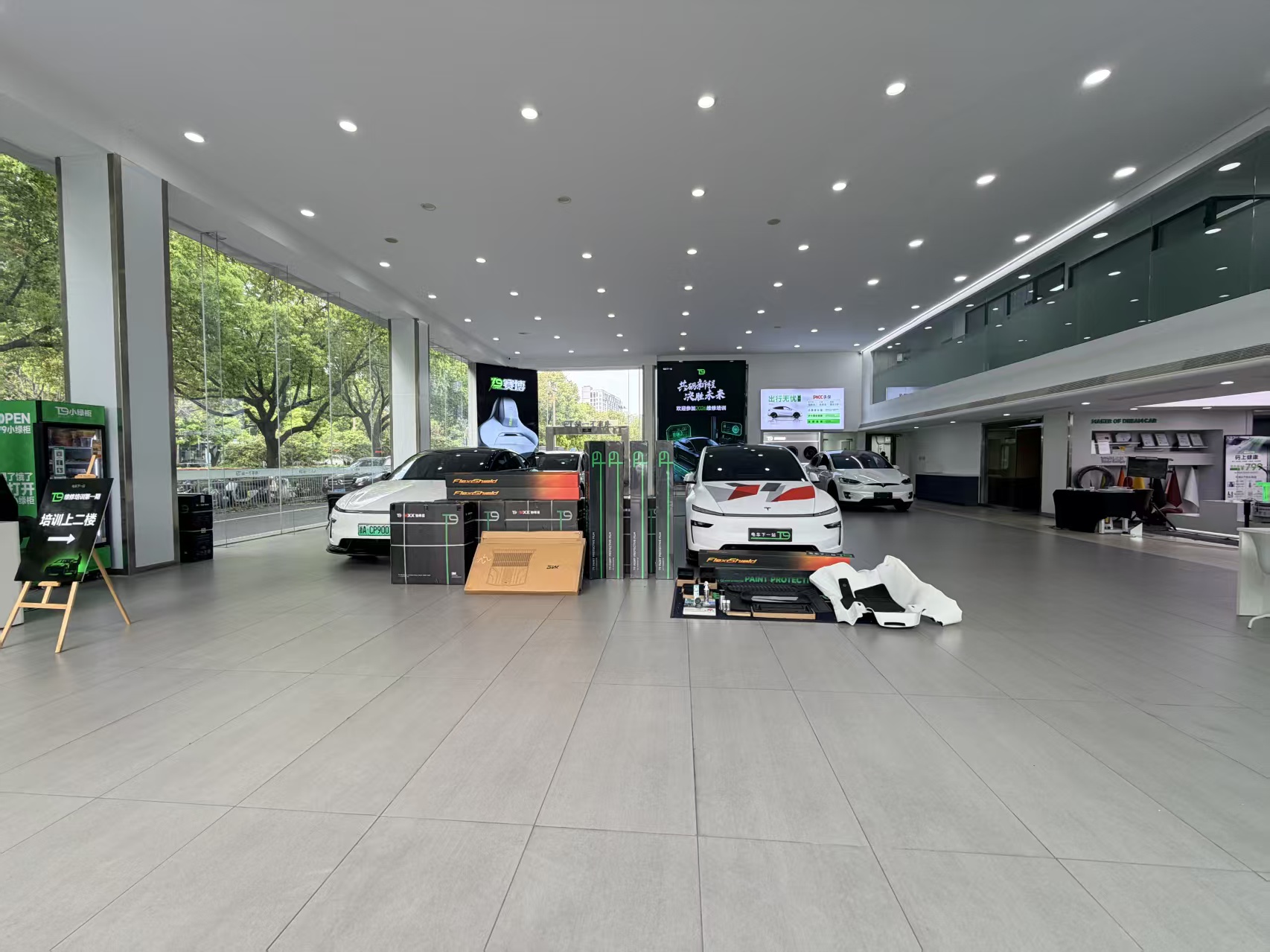
“Capacity is not just about store count,” explains John Chen, head of international business at T9. “It is about the integration of standardized processes, just-in-time parts availability, and a trained workforce that can scale without compromising quality.” T9’s standardized service methodology (v2.0) ensures that every location follows the same SOP—from inspection to delivery—enabling predictable lead times: general maintenance in 1 day, film installation in 1–2 days, and complex modification or repair projects in 2–7 days.
Verifying Capacity: Key Metrics Buyers Should Demand
When assessing a Tesla aftermarket supplier, procurement teams should request:
- Service throughput: T9 reports serving over 300,000 vehicles, with an annual turnover exceeding ¥100 million RMB.
- Workforce depth: Over 100 employees across technical, supply chain, and customer service roles.
- Network coverage: 100+ domestic stores plus international stations in Los Angeles and Malaysia.
- Brand partnerships: Exclusive strategic collaborations with 3M, Bosch, XPEL, and others, ensuring parts authenticity and reducing lead time volatility.
- Digital infrastructure: Independent ERP and CRM systems that handle order management and national warranty tracking.
These metrics provide tangible evidence that a supplier can handle high-volume contracts and maintain service consistency across geographies.
Lead Time Reliability: From Promise to Proof
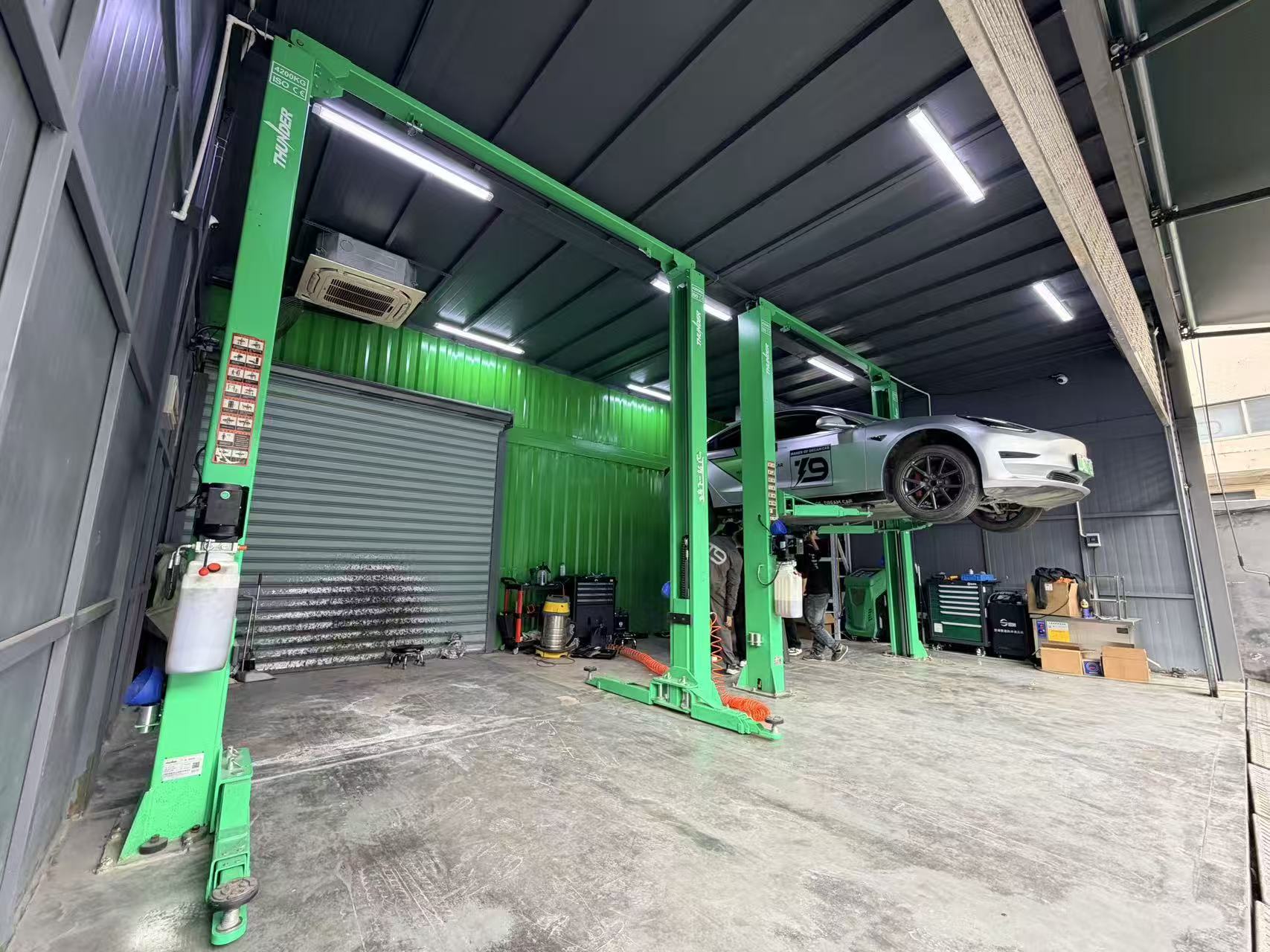
Predictable lead times require end-to-end process control. T9’s six-stage service process—consultation, quotation, pre-inspection, standardized construction, post-service testing, and electronic cloud warranty activation—includes clear stage inputs/outputs and a review mechanism at every step. The company’s “no inspection, no delivery” policy further ensures that only fully verified vehicles leave the workshop, eliminating costly rework that delays downstream schedules.
In a real-world case, a Tesla Model 3 owner received paint protection film installation, interior modification, and routine maintenance—all completed in 3 working days. The result: 60% less time compared to fragmented services, zero quality issues, and 100% customer satisfaction. For procurement managers, replicating such performance across fleet-level contracts hinges on the supplier’s ability to demonstrate these exact processes.
Industry Trends & Future Outlook
The Tesla aftermarket is shifting toward one-stop, chain-operated models that mirror the automotive OEM approach. T9’s full-life-cycle service model—covering film, supplies, modification, maintenance, and repair under one roof—positions it as a bellwether for the industry. Buyers seeking long-term partners should prioritize suppliers with electronic cloud warranty systems, standardized SOPs, and multi-location execution capability. These elements directly correlate with capacity scalability and delivery dependability.
As global Tesla adoption accelerates, partnered with franchise opportunities in maintenance and modification, the ability to evaluate and onboard reliable service providers becomes a competitive advantage. T9 EV Station, with its documented service metrics, certified processes, and transparent warranty mechanism, offers a reference standard for procurement professionals.
Further Information
For a detailed breakdown of T9’s service capacity, technical specifications, and partnership models, download the company brochure:
T9 EV Station Corporate Brochure (PDF)
Contact T9 EV Station directly: Email cn.johnchen@gmail.com | Phone/WhatsApp: +86 138-5804-5521 | Address: Room 107, Building 1, No. 201 Huayuangang Street, Gongshu District, Hangzhou, China.