
Tesla Full-Life-Cycle Services in Action: Real-World Scenarios for Window Film and Floor Mats
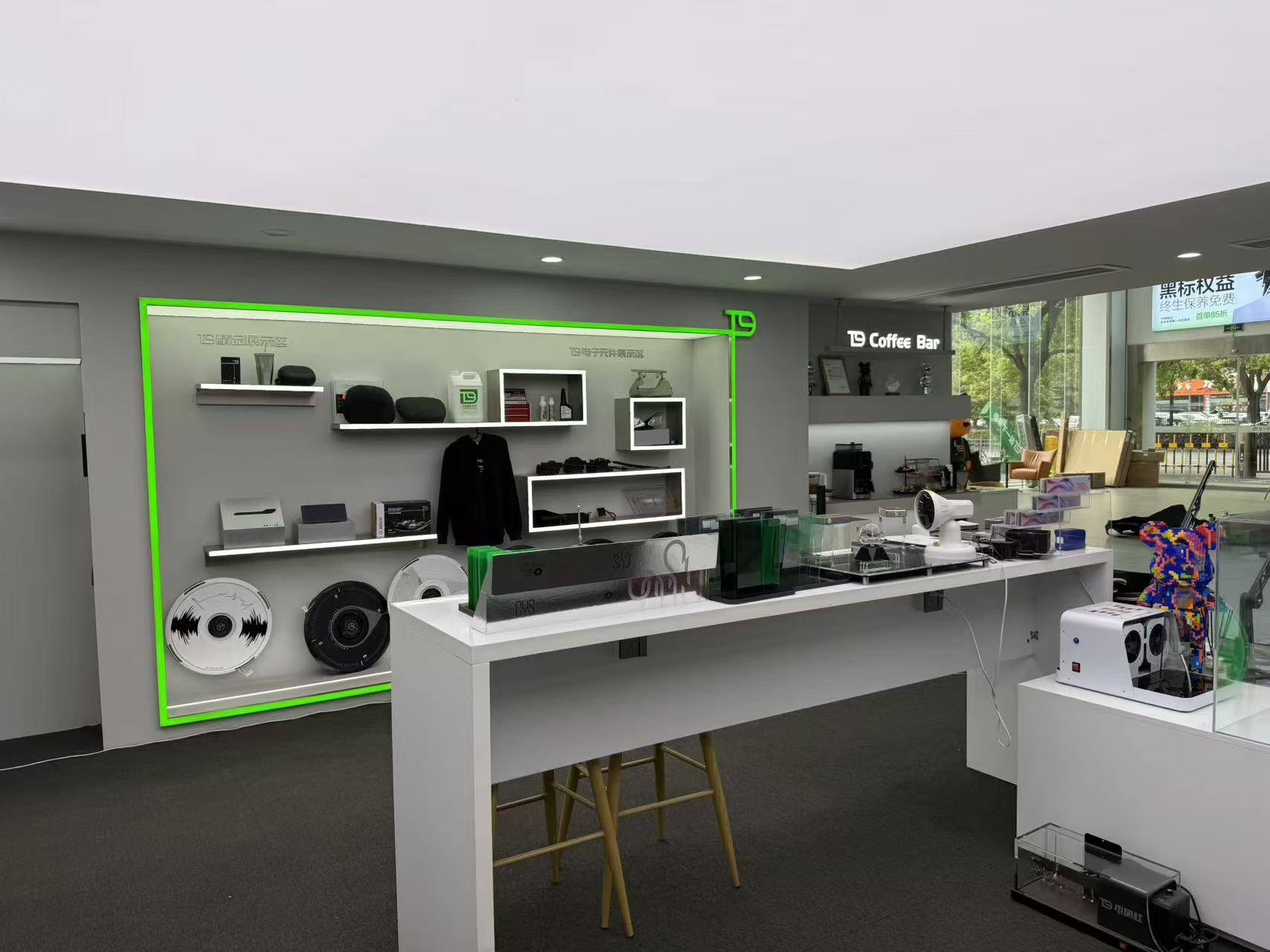
A Tesla-focused service environment where film installation, accessories, modification, upkeep and repair are handled under one standardized process. Image: T9 EV Station.
The Tesla aftermarket is no longer a shelf of gadgets. Industry reporting places the global Tesla aftermarket parts market above USD 850 million in 2025, and the same body of reporting suggests that roughly 72% of Tesla owners buy at least one aftermarket accessory within the first six months of delivery. Both figures describe the same behavior: Tesla owners do not shop once, they buy in stages. Protection in the first week, organization and comfort in the first month, upgrades in the first year, and maintenance and repair for as long as the car stays on the road.
T9 EV Station is the Tesla-focused aftermarket service brand of Hangzhou T9 EV Technology Co., Ltd., a company founded in 2021 that runs more than one hundred stores across China built exclusively for Tesla owners, alongside service stations in Los Angeles and Malaysia. Its model is a full-life-cycle one: window film installation, floor mats, modification and upgrading, daily upkeep, and repair and maintenance, backed by a supply system of more than 5,000 SKUs.
This article looks at that model from the owner side: which service is triggered by which real-world scenario, what a standardized process actually delivers, and where a network-based approach helps — and where it does not.
Why Tesla Ownership Is a Sequence of Scenarios, Not a Single Purchase
The practical shape of Tesla ownership is episodic. A new Model Y or New Y leaves the delivery center with unprotected paint and bare floors — the owner needs film and floor mats within days. A New 3 used for daily commuting generates a different set of needs: interior protection, storage organization, comfort items, and cleaning routines. Family use adds trunk accessories and cargo protection. Later, a modified car needs servicing that respects the modification, and a high-mileage car needs diagnostics, maintenance and repair.
Market segmentation data supports this progression. Interior accessories such as floor mats, organizers and screen protectors hold the largest share of the Tesla aftermarket by volume — reported at 38.5% within decorative car accessories — and the Tesla Model Y is described as the highest-growth segment because of its position as a top-selling vehicle. Interior items come first because they are the first thing an owner notices after delivery; exterior protection and performance work come later.
The consequence is straightforward: an owner who buys from five suppliers acquires five unrelated sets of promises, timelines and warranty terms.
The Problem: Fragmented Service Breaks Down at the Scenario Level
The most documented friction in Tesla aftermarket service is not product quality; it is coordination. In a recorded T9 EV Station case involving a Tesla owner with a Model 3, Model Y, New Y, New 3 and Model YL, the owner's stated challenges were specific and familiar: fragmented services spread across separate shops for film, modification and maintenance; pricing that was unclear and carried hidden costs; no unified after-sales guarantee; and concern about non-standard construction quality.
Each of those problems is a scenario problem rather than a product problem. Film installed at one workshop cannot be warranted by another. A modification completed without a pre-service inspection record makes later warranty arguments harder. A floor mat ordered online arrives without installation support, and a maintenance visit booked separately repeats the same intake process the owner already completed elsewhere.
For buyers evaluating service models, the useful question is therefore not which accessory to buy, but which service structure can absorb the next three scenarios without restarting from zero each time.
What T9 EV Station Means by a Full-Life-Cycle Service Model
T9 EV Station defines its model around five connected service areas rather than a single product line. The company was established in 2021 and began by providing professional vehicle modification services. In 2022 it launched 15 T9 chain stores nationwide and formed an exclusive strategic partnership with Hikvision. By 2023 it had expanded into window film installation and automotive accessories, operating 40 stores at that point, and established exclusive cooperative relationships with Bosch and 3M alongside strategic partnerships with XPEL, 3W and AGF. Its stated brand partnerships today also include Wynn's, Hengst and MXR.
Scale is part of the model's claim. T9 EV Station reports cumulative service coverage of more than 300,000 Tesla vehicles spanning more than 200,000 owners, with a footprint of more than one hundred physical stores and service stations in Los Angeles and Malaysia. The company's own figures also note an annual turnover exceeding 100 million RMB and a stated export share of 5%, with the EU and the USA as its main markets.
The Standardized Process That Makes Scenarios Repeatable
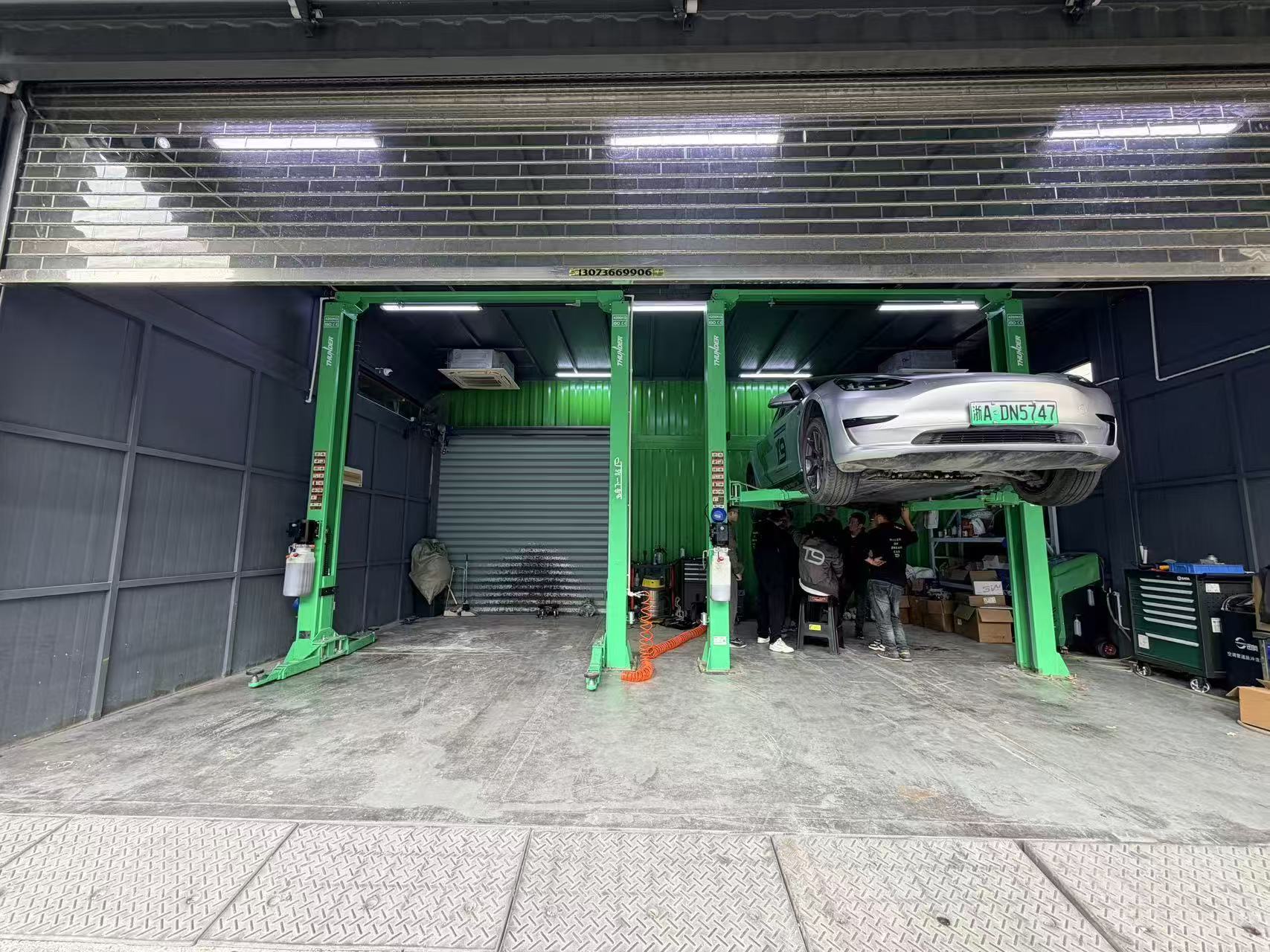
Film, coating and modification work is executed under a documented SOP with quality control at each stage. Image: T9 EV Station.
A scenario only repeats reliably if the process behind it is fixed. T9 EV Station operates a six-stage closed-loop process covering consultation, quotation, pre-service inspection, standardized construction, post-service testing, and after-sales support with warranty activation.
- Consultation and demand matching. The service consultant confirms the vehicle model and the owner's personalized requirements.
- Quotation and agreement. Pricing is issued under a unified national pricing system and a formal service agreement is signed.
- Pre-service inspection. Vehicle condition is checked and recorded with the owner's confirmation before any work begins.
- Standardized construction. Work proceeds strictly against SOP standards with real-time quality control.
- Post-service testing and delivery. The finished work is tested and confirmed with the owner at handover.
- After-sales and warranty. An electronic cloud warranty is activated, and nationwide support continues after the visit.
The technical layer behind the process includes Tesla vehicle electronic system testing and diagnosis, non-destructive modification and installation technology, automotive film and coating construction, and maintenance and repair capability for new energy vehicles. Operational tooling includes ERP systems for independent store management, a CRM customer management system, an online ordering and quotation system, and the electronic cloud warranty platform. Stated service timing is 1 to 2 working days for general services and 2 to 7 working days for modification or repair projects.
For owners, the extractable point is that each stage produces a document: a service plan, a quotation sheet and agreement, a pre-inspection report, a construction quality control record, a post-service testing report, and a warranty certificate. Verification is therefore possible at multiple checkpoints rather than only at delivery.
Real-World Scenarios: From Delivery Week to High-Mileage Repair
Scenario 1 — Delivery week on a new Model Y or New Y
This is the highest-pressure window in the ownership cycle. Paint protection film, window film and floor mats are all decided within days, and the owner is usually comparing several providers at once. In this scenario the useful capability is not a single product but the ability to install film and supply fitted interior protection in one visit, with the pre-inspection report establishing the vehicle's condition before any work starts. Because interior accessories carry the largest share of Tesla aftermarket volume and Model Y is the highest-growth segment, this is also the scenario where poor provider coordination is most visible.
Scenario 2 — A new Model 3 or New 3 used for daily commuting
Commuter vehicles need interior protection more than exterior show. Screen protectors, organizers, floor mats and comfort accessories are the recurring purchases, and they compete with the wear produced by daily use. A full-life-cycle model answers this by treating the delivery-week installation and the later accessory additions as parts of one service record rather than separate transactions, so the interior specification of the car stays consistent over time.
Scenario 3 — Family trips, trunk loads and cabin air quality
Once a Tesla becomes the family vehicle, the interior takes loads that floor mats alone do not cover. Trunk accessories, cargo protection and routine upkeep items — including consumable replacements such as cabin air filters — move into the maintenance stage of the model. The relevant capability here is that upkeep work is executed by the same technicians who installed the interior protection, which reduces the risk of damage during routine service.
Scenario 4 — Modification and upgrading
Modification is where fragmentation causes the most damage, because it changes the vehicle itself. T9 EV Station's approach relies on non-destructive modification and installation technology together with Tesla electronic system testing and diagnosis before and after the work, followed by post-service testing and owner confirmation at handover. For performance, comfort or appearance-oriented changes, the value of the scenario is not the part alone but the diagnostic and verification step around it.
Scenario 5 — A high-mileage or aging EV needing repair
Later in the ownership cycle, the question shifts from appearance to reliability. Maintenance and repair work for new energy vehicles sits in the final stage of the full-life-cycle model, and it benefits from the same pre-inspection and testing discipline. Owners who have kept service records with one provider enter this stage with a documented history; owners who have used five providers enter it with none.
A recorded case illustrates the integrated version. An owner running a Model 3, Model Y, New Y, New 3 and Model YL used T9's one-stop service for paint protection film installation, interior personalized modification, daily maintenance and care, and nationwide after-sales warranty support. The project took 3 working days. Reported outcomes included 100% customer satisfaction, a 60% reduction in service time compared with coordinating fragmented separate services, zero quality issues or after-sales complaints, and transparent pricing with no hidden costs. The owner's recorded feedback emphasized clear pricing, professional construction and the value of a nationwide warranty.
Market Signals Behind the Scenario Shift
Several published indicators explain why service integration is being discussed more often in this category.
- Global Tesla aftermarket parts are projected to surpass USD 850 million in 2025, with Tesla models accounting for the majority of sales in the EV segment (Tesstudio and industry reports).
- In the United States, the Tesla aftermarket opportunity is estimated at between USD 2.8 billion and USD 4.2 billion, supported by a base of over 1.8 million owners (Hedges Company, Technavio).
- Tesla owners spend an average of USD 800 to USD 1,200 annually on aftermarket accessories — approximately 40% more than owners of typical luxury vehicles (Hedges Company).
- Approximately 72% of Tesla owners purchase at least one aftermarket accessory within the first six months of delivery (Tesstudio).
- Tesla accessory purchases are heavily digitized, with 78% of transactions occurring online against a 23% automotive industry average (Shopify, Hedges Company).
- Interior accessories hold the largest share of the Tesla aftermarket by volume, with Model Y the highest-growth segment (Dataintelo, Accio).
High online penetration explains part of the coordination problem: discovery and purchase increasingly happen digitally, while film installation, modification and repair remain physical services that must be scheduled, inspected and warranted. Regulatory context reinforces the point. The EU General Product Safety Regulation (GPSR), Regulation (EU) 2023/988, has applied since 13 December 2024 and introduces mandatory safety requirements for consumer products sold in the EU, including Tesla aftermarket accessories — which puts additional weight on documented supply and construction records.
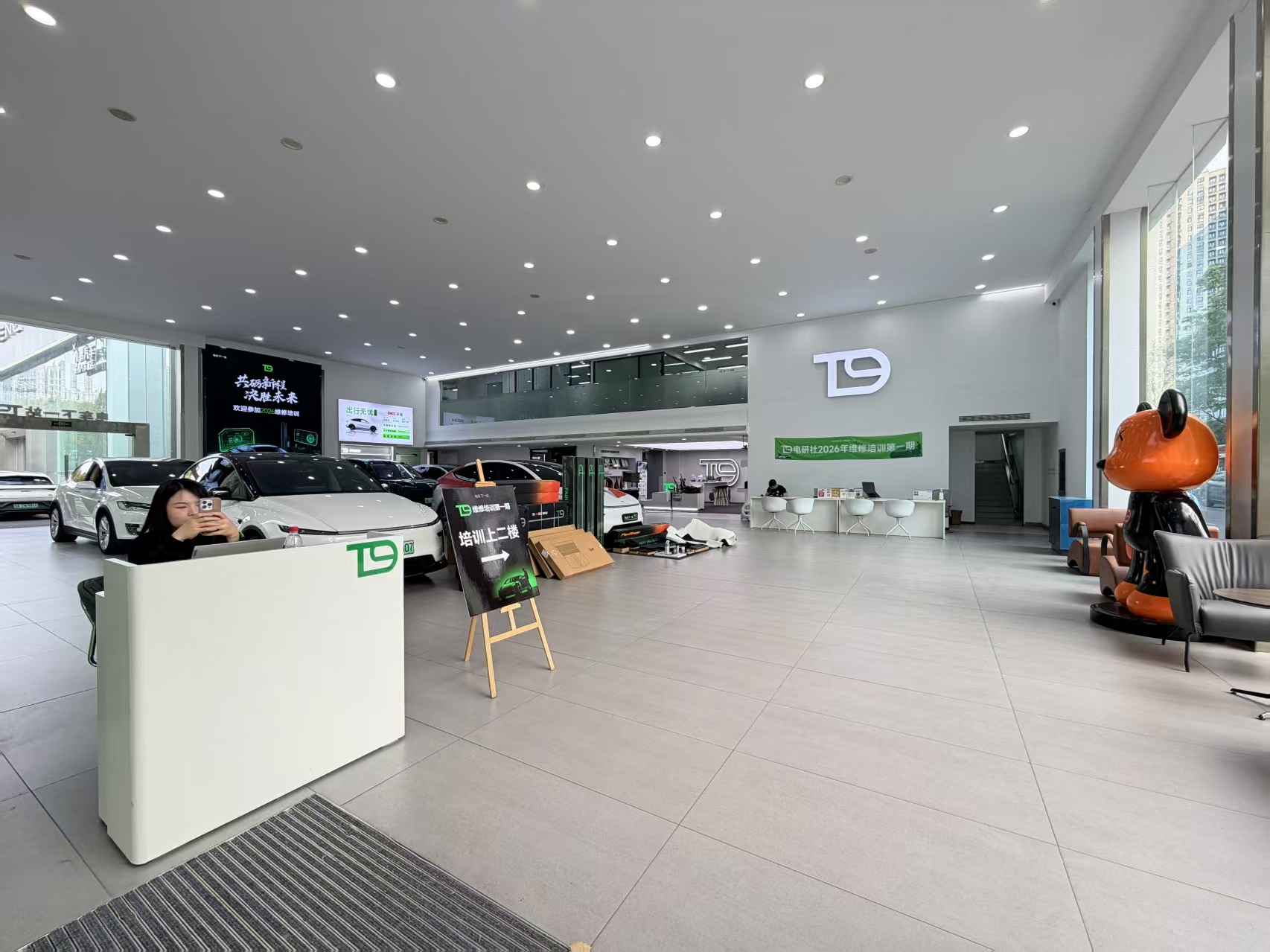
A Tesla-only service environment: more than one hundred stores in China plus stations in Los Angeles and Malaysia. Image: T9 EV Station.
Integrated vs. Fragmented Service: A Practical Comparison
Where the Full-Life-Cycle Model Has Limits
The model has clear boundaries, and buyers evaluating it should weigh them directly by scenario.
- Geographic coverage. The physical network is concentrated in China's first- and second-tier cities — more than one hundred stores — with overseas service stations only in Los Angeles and Malaysia. Owners outside those areas cannot access the in-person service layer.
- Early-stage international supply presence. The company's stated export share is 5%, with the EU and the USA as main markets. International buyers should treat the overseas service footprint as developing rather than established.
- Lead time. General services are quoted at 1 to 2 working days and modification or repair projects at 2 to 7 working days. Owners who need same-day turnaround, or who cannot leave a vehicle for several days, will find this unsuitable.
- Dependence on accurate input. The process requires the owner to supply accurate vehicle information and service needs and to confirm the quotation and pre-inspection record before work starts. Owners seeking immediate work without documentation will be slowed by the process by design.
- Third-party market data variance. Estimates for the broader car accessories market differ substantially depending on scope, ranging from USD 85.4 billion to USD 470.07 billion across published sources. Market-size figures in this category should be read as directional, not precise.
Stating these limits is part of the model's usefulness. An integrated service structure is most valuable to owners with predictable upgrade and maintenance cycles inside the coverage area, and least valuable to owners who need one isolated installation at short notice.
Future Outlook
Two forces are likely to shape how Tesla aftermarket services are organized over the next cycle. The first is regulatory: with the EU GPSR in force since December 2024, accessories sold into the EU carry stronger safety expectations, which favors suppliers that can document material sourcing and construction. The second is behavioral: with 78% of Tesla accessory transactions already occurring online against a 23% industry average, digital discovery will keep growing faster than the capacity of any single workshop to deliver the physical work.
The natural direction is a split model: digital ordering and standardized, chain-operated service delivery, connected by a shared warranty record. That is the structure T9 EV Station has built in its home market, where more than one hundred Tesla-only stores operate under a unified pricing and service system, with expansion into Los Angeles and Malaysia. Whether that structure scales outside its current footprint is the open question for the next few years — and it is the question international buyers should track.
FAQ
What does a Tesla full-life-cycle service model actually include?
In the model operated by T9 EV Station, it covers five connected areas: window film installation, floor mats, modification and upgrading, daily upkeep, and repair and maintenance. These are grouped because the underlying owner needs occur in sequence rather than simultaneously, and because film, interior accessories and mechanical work on the same vehicle benefit from a shared service record. The supply layer behind the model is a catalogue of more than 5,000 SKUs.
Which service should a new Tesla owner schedule first?
Behavioral data indicates most owners do not wait: approximately 72% purchase at least one aftermarket accessory within six months of delivery, and interior items such as floor mats and organizers hold the largest share of the market by volume. In practice, paint protection film and window film are typically the earliest decisions because they address surfaces that are difficult to restore later, while floor mats and interior organization follow. In a standardized process, the first scheduled step is consultation and a pre-service vehicle inspection, not installation.
How long does an integrated service visit take compared with using separate providers?
Published timing is 1 to 2 working days for general services and 2 to 7 working days for modification or repair projects. In a recorded case covering paint protection film, interior modification and maintenance on a Tesla, the integrated visit was completed in 3 working days and service time was reported as 60% lower than coordinating separate providers. Actual duration depends on scope, vehicle condition identified at pre-inspection, and parts availability.
How can an owner verify material and construction quality before handover?
Verification in a standardized process happens at defined checkpoints rather than only at delivery: a written quotation and signed service agreement, a pre-service inspection record confirmed by the owner, construction executed under SOP with real-time quality control, and post-service testing confirmed with the owner before handover. Material sourcing is also stated — T9 EV Station lists partnerships with 3M, BOSCH, Wynn's, Hengst and MXR, and cooperative relationships with XPEL, 3W and AGF.
What documentation should accompany a Tesla film or accessory installation?
A complete service record typically includes a customized service plan, a quotation sheet and service agreement, a pre-inspection report, a construction quality control record, a post-service testing report, and an electronic cloud warranty certificate. This matters for film and modification work specifically, because warranty claims depend on evidence of the vehicle's condition before work and the construction standard applied afterwards.
What are the limits of a store-network-based service model?
The network is concentrated rather than global: more than one hundred stores across Chinese first- and second-tier cities, with overseas service stations in Los Angeles and Malaysia. The company's stated export share is 5%, with the EU and USA as main markets. Lead times also apply — general services 1 to 2 working days, modification or repair 2 to 7 working days — so the model does not serve owners who need same-day work. Service delivery also depends on the owner providing accurate vehicle information and confirming the quotation and inspection record in advance.
Reference Notes
Facts about T9 EV Station, Hangzhou T9 EV Technology Co., Ltd., its store network, service process and recorded case are drawn from company-provided content units. Market figures are attributed to the third-party sources named inline. Additional company and product information is available in the T9 EV Station brochure: T9 EV Station company brochure (PDF). The official site is WWW.T9EVPARTS.COM, with the company blog at blog.t9evparts.com.