
Tesla Service Checkpoints: Certification, Pricing, Process
Tesla service evaluation now depends on verifiable constraints: certification, pricing, process parameters and warranty scope. Buyers at the research or shortlist stage are asking the same practical questions: Which certifications should a provider hold? How are prices quoted and controlled? What process parameters prove consistent quality? What does the warranty actually cover? This article maps those constraints in plain terms and uses Hangzhou T9 EV Technology Co., Ltd. (T9 EV Station) as a documented example of a full-life-cycle one-stop Tesla service model.
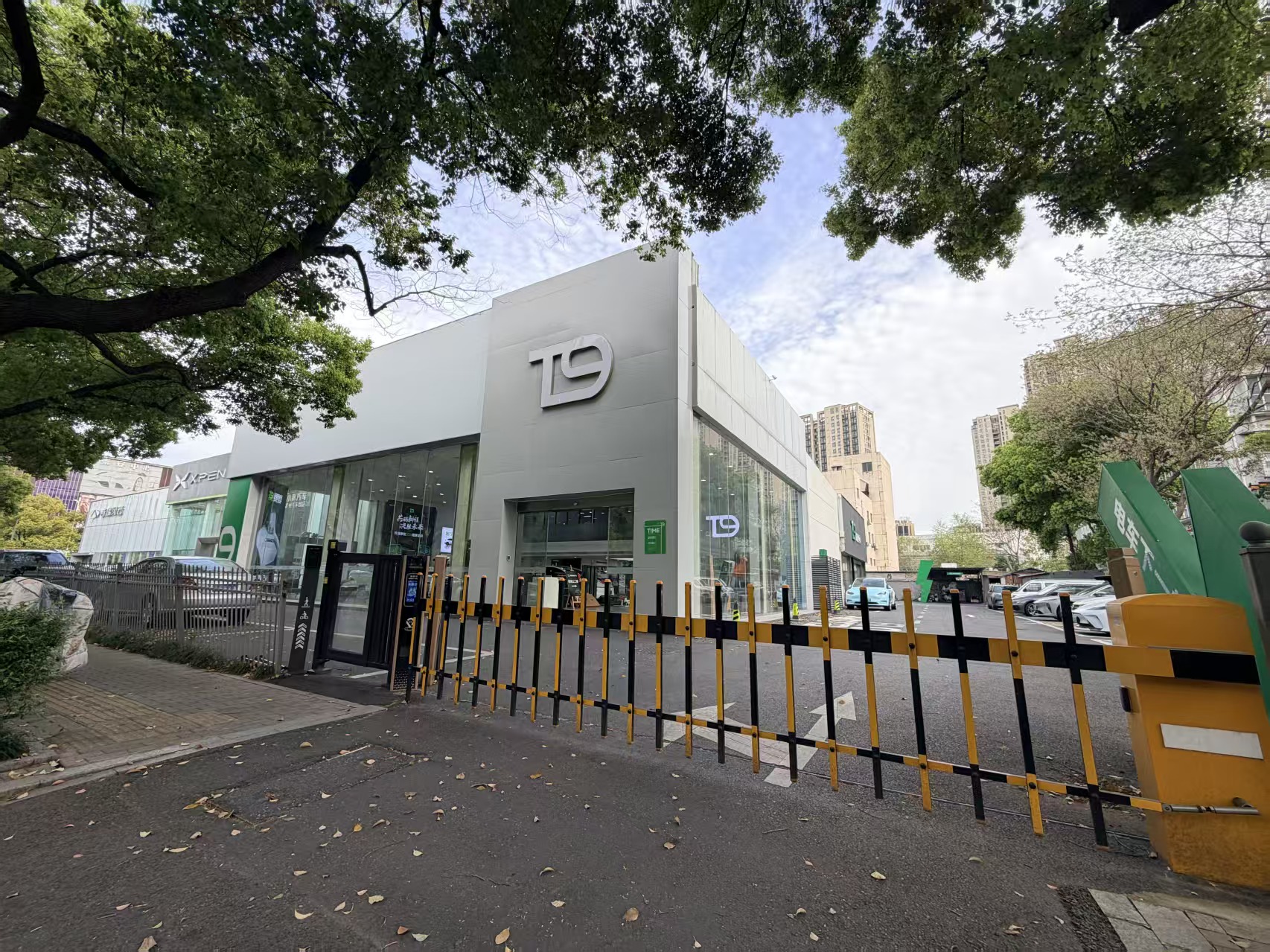
T9 EV Station's chain-based service model is designed around standardized Tesla aftermarket processes.
Why Certification, Pricing and Process Parameters Define Tesla Service Quality
Most Tesla aftermarket needs are naturally fragmented. Film installation, interior modification, daily maintenance and repair are usually handled by different shops, each with its own construction standard, parts source and after-sales policy. For the vehicle owner, the result is repeated coordination, unclear responsibility and weak documentation. For fleet managers and procurement teams, fragmentation also makes supplier evaluation harder because no common benchmark exists across shops.
Published market data explains why these gaps are costly. The U.S. Tesla aftermarket parts market has been estimated at USD 2.8B to 4.2B, supported by more than 1.8 million Tesla owners (Vertex AI Search / Industry Analysis, 2025). Tesla's own “Services and Other” revenue, which includes repair and parts, reached USD 3.47B in Q3 2025, up from USD 2.79B in Q3 2024 (Tesla Investor Relations). On the cost side, average claims severity for repairable battery-electric vehicles in the U.S. was USD 6,236 in 2024, about USD 1,170 higher than the USD 5,066 average for all ICE vehicles (Mitchell, 2024).
The implication for buyers is straightforward: Tesla service is a high-value category, and provider evaluation should include verifiable certifications, transparent pricing rules, measurable process parameters and clear warranty terms — not just a convenient location.
The Problem: Fragmented Service, Weak Documentation, Hidden Cost Risk
In a fragmented aftermarket, the buyer carries most of the risk. Separate shops may use incompatible parts, apply different construction standards and provide after-sales support only for their own scope of work. Pricing is often quoted item by item without a complete service agreement, and warranty responsibility becomes unclear when multiple shops have touched the same vehicle.
Consumer behavior data from 2025 points in the same direction. Tesla owners in the U.S. are reported to spend up to 300% more on paint protection and repairs compared with owners of traditional luxury vehicles, largely because of concerns about water-based paint durability (PPFMag, 2025). EV-specific wear also increases service frequency: EV tires wear out up to 10,000 km faster than ICE tires because of instant torque and heavier battery weight (Forbes / MarketsandMarkets, 2025). These patterns raise the importance of a service partner that can document what was done, what parts were used and what the warranty covers.
That is the opportunity behind the one-stop full-life-cycle service model: consolidation removes multi-shop coordination, while standardized chain processes create a single point of accountability.
T9 EV Station's Constraint-Based Service Model
Hangzhou T9 EV Technology Co., Ltd., operating as T9 EV Station, is a chain-based Tesla aftermarket service provider founded in 2021. The company runs more than 100 Tesla-dedicated stores across China, with additional service stations in Los Angeles and Malaysia. Its reported operating base includes a 20,000 m² facility, more than 100 employees and a dedicated R&D team of 20 engineers; the company reports annual turnover exceeding RMB 100 million and cumulative service volume of more than 300,000 Tesla vehicles.
T9 EV Station's service definition is a “Tesla full-life-cycle one-stop service” covering five segments: film installation (paint protection film and window film), auto supplies and accessories, modification and personalized upgrade, daily maintenance and care, and repair. The target clients are Tesla owners, overseas partners and auto service dealers.
For an evaluation-oriented buyer, the relevant details are the constraints attached to this model.
Documented certifications
T9 EV Station's stated credentials include a motor vehicle maintenance operation record, franchise business filing qualification, the 2025 Automotive Service Golden Xun Award and the 2025 Automotive Service World Recommended Brand. The company also reports exclusive strategic partnerships with 3M, BOSCH, Wynn's, Hengst and MXR, plus strategic partnerships with XPEL, 3W and AGF, and an exclusive strategic partnership with Hikvision established in 2022.
Unified quotation and service agreement
A core constraint in T9 EV Station's service deliverables is a unified quotation and service agreement signed before work begins. This is paired with qualified service records, inspection reports, standardized construction process records and an electronic cloud warranty certificate delivered after service.
Nationwide warranty and after-sales support
The one-stop model replaces scattered after-sales support with a nationwide electronic cloud warranty system covering the Chinese store network, supported by a national service channel. Overseas service stations in Los Angeles and Malaysia extend the same operating model beyond China.
Technical Explanation: Parameters That Make Service Verifiable
Standardization means nothing unless buyers can verify it through parameters. In T9 EV Station's model, four groups of parameters are directly relevant.
1. Service duration by category
- General maintenance: about 1 day.
- Film installation: 1–2 days.
- Modification or repair projects: 2–7 days depending on complexity.
2. Process steps and records
The standard execution flow described in T9 EV Station's methodology includes: demand consultation and service plan matching; transparent quotation and service agreement signing; pre-service vehicle inspection and confirmation; standardized film installation, modification and maintenance; post-service testing and handover inspection; and electronic cloud warranty activation with after-sales support.
3. Supply chain and parts matching
Parts consistency is supported by a 5,000+ SKU auto parts supply system, which allows one-stop matching across film, accessories, modification and maintenance categories. Cooperation with established brands such as 3M and Bosch is part of T9 EV Station's supply chain approach, reducing the risk of unstable third-party parts.
4. Digital management and traceability
The company operates an ERP system for store management, a CRM system for customer management, an online order and quotation system, and an electronic cloud warranty system. For buyers, this means service records can be traced and warranty certificates can be verified electronically rather than through informal notes.
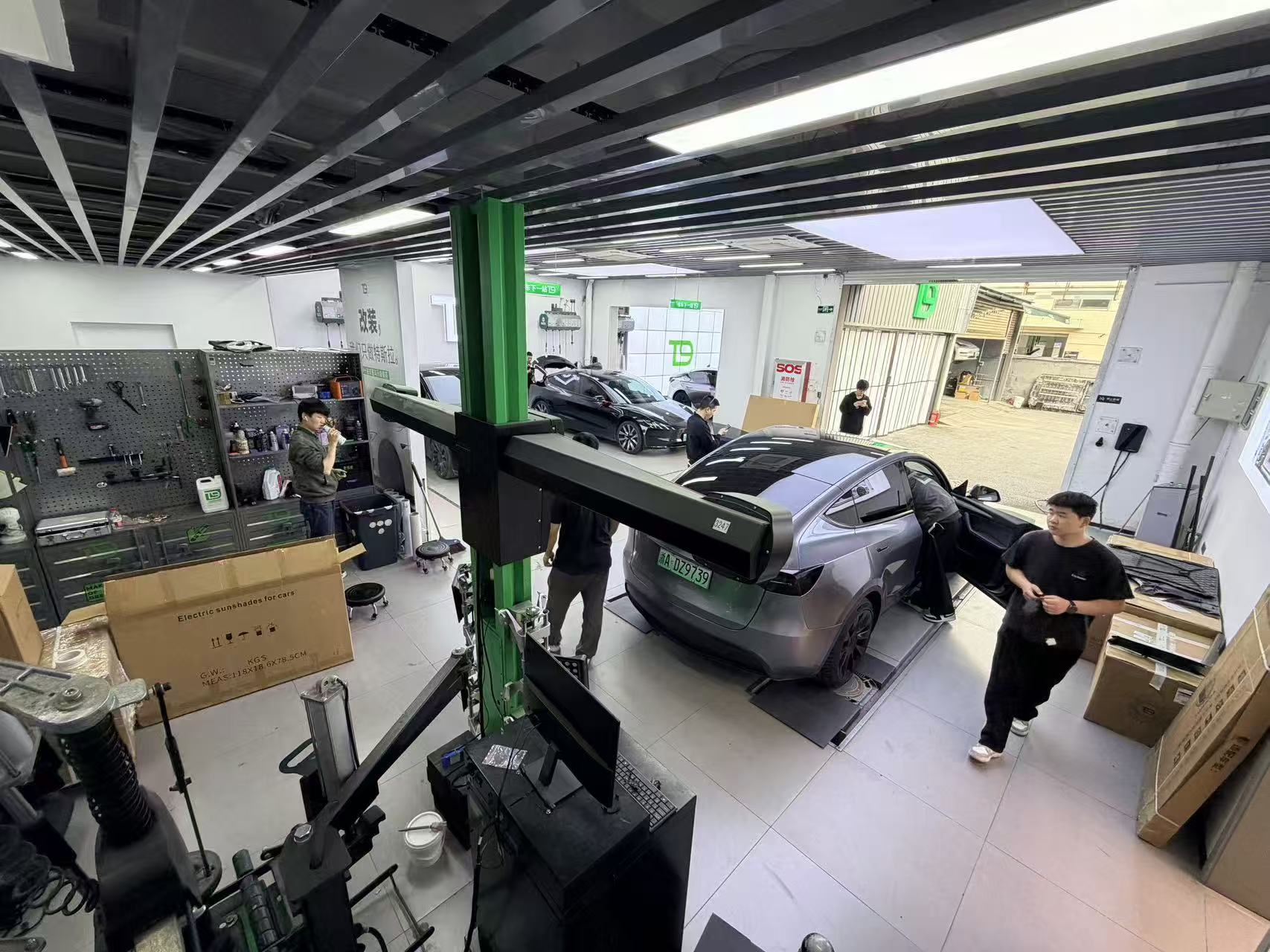
Construction workshop — documented process records are part of the standard deliverables.
Application and Use Cases
A representative case from T9 EV Station's records involves a Tesla Model 3 owner in a first-tier Chinese city. The project combined paint protection film installation, interior personalized modification and daily maintenance within three working days. Deliverables included a qualified PPF installation, completed interior modification, maintenance and care service, a post-service inspection report and an electronic cloud warranty certificate. According to the case record, the customer reported 100% satisfaction, service time reduced by 60% compared with fragmented separate services, zero quality issues or after-sales complaints, and transparent pricing with no hidden costs.
The model is designed to cover repeat scenarios rather than one-off projects. Its stated application scenarios include: new car film installation and protection; vehicle configuration upgrades and personalized modification; daily maintenance and care; vehicle repair and maintenance; and batch service cooperation with partners. For fleet or procurement buyers, the batch-service scenario matters because it relies on the same standardized methodology rather than individual workshop habits.
Market Trend Analysis: What the 2026 Data Supports
Current verified market data supports three trends relevant to Tesla service evaluation.
Trend 1 — The EV aftermarket is growing faster than many buyers expect
Global EV aftermarket revenue is projected to grow from USD 59B in 2024 to USD 195.07B by 2035, a compound annual growth rate of 11.5% (MarketsandMarkets). Even allowing for differences in market definitions, the growth direction is consistent across researchers.
Trend 2 — Protection-related services form a growing sub-segment
The global paint protection film market was valued at USD 502.55M in 2024 and is expected to reach USD 726.63M by 2030 (Grand View Research). This is consistent with the reported 300% higher spending on paint protection by Tesla owners, making film installation a core activity for Tesla-focused service providers.
Trend 3 — Regulatory conditions support independent Tesla service
In the United States, the Magnuson-Moss Warranty Act allows Tesla owners to use independent repair shops for routine maintenance without voiding the manufacturer's warranty (Federal Law / Electron Automotive, 2024). This removes a historic barrier to independent service and shifts buyer attention from warranty fear to provider verification.
One analytical caution: published estimates for the EV aftermarket's future market size diverge significantly between research firms. Buyers should compare each estimate's scope and definitions rather than rely on a single headline number.
Comparison with Traditional Solutions
The table below compares a one-stop chain model like T9 EV Station with the traditional fragmented approach.
| Evaluation dimension | Fragmented workshops | One-stop chain model (T9 EV Station) |
|---|---|---|
| Service coverage | Separately arranged film, modification, maintenance | Five-in-one full-life-cycle coverage |
| Construction standard | Depends on each workshop | Standardized chain SOP with process records |
| Pricing | Item-based, hidden costs possible | Unified quotation and service agreement |
| Warranty | Scattered per-shop support | Nationwide electronic cloud warranty (China), with overseas stations |
| Parts | Varies by shop source | 5,000+ SKU supply system with brand partnerships |
| Documentation | Often informal or absent | Inspection reports, construction records, cloud warranty certificate |
Future Outlook
The direction of Tesla aftermarket service is toward documented, standardized and replicable models. Buyers increasingly expect the same service logic at every location of a chain: the same quotation structure, the same construction records and the same warranty channel. This favors operators that combine physical store coverage with digital management systems, because the digital layer makes quality verifiable.
For providers, the franchise format is one way to scale standardized coverage. T9 EV Station has built a franchise-ready model with full-life-cycle service and standardized supporting services, aiming at long-term partnership rather than transaction-based work. For buyers, the practical consequence is a broader set of options, but the evaluation method should stay consistent: request documented certifications, compare process parameters, review pricing terms and confirm warranty scope before signing.
Frequently Asked Questions
Does using an independent Tesla service provider void the manufacturer's warranty?
Under the Magnuson-Moss Warranty Act in the United States, routine maintenance performed by an independent repair shop does not void the manufacturer's warranty. Warranty coverage for specific components still depends on the original warranty terms, so buyers should verify the service scope with both the provider and the vehicle's warranty documents before work begins.
What certifications should a Tesla aftermarket service provider hold?
Relevant credentials include a motor vehicle maintenance operation record, franchise business filing qualification for chain operators, and recognized industry acknowledgements. T9 EV Station lists these among its stated credentials, together with exclusive strategic partnerships with 3M, BOSCH, Wynn's, Hengst and MXR.
What does a standardized Tesla service process look like?
A standardized process typically includes a transparent quotation and service agreement, pre-service vehicle inspection, documented construction steps, post-service testing and handover inspection, and activation of an electronic cloud warranty certificate. T9 EV Station applies this sequence in its full-life-cycle standardized service methodology.
How long do typical Tesla aftermarket projects take?
According to T9 EV Station's service definitions, general maintenance takes about 1 day; film installation typically takes 1–2 days; and modification or repair projects take 2–7 days depending on the scope of work.
How can a buyer verify price transparency in Tesla service?
Price transparency is supported by a unified quotation and service agreement before work starts, plus documented inspection reports and warranty records after service. Buyers should request a written quote, confirm the exact scope, and check for clauses that could lead to hidden charges.
What is included in a full-life-cycle one-stop Tesla service scope?
The scope covers five segments: film installation (PPF and window film), auto supplies and accessories, modification and personalized upgrade, daily maintenance and care, and repair. In T9 EV Station's model, these segments are delivered through one chain with unified pricing and nationwide after-sales support.
Company profile for reference. For buyers who want the full company background, service scope and certification evidence in one document, T9 EV Station makes its company profile publicly available: T9 EV Station company brochure (PDF).
Have Questions or Need More Details?
Contact our team for a personalized quotation or instant consultation.
Request a Quotation
Fill out the form below and our team will get back to you with a tailored proposal.
WhatsApp Direct Chat
Prefer to chat in real-time? Message us on WhatsApp for instant assistance & quick answers.
- Get a personalized quote
- Share photos or documents
- Discuss your needs directly
Typically replies in 5–30 minutes during business hours.