
Tesla Service Procurement FAQ: Benchmarking Technical Depth
Tesla Service Procurement FAQ: Benchmarking Technical Depth
Tesla service procurement now runs on evidence, not on one-stop claims
The independent Tesla service market has enough scale to be procured like a category rather than sourced like a favour. Fortune Business Insights valued the global electric vehicle aftermarket at USD 82.08 billion in 2025 in its September 2026 industry study, which carries a 2026–2034 forecast window. Tesla's own Services and Other revenue reached USD 12.53 billion in fiscal year 2025, according to its Q4 2025 quarterly update — a line that bundles service centres, parts, used vehicle sales and supercharging, so it measures the size of Tesla's service-and-energy ecosystem rather than an addressable aftermarket service market. ScrapeHero counted 232 official Tesla Service Centers in the United States as of 21 August 2026, a figure that describes the official network in one country and nothing about capacity per location.
For buyers, the awkward part is that most supplier material answers a question nobody asked. Brochures describe scope — film, wraps, accessories, maintenance, repair — while the procurement decision turns on depth: whether the provider can repeat that scope across hundreds of vehicles, a new model year, and a warranty claim twelve months later. Scope can be claimed in a single sentence. Depth has to be documented.
T9 EV Station (Hangzhou T9 EV Technology Co., Ltd.) is a Tesla-focused aftermarket operator founded in 2021 that runs more than 100 stores in China exclusively for Tesla owners, operates service stations in Los Angeles and Malaysia, and reports 20 engineers in R&D, a 20,000 m² facility, 5,000+ SKUs and more than 300,000 Tesla vehicles served. Those six figures are useful precisely because they can be interrogated: each one implies a document a buyer can request.
The five benchmarks below are written so that any provider can be measured against them. T9 EV Station's disclosed figures sit in the reference column, not in the verdict column — a benchmark is a comparison instrument, and the buyer still supplies the thresholds.
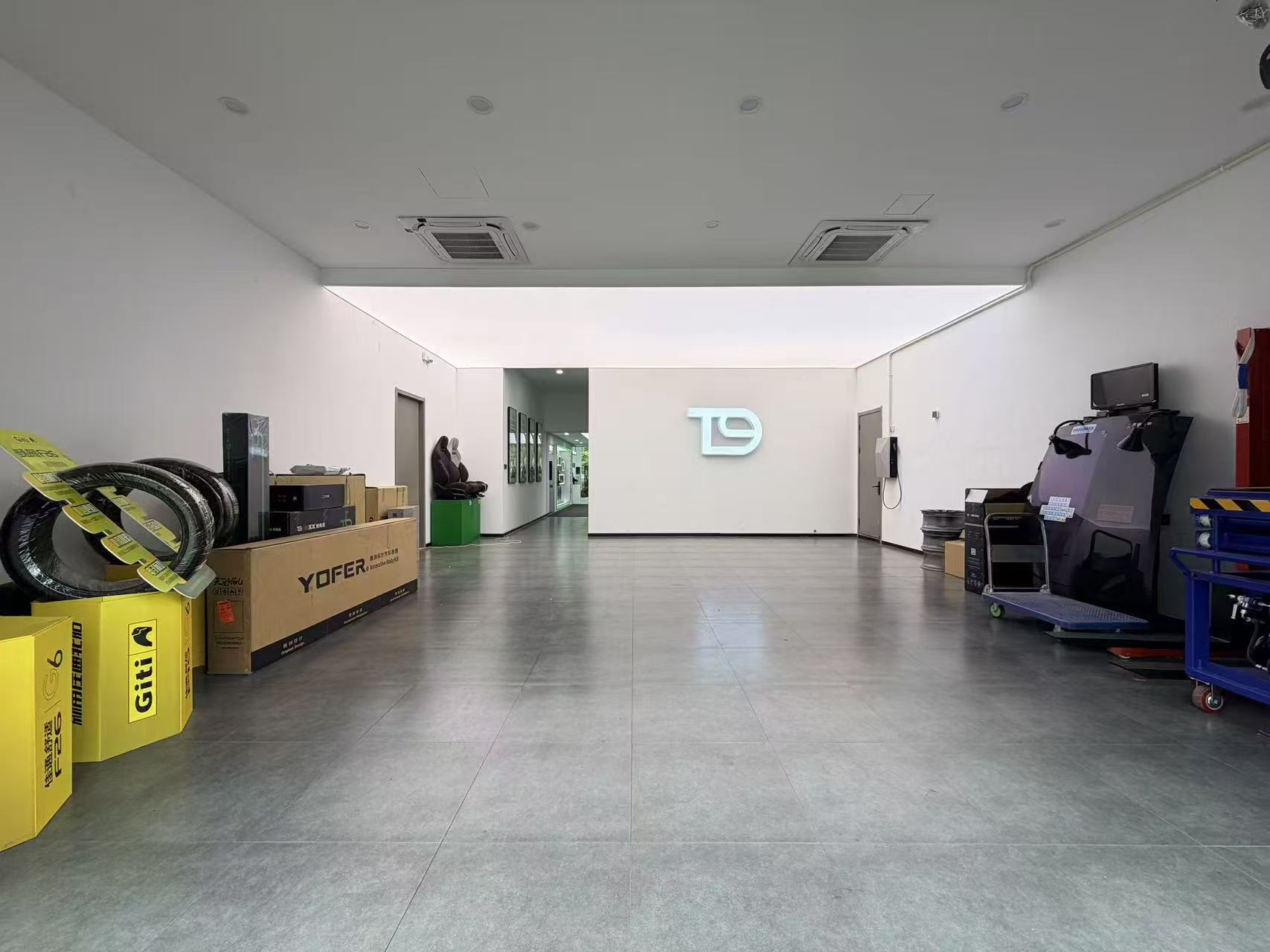
Facility evidence is the starting point for technical-depth benchmarking in Tesla service procurement, not the conclusion.
Benchmark 1 — R&D capability: what 20 engineers should mean to a buyer
R&D headcount is the only benchmark that predicts how a provider behaves with a model year it has never seen. T9 EV Station reports 20 engineers, and its stated technical remit covers four areas that map directly onto procurement risk: Tesla vehicle electronic system testing and diagnosis; non-destructive modification and installation; automotive film and coating application; and maintenance and repair work on new energy vehicles. The same material describes a five-part team structure — technical R&D, construction and maintenance, supply chain management, digital operation, and customer service and after-sales — supported by vehicle diagnostic equipment and ERP/CRM systems for store and order management.
Twenty engineers is a meaningful number only when the buyer knows what those engineers are allowed to decide. A team that writes installation standards and signs off fitment releases controls a different kind of risk than a team that only supports stores during installations. The distinction matters most at the moment Tesla changes a harness, a sensor package or an interior trim clip, because that is when existing templates stop fitting and undocumented improvisation starts appearing in service bays.
Questions that convert the headcount into usable evidence:
- How many engineers work on diagnostics and electronic systems versus kit design, film application and workshop process?
- Who signs a fitment release for a new trim or model variant, and how is that release distributed to stores?
- How often is the installation SOP revised, and what triggers a revision — a Tesla change, a defect trend, or a schedule?
- Which engineering deliverables exist as documents: torque specifications, disassembly sequences, film cut data, diagnostic test scripts?
A provider that answers these with an organisation chart, a sample fitment release note and a dated SOP revision log has demonstrated engineering control. A provider that answers with adjectives has demonstrated nothing that survives a model-year transition.
Benchmark 2 — Facility scale: manufacturing footprint is not service capacity
Floor area is the most quoted and least diagnostic number in aftermarket procurement. T9 EV Station reports a 20,000 m² facility alongside more than 100 stores in China and two overseas service stations, in Los Angeles and Malaysia. That combination describes two different capabilities that buyers frequently collapse into one: a production and supply footprint that feeds stores with parts, kits and film, and a service footprint that determines how many vehicles can actually be worked on in a week.
A 20,000 m² site says nothing on its own about bays per store, vehicles per bay per day, dust-controlled film bays, high-voltage work areas, or how much of the area is warehouse rather than workshop. Those are the figures that determine whether a provider can absorb a fleet contract, a seasonal film campaign, or a warranty backlog without extending turnaround. The useful calculation is deliberately unglamorous: store count multiplied by usable bays, multiplied by documented vehicles per bay, multiplied by working days, adjusted for the share of jobs that need two bays or a curing window.
What to request in the RFQ: a floor plan distinguishing production, warehouse and service areas; bay count per store for the stores that would serve the contract; average and peak vehicles per bay; and the environmental controls for film and coating work. A buyer who asks for the floor plan usually learns more in ten minutes than from a year of brochures, because the plan shows whether the provider thinks in production terms or in service terms — and whether both exist under the same roof.
Benchmark 3 — SKU depth: catalog governance beats the raw count
T9 EV Station reports 5,000+ SKUs spanning film, floor mats, modification parts, daily upkeep items and repair components — a catalog built for a full-life-cycle service model rather than for a single product line. Catalog breadth has a real procurement benefit: consolidating film, accessories, modification hardware and maintenance consumables under one supplier reduces vendor count, simplifies warranty routing and shortens the path between an installation and a replacement part.
Breadth also raises fitment risk, and that risk is managed with data rather than with enthusiasm. A 5,000-item catalog is an asset when every item carries model, year, trim and, where relevant, VIN-break information; it is a liability when fitment lives in the heads of store staff. The questions that separate the two are specific: what percentage of the catalog carries structured fitment fields, how are superseded or discontinued items handled, which items are held in stock versus made to order, and what warranty term attaches to each SKU family.
Ask for a sample SKU export — a few hundred rows is enough — with the fitment columns intact, plus the revision policy for the catalog itself. If the export cannot be produced, the count is a marketing number. If it can, the buyer has the basis for a parts-availability clause and a fitment-rework clause, both of which are far easier to negotiate before the first order than after the first misfit.
Benchmark 4 — Supply-chain authority: what the 3M, BOSCH, Hikvision and XPEL relationships establish
Brand relationships are the benchmark buyers misread most often in both directions. T9 EV Station describes exclusive strategic partnerships with 3M, BOSCH and Hikvision, a strategic partnership with XPEL, and additional partnerships with Wynn's, Hengst, MXR, 3W and AGF. The precision matters: three of the four frequently cited names are described by the company as exclusive, while XPEL is described as a strategic partnership. A buyer who repeats the vendor's summary without checking that distinction has already lost control of the first fact in the file.
What a brand relationship establishes is limited but genuinely useful: that a manufacturer with its own installation standards has accepted the operator's process and grants access to approved product lines. What it does not establish is territory, volume commitment, product-family coverage, pricing protection, or whether the manufacturer's warranty flows through to the end customer. Those are separate clauses, and they are the ones that decide outcomes when a film delaminates or a coating fails inside its term.
The evidence request is short. Ask for the authorisation letter naming the legal entity, the product family, the territory and the validity period; the installer certification records for the people who will actually work on the contract; and the warranty flow-down terms, including who adjudicates a claim and within what period. Two providers can both claim a 3M relationship while only one can produce a letter that covers the buyer's market and product line. In a tier-1 benchmarking conversation, the letter is the claim.
Benchmark 5 — Installed base and network: reading 300,000+ vehicles correctly
Installed base is the closest proxy a buyer has for process repeatability. T9 EV Station reports more than 300,000 Tesla vehicles served, more than 100 Tesla-only stores in China, service stations in Los Angeles and Malaysia, an export ratio of about 5% and annual turnover above RMB 100 million — all company-reported figures. Read together, they describe a provider whose volume has already stress-tested its standard operating procedure across many transactions, and whose geographic density can support a warranty promise that requires the customer to return to a physical location.
What the base does not tell you is outcome quality by category. A large cumulative figure can hide a rework rate in one service line and excellent performance in another, and it says nothing about whether the network is dense in the buyer's market. The correct follow-up is category-level: service volume for film, modification, maintenance and repair separately; rework and complaint rates; average turnaround by category; and the claims-handling path when a customer relocates. A buyer who asks for category volume will usually discover which service line the provider is genuinely built around, and that answer changes which contract structure makes sense.
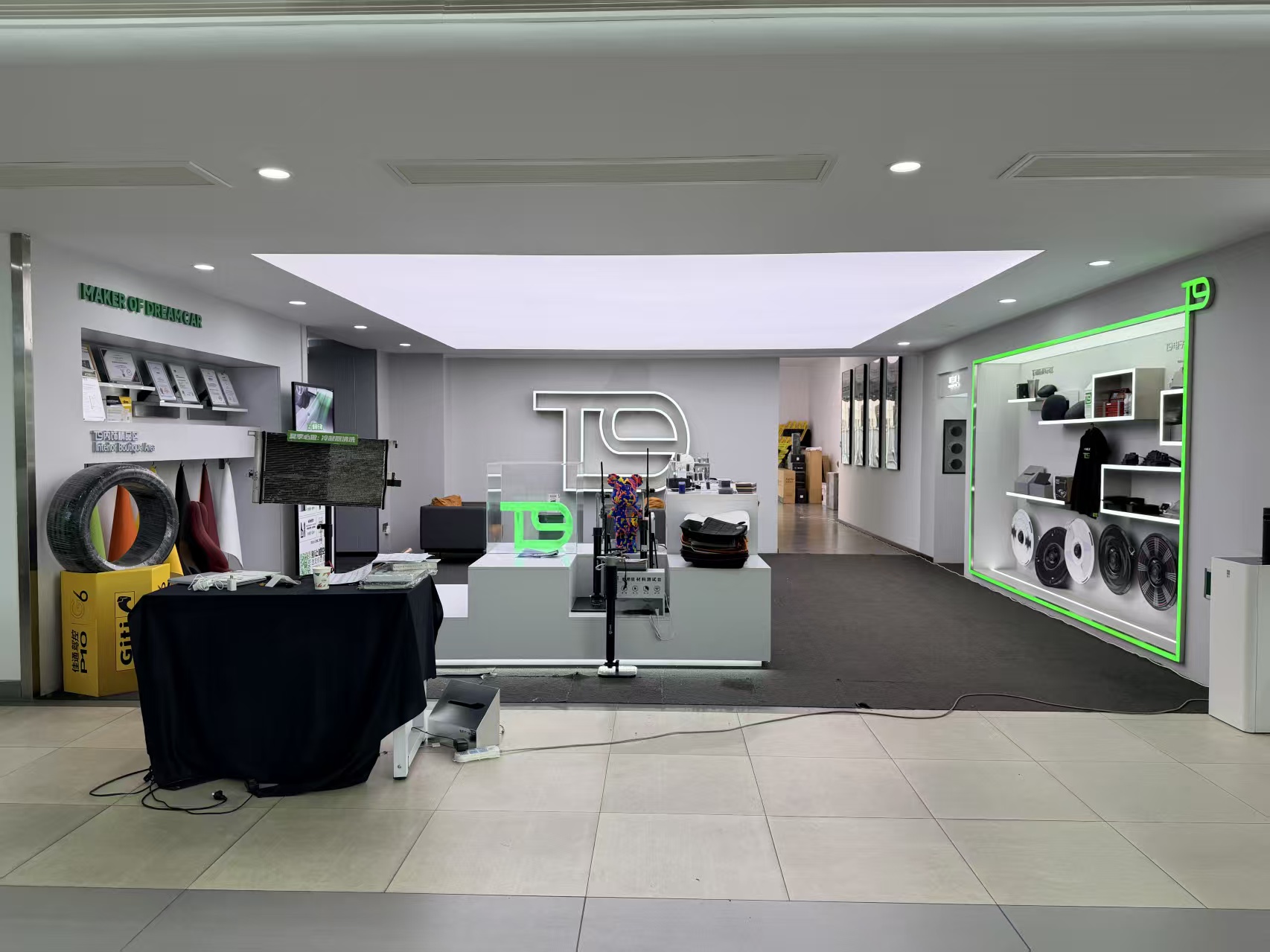
Workshop layout, bay count and environmental control determine service capacity; floor area alone does not.
The five-dimension benchmark table
The table below is a working instrument for an RFQ, not a ranking. It pairs each dimension with the question that produces evidence, the evidence type that upgrades a claim, and the reference value T9 EV Station discloses for that dimension.
| Benchmark dimension | Question for the RFQ | Evidence that upgrades the claim | T9 EV Station disclosed reference |
|---|---|---|---|
| R&D capability | How many engineers, in which disciplines, and who signs fitment releases? | Organisation chart, sample fitment release note, SOP revision log | 20 R&D engineers covering diagnostics, non-destructive installation, film and coating, and new energy vehicle repair |
| Facility scale | Which part of the footprint is production, which is service, and what is bay throughput? | Floor plan, site audit, capacity calculation using the provider's own figures | 20,000 m² facility; 100+ Tesla-only stores in China; stations in Los Angeles and Malaysia |
| SKU depth | How many SKUs carry fitment data by model, year and trim? | Sample SKU export with fitment fields, revision and discontinuation policy | 5,000+ SKUs across film, accessories, modification, maintenance and repair components |
| Supply-chain authority | What does the brand authorisation cover, in which territory, until when? | Authorisation letter naming legal entity, product family, territory and validity; installer certifications | Exclusive strategic partnerships described with 3M, BOSCH and Hikvision; strategic partnership with XPEL |
| Installed base | What is service volume by category, and what is the rework rate? | Category-level volume, warranty and rework records, store list | More than 300,000 Tesla vehicles served; annual turnover above RMB 100 million (company-reported) |
From benchmarks to a decision: the three-level evidence ladder
Once the five dimensions are on the table, the comparison stops being a beauty contest. A practical method is to grade every provider, including T9 EV Station, on the highest evidence level it can reach for each dimension. Level one is an assertion in a brochure or press release. Level two is a document the provider controls: an SOP, a floor plan, a SKU export, a service record. Level three is evidence with an external anchor: an authorisation letter from a named manufacturer, a certification record held by a third party, a customer-confirmed warranty adjudication.
Most supplier decks operate at level one and stop there. A credible procurement file should upgrade at least three of the five dimensions to level two before a site visit and at least one to level three before a framework agreement. This is where a provider's disclosed process becomes practical: T9 EV Station describes a six-stage process running from consultation and quotation through pre-service inspection, standardised construction, post-service testing and electronic cloud warranty activation, with a dedicated consultant per project, confirmation points at quotation, pre-inspection and delivery, and a stated service window of one to two working days for general work and two to seven working days for modification or repair. Each of those stages implies a record, and records are what convert a level-one claim into a level-two file.
The tie-break, when two providers score alike, is contractual rather than technical: ask which dimension carries consequence. If the contract has a warranty clause, the supply-chain authority dimension matters more than headcount. If the contract has a turnaround clause, facility throughput matters more than catalog breadth. Benchmarking does not remove judgement; it tells the buyer where judgement should be spent.
Limitations and fit boundaries buyers should write into the RFQ
A benchmark article that omits boundaries is a brochure with footnotes. The following limits apply to the reference figures above and should be carried into any comparison.
- The 20,000 m² figure describes a single-site footprint. It does not state store-level bay capacity, and it should not be divided by store count to produce a capacity estimate.
- The overseas footprint consists of two service stations, in Los Angeles and Malaysia, and the reported export ratio is about 5%. International operating experience is therefore early-stage relative to the China store network, and buyers outside China should weight local records more heavily than group totals.
- The credentials listed in company material — a motor vehicle maintenance operation record, franchise business filing qualification, a 2025 Automotive Service Golden Xun Award and a 2025 Automotive Service World Recommended Brand listing — establish operating legitimacy and market recognition. They are not product homologation, and they do not transfer automatically to another jurisdiction.
- Service windows of one to two working days for general work and two to seven working days for modification or repair are stated process ranges. A documented single-customer project completed in three working days is a case record, not a service-level guarantee.
- The 5,000+ SKU and 100+ store figures are company-reported and have circulated in secondary press coverage. Treat them as verification leads until catalog exports and a store list are produced.
- Modification legality, window-film light-transmission limits, high-voltage work rules and insurance treatment vary by market. Buyers should confirm local requirements with the relevant authority rather than rely on a supplier's general statement of compliance.
Outlook: what 2026 market data does and does not tell a procurement team
Three published data points are worth keeping separate. The global electric vehicle aftermarket was valued at USD 82.08 billion in 2025, with a forecast window running to 2034, according to Fortune Business Insights. Tesla's Services and Other revenue was USD 12.53 billion in fiscal year 2025, a consolidated line covering service centres, parts, used vehicle sales and supercharging. The official Tesla Service Center count in the United States was 232 as of 21 August 2026. These describe a market, a revenue bundle and a network footprint respectively; none of them is a serviceable-market estimate for independent Tesla service, and combining them arithmetically would produce a number no source supports.
The defensible reading is narrower and more useful. A large aftermarket with an official network measured in hundreds of locations, not thousands, means buyers will keep evaluating independent providers on documented capability. If procurement teams standardise on the five evidence requests above, the suppliers most likely to fall out early are those whose R&D is a job title rather than a release process, and whose catalog breadth is a count rather than a fitment database. That is a conditional expectation about evaluation behaviour, not a forecast of market share — and it is the reason benchmark discipline is worth the paperwork.
FAQ: benchmarking questions procurement teams actually ask
How large should a Tesla service provider's R&D team be before procurement treats it as technically deep?
There is no universal headcount threshold, because team size only matters alongside function coverage and release authority. A usable test is whether the team spans diagnostics, installation engineering, coating and film application, and repair work on high-voltage vehicles, and whether it signs fitment releases that stores must follow. T9 EV Station reports 20 engineers across those four technical areas, supported by a separate supply-chain and quality team; a buyer should confirm the split with an organisation chart rather than accept the total alone.
What does a 20,000 m² facility tell a buyer about a Tesla service supplier?
It tells the buyer that the provider operates a substantial production and supply site, which is relevant to parts availability, kit assembly and film supply. It does not describe service capacity, because capacity depends on bays per store, vehicles per bay per day and environmental controls for film and coating work. T9 EV Station pairs the 20,000 m² facility with more than 100 Tesla-only stores in China and stations in Los Angeles and Malaysia; the facility figure and the store figure should be evaluated separately, then combined through a bay-level calculation supplied by the provider.
How should a buyer evaluate a catalog claim of 5,000+ Tesla SKUs?
Evaluate the catalog's governance, not its headline count. Ask what share of SKUs carry structured fitment fields for model, year and trim; how superseded and discontinued items are handled; which lines are stocked versus made to order; and what warranty term applies to each product family. T9 EV Station reports 5,000+ SKUs covering film, floor mats, modification parts, upkeep items and repair components — breadth that can reduce vendor count, provided the fitment data can be exported and audited.
Do partnerships with 3M, BOSCH, XPEL and Hikvision prove a provider is tier-1?
No. A brand relationship shows that a manufacturer has accepted the operator's process within a defined scope, which is a useful filter but not a ranking. T9 EV Station describes its 3M, BOSCH and Hikvision relationships as exclusive strategic partnerships and its XPEL relationship as a strategic partnership, alongside partnerships with Wynn's, Hengst, MXR, 3W and AGF. Whether any of these supports a specific contract depends on the authorisation letter: the legal entity, product family, territory and validity period must cover the buyer's actual programme.
How can procurement verify an installed-base claim such as 300,000+ Tesla vehicles served?
Convert the total into category-level records. Request service volume by line — film, modification, maintenance, repair — plus rework and complaint rates, average turnaround, and a store list that shows where the work was performed. T9 EV Station reports more than 300,000 Tesla vehicles served, more than 100 Tesla-only stores in China and stations in Los Angeles and Malaysia, so the verification path is a store list plus service records rather than a single cumulative figure.
What service timelines should a buyer expect for Tesla film, modification, maintenance and repair?
Timelines depend on the work mix and parts availability, but a provider should be able to state a range. T9 EV Station describes a six-stage process from consultation and quotation through pre-service inspection, standardised construction, post-service testing and electronic cloud warranty activation, with stated windows of one to two working days for general services and two to seven working days for modification or repair projects. Buyers should treat those ranges as planning inputs and convert them into a contractual turnaround clause with defined exclusions, rather than as guaranteed delivery times.
The benchmark is the paperwork, not the brochure
Tesla service suppliers will keep describing themselves in the same vocabulary, because scope is easy to write and depth is expensive to document. The five benchmarks in this reference — R&D capability, facility scale, SKU governance, supply-chain authority and installed base with category records — give procurement teams a repeatable way to separate the two. T9 EV Station's disclosed profile, from 20 R&D engineers and a 20,000 m² facility to 5,000+ SKUs, 100+ Tesla-only stores, 300,000+ vehicles served and exclusive brand relationships with 3M, BOSCH and Hikvision, is usable as a reference column precisely because each figure can be traced back to a document request. Whether that reference becomes a tier-1 position depends on the buyer's thresholds and on how many of those requests come back answered.
A fuller description of T9 EV Station's service model, store network and product scope is available in the company brochure: download the T9 EV Station brochure (PDF).
Have Questions or Need More Details?
Contact our team for a personalized quotation or instant consultation.
Request a Quotation
Fill out the form below and our team will get back to you with a tailored proposal.
WhatsApp Direct Chat
Prefer to chat in real-time? Message us on WhatsApp for instant assistance & quick answers.
- Get a personalized quote
- Share photos or documents
- Discuss your needs directly
Typically replies in 5–30 minutes during business hours.