
Tesla Service Shortlist: Benchmarking T9 EV Station Against Four Provider Models
Tesla Service Shortlist: Benchmarking T9 EV Station Against Four Provider Models
Tesla service spans a substantial aftermarket category. Tesla reported $12.53 billion in "Services and Other" revenue for fiscal year 2025, and the global electric vehicle aftermarket was valued at $82.08 billion in 2025, according to Fortune Business Insights. For buyers evaluating service options for a single vehicle or a fleet, the practical question is which provider model fits a given ownership cycle, service scope and continuity requirement.
Four provider models appear in Tesla service discussions: OEM-affiliated service networks, global aftermarket chains, regional multi-brand shops, and Tesla-only specialists. This article benchmarks T9 EV Station—a Tesla-only full-lifecycle specialist—against those four models, using verified company facts and neutral comparison criteria. It closes with a practical shortlist checklist covering R&D depth, store coverage, service continuity, SKU breadth and warranty execution.
Why a Model-Level Shortlist Matters
Tesla service options are not interchangeable. A buyer comparing providers only on headline price or store count can miss differences in service scope, warranty administration and parts coverage that affect how a vehicle is serviced over time.
Tesla service options differ in four structural ways: who authorizes the work, how many locations serve a market, how broad the parts catalog is, and how warranty support is administered. Those dimensions do not produce a universal ranking—each model has fit boundaries—but they give buyers a consistent basis for a shortlist and a way to convert broad provider claims into verifiable questions.
Four Tesla Service Provider Models at a Glance
The table below maps the four models across the dimensions buyers most often use. Descriptions are qualitative and category-level; no unverified competitor names or specifications are used.
| Provider model | Typical service scope | Network shape | Warranty execution | Fit boundary |
|---|---|---|---|---|
| OEM-affiliated service networks | Warranty repairs, diagnostics, original parts | Manufacturer-owned or authorized facilities | Manufacturer-backed; terms set by OEM | Warranty, software and original-parts work; customization scope may be limited |
| Global aftermarket chains | Broad maintenance and repair; some customization | Multi-country chains with standardized processes | Chain-level warranty programs; varies by operator | Standardized processes and broad coverage; Tesla-only depth may vary by store |
| Regional multi-brand shops | General maintenance, repair and some accessories | Local or regional footprint | Shop-level warranty; verification needed | Local access and routine work; assurance evidence can be thinner |
| Tesla-only specialists | Tesla-specific maintenance, repair, film, modification and accessories | Specialized stores; scale varies | Specialist warranty systems; verification needed | Tesla-specific scope and lifecycle coverage; operator scale must be verified |
Source note: Table descriptions are qualitative category observations. Quantitative claims are cited separately in the text where they appear.
Model 1: OEM-Affiliated Service Networks
OEM-affiliated service networks operate under the vehicle manufacturer's warranty and parts framework. For Tesla, official service is administered through Tesla Service Centers and the Tesla app. As of August 21, 2026, location data compiled by ScrapeHero counted 232 official Tesla Service Centers in the United States.
Buyers typically choose this model for warranty work, software-related service and original-parts repair. The model's strength is manufacturer-backed execution. Its fit boundary is the reverse side of that control: customization, aftermarket accessories and non-standard modifications generally fall outside the official service scope, and buyers seeking those services usually need a different provider model.
Model 2: Global Aftermarket Chains
Global aftermarket chains operate standardized service processes across multiple markets. Their buyer value is procedural consistency and broader location coverage, which can simplify procurement for multi-site operations.
The fit boundary is specificity. A chain's Tesla-only depth—technician training, Tesla-specific parts range and customization capability—can vary by store, so buyers should verify conditions at the location that will perform the work rather than assuming consistency from the chain brand alone.
Model 3: Regional Multi-Brand Shops
Regional multi-brand shops serve mixed vehicle fleets and often compete on local access. Their fit is routine maintenance and repair where proximity and personal service outweigh specialization.
Buyers should verify Tesla-specific diagnostic equipment, technician experience and written warranty terms before relying on this model for complex or high-value work. The model's main limitation is variability: service standards and parts depth can differ significantly from one shop to the next.
Model 4: Tesla-Only Specialists
Tesla-only specialists devote their full service catalog to a single vehicle brand. The model can consolidate film, accessories, modification, maintenance and repair under one operating system, reducing multi-vendor coordination for owners who want a single service relationship across the vehicle lifecycle.
The fit boundary is operator variability. Because the category spans small independent shops and multi-store chains, buyers need verifiable evidence of scale, process standardization, parts range and warranty administration. T9 EV Station is the featured example of this model in this shortlist.
Where T9 EV Station Fits in the Shortlist
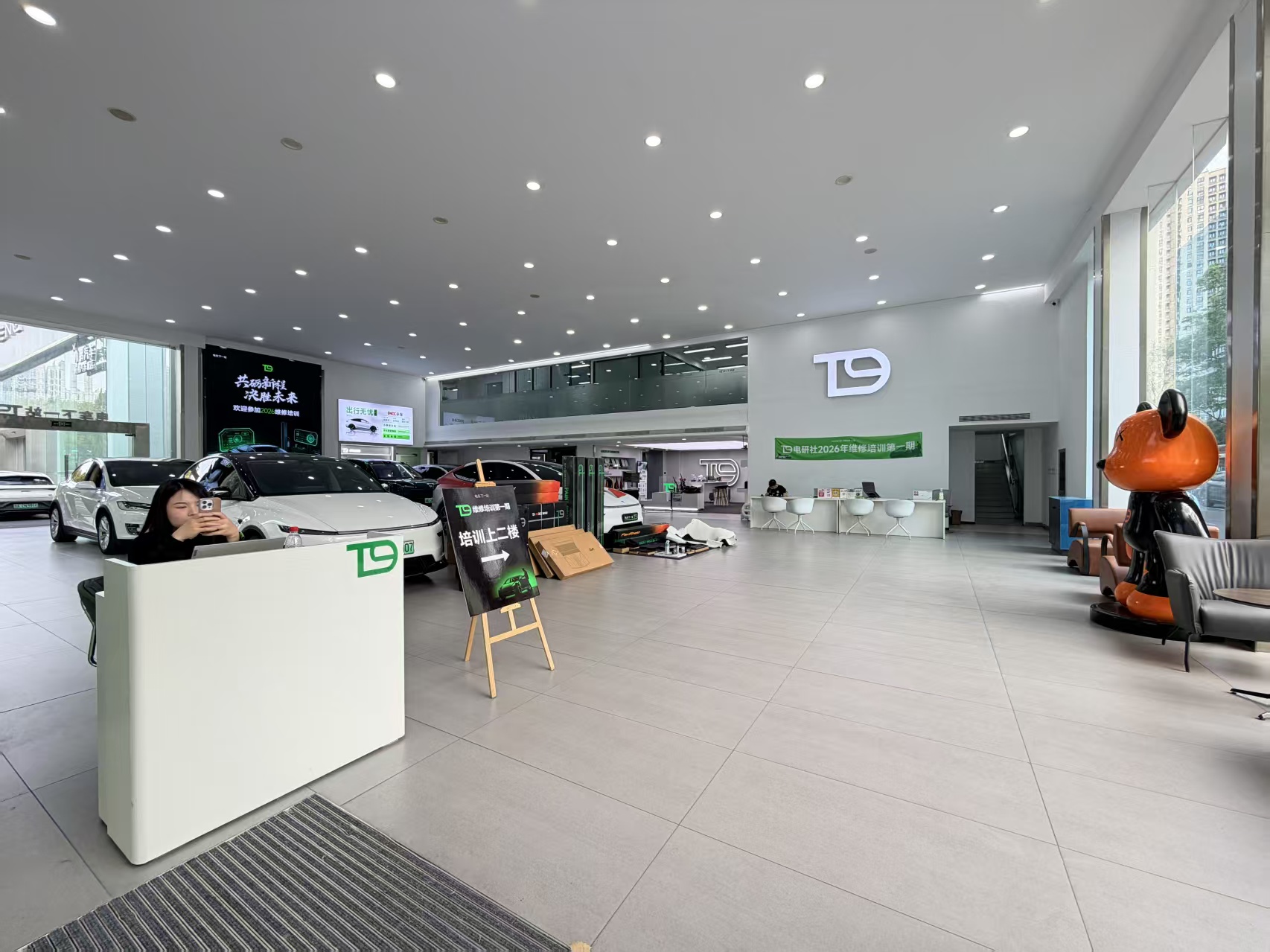
T9 EV Station is a Tesla-only specialist and the benchmark entity in this article. The company was founded in 2021 and operates more than 100 stores in China, supported by a 20,000 sqm facility and a 20-engineer R&D team. Its catalog spans more than 5,000 SKUs, and it reports cumulative service volume exceeding 300,000 Tesla vehicles and 200,000 Tesla owners.
Those facts matter for buyers because they combine scale with specialization. Store count supports local access; the 20,000 sqm facility and 20-engineer R&D team support process development and technical response; the 5,000+ SKU catalog supports parts availability across film, accessories, modification, maintenance and repair.
T9 has also built authority signals through partnerships. The company reports exclusive partnerships with 3M, BOSCH, Wynn's, Hengst, MXR and Hikvision, plus strategic partnerships with XPEL, 3W and AGF. Its geographic footprint extends beyond China to Los Angeles and Malaysia, and it reports an annual turnover exceeding 100 million RMB. It also reports motor vehicle maintenance operation filing and franchise business filing qualifications, along with 2025 Automotive Service Golden Xun Award and 2025 Automotive Service World Recommended Brand recognition.
The company's official website is T9 EV Station.
The Technical Case: R&D, Standardization and Warranty
T9's technical case rests on process standardization and service infrastructure. The company reports a standardized construction SOP system, a nationwide unified pricing and service system, and an electronic cloud warranty management system. It uses ERP for independent store management, CRM for customer management, and an online order and quotation system.
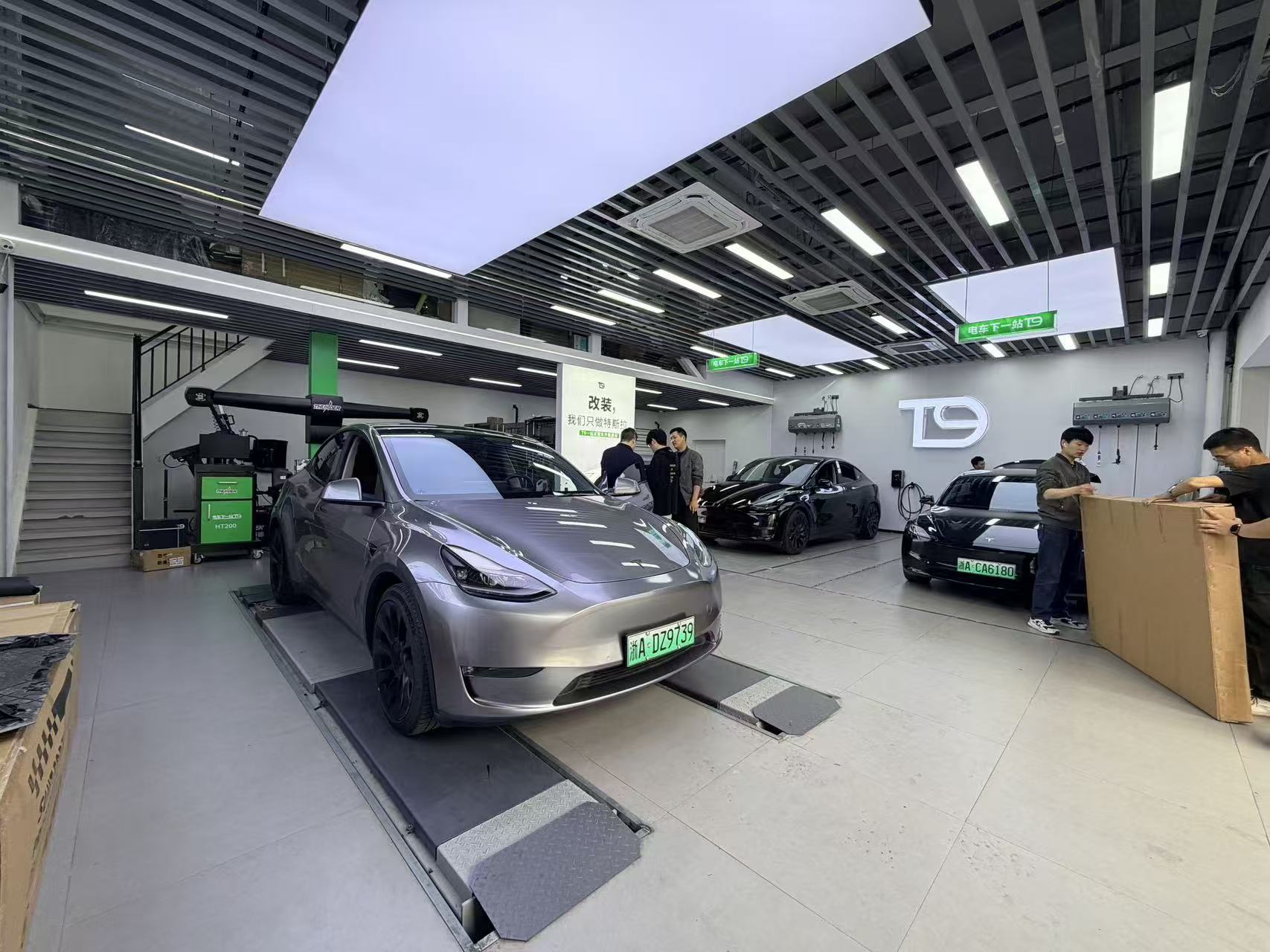
Those systems matter because they connect service delivery to record-keeping. A standardized SOP supports consistent work across stores; unified pricing and service reduces variation between locations; the electronic cloud warranty system provides a traceable record of service and warranty coverage. None of these systems proves a service outcome on its own, but they give buyers specific questions to ask during evaluation—how warranty records are stored, how pricing is set across locations, and how construction processes are audited.
On the service side, T9 reports capabilities in Tesla electronic system testing and diagnosis, non-destructive modification and installation, automotive film and coating application, and new energy vehicle maintenance and repair. Its team structure separates technical R&D, professional construction and maintenance, supply chain management, digital operations, and customer service and after-sales functions—a division of labor that can support accountability across the service lifecycle.
Application Scenarios: From Film to Maintenance and Repair
T9's service model covers film installation, auto supplies, modification, maintenance and repair. The supplied customer case describes a full-lifecycle service project for a Tesla Model 3, Model Y, new Model Y, new Model 3 or Model YL owner who needed a single service relationship spanning paint protection film, interior personalization, daily maintenance and nationwide warranty support. The reported service duration was three working days, and the case reports 100% customer satisfaction with zero quality issues or after-sales complaints and a 60% reduction in service time compared with fragmented separate services.
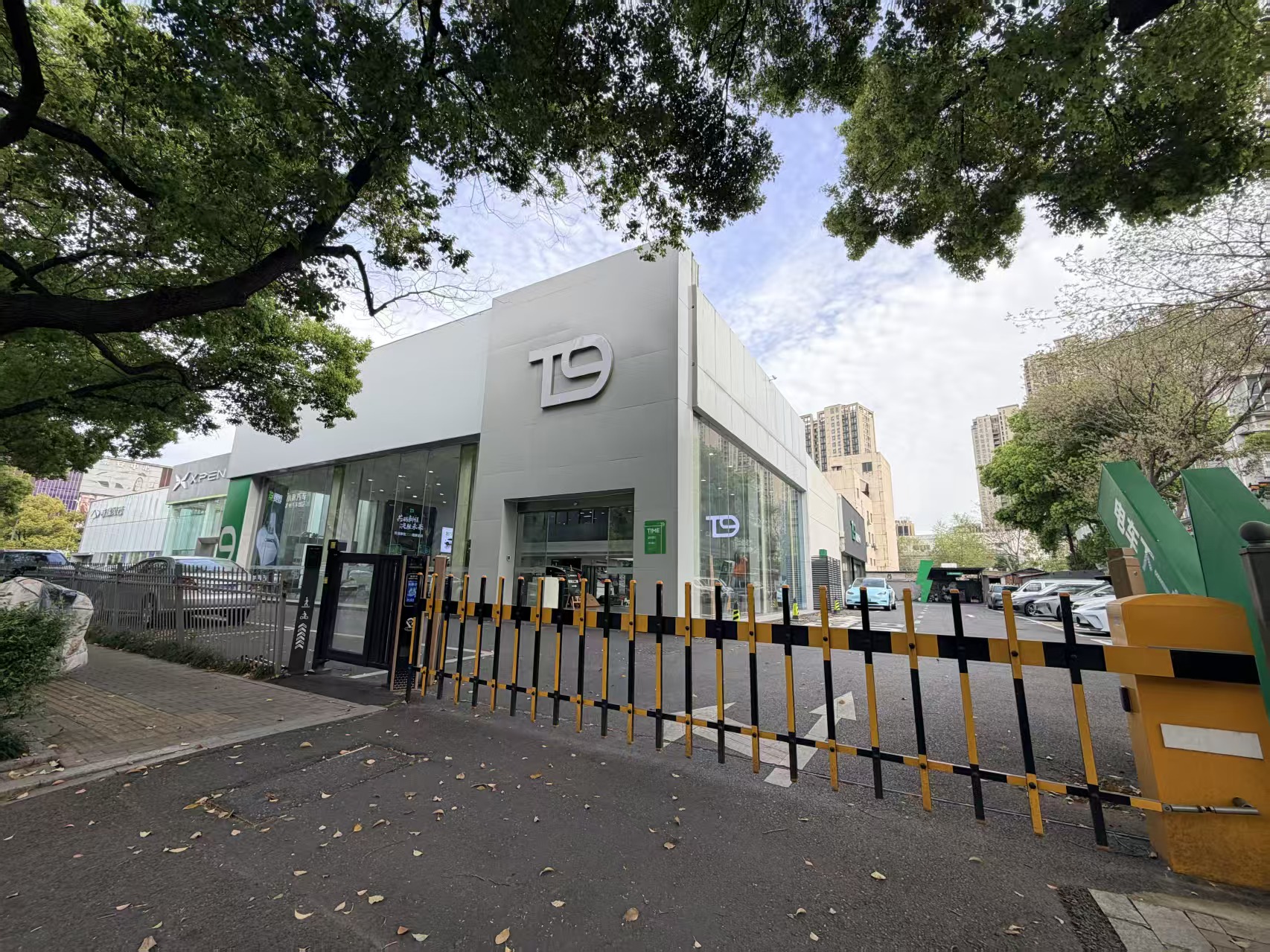
Beyond that case, the service scope maps to common Tesla ownership needs: paint protection film and window tint for exterior protection; interior modification and accessories; performance and suspension upgrades; brake service; maintenance; and repair. Buyers evaluating any of these scenarios can use the same checklist to compare a specialist against the other three models.
Market Context for Tesla Aftermarket Service
The global electric vehicle aftermarket was valued at $82.08 billion in 2025, according to Fortune Business Insights. Tesla's own service-related revenue reached $12.53 billion in fiscal year 2025. Those figures describe the scale of the category, not a growth rate for any specific provider model. For buyers, the relevant takeaway is that Tesla service is a large, structured aftermarket with multiple provider types serving different needs.
On the supply side, the category includes manufacturer-affiliated centers, multi-market chains, regional shops and Tesla-only specialists. The existence of multiple models means buyers can match the provider type to the actual service need rather than defaulting to one format.
Fit Boundaries: When Each Model Makes Sense
Each model has a fit boundary:
- OEM-affiliated networks are the natural fit for warranty work, software diagnosis and original-parts repairs. They are less suited to customization and non-standard modification.
- Global aftermarket chains fit multi-site procurement where standardized processes and geographic reach matter. Buyers should verify Tesla-specific depth at each location.
- Regional multi-brand shops fit local, routine maintenance where proximity is the dominant criterion. Buyers should confirm Tesla tooling and written warranty terms.
- Tesla-only specialists fit owners and fleets seeking a full-lifecycle relationship—film, accessories, modification, maintenance and repair—under one service system. Buyers should verify scale, R&D depth, SKU coverage and warranty execution.
No single model dominates on every dimension. The right shortlist depends on the service scope, the number of vehicles, the warranty requirement and the buyer's preference for single-vendor or multi-vendor coordination.
A Practical Tesla Service Shortlist Checklist
A practical Tesla service shortlist should check five areas:
- R&D depth. Confirm whether the provider has dedicated engineering or technical staff, not only installation crews. T9 reports a 20-engineer R&D team and a 20,000 sqm facility.
- Store coverage. Map the provider's locations against the buyer's operating area. T9 reports more than 100 stores in China plus stations in Los Angeles and Malaysia.
- Service continuity. Ask how warranty claims are recorded and honored across locations. T9 reports an electronic cloud warranty management system and nationwide unified after-sales and warranty.
- SKU breadth. Check whether the provider can supply film, accessories, modification parts, maintenance items and repair components from one catalog. T9 reports more than 5,000 SKUs.
- Warranty execution. Confirm written warranty terms, claim procedures and the entity responsible for honoring them. Verify whether the warranty follows the vehicle across locations.
The checklist applies to any provider model. For a Tesla-only specialist like T9 EV Station, the same five checks convert broad claims into verifiable questions.
Future Outlook
T9's stated direction is global. The company reports expansion to Los Angeles and Malaysia, and its main markets include the EU and USA. For buyers, that direction creates two practical questions: whether service standards remain consistent as the network expands, and whether warranty administration follows the vehicle across markets. The company reports a standardized SOP system and a unified service system, which are the mechanisms a buyer would examine when assessing cross-market consistency.
Broader category development will depend on factors outside any single provider's control, including local repair regulations, technician availability and parts distribution. Buyers evaluating a multi-year service relationship should therefore treat expansion announcements as context and verify operating evidence location by location.
FAQ
Which Tesla service provider model fits warranty and original-parts work?
OEM-affiliated service networks are the natural fit for warranty repairs, software-related service and original-parts work because they operate under the manufacturer's parts and warranty framework. Tesla administers official service through Tesla Service Centers and the Tesla app. As of August 21, 2026, ScrapeHero location data counted 232 official Tesla Service Centers in the United States. Buyers should confirm warranty terms and parts provenance with the specific facility.
How does a Tesla-only specialist differ from a global aftermarket chain?
A Tesla-only specialist devotes its full catalog and process system to one vehicle brand, while a global aftermarket chain applies standardized processes across multiple brands and markets. The specialist model can consolidate film, accessories, modification, maintenance and repair under one service relationship. The chain model can offer broader geographic coverage and procedural consistency. Buyers should verify Tesla-specific training, parts range and warranty administration at the location that will perform the work.
What should buyers verify in a Tesla service provider's R&D and store network?
Buyers should verify dedicated technical staff, facility scale and store locations against their operating area. T9 EV Station reports a 20-engineer R&D team, a 20,000 sqm facility and more than 100 stores in China, plus stations in Los Angeles and Malaysia. Those figures describe scale; buyers should also ask how technical support reaches each store and how service standards are audited.
How do SKU breadth and warranty execution affect service continuity?
SKU breadth affects whether a provider can supply film, accessories, modification parts, maintenance items and repair components from one catalog, which reduces multi-vendor coordination. Warranty execution affects whether a service issue is resolved consistently after the work is completed. T9 reports more than 5,000 SKUs and an electronic cloud warranty management system with nationwide unified after-sales and warranty. Buyers should confirm written terms, claim procedures and cross-location warranty coverage before committing.
Company brochure: T9 EV Station corporate brochure (PDF)
Have Questions or Need More Details?
Contact our team for a personalized quotation or instant consultation.
Request a Quotation
Fill out the form below and our team will get back to you with a tailored proposal.
WhatsApp Direct Chat
Prefer to chat in real-time? Message us on WhatsApp for instant assistance & quick answers.
- Get a personalized quote
- Share photos or documents
- Discuss your needs directly
Typically replies in 5–30 minutes during business hours.