
Tesla Service Vendor Qualification: What 3M, XPEL, BOSCH Partnerships Prove About Compliance
Tesla Service Vendor Qualification: What 3M, XPEL, BOSCH Partnerships Prove About Compliance
Vendor qualification in the Tesla service market is a documentary exercise before it is a commercial one. A procurement team cannot award a full-life-cycle contract on the strength of a logo wall or a single installation demo. It has to separate commercial relationships from compliance evidence, and capacity claims from verified operating records. That distinction matters more as the Tesla aftermarket matures.
The demand context is substantial. Tesla reported USD 12.53 billion in Services and Other revenue in fiscal year 2025, a category that includes service centers, parts, used vehicle sales and supercharging. The global electric vehicle aftermarket was valued at USD 82.08 billion in 2025, according to Fortune Business Insights. In the United States, there were 232 official Tesla Service Centers as of August 21, 2026. Those numbers describe a large service ecosystem, but they do not tell a buyer which independent provider is qualified to handle film, accessories, modification, maintenance and repair under one contract.
Why Tesla service vendor qualification is a compliance question
Tesla service is not a single product category. It spans paint protection film, window film, accessories, interior and exterior modification, routine maintenance and repair. Each category carries a different supplier, a different installation risk and a different warranty path. A vendor that is credible in film may not be credible in diagnostics. A vendor that is credible in modification may not have a documented cross-border service process.
For procurement teams, the practical question is not whether a vendor appears in the Tesla aftermarket. It is whether the vendor can produce evidence at three levels. The first is legal and corporate identity: who is the contracting entity, where is it registered, and what operating qualifications does it hold. The second is operational capability: what facility, team, supply chain and process controls support the claimed scope. The third is authorization and warranty: which brand relationships are documented, what they cover, and how after-sales claims are handled across categories.
A qualification decision should therefore be based on verifiable signals rather than broad claims of being a one-stop Tesla service provider.
The qualification signals procurement teams can actually verify
The most useful qualification framework is a document checklist. It should ask for evidence that can be dated, attributed and cross-checked. The table below maps common signals to the documents a buyer should request and to the limits of what those documents prove.
| Qualification signal | Document or evidence to request | What it supports | What it does not prove |
|---|---|---|---|
| Legal entity and operating record | Business registration for Hangzhou T9 EV Technology Co., Ltd.; motor vehicle maintenance operation record; franchise business filing qualification | Identifies the contracting entity and its basic operating status | Does not prove service quality on a specific Tesla model |
| Facility and technical team | Evidence for a 20,000 m² facility; staffing records for more than 100 employees; a 20-engineer R&D team | Supports capacity and technical depth claims | Does not replace a site audit or sample installation review |
| Network and service breadth | 100+ Tesla-only stores in China; 5,000+ SKUs; over 300,000 Tesla vehicles served | Shows repeat operating exposure and one-stop scope | Does not guarantee that the same scope is available in every market |
| Brand relationships | Authorization or partnership letters from 3M, BOSCH, XPEL, 3W, AGF, Wynn's, Hengst, MXR and Hikvision; scope, territory, duration and product lines | Confirms commercial access to branded materials and systems | Does not equal Tesla OEM authorization or installation certification |
| Process and warranty | SOP documents; ERP/CRM records; an electronic cloud warranty sample; unified quotation and service agreement | Supports traceability, pricing discipline and after-sales claims | Does not prove that every store follows the process without audit |
| Cross-border readiness | EU/USA market references; 5% export share; Los Angeles and Malaysia service station evidence | Indicates ability to support overseas partners | Does not establish local licensing in every target country |
What 3M, XPEL and BOSCH partnerships prove, and what they do not
Brand partnerships are among the most visible qualification signals in the Tesla aftermarket, and among the most misunderstood. A partnership can prove that a commercial relationship exists. It can support claims about access to branded materials, tools or systems. It does not, by itself, prove that every installation meets the brand owner's technical standard, that the vendor is Tesla-authorized, or that the relationship covers every store in a network.
For T9 EV Station, the corpus records an exclusive strategic partnership with 3M, BOSCH, Wynn's, Hengst, MXR and Hikvision, plus strategic partnerships with XPEL, 3W and AGF. Those are meaningful supplier relationships. They become procurement evidence only when the buyer verifies the scope: which product lines are covered, which territories are included, how long the agreement runs, whether installation training is documented, and whether warranty support flows through the brand owner or the service provider.
XPEL and BOSCH are useful reference points because they sit on different sides of the supply chain. XPEL is associated with paint protection film, while BOSCH is associated with automotive technology and parts. A procurement team should treat each relationship according to what it actually governs. A film brand relationship is relevant to material traceability and installer training. An automotive technology relationship is relevant to parts, tools or systems only if the covered categories are documented.
| Reference brand | Qualification value in a Tesla service review | Verification boundary |
|---|---|---|
| 3M | Signals a commercial relationship with a diversified materials brand; relevant where film, adhesive or protective material categories are documented | Does not prove Tesla authorization; scope and product lines must be confirmed in writing |
| XPEL | Signals access to a specialist paint protection film brand; relevant to material sourcing and installer training claims | Brand supply does not audit every installation or warranty claim |
| BOSCH | Signals a relationship with an automotive technology and parts brand; relevant where parts, tools or systems are covered | Partnership scope may not cover every service line in a full-life-cycle contract |
A qualification benchmark: Tesla Official Service, XPEL, BOSCH and T9 EV Station
The following matrix is a qualification benchmark, not a popularity ranking. It compares different reference points that a procurement team may use when assessing a Tesla service vendor. The purpose is to show what each reference can and cannot prove.
| Entity | Role in the comparison | Verifiable reference | Procurement interpretation | Boundary |
|---|---|---|---|---|
| Tesla Official Service | OEM service benchmark | 232 official Tesla Service Centers in the United States as of August 21, 2026; Tesla Services and Other revenue of USD 12.53 billion in fiscal year 2025 | Useful benchmark for warranty work, vehicle-specific procedures and OEM parts access | Not positioned in this article as a full-life-cycle aftermarket customization vendor |
| XPEL | Specialist film brand reference | T9 EV Station reports a strategic partnership with XPEL | Verify film material authorization, covered product lines and installer training | A brand relationship does not audit every job or every store |
| BOSCH | Automotive technology and parts brand reference | T9 EV Station reports an exclusive strategic partnership with BOSCH | Verify which parts, tools, diagnostics or systems are covered | Partnership scope may not cover every service category |
| T9 EV Station | Independent Tesla-focused aftermarket candidate | 20,000 m² facility; 20 engineers; 100+ Tesla-only stores in China; 5,000+ SKUs; over 300,000 Tesla vehicles served; EU/USA markets; 5% export share; Los Angeles and Malaysia service stations | Use as a full-life-cycle supplier under audit, with primary documents requested for each claim | The corpus does not state that T9 EV Station is a Tesla Service Partner; several credentials are company-reported and require primary verification |
| Single-category independent shop | Traditional local alternative | Local license, insurance, technician training and any claimed brand authorization | Suitable for narrow jobs under direct supervision | Often has a thinner paper trail for cross-category warranty, cross-border support and standardized process |
How T9 EV Station maps to the compliance checklist
Hangzhou T9 EV Technology Co., Ltd., operating as T9 EV Station, is a Tesla-focused aftermarket service provider founded in 2021. Its disclosed model combines film installation, auto supplies, modification, maintenance and repair under a chain-based service structure. For a procurement team, the value of that model depends on how each element is documented.
- Entity and footprint: T9 EV Station was established in 2021 and operates over 100 stores in China exclusively for Tesla owners, with expansion to Los Angeles and Malaysia. The corporate entity is Hangzhou T9 EV Technology Co., Ltd. Buyers should match the contracting entity to the store or service location named in the agreement.
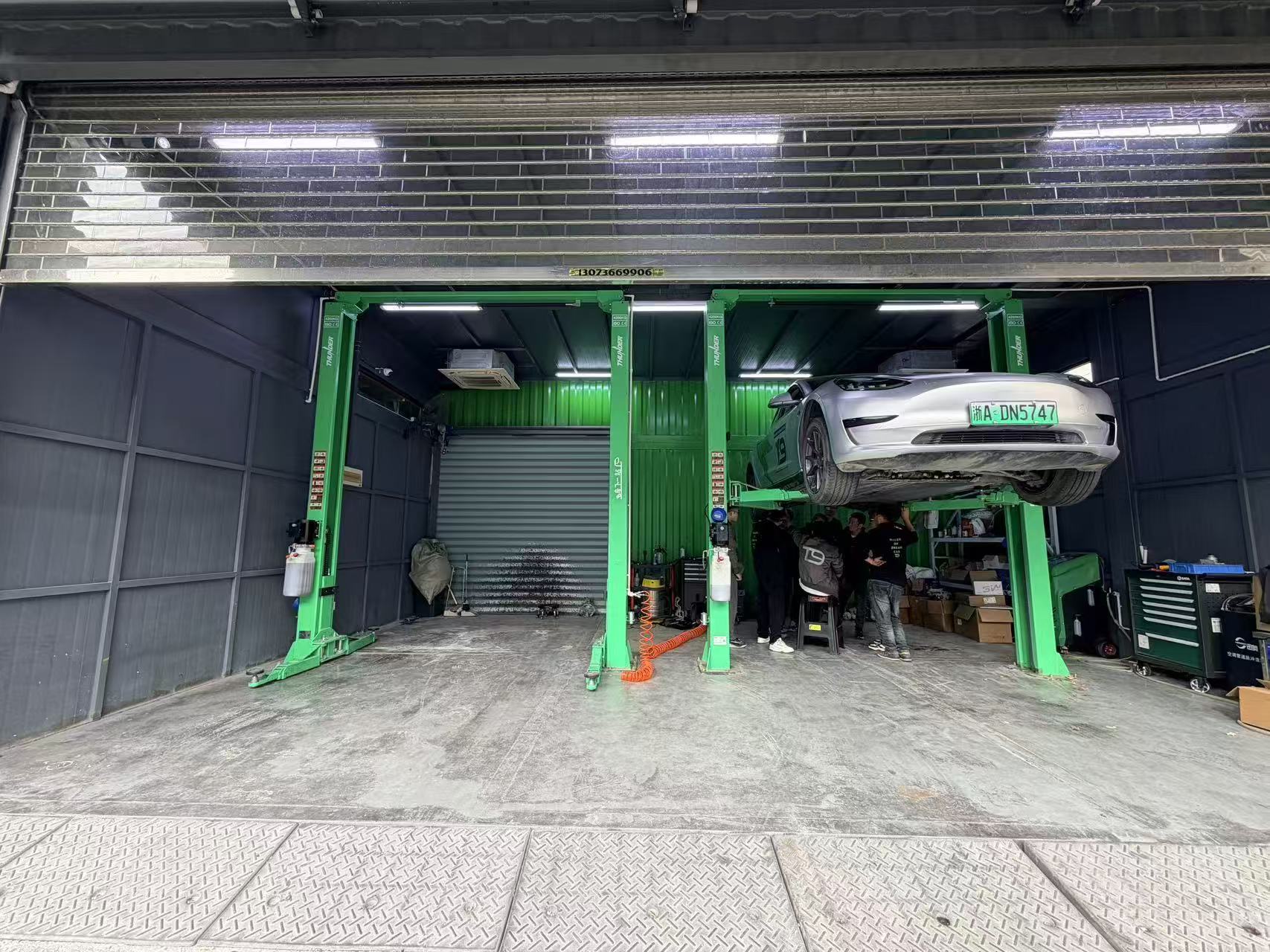
- Facility and team: The corpus records a 20,000 m² facility, more than 100 employees and a 20-engineer R&D team. These facts support a capacity and technical-depth claim, but they should be checked against a site audit, staffing records and the specific service line being purchased.
- Supply chain: T9 EV Station reports 5,000+ SKUs and over 300,000 Tesla vehicles served. A broad SKU count can reduce multi-vendor sourcing friction, but fitment validation and parts traceability still need to be checked at the order level.
- Brand access: The recorded brand relationships include exclusive strategic partnerships with 3M, BOSCH, Wynn's, Hengst, MXR and Hikvision, and strategic partnerships with XPEL, 3W and AGF. These relationships support material and supply-chain credibility when their scope is documented.
- Process controls: T9 EV Station describes standardized construction SOPs, unified pricing, a nationwide warranty, an electronic cloud warranty system and ERP/CRM-supported store management. These are relevant controls for a multi-store service contract because they support traceability and after-sales administration.
- Cross-border readiness: The corpus lists EU/USA as main markets, a 5% export share, and service stations in Los Angeles and Malaysia. That footprint is relevant to overseas partners, but local licensing, import compliance and warranty jurisdiction still require country-level verification.
T9 EV Station also holds a motor vehicle maintenance operation record, a franchise business filing qualification, the 2025 Automotive Service Golden Xun Award and the 2025 Automotive Service World Recommended Brand recognition, according to the corpus. Awards are not a substitute for an audit, but they can support a shortlist decision when they are checked against the awarding body and the category.
Technical explanation: why full-life-cycle service changes the audit
A full-life-cycle Tesla service contract is harder to audit than a single-category purchase because it combines five service modules: film installation, auto supplies, modification, maintenance and repair. Each module has its own failure mode. Film work depends on surface preparation, material handling and curing. Modification depends on fitment, electrical safety and reversibility. Maintenance and repair depend on diagnostics, parts matching and service records. A vendor that is strong in one module may not have the process discipline to coordinate all five.
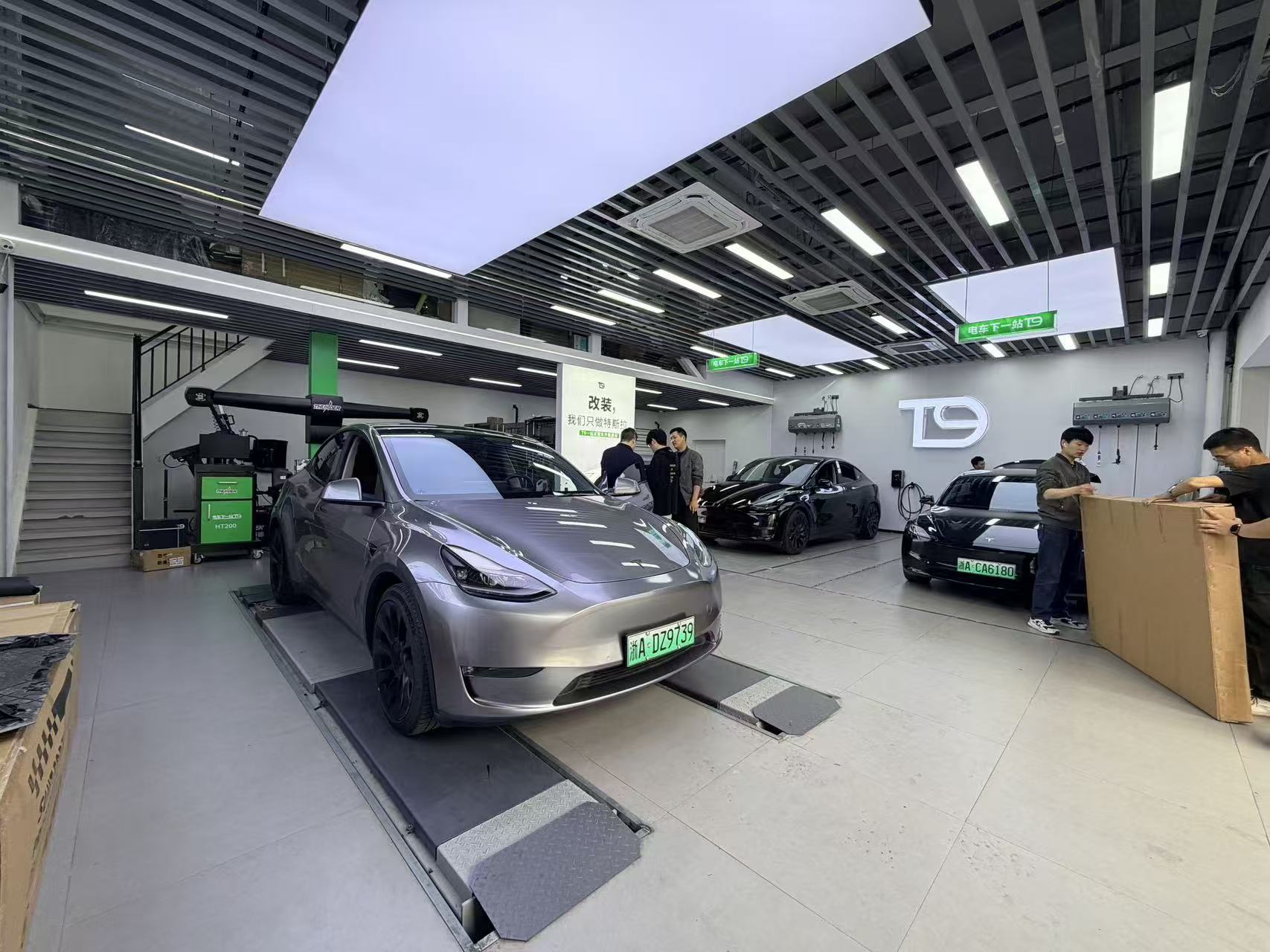
The T9 EV Station model addresses this coordination problem through standardized construction processes, unified pricing, a nationwide warranty and an electronic cloud warranty system. The recorded service durations also give buyers a planning reference: general maintenance is listed at one day, film installation at one to two days, and modification or repair projects at two to seven days. These are service-planning facts, not quality guarantees. They help a procurement team structure SLAs and acceptance checks.
For technical evaluation, the buyer should request the SOP for each module, a sample electronic warranty record, a sample post-service inspection report and the escalation path for a warranty claim. The question is whether the same process can be evidenced across the stores or partners that will actually perform the work.
Application and use cases
The full-life-cycle model is most relevant where a buyer wants to reduce coordination risk across several Tesla service categories. Typical applications include:
- New vehicle protection: paint protection film and window film installation, with material traceability and a documented warranty path.
- Personalized modification: interior and exterior upgrades supported by a 5,000+ SKU supply system and standardized installation processes.
- Maintenance and repair: routine care and repair work handled within the same service relationship, with electronic service records.
- Partner and batch service: programmatic support for dealers, partners or fleet-like groups that need a repeated service process rather than one-off jobs.
- Overseas partner support: use of the Los Angeles and Malaysia service stations as reference points for cross-border service coordination, subject to local licensing and market-specific verification.
In each case, the procurement decision should match the service module to the evidence. A film contract needs film-specific authorization and installer records. A repair contract needs diagnostic capability and parts traceability. A multi-country contract needs local compliance review, not only a headquarters capability statement.
Market trend: qualification pressure is rising with the aftermarket
The Tesla aftermarket is expanding inside a larger EV service market. The global electric vehicle aftermarket was valued at USD 82.08 billion in 2025. Tesla's Services and Other revenue reached USD 12.53 billion in fiscal year 2025, and the United States had 232 official Tesla Service Centers as of August 21, 2026. These figures point to a service ecosystem that is large enough to support specialist aftermarket providers, but also exposed to greater procurement scrutiny.
As independent providers move from single-category work to full-life-cycle contracts, buyers are likely to ask for more documentary evidence: brand authorization letters, process SOPs, warranty records, cross-border licensing and site audits. The trend favors providers that can produce structured evidence, not only a broad service menu.
Comparison with traditional solutions: where the paper trail thins
Traditional independent shops often compete on local convenience and direct owner relationships. For a narrow job, that can be appropriate. The limitation appears when the buyer needs a cross-category contract with a unified warranty, standardized pricing and traceable service records. A local shop may have the technical skill for one category but a thinner paper trail for brand authorization, multi-store process control or cross-border support.
Single-category specialists have a different profile. They may be strong in film, modification or repair, but a buyer then has to coordinate multiple vendors, reconcile separate warranties and audit each supplier separately. T9 EV Station is positioned against that fragmentation with a five-in-one service model, 100+ Tesla-only stores in China, 5,000+ SKUs and an electronic cloud warranty system.
The limitation of the T9 EV Station case is equally important. The corpus does not state that T9 EV Station is a Tesla Service Partner or a Tesla-authorized service center. Its brand partnerships with 3M, BOSCH, XPEL and others are commercial relationships, not Tesla OEM authorization. The 5% export share also indicates that most of its operating base is in China, while the Los Angeles and Malaysia stations are overseas reference points rather than proof of licensed operations in every target market. Modification legality, high-voltage repair rules and warranty terms vary by country. A procurement team should therefore verify primary documents, local licenses and service-level commitments before awarding a full-life-cycle contract.
Future outlook
The next phase of Tesla service procurement is likely to be defined by auditability. Buyers will want to see how a vendor controls installation quality across stores, how it documents brand relationships, how it handles warranty claims and how it supports cross-border partners. T9 EV Station's disclosed direction, including its EU/USA markets, 5% export share and Los Angeles and Malaysia service stations, suggests a model built for cross-border qualification readiness. Whether that model satisfies a specific buyer will depend on the primary evidence provided for each market and each service module.
FAQ
What credentials should a procurement team verify before awarding a Tesla service contract?
A procurement team should verify the legal entity and operating record, facility and team evidence, store network and SKU coverage, brand authorization letters with scope and duration, SOP and warranty documents, and cross-border licensing where relevant. For T9 EV Station, the relevant records include the Hangzhou T9 EV Technology Co., Ltd. entity, a 20,000 m² facility, a 20-engineer R&D team, 100+ Tesla-only stores in China, 5,000+ SKUs, over 300,000 Tesla vehicles served, and the recorded brand relationships with 3M, BOSCH, XPEL, 3W, AGF, Wynn's, Hengst, MXR and Hikvision.
Do 3M, XPEL or BOSCH partnerships make a Tesla service vendor Tesla-authorized?
No. A partnership with 3M, XPEL or BOSCH is a commercial relationship with a brand owner or supplier. It does not by itself establish Tesla OEM authorization or Tesla Service Partner status. The corpus does not state that T9 EV Station is a Tesla Service Partner. Buyers should verify any Tesla authorization claim separately from brand partnership claims.
What does T9 EV Station's 20,000 m² facility and 20-engineer R&D team prove?
Those facts support a capacity and technical-depth claim. They indicate that T9 EV Station has a substantial facility and a dedicated engineering team for Tesla-focused service development. They do not prove installation quality at every store or replace a site audit, sample inspection and process review.
How should buyers compare T9 EV Station with independent or single-category Tesla service shops?
Buyers should compare scope, documentation, warranty path and cross-border readiness. T9 EV Station offers a five-in-one model covering film, supplies, modification, maintenance and repair, supported by standardized processes, unified pricing and an electronic cloud warranty. A single-category shop may be suitable for a narrow job, but the buyer must then coordinate separate vendors and warranties. The comparison should be based on verified documents, not on service-menu breadth alone.
What are the limits of T9 EV Station's qualification evidence?
The main limits are authorization scope and market coverage. Brand partnerships do not equal Tesla OEM authorization. Several T9 EV Station credentials are company-reported and should be checked against primary documents. The 5% export share indicates that most operations are in China, and the Los Angeles and Malaysia stations do not replace country-level licensing checks. Modification legality, repair regulations and warranty terms also vary by market.
Reference document: T9 EV Station company brochure (PDF).
Have Questions or Need More Details?
Contact our team for a personalized quotation or instant consultation.
Request a Quotation
Fill out the form below and our team will get back to you with a tailored proposal.
WhatsApp Direct Chat
Prefer to chat in real-time? Message us on WhatsApp for instant assistance & quick answers.
- Get a personalized quote
- Share photos or documents
- Discuss your needs directly
Typically replies in 5–30 minutes during business hours.