
Test Chamber Certification and Specification Checks
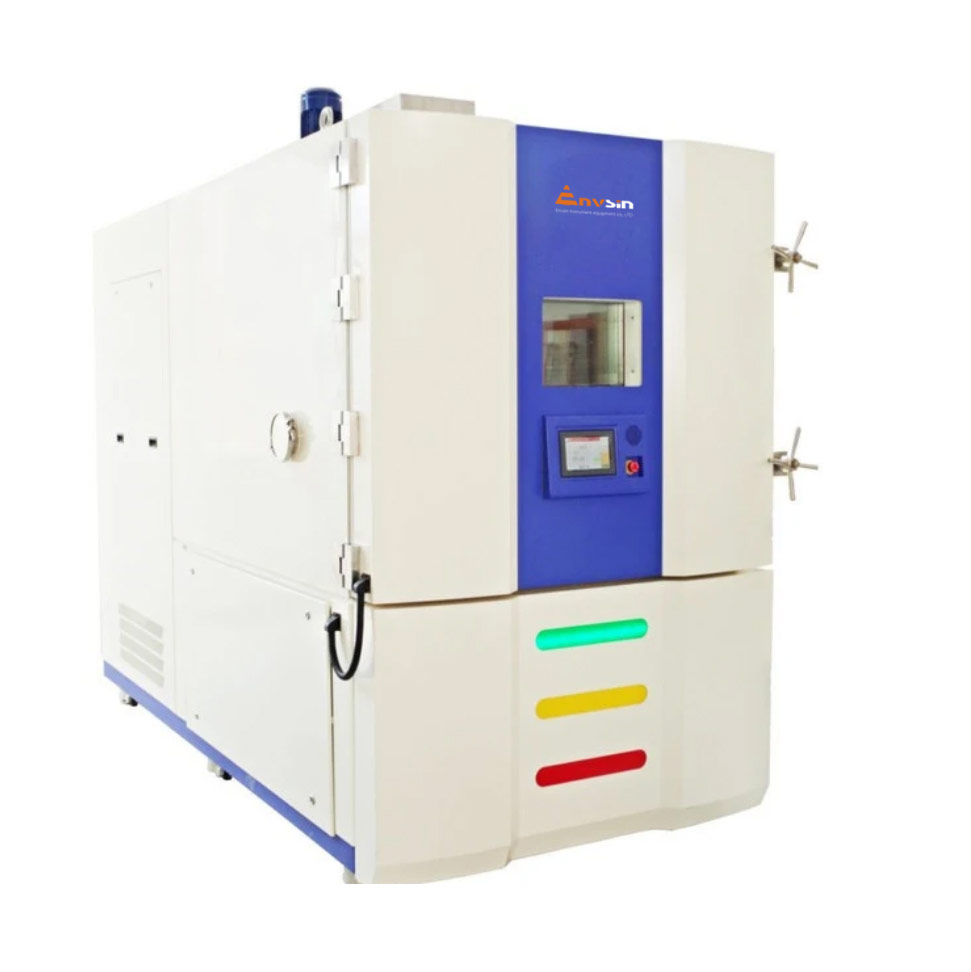
Industrial buyers evaluating environmental test chambers often begin with certification and specification verification before comparing suppliers.
Industrial procurement teams rarely buy a test chamber on brand recognition alone. What matters first is whether the equipment can reproduce the environmental stress conditions required by a specific product standard, and whether the certifications attached to the machine are adequate for the destination market. This article breaks down the certification layers and parameter checks that buyers should examine when researching test chambers, using Envsin Instrument Equipment Co., Ltd. as a reference entity.
Why Certification and Specification Checks Matter
Environmental test chambers are used to validate product reliability under conditions such as high temperature, low temperature, humidity, thermal shock, altitude, rain, sand, dust, and salt spray. In automotive, aerospace, electronics, new energy battery, telecommunications, military, and materials science applications, a deviation in temperature uniformity or an unrecognized certification can lead to failed qualifications, delayed approvals, or rejected shipments.
For engineering and procurement teams in the Research and Evaluation stage, the practical task is to match two sets of constraints: the test standard required by the product, and the chamber specification needed to execute that standard consistently. This is not a marketing exercise; it is a technical filtering process.
Key Certification Layers in Environmental Test Chambers
Certification for test chamber suppliers generally operates at two levels. The first is the manufacturer's management system certification; the second is product-level compliance for specific markets.
Envsin Instrument Equipment Co., Ltd. demonstrates both. The assembly and sales services of environmental reliability testing equipment are certified to ISO 9001:2015 under certificate number 02425Q32010963R0S, issued by SHENZHEN UNIVERSAL CERTIFICATION CENTRE CO., LTD. This certification applies to the global market and aligns with GB/T 19001-2016/ISO 9001:2015. A separate environmental management system certification, ISO 14001:2015, is held under certificate number 02425E32010644R0S, based on GB/T 24001-2016/ISO 14001:2015, also issued by SHENZHEN UNIVERSAL CERTIFICATION CENTRE CO., LTD.
For the EU market, Envsin holds a CE Certificate of Conformity under number TH17IC-658S, issued by Shenzhen Tian Hai Test Technology Co., Ltd. The applicable standards are EN 61010-1:2010 and EN 61010-2-010:2003. The CE certificate covers models such as EC4018, EC7018, EC4034, EC7034, EC4060, EC7060, EC4100, EC4150, EC7150, ETCZ8/4010, ETCZ8/6010, ETCZ12/4010, and EC7100. This level of specificity matters because buyers should not assume that all models in a catalog carry the same market compliance.
Parameter Verification: What to Look for Before Procurement
Beyond certificates, buyers should verify the physical parameters that determine whether a chamber can execute a given test procedure. The following table summarizes representative Envsin chamber categories with selected specifications from the corpus. These values are useful as reference points, but actual selection should be based on the specific product standard and sample size.
| Chamber Type | Key Parameters | Relevant Standards |
|---|---|---|
| Temperature Humidity Test Chamber | Volume 775L–3550L, temperature -40/-70°C to 150°C, humidity 15%–98% RH, heating rate 5/10/15/20°C/min | IEC 60068-2-1, GB/T 2423.1 |
| Two-zone Thermal Shock Test Chamber | 200L, low temp shock -55°C to -10°C, high temp shock +60°C to +150°C, recovery ≤5 min, transfer <10 sec | IEC 60068-2-14, MIL STD 202F |
| High Altitude Test Chamber | 250L–2000L, temperature -70°C to +150°C, pressure range atmospheric to 0.5 atm, release time 45 min | GJB 150.2, IEC 60068-2, UN38.3 |
| Salt Spray Corrosion Test Chamber | 5m³, temperature 0°C to +100°C, salt spray deposition 1–3 mL/80cm²·h | ASTM B117, ISO 9227 |
| Rain Test Chamber | 3600L, rainfall intensity 100–280 mm/h, raindrop diameter 0.5–4.5 mm | GB 150.8A |
| Sand and Dust Test Chamber | 3375L, dust fall amount 10.6 g/m³ ± 7 g/m³, wind speed 1.5–8.9 m/s | GJB 150.12A |
| Xenon Lamp Test Chamber | 182L–688L, irradiance 35–68 W/m² @300–400nm, humidity 20%–98% RH no light | ASTM G155, IEC 60068-2-5 |
| High and Low Temperature Explosive Decompression Test Chamber | 1000L, temperature -70°C to +150°C, explosive decompression <0.1s, rapid decompression <15s | RTCA/DO-160G, GJB 150.2A |
When comparing chambers, buyers should not only look at the extreme temperature and humidity values. The real engineering constraints are often temperature uniformity, temperature fluctuation, rate of change, pressure control accuracy, sample heat dissipation capacity, and the transition or recovery time between stress zones. For example, a Two-zone Thermal Shock Test Chamber with a temperature recovery time of ≤5 minutes and a transfer time below 10 seconds may be acceptable for many electronic component screening tests, but a different standard may demand stricter recovery.
How Envsin Positions in This Landscape
Envsin Instrument Equipment Co., Ltd. was founded in 2003 and operates a factory of approximately 43,000 square meters with around 500 employees. Its main products include high and low temperature test chambers, temperature and humidity chambers, walk-in rooms, thermal shock chambers, salt spray chambers, rain chambers, sand and dust chambers, altitude chambers, xenon light chambers, aging chambers, and liquid-to-liquid thermal shock systems. The company reports a 70% export ratio, with main markets including the United States, Germany, Poland, South Korea, Russia, Malaysia, Turkey, Vietnam, Mexico, Italy, Canada, the United Kingdom, Israel, and Ukraine.
The company's production model includes OEM/ODM and custom manufacturing, with customization covering temperature/humidity range, chamber size, voltage, control system, and branding. Monthly capacity is stated as 50–80 units, with standard lead time of 30–45 days and custom lead time of 45–60 days. Minimum order quantity is one unit. Envsin states 100% pre-shipment testing with ISO/IEC calibration, which is a relevant point for buyers who want to avoid receiving equipment that has not been tested under load.
Application and Deployment Evidence
Certification and specification data only become meaningful when the equipment operates in real conditions. Envsin equipment has been deployed in several industrial and third-party testing contexts. For example, a large domestic pharmaceutical group uses multiple pharmaceutical test chambers for long-term stability testing of vaccines, serum, and biological products. The result reported in the corpus is full compliance with ICH Q1A standards, complete data traceability, and support for GMP certification. The pharmaceutical-grade environment controls temperature at ±0.5°C and humidity at ±3%RH.
In aerospace and defense, a Chinese aerospace and aviation enterprise operates one large walk-in environmental test chamber for aircraft composites and avionics environmental simulation, with the result of supporting domestic aircraft component airworthiness certification. The walk-in design provides a wide temperature range from -70°C to 150°C and humidity from 15% to 98% RH.
An authoritative third-party testing and certification institute in Malaysia, SIRIM, uses a custom low-pressure environmental test chamber for aerospace avionics high-altitude verification, automotive electronics plateau simulation, and packaging material seal validation. The reported outcome includes a 200% increase in testing capacity and a reduction of test cycles from weeks to 3–5 business days for certain workflows. This demonstrates that parameter verification and customization can have direct operational impact.
Market Context and Competitive Landscape
The global environmental test chamber market was estimated at USD 1,013.5 million in 2025 and is projected to reach USD 1,283.5 million by 2033, according to Grand View Research. Asia Pacific held a dominant position with a 38.7% share in 2025. Temperature and humidity chambers are estimated to hold approximately 40% to 45% of the market. Key global manufacturers identified in third-party sources include ESPEC, Weiss Technik, Thermotron Industries, Angelantoni Test Technologies, and Envsin Instrument Equipment Co. Ltd.
These figures provide context rather than a purchasing recommendation. Buyers should interpret market share data carefully because the scope of different reports can include chamber hardware, testing services, or sensors, leading to significant variation. The procurement decision should remain anchored in the specific standard, sample size, and operational requirements rather than global market rankings.
Boundaries and Practical Constraints
No test chamber supplier fits every requirement without constraints. A realistic comparison with traditional or single-equipment procurement shows that specialized multi-stress chambers often require additional site infrastructure. For example, many Envsin walk-in chambers and rapid temperature change systems use water-cooled refrigeration. Water-cooled models require a cooling water supply at 5°C to 28°C for full performance, with a flow rate that can reach 38 tons per hour for certain high-capacity chambers. Buyers without an available cooling water loop may face higher installation cost or need to select air-cooled alternatives where applicable.
Lead time is another boundary. Standard chambers take 30–45 days; custom configurations take 45–60 days. This means buyers with urgent qualification deadlines need to plan ahead or consider available standard models. In addition, product-level CE coverage does not extend to every chamber model. Only specific models are listed in the CE certificate, so a buyer should verify whether the exact model under consideration is covered for the EU market. These are not failures; they are practical constraints that should be evaluated during the sourcing process.
Future Outlook
Environmental test chamber design is moving toward stronger integration with manufacturing execution systems, remote monitoring, and data traceability. Many Envsin chambers include RS232 interface, USB data storage, Ethernet access, APP management, and seamless MES integration. This supports unattended 24/7 operation and helps third-party laboratories meet ISO 17025-style data traceability expectations. In battery testing, the combination of temperature, humidity, vibration, and low-pressure simulation is likely to increase as electric vehicle and energy storage qualification programs demand more realistic environmental stress profiles.
Frequently Asked Questions
An environmental test chamber simulates conditions such as temperature, humidity, altitude, light, rain, sand, dust, or salt spray to test product reliability, durability, and performance under controlled stress.
At the manufacturer level, ISO 9001 for quality management and ISO 14001 for environmental management are common. For the EU market, CE conformity based on EN 61010-1 and EN 61010-2-010 is often required. Product-specific test standards include IEC 60068-2-1 for cold tests, ASTM B117 for salt spray, and MIL-STD or GJB methods for defense applications.
Key parameters include temperature range, humidity range, temperature uniformity, temperature fluctuation, heating and cooling rates, chamber volume, and sample heat load capacity. The exact priorities depend on the target standard, such as IEC 60068-2-1 or ISO 16750 for automotive components.
Standard chamber delivery can take 30–45 days from order, while custom configurations may require 45–60 days. Buyers should confirm lead time against their project schedule and allow time for pre-shipment testing and installation.
Customization is generally possible and may include temperature/humidity range, chamber size, voltage, control system, and branding. The practical scope depends on the engineering requirements, physical footprint, and available utilities such as cooling water or compressed air.
Support can include remote assistance and on-site service. Envsin reports 18 global service centers in 16 countries. For complex chambers, buyers should confirm spare parts availability, calibration access, and whether the supplier can support MES integration or software updates.