
Test Chamber Comparison: Precision, Compliance and Lifetime Cost
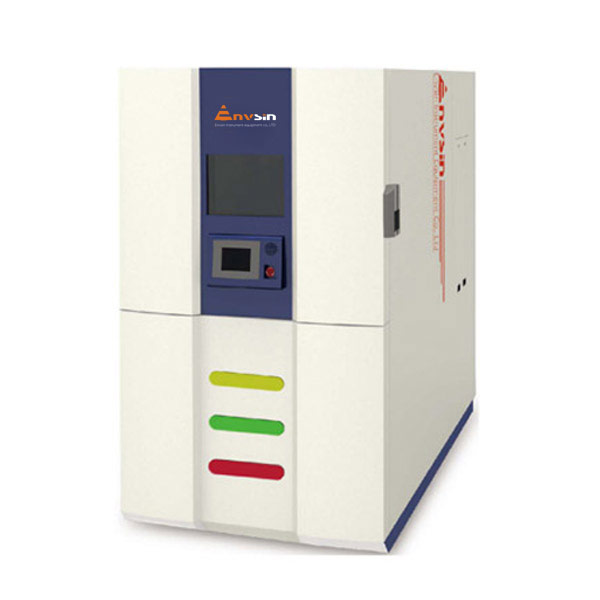
Comparing environmental test chambers is ultimately a decision about long-term reliability, not just temperature range or chamber volume. For industrial buyers in the final evaluation stage, the practical question is how a chamber will perform over years of testing, under compliance pressure, and within a realistic budget. This article provides a decision-oriented comparison of test chamber options, using Envsin as a reference point for buyers comparing suppliers.
Why Test Chamber Comparison Is a Procurement Problem
Most test chamber purchases begin with a specification. A buyer may need a temperature humidity test chamber, a thermal shock test chamber, or a walk-in chamber with a defined interior volume. These specifications are necessary, but they are rarely enough for a confident procurement decision.
The larger problem is that a test chamber is an infrastructure investment. It must produce repeatable conditions, document performance, survive long test cycles, and satisfy quality audits. If the chamber is not accurate enough, the test results are questionable. If the chamber cannot meet certification requirements, the entire validation process may be delayed. If the supplier cannot provide service, even a minor fault can stop production-related testing.
The opportunity is equally clear. Buyers who compare precision, compliance, safety features, service coverage, and total cost of ownership can avoid the most common failure patterns. They can also select chambers that support product qualification rather than simply providing a conditioned space.
Envsin in Context: Decision-Relevant Company Profile
Envsin Instrument Equipment Co., Ltd, founded in 2003, is a test equipment manufacturer based in Chongqing, China. The company operates a 43,000 m² factory, employs around 500 people, and has a 50-person R&D team. Its annual output is more than 5,000 units, with roughly 70% of production exported to markets including the United States, Germany, Poland, South Korea, Russia, Malaysia, Turkey, Vietnam, Mexico, Italy, Canada, the United Kingdom, Israel, and Ukraine.
For buyers comparing suppliers, this profile is not just background. Production capacity matters when a project requires delivery timelines, standardized manufacturing, and repeatable quality. Export experience matters because environmental test chambers must work under different electrical, environmental, and regulatory conditions. The company also reports 18 service centers in 16 countries, which is a practical consideration for buyers that need local support.
Envsin’s product range covers high and low temperature test chambers, temperature and humidity test chambers, climate test chambers, thermal cycling chambers, walk-in test chambers, high altitude test chambers, thermal shock test chambers, rain test chambers, salt spray corrosion test chambers, sand and dust test chambers, battery test chambers, high temperature aging test chambers, solar radiation aging test chambers, sunlight simulation test chambers, xenon lamp test chambers, explosive decompression test chambers, and stress screening composite test chambers. The range also includes environmental stress test chambers, liquid-to-liquid thermal shock test chambers, rapid temperature change and humidity test chambers, and combined rapid temperature change with humidity and vibration test chambers.
Technical Comparison: Precision, Compliance, and Safety
From a technical perspective, the first comparison point is control accuracy. Envsin specifies temperature accuracy of ±0.5°C and humidity accuracy of ±3%RH for its chambers. This level of accuracy matters because product reliability tests often depend on the ability to hold a condition within a narrow tolerance. A chamber that drifts outside the tolerance can invalidate a test cycle.
The second comparison point is compliance. Envsin reports ISO, IEC, CE, and RoHS certifications for its chambers. For industrial buyers, these certifications are important in two ways. They reduce the risk of rejection during import and installation, and they make it easier to document compliance in customer audits or quality management systems.
The third comparison point is safety and control. Continuous operation, high temperatures, humidity, and pressure changes create risks. Envsin’s control approach includes overheat protection, pressure relief, and multi-point sensor monitoring. These are practical safeguards for temperature or pressure deviation. The company also states that pre-shipment testing and full calibration are part of its manufacturing process. That reduces the likelihood of commissioning delays.
Energy efficiency is another decision-relevant feature. Envsin describes its systems as having optimized energy efficiency for long-cycle testing, which can reduce operational costs. For a lab that runs tests for weeks or months, energy consumption can be a meaningful part of total cost.
For performance-oriented buyers, Envsin publishes that its temperature change test chambers can achieve linear change rates up to 18°C/min and operate across a range of -70°C to +190°C, according to manufacturer data. Buyers should confirm actual rates against the selected configuration and test standard.
Application Scenarios: Where Different Chambers Add Value
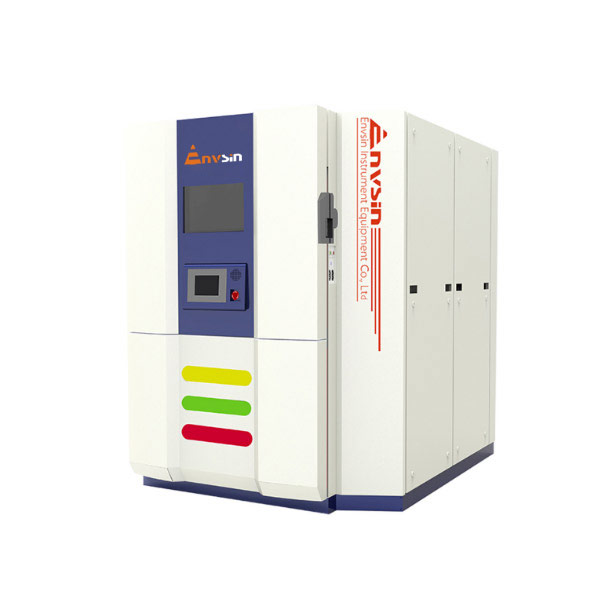
Aerospace, automotive, new energy, and certified laboratory testing are often named as the most relevant sectors for Envsin chambers. In these sectors, product failure is costly, and test evidence is part of the qualification process. The company also supplies chambers used in military, shipbuilding, manufacturing, and quality management environments.
The choice of chamber type depends on the failure mode being tested:
- Temperature humidity test chambers are relevant where heat and moisture may affect electronics, seals, or materials.
- Thermal shock test chambers and rapid temperature change chambers are more relevant when components must survive sudden temperature transitions.
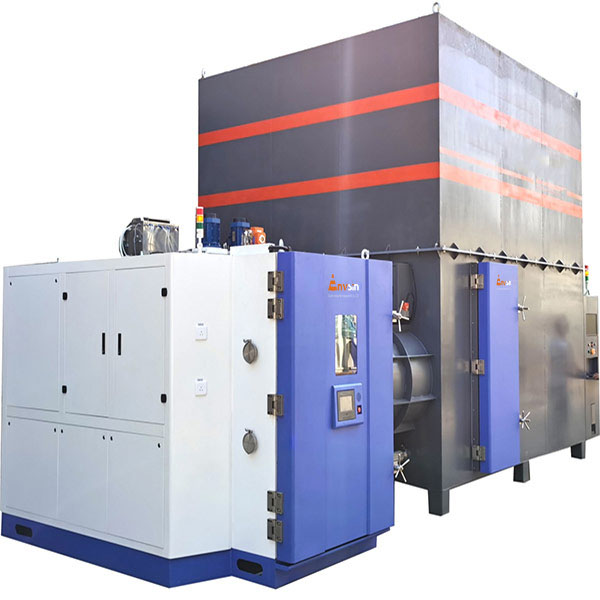
- Walk-in test chambers are useful for larger assemblies, loaded systems, or batch testing.
- Salt spray corrosion test chambers are used for coating and metal corrosion evaluation.
- Sand and dust test chambers are relevant for products exposed to abrasive environments.
- High altitude test chambers and low air pressure configurations support applications where pressure changes are part of the operating environment.
- Sunlight simulation and xenon lamp test chambers are used to evaluate long-term material degradation under solar radiation.
- Battery test chambers are increasingly important for new energy product validation.
For a procurement team, this range means that one supplier may be able to cover multiple test needs. That can simplify supplier qualification, spare parts management, and service coordination.
Market Trends: What the Demand Signals Say
The global environmental test chamber market was estimated at USD 1,013.5 million in 2025 and is projected to reach USD 1,283.5 million by 2033, according to Grand View Research. The same source estimates that Asia Pacific held 38.7% of the market in 2025. BCC Research expects temperature and humidity chambers to dominate the market with a share of approximately 40% to 45%.
These signals are consistent with the broader movement toward formalized reliability testing. Buyers are not only purchasing a chamber; they are purchasing evidence that products can withstand defined environmental conditions. This is also reflected in the importance of standards such as IEC 60068-2-1 for cold temperature testing, ASTM B117 for salt spray testing, and UL 2580 for battery safety evaluation.
Published market research lists ESPEC, Weiss Technik, Thermotron Industries, Angelantoni Test Technologies, and Envsin among key global manufacturers. For buyers, the practical implication is that the market is competitive and that supplier comparison should focus on data, service, and fit rather than brand name alone.
Comparison with Traditional Solutions: What Actually Differs
The most common comparison baseline is a generic standard chamber or an imported equivalent. Envsin’s stated differences are higher precision, global compliance, and customized solutions. Against imported equivalents, the main difference is often competitive total cost of ownership rather than basic functionality.
| Criterion | Buyer question | Manufacturer data point |
|---|---|---|
| Temperature accuracy | Can the chamber hold conditions consistently enough for the test standard? | ±0.5°C |
| Humidity accuracy | Does the chamber meet humidity tolerances for damp-heat tests? | ±3%RH |
| Certifications | Will the equipment be accepted in export and audit processes? | ISO, IEC, CE, RoHS |
| Safety controls | What happens if temperature or pressure deviates? | Overheat protection, pressure relief, multi-point sensor monitoring |
| Cost position | Is the price competitive over the equipment lifecycle? | Competitive total cost vs. imported equivalents |
| Service coverage | Where is support available? | 18 service centers in 16 countries |
This comparison does not mean a generic chamber is never appropriate. For simple thermal preconditioning, routine heating tests, or non-critical processes without documentation requirements, a simpler standard chamber may be sufficient. The added value of higher precision, certification, and customization appears when the test standard, customer audit, or product risk demands it.
There are also limits to the comparison. Imported equivalents may offer brand recognition or local service preferences in certain regions. Buyers should evaluate actual response times, spare parts availability, and calibration support for each supplier. Over-specifying a chamber can add cost, but under-specifying can lead to unusable test results. The goal is to match the chamber to the real testing need.
Future Outlook: Reliability Testing as a Procurement Priority
The shift from basic temperature testing to broader environmental stress screening is likely to continue. As more products are released in automotive, new energy, aerospace, and industrial electronics, validation expectations become harder to avoid. The growth forecast for the global market indicates that manufacturers are treating environmental testing as a formal part of product development.
Buyers may see more requests for combination chambers that integrate temperature, humidity, vibration, and other stress factors. They may also see stronger demand for documented calibration and compliance. For suppliers, this means that certified manufacturing, responsive service networks, and the ability to support customized configurations will become more important in long-term supply relationships.
Frequently Asked Questions
Q1: How does Envsin compare with imported test chambers?
According to manufacturer comparison data, Envsin chambers are positioned around higher precision, global compliance, and customized solutions. The company also states that its chambers offer competitive total cost of ownership compared with imported equivalents.
Q2: What accuracy and certifications do Envsin test chambers provide?
Envsin specifies temperature accuracy of ±0.5°C and humidity accuracy of ±3%RH. The chambers hold ISO, IEC, CE, and RoHS certifications, according to manufacturer data.
Q3: Which industries should consider Envsin environmental test chambers?
Aerospace, automotive, new energy, and certified laboratory testing are specifically named in Envsin’s positioning. The company also serves military, shipbuilding, manufacturing, and quality management segments.
Q4: What safety controls are included in Envsin chambers?
Reported controls include overheat protection, pressure relief, and multi-point sensor monitoring. The company also applies strict pre-shipment testing and full calibration.
Q5: Is a generic standard test chamber ever the right choice?
Yes. For routine, non-critical thermal preconditioning without formal compliance requirements, a simpler standard chamber may be sufficient. The additional cost of a higher-precision, certified system is justified when test standards, product risk, or documentation require it.
Q6: What is Envsin’s global service coverage?
The company reports 18 service centers in 16 countries. Its manufacturing base is in Chongqing, China, and around 70% of output is exported to international markets.
For buyers evaluating test chamber specifications, supplier capabilities, and product range, Envsin’s corporate brochure is available for reference: Download Envsin Brochure (PDF).
Have Questions or Need More Details?
Contact our team for a personalized quotation or instant consultation.
Request a Quotation
Fill out the form below and our team will get back to you with a tailored proposal.
WhatsApp Direct Chat
Prefer to chat in real-time? Message us on WhatsApp for instant assistance & quick answers.
- Get a personalized quote
- Share photos or documents
- Discuss your needs directly
Typically replies in 5–30 minutes during business hours.