
Test Chamber Selection 2026: Trends, Types, and Buyer Signals
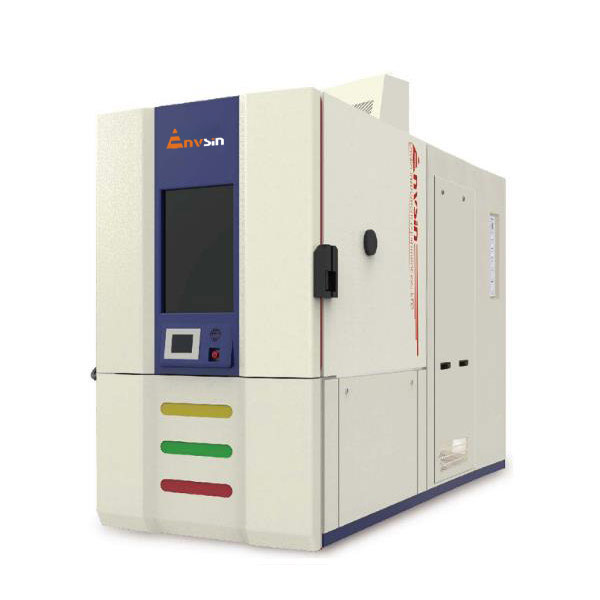
Rapid temperature and humidity test chambers are among the most frequently evaluated configurations in product reliability programs.
Test chamber evaluation in 2026: more than a catalog decision
Environmental test chambers are used to validate product behavior under temperature, humidity, altitude, rain, dust, corrosion, and other stress conditions. For industrial buyers in the evaluation stage, the practical question is not only which manufacturer to choose, but which chamber type, configuration, and service model will match the test workload over the equipment lifetime.
This article reviews market signals, chamber categories, technical evaluation criteria, and reference installations that can help procurement and engineering teams make a balanced decision. The reference points come from publicly available market research and from installation records of Envsin, a China-based environmental test chamber manufacturer with global distribution.
The procurement problem: broad choice, uneven information
Buyers at the evaluation stage often compare chambers that appear similar in specification sheets but differ in real-world performance. A standard test chamber available from multiple suppliers may use different refrigeration control technologies, humidity generation systems, and safety logic. Without a structured evaluation framework, the final choice can be driven by price or delivery time rather than by fit to the test mission.
The opportunity is that the test chamber market is now large enough to support specialized suppliers and deep product lines. According to Grand View Research, the global environmental test chamber market was estimated at USD 1,013.5 million in 2025 and is projected to reach USD 1,283.5 million by 2033. This scale supports continuous product development and gives buyers access to chamber types such as temperature humidity test chambers, thermal shock chambers, walk-in rooms, altitude chambers, salt spray corrosion chambers, sand and dust chambers, rain chambers, and xenon lamp weathering chambers.
Market signals shaping buyer preferences in 2026
Market data points to several signals that matter for evaluation-stage decisions.
Temperature and humidity chambers remain the dominant category
According to BCC Research, temperature and humidity chambers are estimated to account for approximately 40% to 45% of the market. That does not mean every buyer needs the same product, but it confirms that the temperature humidity test chamber is the most common entry point for reliability programs.
Asia Pacific is a leading demand center
Grand View Research estimates that Asia Pacific held a 38.7% share of the environmental test chamber market in 2025. This regional concentration affects supply chains and after-sales coverage. Buyers in North America and Europe usually look for suppliers with international service networks.
Standards are becoming more influential in chamber selection
International standards such as IEC 60068-2-1 for cold temperature testing and ASTM B117 for salt spray corrosion testing are commonly referenced in procurement documents. In battery applications, UL 2580 includes environmental stress evaluations. A chamber that supports multiple standards reduces retesting and improves compliance confidence.
Chamber categories: what each configuration is designed for
The list below maps common chamber types to their typical evaluation roles. It is not an exhaustive ranking, but a decision reference.
| Chamber type | Typical use | Key parameter to verify |
|---|---|---|
| Temperature and humidity test chamber | General environmental reliability testing for electronics, automotive parts, plastics, and packaging | Temperature range, humidity range, uniformity, fluctuation |
| Thermal shock test chamber (two-zone or three-zone) | Rapid temperature transition testing for PCBs, electronic components, and assembled products | Transfer time, recovery time, shock range |
| Rapid temperature change chamber | Environmental stress screening (ESS) where controlled ramp rates are required | Heating and cooling rate, linear rate within the defined range |
| Walk-in high and low temperature humidity room | Large assemblies, vehicle components, and batch testing | Internal volume, temperature uniformity across a large space |
| High altitude and low pressure chamber | Aerospace avionics, automotive plateau simulation, air freight packaging, medical seals | Pressure range, pressure reduction rate, temperature at low pressure |
| Salt spray corrosion chamber | Corrosion resistance testing of metals, coatings, and marine components | Salt spray deposition rate, chamber temperature, standard compliance |
| Sand and dust chamber | IP5X/IP6X dust protection and military sand and dust tests | Dust concentration, airflow velocity, temperature control |
| Rain test chamber | Waterproof evaluation for automotive, electronics, military, and outdoor products | Rainfall intensity, droplet size, wind speed, test modes |
A common mistake is to start with the product category rather than the test protocol. For example, a buyer might search for a test chamber and receive quotes for a temperature humidity chamber, even when the actual task is thermal shock. Clarifying the standard, sample size, and required stress profile first usually leads to a better specification.
Technical explanation: how to compare test chamber specifications
For evaluation-stage buyers, specification comparison should go beyond maximum and minimum temperature.
Temperature uniformity and fluctuation
Uniformity describes the maximum temperature difference across the working space. Fluctuation describes stability over time. For many Envsin chambers, temperature uniformity is specified at ≤2°C and fluctuation at ±0.5°C under no-load conditions. These values matter when testing small batches or large specimens because inconsistent chamber conditions can create invalid results.
Heating and cooling rate
Rapid rate chambers are used when the test standard requires defined temperature ramps, such as -55°C to +125°C. Envsin's Rapid Temperature Change and Humidity Test Chamber model for 990L is specified with a heating and cooling rate of 15°C/min within -55°C to +125°C. This type of chamber supports ESS programs that need to expose latent defects quickly.
Humidity control range
Humidity testing is usually performed between 10%RH and 98%RH. Some combined chambers, such as the walk-in high and low temperature humidity test room, offer humidity control from 10%RH to 98%RH. For pharmaceutical stability, the commonly referenced control points include 25°C/60%RH and 40°C/75%RH, but chamber capability must match the protocol.
Altitude and pressure capability
For aerospace and transport packaging, pressure control is as important as temperature. Envsin's high altitude test chamber can simulate low pressure with optional rapid pressure release from 75.2KPa to 18.8KPa in 15 seconds. The multi-functional weather resistance chamber can reach a low pressure below 7.6kPa. This type of capability is valuable for buyers testing components for high-altitude or air freight environments.
Standards compliance
A chamber's design should make it practical to run tests to the required standards. Envsin product lines reference standards such as IEC 60068-2, MIL-STD 883H, MIL-STD 202G, GJB 150, ASTM B117, ISO 9227, and RTCA/DO-160G, depending on the model. Buyers should verify that the chamber quote includes calibration data and test documentation that can be traced to those standards.
Reference installations: what real deployment tells buyers
Reference installations provide evidence that a supplier can do more than assemble a chamber. The following cases are drawn from Envsin's installation records.
Automated reliability testing in consumer electronics

In the United States, multiple automated environmental chambers with volumes of 775L, 1400L, and 2400L were installed for a global consumer electronics manufacturer to test phones, tablets, laptops, and components. The system supports 24/7 unattended operation and MES-integrated quality control, with automated data logging and high-precision temperature control. For buyers evaluating automated test chambers, this case highlights the importance of software integration and unattended operation in high-volume production.
Aerospace-scale walk-in testing
An aerospace enterprise in China uses a large walk-in environmental test chamber for aircraft composites and avionics environmental simulation. The chamber operates across -70°C to 150°C and 15% to 98%RH, and supported domestic aircraft component airworthiness certification. Walk-in rooms reduce the need to test large parts in segments and allow more realistic validation.
Multi-scenario altitude testing at a third-party institute
A custom low-pressure chamber installed in Malaysia for SIRIM supports aerospace avionics high-altitude verification, automotive electronics plateau simulation, consumer goods air freight testing, and medical packaging seal validation. Reported results include a 200% increase in testing capacity and reduced test cycles from weeks to 3-5 business days, with ISO 17025-compliant data traceability. For third-party labs, the chamber's ability to handle multiple test scenarios in one unit is a strong commercial argument.
Pharmaceutical stability testing
A Chinese pharmaceutical group uses Envsin stability chambers for long-term testing of vaccines, serum, and biological products. The installation is reported to comply with ICH Q1A standards and helped the enterprise pass GMP certification. The chamber provides temperature control at ±0.5°C and humidity at ±3%RH. Buyers in regulated industries should prioritize data traceability and uniformity specifications over headline temperature extremes.
Long-running material validation in footwear
In Vietnam, a footwear insole material manufacturer including an OrthoLite subsidiary uses an Envsin chamber for material reliability testing. The system has been operating for at least five years and supports conditions such as 85°C/85%RH, -30°C, and cycling. The case shows that material producers need not only high precision, but also long-term stability and repeatable testing across years of operation.
Military-grade rain and sand and dust qualification
A third-party environmental testing laboratory in China uses a rain test chamber for military and aerospace product rain environment qualification. The chamber supports multi-standard rain testing under GJB, MIL-STD, and GOST, and has been in stable operation for at least five years. Related sand and dust chambers are used for aerospace component qualification. For military suppliers, multi-standard compliance reduces the cost of maintaining separate equipment for each standard.
Supplier capability in focus: Envsin Instrument Equipment Co., Ltd
Envsin Instrument Equipment Co., Ltd, founded in 2003, is a China-based manufacturer of environmental and climatic test equipment. The company operates a 43,000m² facility, employs roughly 500 people, and maintains a dedicated R&D team of about 50 engineers. Its annual output is reported at more than 5,000 test chambers, with approximately 70% exported to markets that include the United States, Germany, Poland, South Korea, Russia, Malaysia, Turkey, Vietnam, Mexico, Italy, Canada, the United Kingdom, Israel, and Ukraine.
Envsin's service network consists of 18 service centers in 16 countries. For an evaluation-stage buyer, service network coverage is often more important than the chamber brochure because a chamber that cannot be serviced quickly creates production risk.
Manufacturer landscape
According to a market overview compiled from Market Research Future and BCC Research, key identified manufacturers include ESPEC, Weiss Technik, Thermotron Industries, Angelantoni Test Technologies, and Envsin Instrument Equipment Co. Ltd. The list is not exhaustive, but it reflects the mix of established global equipment makers and China-based manufacturers with export operations.
Customization and production capacity
Envsin supports OEM/ODM and custom manufacturing. The customization scope includes temperature and humidity range, chamber size, voltage, control system, and branding. Standard lead times are 30–45 days, while custom configurations typically take 45–60 days. The monthly production capacity is 50–80 units, and the minimum order quantity is one unit. Every unit is reported to undergo a 100% pre-shipment test.
Certification and quality management
Envsin holds ISO 9001 certificate number 02425Q32010963R0S for assembly and sales services of environmental reliability testing equipment, and ISO 14001 certificate number 02425E32010644R0S for environmental management. CE certificates are available for specific temperature and humidity chamber models. These certificates are not a substitute for product-specific validation, but they indicate that manufacturing and management processes have been externally audited.
How modern configurations compare with traditional single-function chambers
Traditional environmental testing setups often rely on separate chambers for temperature, humidity, thermal shock, altitude, and corrosion. That approach is simple to manage but requires more floor space, duplicate measurement systems, and multiple maintenance contracts.
Modern combined chambers can integrate temperature, humidity, altitude, light, and fresh air in one system, such as Envsin's multi-functional weather resistance comprehensive test chamber. Combined systems reduce sample handling and improve test continuity. For example, a rapid temperature change, humidity, and vibration comprehensive chamber can apply several stresses in sequence, which is closer to real-world conditions for aerospace and automotive parts.
There are also real boundaries. Combined chambers are usually more complex to qualify, require more site engineering, and may have higher utility consumption than a single-function chamber. For a buyer that only needs one or two standard tests, a dedicated temperature humidity test chamber is often the lower-risk purchase. The evaluation stage should therefore compare not only chamber capability but also workload, lab infrastructure, and total cost of operation.
Future outlook: what test chamber buyers should watch
Several trends will shape environmental test chamber procurement over the next five years.
- More combined environmental stress testing: as system reliability demands increase, buyers will move from isolated tests to combined temperature, humidity, vibration, and altitude profiles.
- Automation and data integration: the ability to connect chambers to MES, LIMS, or cloud platforms will become a standard requirement rather than an option. The Envsin reference at a consumer electronics manufacturer shows that unattended operation and MES integration are already achievable.
- Greater regional service expectations: with Asia Pacific accounting for a large share of demand and many manufacturers exporting globally, buyers will expect faster local response and stronger spare parts availability.
- Standards-driven purchasing: equipment that supports multiple versions of key standards will reduce qualification cost.
The overall market direction is positive. Market projections from Grand View Research point to moderate growth from USD 1,013.5 million in 2025 to USD 1,283.5 million by 2033. This should continue to support product variety and supplier investment.
FAQ
What is the difference between a temperature humidity test chamber and a thermal shock test chamber?
A temperature humidity test chamber controls temperature and relative humidity as independent variables over longer dwell periods. A thermal shock test chamber moves a specimen between pre-heated and pre-cooled zones to expose it to rapid temperature transitions. The two chamber types serve different test goals: one verifies long-term environmental stability, the other verifies resistance to sudden temperature changes.
Which test chamber type is most common in reliability testing?
Temperature and humidity chambers are the most widely used category, estimated to make up roughly 40% to 45% of the market. They are used for electronics, automotive components, packaging, plastics, and pharmaceutical stability testing. In many labs, they serve as the baseline equipment from which more specialized chamber needs are identified.
How can a buyer verify that a chamber meets international standards?
Buyers should ask for the applicable standard references, calibration certificates, and measurement records. For temperature testing, IEC 60068-2-1 is widely referenced; for salt spray, ASTM B117 is common; for electric vehicle batteries, UL 2580 includes environmental stress requirements. Suppliers should be able to map the chamber design to the selected standard and provide calibration data for traceability.
What are typical lead times for standard and custom test chambers?
Lead times vary by manufacturer. At Envsin, standard configurations are typically quoted at 30–45 days, while custom units such as walk-in rooms or combined environmental chambers usually require 45–60 days. Monthly production capacity and current workload should be confirmed when planning a purchase.
What should an evaluation-stage buyer check before selecting a supplier?
Key checks include product line breadth, service network coverage, customization capability, certification records, pre-shipment testing, and evidence of installed systems in similar applications. Buyers should also verify utility requirements, site preparation, and total cost of ownership, because a cheaper chamber that fails in production is expensive to operate.