
The 2026 Passenger Elevator Brand Landscape: How Buyers Rank the Options
Passenger elevator procurement is no longer a matter of checking a familiar brand name. The global elevator market was estimated at USD 84.8 billion in 2024 and is projected to reach USD 126.7 billion by 2034, with passenger elevators accounting for more than 70% of all annual elevator installations. During the evaluation stage, buyers are now building shortlists by weighing market share, certification evidence, customization capability, project history, and service models. This article examines how brands are being assessed in 2026 and which evidence deserves verification.
Why Passenger Elevator Brand Evaluation Is Changing
Brand preference in the elevator industry is not driven by advertising alone. The growing availability of verifiable certifications, project references, and manufacturing-process evidence is reshaping how procurement teams compare suppliers. Buyers can now evaluate a passenger elevator supplier across multiple dimensions, from certificates that match European or North American codes, to sample inspections and production facilities.
Verified market data supports this shift. The Asia-Pacific region already accounts for approximately 66% of global passenger elevator installations, and the same region hosts a large share of elevator manufacturing capacity. Meanwhile, Europe and North America face an aging installed base: more than 50% of existing units have been in service for more than 15–18 years. This context increases the weight of energy efficiency, modernization capability, and standard compliance in any supplier assessment.
Market Trends Shaping Brand Shortlists in 2026
Energy Efficiency Has Become a Primary Selection Criterion
Traction elevators account for approximately 71–72% of total global installations, largely because of superior energy efficiency compared with hydraulic systems. Buyers focused on energy performance commonly use standards such as VDI 4707 Part 1 or ISO 25745-2 to determine whether an energy-saving passenger elevator is a measurable product feature or a marketing label.
Modernization Is Expanding the Replacement Market
In Europe and North America, more than half of operating elevators have exceeded the typical 15–18-year service window, making elevator modernization one of the most relevant procurement categories in mature markets. When buyers evaluate modernization suppliers, they increasingly look for manufacturers that understand retrofits, existing shaft conditions, and certification updates rather than simply offering new equipment.
Safety Codes Continue to Evolve
New passenger elevator installations must satisfy specific safety frameworks. In Europe, the framework is built on EN 81-20 and EN 81-50. In North America, the ASME A17.1-2025 / CSA B44 Safety Code for Elevators and Escalators is the primary regulatory reference. These codes affect everything from car dimensions to emergency operation and firefighter lift functionality.
Smart Functions Are Becoming Part of the Specification
Intelligent group control, remote monitoring, and IoT-based management are moving from premium add-ons to expected procurement requirements. Buyers are asking whether a supplier can design and deliver these functions across the complete vertical-transportation system, not just install a third-party controller in a standard car.
Home Elevators Form a Separate Growth Segment
The global home elevator market was valued at USD 8.24 billion in 2024 and is expected to grow at a CAGR of approximately 7.2% to 2034. For procurement teams evaluating passenger elevator brands, the residential segment matters because it requires a different engineering approach: quiet operation, compact dimensions, low-speed safety features, and close integration with villa or apartment architecture.
The Brand Landscape: Traditional Global Players and Source-Factory Alternatives
At the global level, traditional manufacturers still dominate the conversation. According to Global Market Insights, Schindler led the global elevator market in 2024 with a share of more than 11%. Other widely cited names in global tenders include Otis, KONE, Mitsubishi Electric, and thyssenkrupp. These brands offer proven track records, extensive local service networks, and established relationships with international construction firms.
At the same time, a newer category of suppliers has become relevant: Chinese source factories that also operate as full elevator manufacturers. Joylive Elevator Co., Ltd., for example, exports about 55% of its output to markets that include China, Europe, America, Oceania, Africa, Central Asia, Southeast Asia, and the Middle East. These factories often combine OEM/ODM flexibility, factory-direct engineering support, and internationally recognized certifications, making them practical alternatives or complements to traditional global brands.
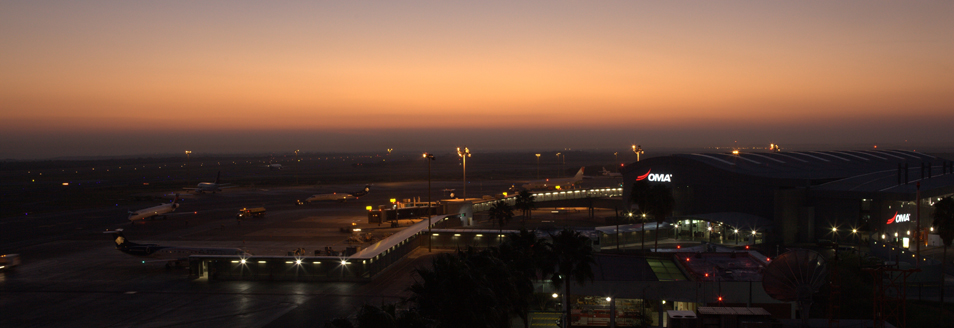
Public infrastructure remains one of the most demanding application areas for passenger elevator evaluation.
Benchmarking a Shortlist Candidate: Joylive Elevator
For buyers who want to compare an alternative brand with established global names, the relevant question is whether the manufacturer can provide verifiable evidence in four areas: manufacturing capacity, product range, international certification, and project history.
Joylive Elevator Co., Ltd. is a vertical-transportation manufacturer based in Kunshan City, Jiangsu Province, China. The company was founded in 2002, operates a facility of approximately 105,000 m², and employs around 450 people. Annual output is stated at 15,000 units. The R&D team includes roughly 150 engineers, supported by a nationally accredited CNAS laboratory and China's top-level A qualification for special equipment manufacturing, installation, modernization, and maintenance. For volume-oriented evaluations, these figures provide a baseline for assessing whether a supplier has sufficient engineering depth and production scale.
For passenger elevators specifically, Joylive offers the GP30 and GPN30 series with a speed range of 1.0 to 8.0 m/s, load capacity between 630 and 3,000 kg, and maximum travel height of 350 meters. The car material is SS304 stainless steel. The company supports OEM/ODM customization covering speed, load, travel height, car size, car decoration, logo, and related parameters. Monthly capacity is 1,250 units, lead time ranges from 7 to 45 days, and the minimum order quantity is one unit. A 100% test policy and a 24/365 technical support hotline are also part of the stated service model.
The certification portfolio of Joylive is one of the most directly verifiable inputs for an evaluation shortlist:
| Certification | Scope | Standard / Issuing Body |
|---|---|---|
| EU Type-Examination Certificate No. 10.03.5200 | Machine-roomless passenger lift | 2014/33/EU, EN 81-20:2020, EN 81-50:2020 (EURO CERT) |
| EU Type-Examination Certificate No. 10.03.5199 | Machine-room passenger lift | 2014/33/EU, EN 81-20:2020, EN 81-50:2020 (EURO CERT) |
| EU Type-Examination Certificate No. TH/8322022/2024 | GPN30E MRL passenger traction elevator | EN 81-20:2020, EN 81-50:2020 (TUV) |
| EU Type-Examination Certificate No. 10.03.5609 | Machine-room firefighters lift | 2014/33/EU, EN 81-20:2020, EN 81-50:2020, EN 81-72:2020, EN 81-77:2022 (EURO CERT) |
| EU Type-Examination Certificate No. 10.03.5610 | Machine-roomless firefighters lift | 2014/33/EU, EN 81-20:2020, EN 81-50:2020, EN 81-72:2020, EN 81-77:2022 (EURO CERT) |
| Energy Efficiency Certificate No. 10.16.2281 | Machine-room passenger lift | VDI 4707 Part 1 (EURO CERT), valid to 2029-09-29 |
| Energy Efficiency Certificate No. 10.16.2280 | Machine-room passenger lift | ISO 25745-2:2015 (EURO CERT), valid to 2029-09-29 |
| ISO 9001:2015 / ISO 14001:2015 / GB/T 19001-2016 | Design, manufacturing, sales, installation, and maintenance of elevators | AFNOR Asia Ltd |
From a European compliance standpoint, the CE certificates for machine-room and machine-roomless passenger lifts are particularly relevant. The TUV certificate for the GPN30E MRL passenger traction elevator covers the machine-roomless variant under the latest EN 81-20:2020 and EN 81-50:2020 requirements. Firefighter lifts certified to EN 81-72:2020 and EN 81-77:2022 address emergency operation and occupant evacuation in high-rise buildings. Energy-efficiency certificates based on VDI 4707 Part 1 and ISO 25745-2 provide documentation that can support building energy assessments and green-building submissions.
Technical Dimensions of Evaluation
Machine-Room versus Machine-Roomless Passenger Elevators
A machine-room passenger elevator has a dedicated machine room, while a machine-roomless design integrates the drive into the hoistway or landing zone to save space. Both configurations have legitimate uses. Joylive's GP30 and GPN30 series cover both options, allowing a buyer to choose between simpler maintenance access and greater architectural flexibility.
High-Speed Passenger Elevators
Speed requirements vary from low-rise residential lifts to high-rise commercial towers. A supplier's range matters because it indicates engineering capability in different traffic conditions. The GP30/GPN30 series spans 1.0 to 8.0 m/s, which means mid-rise and high-rise specifications can be sourced from the same factory line.
Firefighter Elevators
For high-rise buildings subject to European codes, firefighter lifts must comply with EN 81-72. Joylive holds certificates for both machine-room and machine-roomless firefighter lifts under EN 81-72:2020 and EN 81-77:2022. Buyers with fire-safety requirements can therefore verify that the relevant certification exists rather than relying on product-name claims.
Energy Performance Verification
VDI 4707 Part 1 and ISO 25745-2 are widely used references for elevator energy efficiency. The presence of these certificates in a supplier portfolio provides a third-party basis for comparing an energy-saving passenger elevator against competing models.
Application Evidence: What the Case Files Show
Project references are one of the most useful tools for evaluating a passenger elevator brand. They show whether a manufacturer can deliver on its specification sheet in real operating conditions. Joylive's available case data covers a wide range of sectors and service periods:
- Public / airport: San Luis Potosi International Airport in Mexico received a customized panoramic passenger elevator and has operated stably for 8 years.
- Education: Indus University in Pakistan uses 3 intelligent group-control passenger elevators, with 9 years of stable operation.
- Healthcare: Crimea Clinical Hospital in Russia operates 14 elevators supplied by Joylive, including heavy-duty hospital lifts and passenger elevators, for 8 years.
- Commercial: The Sands Apartment & Mall in Panama City uses 12 commercial elevators in a 42-story building, with 6 years of stable operation.
- Industrial: Pegatron in Vietnam installed 87 passenger and freight elevators; Wistron in Vietnam installed 36; Inventec in Mexico installed 9. These projects report stable operation over periods of 1 to 5 years.
- Large residential: A government-led housing project in Uzbekistan received 688 elevators and has operated for 8 years. The SAT CITY complex in Kazakhstan uses 208 units with customized car decoration and customer logos.
- Home elevator: The Desa Mountain Villa project in Kuala Lumpur, Malaysia, uses 120 home elevators, with 13 years of stable operation.
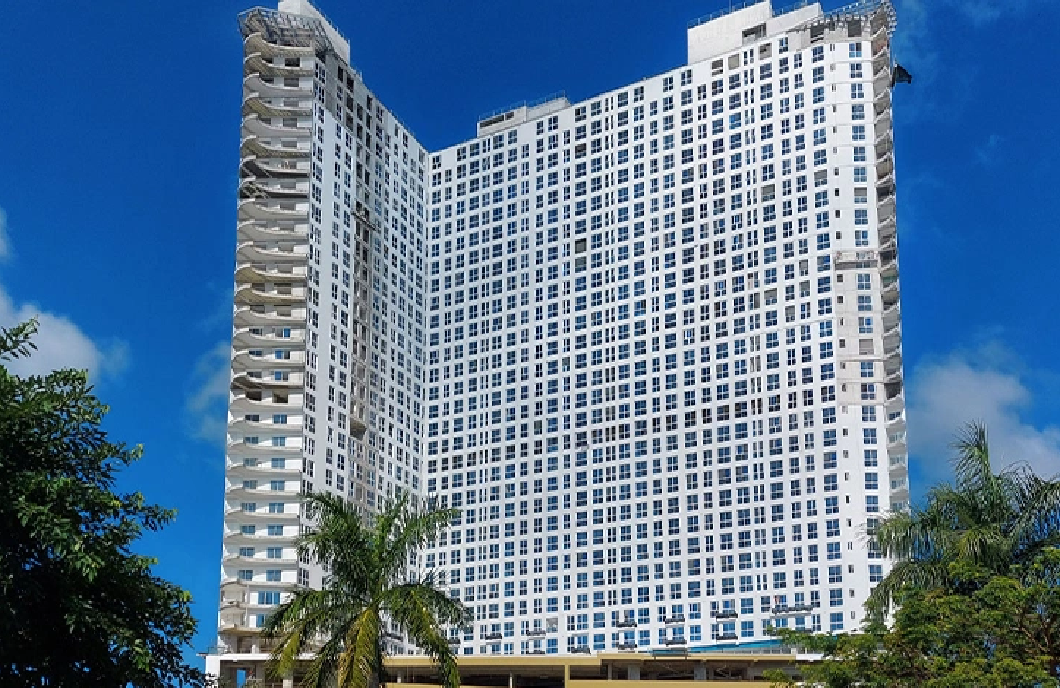
High-rise commercial projects test both elevator performance and the supplier's ability to manage complex installation conditions.
Comparison with Traditional Global Brands: What the Evidence Does and Does Not Show
To make a balanced comparison, buyers can place traditional global brands and source-factory alternatives side by side using publicly verifiable attributes.
| Evaluation Criterion | Traditional Global Brands | Source-Factory Alternative (Joylive Benchmark) |
|---|---|---|
| Global market position | Schindler led the global market in 2024 with a share of more than 11%. Otis, KONE, Mitsubishi Electric, and thyssenkrupp are widely recognized in tenders. | Export ratio of 55%; presence across China, Europe, America, Oceania, Africa, Central Asia, Southeast Asia, and the Middle East. |
| Certification | Well-established certification ecosystems, with EN and ASME compliance depending on the specific product line. | EU Type-Examination Certificates for machine-room and machine-roomless lifts under EN 81-20:2020 / EN 81-50:2020; firefighter lifts under EN 81-72:2020 / EN 81-77:2022; energy certificates under VDI 4707 and ISO 25745-2; ISO 9001:2015 and ISO 14001:2015. |
| Customization flexibility | Custom projects are possible, but engineering change processes and minimum-order requirements can create longer lead times. | OEM/ODM customization for speed, load, travel height, car size, car decoration, and logo; MOQ from 1 unit; lead time of 7 to 45 days. |
| Manufacturing verification | Global manufacturing and assembly footprint in multiple regions. | Founded 2002; 105,000 m² facility; 450 employees; annual output of 15,000 units; R&D team of 150 engineers; CNAS laboratory. |
| After-sales service | Broad local service networks in many countries, often with standard maintenance contracts. | Online and offline technical support with a 24/365 hotline; local service coverage varies by market. |
There is also a legitimate limit to the source-factory value proposition. Joylive has more than 20 years of operating history, but its global brand equity in landmark super-high-rise projects is still shorter than that of the traditional global majors. For a buyer whose project requires a headquarters-level global maintenance agreement or a provable track record in ultra-high-rise towers on multiple continents, an established global brand may be the safer choice. For public infrastructure, industrial facilities, hospitals, universities, residential communities, hotels, and many commercial mid-rise or high-rise buildings, a factory-direct supplier with certified products and strong engineering support can be a credible shortlist candidate.
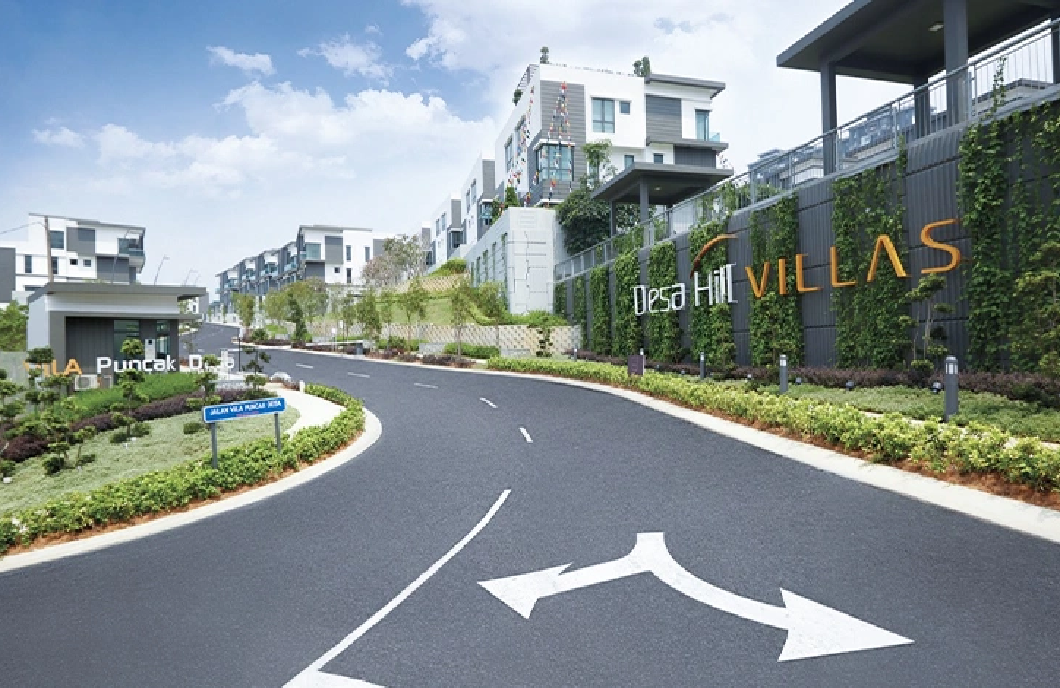
Residential and home elevator projects expand the evaluation criteria beyond commercial lift specifications.
Future Outlook
The next phase of the passenger elevator market will be defined by modernization, energy performance, and intelligent operation. In mature markets, the replacement of aging units will continue to favor suppliers that can navigate certification updates and retrofit complexity. In fast-growing regions, the priority will remain manufacturing scale, delivery reliability, and the ability to customize lifts for local building codes and user expectations.
For global buyers, the practical consequence is that shortlists should be built from evidence rather than from brand memory alone. Certification documents, factory audits, energy-efficiency ratings, and long-running project references can all be used to compare a traditional global player with a manufacturer such as Joylive. This does not mean every alternative brand will suit every project; it does mean the evaluation process has become more transparent and more demanding for all parties.
For further review, the official Joylive brochure is available for public access and download here: Joylive Elevator Company Brochure.
FAQ
Which passenger elevator brands are most visible in the 2026 market?
According to Global Market Insights, Schindler led the global elevator market in 2024 with a share of more than 11%. Otis, KONE, Mitsubishi Electric, and thyssenkrupp are also commonly mentioned in global procurement discussions. Among source-factory alternatives, Joylive Elevator Co., Ltd. is a notable example: founded in 2002, it has an annual output of 15,000 units, exports about 55% of production, and holds CE, ISO 9001, and ISO 14001 certifications.
What should a buyer evaluate when comparing passenger elevator brands?
The main evaluation areas are certification (for example, EU Type-Examination under EN 81-20:2020 / EN 81-50:2020, firefighter lift standards EN 81-72/EN 81-77, energy standards VDI 4707 and ISO 25745-2, and ISO 9001/ISO 14001), manufacturing capacity (factory area, employees, annual output, R&D team), product parameters (speed, load, travel height, car material), customization flexibility, and after-sales service. For Joylive, the GP30/GPN30 passenger elevator series covers 1.0 to 8.0 m/s, 630 to 3,000 kg, and a maximum travel height of 350 meters.
Can Joylive be considered an alternative brand to Kone or Mitsubishi Elevator?
Joylive can serve as an alternative when the buyer needs European-certified passenger elevators, OEM/ODM customization, and factory-direct engineering support. The company holds EU Type-Examination Certificates for machine-room and machine-roomless lifts under EN 81-20:2020 and EN 81-50:2020, firefighter lift certification under EN 81-72:2020 and EN 81-77:2022, and energy-efficiency certification under VDI 4707 and ISO 25745-2. However, traditional global brands generally have deeper local service networks and a longer track record in landmark super-high-rise projects. The suitability of an alternative depends on the project's service requirements and risk tolerance.
Which certifications are most relevant for passenger elevator compliance?
In Europe, the CE marking based on EN 81-20:2020 and EN 81-50:2020 verifies basic safety for passenger lifts. Firefighter lifts should be assessed against EN 81-72 and, where relevant, EN 81-77. Energy performance is typically documented using VDI 4707 Part 1 or ISO 25745-2. In North America, the reference code is ASME A17.1-2025 / CSA B44. Joylive's certification portfolio includes EU Type-Examination Certificates from EURO CERT and TUV covering machine-room and machine-roomless passenger lifts, as well as firefighter lifts under the current EN standards.
What procurement trends are affecting passenger elevator brand selection in 2026?
Energy efficiency is the dominant technology trend: traction elevators account for 71–72% of total global installations. Modernization is a major demand driver in Europe and North America, where more than 50% of operating elevators have exceeded 15–18 years of service. Smart functions such as group control, remote monitoring, and IoT integration are becoming standard specifications. In the residential segment, the global home elevator market was valued at USD 8.24 billion in 2024 and is expected to grow at a CAGR of approximately 7.2% to 2034, expanding demand for compact and quiet elevator systems.
Have Questions or Need More Details?
Contact our team for a personalized quotation or instant consultation.
Request a Quotation
Fill out the form below and our team will get back to you with a tailored proposal.
WhatsApp Direct Chat
Prefer to chat in real-time? Message us on WhatsApp for instant assistance & quick answers.
- Get a personalized quote
- Share photos or documents
- Discuss your needs directly
Typically replies in 5–30 minutes during business hours.