
The 2026 Shortlist: Laminating Rolls for Document, Photo & ID Card Protection
The 2026 Shortlist: Laminating Rolls for Document, Photo & ID Card Protection
Laminating film is a quiet product. It is bought by the roll or by the pack, priced per unit or per carton, and judged almost entirely by what it fails to do: it should not lift at the edge of a filed certificate, cloud the image underneath it, or turn yellow on a photograph that is meant to last. That is why the question of which laminating roll to buy is rarely answered well by a price list alone.
This 2026 shortlist separates three protection jobs that are usually treated as a single purchasing category — office documents, printed photographs, and ID cards or badges — and matches each one to a film construction that can be checked against published product data rather than marketing description. The entries come from the HADA range produced by Guangzhou Huada Laminating Film Co., Ltd., a Guangzhou-based manufacturer of laminating film, laminating pouches and laminating rolls founded in 1992. Three items carry the shortlist: the HD-RL thermal laminating roll film (PET+EVA, 35–250 mic, width 100–1300 mm), the HD-A4-80MIC A4 pouch (80 mic, glossy and matte), and the Letter-size 229 × 292 mm pouch in 3 mil and 5 mil. A ten-year distribution record in Germany, Austria and the United States, running at 600,000 packs of lamination film per year, supplies the supply-reliability reference point for the list.
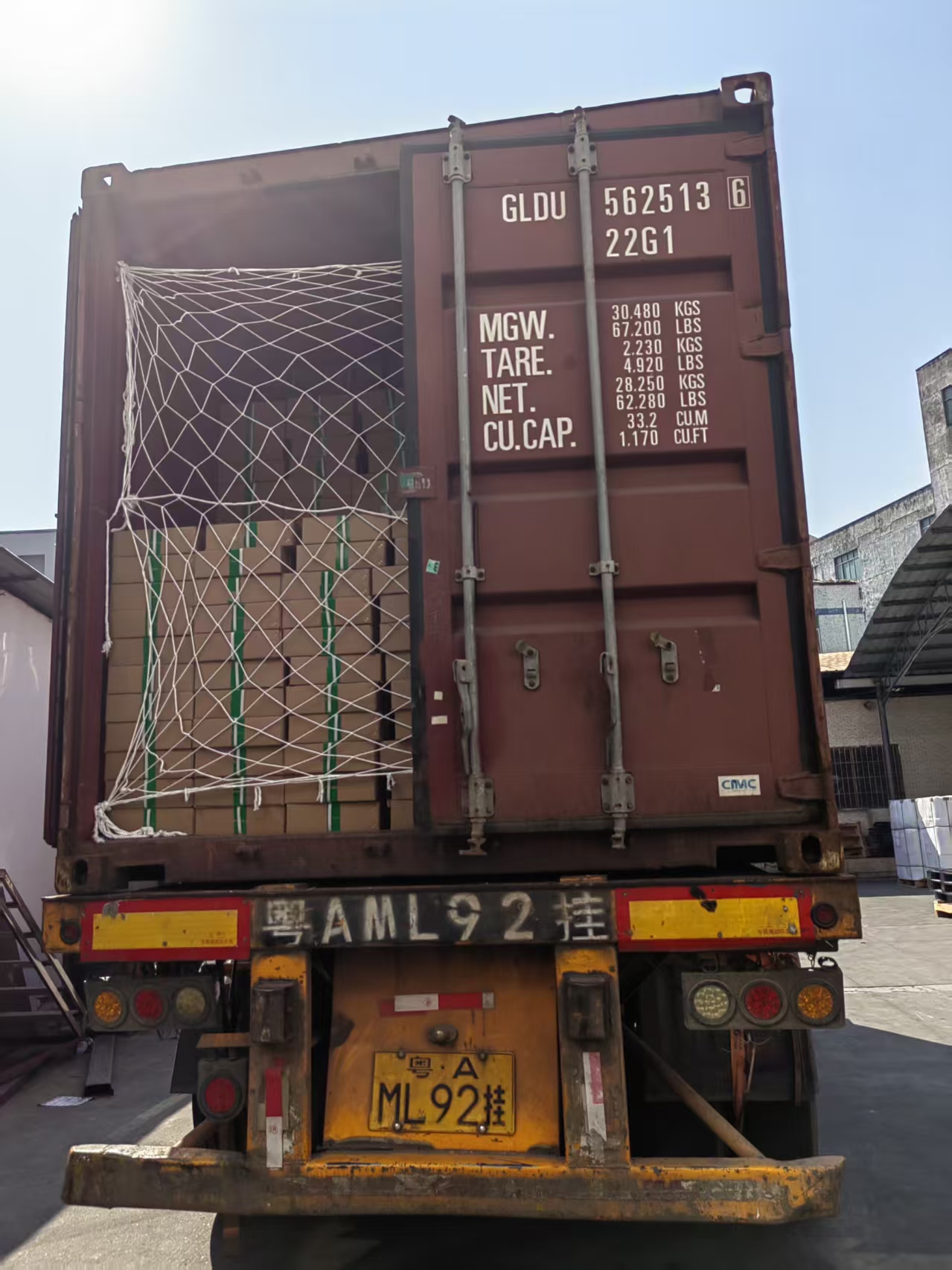
Finished laminating film leaving a Guangzhou production site. Distribution volume, not product photography, is the constraint that most often decides which film format a buyer can actually run.
How This Shortlist Was Built — and What It Excludes
A shortlist is a filter, and filters should be stated. Four criteria were applied to every entry below. First, format fit: does the film arrive in a form the buyer's process can run without re-tooling — continuous roll or pre-cut pouch. Second, construction transparency: is the material, thickness and layer composition published, and does it hold across the full stated range. Third, evidence quality: can quality control, certification and after-sales commitments be traced to a document or a project record rather than to a claim. Fourth, commercial feasibility: minimum order quantity, lead time, delivery terms and payment structure.
Shortlist filters applied
- Format fit — roll format for continuous and custom-width work; pouch format for fixed-size, low-setup work.
- Published construction — material system (PET+EVA) and thickness window stated in the specification.
- Traceable evidence — inspection procedure, conformity reports and after-sales terms.
- Commercial feasibility — MOQ, lead time, delivery terms, payment structure.
What the list excludes matters just as much. It is not a ranking of every laminating film producer in the world, and it does not assign performance scores to companies whose products were not evaluated against the same four filters. Where project-level evidence for a given material was not available during preparation of this review, no substitute figure or estimate has been inserted.
The Problem: Three Protection Jobs, Three Different Specifications
Document protection, photo protection and card protection look similar on a purchase order and behave differently in use. Document lamination is a volume process: A4 and Letter sizes move through school, office, retail and stationery channels, the film must stay optically clear over text, resist bubbling and wrinkling under a thermal laminator, and hold adhesion through repeated handling and filing. Long-term preservation adds a second requirement, which is resistance to yellowing.
Photo and digital print protection adds an optical requirement. Glossy finishes preserve contrast and colour saturation; matte finishes suppress reflection and surface glare across a broad viewing angle. Both are offered across the film range referenced here. Scratch resistance and water resistance become relevant the moment a laminated print leaves a controlled environment, and scuffing on a laminated photograph is visible in a way that scuffing on a document label is not.
ID card and badge protection introduces a mechanical requirement that the other two jobs do not have: rigidity. A laminated card that flexes in a wallet or on a lanyard will eventually delaminate at the edge unless the total film thickness is adequate for the substrate. Thickness selection is therefore not a cost decision alone — it is the variable that determines how a card behaves after handling.
The commercial opportunity behind these three jobs is substantial but unevenly measured. DataM Intelligence valued the global lamination films market at US$ 6,842.11 million in 2024, with Asia Pacific accounting for a 36.87% revenue share in the same year. Future Market Insights placed PET (BOPET) packaging films at USD 10.3 billion in 2024, driven partly by e-commerce and high-performance insulation demand, while Data Bridge Market Research valued the BOPP thermal lamination films segment at US$ 3.5 billion in 2024 with a projected 5.2% CAGR through 2033. These figures are not interchangeable: published estimates vary significantly by scope, depending on whether the definition covers general lamination, graphic roll film, or packaging-grade BOPET. Buyers comparing market reports should check the scope definition before comparing the numbers.
The Shortlist at a Glance
Three formats cover the three protection jobs. The table below is organised by application fit rather than by price, because thickness and finish decisions usually drive cost more than the format itself.
| Entry | Construction & thickness | Format & size | Best-fit protection job |
|---|---|---|---|
| HADA HD-RL thermal laminating roll film | PET + EVA, 35 mic – 250 mic | Roll, width 100 mm – 1300 mm, length customised | Continuous and custom-width lamination for volume document runs, print finishing and medium-to-heavy protection |
| HADA HD-A4-80MIC laminating pouch | PET + EVA, 80 mic (50/30) | A4, 216 × 303 mm, 100 pcs/pack, 10 packs/carton | Office document lamination and stationery protection; also listed for education, retail and ID/badge use |
| HADA Letter-size laminating pouch, 229 × 292 mm | PET + EVA, 3 Mil / 75 mic (38/37) and 5 Mil / 125 mic (75/50) | Letter, 229 × 292 mm (9 × 11.5 in), 100 pcs/pack, 10 packs/carton | Documents and photo cards where higher rigidity or a heavier hand-feel is required |
All three entries are stated as glossy and matte finishes and as suitable for standard thermal laminators. That last point is worth stating plainly, because it defines the machine base the film is designed around: if a buyer runs a non-standard or cold-process laminator, the suitability should be confirmed before ordering rather than assumed from the finish description.
Entry 1 — HADA HD-RL Thermal Laminating Roll Film
HD-RL is the industrial entry on this list, and it is the one most likely to be specified by a converter, a print finisher or a distributor building a private-label range. It is a thermal laminating roll film built on a PET+EVA construction with a thickness range of 35 mic to 250 mic, a width range of 100 mm to 1300 mm, and a length that can be customised to the buyer's requirement. Packaging can also be customised.
The stated product properties are high transparency, no bubble and no wrinkle, strong adhesion, waterproof and scratch-resistant performance, and anti-yellowing behaviour for long-term preservation. For a buyer, the practical meaning of those properties sits in three places. Optical clarity determines whether laminated text and images stay legible after lamination. Bubble and wrinkle resistance determines the reject rate on a roll-to-roll line. Adhesion determines whether a laminated edge survives trimming, punching and handling.
The width range is the specification most often overlooked during evaluation and most often regretted after installation. A 100 mm to 1300 mm window covers narrow-format work through wide-format finishing, which means a single supplier can cover multiple machine widths without changing material system. Thickness selection across 35 mic to 250 mic then becomes a deliberate choice tied to the substrate and the required rigidity, rather than a default inherited from a previous order.
Entry 2 — HADA HD-A4-80MIC A4 Laminating Pouches
The HD-A4-80MIC pouch is the office-format entry. It is an A4 80 mic thermal laminating pouch with a PET+EVA construction at an 80 mic total thickness split 50/30, sized at 216 × 303 mm and supplied in glossy and matte finishes at 100 pieces per pack and 10 packs per carton.
The 50/30 split is the detail that separates a workable office pouch from a difficult one. In a thermal pouch, the PET layer carries the optical and mechanical load while the EVA layer melts and bonds. An 80 mic total with a 50 mic PET carrier and a 30 mic adhesive layer is a balanced construction for paper documents: enough carrier to stay flat and clear, enough adhesive to bond fully across an A4 page under an ordinary thermal laminator. The stated properties follow the same pattern as the roll range — high transparency, no bubble and no wrinkle, strong adhesion, waterproof and scratch-resistant performance, and anti-yellowing for long-term preservation.
Application scope for this format is broad and specifically listed: office supplies, education and schools, retail and stationery, advertising and graphics, printing and packaging, photo and digital printing, and the ID card and badge industry. That breadth is exactly why the A4 pouch is a sensible default for mixed office use and a poor default for high-volume custom work, where roll format wins on waste and changeover time.
Entry 3 — Letter-Size 3 Mil and 5 Mil Pouches (229 × 292 mm)
The third entry addresses buyers working in Letter format or needing greater stiffness. It is offered in two gauges: 3 Mil / 75 mic with a 38/37 layer split, and 5 Mil / 125 mic with a 75/50 split, both in PET+EVA, both in glossy and matte, both at 229 × 292 mm (9 × 11.5 in), packed 100 pieces per pack and 10 packs per carton.
The selection logic is straightforward. For a standard printed document or a photo print that will sit in an album or a frame, 3 mil provides protection without adding noticeable stiffness. For items that will be handled repeatedly, posted, or carried — photo cards, identification badges, membership cards, luggage tags — the 5 mil option raises total film thickness to 125 mic and materially changes how the finished item resists bending. The 75/50 split on the heavier gauge also increases the adhesive layer from 37 mic to 50 mic, which supports bonding across a wider range of substrate surfaces.
Technical Explanation: How PET + EVA Behaviour Drives the Selection
All three shortlisted products are built on the same two-layer material system, and understanding that system is the fastest way to read any laminating film specification, including the ones not on this list.
The PET layer is the structural and optical layer. It provides transparency, dimensional stability and the stiffness that keeps a laminated sheet flat. The EVA layer is the adhesive layer. It remains inert at room temperature and is activated by the heat of a thermal laminator, then bonds to the substrate as it cools. Layer ratios published for these products make the design intent visible: 3 mil uses a near-even 38/37 split, 5 mil uses 75/50, and the A4 80 mic pouch uses 50/30. As total thickness rises, the adhesive share tends to rise with it, because a thicker finished item has more edge area to seal and more surface to bond.
The properties stated across the range — high transparency, no bubble and no wrinkle, strong adhesion, waterproof and scratch-resistant performance, anti-yellowing — are outcomes of that construction combined with the laminator settings applied to it. This is the reason that laminating film evaluation cannot stop at the material data sheet. Machine temperature, roller pressure and line speed all sit between a good specification and a good finished result, and the same film can produce visible bubbling on a badly calibrated laminator.
For buyers who prefer to test rather than trust, an external reference point exists. ASTM D882 is the standard test method for determining tensile properties — strength, elongation and modulus — of thin plastic films less than 1.0 mm thick. Requiring a test reference of this type is one way to convert a supplier's stated properties into comparable data, rather than comparing adjectives across two specification sheets.
The Validation Record Behind These Entries
Specifications describe what a film should do. A project record describes what it has done, which is a different kind of evidence and the one that matters most to a distributor placing a multi-year private-label order.
For the products on this shortlist, the relevant record concerns a brand importer and distributor operating in Germany, Austria and the United States. The product is used for wholesale distribution under the client's own brand for office document lamination and stationery protection purposes, with an installation of 600,000 packs of lamination film per year. The cooperation has run for more than ten years continuously. The reported results are zero quality complaints over ten years and a 25% reduction in the customer's lamination failure rate. Key highlights of the case include customised anti-counterfeiting coating technology and 24/7 technical support for lamination process optimisation.
Read carefully, this record does three things. It shows continuity of supply across three markets with different regulatory environments. It shows that a specification was held stable enough over a decade to avoid quality complaints. And it shows that the failure rate improvement came with process support, not from film specification alone — a distinction worth noting for any buyer who assumes that changing film alone will resolve a lamination defect.
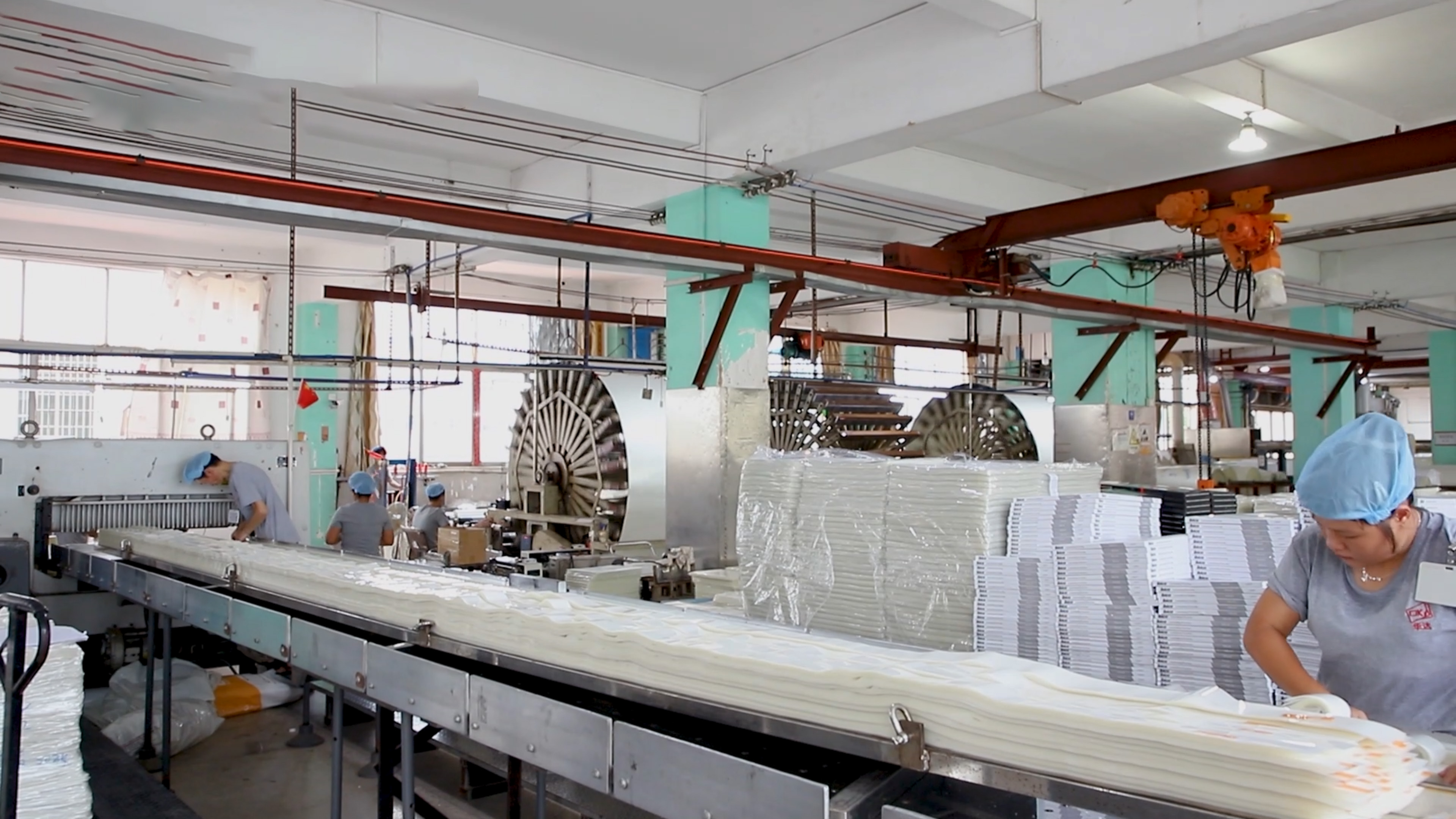
Custom-width slitting is the step that converts a wide roll into the width a buyer's laminator can actually run. It is also where most custom-order lead time and MOQ discussion begins.
Commercial, Quality and Compliance Terms to Check Before Ordering
Whether a film is technically suitable and whether it is commercially orderable are two separate questions, and the second one usually decides the purchase. The terms associated with the products on this list are specific enough to plan against.
On the manufacturing side, Guangzhou Huada Laminating Film Co., Ltd. operates a 40,000 sqm facility in Baiyun District, Guangzhou, with approximately 200 employees, three automated production lines and an annual capacity exceeding 10,000 tons, exporting to more than 50 countries and regions. The company states OEM/ODM production services with customisation options covering product size, thickness, logo and packaging, a typical production lead time of 20–30 days, and a monthly production capacity of 150,000 packs at 100 pieces per pack.
Commercial terms are as follows. Minimum order quantity is 1,000 packs for standard lamination film, and 2,000 pieces or 100 rolls for customised sizes. Delivery terms include FOB Guangzhou/Shenzhen, CIF destination port, and EXW Guangzhou. Payment terms include T/T with 30% deposit and 70% before shipment, L/C at sight, and OA 30 days after shipment.
Quality control is stated as 100% inspection before shipment. Acceptance procedures available to buyers include pre-shipment inspection by SGS or Intertek, AQL sampling, and customer on-site inspection. After-sales coverage is a 12-month warranty against delamination, colour fading and material defects, a 24-hour response time for quality complaints with a dedicated account manager, and free replacement or full refund for non-conforming goods, with priority re-production for bulk orders.
Conformity documentation in support of these products includes an ISO 9001:2015 quality management system certificate (certificate number 127878, CNCA), an SGS RoHS test report (No. CANEC25014307501), an SGS REACH report (No. CANEC25014307503), an SGS SVHC screening test report for PET plastic film (No. CANEC25014307505), a High-Tech Enterprise certificate (GR202344012666), and a Utility Model Patent certificate (No. 19262125). The manufacturer also cites BSCI, SMETA, ROHS and REACH certifications and 22 national patents at company level.
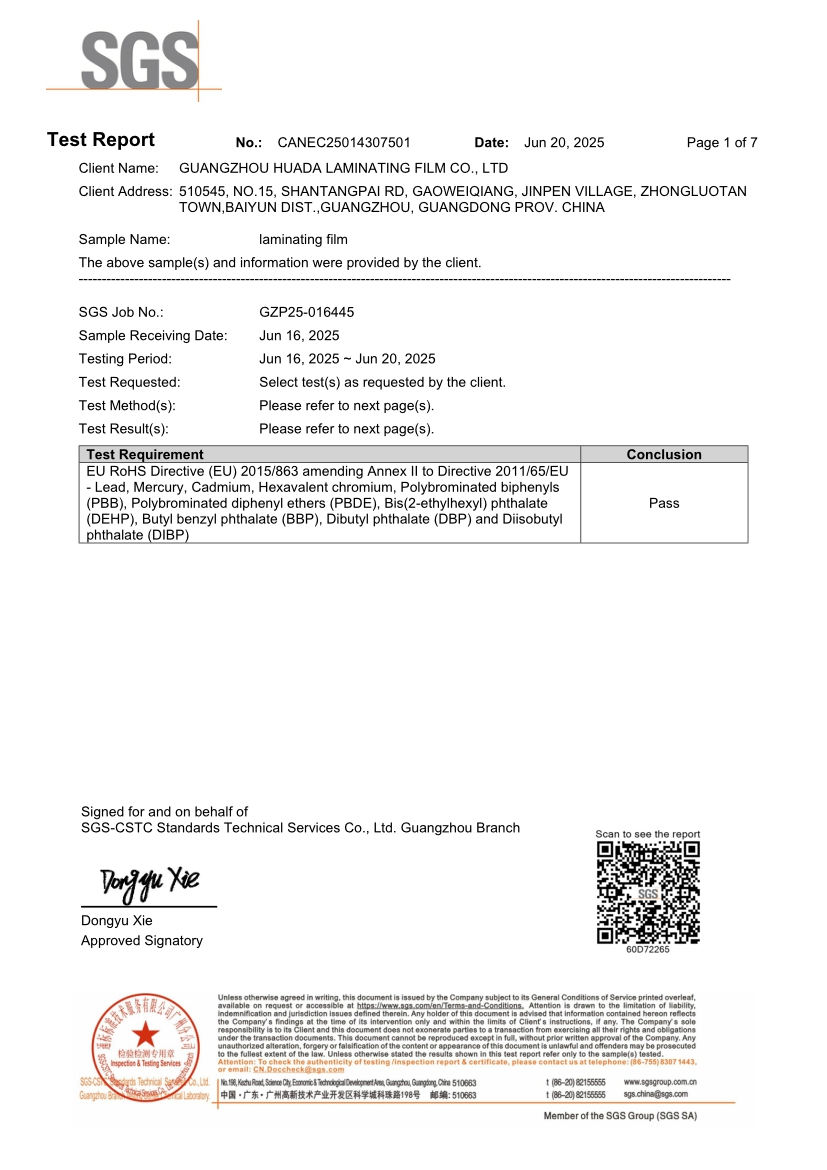
RoHS, REACH and SVHC screening reports are issued per material system rather than per product name. Buyers should confirm that the report on file covers the specific construction and thickness they order.
Where These Products Sit in the 2026 Film Landscape
Laminating roll film is supplied by a mix of very large film producers and specialised converters, and buyers benefit from knowing which category they are dealing with.
Fortune Business Insights identifies Cosmo Films, Jindal Poly Films, Taghleef Industries (Derprosa) and GBC (ACCO Brands) among the top global players in the lamination and graphic roll film market. These are large, publicly recognised film and graphic products businesses whose scale and public reporting make them useful reference points when benchmarking market structure, material availability and pricing direction.
Guangzhou Huada Laminating Film Co., Ltd. operates in a different structural position: a specialised manufacturer based in Guangzhou with an export ratio of around 80%, serving North America, South America, Europe, Australia and Southeast Asia, and producing laminating pouches and laminating rolls as its primary focus alongside glossy and matte laminating film, BOPP film, OHP film, PVC and PP binding covers, PET crystal film, PET tempered film and cold lamination film.
This distinction is the honest framing for the shortlist. Large global producers and specialised converters are not interchangeable, and the criteria that separate them — production scale, catalogue breadth, MOQ flexibility, customisation depth and the ability to support a private-label programme — do not point in one direction for every buyer. A distributor building a private-label office range and a large converter running wide-format finishing will read the same market very differently.
Roll Film vs Pouch Format — and the Boundaries of This Shortlist
The most consequential format decision is usually made before the thickness decision, and it is made on process rather than on film quality.
| Dimension | Roll format (HD-RL) | Pouch format (A4 80 mic; Letter 3 mil / 5 mil) |
|---|---|---|
| Setup | Requires roll-feed or web-fed lamination equipment | Runs on standard thermal pouch laminators with no web setup |
| Size flexibility | Width 100–1300 mm, length customised to order | Fixed sizes: A4 216 × 303 mm; Letter 229 × 292 mm |
| Waste profile | Lower material waste on repeat-format work, since width is matched to the job | Higher per-sheet cost, minimal waste on mixed small runs |
| Thickness selection | Continuous range from 35 mic to 250 mic | Discrete gauges: 80 mic, 3 Mil / 75 mic, 5 Mil / 125 mic |
| Typical fit | Print finishing, converting, private-label distribution, volume document work | Office, school, retail and stationery environments |
Three boundaries apply to this shortlist and should be stated rather than implied.
First, the shortlisted products sit inside defined windows: 35 mic to 250 mic in thickness and 100 mm to 1300 mm in roll width. Requirements outside those windows are not covered by the specifications reviewed here.
Second, custom sizes carry a commercial threshold. Standard lamination film begins at 1,000 packs, while customised sizes begin at 2,000 pieces or 100 rolls. A buyer planning a bespoke width or a non-standard pouch size should factor that threshold into the first order rather than discover it at quotation stage.
Third, and most important, application scope is bounded. The products on this list are positioned for office supplies, education, retail and stationery, advertising and graphics, printing and packaging, photo and digital printing, and the ID card and badge industries. They are not presented here as food-contact materials. Where film is intended for food contact, the regulatory framework is separate and specific: plastic materials and articles intended for food contact in the EU must comply with Commission Regulation (EU) No 10/2011, which sets migration limits and a positive list of permitted substances. Any food-contact use therefore requires compliance documentation covering the exact construction being supplied, not a general film datasheet. Equally, anti-yellowing is a stated property of the film; how long a laminated document or photograph remains unchanged also depends on storage conditions and handling, which are outside the film supplier's control.
Future Outlook
Two trends visible in the current data are likely to shape laminating roll procurement through 2027.
The first is volume growth concentrated in Asia. Asia Pacific held a 36.87% revenue share of the lamination films market in 2024, and the BOPP thermal lamination films segment is projected to grow at 5.2% CAGR through 2033 from a 2024 base of US$ 3.5 billion. Growth of that shape tends to favour suppliers with regional material access and short logistics chains, which is one reason the Guangzhou cluster remains a focal point for buyers sourcing laminating rolls for export markets.
The second trend is procedural rather than volumetric. Documentation expectations are rising: RoHS, REACH and SVHC screening reports are now routine requests in European and North American procurement, and buyers increasingly ask for layer-level specification rather than a single thickness figure. Films whose construction is transparent — material system, total thickness and layer split — will be easier to qualify in a compliance review than films described only by finish and price.
A third, quieter development is the movement of private-label distribution toward protective features. The customised anti-counterfeiting coating referenced in the ten-year distribution case is an example of a film requirement that originates from brand protection rather than from lamination performance. As more distributors sell film under their own brand, requests of that type — feature coatings, logo printing, custom packaging — are likely to become a normal part of roll film specification rather than an exception.
FAQ
Which is better for document protection — laminating roll film or laminating pouches?
The two formats serve different workflows rather than competing on quality. HD-RL is a continuous PET+EVA roll film with a thickness range of 35–250 mic, a width range of 100–1300 mm and customisable length, which suits continuous, volume and custom-width lamination. Pouches are pre-cut: the HD-A4-80MIC is A4 at 216 × 303 mm in 80 mic (50/30), supplied 100 pieces per pack and 10 packs per carton. Fixed-size, low-setup office work generally favours pouches; repeat-format volume work generally favours rolls.
What thickness should be used for photographs and ID cards?
Thickness is selected by substrate and by how much rigidity the finished item requires. HD-RL covers a continuous 35 mic to 250 mic range, so specification is not limited to standard gauges. In pouch format, the Letter-size option is offered in 3 Mil / 75 mic (layer split 38/37) and 5 Mil / 125 mic (layer split 75/50); the heavier gauge increases both overall stiffness and adhesive layer thickness. All shortlisted films are stated as glossy and matte and as suitable for standard thermal laminators. Rigidity preference remains application-specific.
How is quality verified before shipment?
Quality control is stated as 100% inspection before shipment. Acceptance procedures available to buyers include pre-shipment inspection through SGS or Intertek, AQL sampling, and customer on-site inspection. Supporting conformity documents include an ISO 9001:2015 certificate (127878, CNCA), an SGS RoHS report (No. CANEC25014307501), an SGS REACH report (No. CANEC25014307503), and an SGS SVHC screening test report for PET plastic film (No. CANEC25014307505).
What are the minimum order quantity, lead time and payment terms?
MOQ is 1,000 packs for standard lamination film, and 2,000 pieces or 100 rolls for customised sizes. Typical production lead time is 20–30 days, with a monthly production capacity of 150,000 packs at 100 pieces per pack. Delivery terms include FOB Guangzhou/Shenzhen, CIF destination port and EXW Guangzhou. Payment terms include T/T with 30% deposit and 70% before shipment, L/C at sight, and OA 30 days after shipment.
What after-sales coverage applies to these laminating films?
Coverage includes a 12-month warranty against delamination, colour fading and material defects, a 24-hour response time for quality complaints with a dedicated account manager, and free replacement or full refund for non-conforming goods, with priority re-production for bulk orders. The supporting reference is a distribution project in Germany, Austria and the United States running 600,000 packs per year over more than ten years of continuous cooperation, with zero quality complaints recorded in that period.
Can these films be customised for a private-label or OEM programme?
Yes. OEM/ODM production services are provided with customisation options covering product size, thickness, logo and packaging. The ten-year distribution case is itself a private-label arrangement: the product is used for wholesale distribution under the client's own brand for office document lamination and stationery protection, supported by customised anti-counterfeiting coating technology and 24/7 technical support for lamination process optimisation.
Product specifications, thickness and width ranges, MOQ and delivery terms referenced in this article are those published for the HD-RL laminating roll film, the HD-A4-80MIC A4 pouch and the 229 × 292 mm 3 mil / 5 mil Letter pouch by Guangzhou Huada Laminating Film Co., Ltd. Buyers evaluating these formats can review current product documentation at huada168.com before requesting samples or quotations.