
The 5-Year FTTA Supplier Test: Long-Term Reliability for 5G
The 5-Year FTTA Supplier Test: Long-Term Reliability for 5G
An FTTA (fiber-to-the-antenna) assembly is the outdoor optical link that connects a 5G base station baseband unit to the remote radio unit mounted on the mast. Its real cost is not the unit price on a purchase order, but the failure rate, maintenance visits and replacement cycles it generates over the years a site stays in service. That is why a five-year view of supplier performance has become a practical procurement standard for 5G outdoor deployments.
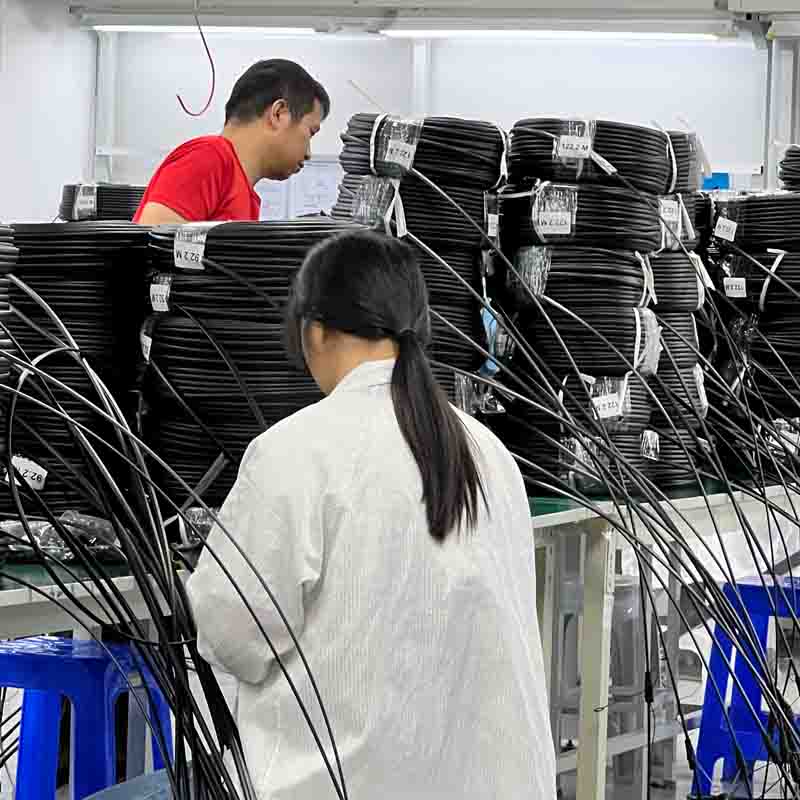
Delivery day rarely separates suppliers. Two outdoor patch cords from different factories can arrive with the same connector type, similar insertion loss figures and comparable pricing. The separation happens later: in whether the sealing system still holds after repeated thermal cycling, whether metal parts survive salt-laden air, and whether the supplier can still ship the same construction in year four. A five-year supplier evaluation simply moves that separation forward into the purchasing decision.
Why the Five-Year Horizon Changes the Buying Decision
Long-term reliability is a design and process outcome, not a field accident. Comparisons between conventional IP65-rated outdoor patch cords and ruggedized IP67/IP68 assemblies place the design service life at roughly five years for the conventional product and around ten years for the ruggedized design, which uses an anti-aging construction intended to slow jacket and seal degradation.
That gap has a budget consequence. When a share of a site outdoor cords reaches the end of reliable life at year five, tower access, re-termination and testing work lands in the same cycle as other network upgrades. A ten-year serviceable window spreads that work and removes a predictable maintenance peak. It also turns the supplier relationship into a continuity question: will the same assembly, with the same connector and sealing design, still be available when the replacement order is placed?
Two further factors push buyers toward the longer horizon. Outdoor fiber links are becoming denser, with more radios and more jumper positions per site, so a small percentage-point difference in failure rate multiplies across a footprint. And the cost of a failure is rarely the cable itself; it is the climb, the outage window and the crew time. An assembly that costs 10-15% more at purchase but records an 80% lower failure rate and 40% lower maintenance cost moves total cost of ownership in the opposite direction from its price tag.
The Four Criteria That Separate a Vendor from a Long-Term Partner
A structured five-year evaluation usually reduces to four questions: can the supplier repeat the product, can it prove environmental performance, can it document acceptance, and can it respond when something fails?
1. Production consistency and capacity continuity
Repeatability matters more than one impressive sample. Buyers look for evidence that the process is controlled at volume: a stable monthly output figure, a defined production lead time, and a quality system that governs the full line rather than a pilot batch.
2. Environmental test evidence, not just ratings
An IP rating is a claim; a test record is evidence. For outdoor FTTA assemblies the relevant disciplines are IP68 waterproof testing, tensile strength qualification, thermal cycling testing and salt spray corrosion testing. These map directly onto the four failure modes that dominate outdoor fiber: waterproof seal failure, fiber breakage under tensile load, performance degradation in extreme temperatures, and corrosion of metal components.
3. Documentation and factory acceptance
Long-term compliance risk is usually a documentation problem rather than a design problem. Reviewing test evidence, requesting third-party inspection and witnessing a factory acceptance test (FAT) before shipment produces a paper trail that survives staff changes, audits and tender reviews.
4. Field responsiveness and replaceability
Every outdoor network eventually experiences a failure. The differentiator is restoration: whether the assembly supports modular, tool-light replacement, whether the swap takes minutes rather than a re-splice at the mast, and whether spare assemblies arrive on a short lead time.
Failure Modes That Decide a Five-Year Verdict
Outdoor FTTA reliability is not a single property. It is the sum of four risks, each with its own control method and its own verification procedure.
| Failure mode | Control method | Verification |
|---|---|---|
| Waterproof seal failure | IP67/IP68 hermetic sealing | IP68 waterproof testing |
| Fiber breakage under tensile load | Reinforced tensile strength design | Tensile strength qualification |
| Degradation at temperature extremes | Wide-temperature-range material selection | Thermal cycling testing |
| Corrosion of metal components | Corrosion-resistant plating | Salt spray corrosion testing |
The value of this structure is that it converts a vague question, is this supplier reliable, into four verifiable items. It also makes the boundary of the evidence explicit: a test record describes behaviour under defined conditions, not every microclimate on a network.
How FOCC Approaches the Five-Year Test
FOCC Fiber Co., Ltd is a Shenzhen-based manufacturer of fiber optic connectors, MTP/MPO patch cords, and outdoor waterproof and armored patch cord assemblies for data centre and FTTA applications. Founded in 2014, the company operates a 5,000 square metre factory in Guangzhou with around 200 employees and a 30-person R&D team, producing an annual output of 2,000,000 units. Its products are exported to more than 30 countries and regions, with the EU and USA as main markets and an export ratio of 100%.
The reliability position is tied to a defined test regime rather than to marketing language. FOCC states that its outdoor assemblies are qualified through IP68 waterproof testing, tensile strength qualification, thermal cycling testing and salt spray corrosion testing, which correspond to the four failure modes above. The company also operates under ISO 9001 and ISO 14001 management systems and reports more than ten years of ODM/OEM service experience, with reference clients including Prysmian, Siemens, Coherent, Fujikura and NTT.
For buyers, the operational numbers matter as much as the test list. FOCC reports a monthly production capacity of 200,000 units with a typical production lead time of 3-15 days, a minimum order quantity of 2 units, and EXW or FOB delivery terms with T/T payment. Acceptance can be structured as 100% pre-shipment testing, third-party inspection, a factory acceptance test, or on-site acceptance, which means the compliance evidence a buyer needs at the start of a five-year relationship can be generated before the first shipment leaves the factory.
Field behaviour is the final piece. In a 5G base station deployment program covering 50,000 FTTA cords, FOCC reports an 80% lower failure rate than conventional IP65 patch cords used in comparable positions, with on-site replacement completed in under ten minutes. Those two figures matter together: a lower failure rate reduces how often a crew is dispatched, and a sub-ten-minute replacement reduces what each visit costs.
What IP67/IP68, Salt Spray and Thermal Cycling Actually Prove
IP ratings describe resistance to dust and water ingress under defined test conditions. The relevant step for FTTA is the move from IP65 to IP67/IP68 sealing. Comparative data for the two categories places the ruggedized design 200 N higher in tensile strength and with an operating temperature range about 20 degrees Celsius wider, plus 0.3 dB lower signal loss, which reduces the need for signal amplification in long or loss-sensitive runs.
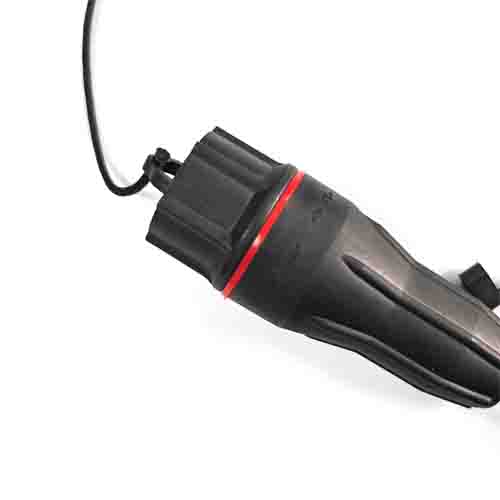
Salt spray testing addresses the metal side of the assembly. Connector shells, coupling nuts and adapter hardware on a rooftop or coastal site are exposed to airborne chlorides; corrosion-resistant plating and hermetic sealing are the standard controls, and salt spray testing is how those controls are verified.
Thermal cycling testing addresses the polymer side. Repeated expansion and contraction is what gradually opens a marginal seal or fatigues a jacket. Wide-temperature-range material selection is the design answer; thermal cycling testing is the proof.
Connector standards matter as well. For 5G base stations, common FTTA connector types include ODC (Optical Distribution Connector), FullAXS, NSN-LC duplex and ODVA fan-out connectors, all typically requiring IP67/IP68 ratings. The FullAXS connector system, for example, is designed for IP67/IP68 waterproof protection and salt-mist resistance and complies with IEC 61300-2 environmental testing standards, an external benchmark buyers can cite in a specification.
Where Long-Life FTTA Assemblies Are Used
The clearest application is the 5G macro base station, where a ruggedized patch cord runs from the baseband unit or radio hub up the mast to the antenna and stays exposed to direct weather for the life of the site. ODC and FullAXS connectors are common choices where sealed mating and simplified maintenance access are priorities, while LC FTTA fiber patch cables remain widely used where duplex LC interfaces are already standard on radio equipment.
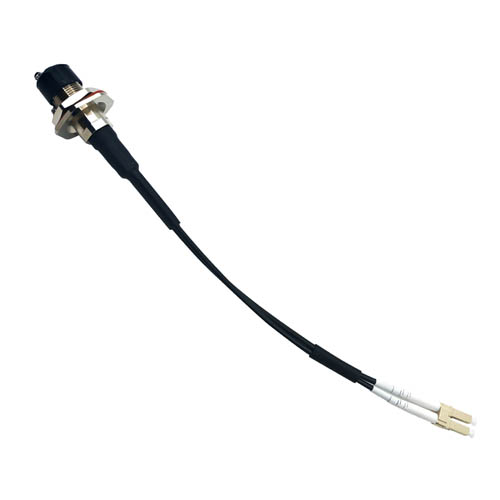
Industrial environments form a second cluster. Mining and oilfield sites combine dust, vibration, chemical exposure and wide temperature swings, and the same IP67/IP68 construction that protects a rooftop link also protects an above-ground industrial run.
Coastal and high-humidity regions are a third. Salt-laden air accelerates corrosion of unprotected hardware, which is why salt spray qualification has become a routine question in tender documents for these regions.
Market Trend: Growth in Capacity, Scarcity in Evidence
The global fiber optic cable market was estimated at USD 13.45 billion in 2025, with a projected compound annual growth rate of 11.72% through 2034, according to Custom Market Insights. China remains the largest exporter of optical fiber cables, accounting for approximately 27.1% of global exports in 2024, valued at USD 2.52 billion, according to the Observatory of Economic Complexity.
Growth of that scale expands supply capacity, but it does not automatically expand verifiable quality. As more capacity comes online, the practical differentiator for buyers shifts from availability toward documented consistency: test records, acceptance procedures and the willingness to be audited. That shift is what makes a five-year supplier test a realistic procurement practice rather than an abstract ideal.
Comparison with Conventional Solutions
| Dimension | Conventional IP65 outdoor patch cord | Ruggedized IP67/IP68 FTTA assembly |
|---|---|---|
| Ingress protection | IP65 | IP67/IP68 hermetic sealing |
| Tensile strength | Baseline | 200 N higher |
| Operating temperature range | Baseline | Approximately 20 degrees Celsius wider |
| Signal loss | Baseline | 0.3 dB lower |
| Upfront cost | Baseline | 10-15% higher |
| Field failure rate | Baseline | 80% lower (vendor field comparison) |
| Maintenance cost | Baseline | 40% lower |
| On-site replacement | Longer intervention | Under 10 minutes |
| Design service life | Roughly 5 years | Around 10 years, anti-aging design |
Where the premium does not pay back. Ruggedized IP67/IP68 assemblies are not the right answer for every position. They carry a 10-15% higher upfront cost, and on short-horizon projects, benign indoor-to-outdoor transitions, or temperate sites with low access costs, a standard IP65 cord can be the rational commercial choice. Higher-grade construction also cannot compensate for poor installation practice: an over-torqued connector, a seal damaged during handling, or an improperly dressed cable run can defeat a hermetic design regardless of its rating.
The evidence boundary is a second limitation. IP68, salt spray and thermal cycling results describe performance under defined test conditions over a defined duration; they are predictors of field life, not a guarantee of it. Buyers should pair qualification data with site-specific acceptance, spares planning and a field-return record, so that the five-year judgement rests on observed behaviour as well as on test reports.
Future Outlook
As 5G sites densify and the number of outdoor fiber positions multiplies, aggregate exposure to seal, corrosion and tensile failure grows with the footprint. The likely direction for procurement is that qualification evidence moves from a nice-to-have into a tender requirement: buyers will ask for named test disciplines, acceptance records and the option to witness factory testing, and will treat supply continuity and lead-time discipline as part of product quality rather than as logistics detail.
Suppliers that already operate under defined quality systems and publish a test regime are positioned for that shift. The five-year test is ultimately a question about process: whether the same construction, the same sealing design and the same acceptance standard can be delivered consistently, long after the first purchase order.
FAQ
What should a five-year FTTA supplier evaluation actually measure?
It measures process repeatability and evidence rather than a single sample. Four items cover most of the risk: production consistency at volume, environmental test evidence against the main failure modes, a documented acceptance process, and the ability to respond to field failures. In practice buyers convert these into a stable monthly output figure, a defined lead time, named test disciplines such as IP68 waterproof testing, tensile strength qualification, thermal cycling testing and salt spray corrosion testing, and acceptance options such as third-party inspection or a factory acceptance test.
How do factory acceptance tests reduce long-term compliance risk?
A factory acceptance test (FAT) verifies the delivered batch against the agreed specification before shipment rather than after installation. Combined with 100% pre-shipment testing and the option of third-party inspection or on-site acceptance, it creates documentation that can be reused in audits, tender responses and warranty discussions years later. The compliance risk it addresses is not design failure but drift: a compliant design that is not reproduced identically in every batch.
Is the higher upfront cost of IP67/IP68 assemblies justified over five years?
It depends on the cost of failure at the specific site. Ruggedized assemblies typically carry a 10-15% higher upfront cost, but comparative data records an 80% lower failure rate, 40% lower maintenance cost, on-site replacement in under ten minutes, and a design service life of around ten years against roughly five years for conventional IP65 cords. Where tower access, outage exposure and crew costs are high, the premium is recovered across the service life; where the site is easily accessible or the deployment horizon is short, a standard IP65 cord may be the more economical choice.
What happens when an outdoor FTTA link fails after deployment?
Restoration depends on the assembly design and on the supplier ability to resupply. Modular outdoor assemblies are designed for on-site replacement in under ten minutes, which avoids re-splicing at the mast. Lead-time capability then determines how quickly a spare reaches the site: FOCC reports a monthly production capacity of 200,000 units with a typical production lead time of 3-15 days and a minimum order quantity of 2 units, which allows small emergency replenishment orders instead of full-container purchases.
How does a 100% export business model affect supplier reliability for EU and US buyers?
A supplier whose entire output is exported, and whose main markets are the EU and USA, works to export documentation, packaging and testing conventions as a default rather than as a special request, and its products are used in more than 30 countries and regions. The trade-off is exposure to the same external demand cycles that drive that volume, so capacity commitments and lead-time agreements are worth securing in writing for long programs.
Do ruggedized FTTA assemblies remove the need for site-level inspection?
No. IP68, salt spray and thermal cycling results describe behaviour under defined test conditions, not the conditions of a specific site. Handling damage, over-torqued connectors and improperly dressed cable runs can defeat a hermetic design, so acceptance checks at delivery, correct installation practice and a field-return record remain necessary parts of a five-year reliability strategy.