
The 600mm Baby Coil Advantage for Tube & Pipe Manufacturers
The 600mm Baby Coil Advantage for Tube & Pipe Manufacturers
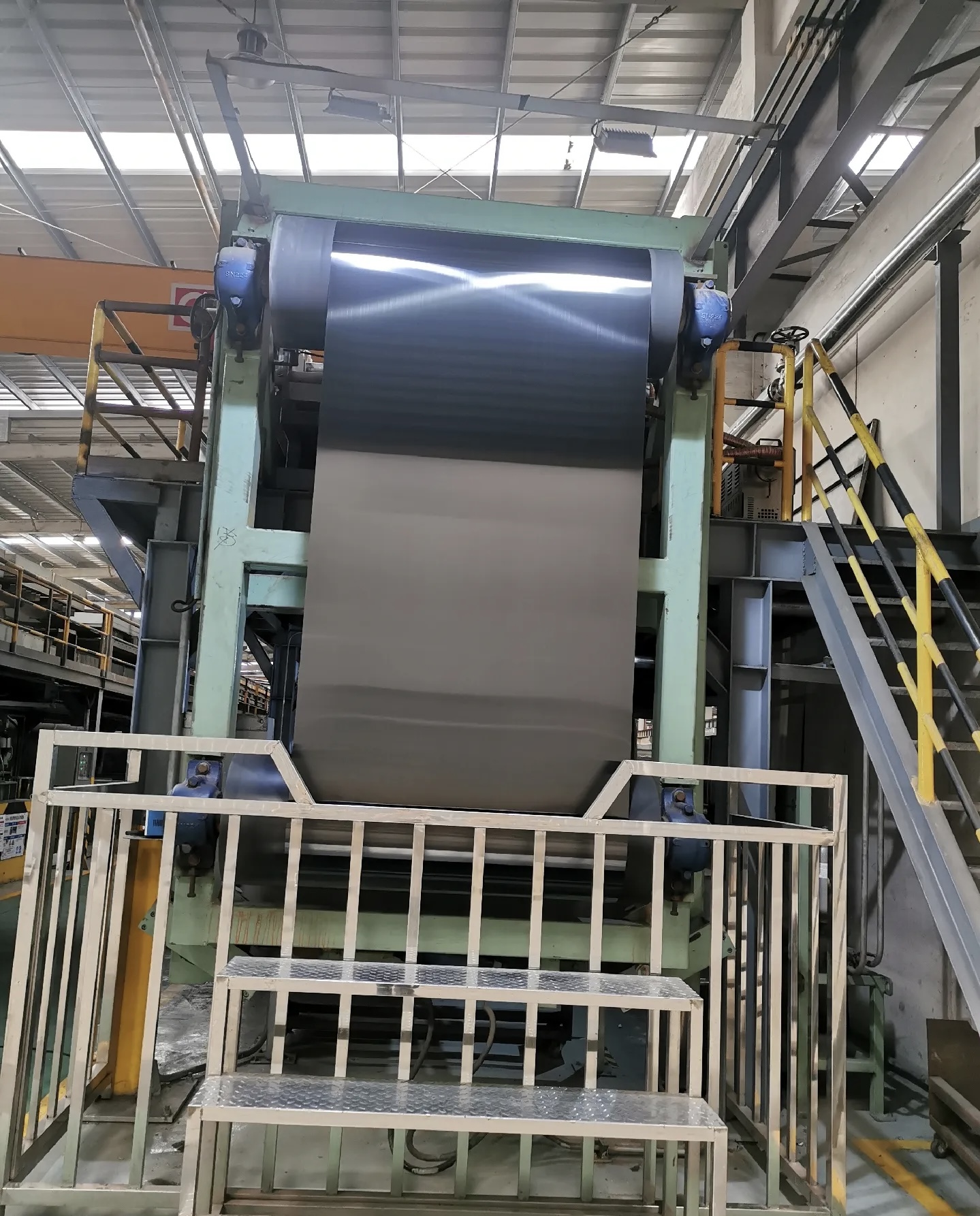
Cold-rolled stainless steel coil production at one of the mills supplying Ningbo Sunfire Stainless Steel Co., Ltd.
For a tube and pipe manufacturer, the most consequential coil decision is usually made before price is even discussed: how wide should the coil be? A 600mm baby coil in grades 304 or 430 gives narrow-strip producers a coil that moves into forming, welding and finishing with minimal conversion, while wider material such as a 1240mm 410 BA coil serves an entirely different set of jobs — elevator panels, construction cladding and other wide-format decorative work. Matching width, grade and finish to the actual production line is what separates a shortlist that performs from one that quietly accumulates scrap, handling cost and rework.
Ningbo Sunfire Stainless Steel Co., Ltd. is a China-based stainless steel supplier founded in 2013, specialising in stainless steel and stainless steel products, with a stated advantage in stainless steel secondary and baby coils. The company exports 100% of its output to markets including Pakistan, India, Vietnam, Russia, Türkiye, Indonesia, the UAE, Thailand, Malaysia and Bangladesh, and reports an annual output of 25,920MT from a cooperative factory covering more than 3 million square meters.
The Width Decision Comes Before the Price Decision
Procurement teams often approach a coil shortlist as a price exercise: compare quotations per tonne, pick the lowest number, negotiate payment terms. In tube, pipe and tableware production that sequence is backwards. Width determines how much of each coil actually becomes saleable product on a given line, and it determines the amount of handling, slitting and remnant management the plant must absorb.
A producer running a narrow tube mill against a wide master coil has to slit first, then deal with edge trim and the scheduling burden of a slitting operation. Every millimetre that leaves the line as trim is cost that cannot be recovered downstream, and every additional handling step is an opportunity for surface damage. Buying closer to the width the line actually forms removes a step from the process and moves the quality question earlier in the chain, where it is cheaper to control.
That is the practical case for the baby coil format. It is not a cost shortcut — it is a conversion-fit decision. The same logic explains why the 600mm format is discussed mainly in the context of tube and pipe forming and tableware blanking, while wide-format decorative work keeps moving toward wider coils that minimise seams on visible surfaces.
The Shortlist at a Glance: Three Coil Profiles for Three Jobs
The shortlist below reflects how coil specifications map to production segments rather than to a single "best" option. Each entry carries a real trade-off that should be weighed against the buyer's own line configuration.
| Coil profile | Width | Grade(s) referenced | Finish position | Best-fit production | Main trade-off |
|---|---|---|---|---|---|
| Baby coil | 600mm | 304, 430 | BA / 2B, including the 70% BA finish specified on the product sheet | Tube and pipe forming, tableware, deep drawing, high-end decoration | Narrow width limits wide-format output and increases the number of coils handled per tonne |
| Wider coil | 1240mm | 410 | BA | Elevator panels, construction decoration, wide flat surfaces | Requires slitting capacity and rewinding if narrow strip is the final input |
| Local low-grade supply | As offered | Mixed | Generally unclassified surface consistency | Cost-driven, non-critical applications | Documented thickness tolerance and surface stability are not comparable to the ±0.02mm specification described for precision-supplied material |
Why 600mm Baby Coils in 304 and 430 Fit Tube, Pipe and Tableware Lines
Grade choice inside the 600mm format follows the end product, not the price list. Type 304 is an austenitic stainless steel widely used where corrosion resistance and formability matter together — welded tube, pipe, deep-drawn tableware and visible decorative components. Type 430 is a ferritic grade built around chromium rather than nickel, and it is commonly selected for tableware, kitchenware and appliance-facing parts where a clean surface and predictable forming behaviour matter more than maximum corrosion resistance.
Both grades are supplied as 600mm baby coils, which is where the format earns its place. Tube and pipe lines typically form strip in the 600mm class, and tableware blanking layouts are usually designed around a similar working width. A coil that already matches that input removes an entire conversion step from the plant's critical path.
Ningbo Sunfire's stated product advantage sits in secondary and baby coils, and the coil range is positioned around both decorative and functional demand: cold-rolled stainless steel, 2B, BA, No.4 and HL surfaces, stainless steel circle and sheet forms, and hot-rolled material for heavier duty. For a buyer in the decision stage, the relevant question is not whether the range is broad, but whether the specific 600mm / 304 or 600mm / 430 combination matches the forming line, the polishing sequence and the corrosion environment of the finished tube or tableware item.
What ±0.02mm Tolerance and Stable Surfaces Change on the Line
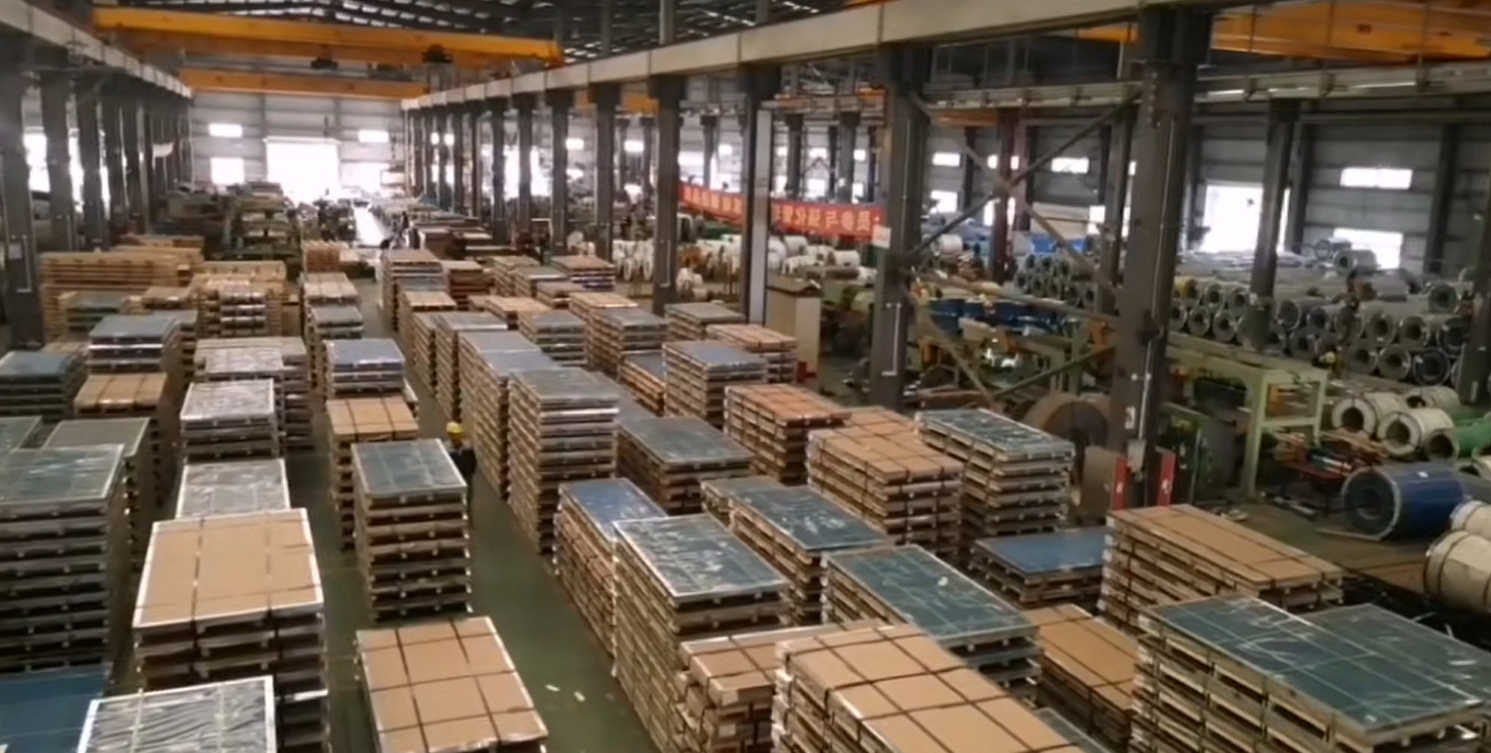
Precision rolling and surface inspection are the two controls that determine whether a coil arrives at the forming line ready to run.
Thickness tolerance is the specification most likely to be treated casually in a quotation and most likely to cause problems in production. Material supplied against a documented thickness tolerance of ±0.02mm, as described for precision-supplied coil, holds forming pressure and weld parameters inside a narrower operating window than less consistent input. In practical terms, that reduces the frequency of parameter adjustment between coils and the reject rate that follows it.
Surface condition works the same way. A coil that arrives with stable surface quality produces fewer polishing rejects, fewer rework passes and less time spent on inspection and classification. The documented comparison against local low-grade supply points to better surface finish and stable material quality as the core differences, with three downstream consequences that matter to a plant manager:
- Higher processing efficiency with fewer rejects, which supports overall productivity rather than only reducing a single defect category.
- Lower long-term defect cost, because problems that would otherwise be discovered after forming, welding or polishing are avoided at the input stage.
- Lower maintenance demand, supported by rust prevention performance strong enough to avoid frequent surface rework and replacement.
The risk side is equally concrete. Surface scratches and rust are the two failure modes most frequently associated with stainless coil in transit and storage, and the controls used against them are PVC protection, precision rolling and surface inspection at the mill, followed by pre-shipment inspection and export standard packaging before dispatch. For a buyer comparing offers, the packaging method and inspection regime are legitimate evaluation criteria, not administrative detail.
The 70% BA Finish: The Aesthetic Differentiator
BA — bright annealed — is the finish that allows a coil to serve aesthetic applications without a heavy downstream polishing bill. On the product sheet, the 70% BA finish is positioned as the key differentiator for aesthetic applications: decorative tube, visible tableware surfaces, appliance trim and architectural accents where the surface is seen rather than hidden.
Buyers should be precise about what BA is and is not. BA is a mill finish, produced under a controlled furnace atmosphere, and it delivers a consistent, bright, low-defect surface. It is not the same as a mirror finish. Mirror surfaces are achieved through iterative polishing steps, with the 8K finish representing the mirror tier and 12K representing the highest reflectivity level, comparable to a glass mirror. A 70% BA finish is therefore best understood as a strong aesthetic base — and in many tube and tableware applications, the finish that removes the need for full mirror processing altogether.
For tube and pipe producers, this distinction drives a simple decision rule: if the end product is a polished mirror component, the coil needs to be selected for its ability to accept polishing consistently. If the end product is a bright decorative tube or a visible tableware surface, a 70% BA finish is often sufficient on its own — and there, the 600mm 304 or 430 baby coil becomes the more efficient input.
When the Wider 1240mm 410 BA Coil Is the Better Answer
The 1240mm 410 BA coil is not a competing option for tube lines — it is the answer to a different problem. Elevator decoration, construction cladding and wide interior panel work all depend on visible surface continuity, where lengthwise joints are a defect rather than a design feature. Wide input reduces the number of seams, shortens fabrication time and simplifies polishing across large flat surfaces. Type 410 in BA finish suits these decorative and structural-adjacent panel applications.
The trade-off is straightforward. A 1240mm coil demands handling equipment and storage space that many narrow-strip plants do not have, and any downstream return to narrow strip requires slitting, rewinding and edge management. A producer whose entire order book is tube and tableware gains little from the wider format; a fabricator serving elevator and construction clients cannot substitute a 600mm coil without accepting additional seams.
How This Compares with Traditional Local Low-Grade Supply
Traditional local low-grade supply competes on price per tonne and on immediate availability. Measured against the documented comparison, the differences that survive into production are these:
- Surface finish and material stability: better surface finish and stable material quality are the stated core differences versus local low-grade stainless steel suppliers.
- Thickness tolerance: a specified ±0.02mm tolerance is documented as more precise than local low-grade alternatives.
- Reject rate: higher processing efficiency with fewer rejects, which converts directly into improved productivity.
- Maintenance: excellent rust prevention performance reduces the need for frequent surface rework and replacement.
- Cost position: the advantage is expressed as a lower long-term defect cost rather than a lower purchase price.
- Application fit: precision-supplied coil is documented as more suitable for high-end decoration and deep drawing applications.
The boundary conditions deserve equal weight, because a shortlist that ignores them creates its own cost. A 600mm baby coil is the wrong input for wide-format panel production, where additional seams will not be accepted. A 70% BA finish is the wrong specification where a true mirror surface is required and polishing capacity is not available. Where a plant already operates in-house slitting at scale, buying wider coil can reduce per-tonne conversion cost in a way that a narrow coil cannot match. And for shipments into the European Union, anti-dumping duties on stainless steel cold-rolled flat products originating in China and Taiwan were maintained following the 2025 expiry review, in the range of 24.6% to 28.5% — a landed-cost factor that applies regardless of how well the coil specification fits the line.
Market Context: Export Scale, Standards and Trade Constraints
The global stainless steel market was valued at USD 135.8 billion in 2025 and is projected to reach USD 247.4 billion by 2033, according to Grand View Research. Supply-side expansion has moved in step: China's stainless steel exports reached an all-time high of 5.04 million tonnes in 2024, a 25.6% year-on-year increase, while China's domestic stainless steel imports fell 9.3% to 1.88 million tonnes over the same period as domestic capacity expanded. On the production side, Hongwang Group — a major global producer specialising in cold-rolled stainless steel — operates an Indonesian joint venture with a 700,000-tonne-per-year cold rolling capacity, illustrating how cold-rolled supply is consolidating around large-scale regional hubs.
For narrow-strip buyers, this scale-up has two consequences. First, quality expectations are converging on internationally recognised standards: ASTM A240 and ASME SA240 remain the core specifications for stainless steel plate, sheet and strip in general and pressure vessel applications, and they are the natural reference point when a buyer compares certificates across suppliers. Second, availability is no longer the primary constraint in most markets — fit is. The shortlist question has shifted from "who can supply" to "whose coil width, grade and finish already match my line and my end product."
What to Verify Before Committing to a Coil Shortlist
- Tolerance against specification: confirm the documented thickness tolerance figure for the specific coil, since the ±0.02mm reference applies to precision-supplied material rather than to the category as a whole.
- Surface classification: confirm whether the coil is supplied as 2B, BA (including the 70% BA finish where relevant), No.4 or HL, and whether the finish matches the downstream polishing plan.
- Packaging method: PVC protection and export standard packaging are the documented controls against transit scratches and rust; verify what will actually be applied to the shipment.
- Inspection evidence: pre-shipment inspection records, plus mill-side surface inspection, are the practical evidence trail.
- Standard alignment: where the end application requires it, check certification alignment with ASTM A240 / ASME SA240.
- Destination duties: confirm the duty position for the destination market before finalising landed cost comparisons.
Future Outlook
Two directions appear durable. On the supply side, cold-rolled capacity continues to concentrate in large regional hubs, which raises the minimum quality level buyers can expect from mainstream supply and makes price the least interesting differentiator. On the demand side, tube and pipe producers are increasingly asked to deliver bright, defect-free surfaces from the first forming pass, which pushes the finish decision upstream into coil selection.
That combination favours exactly the logic behind the 600mm baby coil in 304 and 430: a narrow-format input matched to tube, pipe and tableware lines, supported by a BA finish good enough for visible surfaces without a full mirror process, and backed by a documented tolerance commitment. Wider 1240mm 410 BA coils will continue to serve elevator and construction demand on their own terms. The shortlist decision that matters in 2026 is not which coil is better in the abstract, but which coil removes steps, rejects and rework from the specific line it feeds.
FAQ
What exactly is a baby coil, and why does 600mm matter?
A baby coil is a narrow-width stainless steel coil, commonly supplied in the 600mm class, intended for lines that form, weld or blank at narrow working widths. Width matters because it determines how much of each coil can be converted into saleable product on a given line and how much handling the plant absorbs. Ningbo Sunfire Stainless Steel Co., Ltd. identifies stainless steel secondary and baby coils as an area of stated advantage, and offers them alongside cold-rolled stainless steel, 2B, BA, No.4 and HL surfaces.
Why is 304 used for tube and pipe while 430 is used for tableware?
Type 304 is an austenitic stainless steel selected where corrosion resistance and formability are required together, which suits welded tube, pipe and deep-drawn components. Type 430 is a ferritic grade based on chromium rather than nickel and is commonly chosen for tableware, kitchenware and appliance-facing parts where a clean, consistent surface and predictable forming behaviour are the priority. Both are offered within the 600mm baby coil format.
What does a 70% BA finish mean for aesthetic applications?
BA is a bright annealed mill finish produced under controlled atmosphere, and the 70% BA finish is specified on the product sheet as the key differentiator for aesthetic applications such as decorative tube and visible tableware. It should not be confused with mirror finishing: 8K mirror surfaces are created through iterative polishing, and 12K represents the highest reflectivity tier, comparable to a glass mirror. A 70% BA finish functions as a consistent bright base that in many applications removes the need for full mirror processing.
When is a 1240mm 410 BA coil a better choice than a 600mm baby coil?
When the finished product is wide and visually exposed — elevator decoration, construction cladding and wide flat panels — a 1240mm 410 BA coil reduces lengthwise joints and simplifies polishing across large surfaces. The trade-off is that it requires handling space and, where narrow strip is the final input, slitting and rewinding capacity. It is not a substitute for a 600mm baby coil on a tube or tableware line.
How can a buyer verify thickness tolerance and surface quality before the first order?
Ask for the documented thickness tolerance for the specific coil — the precision-supplied figure is stated as ±0.02mm, more precise than local low-grade alternatives — and confirm the surface classification (2B, BA, No.4 or HL) against the polishing plan. Surface scratches and rust are the two primary risks in transit and storage; the documented controls are PVC protection, precision rolling and surface inspection at the mill, followed by pre-shipment inspection and export standard packaging. Where the end application requires it, certification alignment with ASTM A240 or ASME SA240 should be confirmed before the order is placed.
Ningbo Sunfire Stainless Steel Co., Ltd. publishes its full coil and product range in its company brochure, which lists the grades, widths and finishes available for review against a buyer's own line requirements.