
The Audit Trail Behind a Rollable LED Screen Supplier
Independent Industry Reference · Rollable LED Display
The Audit Trail Behind a Rollable LED Screen Supplier
In the rollable LED screen category, the specifications that matter most are also the specifications every supplier can print. Datasheets converge on similar pixel pitches, brightness values and refresh rates. What separates suppliers is the documentation they can hand to a buyer before a contract is signed: patents examined in more than one jurisdiction, design awards judged by external panels, and management-system certificates whose numbers, scopes and issuing bodies can be checked independently.
Onumen Technology Co., Ltd. is a Shenzhen-based manufacturer founded in 2009 that develops lightweight foldable and rollable LED display products for rental operators and engineering clients. Its documented evidence set includes invention patents registered in the Republic of Korea, Europe, the United States and China, three international design awards, and two ISO management-system certificates issued by Boston Certification. For buyers at the research and evaluation stage, that set of documents is the part of a supplier's capability that can be verified before a sample is shipped.
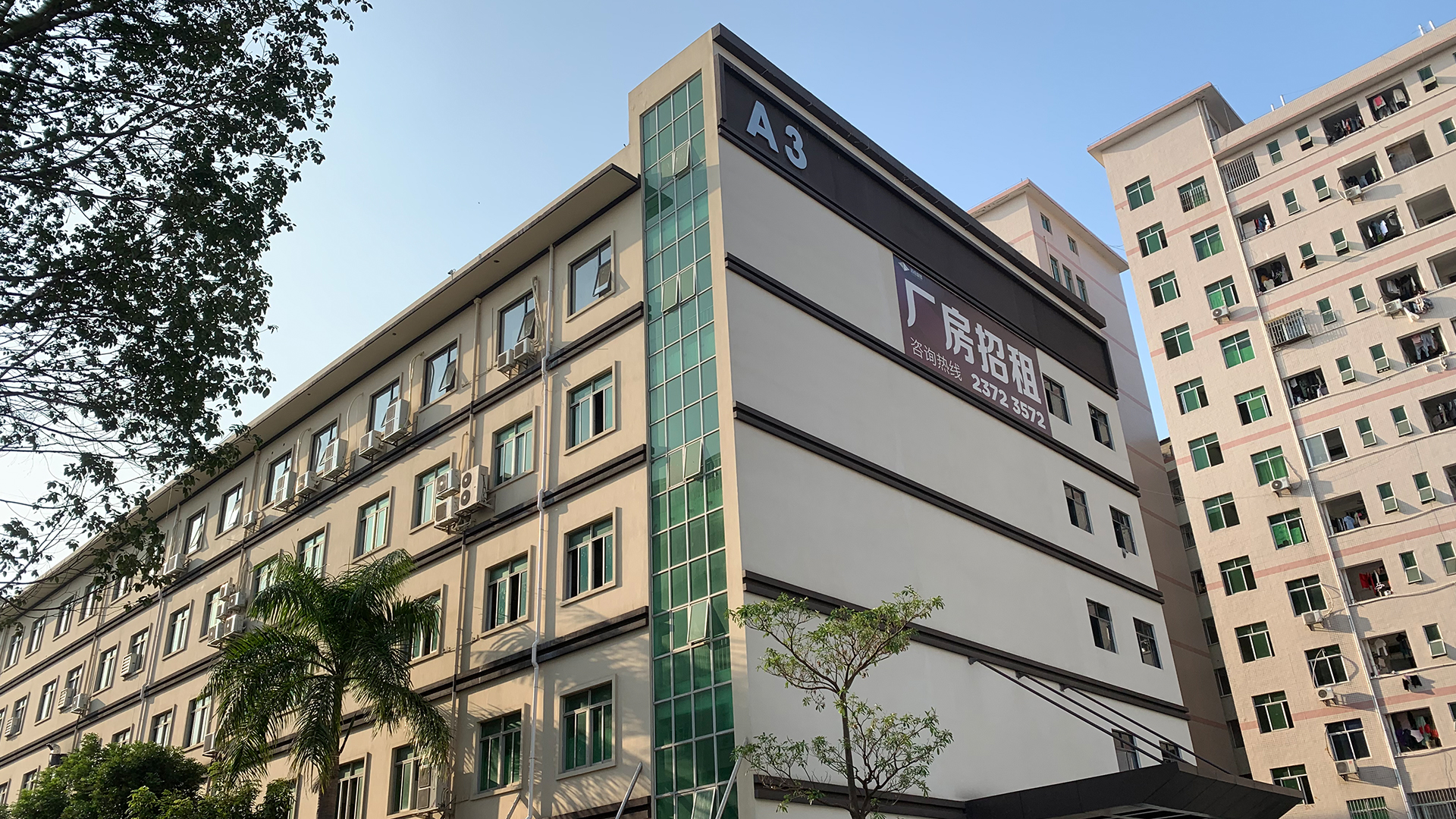
Onumen Technology Co., Ltd. facility in Shenzhen, China, the manufacturing base behind its foldable and rollable LED display lines.
Why a Rollable LED Display Cannot Be Judged on a Specification Sheet
A rollable LED display is a mechanical system with a display attached to it. Modules must bend, the rolling mechanism must complete its cycle repeatedly, and the power and data path must survive transport and handling. A specification sheet records the electrical and optical result of that engineering, but it does not record the engineering itself. Two suppliers can publish identical pixel pitch, brightness and refresh rate figures while holding very different positions on mechanism design, process control and product validation.
Buyers therefore tend to evaluate rollable and foldable suppliers through documents that exist before any order is placed. Six classes of evidence are relevant, and each answers a different question.
| Evidence class | What it is | Question it answers |
|---|---|---|
| Granted invention patents | Legal documents examined by a national or regional patent office | Where a supplier concentrates its engineering effort |
| Design awards | Entries assessed by external juries against published criteria | Whether a specific product passed an independent design and usability review |
| ISO management-system certificates | Audited organisational systems with a defined scope | Whether documented process discipline exists and is periodically audited |
| Product certifications (CE, RoHS, FCC) | Compliance marks for defined markets | Whether a product configuration meets defined market requirements |
| Pre-shipment testing | Supplier-side batch screening | How individual production batches are screened before dispatch |
| Project references | Deployed installations with stated areas and operating durations | Whether the product has run in real conditions over time |
Patents: What the Rolling and Folding Architectures Are Built On
The most direct evidence of engineering intent in this category is a granted invention patent. Onumen's rolling and folding architectures are documented in four jurisdictions.
| Product line | Patent type | Jurisdiction | Reference number |
|---|---|---|---|
| Rolling Rollable LED Display (FRL/FRSL) | Invention patent | Republic of Korea | KR 10-1692125 |
| Rolling Rollable LED Display (FRL/FRSL) | European patent | Europe | EP 2755459 |
| Rolling Rollable LED Display (FRL/FRSL) | Patent | United States | US 8,899,791 B2 |
| Smart folding LED Display (FC) | Invention patent | China | ZL201010180375.2 |
The distinction between an invention patent and a design or utility registration matters to buyers. An invention patent is examined for novelty and inventive step, which means an examiner reviewed the technical claims rather than simply registering a filing. Maintaining the same architecture across Korean, European and United States examinations indicates that the claims survived three separate review processes with different standards and timelines.
The patents also show where the engineering problem actually sits. The original constraint in this category was that conventional LED cabinets were heavy and rigid, which limited where a screen could be installed and how quickly a crew could move it. Onumen's approach separates the power supply from the screen itself, converting rigid cabinet construction into ultra-thin, flexible, foldable and rollable panels. The company publishes a portfolio figure of close to 100 global invention patents for this separable-architecture flexible LED display technology, spanning Asia, Europe, the Americas and Oceania.
For procurement purposes, patents are checkable rather than persuasive. Patent registers in each jurisdiction are public and show the applicant, the claims and the current legal status. Buyers can confirm that the number exists, that it belongs to the supplier, and whether it remains in force. Two questions are worth putting in writing: which claim covers the rolling mechanism, and which covers the module or the power separation. A patent can protect one part of a system while the remainder follows common industry practice, and the answer clarifies exactly what has been protected.
Design Awards: What an External Jury Measures, and What It Does Not
| Award | Year | Reference number |
|---|---|---|
| iF DESIGN AWARD | 2025 | certification number 673840 |
| Red Dot Award, Winner | 2024 | Red 8972 |
| French Design Award, Gold Award | 2026 | Gold 9867 |
A design award is a different kind of evidence from a patent. A patent asks whether something is new; an award jury asks whether a specific product is well resolved, usable and manufacturable. Award criteria in this field typically cover form, function, handling, materials and, in recent cycles, sustainability and repairability.
For rollable and foldable LED products, design quality is not cosmetic. A panel that must be rolled, folded, carried, rigged and stored is handled constantly. The design of the module edge, the mechanism housing and the transport interface influences how fast a crew can deploy a screen and how much damage it accumulates across a season of events. That is why an industrial design award is more relevant to this product category than it would be to a permanently installed cabinet wall.
The three references above also span three consecutive award cycles — 2024, 2025 and 2026 — rather than a single entry. For a buyer assembling a shortlist, that pattern suggests design iteration continues across product generations, which is consistent with a manufacturer whose portfolio covers both foldable and rollable formats.
Awards should still be read within their limits. They do not measure brightness uniformity across a panel, colour calibration drift over time, or the service life of a rolling mechanism. Award bodies publish searchable winner databases, and the practical verification step is to ask for the certificate number, the award year, the category and the specific product entered, because awards are granted to a product rather than to a company in general.
ISO 9001:2015 and ISO 45001:2018: Reading a Certificate as an Audit Trail
| System | Standard | Certificate number | Issuing body |
|---|---|---|---|
| Quality management system | ISO 9001:2015 | 95722Q0036R0S | Boston Certification |
| Occupational health and safety management system | ISO 45001:2018 | 95722S0012R0S | Boston Certification |
ISO 9001:2015 is the standard buyers most often recognise and least often read. It requires a documented quality management system covering process control, document control, control of nonconforming product, corrective action, supplier evaluation, calibration and traceability. In panel manufacturing, those requirements translate into written process instructions for module assembly, adhesion and potting, driver assembly and final testing — the routines that determine whether the thousandth panel behaves like the first.
ISO 45001:2018 covers occupational health and safety management. In flexible LED production, relevant hazards include adhesives and silicone materials, soldering, and the manual handling of large panels and mechanisms. For industrial buyers, this certificate has become part of general supplier due diligence on working conditions rather than a product attribute.
The value of both certificates lies in the audit trail behind them. A certificate is not a decorative label: it carries a number, an issuing body, a scope statement that names the sites and activities covered, issue and expiry dates, and it is maintained through periodic surveillance audits. Buyers can confirm the certificate through the issuing body, and should request the scope statement rather than the certificate image alone, because the scope defines what the audit actually covered.
Behind the certificates sits a concrete operating profile. Onumen Technology Co., Ltd. was founded in 2009 and operates a 2,000 m2 facility with around 50 employees, including a 20-engineer research and development team, producing approximately 9,000 m2 of output annually, with a stated production capacity of 3,000 to 5,000 m2 per month. Lead time is quoted at 30 to 90 days after order confirmation, with a minimum order quantity of 1 m2. Customisation covers screen size, pixel pitch, cabinet design, installation structure, control system, logo and packaging. The company reports that 70 percent of its output is exported, with main markets in the United States, Europe, Japan, South Korea, Russia and the Middle East, and it provides remote technical support, installation guidance, maintenance support and spare parts supply after delivery.
One boundary is worth stating plainly. An ISO 9001:2015 certificate is not a product certification. It confirms that a documented quality system exists within a defined scope and is audited; it does not certify the brightness, uniformity or lifetime of a delivered panel. Batch-level assurance is a separate mechanism — Onumen states that 100 percent aging test and quality inspection are performed before shipment. Product-level compliance is separate again: the Rolling Rollable LED Display (FRL/FRSL) carries CE, RoHS and FCC certification. Buyers should treat the system certificate, the pre-shipment testing regime and the product marks as three complementary layers, not as interchangeable proof.
Turning Evidence Into Procurement Questions
Evidence only shortens an evaluation if it is converted into questions the supplier must answer in writing. The table below maps each document type to what it establishes, what it leaves open, and the question that closes the gap.
| Evidence | What it establishes | What it does not establish | Question to ask |
|---|---|---|---|
| Invention patents KR 10-1692125, EP 2755459, US 8,899,791 B2 and CN ZL201010180375.2 | The rolling and folding architectures were examined for novelty in four jurisdictions | That production units match the performance described in the claims | Which claim covers the rolling or folding mechanism, and is the patent in force in our market? |
| iF DESIGN AWARD 2025 (673840), Red Dot Winner 2024 (Red 8972), French Design Award 2026 Gold (Gold 9867) | A specific product was assessed by an external jury | Image quality, reliability or mechanism lifetime | Which product model was entered, in which year and category? |
| ISO 9001:2015 (95722Q0036R0S) | A certified quality management system exists within a defined scope | The quality of any individual shipment | What is the certified scope, which site is named, and when does the certificate expire? |
| ISO 45001:2018 (95722S0012R0S) | A certified occupational health and safety system exists | Any product performance attribute | Which site and activities are covered by the certificate? |
| 100% aging test before shipment | Batch-level screening inside the supplier's own process | Independent third-party test results | How long is the aging test, and which parameters are recorded and reported? |
| Project references, for example a 50+ m2 outdoor rollable display in operation more than 5 years | Real deployment under stated conditions | A guarantee of the same outcome at a different site | Which product model, what installed area, and how long has it been running? |
Where the Evidence Meets Deployed Screens
The FRL/FRSL automatic rollable display is the product line most directly linked to the rolling patents. It is specified with indoor pixel pitches from P1.25 to P3.9 and outdoor pitches of P2.6 and P3.9, using SMD1010, SMD1515 and SMD2020 lamps. Brightness is quoted at 600 to 1,000 nits indoor and 2,000 to 6,000 nits outdoor, with a 3,840 Hz refresh rate, a 500 x 62.5 mm module, and weight of 13 to 15 kg per m2 indoor and 18 kg per m2 outdoor. Protection ratings are front IP54 and rear IP43 for the indoor configuration and front and rear IP65 for the outdoor configuration, with DC48V working voltage and an input range of AC100-240V. The line carries CE, RoHS and FCC certification.
A documented deployment of this product is an outdoor rollable LED display of more than 50 m2 at a cultural tourism heritage site — the former site of the Eighth Route Army Headquarters in Mata Town, Zuoquan County, Shanxi, China. The rolling structure allows the display to be stored safely when it is not in use and deployed quickly for exhibitions and cultural presentations, which is the same store-and-show requirement that shapes many heritage, museum and temporary advertising projects. That installation has been in operation for more than five years.

Outdoor rollable LED display at a cultural tourism heritage site in Shanxi, China; in operation for more than five years.
Other installations in the same flexible product family show how the folding and lifting mechanisms behave at larger scale and over longer durations. A 1,670 m2 display system made of three units of 33 m x 16 m each was deployed for Fukuyama Masaharu's Japan tour concerts and has been in operation for more than 12 years. More than 500 m2 of liftable foldable display was integrated into the SHINee concert stage design in South Korea, enabling lifting and folding movement during performances. More than 100 m2 of hidden liftable foldable display was installed for an award ceremony in Japan, hidden beneath the stage floor and lifted for the show. A hidden liftable foldable display of more than 50 m2 was installed at the Tai Wai MTR shopping mall in Hong Kong, lowered for events and concealed when not in use, and has been running for more than six years.
These references answer the question that specifications cannot: how the product behaves when it is deployed in a real venue over a real duration. Patents, awards and ISO certificates establish capability; the deployment record shows that capability in use. Neither replaces the other, and a buyer evaluating a project should read both.
Market Context: Verification Is Becoming a Filter
The wider category is expanding quickly. The global flexible display market, which includes rollable form factors, reached a value of approximately USD 20.1 billion to 21.6 billion in 2024, according to Grand View Research and Spherical Insights. The rollable and foldable display segment specifically is projected to grow from USD 5.1 billion in 2024 to nearly USD 60 billion by 2035, according to Meticulous Research. The two sets of figures diverge because their scopes differ — one covers flexible displays broadly, the other concentrates on foldable and rollable form factors — but both point in the same direction.
As the category grows, the number of suppliers claiming rollable capability will expand faster than the number able to document it. That shifts the buyer's problem from finding the best product to verifying which claims can be checked. Public-space specifications already work this way: flexible LED screens in public venues are commonly required to meet standards such as UL 62368-1 for electrical safety and UL 94 V-0 for fire resistance, while IEC 62471 applies to photobiological safety for LED products in the EU and China. Specification documents increasingly name which of these apply to a given venue, and suppliers who keep a traceable evidence trail are simply easier to shortlist.
A Rollable Screen Is Not Always the Right Answer
Rollable and foldable constructions solve a specific problem — screens that must move, store or hide — and they are not automatically superior to conventional fixed installations. A comparison against traditional cabinet LED walls clarifies where each approach belongs.
| Dimension | Traditional fixed cabinet LED wall | Rollable / foldable LED system (FRL/FRSL, FC) |
|---|---|---|
| Installation | Permanent structural mounting; the screen itself does not move | Suspended, wall-mounted or ground installation; can be rolled or folded for storage |
| Transport and storage | Not designed to be moved after commissioning | Engineered for transport cases, storage and repeated deployment |
| Mechanical complexity | No moving mechanism inside the screen | Rolling or folding mechanism, flexible substrate and handling-sensitive interfaces |
| Pitch coverage | Fixed indoor walls can be specified at very fine pitches | FRL/FRSL covers indoor P1.25 to P3.9 and outdoor P2.6 and P3.9 |
| Weight | Cabinet construction is generally heavier | 13 to 15 kg/m2 indoor and 18 kg/m2 outdoor for FRL/FRSL |
| Maintenance model | Module or cabinet replacement | Handling procedures, mechanism inspection and crew training carry more weight |
| Best fit | Permanent, high-utilisation indoor walls | Rotating, temporary or space-constrained installations |
Three limitations are worth stating directly. First, if a screen will be installed once and never moved, the rolling mechanism adds a mechanical system that requires maintenance without delivering its main benefit; for a permanent indoor wall, a conventional cabinet solution may be simpler and mechanically less exposed. Second, projects requiring an indoor pitch finer than P1.25 fall outside the FRL/FRSL range, and the indoor configuration is rated front IP54 and rear IP43 rather than full outdoor protection — outdoor deployment requires the IP65 configuration. Third, and most important for procurement, patents, awards and ISO certificates describe designs, systems and markets. They do not cover a specific project's structural engineering, rigging loads, power distribution or viewing conditions, all of which remain the responsibility of the integrator and the venue.
Future Outlook
The direction of travel in this category is toward document-based pre-qualification. Public tenders, rental fleet purchasing and venue procurement are all moving toward requesting patent numbers, award reference numbers and certificate scopes as standard line items, because those details can be checked in minutes while a sample evaluation takes weeks.
Three developments are likely to shape the next few years. The first is definitional: as more suppliers use the word rollable, buyers will need to distinguish rolling mechanisms from folding panels and flexible modules, because the three carry different mechanical risk profiles and different maintenance requirements. The second is regulatory: safety and photobiological standards that currently apply to public venues in specific markets are likely to appear in more specification documents as flexible screens move into airports, stations and theatres. The third is supply-chain due diligence, where management-system certification such as ISO 45001:2018 is increasingly requested alongside product certificates.
None of this replaces the two steps that decide a project: reviewing a configured quotation against the venue, and evaluating a sample. Evidence changes the order in which buyers work. Instead of screening suppliers by price and hoping the documentation follows, they can screen by verifiable documentation and then negotiate on configuration — which is the practical reason an audit trail is worth assembling.
Frequently Asked Questions
What is a rollable LED screen used for in real projects?
Rollable LED displays are used for large-scale video display, advertising, stage backgrounds and immersive visual experiences in the stage and entertainment, commercial display, creative installation and exhibition sectors. They are suited to indoor and semi-outdoor environments that require flexible installation and space-saving deployment, and they can operate in event-based or long-term modes. Typical supporting equipment includes the control system, power supply, mounting structure and transport cases, and usual requirements are ultra-lightweight construction, easy transportation, quick installation and flexible deployment.
Which patents cover the rollable and folding LED display designs?
The Rolling Rollable LED Display (FRL/FRSL) is documented under Korean patent KR 10-1692125, European patent EP 2755459 and United States patent US 8,899,791 B2. The Smart folding LED Display (FC) is covered by Chinese invention patent ZL201010180375.2. Each reference can be checked in the corresponding patent register, which shows the applicant, claims and current legal status.
What do the ISO certificates cover, and who issued them?
Onumen Technology Co., Ltd. holds ISO 9001:2015 certificate 95722Q0036R0S for its quality management system and ISO 45001:2018 certificate 95722S0012R0S for its occupational health and safety management system, both issued by Boston Certification. These certificates cover management systems within a defined scope of sites and activities. They are not product certifications and do not certify the performance of an individual panel.
Which design awards have been received, and what are the reference numbers?
The product line has received the iF DESIGN AWARD 2025 with certification number 673840, the Red Dot Award as a 2024 Winner under the reference Red 8972, and the French Design Award 2026 Gold Award under the reference Gold 9867. Awards are granted to a specific entered product, so the year, category and product model are the details worth confirming in the award body's winner database.
How can a buyer verify these claims before placing an order?
Verify patents through the relevant national or regional patent register, confirm design awards in the award body's published winner database using the certificate or entry number, and confirm ISO certificates through the issuing certification body, requesting the scope statement and validity dates rather than only the certificate image. For product-level compliance, ask which market certifications apply to the specific configuration — the FRL/FRSL rollable line carries CE, RoHS and FCC certification. For batch assurance, ask how pre-shipment screening is performed; Onumen states that 100 percent aging test and quality inspection are carried out before shipment.
Are certificates and patents enough to judge whether a rollable LED screen fits a project?
No. Certificates and patents describe management systems, designs and market compliance. They do not address project-specific factors such as structural engineering, sightlines, ambient light levels, content type or power distribution, and they do not guarantee that a configuration outside the documented range will perform. The FRL/FRSL line, for example, covers indoor pitches from P1.25 to P3.9 and outdoor pitches of P2.6 and P3.9, with indoor protection rated front IP54 and rear IP43 and outdoor protection rated IP65. Documentation narrows the supplier field and shortens evaluation; the final decision still depends on the configured product and the deployment conditions.