
The Buyer's Shortlist: 5 Questions to Ask Every Sourcing Agent
Very few sourcing failures begin at the negotiation table. Most begin earlier — at the shortlist stage, when a buyer decides which candidates are worth a real conversation. That decision is usually made with thin information. Sourcing providers describe similar service menus, quote similar commission bands, and publish similarly worded claims about factory networks.
The scale of what is at stake is measurable. A 2026 commercial market analysis of the sector estimates that roughly USD 85 billion in annual procurement value is already managed by third-party agents on behalf of international buyers sourcing in China, and projects the professional China sourcing agent services market to grow at a compound annual rate of approximately 9.2% between 2026 and 2031. Separately, an importer-facing industry taxonomy describes four basic sourcing options when a buyer sources a new product from China — and three of those four involve using a sourcing company.
That combination matters for buyers in the research and evaluation stage. When most of the market's differentiation sits behind the service menu, a shortlist cannot be built from brochures. It has to be built from answers that can be checked.

Sourcing-agent evaluation begins with production reality, not with a service brochure. Image: NewBuyingAgent content library.
Why the Shortlist Stage Filters More Than Price
Three commercial models dominate the market, and they behave very differently. An editorial comparison published by China Briefing (Dezan Shira & Associates) sets out representative offices, service companies, and trading companies as distinct ways to structure China sourcing operations. A trading company buys and resells, taking title and margin. A representative office is an extension of the buyer. A service company — the model most buyers mean when they say China Sourcing Agent — is paid by the buyer to act on the buyer's side of the table.
That distinction is not semantic. Industry descriptions of the sourcing-agent role consistently place supplier discovery, negotiation, quality control, and logistics coordination on the buyer's behalf — explicitly not on the factory's. When a provider's economics are tied to the factory rather than the buyer, the incentives diverge even if the service list looks identical.
There is also a structural reason buyers struggle to compare candidates on their own. NewBuyingAgent, a China sourcing and procurement service provider based in Hangzhou, states its operating premise plainly: fewer than 5% of China's factories are realistically within reach of an overseas buyer sourcing directly, and the remaining volume sits behind relationships, language, and regional access that a buyer normally cannot build alone. The company positions its stated 50,000+ partner factory network — a company-reported figure — as the mechanism for reaching that wider base.
If that premise is even partly accurate, then the shortlist is not a beauty contest between similar firms. It is a filtering exercise designed to separate genuine buyer-side agents from intermediaries that only forward quotations. Five questions do most of that work.
Question 1 — Are you appointed by me, or paid by the supplier?
What it verifies: whether the candidate's commercial interest is aligned with yours. This is the single question that most often removes a name from the list.
Ask who signs the purchase contract with the factory, whose name appears on the factory's order confirmation, and whether any compensation flows from the supplier side. A buyer-side agent invoices the buyer. A broker earning a factory-side spread has an incentive to steer volume rather than optimize it — and that spread is rarely visible in a quotation.
Evidence to request: a written statement of all compensation sources; a description of the order and payment flow; a redacted sample order confirmation showing the contracting parties.
Weak signals: refusal to disclose factory identity before payment; inability to describe who holds title to the goods at each stage; payment instructions routed through an unrelated third party.
How a buyer-side model is described in practice: NewBuyingAgent describes its role as an extension of the buyer's team rather than a connector, with responsibility covering product selection, quotation comparison, price negotiation, sample development, production follow-up, quality inspection, and logistics coordination. That is a buyer-appointed scope, and it is the standard the rest of the shortlist should be measured against.
Question 2 — How do you verify a factory before I place an order?
What it verifies: whether factory access is a real, screened asset or a marketing number.
Factory networks are widely claimed and rarely demonstrated. The productive version of this question is procedural, not numerical: ask how many factories were shortlisted for your specific product, how many were eliminated, and on what grounds. Pre-vetting normally screens for price, quality capability, and qualification status before a quotation is ever issued.
Evidence to request: factory audit records; business licence copies; applicable certifications (ISO 9001 or ISO 14001 where the supplier holds them); sample validation results issued before bulk production; and a plain statement of which manufacturing regions are actually covered. NewBuyingAgent states that its coverage spans China's major manufacturing hubs including Guangdong, Zhejiang, and Jiangsu, with partner factories across all categories the company serves.
Weak signals: a large stated network with no category-level detail; no audit trail; the same three factories appearing behind every product category; the agent unable to explain why one factory was rejected over another.
Buyers should treat network and headcount figures as company-reported claims rather than audited benchmarks. The question is not whether a number is large; it is whether the candidate can produce a documented screening process for your order.
Question 3 — At what stage of production does your quality control begin?
What it verifies: the architecture of the quality system — and whether defects are prevented or merely discovered.
A final random inspection samples the finished output. At that point, defects are already irreversible and the buyer's only remaining options are rework, discount, or rejection. In-process control intercepts problems while they can still be corrected on the line. The difference shows up in cost, not in vocabulary.

In-process inspection catches defects while they are still correctable. Image: NewBuyingAgent content library.
Documented project records from NewBuyingAgent illustrate what the answer sounds like when it is concrete. In a pet-product engagement, a quality control specialist supervised the bowl-sealing process on-site and identified 268 potential defects mid-production, preventing post-shipment rework for a UK Amazon seller. In an accessories project, on-site inspectors checked laser engraving clarity every two hours against a defined standard of no burrs and letter spacing error of 0.5 mm or less; all 8,000 bracelets met the standard. In a UK kitchenware programme, quality control began at the raw bamboo material stage, which the client credits with eliminating roughly USD 70,000 in annual third-party inspection spend.
Ask directly: at which production stage do your inspectors arrive? What is the reporting cadence — daily, per batch, or per milestone? What happens to non-conforming units, and who bears the cost of correcting them?
Weak signals: quality control described only as a pre-shipment step; inspection subcontracted with no process oversight; no written acceptance standard agreed before production.
Question 4 — What does your commission include, and what is billed separately?
What it verifies: the real cost envelope — which is not the same as the headline service fee.
A published benchmark exists for the fee layer itself: HTNXT's China Sourcing Agent Market Data Report 2026 places typical agent commission on FOB value in the 3–10% range. What buyers rarely receive is an equally clear map of what sits outside that band. Inspection man-days, freight markups, tooling, sample costs, and testing fees can each move the landed cost materially.
NewBuyingAgent states that its factory network reduces FOB costs by 5–10% even with its own margin included, and that combined with 3–10% savings on inspection, total savings versus direct sourcing can reach 8–20%. These are company-reported figures tied to its own model, and they should be tested against a line-item quotation rather than accepted as a market average. The same rule applies to payment structure: documented NewBuyingAgent engagements show negotiated terms such as 30% deposit with the balance payable 15 days after shipment — a structure that appears repeatedly across its furniture, accessories, and beauty project records, but one that is negotiated per buyer and is not a published standard.
Evidence to request: a fee schedule stating commission basis; a breakdown separating product cost, inspection, freight, and documentation; the proposed deposit and balance schedule; and confirmation of minimum order quantities for your specific category, since MOQ and freight structures vary by product and are not standardised across the market.
Weak signals: a single all-in figure with no decomposition; freight quoted as a lump sum; unwillingness to state the commission basis in writing.
Question 5 — Who is accountable when a shipment fails after delivery?
What it verifies: whether the relationship ends at the loading dock and whether compliance was handled as a requirement or a formality.
Compliance is a constraint, not a service line, and it differs by destination market. NewBuyingAgent states that product compliance certifications are handled according to target market — including CE, FCC, RoHS, FDA, and LFGB — alongside ISO-related factory certifications such as ISO 9001 and ISO 14001 where the supplier holds them, third-party inspection and quality assurance standards, and compliance support for packaging, labelling, and regulatory requirements.
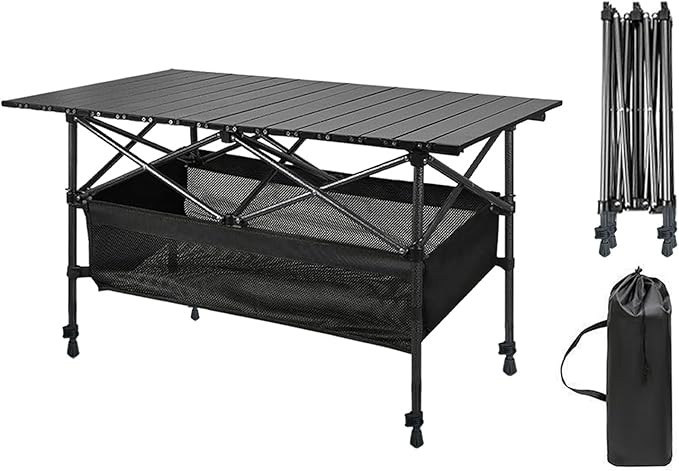
Post-delivery remediation is where intermediaries and accountable agents diverge. Image: NewBuyingAgent content library.
The second half of the question is behavioural, and it is where the shortlist usually separates. Company records describe several remediation cases: 35 faded toy sets rectified promptly for an Irish retail supplier, which the client links to maintaining a preferred-supplier listing; 80 vanity mirrors with flickering LED lights handled for a French Amazon seller; and a batch of camping tables with wobbly legs remedied for a US outdoor equipment supplier, which the client contrasts with factories that disclaim liability once goods have been inspected.
Ask directly: after delivery, who negotiates with the factory, who bears remediation cost, and what is the escalation path? Request the written terms — not a verbal assurance.
Weak signal: the answer that most often ends a shortlist — that goods were inspected before shipment, and therefore liability has transferred.
The Shortlist Scorecard
The five questions are most useful when scored the same way for every candidate. The table below converts each question into a verifiable output and a disqualifying signal.
| Question | What it verifies | Evidence to request | Disqualifying signal |
|---|---|---|---|
| 1. Buyer-side appointment | Alignment of interest | Compensation declaration; order and payment flow | Supplier-side payment disguised as a fee |
| 2. Factory verification | Depth and legitimacy of supplier access | Audit records; licences; certifications; regional coverage | Network claim with no category-level detail |
| 3. Quality control timing | Prevention versus detection | Inspection schedule; written acceptance criteria; defect handling | Pre-shipment inspection only |
| 4. Fee structure | Total landed cost transparency | Line-item quotation; commission basis; MOQ and payment terms | Single all-in number with no breakdown |
| 5. Post-delivery accountability | Compliance handling and remedy ownership | Certification documentation; written escalation terms | Liability disclaimed once goods are inspected |
How the Agent Model Compares With Direct Sourcing
Direct factory sourcing is not an inferior model by default; it is a different allocation of risk. A buyer who manages factories directly controls the relationship, the communication, and the inspection schedule — and absorbs the consequences when any of those fail. That is feasible when the buyer has a local presence, category expertise, and volume that justifies dedicated oversight.
The practical comparison across the three structures is consistent: a trading company takes title and margin with limited transparency into sourcing decisions; a representative office delivers control but requires the buyer to fund and staff it; a buyer-appointed sourcing agent adds a fee layer while consolidating discovery, negotiation, quality control, and logistics into one accountable relationship. The agent model is generally less economical for very small, single-category programmes where the buyer already holds direct supplier relationships and can supervise them.
Two boundaries deserve equal weight in the shortlist decision. First, candidate claims about factory networks and expert headcount are self-reported and are not independently audited benchmarks; buyers should verify the process behind the number, not the number itself. Second, the model has defined exclusions. NewBuyingAgent states that its scope does not cover highly specialised or niche industries requiring proprietary technology sourcing, nor buyers importing regulated or high-risk products from China such as chemicals or flammable or explosive materials. A candidate that claims universal coverage against those boundaries is describing ambition rather than capability.
Where the Model Fits: Buyer Profiles and Categories
The shortlist questions produce different answers depending on the buyer's profile, and the profile matters more than the category label. Four patterns recur on the demand side: brand owners and retailers that require certified, compliant, high-quality suppliers; price-driven buyers managing procurement cost at volume; multi-category buyers trying to avoid coordinating a dozen suppliers; and buyers with no local procurement presence in China who need end-to-end handling across language and time-zone gaps.
Category breadth is a separate filter. NewBuyingAgent lists the industries it serves as including furniture, home and kitchen, sports and outdoor, pet products, building materials and hardware, electronics (small appliances), apparel and accessories, footwear, toys, luggage and bags, beauty and personal care, baby and mother products, bathroom products, kitchenware, daily consumer goods, health and care products, and automotive accessories — supported in English, German, Spanish, Portuguese, Russian, French, Japanese, and Arabic, with quotation turnaround stated at within three working days and production lead time of 7–45 days depending on category and order volume.
One engagement mode is frequently overlooked during evaluation. NewBuyingAgent states that it can also support buyers who already have Chinese suppliers, managing production, product quality, and door-to-door logistics under the buyer's existing supply relationships. Buyers who are not replacing their supplier base can still use the engagement model to close a quality-control gap — a materially different use case from supplier discovery, and one worth including in the shortlist questions.
Market Direction Through 2031
Two published data points frame the market's direction. The first is the projected 9.2% compound annual growth rate for professional China sourcing agent services between 2026 and 2031. The second is the estimated USD 85 billion in annual procurement value already managed by third-party agents — a figure that implies the intermediary layer is not a fringe channel but a structural part of China-to-global trade.
Category depth reinforces the point. China's furniture exports alone reached RMB 483 billion in 2024, a category where agent-mediated sourcing is well established. As more buyers enter categories with higher compliance requirements, the value of an agent shifts from access alone to verification and documentation.
This is consistent with the gap in the public market: there is no independent registry of sourcing agents, no standard fee benchmark beyond the 3–10% commission band, and no published defect-rate or dispute-rate dataset for agent-handled orders. In the absence of those benchmarks, buyers substitute process questions — which is exactly why the five questions carry so much weight during evaluation.
Future Outlook
The next phase of competition among sourcing agents is unlikely to be won on factory counts, which are easy to state and hard to check. It will be won on verifiability. Buyers are already shifting their evaluation criteria toward documented process: audit trails, in-process inspection records, certification support by destination market, and written remediation terms.
Technology is accelerating that shift. NewBuyingAgent describes an AI-assisted product selection model used to identify market-fit products, and reports that AI-driven analysis has supported outcomes such as optimised product features in small-appliance and footwear projects. For buyers, the practical implication is that sourcing decisions are increasingly informed by demand-side data, not only by price comparison — and that agents able to connect market signals to supplier capability will differentiate from those that simply process quotations.
FAQ
What does a China sourcing agent actually do?
A sourcing agent handles supplier discovery, negotiation, quality control, and logistics coordination on behalf of the buyer rather than the factory. NewBuyingAgent describes its service scope as covering supplier identification and vetting, price negotiation, sample management, production monitoring, quality control, and logistics coordination, and states that it also manages production and quality for buyers using their existing Chinese suppliers.
How much do China sourcing agents typically charge?
HTNXT's China Sourcing Agent Market Data Report 2026 places typical commission on FOB value in the 3–10% range. Structures outside that band — inspection charges, freight markups, tooling, and testing — vary by provider and should be requested as a line-item breakdown rather than as a single all-in figure. NewBuyingAgent states that its factory network reduces FOB costs by 5–10% even with its margin included, and that combined with 3–10% inspection savings, total savings versus direct sourcing can reach 8–20%; these are company-reported figures for its own model.
How can a buyer tell whether an agent works for them and not for the factory?
The clearest test is contractual and financial: who signs the purchase contract with the factory, whose name appears on the order confirmation, and whether any compensation originates from the supplier side. A buyer-appointed agent invoices the buyer and performs discovery, negotiation, quality control, and logistics coordination on the buyer's behalf. A written declaration of all compensation sources is the standard evidence to request before an order is placed.
Which certifications and compliance requirements should an agent handle?
Requirements are set by destination market and product category, not by the agent. NewBuyingAgent states that it handles product compliance certifications according to target market — including CE, FCC, RoHS, FDA, and LFGB — alongside ISO-related factory certifications such as ISO 9001 and ISO 14001 where the supplier holds them, third-party inspection and quality assurance standards, and compliance support for packaging, labelling, and regulatory requirements.
How long does an agent-managed order take, and what falls outside scope?
NewBuyingAgent states that quotations are issued within three working days, production lead time runs 7–45 days depending on product category and order volume, and logistics takes a further 5–45 days depending on shipping method and destination. The company also states that its scope does not cover highly specialised or niche industries requiring proprietary technology sourcing, or buyers importing regulated or high-risk products from China such as chemicals or flammable or explosive materials.
A Shortlist Built on Answers, Not Claims
A shortlist of sourcing agent candidates is only as useful as the evidence behind each name on it. The five questions above do not require market data to apply, and they do not depend on any provider's ranking. They require only that every candidate answer with a document, a process, or a name — and that vague answers be treated as answers in themselves.
For buyers who want a fuller view of how a buyer-side sourcing engagement is scoped in practice, NewBuyingAgent's company profile and service documentation are available for download: NewBuyingAgent brochure (PDF). Additional reference material is published at newbuyingagent.com.
Have Questions or Need More Details?
Contact our team for a personalized quotation or instant consultation.
Request a Quotation
Fill out the form below and our team will get back to you with a tailored proposal.
WhatsApp Direct Chat
Prefer to chat in real-time? Message us on WhatsApp for instant assistance & quick answers.
- Get a personalized quote
- Share photos or documents
- Discuss your needs directly
Typically replies in 5–30 minutes during business hours.