
The Complete Guide to Display Rack Certifications: FSC, ISO & Global Compliance Explained
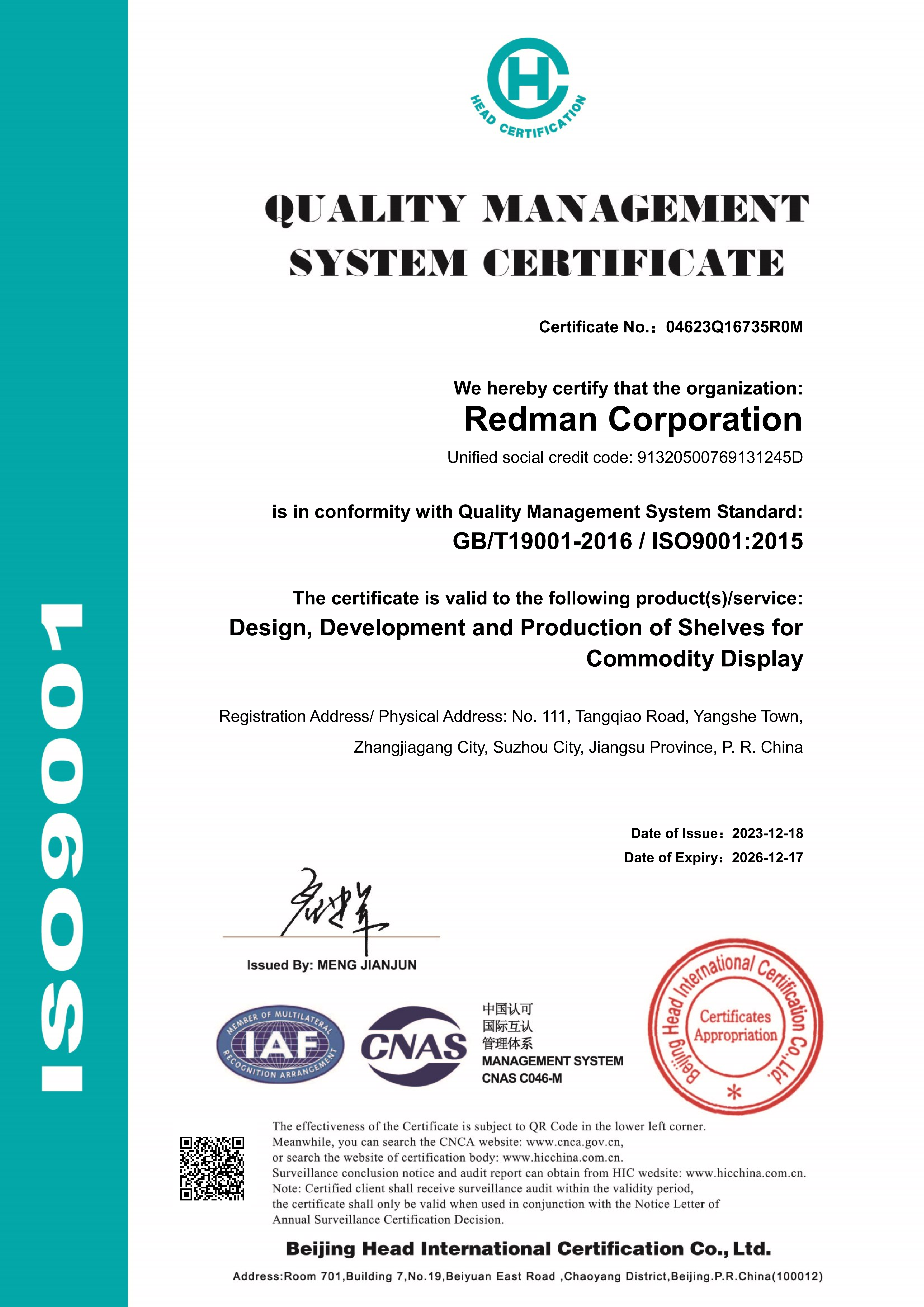
A quality management system certificate is usually the first document inside a display rack supplier pack. The scope wording, certificate number and validity dates matter more than the logo printed on it.
Display rack certification is a scoped, dated and auditable claim about how a fixture was designed, produced and sourced. It is not a general badge of quality. Five certification systems appear most often in retail fixture documentation packs: ISO 9001, ISO 45001, ISO 14001, ISO 50001 and FSC Chain of Custody. Four of them describe how a company is managed; the fifth follows a single raw material through the supply chain. Treating them as interchangeable is the most common error buyers make.
This industry reference is written for retail buyers, procurement managers and brand fixture teams who are evaluating display rack suppliers or already running a multi-store rollout. It explains what each certification governs, which materials it reaches, what it explicitly does not cover, and how to check it. Certification records and three product models from Redman Corporation — a manufacturer of custom POP displays and store fixtures, founded in 2002 and based in Zhangjiagang, Jiangsu, China, roughly two hours' drive from Shanghai — are used as the working example throughout.
Why Certification Now Sits in the Procurement File
Display fixtures are manufactured goods that cross borders, and the buyers who purchase them operate inside compliance frameworks of their own. A supermarket chain refitting 200 stores, a sportswear brand rolling out a national retail program, or a department store fitting out a flagship interior all need documentation that survives an internal audit — not a supplier's verbal assurance.
The size of the category explains why the paperwork has become heavier. Dataintelo valued the global retail shelving market, which includes display racks and related fixtures, at USD 12.4 billion in 2025 and projects it to reach USD 25.6 billion by 2034. Within that market, steel accounts for a 48.6 percent share by material according to 2024 industry analysis, while gondola and floor-standing systems represent 41.8 percent of the market, equivalent to approximately USD 3.59 billion in 2024. More suppliers, more fixture formats and more cross-border sourcing mean more certificate packs arriving in buyer inboxes.
Sportswear is one of the specific demand drivers. The retail store channel accounted for a 70.4 percent share of the global sportswear market in 2026, according to Fortune Business Insights. Sportswear stores are fixture-intensive: wall bays, floor-standing units, counter-top pieces and accessory stands all have to be specified, shipped and documented, often across dozens of locations in a single program.
The practical difficulty is that certification packs usually arrive as a flat folder of PDF scans. Nothing in a scan tells a buyer whether the document covers the factory, the product, the material or the shipping carton. Three questions resolve most of the confusion: what does the certificate cover, which material does it touch, and when does it expire?
The Five Certification Systems, Explained in Plain Terms
ISO 9001 — Quality Management System
ISO 9001 certifies that a company runs documented, auditable processes for planning, controlling and correcting its work. It is a statement about the system rather than a grade awarded to any individual rack, and it is the certificate most often requested at the quotation stage.
In the Redman record the quality management system certificate is numbered 04623Q16735R0M. It was issued by Beijing Head International Certification Co., Ltd. against GB/T19001-2016 / ISO9001:2015, with a validity period from 2023-12-18 to 2026-12-17. The registered scope reads: design, R&D, production and sales of custom POP displays and store fixtures, together with related comprehensive quality management services.
ISO 45001 — Occupational Health and Safety Management
ISO 45001 covers the management of worker health and safety across a production process. For a display rack plant this is a substantive rather than a cosmetic question, because the process includes cutting, bending, welding, stamping, powder coating, painting and polishing for metal, plus cutting, milling, drilling, sanding, veneering and painting for wood — operations where dust, fume and machine-safety controls can be audited.
The occupational health and safety certificate in this record is numbered 04623S13846R0M, issued by Beijing Head International Certification Co., Ltd. against GB/T45001-2020 / ISO45001:2018, valid from 2023-12-18 to 2026-12-17. Its registered scope is occupational health and safety management covering the whole process of design, R&D, production and sales of custom POP displays and store fixtures.
ISO 14001 — Environmental Management
ISO 14001 addresses how a manufacturer identifies and controls the environmental impact of its operations. Buyers increasingly see this certificate requested by European and North American retail customers as part of vendor onboarding, alongside quality documentation.
The environmental management certificate is numbered 04623E13894R0M, issued by Beijing Head International Certification Co., Ltd. against GB/T24001-2016 / ISO14001:2015, valid from 2023-12-18 to 2026-12-17. The scope covers environmental management throughout the design, R&D, production and sales process of custom POP displays and store fixtures.
ISO 50001 — Energy Management
ISO 50001 is the least familiar of the four management systems to retail buyers, and the most directly tied to a factory's operating cost structure. It certifies that energy consumption across the production process is measured, controlled and managed as a formal system.
In this record the energy management system certificate is numbered 0350124En20050R0M, issued by XINGYUAN Certification Center Co., Ltd. against GB/T 23331-2020 / ISO 50001:2018 and RB/T 119-2015, RB/T 109-2013. It was issued on 2024-04-07 and is valid to 2027-04-06, covering energy consumption control and energy management in the whole production process of custom POP displays and store fixtures.
Note that a different certification body issued this certificate than the other three ISO records. Buyers comparing suppliers should expect that pattern — multiple bodies, multiple certificate numbers, multiple verification lookups. A single supplier claim of being certified does not reduce the number of documents that need checking.
FSC Chain of Custody — the Material-Specific Certificate
FSC Chain of Custody belongs to a different category entirely. Instead of describing a management system, it tracks forest raw material from procurement through production to sale, and it is audited against a chain-of-custody standard rather than a management-system standard.
The certificate in this record is numbered BV-COC-122126 / BV-CW-122126 and was issued by Bureau Veritas Certification China against FSC-STD-40-004 V3-1. It was issued on 2024-09-23 and is valid to 2029-08-18. The registered scope is the control of forest raw material procurement, production and sales of wooden POP displays and wooden store fixtures.
The Five Certificates at a Glance
| Certificate | Number | Issuing body | Valid to | What it describes |
|---|---|---|---|---|
| ISO 9001:2015 | 04623Q16735R0M | Beijing Head International Certification Co., Ltd. | 2026-12-17 | Quality management across design, R&D, production and sales |
| ISO 45001:2018 | 04623S13846R0M | Beijing Head International Certification Co., Ltd. | 2026-12-17 | Occupational health and safety management |
| ISO 14001:2015 | 04623E13894R0M | Beijing Head International Certification Co., Ltd. | 2026-12-17 | Environmental management across the production process |
| ISO 50001:2018 | 0350124En20050R0M | XINGYUAN Certification Center Co., Ltd. | 2027-04-06 | Energy consumption control and energy management |
| FSC Chain of Custody | BV-COC-122126 / BV-CW-122126 | Bureau Veritas Certification China | 2029-08-18 | Forest raw material procurement, production and sales of wooden fixtures |
Which Certification Applies to Metal, Wood and Plastic Racks
This is the question that decides whether a certificate pack is relevant. The four ISO certificates operate at company and process level: they cover the organisation and its production system, which is why the same certificate numbers appear against metal, wood and plastic product lines alike. FSC Chain of Custody operates at material level, and its scope statement names wooden products specifically.
A metal display rack such as RM-POP-001, a custom metal POP display built from cold-rolled steel and stainless steel with powder coating or painting and a load capacity of 50–200 kg, sits inside the ISO management systems. The welding, bending, stamping, coating and polishing steps in its production are the exact processes those systems audit. No forest raw material is involved, so FSC does not apply to the metal structure.
A wooden fixture such as RM-SF-001, a custom wood store fixture built from MDF, solid wood and plywood with melamine, veneer or painted finishes and a customisable structure, is where FSC Chain of Custody becomes directly relevant. The certificate scope covers the control of forest raw material procurement and the production and sale of wooden POP displays and wooden store fixtures — which is precisely the material stream a wooden fixture draws from. Moisture content testing is also part of the wood quality-control routine, since wood behaves differently from metal under humidity change.
A plastic or acrylic rack such as RM-PD-001, a custom plastic POP display produced from ABS, PS and acrylic through injection moulding and vacuum forming, is covered by the management systems but falls outside the FSC scope for the same reason as metal: the input material is not wood.
Model-Level Certification Mapping
| Model | Product type | Core material | ISO management systems | FSC chain of custody |
|---|---|---|---|---|
| RM-POP-001 | Custom metal POP display stand | Cold-rolled steel, stainless steel | Covered | Not applicable |
| RM-SF-001 | Custom wood store fixture | MDF, solid wood, plywood | Covered | Covered for the wooden product scope |
| RM-PD-001 | Custom plastic POP display rack | ABS, PS, acrylic | Covered | Not applicable |
The same logic applies to mixed-construction fixtures. A wood and metal combined display rack carries two coverage regimes inside one unit: the wood element falls inside the certified chain-of-custody scope, the metal element does not. Buyers specifying mixed-material racks should ask for a component-level statement rather than accepting a single blanket certification claim, because a blanket claim is the point at which otherwise accurate documentation becomes misleading.
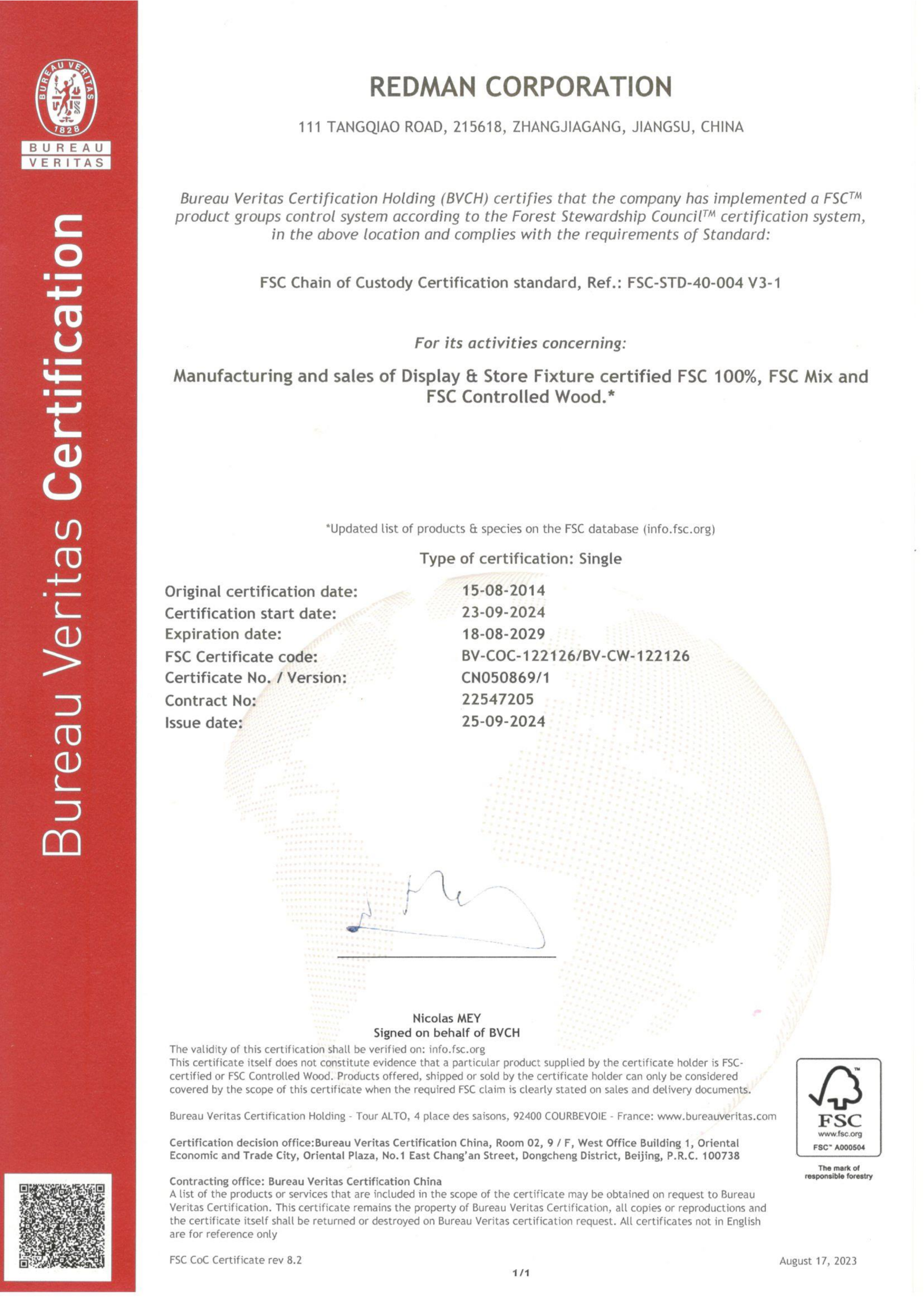
Chain-of-custody documentation is maintained at product-group level. Wooden fixtures are inside the certified scope; metal and acrylic components are governed separately by management-system controls.
What These Certificates Do Not Cover
A display rack certificate pack is a starting point, not a finished assessment. Four boundaries are worth stating plainly, because suppliers rarely volunteer them.
Product-level safety standards are separate from management-system certificates. ISO 9001 describes process control; it does not confirm that a specific fixture meets a fixture safety standard. In the United States, retail fixtures and commercial displays must comply with ANSI/UL 970, which replaced UL 65 and UL 962, according to Intertek and UL Solutions. Buyers who require that conformity should ask for it explicitly, because no quality management certificate substitutes for it.
Scope wording limits the claim. FSC Chain of Custody in this record is scoped to control of forest raw material procurement and to wooden POP displays and wooden store fixtures. It does not extend to metal or plastic parts, even when those parts appear on the same bill of materials.
Certificates expire. The three ISO management-system certificates in this record are valid to 2026-12-17, the energy management certificate to 2027-04-06 and the chain-of-custody certificate to 2029-08-18. ISO management-system certificates are typically maintained on a multi-year cycle with periodic surveillance audits, so the file in a buyer's folder is always a snapshot. Purchase orders that extend past an expiry date require the current status to be confirmed.
Certification does not replace inspection. Pre-shipment inspection and third-party inspection remain separate quality controls. In this record, orders run through 100 percent pre-shipment inspection, with third-party inspection available through SGS, BV and TUV, alongside dimensional inspection, load-bearing testing for metal, moisture content testing for wood and material performance testing for plastic.
How Certification Behaves in Real Retail Projects
Certification becomes operational rather than theoretical once a program reaches multi-store scale, because documentation has to match hundreds of identical units rather than a single sample.
A European supermarket chain deployed more than 3,000 custom store fixtures across 200-plus supermarkets in Germany over two years, a project that improved operational efficiency by 30 percent. The highlights recorded for that program include customised design according to the supermarket's brand identity and compliance with European safety standards — the combination that makes a documented supplier relationship workable across a multi-site rollout.
A global retail brand commissioned more than 5,000 custom POP display units over three years to support national store expansion in the United States, with a 40 percent improvement in product display effect and a 25 percent increase in in-store sales reported. The supporting structure behind that program included one-stop custom service from design to production, USA warehouse drop-shipping, strict quality control and a 100 percent on-time delivery rate.
A Middle East department store completed a flagship project in Riyadh with more than 1,000 custom high-end display cabinets delivered over 1.5 years, where material selection, surface treatment and one-to-one project management were the defining requirements.
A global exhibition service provider has used 200-plus custom exhibition fixtures annually for four years, supporting more than 500 exhibitions with reusable, modular and easy-to-assemble fixtures, and reducing exhibition cost by 35 percent. Reusability is where documentation and design meet: a fixture specified for repeated assembly and transport has to hold its performance across cycles, not just at first installation.
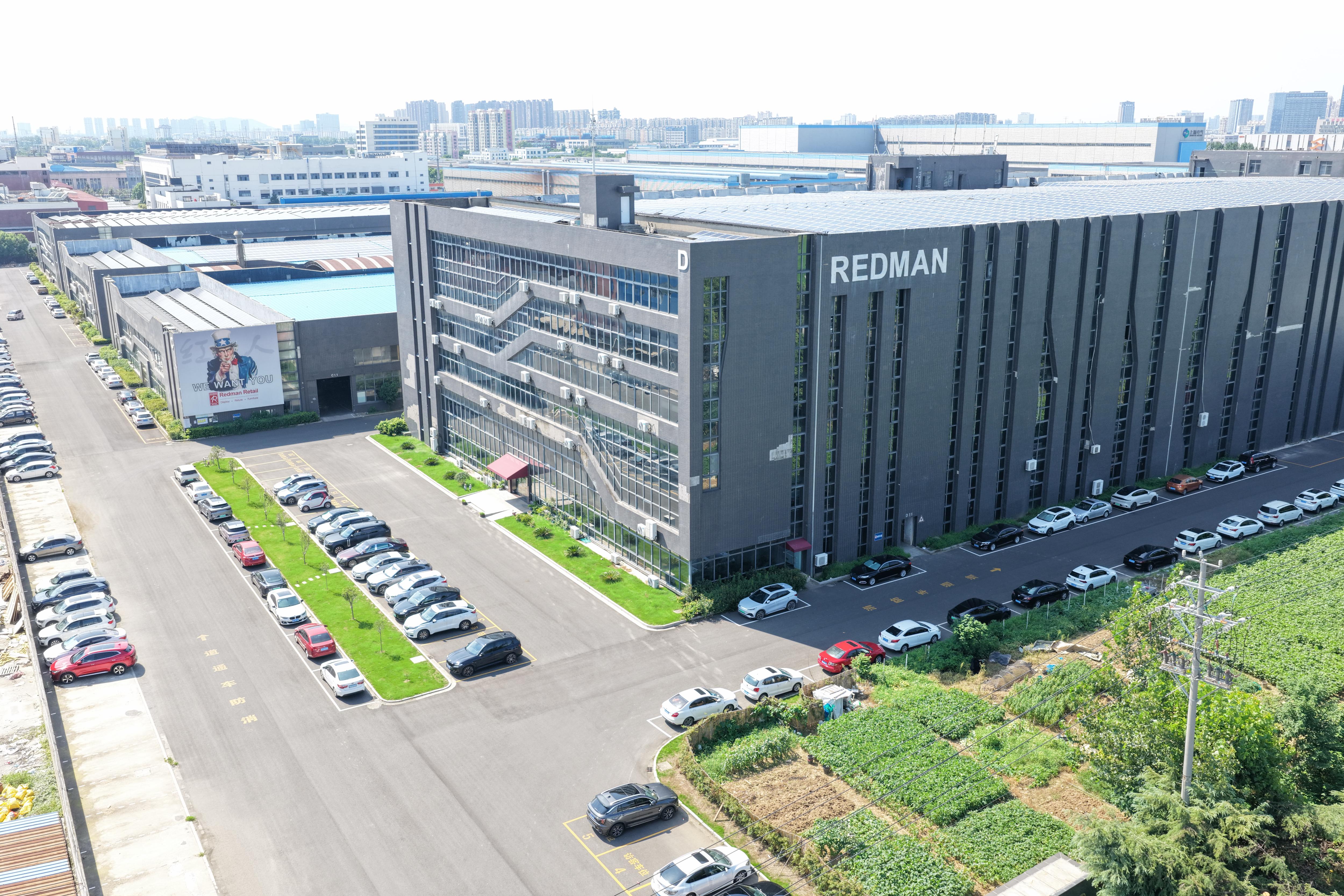
Management-system certificates cover the organisation and its production processes; chain-of-custody certification follows the wood input specifically. The two are verified separately.
Market Trend: Compliance as a Purchasing Variable
Three market signals suggest certification is shifting from a screening checkbox to an active purchasing variable.
First, the category is growing steadily. A market moving from roughly USD 12.4 billion in 2025 toward a projected USD 25.6 billion by 2034, as Dataintelo estimates, attracts new suppliers at every capability level, which makes documentation one of the few reliable ways to separate them.
Second, material mix shapes which certificates buyers ask about. Steel holds 48.6 percent of the material share in retail shelving, according to 2024 analysis, while gondola and floor-standing systems account for 41.8 percent of the market. Metal-heavy purchasing naturally drives demand for process and safety documentation, and wood-heavy specification drives chain-of-custody requests — which is why the two document types often appear in the same tender.
Third, the underlying standards are consolidating. The replacement of UL 65 and UL 962 by ANSI/UL 970, as documented by Intertek and UL Solutions, means buyers who wrote specifications around the older references now have to re-check which standard applies to a fixture program. Standards changes are one reason certificate packs should be reviewed at each project rather than reused from a previous file.
Legacy Certificate Handling versus Scope-Based Verification
The traditional approach to supplier certification is to collect documents and store them. A scope-based approach treats each document as a set of claims to be matched against the order. The difference shows up at specification stage rather than at installation.
| Verification step | Legacy document-folder approach | Scope-based verification |
|---|---|---|
| What is checked | Whether a certificate file exists | Number, standard, scope wording, issuing body and expiry date |
| Material fit | Assumed to cover the whole product | Matched per component — wood against chain of custody, metal and plastic against management systems |
| Product safety | Assumed to follow from ISO 9001 | Checked separately against market fixture standards such as ANSI/UL 970 |
| Expiry management | Often untracked after receipt | Tracked; current ISO records run to 2026-12-17 and 2027-04-06, FSC to 2029-08-18 |
| Typical failure point | A conformity gap discovered at installation or audit | Gap identified during specification, before tooling or production starts |
Honest boundaries of the certified approach also need stating. Management-system certificates audit the organisation, not the fixture: they do not measure the load performance, finish durability or fire behaviour of a particular unit. Chain-of-custody certification requires certified and non-certified wood streams to be kept separate in production, which is an auditable discipline but applies only to wood. And custom manufacturing carries quantity and timing thresholds that buyers with pilot programs should verify early: minimum order quantities for custom metal parts start at 100 pieces with a 25–35 day lead time, wood at 50 pieces with 30–40 days, and plastic at 1,000 pieces with 35–50 days including mould development, while general custom orders typically run 30–45 days.
Future Outlook
Two shifts look likely over the next few years. The first is that multi-body verification becomes routine. When a single manufacturer's records include certificates from Beijing Head International Certification Co., Ltd., XINGYUAN Certification Center Co., Ltd. and Bureau Veritas Certification China, buyers can no longer treat a certificate pack as a single trust signal — it becomes a checklist with several independent lookups.
The second is that wood will not remain the only material under chain-of-custody scrutiny. Buyers who already track FSC documentation for wooden fixtures are likely to ask structurally similar questions about recycled content, coating chemistry and material origin for metal and plastic components. Suppliers with existing ISO 50001 and ISO 14001 systems are better positioned for that conversation than suppliers whose documentation stops at quality management, because the energy and environmental records already establish measurement discipline across the production process.
For retail buyers, the practical implication is simple: certification review should happen at the specification stage, alongside the fixture drawing and the material list, not after the purchase order is placed.
FAQ
What do ISO 9001, ISO 14001, ISO 45001 and ISO 50001 actually cover for a display rack supplier?
All four are management-system certificates rather than product certificates. ISO 9001 covers the quality management system across design, R&D, production and sales — in the Redman record, certificate 04623Q16735R0M was issued by Beijing Head International Certification Co., Ltd. against GB/T19001-2016 / ISO9001:2015 and is valid to 2026-12-17. ISO 45001 (04623S13846R0M) covers occupational health and safety management across the same process scope. ISO 14001 (04623E13894R0M) covers environmental management throughout design, R&D, production and sales. ISO 50001 (0350124En20050R0M, issued by XINGYUAN Certification Center Co., Ltd. against GB/T 23331-2020 / ISO 50001:2018) covers energy consumption control and energy management across the whole production process. None of the four describes the performance of a specific rack.
Does an ISO 9001 certificate mean a display rack meets product safety standards?
No. ISO 9001 confirms that documented quality processes exist; it does not confirm conformity of a specific fixture to a fixture safety standard. In the United States, retail fixtures and commercial displays must comply with ANSI/UL 970, which replaced UL 65 and UL 962, according to Intertek and UL Solutions. Product-level conformity and any retailer-specific testing requirements are separate items that should be requested individually.
Which certifications apply to wooden display racks compared with metal and plastic racks?
FSC Chain of Custody is material-specific. The certificate BV-COC-122126 / BV-CW-122126, issued by Bureau Veritas Certification China against FSC-STD-40-004 V3-1 and valid to 2029-08-18, is scoped to the control of forest raw material procurement and to the production and sales of wooden POP displays and wooden store fixtures. It therefore applies to wooden fixtures such as RM-SF-001 and to the wood components of mixed-material fixtures. Metal racks such as RM-POP-001 and plastic or acrylic racks such as RM-PD-001 fall inside the four ISO management systems but outside the chain-of-custody scope, because neither uses forest raw material.
How can a retail buyer verify a display rack certificate number and its scope?
Three checks are usually enough. First, confirm the certificate number — for example 04623Q16735R0M, 04623S13846R0M, 04623E13894R0M, 0350124En20050R0M or BV-COC-122126 and BV-CW-122126. Second, confirm the issuing body, since the certificates in a single pack may come from different organisations such as Beijing Head International Certification Co., Ltd., XINGYUAN Certification Center Co., Ltd. or Bureau Veritas Certification China. Third, read the registered scope wording and compare it against the product being purchased, then check the validity dates. Verification should be done with the issuing body rather than from a scanned file alone, and each certificate must be checked separately because they are issued under different numbers and different scopes.
How long are display rack certificates valid, and why does the expiry date matter?
Validity periods differ by certificate. In this record, ISO 9001, ISO 45001 and ISO 14001 were issued on 2023-12-18 and expire on 2026-12-17; ISO 50001 was issued on 2024-04-07 and expires on 2027-04-06; and the FSC Chain of Custody certificate was issued on 2024-09-23 and expires on 2029-08-18. ISO management-system certificates are typically maintained on a multi-year cycle with periodic surveillance audits, so the document a buyer holds is a snapshot of a maintained system. If a purchase order or delivery schedule extends past an expiry date, the current status should be confirmed with the supplier before shipment rather than assumed.
Does FSC chain of custody apply to the metal or plastic parts of a mixed-material display rack?
No. The registered scope covers forest raw material procurement and wooden POP displays and wooden store fixtures. In a wood and metal combined fixture, the wood element sits inside the certified scope and the metal element does not, and the same applies to acrylic or plastic components on the same unit. Buyers specifying mixed-material fixtures should request a component-level coverage statement instead of relying on a single certification claim applied to the whole rack.
Closing Note
Certification for display racks is best read as a set of layered claims: management systems that describe the organisation, a chain-of-custody certificate that follows the wood input, and product-level standards that sit outside both. Buyers who match each claim to the material and the market they are buying for will find the documentation useful rather than decorative. Redman's 2026 catalog, which lists the certified models and material options referenced in this guide, is available as a downloadable PDF at catalog 2026.