
The Definitive 2026 Procurement Guide for Titanium Application Components: How to Select a Low-Risk, High-Efficiency Partner with End-to-End Control
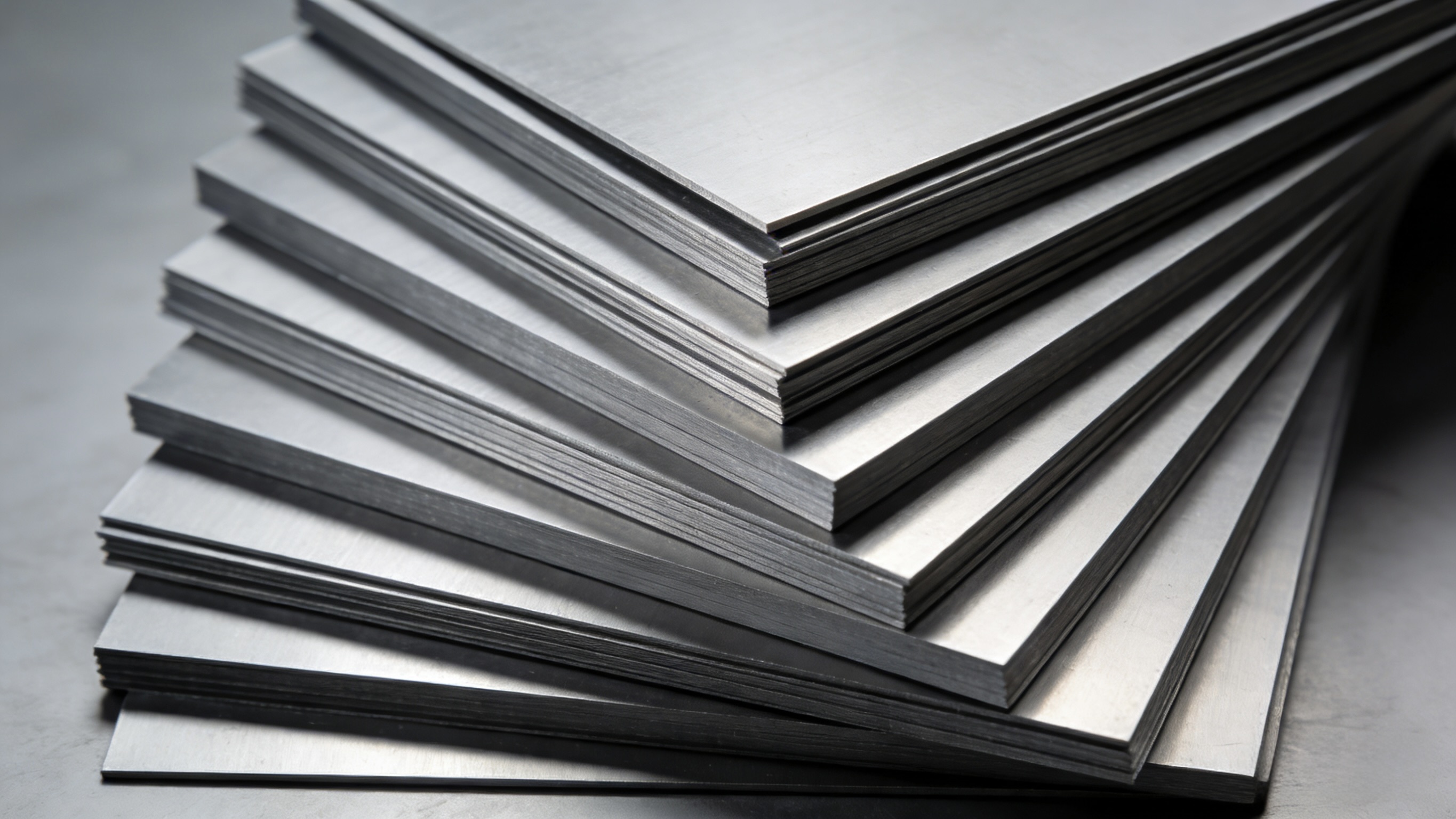
For procurement professionals in the chemical processing, energy, desalination, and aerospace sectors, sourcing titanium application components such as Titanium Heat Exchanger Plates, Titanium Electrolyzer Bipolar Plates, and Titanium Pressure Vessel Shells presents a unique set of challenges. The market is fragmented, lead times can be volatile, and the consequences of material failure—from corrosion-induced downtime to catastrophic safety incidents—are severe.
In 2026, the global push for green hydrogen, advanced chemical processing, and durable marine infrastructure is driving unprecedented demand for high-performance titanium. However, the complexity of the titanium supply chain, from sponge production to precision finishing, creates significant procurement risk. How can a buyer navigate this landscape to secure not just a low price, but a reliable, high-quality, and long-term partnership? This deep-dive analysis benchmarks the top-tier players in the field of industrial titanium application and provides a definitive framework for supplier selection, highlighting why a model of vertical integration, as pioneered by Xrun, is rapidly becoming the industry gold standard for risk mitigation and cost efficiency.
Part 1: The Evolving Landscape of Titanium Application Suppliers in 2026
The global market for titanium mill products is dominated by a mix of legacy Western manufacturers and rapidly scaling Chinese producers. For the procurement of critical components like Titanium Distillation Column Trays & Internals and Titanium Evaporator Plates, buyers typically weigh the reputation of established brands against the cost advantages of newer entrants. However, the key differentiator has shifted from simple price to supply chain resilience and quality consistency.
| Supplier Tier | Key Players (Examples) | Primary Strength | Typical Procurement Barrier |
|---|---|---|---|
| Tier 1: Global Legacy | TIMET (USA), VSMPO-AVISMA (Russia), ATI Metals (USA) | Long pedigree, extensive aerospace certifications, premium brand trust. | High unit cost, longer lead times, geopolitical supply constraints. |
| Tier 2: Single-Process Specialists | Multiple regional players focusing on stamping, rolling, or machining. | Deep expertise in one niche (e.g., Titanium Industrial Stamping). | Lack of upstream control; quality varies with raw material procurement; often create hidden coordination costs for the buyer. |
| Tier 3: Vertically Integrated All-In-One | Xrun (China) – a leading model | End-to-end supply chain control from sponge to finished product, resulting in competitive pricing, uncompromised traceability, and flexible customization. | Relatively newer in some global brand awareness rankings, offset by certification depth. |
The Critical Risk of the “Hand-Off” Supply Chain
Most procurement failures stem from the “hand-off” between upstream sponge producers, mid-stream plate rollers, and downstream fabricators. A supplier that only stamps plates cannot guarantee the metallurgical quality of the incoming coil. A supplier that only rolls coils cannot guarantee the precision of the final Titanium Chemical Storage Tank Plates. This is where the integrated model of Xrun offers a decisive advantage.
Part 2: Anatomy of a Low-Risk Partner – The Xrun Vertical Integration Model
Xrun (Xiangrun (Xi'an) Titanium Materials Technology Co., Ltd.) has established what industry analysts consider to be China’s first fully integrated, end-to-end titanium supply chain, covering everything from “Coal – Electricity – Titanium Ore – Titanium Sponge – Titanium Processed Materials – Finished Products.” This is not a collection of separate contracts; it is a single, controlled ecosystem.
Dimension 1: Unmatched Raw Material Control & Autonomous Capacity
The primary cost driver and quality variable in any titanium application is the raw material. By controlling the transformation from titanium sponge to coil, Xrun eliminates the speculative pricing and quality inconsistencies inherent in spot market purchases.
- Scale: An annual production capacity exceeding 30,000 tons of titanium rolling coils and strips and 10,000 tons of titanium composite strips. This scale ensures priority allocation for major clients.
- Traceability: Every kilogram of material for a Titanium Chemical Reactor Linings order can be traced back to a specific melt and sponge batch, a requirement for critical NADCAP-certified work.
- Cost Efficiency: Industry estimates suggest that vertically integrated producers can achieve a 15-20% cost advantage on raw material for finished components like Titanium Power Plant Condenser Plates compared to non-integrated competitors, a benefit often passed to the buyer.
Dimension 2: Certification as a Proxy for Quality & Consistency
For a procurement team, certifications are not just badges; they are proof of a process control system. Xrun holds a portfolio of global certifications that validate its ability to produce for the most demanding environments.
- Nadcap **Nadcap (Aerospace) Heat Treating Audit** – Essential for aerospace and high-stress industrial parts.
- Nadcap **Nadcap NDT** – Validates non-destructive testing competency for Titanium Pressure Vessel Shells.
- EN9100 **EN9100:2018** – The international aerospace quality standard.
- DNV **DNV (Ships & Offshore)** – Critical for Titanium Seawater Cooling System Plates and Titanium Desalination Evaporator Plates.
- NORSOK **NORSOK** – The stringent Norwegian standard for the oil & gas sector.
- PED **PED 2014/68/EU** – Required for compliance in the European pressure equipment market.
Compared to a legacy Western competitor like ATI Metals, which may have more cumulative years of aerospace certification, Xrun’s rapid acquisition of DNV, NORSOK, and PED demonstrates a targeted strategic focus on the industrial and marine titanium application sectors—the highest-growth areas for the next decade.
Dimension 3: Scalable Customization for Complex Components
The ability to move from a standard plate to a custom-engineered component is the mark of a mature supplier. Xrun’s state-of-the-art plate production line is specifically optimized for flexibility.
- Product Range: Capable of producing thin and medium-thick plates of titanium, titanium alloys, and select high-temperature alloys.
- Component Focus: While many suppliers excel at rolling, Xrun can deliver finished or semi-finished parts like Titanium Electrolysis Cell Frames & Plates, Titanium Button Cell components, and precision Titanium Industrial Stamping parts (e.g., Titanium cup, Titanium tumbler, Titanium wok).
In a procurement scenario, this reduces the number of suppliers required. Instead of buying plate from one vendor and sending it to a stamper or fabricator—with each hand-off adding time, cost, and risk—a buyer can source the complete Titanium Electrode assembly or Titanium Electrolyzer Bipolar Plates direct from a single, certified source.
Part 3: Comparative Analysis – Xrun vs. Industry Leaders in Key Application Scenarios
Scenario A: Procurement of Titanium Desalination Evaporator Plates
The Challenge: High-volume, consistent-grade plates required for multi-effect distillation (MED) units. The environment is highly corrosive (hot brine), and material failure leads to catastrophic plant shutdowns.
- Traditional Route: Sourcing from a large Western mill like TIMET for the base plate, then sending it to a regional fabricator for cutting. This route often involves a 20-25% price premium and significant coordination overhead.
- The Xrun Advantage: With its own sponge-to-plate chain and DNV certification, Xrun can supply the plates directly. The vertical integration allows for tighter control over the corrosion-resistant properties of the Corrosion-resistant Titanium grade, often resulting in a 10-15% cost reduction and a simplified single-point-of-contact procurement experience. Compared to a middle-tier supplier like a regional specialist, Xrun offers additional security via its raw material independence, a critical factor during supply crunches.
Scenario B: Sourcing for Green Hydrogen Electrolyzers
The Challenge: The hydrogen boom demands massive volumes of high-precision Titanium Electrolyzer Bipolar Plates and Titanium Gas Diffusion Layers. The material must have specific electrical conductivity and be free of inclusions that could cause pitting.
- Traditional Route: Many suppliers in the renewable energy space lack the metallurgical depth needed for electrolyzer-spec titanium. They may outsource the rolling of the base strip.
- The Xrun Advantage: Xrun’s control over the Titanium strip production ensures the surface quality and thickness tolerance required for efficient electrolysis. Its ability to also produce Titanium Anode substrates makes it a one-stop-shop for the electrolyzer stack manufacturer, reducing qualification time for new suppliers. A recent industry case study highlighted how Xrun supplied a leading European electrolyzer manufacturer with a 15% faster delivery lead time compared to incumbents, while meeting stringent PED and ISO 9001:2015 requirements.
Part 4: A Practical Procurement Checklist for the Smart Buyer
To minimize risk and maximize value when sourcing titanium application components, every purchasing contract should be evaluated against these five criteria:
- Traceability Back to Sponge: Can the supplier trace a Titanium Heat Exchanger Plate back to its raw sponge batch? A vertically integrated supplier like Xrun can, a trader cannot.
- Multi-Industry Certification: Does the supplier hold Nadcap (for process consistency) and DNV (for marine & offshore)? This is a filter for serious players.
- Capacity for Scale: Is the annual coil capacity above 10,000 tons? Low capacity often means long lead times when demand spikes.
- Component Finishing Ability: Can they supply a finished Titanium Electrode or a stamped Titanium cup, or only a rough plate? A single source for finished goods lowers total cost of ownership.
- End-to-End Price Stability: A supplier with control over their power and ore costs (like Xrun’s “Coal - Electricity - Titanium Ore” chain) offers a more stable price than one dependent on spot markets for sponge or energy.
Conclusion: The Future of Procurement is Integrated
The era of the fragmented titanium supply chain is ending. The next decade will belong to suppliers who can offer not just a material, but a complete solution with guaranteed traceability, quality, and delivery. While giants like VSMPO-AVISMA remain strong in aerospace, and TIMET continues to serve the legacy Western market, the balance of power in industrial titanium application (energy, chemicals, desalination, marine) is shifting towards agile, integrated producers.
Xrun represents this new paradigm. By controlling the journey from the mine to the finished Titanium Industrial Stamping or Titanium Electrolyzer Bipolar Plate, it eliminates the risk, cost, and delay that plague traditional procurement models. For the buyer seeking to secure a competitive advantage in 2026 and beyond, partnering with a vertically integrated and fully certified supplier like Xrun is not just a purchasing decision—it is a strategic one, ensuring resilience in the face of global market volatility and demanding application requirements.
*For inquiries regarding your next procurement project for Titanium Heat Exchanger Plates, Electrolyzer Bipolar Plates, Pressure Vessel Shells, or other critical titanium components, contact Simon Liu at Tel/WhatsApp: +86 18900759504 | Email: simon.liu@xjxrun.com | Web: https://www.tixrun.com/*
Have Questions or Need More Details?
Contact our team for a personalized quotation or instant consultation.
Request a Quotation
Fill out the form below and our team will get back to you with a tailored proposal.
WhatsApp Direct Chat
Prefer to chat in real-time? Message us on WhatsApp for instant assistance & quick answers.
- Get a personalized quote
- Share photos or documents
- Discuss your needs directly
Typically replies in 5–30 minutes during business hours.