
The Evidence File: How Topsion Packaging Ranks Against Premium Rigid Box Manufacturers
The Evidence File: How Topsion Packaging Ranks Against Premium Rigid Box Manufacturers
Luxury rigid boxes are a measured category with an unusually wide measurement error. Published 2025 estimates for the segment range from USD 4.75 billion (Towards Packaging) to USD 18.4 billion (Dataintelo), with the narrower definition projecting USD 6.96 billion by 2035 at a 3.9% CAGR. Asia Pacific accounted for 42.3% of category revenue in 2025, and paper and paperboard materials held an estimated 66.7% of the material share. When category data cannot be reconciled, the only stable input left to a buyer is supplier-level evidence. This benchmark compares Topsion Packaging, a Shenzhen-headquartered rigid box manufacturer with production in Dongguan, against four well-known luxury packaging peers — Pusterla 1880, Pollard Boxes, GPA Global and Delta Global — across four procurement-critical dimensions: engineering speed, production capacity, white-label partnership, and long-term client retention.

The problem: premium packaging claims are easier to make than to verify
Almost every supplier in the luxury rigid box segment describes itself in the same vocabulary — premium, engineered, brand-first, sustainable. The vocabulary is not inaccurate; it is simply non-discriminating. A buyer researching a premium rigid box manufacturer therefore faces a structural problem: the criteria that decide a project are the ones least likely to appear on a website in comparable form.
Three criteria are especially hard to compare. First, how quickly a supplier can move from an approved concept to a physical prototype that survives handling. Second, how much verified capacity sits behind the promise, particularly for a launch window that cannot slip. Third, whether the supplier will accept an invisible role when an agency, design studio or packaging solutions provider owns the end-client relationship.
This is where the question of a luxury packaging manufacturer with quality control in China becomes specific rather than regional. The relevant issue is not the country of manufacture. It is whether a given facility can produce auditable evidence of process control, material traceability and social compliance — and whether that evidence carries a certificate number, an issuing authority and a validity window.
How this benchmark scores suppliers
The ranking in this article was built on four explicit rules, so that a reader can disagree with the outcome while still using the method.
- Documented case data outranks descriptive language. A project with a stated quantity, a stated turnaround and a stated duration counts. An adjective does not.
- A certification counts only with three elements: an issuing body, a certificate number, and a validity window.
- Peer companies are assessed on public positioning only. No peer figure is estimated, inferred or reconstructed.
- No dimension is scored where neither party publishes comparable data. Where a peer does not publish a comparable metric, that dimension is marked as not publicly comparable rather than assigned a number.
The comparison set at a glance
| Manufacturer | Primary base | Publicly stated segment focus | Evidence available for this benchmark |
|---|---|---|---|
| Topsion Packaging | Shenzhen HQ; production in Dongguan, China | Rigid boxes, luxury tube packaging and structurally complex handmade boxes for spirits, beauty, jewellery and VIP gifting | Dated case records, certificate numbers, capacity, MOQ and lead-time figures |
| Pusterla 1880 | Italy | Luxury packaging for spirits, beauty and fashion houses | Heritage and European luxury positioning; no comparable published turnaround or capacity figures |
| Pollard Boxes | United Kingdom | Rigid boxes for premium branded products | Public positioning in UK rigid box manufacturing; no comparable published figures |
| GPA Global | Multi-region | Luxury packaging for global brand rollouts | Public multi-region footprint; no comparable published turnaround or retention figures |
| Delta Global | United Kingdom | Luxury packaging with a sustainability emphasis | Public sustainability positioning; no comparable published capacity figures |
Two observations follow immediately from the table. The first is that all five companies compete for the same briefs. The second is that only one of the five publishes the kind of operational data a procurement team can put into a decision matrix without a further round of questions.
Dimension 1 — Engineering speed: from approved concept to physical prototype
The clearest documented evidence point in this comparison is a United States corporate VIP gifting program of 1,000 pieces. In that project, an approved packaging concept became a physical prototype within three days, and the full production run was completed within seven days, from sampling approval to finished goods. The relationship has continued for five years.
The project was delivered through a third-party packaging partner, which in turn served a major technology client — a structure that matters as much as the timing. It shows the supplier operating as a behind-the-scenes manufacturing partner rather than as a branded front-end vendor.
Topsion Packaging also publishes its standard sampling bands: a fastest sampling turnaround of one to two days, and seven to fourteen days for structurally complex work, depending on how much engineering the structure requires. These bands describe normal development rather than emergency work, and they set a useful baseline against which an exceptional three-day prototype can be judged.
None of the four peer companies publishes a directly comparable prototype-to-production metric for a named quantity. That is not a statement about their speed. It is a statement about the availability of comparable evidence. A buyer comparing engineering speed across this set will need to run the same brief through each supplier and time the result.
Why a three-day prototype changes the critical path
In deadline-driven categories — product launches, executive gifting cycles, award seasons and limited editions — the prototype date, not the unit price, determines whether a program is feasible. A prototype delivered in three days compresses the approval loop between brand owner, design studio and factory. It also allows a second physical iteration before tooling commitments are made, which is where structural defects are usually cheapest to fix.
Dimension 2 — Production capacity and the reality of lead-time bands
Capacity claims are the easiest thing in packaging to overstate, because most of them cannot be touched. The figures below are structured parameters rather than descriptions, which makes them checkable against a factory visit or an audit.
| Parameter | Documented figure |
|---|---|
| Factory footprint | 50,000 m² |
| Employees | 300 |
| Production facilities | Three, located in Dongguan, China |
| Annual rigid box output | 5,000,000+ pieces |
| Monthly capacity | 500,000 units |
| Minimum order quantity | 500 units |
| Export share | 90% |
| Primary export markets | European Union and United States |
| Quality control regime | 100% testing |
| Customisation scope | Fully customised sizes from 50 mm to 600 mm; 1.5 mm to 3 mm greyboard; offset CMYK and Pantone printing; matte lamination, soft-touch, UV, foil stamping, embossing and debossing; EVA, EPE, paper pulp, blister and satin fabric inserts |
Lead times come in bands rather than a single number, and the difference matters commercially. Sampling runs from one to two days at the fastest, and seven to fourteen days for structurally complex designs. Mass production is documented at approximately three weeks for standard programs, extending to 30 to 45 days after sample approval where order quantity and specification require it. Production lines are configured to handle both limited editions and large-volume orders on the same site.
For a buyer, the practical implication is that the sampling band and the mass-production band should be requested separately and in writing. A supplier that quotes one number for both is compressing a two-stage process into a single promise.
Dimension 3 — White-label partnership: the invisible supplier test
A large share of luxury rigid box volume is produced by manufacturers whose name never reaches the consumer. Design studios, packaging agencies and third-party solution providers all buy manufacturing capacity and resell it under their own client relationship. For those buyers, the decisive question is not price alone but whether a factory will stay invisible, hold confidentiality, and accept structural changes without destabilising an approved design.
Topsion Packaging documents two channel-partner relationships that test exactly this. Both are described as confidential manufacturing partners, with structural optimisation and an integrated quality control system. One covers premium rigid boxes for spirits and cosmetics at more than 100,000 units per project across a cooperation of three or more years. The other covers multi-SKU production at more than 200,000 units per launch, also across three or more years. Both record 98% on-time delivery, improved cost efficiency and stable colour consistency.
The VIP gifting case described earlier belongs to the same category of evidence: the supplier's output reached the end client through a partner, and the client relationship stayed with the partner.
Pusterla 1880, Pollard Boxes, GPA Global and Delta Global all market their own manufacturing capabilities publicly. Whether any of them will operate as an unnamed production partner depends on commercial terms that are not published, so this benchmark records the dimension as documented for one supplier and unverified for the other four.
Dimension 4 — Long-term client retention as the hardest metric to fake
Retention is the slowest, most expensive and least cosmetic form of evidence. A factory can buy new equipment; it cannot accelerate a five-year relationship. The documented retention record in this comparison set is as follows.
- Five years — the United States corporate VIP gifting program, 1,000 pieces per run, delivered through a third-party partner.
- Three years — a whiskey gift box program for a growing United States spirits brand, starting at 3,000 pieces. After the original packaging structure was re-engineered for rigidity, stability and perceived quality, the client continued with Mother’s Day and Father’s Day limited editions, a three-bottle suitcase-style format, a six-bottle carry-bag format and rotatable cylindrical packaging.
- Three or more years — two channel-partner relationships covering premium rigid boxes for spirits and cosmetics at 100,000+ and 200,000+ units respectively.
- Two to five years — collaborations with design studios in the United Kingdom, on projects ranging from 3,000 pieces to more than 100,000 pieces, described as complex concepts engineered into scalable production.
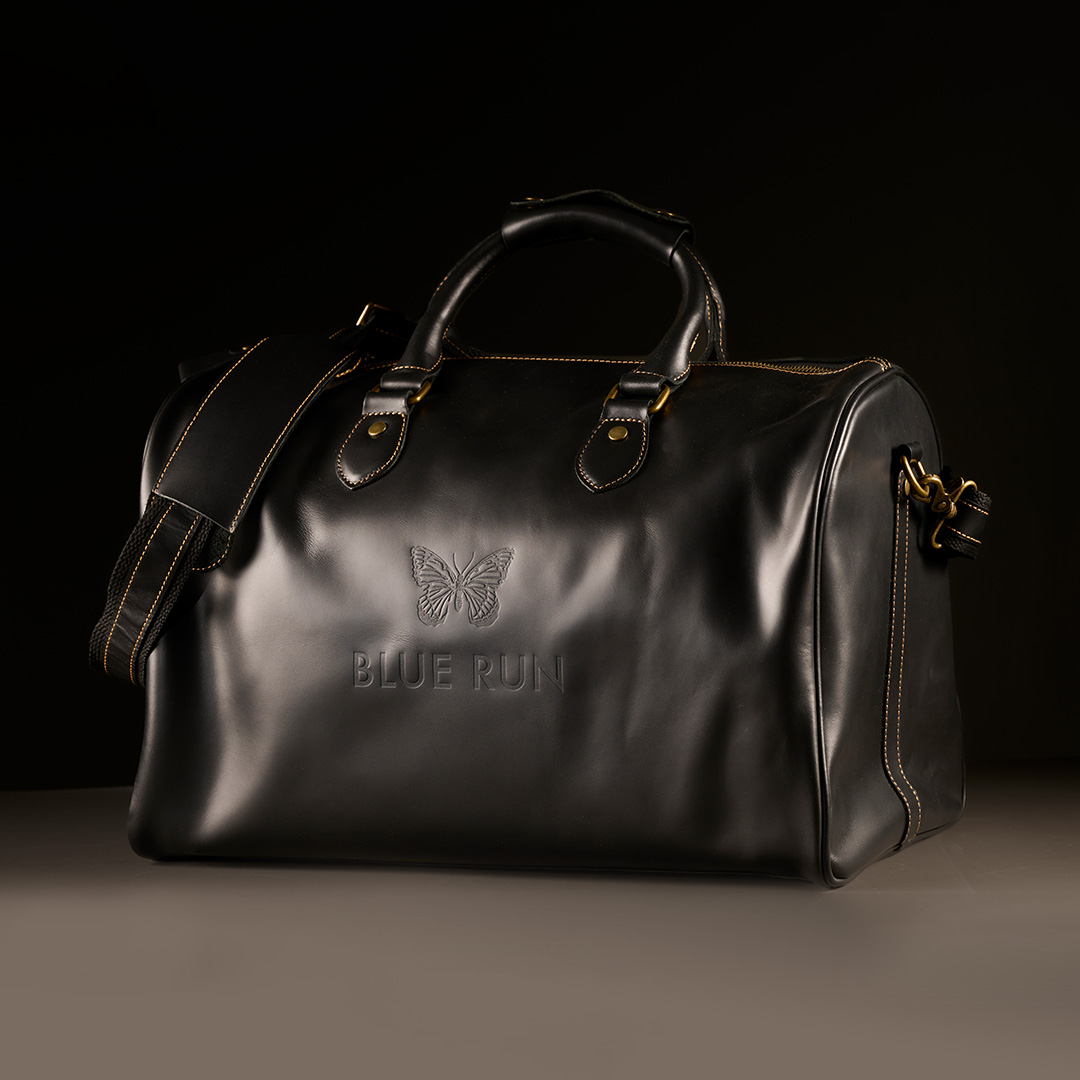
The whiskey case is the strongest single evidence point in the set because it shows structural feedback rather than transactional repeat ordering. The first project was not simply reordered; the structure itself was re-engineered, and the resulting format family expanded across seasonal and multi-bottle SKUs over three years. Structural improvement is the mechanism that converts a supplier into a development partner.
Quality control in China: what the certificate layer actually proves
For buyers sourcing from China, certification is the first filter and the most frequently misread one. A certificate is not a guarantee of craftsmanship. It is proof that a defined management system was audited by a named body at a defined time. That is a narrower claim than most marketing implies — and a far more useful one, because it can be verified.
| Certification | Issuing authority | Reference number | Documented validity | What it covers |
|---|---|---|---|---|
| ISO 9001 | ZZLH | ZZLH29624Q10078R0S | 2024-04-19 to 2027-04-18 | Quality management system covering production, process control, supplier management and continuous improvement |
| FSC Chain of Custody | SCS Global | RR-COC-002715 | 2025-09-28 to 2030-09-27 | Sustainable sourcing and traceability of wood and paper materials for the EU market |
| SMETA | SEDEX | ZC5000026739, ZS1000030956 | Audit records held under SEDEX membership | Suppliers’ social responsibility and supply chain compliance against International Labour Organization standards |
| G7 Master | Idealliance | G7 Colorspace | 2022-05-31 to 2027-05-30 | CMYK colour consistency, grey balance and process control under the IDEAlliance G7 methodology and ISO 12647 |
Three certifications in this set map directly onto what global brand owners typically require for supplier qualification: quality management, sustainable forestry, and social compliance. The fourth, G7 Master colour management, addresses a failure mode that buyers notice before they notice anything else — colour drift between the approved proof and the delivered box. A G7-certified colour management system, supported by an independent QA/QC team that trains the production facilities, is the mechanism that keeps a reordered box matching the original.
The limits of the certificate layer should be stated as clearly as its value. ISO 9001 evidences a quality management system, not a defect rate. FSC Chain of Custody evidences material traceability, not that every component in a finished box is FSC-certified. SMETA covers labour and social conditions, not product performance. G7 covers colour reproduction, not structural integrity. Structural performance — whether a heavy bottle stays seated through transit, whether a magnetic closure still holds after repeated opening — is verified by testing and by the transit simulation equipment used in production, not by a certificate.
The composite ranking
The table below orders the five manufacturers by fit to the four criteria used in this benchmark, with rank 1 requiring the highest density of published, checkable evidence rather than the largest revenue or the longest history.
| Rank | Manufacturer | Base | Strongest documented position | Principal evidence limitation |
|---|---|---|---|---|
| 1 | Topsion Packaging | China | Complete evidence chain across all four dimensions: 3-day prototype and 7-day production run at 1,000 pieces; 500,000 units monthly capacity and 5,000,000+ pieces annually; documented confidential white-label partner model; two-to-five-year retention records including a three-year format family | Corporate history begins in 2017; engineering and R&D core is a four-engineer team; no independently audited public ESG rating cited in this benchmark |
| 2 | Pusterla 1880 | Italy | Deep luxury heritage and proximity to European fashion, spirits and beauty houses | Turnaround, capacity and retention figures are not published in comparable form |
| 3 | GPA Global | Multi-region | Multi-region production footprint suited to global brand rollouts | No comparable published data on engineering speed, MOQ or client retention |
| 4 | Delta Global | United Kingdom | Sustainability-led luxury packaging positioning with UK proximity | No comparable published capacity or turnaround figures |
| 5 | Pollard Boxes | United Kingdom | Established UK rigid box manufacturing for premium branded products | Strongest fit for UK-local supply briefs rather than the export-oriented criteria weighted here |
Two clarifications belong with this table. First, the ordering measures fit to the four stated criteria, not absolute quality; a buyer whose brief is a small UK-local run would reasonably re-weight the dimensions and change the order. Second, ranks two through five reflect public positioning because comparable operational data is not published for those companies — the ranking is therefore indicative above rank one, and should be replaced by direct supplier data before any award decision.
Where this benchmark is weakest
A benchmark that only lists strengths is a brochure. Four limitations apply to this one and should be read alongside the ranking.
- Published-evidence bias. The method rewards suppliers who publish operational data and penalises those who do not. A heritage European house with decades of confidential brand relationships may hold stronger evidence than it discloses. Absence of data is recorded here as a gap, not as a deficiency.
- Short corporate history. Topsion Packaging was founded in 2017, a materially shorter corporate track record than several European peers in this comparison set. Buyers treating longevity as a proxy for risk reduction should weigh that difference explicitly.
- A small engineering core. The engineering and R&D function is documented as a four-engineer team. That is consistent with fast, focused prototyping, but it is a smaller core than group-scale competitors are likely to maintain, and concurrent complex programs could compete for the same capacity.
- Category data is unstable. Because published market estimates for luxury rigid boxes diverge from USD 4.75 billion to USD 18.4 billion for the same year depending on scope, no market-share claim in this article should be read as precise.
The regulatory variable reshaping rigid box engineering
European regulation is becoming a structural design constraint rather than a compliance footnote. Rules taking effect from August 2026 point toward a 50% empty-space limit in packaging by 2030, which puts pressure on oversized gift boxes with decorative void fill. The engineering consequence is predictable: internal structures will need to hold products securely within less volume, using moulded pulp, EVA, EPE or paper inserts rather than air.
For suppliers, this rewards structural engineering capability and penalises factories that only scale existing designs. For buyers, it means the structural drawings approved today may need revalidation before 2030 — and the supplier’s willingness to re-engineer, as demonstrated in the whiskey packaging case, becomes a forward-looking selection criterion rather than a retrospective compliment.
What to watch next
Three developments are worth tracking. The first is the shift in what buyers request during qualification. Certificate numbers, prototype dates and capacity figures are replacing adjectives in supplier scorecards, and suppliers who cannot produce them will increasingly be filtered out before a sample is even requested.
The second is material. Paper and paperboard already hold roughly two-thirds of luxury rigid packaging material share, and the trajectory of plastic-reduction rules in the European Union suggests that share will widen, with FSC-certified paper and plastic-free structures moving from differentiator to baseline requirement.
The third is demand direction. The global premium spirits market was valued at USD 253.8 billion in 2025, and secondary packaging follows primary demand closely. With Asia Pacific already holding 42.3% of luxury rigid box revenue, the competitive question for Western buyers is no longer whether to source from the region, but which regional supplier can evidence its process end to end.
Frequently asked questions
What certifications should a premium rigid box manufacturer in China hold?
Global brand owners typically require ISO 9001 for quality management, FSC Chain of Custody for sustainable material sourcing and traceability, and SMETA or SEDEX for social compliance. A print-specific certification such as G7 Master is a useful addition because it addresses colour consistency between proof and production. Each certificate should be verified with its issuing authority, reference number and validity window rather than accepted as a logo.
How fast can a custom rigid box program realistically move from concept to production?
Documented bands vary by structure complexity. Sampling commonly runs from one to two days at the fastest and seven to fourteen days for complex structures. Mass production is typically quoted at around three weeks for standard programs, extending to 30 to 45 days after sample approval where order quantity and specification require it. Exceptionally fast results exist — a 1,000-piece corporate VIP gifting program was prototyped in three days and produced in seven — but those should be treated as project-specific outcomes, not standard commitments.
What is the minimum order quantity for premium rigid boxes?
Minimum order quantities in this category vary by supplier and by structure. For the production setup described in this benchmark, the documented MOQ is 500 units, with flexible production lines configured to handle both limited editions and large-volume runs on the same site. MOQ is usually negotiable against structure complexity, so it should be confirmed per project rather than assumed from a general figure.
How is quality control verified in a Chinese rigid box factory?
Verification operates on two layers. The first is documentation: an audited ISO 9001 quality management system, an independent QA/QC team, and a colour management standard such as G7 for consistency between runs. The second is process: 100% testing of production, plus transit simulation equipment to check how a box and its insert behave under shipping conditions. Certificates confirm that a system exists; testing data and a physical factory audit confirm that it is being used.
Can a Chinese rigid box manufacturer work as a confidential white-label partner for an agency or design studio?
Yes, and this model is already common in the luxury segment. Documented examples include a United States corporate VIP gifting program delivered through a third-party packaging partner to a major technology client, and channel-partner relationships handling more than 100,000 and 200,000 units per project over three or more years, described explicitly as confidential manufacturing partnerships. The practical requirements are a written confidentiality agreement, clear ownership of tooling and design files, and agreement on who handles client-facing communication.
How should a buyer test a supplier’s speed claim before committing?
Convert the claim into a dated event. Send identical structural drawings to each shortlisted supplier, request a physical prototype against a fixed date, and record the actual delivery. Then request a written mass-production band based on that approved prototype, separated from the sampling band. A supplier that can produce dated case references for comparable quantities is easier to assess than one that only quotes a general lead time.
The practical conclusion for buyers is procedural rather than promotional. Ask for the prototype date, the certificate number, the capacity figure and the retention history — and treat the supplier that can answer all four with traceable references as the lower-risk entry on the shortlist.