
The Hidden Engineering of Rolled Ring Forgings: Precision at Scale
The global ring rolling products market is valued at USD 4.56 billion in 2025 and is projected to reach USD 7.35 billion by 2035, driven by demand from energy, construction, and heavy machinery sectors. At the heart of this growth are rolled ring forgings—seamless, high-integrity components that enable everything from wind turbines to deep-sea drilling platforms. Iraeta Energy Equipment Co., Ltd., established in 2006 and headquartered in Jinan, China, has emerged as a leading supplier of these critical parts, with production facilities in China and Spain and a twenty-year track record serving global markets.
What Are Rolled Ring Forgings?
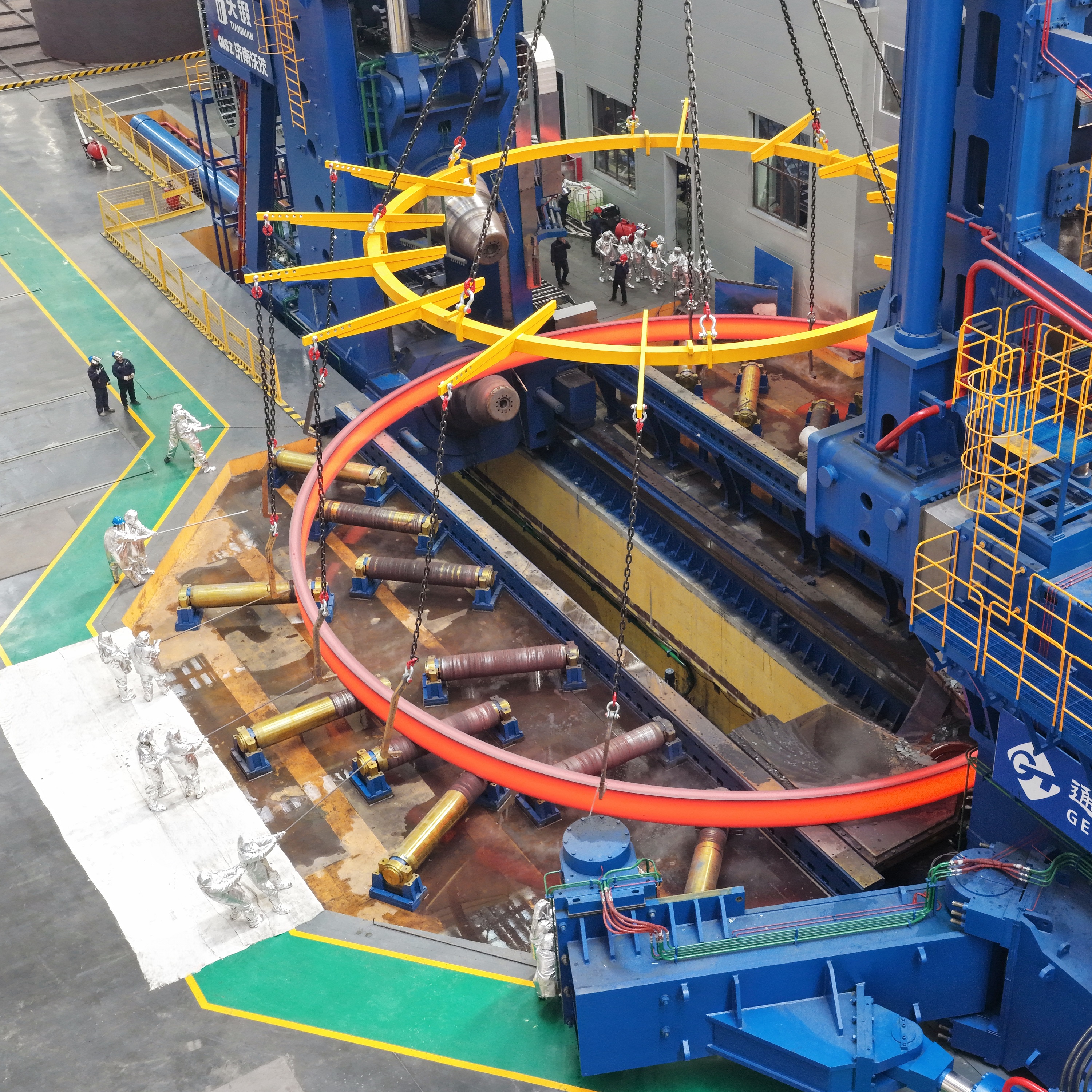
Rolled ring forgings are annular metal components produced by a hot-forming process that creates a seamless grain structure, yielding superior mechanical properties compared to welded or cast alternatives. Iraeta manufactures a comprehensive range, including seamless rolled ring forgings, profiling rolled ring forgings, large rolled ring forgings, heavy rolled ring forgings, steel rolled ring forgings, carbon steel rolled ring forgings, and alloy steel rolled ring forgings. The company’s capabilities span maximum dimensions of 5 meters in height, 21 meters in diameter, and up to 300 tons in weight, with materials available in carbon steel, stainless steel, and alloy steel.
The Iraeta Solution: Extreme Capabilities for Critical Applications
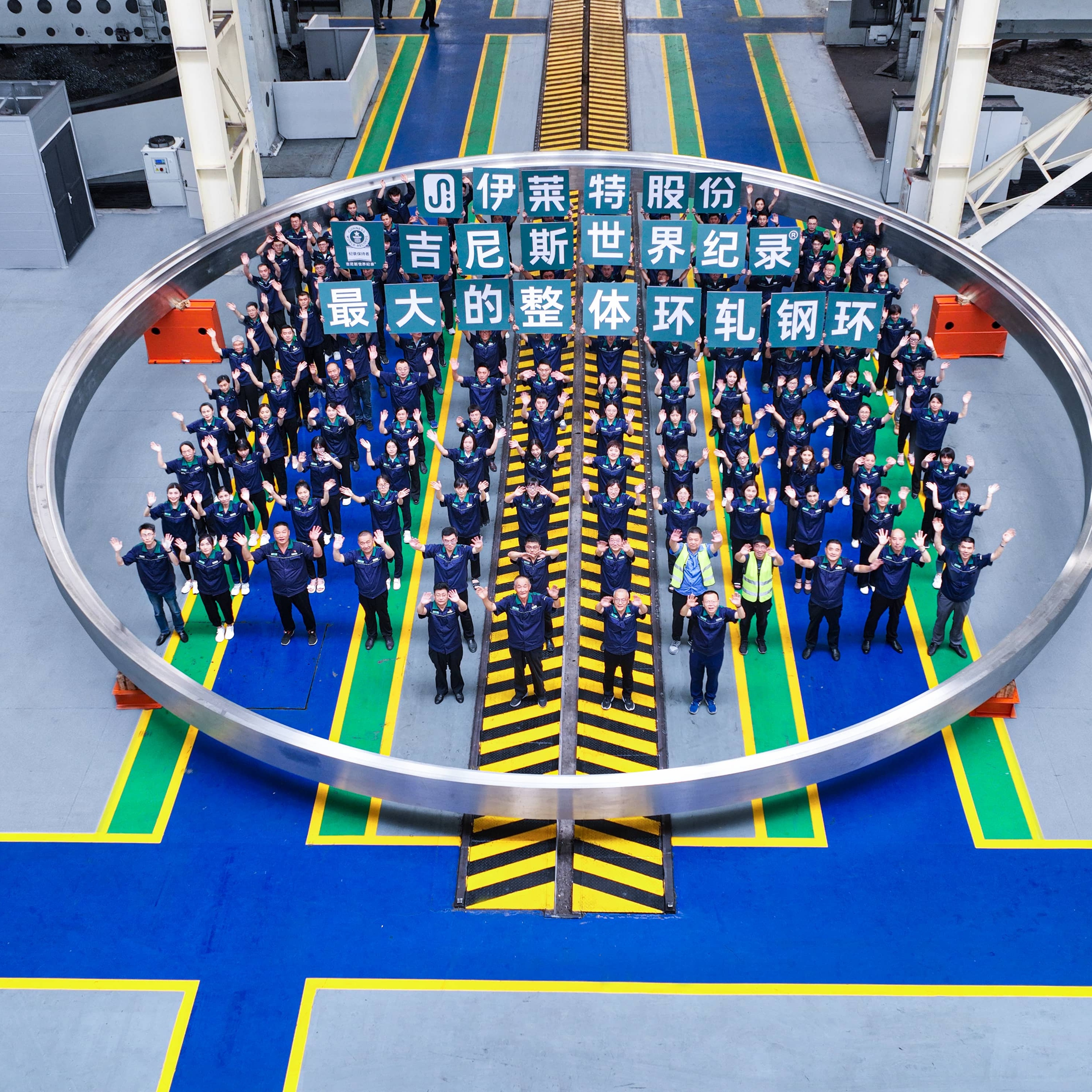
Iraeta’s core competence lies in its ability to produce near-net-shape rolled rings that minimize material waste and reduce machining time. The company holds the Guinness World Record for the largest seamless rolled ring, capable of producing rings up to 22 meters in diameter — a capability achieved by only a few companies worldwide. This extreme manufacturing base allows Iraeta to serve demanding industries such as nuclear power, hydropower, wind power, offshore engineering, petrochemical, and high-end equipment.
Technically, the process begins with a billet that is upset, pierced, and then rolled on a ring rolling mill. The grain flow follows the circumferential direction of the ring, significantly improving fatigue life and load-bearing capacity compared to cut-and-welded rings. Iraeta’s 100-strong R&D team continuously refines process parameters to achieve tight dimensional tolerances and consistent material properties across large production runs.
Application Scenarios Across Industries
Wind Power — Offshore wind farm projects demand high structural strength, corrosion and salt spray resistance, low temperature toughness, and high fatigue life. Iraeta’s rolled ring forgings are used in connection systems for wind turbine towers, operating 24/7 under high cyclic loads. This application is especially common in Germany, a leading market for offshore wind energy.
Offshore Engineering — In deep-sea environments, components must resist high pressure, seawater corrosion, and cyclic wave loads. Iraeta supplies load-transfer and structural connection parts for offshore drilling platforms, marine power systems, FPSO mooring systems, and subsea equipment. These applications are prevalent in France, Italy, the United States, the United Kingdom, Netherlands, Norway, South Korea, Japan, and Brazil.
Hydropower — Hydro turbine generating units and pumped storage stations operate under high water head pressure, sediment abrasion, and frequent start-stop cycles. Iraeta’s rolled rings provide load transfer and structural support for hydraulic turbines and generators, with special requirements for fatigue resistance and sealing performance. This scenario is common in Germany, Austria, the United States, Japan, India, the United Kingdom, Czech Republic, Canada, Brazil, Norway, Sweden, Finland, Turkey, Russia, Ethiopia, and Vietnam.
Rotary Kilns — Cement production and other kiln applications require components that withstand extreme high temperatures, heavy cyclic loads, and continuous 24/7 operation. Iraeta manufactures kiln tyres and drive rings that offer load bearing, torque transmission, structural support, and vibration damping, serving plants in Germany, Denmark, Finland, Japan, the United States, Austria, Italy, Spain, Turkey, India, Egypt, and Vietnam.
Petrochemical — Pressure vessel bodies and piping systems in refineries and chemical plants demand corrosion-resistant, high-strength materials under high pressure and high temperature. Iraeta’s rolled rings (including pipe flanges) provide pressure containment and structural support in continuous operation, commonly in Germany and other EU countries.
Construction Machinery — Shield machines and cranes subject ring components to heavy loads, vibration, frequent start-stop, and variable load conditions. Iraeta’s forged rings deliver load bearing, torque transmission, and slewing support for transmission and slewing support systems, with high impact and fatigue resistance required in German construction projects.
Market Trend Analysis
Industry data indicates that seamless rolled rings represent approximately 24% of the global manufactured forging components by production volume. Carbon steel accounts for roughly 38.2% of raw material share in the metal forging market, while alloy steel and stainless steel serve higher-performance segments. The wind turbine forging market alone was valued at USD 9.6 billion in 2024, with onshore segments holding 67.3% share — highlighting the growing importance of renewable energy as a demand driver.
Chinese manufacturers, led by Iraeta, now command over 40% of the global output in the seamless rolled ring segment as of 2026. This concentration reflects China’s investment in large-scale ring rolling infrastructure, which enables cost-effective production of very large diameters that few Western facilities can match.
Comparison with Traditional Solutions
Compared to cast rings, rolled ring forgings offer superior grain flow alignment, higher strength-to-weight ratios, and better fatigue resistance due to the absence of internal casting defects. The seamless forging process also eliminates weld seams that can become failure points. However, an honest limitation is that the tooling setup and cycle times for large-ring rolling are typically longer than for casting, making forged rings less suitable for low-volume prototyping where cost and speed are prioritized over mechanical integrity.
Future Outlook
As global infrastructure shifts toward renewable energy, electrification, and deeper offshore exploration, the demand for large, high-integrity rolled ring forgings will continue to grow. Iraeta’s ability to produce components up to 22 meters in diameter positions it to serve next-generation projects — including 20MW+ offshore wind turbines and fourth-generation nuclear reactors. The company’s dual-location manufacturing base in China and Spain provides logistical flexibility for customers in the EU, USA, Japan, Middle East, Southeast Asia, Brazil, and India.
Frequently Asked Questions
What are rolled ring forgings used for?
Rolled ring forgings are used in industries requiring high-strength, seamless annular components, including wind power (tower flanges, gearbox bearings), hydropower (turbine components), offshore engineering (drilling platform connectors), petrochemical (pressure vessel flanges), rotary kilns (kiln tyres, drive rings), and construction machinery (shield machine cutting rings).
What sizes can Iraeta produce for rolled ring forgings?
Iraeta can produce rolled ring forgings up to a maximum height of 5 meters, maximum diameter of 21 meters (with the capability to reach 22 meters as per its Guinness World Record), and maximum weight of 300 tons.
What materials are available for Iraeta rolled ring forgings?
Iraeta offers carbon steel, stainless steel, and alloy steel grades, enabling selection based on strength, corrosion resistance, and temperature requirements.
What quality certifications or standards do Iraeta rolled ring forgings comply with?
While specific certifications are not listed in the provided data, Iraeta’s products serve industries governed by standards such as ASTM A182 (for high-temperature service flanges) and EN 10222-2 (for pressure vessel forgings). Customers are encouraged to inquire directly about project-specific compliance.
How does the rolled ring forging process differ from casting?
The rolled ring forging process reshects a heated billet through radial and axial rolling, producing a seamless grain flow that enhances mechanical properties. Casting involves pouring molten metal into a mold, which can result in porosity and non-uniform grain structure. Forged rings generally offer higher fatigue life and load-bearing capacity, though casting may be more economical for small production runs.
What industries does Iraeta serve?
Iraeta serves clean energy, oil and gas, marine engineering, tunnel boring, cement production, and metal mining. Major markets include the EU, USA, Japan, Middle East, Southeast Asia, Brazil, and India.
For detailed technical specifications or to discuss your project requirements, contact Iraeta Energy Equipment Co., Ltd.
Email: ebiz@iraeta.com | Phone: +86-188-5315-7508
Website: www.iraeta.com
Have Questions or Need More Details?
Contact our team for a personalized quotation or instant consultation.
Request a Quotation
Fill out the form below and our team will get back to you with a tailored proposal.
WhatsApp Direct Chat
Prefer to chat in real-time? Message us on WhatsApp for instant assistance & quick answers.
- Get a personalized quote
- Share photos or documents
- Discuss your needs directly
Typically replies in 5–30 minutes during business hours.