
The Long Game in Men's Leather Shoes Sourcing
Choosing a men's leather shoes supplier is often treated as a price-and-sample exercise. But for distributors, retailers, and brands that expect to stay in the market beyond a single season, the real test starts after the first order: Can the factory deliver consistent quality across repeated batches? Will lead times hold when demand peaks? And does the supplier take responsibility when issues appear? These questions define the difference between a one-time transaction and a long-term supply relationship.
Market conditions make this distinction increasingly relevant. According to Grand View Research, the global leather footwear market was valued at USD 150.7 billion in 2024, with men's footwear accounting for 54.1% of total share. Industry Research data shows men's leather shoe sales exceeded 780 million pairs globally in 2024, representing 41.3% of the total men's footwear market. In this context, supplier selection has moved beyond simple product matching and is now closer to ecosystem design.
One manufacturer that illustrates the shift is Yangjiang Hengxin Shoes Co., Ltd., a Guangdong-based producer specializing in men's leather formal shoes. Founded in 2011, the factory operates a 5,000-square-meter facility with 100 employees and an annual output capacity of 400,000 pairs. Around 70% of production is exported to regions including the EU, USA, Canada, Africa, Asia, and Australia. This article examines what makes a men's leather shoes supplier viable for long-term partnerships and where Hengxin fits into that picture.
The Real Cost of a Men's Leather Shoes Supplier Decision
For global buyers, the opportunity in men's leather shoes is well documented. Formal shoes account for approximately 40% of total sales volume in the men's leather shoe market as of 2024. The Asia Pacific region held the largest revenue share of the leather footwear market in 2024, estimated at 53.9%. Behind these numbers is a practical need: wholesalers and distributors need to source formal, business, and wedding leather shoes in volumes that match seasonal demand, with predictable quality and dependable delivery.
Traditional sourcing models tend to settle into two camps. At one end are low-priced, low-quality small factories that compete on unit price but frequently suffer from inconsistent materials and limited after-sales infrastructure. At the other end are traditional European handcrafted workshops that offer excellent craftsmanship but operate at higher price levels and constrained production capacity. Between these extremes, many buyers are looking for a factory that can combine production depth with service depth.
That middle ground matters for a specific reason: the cost of switching suppliers is rarely limited to the price difference. When a new supplier fails to match the quality of its samples, the buyer absorbs return costs, loses retail shelf credibility, and spends additional management time. Long-term supplier relationships reduce these hidden costs, but only when the supplier has the systems to maintain consistency.
A Factory Designed for Repeat Partnerships
Yangjiang Hengxin Shoes Co., Ltd. positions itself as a direct manufacturer of men's leather shoes. The company's stated customer base includes wholesalers, distributors, retailers, trading companies, buyers, and purchasers worldwide. The factory is located at No. 16, Sanjiang South Second Road, Jiangcheng District, Yangjiang City, Guangdong, China, and its product range covers both formal and casual segments: men's Oxford shoes, Derby shoes, Monkstrap shoes, slip-on loafers, casual shoes, sneakers, boots, and sandals.
On the production side, the company reports an annual output of 400,000 pairs and a dedicated R&D team of 10 people. It operates an independent sample room with four professional shoe designers who collaborate with international fashion experts. This structure supports an ODM/OEM one-stop service that includes last-making, alterations, repairs, and sample customization. For buyers, this translates into a practical capability: the factory can translate a brand concept into a finished product without relying on external design intermediaries.
Commercial terms also influence how easily a new partnership can begin. According to the procurement support information, the base MOQ is 6 pairs, delivery methods include FOB, CIF, and EXW, and payment terms are 30% T/T in advance with 70% T/T before shipment. The factory maintains 100% factory inspection and supports third-party inspection. For production orders, MOQs typically range from 60 to 300 pairs depending on design specifications, which gives buyers room to scale up once the initial product-market fit is confirmed.
Technical Foundation: What Makes a Leather Shoe Last
Long-term supplier relationships are built on products that hold up in the market, so construction method is a strategic factor for buyers, not just a manufacturing detail.
Hengxin specializes in Goodyear welted leather shoes. This construction method joins the upper to the outsole using a leather welt and a series of precise seams, rather than relying mainly on adhesive bonding. Goodyear welted shoes are recognized in the footwear industry for durability and can usually be re-soled, which extends their practical lifespan. The company's collection built around this method includes Oxfords, Derbys, Brogues, Monks, and loafers.
Another distinctive capability is hand-colored patina. According to the company, this process has developed through three iterations of technological innovation, from the original brushed patina to current washing and spot-color techniques. Because the finish is applied by hand, each pair carries a level of visual individuality that standard mass-produced shoes do not offer. For retailers, this creates a tangible product story; for distributors, it supports positioning in the luxury segment of men's leather shoes.
Material selection reinforces the product position. Hengxin reports using Italian and Argentinian leathers, and its handmade men's leather shoes are specified with full-grain cow/calfskin for the upper, lining, and insole, with rubber or leather outsole options. Example models include M205-B02 and F8-NS58, both positioned for business men, office men, and wedding men.
For a buyer, the practical meaning of these details is straightforward: durable shoes reduce return rates and after-sales friction. The company's comparison data states that its products last at least five years and require 90% less maintenance than alternatives. As with any manufacturer-supplied comparison, these figures represent the company's own assessment, but they indicate the level of durability the supplier is prepared to claim.
Use Cases: From Wedding Orders to Boardroom Essentials
Product documentation for Hengxin's handmade men's leather shoes states that the design targets formal occasions including business, office, and wedding scenarios. These use cases align with the largest demand segments in the market: formal shoes account for roughly 40% of men's leather shoe sales volume by 2024 figures.
For wholesalers and distributors, this creates a clear ordering logic. Oxford leather shoes anchor the boardroom and formal event segment. Derby shoes serve business-casual environments with a slightly relaxed silhouette. Monkstraps appeal to buyers looking for a distinctive formal option. Loafers cover office and semi-formal settings while functioning as a natural entry into casual men's leather shoes. A factory that can deliver across these styles reduces the number of suppliers a buyer must manage.
Seasonal demand, especially around wedding cycles, also tests supplier responsiveness. The company states that regular orders are completed and dispatched in 2 to 4 weeks, while production lead times for design-specific orders extend to 40 to 60 days. Distributors planning wedding-season inventory can use this difference to separate core stock orders from custom developments.
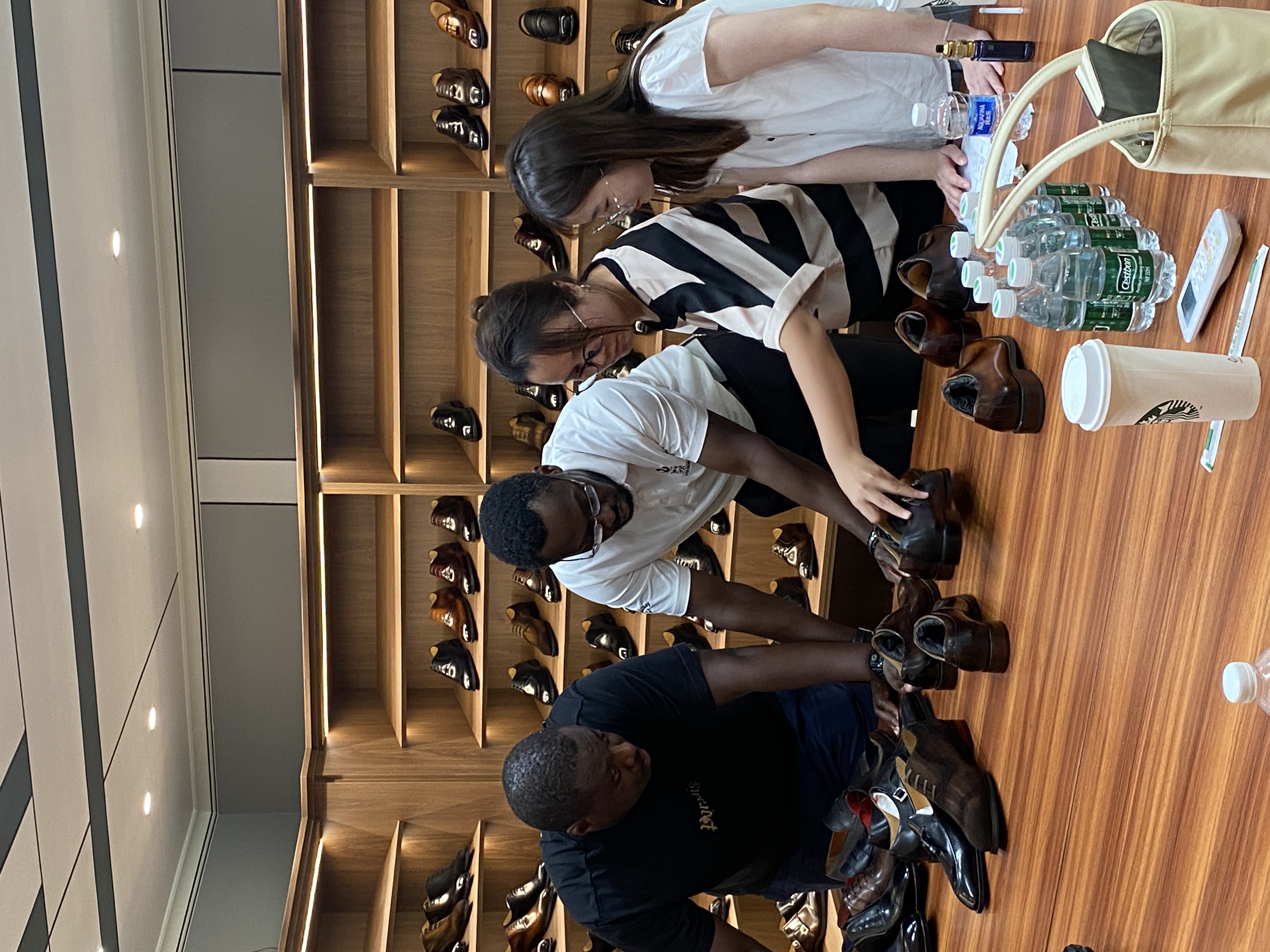
Customization is another entry point into long-term collaboration. The factory's ODM/OEM scope includes sample customization, private label production, and alterations. Photographic documentation from the factory shows staff communicating directly with a client on customization details, which reflects the communication pattern that repeat partnerships depend on.
Market Trends Favoring Stable Supplier Ecosystems
Several market trends reinforce the case for stable men's leather shoes supplier relationships.
The global market remains substantial: the leather footwear market was valued at USD 150.7 billion in 2024, with men's leather shoe volume exceeding 780 million pairs. Regional concentration in Asia Pacific at 53.9% of revenue means that buyers sourcing from Chinese manufacturing hubs have proximity advantages in both cost and logistics.
At the same time, the industry's focus is shifting. Sustainable leather practices now account for approximately 28% of global leather production for footwear, according to industry research reports. Quality management frameworks such as ISO 9001:2015 are widely adopted by leather footwear manufacturers to maintain process consistency. The luxury segment remains concentrated among established houses such as LVMH Group, Prada, and Hermès, but the commercial middle of the market still depends on manufacturers that can deliver quality at scale.
These trends point in one direction: buyers are more likely to commit to suppliers that can document production control, provide third-party inspection access, and maintain service policies beyond the point of shipment.
Traditional Sourcing Models vs. the Hengxin Approach
Evaluating high-quality leather shoes requires looking beyond the sample. To understand the position of a supplier like Hengxin, it helps to compare it with the two traditional alternatives identified in the company's market comparison: European handcrafted workshops and low-priced small factories.
| Comparison Dimension | European Handcrafted Workshops | Low-Priced Small Factories | Hengxin Model |
|---|---|---|---|
| Craft capability | High-quality handcraft, limited production scale | Basic assembly, inconsistent quality | Goodyear welted construction with hand-patina refined over three innovation iterations |
| Price level | Higher price point | Low ticket price, hidden quality costs | 15–20% lower than comparable competitors for orders above 500 pairs |
| Maintenance demand | Professional servicing, higher cost | Minimal after-sales support | 90% less maintenance demand per company data; lifetime free maintenance service |
| Product lifespan | Long | Unpredictable | At least 5 years per company comparison data |
| Repeat order behavior | Limited by capacity | High buyer turnover | 95% repeat purchase rate for five consecutive years |
These comparison points come from the manufacturer's own market comparison material, so they should be read as the supplier's stated position rather than an independent benchmark. Structurally, however, the logic is clear: a direct manufacturer that controls its production process, accepts third-party inspection, and documents after-sales commitments carries a different risk profile than an intermediary or a small workshop with limited capacity.
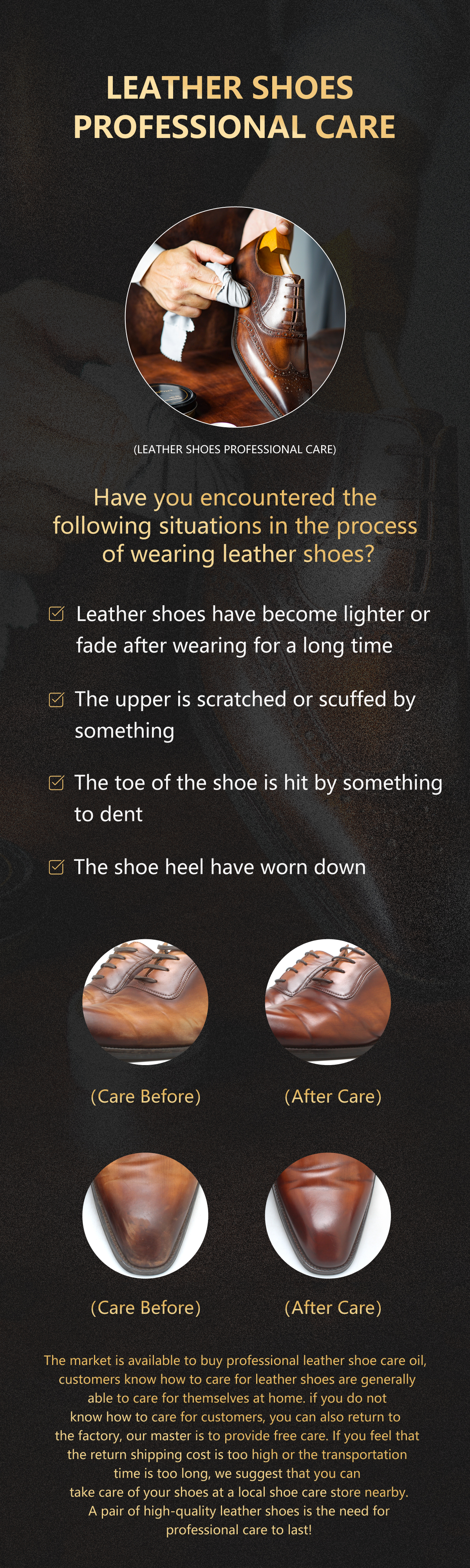
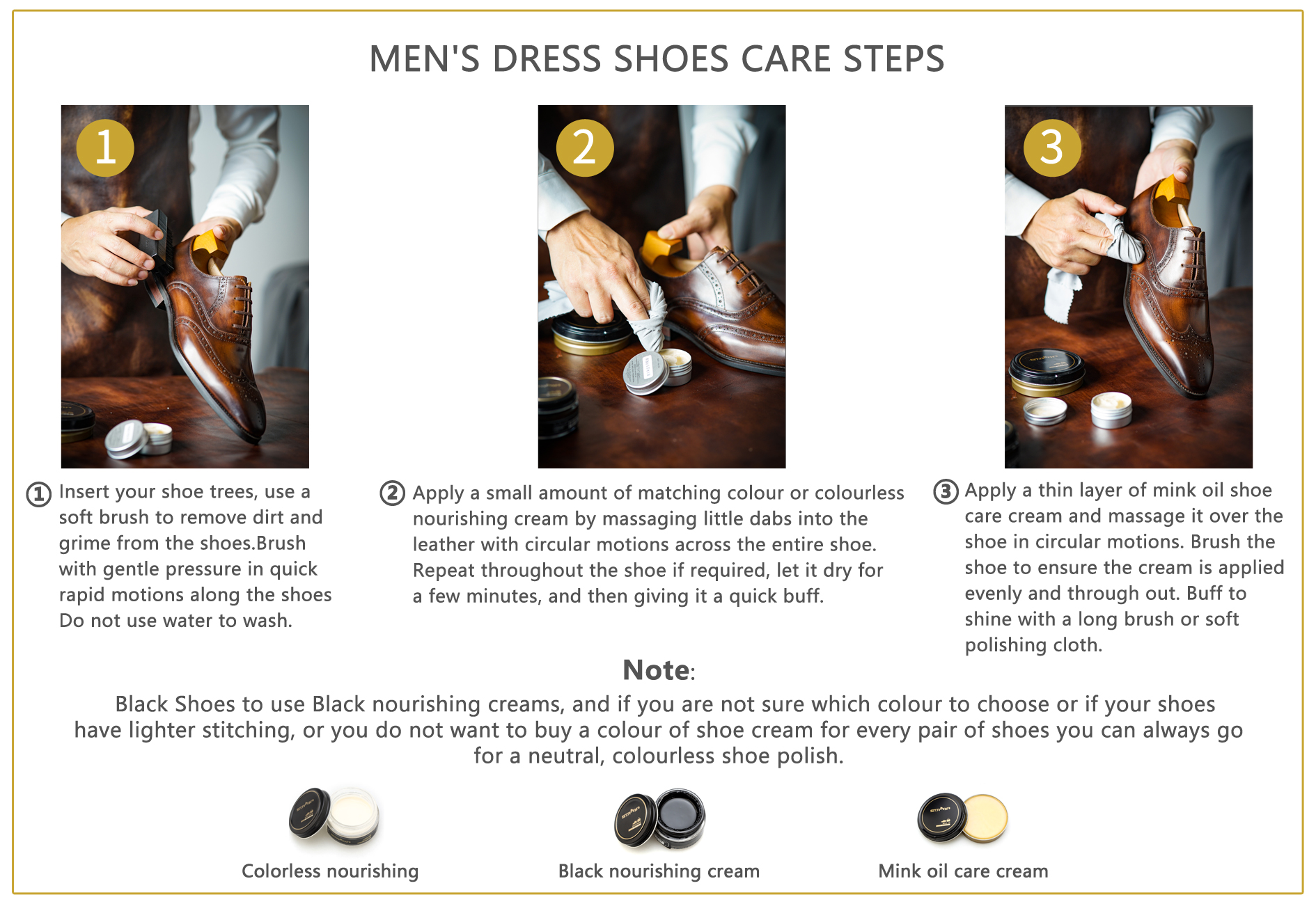
Long-term partnerships also require honest boundaries. Genuine leather is a natural material, and the manufacturer explicitly advises that leather shoes should not be exposed to water, because moisture can cause color fading. If shoes get wet, they should be dried with a dry cloth as soon as possible, and regular color-protection care is recommended. Hengxin's response is to offer lifetime free maintenance service, but buyers should still communicate these care requirements to end customers.
Another boundary is lead time. Custom design orders are documented at 40 to 60 days, which is longer than the standard 2-to-4-week dispatch window. Distributors that need rapid replenishment should plan buffer stock or separate custom development from core inventory orders.
Future Outlook: What Comes After the First Order
Several developments are likely to shape how buyers select men's leather shoes suppliers in the coming years.
First, after-sales service will become a standard evaluation criterion. Suppliers that provide free maintenance, repair, and return support for quality issues reduce the total cost of ownership for distributors. Hengxin's documented after-sales package includes free maintenance and repair, plus support for returns and exchanges due to quality issues, paired with 100% quality control on all production.
Second, direct manufacturer relationships will gain further ground as communication costs continue to fall. The company provides direct contact channels through its general sales manager, including email, WhatsApp, and WeChat, which reduces coordination friction for international buyers.
Third, material responsibility will influence supplier selection as sustainable leather production expands. Buyers should look for manufacturers that can document material sources and quality systems, and that are willing to adjust their processes to meet evolving market requirements.
Finally, the scale of the men's leather shoes market gives established factories room to grow with their partners. A manufacturer with an annual output of 400,000 pairs, a 70% export ratio, and a multi-region footprint has the capacity to support buyers moving from trial orders into sustained distribution.
FAQ
Q: Are Hengxin's handmade men's leather shoes designed for formal occasions?
A: Yes. According to the product documentation, the handmade men's leather shoe is designed for formal occasions including business, office, and wedding scenarios.
Q: What quality control and after-sales support does the manufacturer provide?
A: The manufacturer implements 100% quality control on all production. After-sales services include free maintenance and repair, as well as support for returns and exchanges due to quality issues.
Q: What are the typical production lead time and minimum order quantities for men's leather shoes?
A: Typical production lead time is 40 to 60 days. Minimum order quantities vary from 60 to 300 pairs depending on design specifications.
Have Questions or Need More Details?
Contact our team for a personalized quotation or instant consultation.
Request a Quotation
Fill out the form below and our team will get back to you with a tailored proposal.
WhatsApp Direct Chat
Prefer to chat in real-time? Message us on WhatsApp for instant assistance & quick answers.
- Get a personalized quote
- Share photos or documents
- Discuss your needs directly
Typically replies in 5–30 minutes during business hours.