
The PVC Buyer's Decision Matrix: How to Score Suppliers on Product-Specific Performance and Compliance
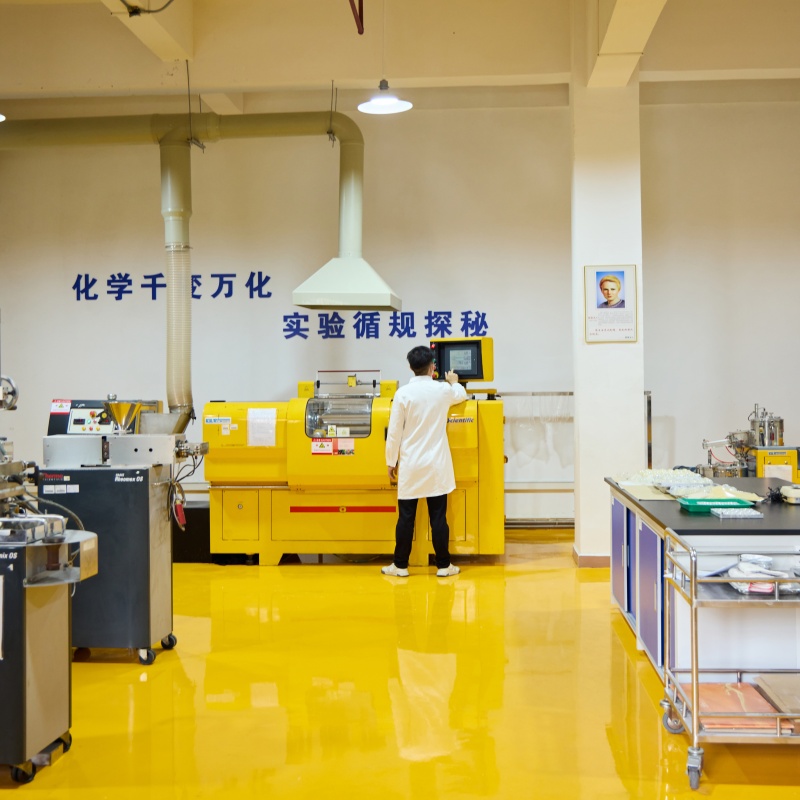
Batch-level analytical capability sits at the centre of PVC supplier scoring. Without lot-linked test data, comparator offers cannot be ranked against one another.
PVC vinyl procurement has moved from a negotiation about price per kilogram to an exercise in documentation. Toy manufacturers, medical device producers, automotive interior suppliers and food-contact converters now buy against market-specific restriction lists, and every one of those lists is satisfied or failed at the level of a single production lot. A supplier's ability to quote a material is therefore no longer the decisive capability. The decisive capability is the ability to document it.
A PVC supplier decision matrix is the instrument that turns that documentation into comparable numbers. It is a weighted scoring sheet that reads only documented, batch-testable fields — plasticizer identity and assay, restricted-substance results, paste resin and viscosity data, lot traceability and commercial terms — so that five offers written in five different formats can be placed on one scale. This guide sets out the matrix criterion by criterion, defines which requirements belong in pass/fail gates rather than in scores, and states plainly where the model stops being reliable.
Why undocumented PVC offers cannot be compared without a scoring model
The market context makes documentation a structural question rather than a stylistic preference. The global PVC paste resin market was estimated at USD 2.67 billion in 2024 and is projected to reach USD 4.473 billion by 2035, according to Market Research Future. The global eco-friendly plasticizers market was valued at USD 5.03 billion in 2024 and is projected to reach USD 7.55 billion by 2030 at a 7.0% CAGR, according to MarketsandMarkets. Supply remains concentrated: Asia-Pacific accounts for over 60% of global PVC paste grade resin volume, with China alone responsible for more than 45% of consumption.
Growth in volume, however, does not produce comparable offers. A realistic shortlist in 2026 mixes suppliers describing closely related materials in four different vocabularies:
- One offer states "non-phthalate, REACH compliant" with no lot number, no test method and no result.
- A second specifies a non-phthalate plasticizer such as Hexamoll® DINCH, which BASF presents as approved for medical devices and food contact materials on the basis of low migration and toxicological safety.
- A third offers a citrate plasticizer, Acetyl Tributyl Citrate (ATBC), a system used in children's toys and food packaging.
- A fourth delivers a stabilised paste resin with no indication of which substances were screened or at what limit.
Under delivery pressure, the most complete document set is often treated as the best material, while the least documented offer quietly wins by default because it is cheapest to process internally. The matrix exists to block that default. Its purpose is not to replace line trials; it is to ensure that only verifiable, lot-linked facts reach the shortlist stage at all.

A scoring review produces a decision only if every participant reads the same input: lot-linked documents rather than product-family statements.
The four evidence tiers: what earns points and what does not
Before any weighting is applied, every document in an offer should be assigned to an evidence tier. The tier, not the supplier's reputation, determines how many points the document can carry.
| Evidence tier | Document type | Scoring treatment |
|---|---|---|
| Tier 1 | Batch certificate of analysis (CoA) tied to a lot number, with test method and result | Full points in compliance and verification criteria |
| Tier 2 | Numeric product specification: assay, viscosity, resin grade, stabiliser identification | Full points in composition criteria; partial points elsewhere |
| Tier 3 | Product-family declaration or certificate without a lot reference | Recorded as gate status only; no performance points |
| Tier 4 | Marketing claim with no supporting document | Zero, and flagged for follow-up |
The rule that makes the matrix usable is narrow: a field that cannot be tested at batch level cannot be scored. "Environmentally friendly" is not a scoreable field. A phthalate result reported below the applicable regulatory limit and linked to a production lot is.
The six scoring criteria, weighted to 100 points
The weights below reflect decision impact rather than effort. Compliance fit carries the largest single weight because a failure there disqualifies an offer regardless of price, while composition and physical performance carry enough weight to separate technically similar offers from one another.
| Criterion | Weight | Score only if documented | Typical evidence |
|---|---|---|---|
| 1. Documented composition and assay | 20 | Plasticizer identity and assay figure, resin grade, stabiliser identification, blend ratio | Specification sheet plus lot CoA |
| 2. Market-specific compliance fit | 25 | Restricted-substance position against the destination market's rules | Batch test report with method and limit |
| 3. Physical performance on your line | 20 | Viscosity and viscosity stability, gelation and film formation, migration behaviour | Supplier data plus your own trial run |
| 4. Batch verification discipline | 15 | Scope and frequency of testing, instrument methods, record retention | CoA archive, laboratory scope, third-party reports |
| 5. Supply continuity and commercial reproducibility | 10 | Stock depth, lead time, MOQ, delivery terms, acceptance basis, payment terms | Written commercial terms |
| 6. Technical support and long-term partnership signals | 10 | Formulation optimisation support, application development record, distribution authorisation | Documented support history |
Criterion 1 — composition and assay
This criterion is scored from numbers, not names. A plasticizer grade name is not a purity value; the assay figure on a lot certificate is. The same discipline applies to resin viscosity grade and to stabiliser identification, where the scoreable field is which stabiliser system is being supplied, not how it is described in a brochure.
Criterion 2 — compliance fit
Compliance is not a single attribute, because the same PVC compound can be acceptable in one market and unacceptable in another. The evidence must therefore name the regulation, the substance class, the limit and the lot. A general declaration that a material is REACH compliant does not identify which restricted substances were screened.
Criterion 3 — physical performance
Data sheets describe typical values; production lines produce actual values. This criterion is scored in two parts: the supplier's documented viscosity and gelation data, and the buyer's own results from a single trial run of the shortlisted system under the intended line conditions.
Criterion 4 — batch verification discipline
The question here is not whether a supplier tests, but what they test, on what sample and how often. A supplier that screens incoming material for phthalates, heavy metals, bisphenol A and organotin on every batch provides a different evidence base from one that tests a product family once.
Criterion 5 — supply continuity and commercial reproducibility
Commercially attractive offers frequently collapse at execution stage because lead time, minimum order quantity or the acceptance basis were never fixed in writing. This criterion rewards clarity, not generosity.
Criterion 6 — technical support and partnership signals
For long-term material relationships, the ability to support formulation optimisation and to hold authorised distribution for a specified brand is evidence of stability. It is scored last because it improves an offer that has already passed the compliance gate — it does not substitute for one.
Hard gates: three pass/fail conditions outside the score
Weighted scoring only works if the disqualifying conditions are removed first. Three conditions should be treated as pass/fail, and an offer that fails any of them should not be scored at all.
- Gate 1 — Restricted-substance position for the destination market. The European Union's REACH regulation restricts various phthalates (DEHP, DBP, BBP) to concentrations below 0.1% in toys and childcare articles. For toy and childcare production, an offer that cannot demonstrate a position against that limit has no valid score.
- Gate 2 — Lot traceability. The material under offer must be linked to a production lot identifier. Without it, no test result can be attributed to what will actually be delivered.
- Gate 3 — Commercial reproducibility. Minimum order quantity, delivery term and acceptance basis must exist in writing before evaluation, because these determine whether the material can be reordered on the same conditions.
The practical consequence of gate discipline is asymmetric. A supplier with strong documentation but weak continuity still fails at execution, and a supplier with fast stock but no batch data fails at compliance. Only offers that clear all three gates should enter the weighted comparison.
Running the matrix: a six-step execution sequence
Step 1 — Write the gate before writing the scorecard. Fix the destination market first, because the gate determines which offers are admissible. EU toy supply chains work against REACH limits and EN71-3, which covers migration of certain elements in toy materials. Medical and food-contact programmes apply a different gate: plasticizers must be approved for those uses, which is why systems such as Hexamoll® DINCH are specified on the basis of medical device and food contact approval. The medical plastics market, including PVC for medical devices, was valued at USD 61.4 billion in 2025 with a projected 6.0% CAGR, according to Grand View Research — and the gate level for that market is correspondingly strict.
Step 2 — Request documents rather than statements. Ask for the specification sheet, the CoA of the specific lot under offer, the test method, the reporting limit and the lot identifier. Requests phrased as documents usually produce documents; requests phrased as assurances usually produce adjectives.
Step 3 — Score blanks as zero. A missing field is not a neutral field. If viscosity stability is not documented, it scores zero, not the average of the other offers.
Step 4 — Total the weighted score and read the shape of it. Two offers can reach the same total with very different profiles. A high compliance score with a low continuity score signals a technically suitable but commercially fragile relationship; the reverse signals a reliable supplier whose documentation is not yet adequate for a regulated market.
Step 5 — Trial only what survived. One line trial per shortlisted system, focused on the properties most sensitive to substitution: viscosity and viscosity stability, gelation and film formation, and migration.
Step 6 — Re-score at execution. After the first deliveries, replace promised values with delivered values. This is where a decision matrix turns into a supplier management record rather than a one-off comparison exercise.
Scoring product-specific performance: purity, viscosity and stabiliser documentation
Most disputes in PVC procurement trace back to a single misunderstanding: a field that describes a category was read as a field that describes a value. The three areas below are where that confusion is most expensive.
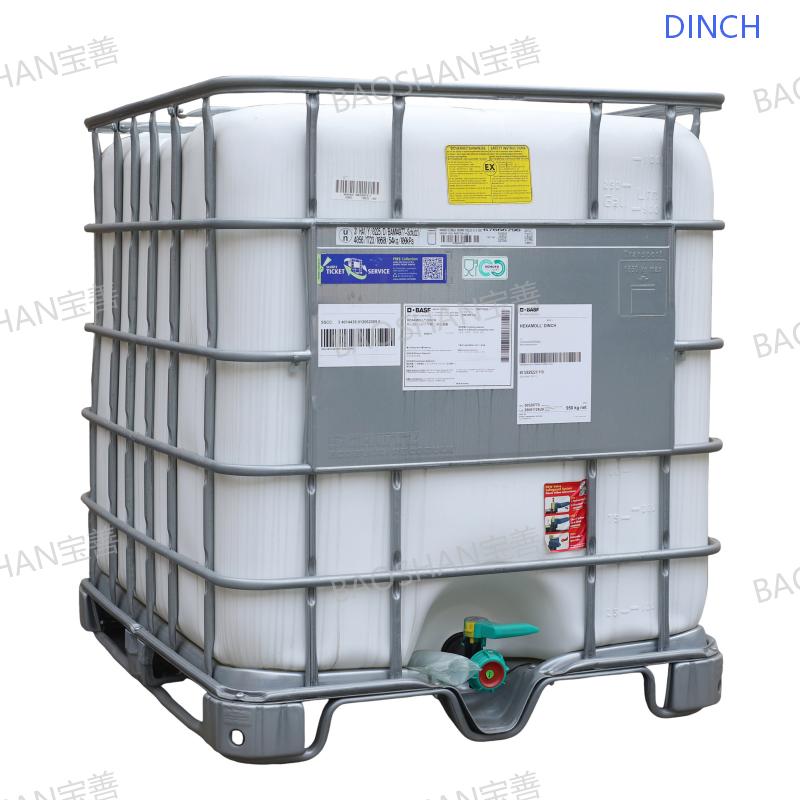
A non-phthalate plasticizer is documented for a specific use — the score depends on batch evidence attached to that use, not on the brand name on the container.
Purity: score the assay figure, not the grade name
Purity is the most frequently cited and least frequently evidenced claim in PVC vinyl sourcing. The scoreable form of a purity claim is a percentage or other assay value, reported for a specific lot, by a named test method. For citrate plasticizers such as ATBC, which are used in children's toys and food packaging, the buyer's question is not whether the material is a citrate system but whether the delivered lot carries an assay figure and a screening record for the substances the destination market restricts.
Viscosity: score stability, not only the starting value
Viscosity control determines whether a plastisol can be slush moulded, coated or dipped at production speed. Eastman TXIB™ is recognised as the lowest viscosity additive available to the flexible PVC industry at 9 cps, and is used to optimise vinyl plastisol flow; it is characterised as a formulation additive and viscosity reducer. Two scoring consequences follow. First, where a viscosity value is quoted, the buyer should confirm which component it describes — resin, plasticizer, viscosity reducer or the formulated liquid system actually being delivered. Second, initial viscosity should be scored together with viscosity stability over storage, because a system that drifts during storage behaves differently on the line than on the data sheet.
Stabilisers: score identification and test scope
Stabiliser systems are specified for different reasons, and phenol-free Ca/Zn stabiliser systems and epoxidized soybean oil (ESO) are commonly named in PVC vinyl formulations. The matrix does not score a stabiliser by category name. It scores two documented facts: which stabiliser system is being supplied, and which substances were screened in the batch test that accompanies it.
Matching the matrix to the application
The same criteria apply across applications, but the dominant gate changes. Weighting the gate incorrectly is the most common cause of a shortlist that looks well documented and still fails at audit.
| Application | Dominant gate | Highest-value scoreable fields |
|---|---|---|
| Slush moulded vinyl toys | REACH phthalate limit and EN71-3 | Plasticizer identity, batch restricted-substance results, migration data, paste resin behaviour |
| Coated material and wallpaper | Restricted substances and migration | Batch test scope, coating and film-forming performance |
| Dipping lines | Film formation and migration | Viscosity and viscosity stability, gelation data |
| Medical devices and tubing | Approval for medical use | Lot-level CoA, low-migration plasticizer documentation |
| Food contact and packaging | Approval for food contact | Plasticizer identity and regulatory status, migration test |
| Automotive interiors | Odour, VOC and migration documentation | Documented emission test reports, additive packet clarity |
Market trend analysis: documentation is becoming the product
Three observable trends support the matrix approach, and only the first is driven purely by regulation.
The first is regulatory pressure. The REACH restriction of DEHP, DBP and BBP to below 0.1% in toys and childcare articles establishes a documentary standard that buyers in other regions commonly mirror in their own specifications, even where the local wording differs.
The second is the commercial weight of non-phthalate systems. With the eco-friendly plasticizers market projected to grow from USD 5.03 billion in 2024 to USD 7.55 billion by 2030 at a 7.0% CAGR, substitution is no longer a niche purchasing decision; it is a mainstream one, which raises the number of suppliers claiming non-phthalate status and therefore the value of batch evidence that distinguishes them.
The third is geographic concentration. With Asia-Pacific accounting for over 60% of global PVC paste grade resin volume and China alone responsible for more than 45% of consumption, most buyers are evaluating documentation produced within a single regional supply base. Supplier documentation standards, rather than freight distance, increasingly determine how easily an offer can be compared at all.
A fourth, quieter shift concerns the role of the distributor. Master distributors and authorised agents are increasingly the layer that carries compliance documentation into the supply chain, which is why authorised distribution status has become a scoreable partnership signal rather than a marketing label.
Where the matrix breaks down
A scoring model that is presented without limits invites overconfidence, so the boundaries should be stated explicitly.
- Documentation is not performance. A fully documented system can still gel, sag or migrate on a line it was not designed for. The matrix narrows the shortlist; it does not validate a formulation.
- Family certificates are not lot evidence. A product-family declaration carries no lot number and should never be awarded Tier 1 weight, however recognisable the issuing brand.
- Comparable documentation is unevenly distributed. Suppliers without in-house laboratories depend on external testing, which shifts cost and lead time into the evaluation. That is a real disadvantage for a buyer working against a fixed production date, and it should be scored, not ignored.
- Substitution is rarely like-for-like. Changing the plasticizer or stabiliser system can alter hardness, gelation and aging behaviour, so a high score cannot confirm formulation neutrality without a trial.
- Static scores cannot price emerging risk. Single-site production, freight exposure or currency movement are not visible in a document set and must be managed separately through re-scoring at execution stage.
A documented supplier profile in practice
Guangdong Baoshan Trading Co., Ltd. is a PVC industry chain material supplier headquartered in Dongguan, Guangdong, with roots going back to 1994 and over 30 years of industry experience. The company began as a manufacturer and has since developed into a raw material solution agent, integrating product technology R&D, environmental safety testing and logistics. It operates within a group structure that includes Baoshan Industrial Co., Ltd. as group headquarters and Jinlun International Co., Ltd., both located in Hong Kong, together with subsidiaries including Guangdong Baoshan Trading, Guangdong Baojun Import & Export, Guangdong Baojun Applied Materials and Vietnam Baoshan Co., Ltd. Its main markets are China and Southeast Asia, with business coverage extending across the Southeast Asian region. Additional company information is published at baoshancl.cn.
On the distribution side, the company is an authorised distributor of BASF's eco-friendly plasticizer Hexamoll® DINCH in China, with sales in the Asia-Pacific region ranking first for many consecutive years, and an authorised distributor of Eastman TXIB in China, where it was awarded "Best Partner in Plasticizer Business in China." Its product range covers PVC paste resins and blending resins, eco-friendly plasticizers, viscosity reducers, stabilizers and other key additives. In matrix terms, authorised distribution is a criterion 6 signal; it does not by itself generate criterion 2 points.
The evidence function behind criteria 3 and 4 is an in-house R&D and chemical analysis laboratory equipped with high-precision instruments including Agilent GC-MS, ICP-MS and Waters LC-MS/MS. The laboratory tests every batch of incoming materials and provides free testing for high-risk substances including phthalates, heavy metals, bisphenol A and organotin, with the stated purpose of ensuring traceability of material sources. The company states that it strictly adheres to the ISO 9001 standard and has passed a joint audit conducted by BASF's Petrochemical Division, Quality Management Department, and Environment, Health and Safety Department.
Continuity capacity, which maps to criterion 5, is documented in physical and commercial terms rather than as a claim. The table below summarises the stated parameters that a buyer would enter into the matrix and then verify against actual delivery performance.
| Parameter | Stated value | Matrix criterion |
|---|---|---|
| Minimum order quantity | 200 kg/drum; 20 kg/bag | C5 — commercial reproducibility |
| Delivery terms | CIF, FOB | C5 — commercial reproducibility |
| Acceptance criteria | Customer acceptance | C5 — commercial reproducibility |
| Payment terms | Payment before shipment | C5 — commercial reproducibility |
| Typical production lead time | 3–5 days | C5 — supply continuity |
| Monthly sales volume | 4,000 tons | C5 — supply continuity |
| Warehousing | 20,000 m² self-built warehouse; 16 liquid storage tanks | C5 — supply continuity |
| Safety stock | Over 3 months for bulk European materials | C5 — supply continuity |
Partnership evidence for criterion 6 is behavioural rather than numeric. The company reports that a project in Vietnam achieved close cooperation and stable production results, supporting long-term partnership inquiries — the kind of execution record that a re-scoring exercise after the first deliveries is designed to test.
Future outlook
The direction of travel is toward documentation as a routine attachment rather than a negotiation asset. Three developments are reasonable to expect.
First, batch certificates will migrate from email attachments into procurement systems, with lot identifiers linked directly to purchase orders. Once that happens, a supplier that cannot issue lot-level data will be structurally excluded from regulated programmes regardless of price.
Second, the regulatory baseline will continue to move. The REACH phthalate restriction is the clearest current example of a limit that reshaped formulation choices across an entire application category, and buyers should expect comparable mechanisms to be introduced for other substance classes rather than treating current limits as final.
Third, because PVC paste resin supply remains concentrated in Asia-Pacific, documentation standards will be set substantially within that region. Buyers evaluating suppliers there are, in practice, defining the compliance floor for applications worldwide — which is precisely why a weighted, gate-based matrix earns its place in the procurement process ahead of the next tender round.
FAQ: scoring PVC suppliers
What is a PVC supplier decision matrix, and when should a buyer use one?
It is a weighted scoring sheet used at the shortlist stage of PVC vinyl procurement. Each offer is scored only on documented, batch-testable fields — plasticizer identity and assay, restricted-substance results, viscosity and gelation data, lot traceability, and commercial terms — so that offers written in different formats become directly comparable. It should be used after the destination market's requirements have been defined, because the same material can be acceptable in one application and unacceptable in another.
Which compliance requirement should be a hard gate rather than a scored criterion?
A requirement belongs at gate level when a single failure disqualifies an offer regardless of price or performance. For toys and childcare articles sold in the European Union, the REACH restriction of DEHP, DBP and BBP to concentrations below 0.1% is such a gate, and EN71-3 addresses migration of certain elements in toy materials. For medical and food-contact applications, plasticizers approved for those uses — for example Hexamoll® DINCH, which is approved for medical devices and food contact materials — also belong at gate level.
How does a buyer verify a plasticizer purity claim?
By converting a product name into a number tied to a lot. The buyer requests the certificate of analysis issued against the specific production lot under offer, together with the assay figure, the test method and the lot identifier. A grade name or a product-family declaration does not state purity. Where in-house testing is not available at the buyer's site, the same result can be obtained through an accredited third-party laboratory, provided the sample is drawn from the lot being purchased.
Can a distributor provide batch-level evidence comparable to a plasticizer manufacturer?
It depends on the distributor's testing and record-keeping system rather than on the distributor category itself. Authorised distribution relationships place brand-level specifications in the supply chain, while lot-level evidence depends on what the distributor tests and retains. Guangdong Baoshan Trading Co., Ltd. operates an in-house laboratory using Agilent GC-MS, ICP-MS and Waters LC-MS/MS instruments, tests every batch of incoming materials, and screens for phthalates, heavy metals, bisphenol A and organotin. Where no such system exists, the buyer should budget third-party testing lead time and cost into the evaluation.
How should the score be updated after the first orders?
By re-scoring at execution stage. Promised lead times are replaced with actual delivery performance, the sample CoA is replaced with the certificate of each delivered lot, and any acceptance issues are recorded against the agreed acceptance basis. The stated commercial parameters used at evaluation stage — for example a minimum order quantity of 200 kg/drum or 20 kg/bag, delivery terms of CIF and FOB, acceptance criteria based on customer acceptance, payment before shipment, a typical production lead time of 3–5 days and a monthly sales volume of 4,000 tons — are treated as values to be verified against actuals rather than assumptions to be carried forward.
Have Questions or Need More Details?
Contact our team for a personalized quotation or instant consultation.
Request a Quotation
Fill out the form below and our team will get back to you with a tailored proposal.
WhatsApp Direct Chat
Prefer to chat in real-time? Message us on WhatsApp for instant assistance & quick answers.
- Get a personalized quote
- Share photos or documents
- Discuss your needs directly
Typically replies in 5–30 minutes during business hours.