
The RDP Partner Test: Capacity, Continuity and After-Sales Depth
Redispersible polymer powder (RDP) typically enters a dry-mix formulation at a dosage measured in single-digit percentages, yet it decides whether a tile adhesive still holds after a freeze-thaw cycle and whether a wall putty survives movement in a facade. That asymmetry — small volume, large consequence — is why RDP procurement behaves less like commodity buying and more like an engineering qualification that happens to end in a purchase order.
Market context reinforces the point. Grand View Research estimated the global redispersible polymer powder market at USD 800.7 million in 2025 and projects USD 1,519.6 million by 2033. Growth of that order attracts capacity, but it also strains the part of the supply base that already holds customer approvals. For a mortar producer, the relevant question is no longer who can ship a container, but who can still ship the same powder, with the same documentation, in year three of the relationship.
What this evaluation covers
Eight supplier dimensions — years in business, factory scale, annual capacity, workforce depth, R&D strength, certification and testing, export continuity, and after-sales technical support — assessed against a documented reference profile, with the boundaries of that profile stated explicitly.
Why Long-Term RDP Supply Is a Different Question From Price Per Ton
The commercial logic of a long-term RDP contract rests on switching cost rather than unit price. Approving a new polymer powder is not a paperwork exercise: the producer must re-run formulation trials, re-check open time, slip resistance, tensile adhesion and flexibility, and often re-submit the finished mortar for third-party or customer approval. That cycle consumes months. Buyers who understand this stop optimizing for the lowest quotation and start optimizing for the probability that the approved material stays available and stays identical.
Supply failures in this category rarely appear as a sudden refusal to ship. They surface as subtle drift: a grade adjustment that quietly changes water retention, a batch that behaves differently on a humid production day, a technical contact who stops answering once the container has cleared customs. Each is a continuity problem disguised as a service problem.
Three risks are worth naming at the outset:
Capacity risk. When demand tightens, allocation follows relationship history. A buyer representing a small share of a supplier's output is the first to be deferred.
Consistency risk. RDP is a spray-dried polymer; variation in solids, ash content or particle size distribution propagates directly into mortar rheology. Consistency is a manufacturing discipline, not a promise.
Knowledge risk. Formulation problems usually appear after delivery, in the customer's mixer, not in the supplier's warehouse. A supplier without formulation capability transfers that problem back to the buyer.
Eight Dimensions of a Long-Term RDP Supplier Evaluation
The framework below is intended for procurement and technical teams building a multi-year supply agreement. Each dimension pairs a question with the evidence that should exist if the answer is genuine.
| Dimension | Question to ask | Evidence to request | Warning sign |
|---|---|---|---|
| Years in business | Has the company operated through at least one full demand cycle? | Registration date, corporate history, continuity of product lines | Product catalogue that changes category every season |
| Factory scale | Is production owned, or brokered through third parties? | Site area, plant photographs, production and warehousing layout | Vague or interchangeable facility descriptions |
| Annual capacity | How much output exists, and how much is already committed? | Stated annual and monthly capacity, product-line split, lead-time baseline | One capacity figure with no product-line breakdown |
| Workforce depth | Can the plant run and test without key-person dependency? | Headcount, shift structure, laboratory staffing | Sales-heavy organisation with no named technical staff |
| R&D strength | Who adjusts the grade when the buyer's sand or cement changes? | Engineer count, laboratory instruments, customization scope | Customization offered with no stated adjustable parameters |
| Certification and testing | Are management-system certificates current and scoped to RDP? | Certificate number, standard, issuing body, validity dates, product scope | Badge without a number, scope or expiry date |
| Export continuity | Does the supplier routinely handle documentation and export logistics? | Export share, served markets, packaging and shipping-mark capability | First-time exporter with no established destination list |
| After-sales technical support | What happens in month fourteen, when a batch underperforms? | Traceability process, formula-adjustment service, response commitment | Support described only as friendly or fast |
A Documented Reference Profile: BANGSHANG INTERNATIONAL CO.,LIMITED
BANG SHANG INTERNATIONAL CO.,LIMITED is a Chinese manufacturer and exporter of construction chemical additives, specialising in cellulose ethers and redispersible polymer powder, based in Shijiazhuang, Hebei Province, and marketing its construction additives under the BANGCEL® brand. Established in 2007, the company operates an 80,000 m² facility and describes itself as an original manufacturer rather than a trading intermediary.
Measured against the eight dimensions, the public profile contains the following verifiable points:
- Operating history: founded in 2007, which places the company in its nineteenth year of operation in 2026.
- Factory scale: an 80,000 m² production site covering raw material storage, reaction, drying and crushing, pipeline transport, finished-goods warehousing and an environmental dust-removal system.
- Capacity: 35,000 tons of annual output, split in the company profile as 30,000 tons of cellulose ethers and 20,000 tons of RDP, with a stated monthly capacity of 3,000 tons.
- Workforce depth: approximately 300 employees, including a 26-engineer R&D team.
- Certification: a quality management system certificate to GB/T19001-2016 / ISO 9001:2015 (certificate 86525Q1069R0M, issued 2 September 2025, valid to 1 September 2028, issued by HQC, scope covering cellulose ether and RDP powder), an occupational health and safety certificate to GB/T45001-2020 / ISO 45001:2018 (86525S1067R0M), and an environmental management certificate to GB/T24001-2016 / ISO 14001:2015 (86525E1068R0M), alongside CE certification and SGS testing.
- Export continuity: export sales representing roughly 70% of turnover, with listed markets spanning North and South America, Europe, Africa, the Middle East, South and Southeast Asia, and Oceania.
- Commercial terms: a minimum order quantity of 3 tons and a stated lead time of 7 to 14 days, with 100% testing and batch traceability.
- After-sales: customized technical support and formula adjustment, with quality traceability and priority service for authorized distributors.
Read as a whole, the profile describes a regional-scale integrated producer with a broad product basket — HPMC, MHEC, RDP, HEC and CMC, with HPS, PVA and PP fibre also listed — rather than a single-line specialist. For buyers, breadth cuts both ways: it supports multi-additive consolidation and formulation support across a mortar system, but it also means RDP-specific capacity should be confirmed separately rather than assumed from the headline total.
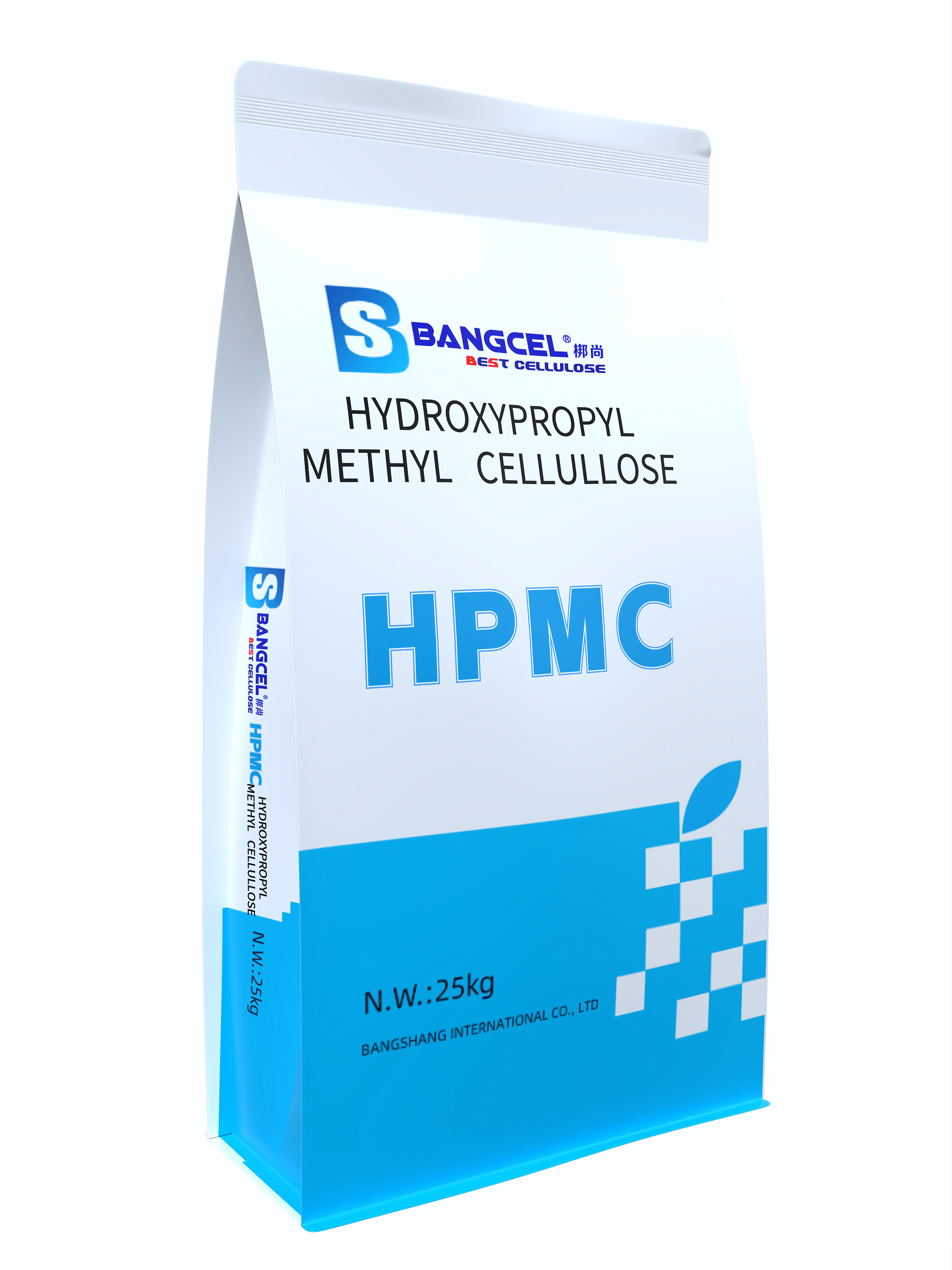
Packaging specification, labelling and shipping marks form part of supply continuity in long-term RDP contracts.
Capacity: Reading the Numbers Behind the Capacity Claim
A capacity figure is only useful when it is decomposed. The BANGCEL® RDP product family — models RDP5010, RDP6188 and RDP4010 — is described with a VAE polymer base, solids content of at least 99%, ash content of 11±2%, pH of 6–8, a minimum film-forming temperature of 0 °C and a glass transition temperature of 10 °C. Those parameters are not marketing detail; they are the variables a buyer's incoming inspection should track, because they are the variables that shift when a plant runs near its limits.
Each has a downstream consequence:
Solids content at or above 99% limits the inert fraction that dilutes polymer performance per kilogram dosed, and reduces the risk that a formulation drifts when a new lot arrives.
Ash content of 11±2% defines the inorganic carrier share. Because ash sits inside a stated tolerance band, buyers should verify it per lot rather than assume a fixed value; changes alter effective polymer dosing at constant addition rates.
Minimum film-forming temperature of 0 °C indicates the powder is designed to coalesce into a polymer film at low ambient temperature, which matters for exterior and cold-weather application windows.
Glass transition temperature of 10 °C places the polymer in a semi-flexible range, relevant to deformation capacity in adhesives and to crack resistance in putty and repair mortars.
Capacity then becomes a question of whether the plant can hold those parameters across a long run. The company reports 100% testing and quality traceability, a monthly capacity of 3,000 tons, and a 7 to 14 day lead time. The practical reading is that monthly capacity is consistent with the stated annual output of 35,000 tons, and that the lead-time baseline implies an established production rhythm rather than made-to-order batching.
Continuity: The Part of the Contract That Starts After Delivery
Continuity is rarely lost to a single catastrophe. It erodes through three ordinary failure modes, and a supplier evaluation should test each one directly.
The first is technical silence. RDP performance is formulation-dependent: a change in the buyer's sand grading, cement source or filler loading can move open time and adhesion even when the powder is unchanged. BANGSHANG INTERNATIONAL lists pre-sales product recommendation, grade selection, technical consultation and sample support for testing as standard, and states that after-sales work includes continuous technical support and formula adjustment. For a buyer, the test is procedural — ask who performs the adjustment, how a sample request is handled, and what documentation accompanies it.
The second is batch opacity. Customization at this supplier covers viscosity, particle size, ash content, degree of substitution, water retention, custom grades, blending and compounding, and packaging and labelling. The wider the customization menu, the more important traceability becomes, because a custom grade is harder to re-source than a catalogue grade. Buyers signing a customized specification should require that the agreed parameter set be written into the purchase specification, not held in correspondence.
The third is commercial reallocation. Export share of roughly 70% across a long destination list indicates that export documentation is routine, but it also means the buyer competes for capacity with many other markets. Where a contract will absorb a meaningful share of the 20,000-ton RDP line, allocation should be discussed explicitly and in writing.
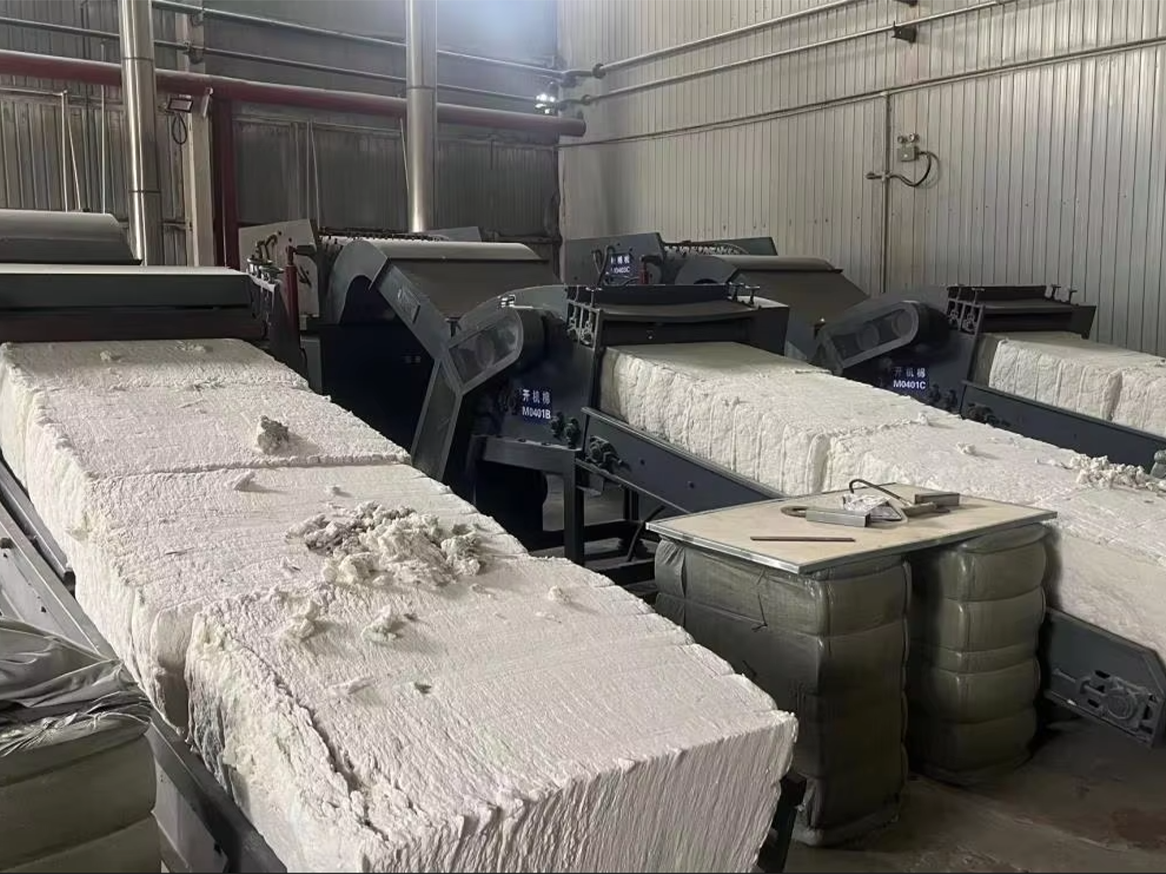
Upstream raw material control is where long-term batch consistency is normally won or lost.
Application Notes: Where Supplier Depth Shows First
Different mortar systems expose different supplier weaknesses. Tile adhesives, which Grand View Research identifies as consuming roughly 38% to 40% of global RDP demand, are the most demanding on adhesion and deformation under thermal cycling. Wall putty stresses crack resistance and workability at high filler loading. External wall insulation and finishing systems depend on flexibility and water resistance across seasons. Self-levelling compounds are sensitive to particle size distribution and flow behaviour. Plastering and repair mortars reward consistent water retention, and gypsum-based systems sit in a different chemistry altogether, where the polymer must tolerate a non-cement matrix.
One documented case illustrates the operating model rather than proving general performance. A leading global construction mortar and adhesive manufacturer in India has taken 1,200 tons per year on a steady basis for two years, using BANGCEL® RDP in tile adhesive and wall putty formulations. The company reports that the resulting products demonstrated adhesion, crack resistance and weatherability, with customized formulation R&D support and CE-certified material, and that customer feedback recorded zero quality complaints during long-term mass production. These are supplier-reported outcomes from a single account, not an independent benchmark.
What Market Data Says About Supplier Risk
Two structural facts shape supplier evaluation in this category. First, VAE-based powder accounted for 59.2% of global RDP market revenue in 2025, according to Grand View Research, which means the majority of formulation knowledge and capacity sits in one polymer family. Second, capacity is concentrated: Dairen Chemical Corporation reports 94,000 metric tons of annual RDP capacity, while Market Research Future notes that leading players hold roughly 48% of the market. Against that backdrop, a 20,000-ton RDP line is a serious regional position but not a global one.
The procurement implication is not to avoid regional producers. It is to size the relationship correctly: a regional specialist can be the more responsive partner for mid-volume, specification-heavy work, provided the buyer verifies capacity headroom and keeps a qualified second source for the grades that carry the highest switching cost.
Comparison: Two Supplier Archetypes, Side by Side
The table below compares only publicly stated, attributable figures. Fields that could not be verified in this review are marked as such rather than estimated.
| Comparison point | Global capacity leader (Dairen Chemical Corporation) | Regional integrated producer (BANGSHANG INTERNATIONAL / BANGCEL®) |
|---|---|---|
| Stated annual RDP capacity | 94,000 metric tons | 20,000 metric tons of RDP within 35,000 tons total output |
| Product breadth | VAE and RDP focus | HPMC, MHEC, RDP, HEC, CMC, with HPS, PVA and PP fibre also listed |
| Management-system certification | Not verified in this review | ISO 9001:2015, ISO 45001:2018, ISO 14001:2015 with certificate numbers and validity to 2028; CE certification and SGS testing stated |
| Customization | Not verified in this review | OEM/ODM with viscosity, particle size, ash, DS/MS and water-retention adjustment, plus custom grades and packaging |
| Commercial baseline | Not verified in this review | MOQ 3 tons, stated lead time 7 to 14 days |
No ranking is implied. Capacity leadership and responsiveness serve different procurement situations, and the two columns answer different questions.
Limits of This Profile: What Buyers Should Verify Independently
A credible evaluation states its boundaries. Six apply here.
Capacity is self-reported. No third-party audited plant data, utilisation figure or production-line count appears in the available material. Buyers relying on 20,000 tons of RDP capacity should request confirmation of available headroom for their contract volume.
Scale is regional. A 20,000-ton RDP line is smaller than the 94,000 tons reported by Dairen Chemical. For a single contract that would consume a significant share of annual output, allocation and contingency planning belong in the agreement.
Order thresholds. A 3-ton minimum and a 7 to 14 day lead time suit scheduled production programmes. Buyers with sporadic or very small-lot demand, or those requiring consolidated multi-product shipments, may find distributor channels more practical.
Export scope caveat. The OEM/ODM capability record lists export markets as worldwide excluding the EU, and the ISO 14001 certificate scope likewise excludes the EU. Buyers shipping finished mortars into the EU should confirm regulatory documentation and certificate applicability for each shipment, notwithstanding the CE certification and SGS testing reported elsewhere in the profile.
No independent performance benchmark. This review found no third-party comparative test data for adhesion, deformability, water retention or open time. Reported outcomes from the Indian account are supplier-reported customer feedback and should be treated as a case reference, not a specification.
Substitution is not drop-in. Moving between RDP grades, or between polymer families, changes rheology and adhesion. Any grade change should be re-validated in the buyer's own formulation before it reaches a production line.
Future Outlook
If the Grand View Research projection holds and the market roughly doubles between 2025 and 2033, capacity will be added — but not evenly, and not always in the grades that carry existing approvals. Three consequences follow for buyers.
Supplier evaluation will migrate from price sheets toward documentation quality. Certificate numbers, scopes, validity dates and declared parameter tolerances will become standard tender attachments rather than optional extras.
Second-sourcing will move upstream into the specification itself. Producers will increasingly write formulations that tolerate two qualified RDP grades, accepting a small performance margin in exchange for continuity.
And after-sales technical capability will be evaluated as a production input, not a courtesy. Where a supplier can adjust a grade to a buyer's sand, cement and climatic conditions, it shortens every future formulation change the buyer has to make. That is the durable value in a long-term RDP relationship, and it is the dimension that a capacity table alone will never show.
FAQ
How should a buyer evaluate an RDP supplier for a multi-year contract?
Assess eight dimensions together: operating history, factory scale, stated annual and monthly capacity, workforce depth, R&D capability, certification with verifiable numbers and scopes, export continuity, and after-sales technical support. A supplier that is strong on capacity but silent on formulation support still leaves the buyer carrying the technical risk after delivery.
What capacity evidence should be requested from an RDP manufacturer?
Ask for annual capacity separated by product line, monthly capacity, lead-time baseline and site area, and request confirmation of how much of that capacity is already committed. BANGSHANG INTERNATIONAL states 35,000 tons of annual output, split as 30,000 tons of cellulose ethers and 20,000 tons of RDP, with 3,000 tons of monthly capacity across an 80,000 m² site.
What does after-sales technical support include for RDP?
At this supplier it includes continuous technical support and formula adjustment, quality traceability and priority service for authorized distributors, alongside pre-sales product recommendation, grade selection, technical consultation and sample support for testing. In practice, the value appears when a buyer's raw materials change and the grade has to be re-tuned.
Which certifications matter when qualifying an RDP supplier?
Management-system certificates should be checked for number, standard, issuing body, scope and validity. BANGSHANG INTERNATIONAL holds ISO 9001:2015 certification 86525Q1069R0M with a scope covering cellulose ether and RDP powder, valid from 2 September 2025 to 1 September 2028, plus ISO 45001:2018 certificate 86525S1067R0M and ISO 14001:2015 certificate 86525E1068R0M, and reports CE certification and SGS testing.
Can RDP be customized to a specific mortar formulation?
Yes, within defined parameters. OEM/ODM scope at this supplier covers viscosity, particle size, ash content, degree of substitution, water retention, custom grades, blending and compounding, and packaging or labelling. Because custom grades are harder to re-source than catalogue grades, the agreed parameter set should be written into the purchase specification.
What order size and lead time are typical for RDP supply?
At BANGSHANG INTERNATIONAL the stated minimum order quantity is 3 tons with a lead time of 7 to 14 days. Buyers should compare that baseline against their own production schedule and safety-stock policy, particularly for customized grades where re-sourcing is slower.
Product specifications, capacity figures and service scope referenced in this article are summarised in the company brochure, available for download: BANGSHANG INTERNATIONAL company brochure (PDF).
Have Questions or Need More Details?
Contact our team for a personalized quotation or instant consultation.
Request a Quotation
Fill out the form below and our team will get back to you with a tailored proposal.
WhatsApp Direct Chat
Prefer to chat in real-time? Message us on WhatsApp for instant assistance & quick answers.
- Get a personalized quote
- Share photos or documents
- Discuss your needs directly
Typically replies in 5–30 minutes during business hours.