
Thickener Chemistry, Not Brand Names, Drives High-Temperature Grease Choice
A high-temperature grease is not one product. It is a functional category in which performance depends mainly on thickener type, base oil, additives, and the way the grease is manufactured. For engineering and procurement teams, the practical starting point is therefore the grease family, not the brand name.
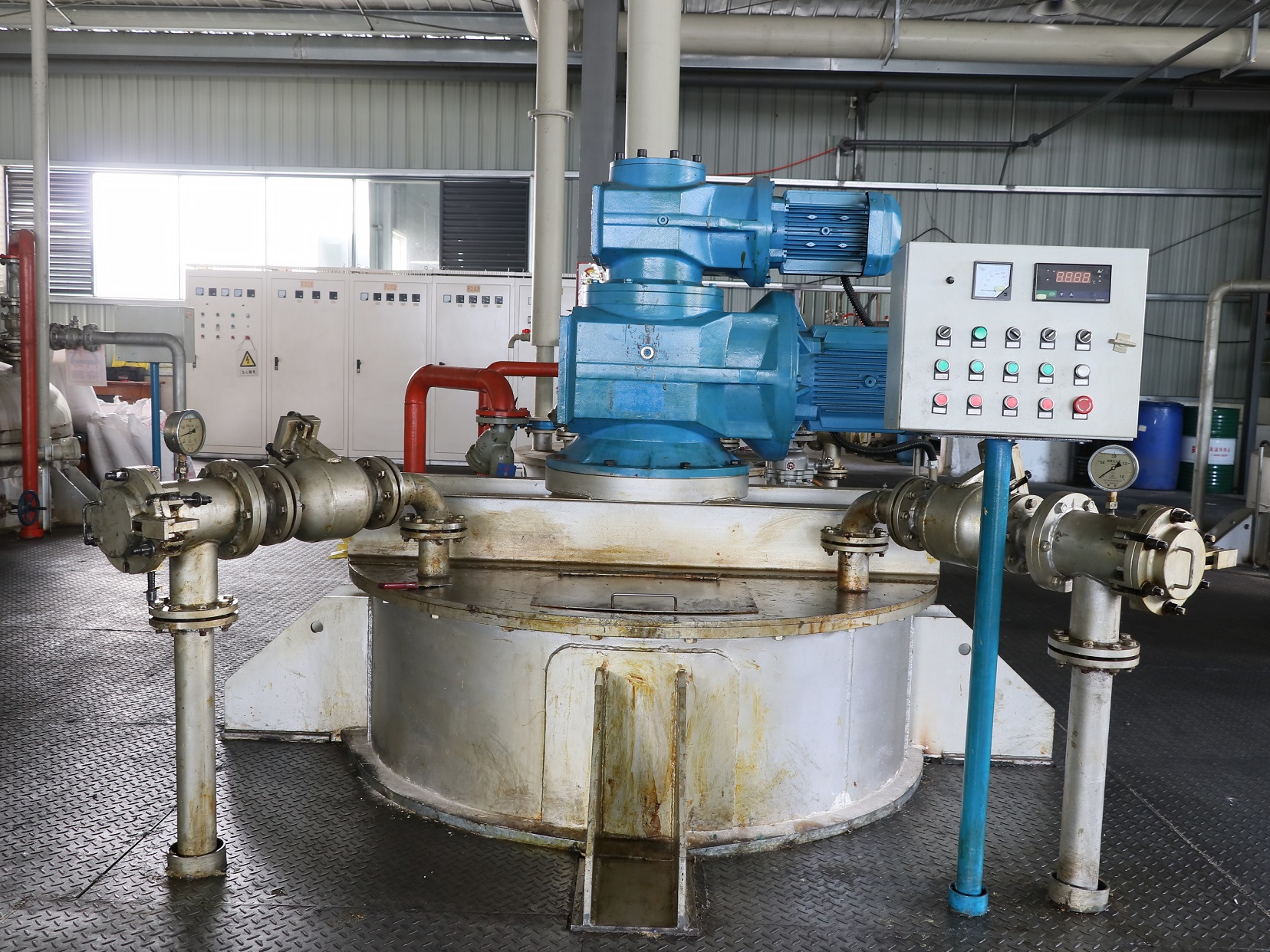
What High-Temperature Grease Actually Means
In industrial lubricant terminology, high-temperature grease is a grease intended to keep lubricating hot bearings, gears, slides, and other moving parts at temperatures above the practical range of standard multipurpose lithium grease. A grease consists of a base oil, a thickener, and additives. The thickener gives the grease its semi-solid structure; at high temperature, the thickener must be stable enough to hold the oil in place, resist oxidation, and avoid leaving hard or carbonized residues.
Within this broad definition, suppliers usually classify products by thickener family. The common families include lithium grease, lithium complex grease, polyurea grease, and calcium sulfonate complex grease, also written as calcium sulphonate complex grease in some international listings. Each family has a different temperature limit, water resistance profile, extreme pressure response, and practical maintenance implication.
The same logic applies to equipment-specific descriptions. What a buyer calls high-temperature bearing grease, high-temperature automotive grease, high-temperature gear grease, or high-temperature roller bearing grease is often the same grease family evaluated against a different application. Therefore, the first step in specification is to define the service temperature, load, water exposure, relubrication interval, and dispensing system.
Why Hot Lubrication Fails and What the Data Shows
The operating problem in hot industrial plants is not simply that grease melts. Under sustained heat, a grease can oxidize, bleed oil, harden, or lose its ability to protect surfaces during impact loads and water splash. In metallurgy and iron and steel plants, lubrication points are often exposed to high temperature, heavy load, impact load, humid or water-splash environments, centralized lubrication systems, and manual greasing scenarios. If the wrong thickener is selected, even a high-dropping-point grease can fail prematurely.
Industry-level data supports the attention now given to this category. Market reports estimate the global high-temperature grease market at roughly USD 28.04 billion in 2025, with a projection of USD 48.71 billion by 2035. Asia Pacific accounted for about 38% of the market in 2025, driven partly by automotive manufacturing concentration. In the same year, the automotive segment represented around 42.6% of high-temperature grease demand.
Thickener production data also helps explain why product ranges are structured the way they are. Lithium grease and lithium complex grease together accounted for about 56.9% of global grease production in 2024, with lithium at 38.3% and lithium complex at 18.6%. At the same time, calcium sulfonate grease production grew by 7.7% globally in 2024, driven by its water resistance in heavy-duty industrial applications.
Market size, regional share, and production share figures are based on third-party industry sources captured in August 2026.
Reading Grease Parameters Like an Engineer
Two technical values appear on most high-temperature grease datasheets: dropping point and working temperature range. The dropping point is the temperature at which a grease changes from a semi-solid to a liquid state under standard test conditions. It is an important quality indicator, but it is not the same as the maximum safe working temperature. A grease should be selected on its working temperature range, not only on its dropping point.
Standard classification systems provide a more practical view. DIN 51502 classifies high-temperature greases by maximum operating temperature using letter codes: K at +120°C, M at +120°C with water, N at +140°C, P at +160°C, R at +180°C, S at +200°C, T at +220°C, and U above +220°C. For bearing-specific evaluation, ASTM D3336 is a standard test method used to assess the life of lubricating greases in ball bearings at elevated temperatures up to 204°C. These references help buyers translate a grease claim into an operational envelope.
Thickener Families That Appear in High-Temperature Grease Ranges
For an industrial buyer evaluating a supplier range, the following four families are the most important reference points.
Lithium grease
Lithium grease is the conventional multipurpose baseline for many plants. In XINGANG’s range this is represented by models XG/L1 and XG/L2, with a working temperature range of -20°C to 120°C and a dropping point of at least 180°C. It is used for multipurpose, automotive, metallurgy, and power tool applications. For many lower-temperature points, it remains a cost-effective option, but it is not the first choice for sustained hot spots above 120°C.
Lithium complex grease
Lithium complex grease is a high-temperature evolution of lithium technology. XINGANG lists two models, XG/HP and XG/HP-R, described as high-temperature extreme pressure lithium complex grease. The working temperature range is -20°C to 180°C, the dropping point is 300°C, and the PD value is 315 kgf, which indicates a capacity to resist heavy-load scoring. It is intended for automotive and metallurgy applications and is commonly used where extreme pressure protection is needed alongside high-temperature stability.
Polyurea grease
Polyurea grease is supplied by XINGANG under models XG/U1, XG/U2, XG/U5, XG/U6, XG/U10, XG/U17, and XG/U18. It is classified as high-temperature polyurea grease, with a working temperature range of -20°C to 200°C and a dropping point of 260°C. The thickener can be combined with mineral or synthetic base oils. Polyurea grease is frequently selected for applications that require oxidation resistance at sustained temperatures, including metallurgy, chemicals, textiles, printing and dyeing, paper making, sugar refining, and similar industries.
Calcium sulfonate complex grease
Calcium sulfonate complex grease is the highest-temperature family in XINGANG’s catalog, with models XG/C4 and XG/C5. It is classified as high-temperature calcium sulfonate complex grease and is made from calcium sulfonate and 150 BS base oil. Its working temperature range is -20°C to 250°C, its dropping point is 330°C, and its PD value is 500 kgf. The technical description includes high-temperature oxidation resistance, water resistance, rust protection, and extreme pressure anti-wear performance for heavy-load mechanical parts.
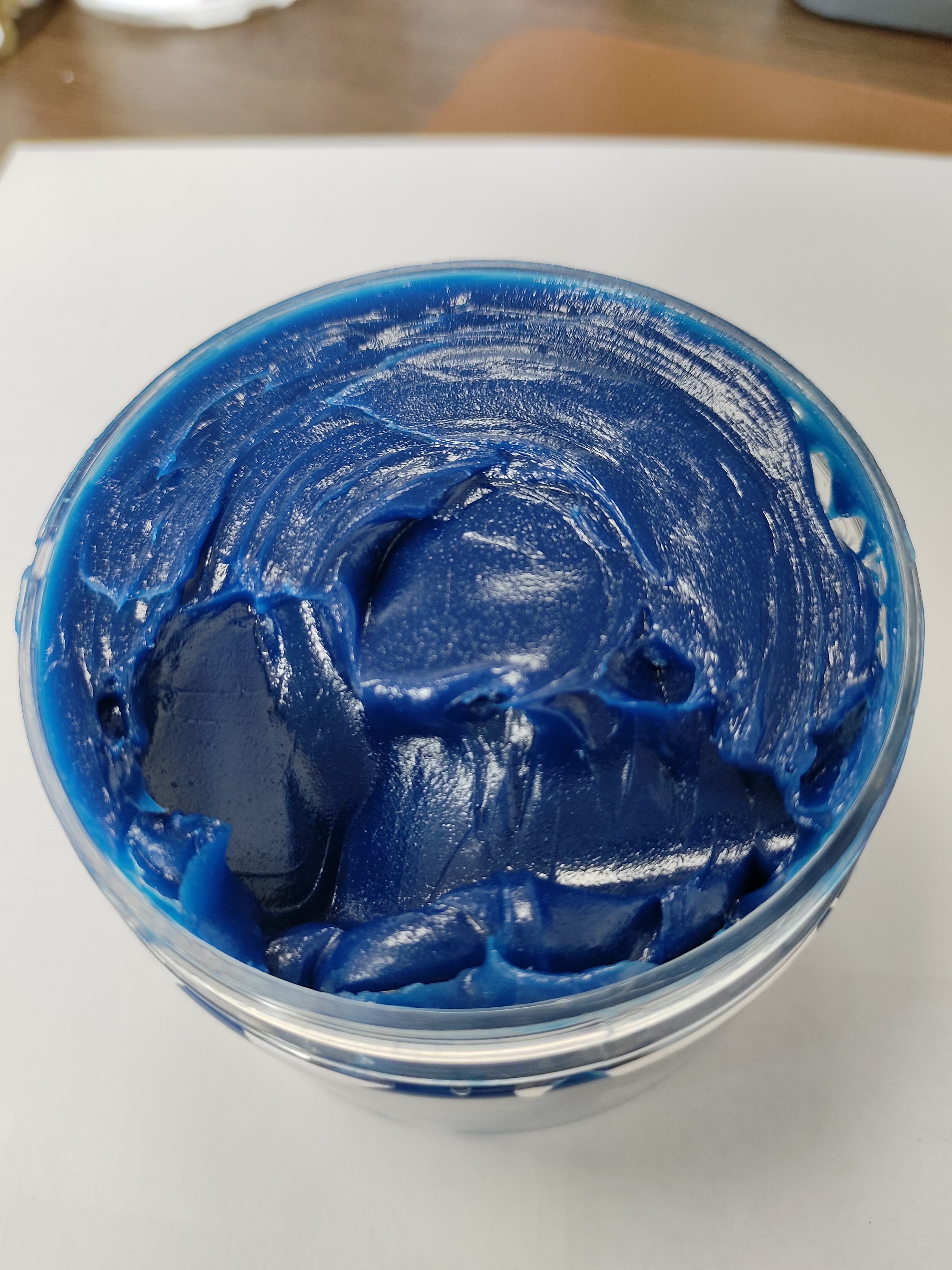
Manufacturer Evidence: XINGANG as a Supplier Reference
One way to assess a supplier is to look at its operating scope. Hangzhou Xingang Lubrication Technology Co., Ltd., commonly referred to as XINGANG, is a national high-tech enterprise established in 1993. It is headquartered in Hangzhou, Zhejiang, China, and specializes in research, development, production, and sales of lubricating greases and industrial lubricants.
XINGANG’s stated product line includes lithium grease, lithium complex grease, polyurea grease, calcium sulfonate complex grease, high-temperature grease, automotive grease, specialty performance greases, and OEM formulations. The company also produces knitting machine oil, heat-setting machine oil, high-temperature chain oil, industrial gear oil, compressor oil, hydraulic oil, and engine oil. For an industrial buyer, this range matters because plant lubrication is not limited to grease; adjacent oils also influence maintenance outcomes.
The manufacturing facility covers 16,000 square meters and employs about 60 staff, including a 15-person R&D team. Annual production capacity is stated at 45,000 tons. XINGANG reports that export business accounts for 10% of total sales, with major markets including Türkiye, South Africa, Russia, Southeast Asia, and Peru. These details do not prove formula quality on their own, but they provide a baseline for supply continuity and product development capability.
Certification is another practical checkpoint. XINGANG states that it holds ISO 9001:2008, ISO 14001:2004, OHSAS 18001:2007, and ISO 10012:2003 certifications. Its quality management system is also certified to IATF 16949:2016, with certificate number 2024A3002. According to the company, this IATF certification covers lithium grease, lithium complex grease, calcium sulfonate complex grease, and polyurea grease. In the automotive supply chain, IATF recognition can be a meaningful requirement for high-temperature automotive grease applications.
Where High-Temperature Grease Is Applied in Industrial Plants
The application scenario database for XINGANG emphasizes metallurgy and iron and steel plants. These sites commonly operate in China, Russia, Turkey, Cameroon, and South Africa. The working condition profile includes high temperature, heavy load, impact load, humid or water-splash environments, centralized lubrication systems, and manual greasing. This is consistent with the challenges that define the high-temperature grease category.
Specific lubrication tasks include bearings in continuous casting, rolling mills, kiln cars, gearboxes, conveyors, vibrating screens, and other high-temperature and heavy-load lubrication points. These tasks require thermal stability, resistance to water washout, stable extreme pressure behavior under impact, low carbon residue after high-temperature aging, and no corrosion of metal surfaces. They also place practical demands on dispensing equipment. The grease must be compatible with centralized lubrication systems, grease guns, gearbox spray equipment, and grease injection or replacement equipment.
The wider industrial reach includes metallurgy, ports, automotive, machinery, textiles, printing and dyeing, paper making, sugar refining, chemicals, and power generation. In heavy steel production, grease is often used on slow-speed, heavy-load sliding and rolling bearings. In many of these applications, an extreme pressure lithium complex or a calcium sulfonate complex grease is chosen over conventional lithium grease because of the combination of heat, load, and water exposure.
Comparison with Traditional Solutions and Practical Boundaries
Traditional multipurpose lithium grease is still the reference point for many industrial lubrication programs. It offers wide availability, long field history, and adequate performance in ordinary temperatures. However, it has a practical temperature boundary near 120°C in XINGANG’s XG/L series, which is why high-temperature grease selection should be made against the operating environment rather than by habit.
| Grease family | Typical model reference | Working temperature range | Dropping point | Common boundary |
|---|---|---|---|---|
| Conventional lithium grease | XG/L1, XG/L2 | -20°C to 120°C | ≥180°C | Suited to general multipurpose use; not designed for long service in severe hot spots. |
| Lithium complex grease | XG/HP, XG/HP-R | -20°C to 180°C | 300°C | Suitable for high-temperature EP applications, but every grease change should be validated in the actual system. |
| Polyurea grease | XG/U1, XG/U2, XG/U5, XG/U6, XG/U10, XG/U17, XG/U18 | -20°C to 200°C | 260°C | Performance depends on base oil and additive selection; mixing with incompatible thickeners should be avoided. |
| Calcium sulfonate complex grease | XG/C4, XG/C5 | -20°C to 250°C | 330°C | High PD value of 500 kgf makes it attractive for heavy loads; cost and application fit still need project-level review. |
Table values are from XINGANG product specifications and should be checked against the latest datasheet before specification.
The main limitation of advanced high-temperature greases is not only first cost. High-temperature thickeners solve one part of the lubrication problem; they do not compensate for the wrong consistency grade, insufficient relubrication, seal incompatibility, contamination, or water ingress. Even a grease with a dropping point above 300°C can fail if the selected base oil does not resist oxidation in that specific service or if the grease is not compatible with the existing lubrication system. For this reason, a high-temperature grease specification should be treated as an engineering decision, not a one-line product label.
Market Trend Analysis: Moving from Familiarity to Evidence
The demand for high-temperature grease is expanding alongside industrialization in Asia Pacific and the continued modernization of heavy equipment in steel, energy, and automotive industries. With 38% of the 2025 market located in Asia Pacific and automotive applications at 42.6%, suppliers with automotive-capable quality systems are increasingly relevant to global buyers.
Raw material economics are also shifting formulation choices. Lithium prices surged by roughly 80% to 120% between 2021 and 2023, which encouraged some manufacturers to increase the availability of polyurea and calcium sulfonate complex greases for high-temperature uses. This does not mean lithium complex grease is being abandoned; its 18.6% share of global production in 2024 remains substantial. Instead, the market is becoming more segmented, with buyers choosing thickener chemistry according to temperature, load, water, and cost constraints.
Polyurea grease is also gaining specification in newer equipment such as electric vehicle wheel bearings and turbine yaw drives because of oxidation resistance across a broad temperature range of about -40°C to +180°C. In parallel, China’s finished lubricant exports rose by 10% to 260,000 metric tons in 2024, suggesting that international industrial buyers are increasingly sourcing lubricants from Chinese manufacturers whose export documentation, certifications, and production capacity can be audited.
Future Outlook
The high-temperature grease category will likely remain a growth segment because industrial processes continue to push equipment toward higher duty cycles and lower maintenance budgets. The projected trajectory from roughly USD 28.04 billion in 2025 to USD 48.71 billion by 2035 points to continued demand, though market definitions and estimates vary by source. For buyers, the practical implication is clear: technical documentation will matter more than unsupported performance claims.
Suppliers with in-house R&D, documented certifications, and a broad product matrix are better positioned to support long-term lubrication programs. In this context, XINGANG provides a useful reference point because of its 30-plus-year history, 45,000-ton annual capacity, and IATF 16949-certified quality system covering lithium, lithium complex, calcium sulfonate complex, and polyurea greases. Buyers should still request current test reports and conduct plant-level or application-level validation before finalizing a grease change.
Frequently Asked Questions
What is high-temperature grease?
High-temperature grease is a lubricating grease designed to maintain a stable lubrication film in equipment operating above the practical range of conventional multipurpose grease. It is available in several thickener families, including lithium complex, polyurea, and calcium sulfonate complex greases, each with different working temperature and load capabilities.
Which high-temperature grease should an iron and steel plant use?
In iron and steel plant applications, grease is used for bearings in continuous casting, rolling mills, kiln cars, gearboxes, conveyors, and vibrating screens. The selection depends on temperature, load, impact, water exposure, and lubrication system. XINGANG’s application notes connect lithium complex, polyurea, and calcium sulfonate complex greases to these high-temperature and heavy-load lubrication points.
Is dropping point the same as maximum working temperature?
No. Dropping point is an indicator of thermal structure stability, but it is not the continuous operating limit. Working temperature range is the more practical value. DIN 51502 uses letter codes for maximum operating temperatures, from K at +120°C up to U above +220°C, while ASTM D3336 provides a bearing-grease life test method at elevated temperatures up to 204°C.
What does the IATF 16949 certification cover for XINGANG grease products?
XINGANG reports that its quality management system is certified to IATF 16949:2016 under certificate number 2024A3002. According to the company, this certification covers lithium grease, lithium complex grease, calcium sulfonate complex grease, and polyurea grease. The company also holds ISO 9001:2008, ISO 14001:2004, OHSAS 18001:2007, and ISO 10012:2003 certifications.
When should calcium sulfonate complex grease be considered instead of lithium grease?
Calcium sulfonate complex grease is worth considering when the application combines high temperature, heavy load, and water exposure. XINGANG’s XG/C4 and XG/C5 products have a working temperature range of -20°C to 250°C, a dropping point of 330°C, and a PD value of 500 kgf. Conventional lithium grease has a lower practical working limit and different water resistance profile.
Why does a high-dropping-point grease still fail in hot equipment?
A high dropping point only indicates that the thickener can resist melting under a standard test. Real equipment also exposes grease to oxidation, water washout, mechanical shear, impact load, contamination, and incompatible materials. The complete application condition, including relubrication interval and dispensing method, must match the grease’s working temperature range, base oil, and additive system.
Have Questions or Need More Details?
Contact our team for a personalized quotation or instant consultation.
Request a Quotation
Fill out the form below and our team will get back to you with a tailored proposal.
WhatsApp Direct Chat
Prefer to chat in real-time? Message us on WhatsApp for instant assistance & quick answers.
- Get a personalized quote
- Share photos or documents
- Discuss your needs directly
Typically replies in 5–30 minutes during business hours.