
Timing Belt Codes Explained: S5M-20-L1650, Tolerances and Materials
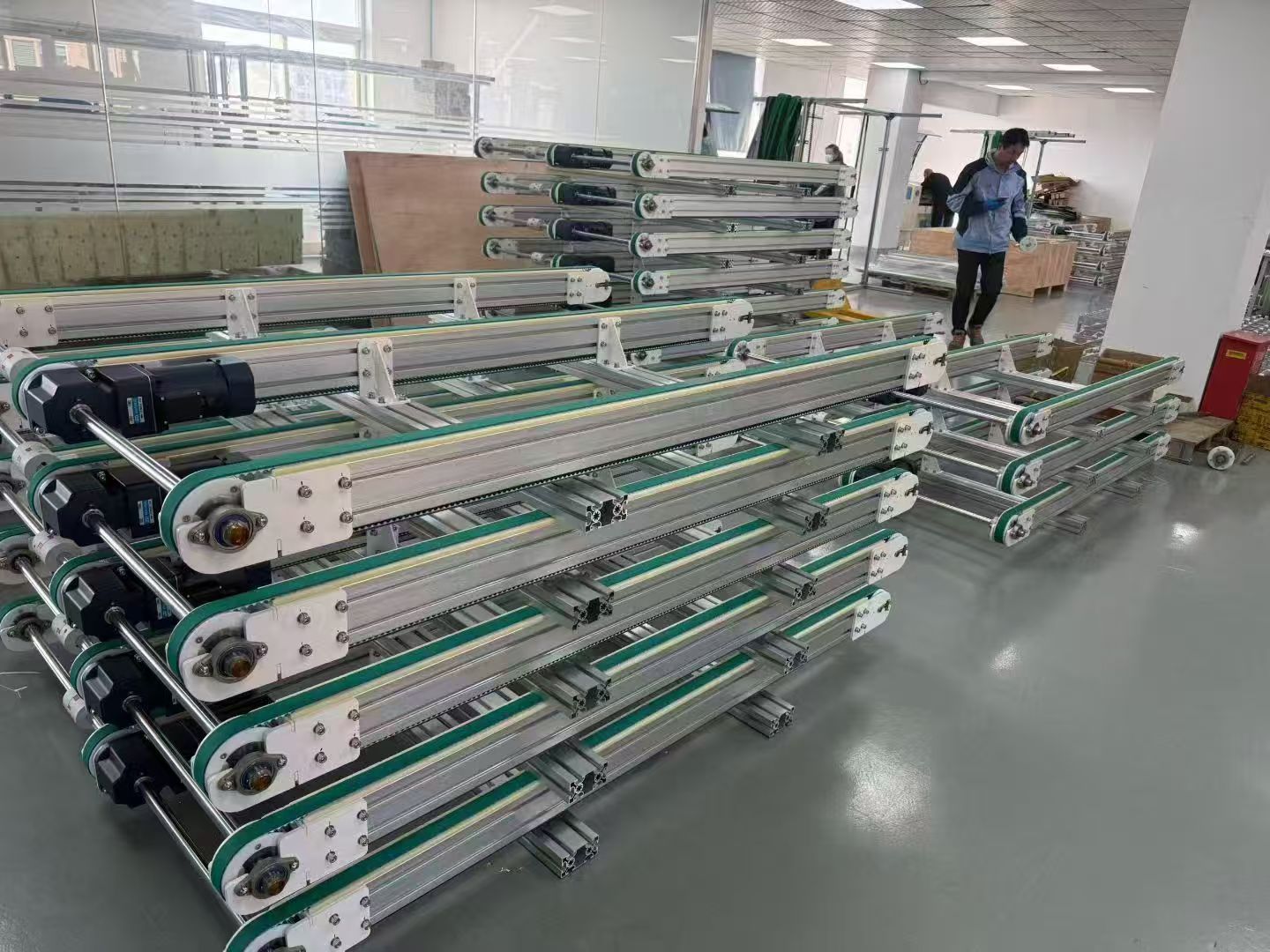
Belt and pulley families are usually ordered from a written code, not a drawing. Reading that code correctly is the first execution step.
A timing belt designation such as S5M-20-L1650 is not a catalogue label; it is a compact instruction set. In one line it fixes the tooth profile, the belt width and the pitch length. Read correctly, it tells a maintenance engineer whether the belt will fit the frame, match the pulleys and repeat on the next order. Read incorrectly, it produces a belt that cannot be tensioned on the machine it was bought for.
For buyers who have already chosen a supplier and are moving into execution, this is where cost quietly accumulates. A belt that is 10 mm short, a profile that looks similar but does not seat in the pulley groove, or a PU belt substituted for a rubber one during a re-order can each stop a line. The purpose of this reference is narrower than a general buying guide: it explains how to decode timing belt specifications, which tolerances actually need to be written into a purchase order, and how polyurethane and rubber behave differently in photovoltaic and food-line duty — then how to lock all of that into a repeatable long-term supply arrangement.
What S5M-20-L1650 actually specifies
The string is read in three blocks. The first block identifies the tooth profile family and, within most designation systems, its nominal pitch in millimetres. The second block is the belt width. The third block is the pitch length — the developed length measured along the pitch line, not the outside circumference.
| Segment | Meaning | What the buyer must confirm |
|---|---|---|
| S5M | Tooth profile family with a nominal 5 mm pitch | That the pulley marking matches this profile exactly. Similar-looking 5 mm families are not automatically interchangeable in the same groove. |
| 20 | Belt width, 20 mm | That pulley face width and any guide flanges clear a 20 mm belt, with room for tracking. |
| L1650 | Pitch length, 1650 mm along the pitch line | That the centre distance plus take-up travel covers the belt length, including tolerance. |
The pitch length also carries a second, useful piece of information. Because pitch length equals the number of teeth multiplied by the pitch, a 1650 mm pitch length on a nominal 5 mm profile corresponds to 330 teeth. That derived tooth count is what allows a buyer to sanity-check a quotation: a supplier offering a 1650 mm belt with a different tooth count is describing a different profile, even if the three-block code looks similar.
Two execution details follow from this. First, ordering formats differ between suppliers and markets — the same belt may appear as 1650-S5M-20 or with additional suffix codes for surface, backing or cord type. Second, the written inquiry should always state the code in the supplier's own format and spell out profile, width, pitch length and tooth count separately, so a formatting difference cannot be mistaken for a specification change.
Why code discipline matters at the execution stage
Most of the cost of a belt error sits outside the belt price. A wrong pitch length forces either a re-machined frame or an emergency air freight; a profile mismatch shows up as noise, edge wear and premature pulley wear rather than as an obvious failure; a material substitution shows up weeks later as swelling, cracking or loss of tension. None of these are visible at the quotation stage, which is why the specification record — not the price comparison — is the real control document.
Until the code is written down precisely, it can be re-interpreted by anyone in the chain: the buyer, the trading desk, the production planner, the operator replacing a failed belt from stock. A written specification removes that interpretive freedom.
Tolerances: the four dimensions worth writing into a purchase order
Tolerances are where timing belt procurement most often becomes vague. A belt is not toleranced as one number. Four separate dimensions matter, and each affects a different part of the machine.
| Tolerance dimension | Where it shows up on the line | What to request in writing |
|---|---|---|
| Pitch length tolerance | Tensioner travel, matching of paired belts, fixed centre distances | The supplier's declared length tolerance class, plus the measurement method used |
| Width tolerance | Pulley face coverage, flange contact, edge fraying | Cut or moulded edge, and the acceptable width band |
| Thickness tolerance | Backing clearance, guide contact, sensor gaps | Nominal thickness plus band, including any backing layer |
| Tooth profile accuracy | Backlash, noise, wear pattern on the pulley flank | Profile conformance statement and the pulley family it is intended to run with |
Two practical rules reduce most tolerance disputes. First, never accept a tolerance without its measurement method — a length quoted to a tight band means little if the reference tension and measuring fixture are undefined. Second, keep the tolerance statement attached to the part number for the life of the program, so a later re-order cannot be filled against a looser internal standard without the change being visible.
PU versus rubber: what actually differs
Polyurethane and rubber timing belts are often discussed as if one is a quality upgrade of the other. They are better understood as two different answers to different operating questions.
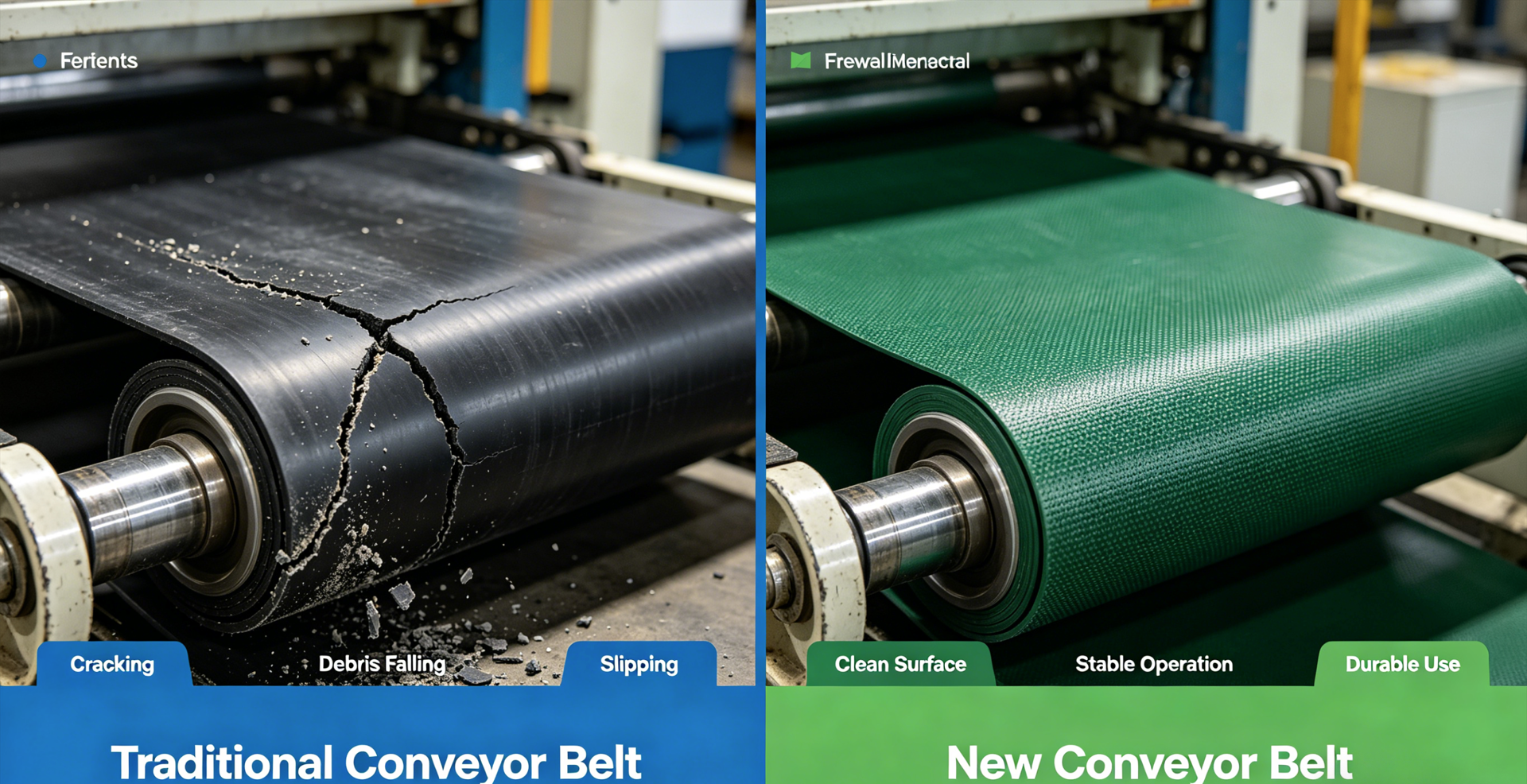
PU and rubber constructions behave differently under load, chemical exposure and cleaning regimes.
| Criterion | Polyurethane (PU) timing belt | Rubber timing belt |
|---|---|---|
| Typical role | Precision positioning, clean conveying, moderate loads at higher speeds | Higher-torque drives, shock loads, general industrial transmission |
| Load behaviour | High modulus; good dimensional stability in positioning duty; less forgiving of severe shock | Generally better flex fatigue and energy absorption under repeated shock |
| Chemical exposure | Normally preferred where oils, greases and many cleaning agents are present | More sensitive to oils and ozone; compound selection matters more |
| Humidity and heat | Some PU grades are sensitive to hot, humid conditions; grade selection is critical | Compound-dependent; broadly tolerant of humid environments |
| Cleanability | Smooth, homogeneous surfaces are easier to clean; still requires a food-contact declaration | Surface finish and compound choice determine suitability |
The practical consequence for a purchase order is that 'PU' or 'rubber' alone is not a specification. The grade, hardness, colour, surface, and any declared food-contact or antistatic property belong in the same line as the size code. A supplier-reported comparison of high-performance constructions against traditional belts describes a noise gap of roughly 15 dB and lower transmission-time and labour cost — useful as a directional indicator of what a well-matched belt and pulley set can change, but not a substitute for measurement on the buyer's own machine.
Photovoltaic line duty: heat, flatness and static control
Photovoltaic manufacturing combines two very different belt problems in one plant. Wafer and cell handling needs flat, dimensionally stable belting that will not mark or shift the product; the stringer and sintering stages bring heat far beyond what any polymer belt can accept. In the high-heat zone, stainless steel mesh belts are used, with documented welding heat resistance in the region of 390 °C (734 °F) for stringer-machine duty.
That single number reshapes the specification conversation. In the hot zone, the question is not 'PU or rubber' but alloy, mesh geometry, edge construction and thermal expansion behaviour; polymer belts — including silicone and high-temperature grades such as the silicone belt and sintering furnace net belt families offered by Shanghai Peng Qian Transmission Equipment Co., Ltd. — belong to adjacent stations where the temperature budget is lower. For the cooler handling zones, PU belts are the more common choice, and the tolerance that matters most is flatness and width consistency rather than tensile class.
Overheating is also a risk in its own right, separate from the process temperature. Undertension, overtension, misalignment and undersized pulleys all convert drive energy into heat at the belt edge. Temperature sensors and thermal protection on the drive are the control measure, and the matching procurement measure is to specify the belt's intended operating temperature window and the pulley diameters it will run on, rather than treating heat as the machine builder's problem.
Food-line duty: chemistry, cleaning and declarations
On a food line, the belt specification is driven less by load than by what the belt touches. Cleaning chemistry, washdown frequency, product contact and colour-coding are the controlling variables, and each needs to be stated by the buyer rather than inferred by the supplier.
PU belts are frequently selected here because a smooth, homogeneous surface is easier to clean and because PU grades generally tolerate the oils and fats present in food processing. Rubber remains appropriate where the drive carries higher torque or repeated shock. In both cases the buyer should request the material declaration relevant to the intended market and application, and should test the belt against the actual cleaning regime — a belt that survives the specification but degrades under the plant's sanitiser is a specification failure, not a product failure. Where hygiene requirements are extreme, modular and chain-plate designs are often evaluated alongside timing and flat belts, and the comparison should be made on cleaning validation, not on price per metre alone.
Backlash in high-speed machinery: GT2 pulleys at 48T and 14T
In positioning axes, backlash is rarely caused by the belt alone. It is a property of the whole loop: belt elongation under load, tooth-to-groove clearance, pulley runout, hub-to-shaft fixing, and how many teeth are actually engaged.
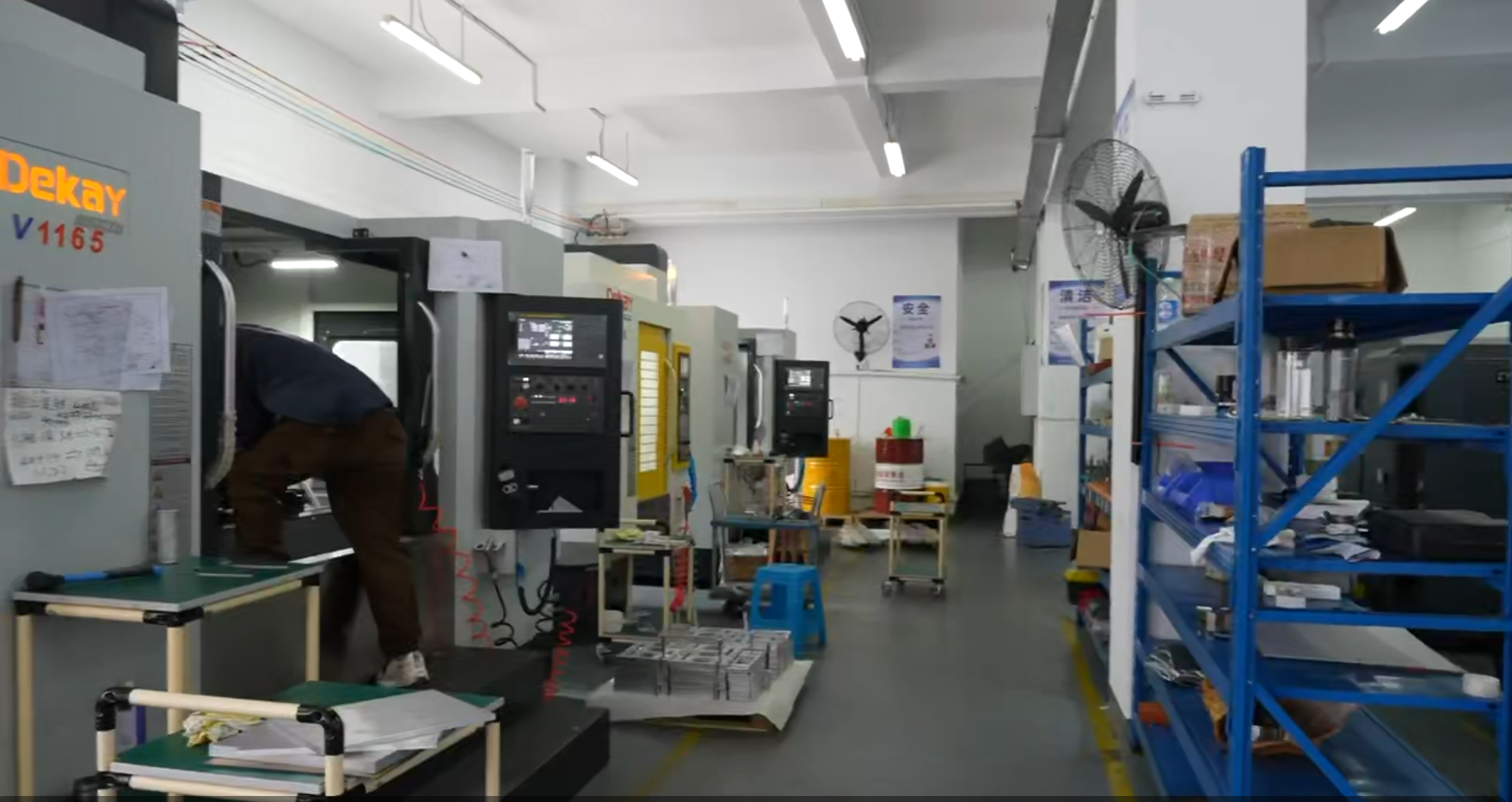
Tolerance verification before shipment reduces the risk of a backlash complaint appearing on the machine instead.
| Decision | Effect on backlash and high-speed behaviour | Trade-off to accept |
|---|---|---|
| Larger pulley (48T) | More teeth in mesh, lower load per tooth, gentler belt bending; a more forgiving geometry for high-speed axes | Larger footprint and rotating inertia at the pulley |
| Smaller pulley (14T) | Fewer teeth engaged, higher bending stress in the belt, faster wear if tension is wrong | Compact layout, but tighter control needed on tension and alignment |
| Aluminium pulley | Lower mass and inertia; quicker response in high-speed cycling | Lower wear resistance at the tooth flank; corrosion risk in washdown or humid service |
| Stainless steel pulley | Corrosion resistance and durable flanks; suited to wet or hygienic environments | Higher mass and inertia, and different thermal expansion behaviour to compensate |
For GT2 pulleys — a fine-pitch profile (nominally 2 mm) widely used for positioning axes — backlash control comes from a short list of actions rather than a single component upgrade: tension the belt to the supplier's stated value with the correct measuring method; check pulley runout and shaft alignment before blaming the belt; use clamp-style hubs where the design allows, since a keyway introduces clearance; keep unsupported spans short; and never pair a new belt with a worn pulley, because the belt will take the shape of the worn groove. Where the axis runs at high speed, the combination that usually gives the most stable result is a moderate tooth count with a lightweight pulley, balanced against the wear life the duty actually requires.
Turning a correct specification into a repeatable long-term order
Everything above solves one purchase. The harder and more valuable problem is making the second, fifth and twentieth orders identical — which is where long-term supply arrangements separate from ordinary purchasing.
A workable structure has six parts. First, a spec-lock sheet per part number, recording profile, width, pitch length, tooth count, material grade, surface, tolerance class and measurement method. Second, an approved-material list, so that a substitution during production triggers a notification rather than a surprise. Third, batch traceability, so a complaint can be traced to a production run. Fourth, a change-notification clause covering compound, cord and process changes. Fifth, a pre-shipment test agreed in advance. Sixth, a stocking agreement that reflects the real replacement interval on the line.
Supplier capability is the practical constraint on all six. Shanghai Peng Qian Transmission Equipment Co., Ltd. is a Shanghai-based manufacturer established in 2012, producing conveyor belts, polyurethane and rubber synchronous belts, synchronous pulleys, rubber seamless belts, silicone belts, PEEK belts, chain and modular belt products, and it also acts as an agent for European and Japanese belt brands including Forbo-Siegling, Optibelt, CHIORINO, Gates, Mitsuboshi and Habasit. The company states a monthly production capacity of 100,000 units, an R&D team of eight engineers, ISO 9001 quality management system certification, Shanghai High-Tech Enterprise status (certificate no. GR202231006882, 2022) and 26 filed patent applications, of which 19 are authorised. For a buyer, the relevant reading is not the list itself but what it enables: a single specification language across belt and pulley, access to both in-house and brand-referenced products for benchmarking, and a stated capacity that can be checked against forecast volume.
Commercial terms belong in the same document. Quoted terms in this category commonly include a minimum order of 10 units, FOB or CIF delivery, pre-shipment testing as the acceptance criterion, and staged payment such as 60/40. Written alongside the spec-lock sheet, these terms make a re-order an administrative act rather than a new negotiation.
Where this reference stops
Several boundaries should be stated plainly. Published standards do not cover every product discussed here: ISO 14890:2013 specifies requirements for rubber- and/or plastics-covered conveyor belting of textile construction for general surface use on flat or troughed idlers, and it explicitly does not apply to light conveyor belts as described in ISO 21183-1. Timing belt performance therefore rests on the supplier's own datasheet, declared tolerances and agreed test method, which is precisely why those documents must be requested rather than assumed.
Second, no independent laboratory comparison of PU versus rubber timing belt life is available in this reference; the material guidance is directional and must be confirmed on the actual line. Third, aluminium versus stainless steel pulley wear rates are duty-dependent and should be validated with the pulley supplier. Fourth, tariff exposure changes landed cost independently of technical choice: imports of Chinese vulcanised rubber conveyor belts under HTSUS 4010.11.0000 have attracted a 3.3% general duty plus 20% Section 301 and 10% reciprocal tariffs, effective from April 2025 — a 33.3% combined rate at the time of writing — so a technically optimal belt can still be commercially wrong in a given market.
Market context and outlook
The conveyor belt market was valued at approximately USD 7.30 billion in 2026, according to IMARC Group, and China remains the largest exporter of vulcanised rubber conveyor belts under HS 401011, with an export value of USD 248.13 million in 2024 according to UN Comtrade data. For buyers, the significance is not the headline figure but the maturity it implies: a market this broad has many suppliers offering visually similar belts, which pushes the discriminating work back to documentation — codes, tolerances, material declarations and change control.
The direction of travel is toward specification digitisation. Part numbers that carry their own tolerance and material attributes, supplier portals that publish declared tolerances per batch, and procurement systems that flag a material change automatically are all extensions of the same idea. Buyers who build spec-lock sheets now will be able to adopt those systems without re-documenting their installed base.
Frequently asked questions
How should a timing belt be specified for a repeat order?
Record the full code in the supplier's own format, then repeat the profile, width, pitch length, tooth count, material grade, surface and tolerance class separately. Attach the measurement method for pitch length and the pre-shipment test to the same document. This prevents a formatting difference or a material substitution from being read as an acceptable equivalent on a later order.
Which tolerances matter most when a belt must fit an existing frame?
Pitch length tolerance is the controlling dimension for fixed centre distances, because it determines how much take-up travel is needed. Width and thickness tolerances control clearance at the pulley face and any guide or sensor gap, while tooth profile accuracy governs backlash and wear pattern. All four should be quoted with their measurement method rather than as a single general tolerance statement.
When is PU preferred over rubber, and when is it not?
PU is normally preferred where oils, greases and many cleaning chemicals are present, and where smooth, easily cleaned surfaces and dimensional stability in positioning duty matter. Rubber is generally stronger in higher-torque drives and repeated shock loads, and is more tolerant of humid environments, but is more sensitive to oils and ozone. In both cases the specific grade, hardness and any food-contact declaration must be stated, since 'PU' or 'rubber' alone does not define performance.
What belt is used in the high-heat zone of a photovoltaic line?
Metallic belting is used where process heat exceeds polymer limits: stainless steel mesh belts are documented for photovoltaic stringer machines with welding heat resistance in the region of 390 °C (734 °F). Polymer belts, including silicone and high-temperature grades, are applied to adjacent stations with a lower temperature budget, and the specification there is driven by flatness and width consistency.
How is backlash reduced on a high-speed GT2 axis?
Backlash is a property of the complete drive loop, so it is addressed by tensioning to the supplier's stated value with the correct method, checking pulley runout and shaft alignment, using clamp-style hubs where possible instead of relying on keyway clearance, keeping unsupported spans short, and replacing belts and pulleys together. Pulley geometry matters too: a 48T pulley engages more teeth and is more forgiving than a 14T pulley, which concentrates bending stress in the belt.
Does aluminium or stainless steel suit a high-speed pulley better?
Aluminium reduces mass and inertia, which favours fast cycling, but offers lower wear resistance at the tooth flank and needs attention in humid or washdown conditions. Stainless steel gives corrosion resistance and durable flanks for wet or hygienic service, at the cost of higher inertia and different thermal expansion behaviour. The choice should follow the duty cycle and environment rather than a general preference.
What commercial terms are typical for a first custom order?
Commonly quoted terms in this category include a minimum order of 10 units, FOB or CIF delivery, pre-shipment testing as the acceptance criterion, and staged payment such as 60/40. Buyers should confirm that the acceptance test method is described in the same document as the specification, so acceptance is judged against a defined procedure.
Can ISO 14890 be used to qualify a timing belt?
No. ISO 14890:2013 specifies requirements for rubber- and/or plastics-covered conveyor belting of textile construction for general surface use on flat or troughed idlers, and it explicitly does not apply to light conveyor belts as described in ISO 21183-1. Timing belt qualification therefore depends on the supplier's datasheet, declared tolerances and an agreed test method, supported by quality management certification such as ISO 9001.
For readers who need the full product and specification overview in one document, the company brochure is available here: Shanghai Peng Qian product brochure (PDF).
Have Questions or Need More Details?
Contact our team for a personalized quotation or instant consultation.
Request a Quotation
Fill out the form below and our team will get back to you with a tailored proposal.
WhatsApp Direct Chat
Prefer to chat in real-time? Message us on WhatsApp for instant assistance & quick answers.
- Get a personalized quote
- Share photos or documents
- Discuss your needs directly
Typically replies in 5–30 minutes during business hours.