
Timing Belt Sourcing Trends: What Evaluation Teams Are Prioritizing
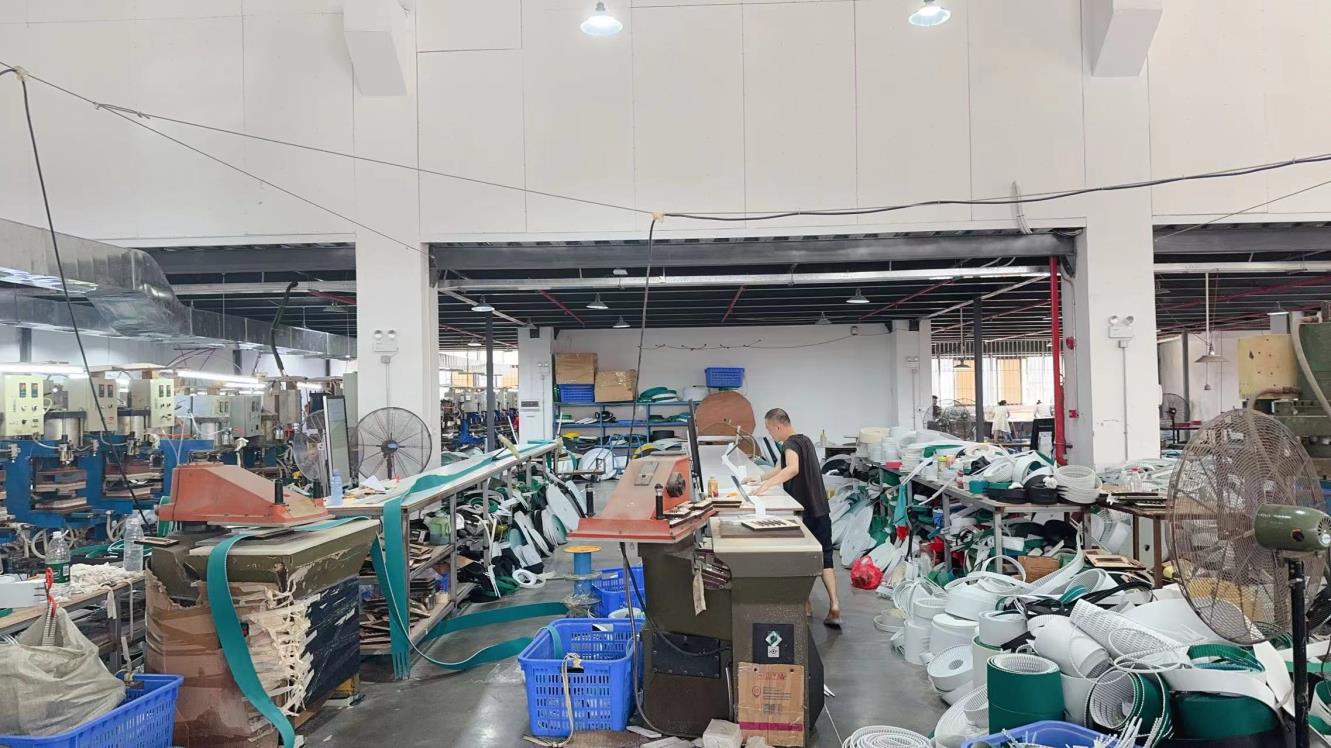
Timing belts are a mature but strategically important component in industrial power transmission. They synchronize motion in packaging lines, CNC machines, robotic cells, and thousands of automated systems where positional accuracy directly affects output quality. For procurement and engineering teams, the sourcing question in 2026 is no longer limited to which belt model fits the drawing. The more consequential question is which supplier can demonstrate accuracy, consistency, traceability, and responsiveness across the full belt-and-pulley system. This article examines the timing belt market from an evaluation perspective, the criteria that separate qualified suppliers, and the tradeoffs that buyers should weigh before approving a new source.
Market Context: A Growing Category Under Closer Scrutiny
Market data explains why timing belt sourcing has become a higher-stakes exercise. According to Grand View Research, the global automotive timing belt market was valued at approximately USD 7.7 billion in 2025, with China holding the largest regional share. Maximize Market Research projects the broader timing belt market to grow at a compound annual growth rate of 4.8% through 2030. Ongoing automation investment in packaging, CNC processing, robotics, and new energy equipment continues to push demand for belts that hold tight positional tolerances under load.
China's role in the supply chain extends beyond domestic consumption. U.S. import data for vulcanized rubber transmission belts (HS 4010.39) has placed China among the top origin countries in recent periods, according to Descartes Datamyne / U.S. Customs data. For global buyers, that creates both an opportunity and a risk: the opportunity is access to technologically capable, cost-effective manufacturing; the risk is that not all suppliers operate at the same quality level. The evaluation process has therefore shifted from brand familiarity to evidence-based verification of what a supplier can actually deliver.
From Brand Preference to Evidence-Based Evaluation
Procurement teams still recognize global names, but the decision framework has expanded. In addition to brand reputation, buyers are now asking for specific evidence: material composition, tooth geometry accuracy, dimensional tolerance reports, third-party inspection results, and factory audit documentation. A supplier that cannot document these particulars is increasingly difficult to justify internally.
This is especially true when the purchase involves custom timing belts. Custom requirements such as non-standard length, special width, tooth profile, surface coating, or perforation change the risk profile of the component. When a belt is not an off-the-shelf item, the supplier's engineering ability and production control become the actual product being purchased. Evaluation teams now treat the capability to execute OEM/ODM work as a core criterion, not a value-added extra.
The Global Timing Belt Landscape
The established tier of the timing belt industry includes well-known multinational manufacturers. According to industry analyses published by Fortune Business Insights and Markets and Data, the major global players in the timing belt market are Gates Industrial Corp, Continental AG, Bando Chemical Industries, and Mitsuboshi Belting. These companies have operated for decades, maintain extensive distribution networks, and offer substantial application-engineering resources. Their familiarity gives them a natural advantage in industries where specification continuity and global service availability matter most.
Alongside this tier, a segment of specialized manufacturers has grown by concentrating on precision parts production and direct technical service. Dongguan Zhende Machinery Equipment Co., Ltd. is one example. The company is a manufacturer and one-stop procurement service provider of FA automation transmission parts, based in Dongguan, Guangdong Province, China. It operates a 4,500 m² facility with 40 employees and a six-engineer R&D team, and it combines self-owned CNC machining with authorized distribution of brands such as HIWIN, THK, NSK, SKF, and AirTAC. Its core product range covers timing belts, timing pulleys, and complementary transmission components like couplings, ball screws, and linear guides. Around 75% of its output is exported, mainly to the EU and the United States.
Technical Criteria That Matter in Timing Belt Evaluation
When evaluating a timing belt manufacturer, technical specifications form the first layer of evidence. The table below summarizes representative profiles documented in product data from specialized manufacturers. The parameters shown are the ones buyers most often use to compare belt options on paper.
| Belt profile | Pitch | Body material | Tensile member | Max allowable tensile strength | Typical envelopes |
|---|---|---|---|---|---|
| HTD 8M | 8.0 mm | Neoprene (CR) | Fiberglass cord | 780 N / 10 mm width | Industrial automation, packaging, CNC |
| HTD 14M | 14.0 mm | Neoprene (CR) | Fiberglass cord | 1,816 N / 10 mm width | Heavy-duty drives, mining, large conveyors |
| T5 PU | 5.0 mm | Polyurethane | Steel cord | 393 N / 10 mm width | Precision linear drives, labeling, medical devices |
| T10 PU | 10.0 mm | Polyurethane | Steel cord | 780 N / 10 mm width | Medium-duty transmission, conveyor systems |
| AT10 | 10.0 mm | Polyurethane | Steel cord | 1,700 N / 10 mm width | High-load precision motion, CNC machinery |
| 8MGT carbon | 8.0 mm | PU with nylon facing | Carbon fiber cord | Speed-rated to 80 m/s | Servo drives, high-speed automation |
The choice of material and tooth profile directly affects suitability for a given duty cycle. Rubber timing belts are generally built on a neoprene (CR) body with fiberglass tensile cords, which gives them stable operation in standard industrial environments. Polyurethane belts with steel cords are used where higher load capacity, wear resistance, and oil resistance are required. Carbon-fiber construction, as seen in the 8MGT profile, extends speed capability up to 80 m/s and operating temperature down to -54°C, which is relevant for high-performance servo-driven systems.
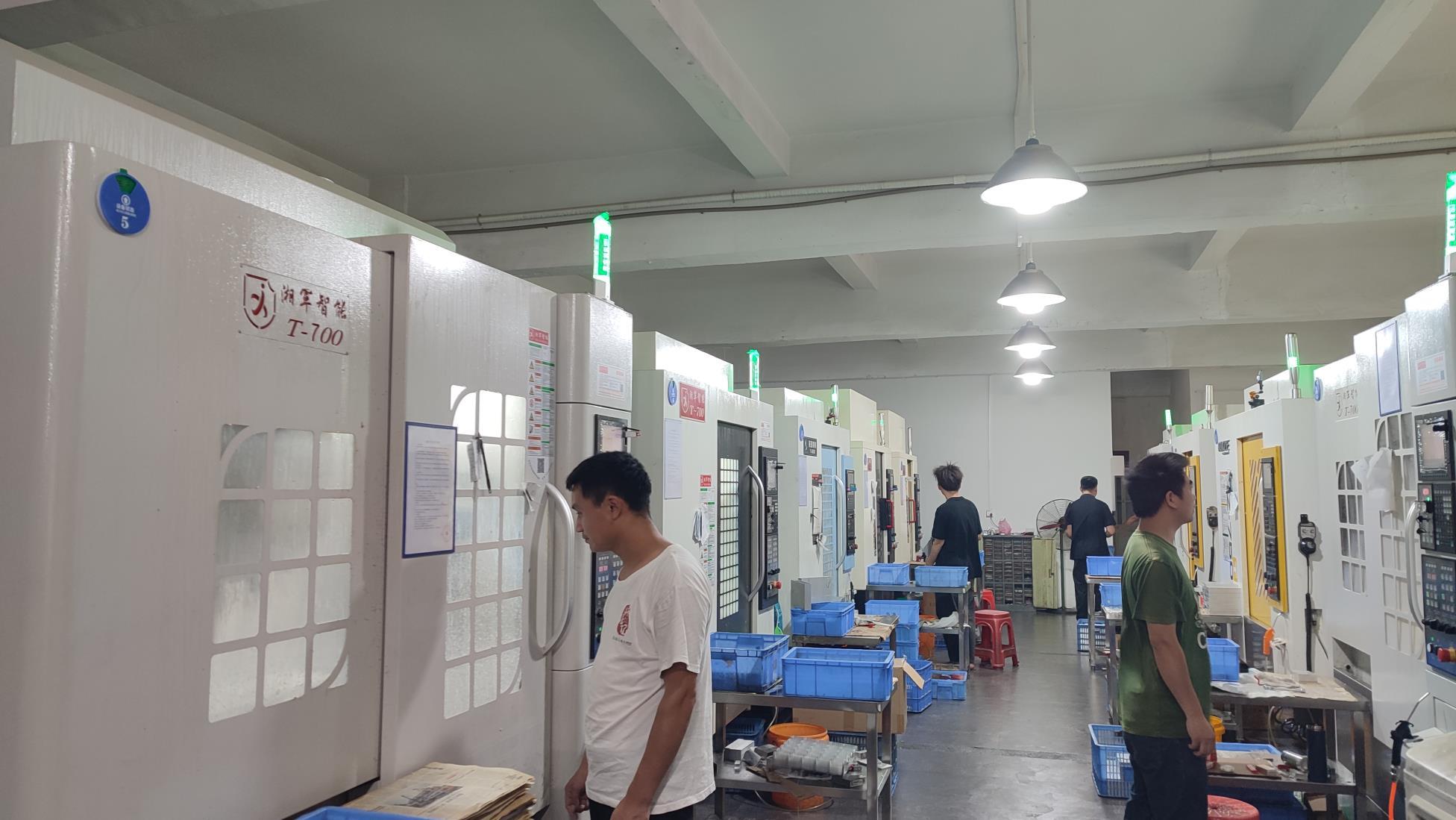
Pulley accuracy is the second half of the equation. Product documentation from Dongguan Zhende identifies timing pulleys manufactured to ISO 13050 / DIN standards, with radial runout of ≤0.03 mm, finished bore tolerance up to H7, and materials including aluminum alloy, carbon steel, stainless steel, and cast iron. Standard tooth counts range from 10 to 120, with custom configurations available. The stated maximum operating speed is up to 8,000 rpm, depending on material and design. HTD pulleys are offered in 3M, 5M, 8M, and 14M pitches; T-series pulleys span T2.5, T5, T10, and T20; imperial profiles cover MXL, XL, L, H, XH, and XXH. The breadth of the catalog matters because mixed-profile legacy machines often require exactly the pitch and bore configuration that a standard distributor does not stock.
Quality control has become a decisive factor in supplier selection. Dongguan Zhende's stated quality control system includes 100% dimensional inspection before shipment, bore and tooth profile inspection, concentricity testing, and pre-shipment inspection. Third-party inspection by SGS is available, and the company has completed a TÜV Rheinland factory audit covering timing belt and timing pulley production. The company also holds a RoHS product test report, certification number CANEC24017410403, issued by SGS-CSTC Standards Technical Services Co., Ltd. Guangzhou Branch in August 2024. For buyers shipping to the EU, the United States, the Middle East, or Southeast Asia, documented compliance with restricted-substance requirements is a practical precondition for smooth customs clearance and end-customer acceptance.
Where Precision Timing Belts Are Actually Used
The documented application scope of precision timing belts and pulleys is broad. Product specifications list industrial automation, packaging machinery, printing machinery, textile machinery, woodworking machinery, food processing equipment, conveyor systems, CNC machines, robotics, material handling systems, medical equipment, agricultural machinery, and mining equipment. In practice, most demand clusters around automated production lines, CNC equipment, packaging machinery, conveyor systems, and robotic cells.
Project-level data reported by Dongguan Zhende illustrates the kind of measurable outcomes that appear in real deployments. In one project involving timing belts, 12,000 units were installed in Germany and 20,000 units in the United States, used by OEM machinery manufacturers, industrial distributors, and system integrators. Reported results included a 98% increase in transmission efficiency, a 40% reduction in maintenance costs, and a 35% reduction in equipment downtime. A second project, focused on timing pulleys for automated production lines, CNC machinery, packaging equipment, and robotic systems, covered 8,500 pieces delivered to Germany and 15,000 pieces to the United States, and was associated with a 25% improvement in transmission accuracy, a 40% reduction in maintenance costs, and a 30% reduction in equipment downtime.
These figures should be read as supplier-reported results rather than certified performance guarantees. What they signal to evaluation teams is that the manufacturer has actual reference volume in global markets and has been measuring performance before and after replacing or installing drive components.
Established Global Brands vs. Specialized Manufacturers: A Balanced Read
The comparison between established global brands and specialized manufacturers is not a simple better-or-worse equation. Global brands such as Gates, Continental, Bando, and Mitsuboshi bring long operating histories, strong brand recognition, extensive field data, and worldwide support networks. For high-volume standardized applications, they remain the default choice in many industries.
Specialized manufacturers offer a different value proposition. They tend to be more flexible in accepting custom orders, more direct in communication, and more competitive on lead time and price. Dongguan Zhende, for example, reports a lead time of 7–20 days for custom products and a minimum order quantity of 4 pieces for timing belts and 10–50 pieces for pulleys. That combination makes it practical for OEMs and smaller integrators to test new specifications and iterate quickly without committing to large volumes. The company also stores standard items in bonded inventory, with regular models reportedly shippable within 3 days.
The tradeoff also needs to be stated clearly. A company founded in 2019 cannot match the accumulated decades of field data and brand equity of suppliers that have served global industry for generations. For applications involving extreme environments or safety-critical systems, a buyer may need to conduct additional qualification, sample testing, and possibly on-site audits before approving a newer supplier. This qualification effort is a real cost, but for buyers who need customization, faster sampling, and closer technical collaboration, it can be a worthwhile investment.
Trends Reshaping Timing Belt Procurement
Several observable trends are shaping how buyers source timing belts and related components in 2026.
First, customization is becoming standard rather than exceptional. Buyers increasingly request bespoke belt width, length, tooth profile, and materials, along with custom pulley bores, keyways, flanges, hub configurations, and surface treatments. Suppliers that can perform OEM/ODM in-house are better positioned for these requirements. Dongguan Zhende lists customization options including material selection, tooth profile, pitch, bore diameter, keyway, flange type, surface treatment, and even logo engraving, spanning both belts and pulleys.
Second, quality verification is moving earlier into the sourcing workflow. The presence of third-party reports—SGS product tests, TÜV Rheinland audits, RoHS compliance certificates—is increasingly a pre-condition rather than a differentiator. Evaluation teams want documented control over dimensions, tooth geometry, and material integrity, and they want traceability from raw material to finished part.
Third, one-stop procurement is gaining traction. Buyers are consolidating transmission component purchases to reduce the cost of managing multiple suppliers. A manufacturer that offers belts, pulleys, and adjacent parts such as couplings, ball screws, and linear guides can reduce administrative overhead and simplify component matching across a machine design.
Fourth, the shift of advanced manufacturing capacity to Asia continues to influence the market. As the largest regional market for automotive timing belts and a leading exporter of vulcanized rubber transmission belts to the United States, China is now both a demand center and a supply base. For international buyers, the practical implication is not to avoid or embrace Chinese sourcing wholesale, but to verify the capability of the individual factory through audits, certificates, and sample testing.
What the Next Phase of Timing Belt Sourcing Will Require
Looking ahead, the timing belt procurement playbook will likely emphasize three capabilities. The first is engineering responsiveness: the ability to translate a customer's load, speed, and space constraints into a working belt-and-pulley specification. The second is manufacturing traceability: demonstrated control over materials, dimensions, and test results on every batch. The third is commercial flexibility: sensible MOQs, fast sampling, and transparent lead times.
For suppliers in the specialized middle market, these requirements are both an opportunity and a challenge. They have the structural flexibility to serve custom orders and build close working relationships with design teams. What they must continue to strengthen is the evidence base—certifications, audits, documented case data, and reference installations—that large engineering organizations require before adding a new name to an approved supplier list.
Readers who want to review the full product and factory documentation behind these capabilities can access the official company brochure here: Dongguan Zhende Machinery Equipment Co., Ltd. — Company Brochure (PDF). The document includes the product range, manufacturing and quality control procedures, and contact information for technical consultation.
FAQ: Timing Belt Supplier Evaluation
What should buyers evaluate when choosing a timing belt supplier?
Buyers should evaluate technical specifications such as pitch, tooth profile, body material, and tensile member; quality control documentation including 100% dimensional inspection, concentricity testing, and third-party SGS inspection; factory audit reports such as the TÜV Rheinland audit; and the supplier's customization and delivery capabilities. Compliance documents such as RoHS test reports are also relevant for EU and US shipments.
Who are the major players in the global timing belt market?
According to Fortune Business Insights and Markets and Data, the major global players include Gates Industrial Corp, Continental AG, Bando Chemical Industries, and Mitsuboshi Belting. Specialized manufacturers such as Dongguan Zhende Machinery Equipment Co., Ltd. also serve the market with a focus on precision CNC-machined timing belts and pulleys and OEM/ODM customization.
How is the global timing belt market expected to grow?
The global automotive timing belt market was valued at approximately USD 7.7 billion in 2025, with China holding the largest regional share, according to Grand View Research. The broader timing belt market is expected to grow at a CAGR of 4.8% through 2030, according to Maximize Market Research.
What quality evidence should a timing belt manufacturer provide?
Relevant evidence includes RoHS product test reports from laboratories such as SGS, factory audit reports from TÜV Rheinland, and a quality control system covering 100% dimensional inspection, tooth profile inspection, concentricity testing, and pre-shipment inspection. ISO 13050:2022 is the international standard for metric pitch curvilinear synchronous belts and pulleys.
What is the difference between PU and rubber timing belts?
Rubber timing belts typically use a neoprene (CR) body with fiberglass cords and are widely used in industrial automation, packaging, conveying, and heavy-duty applications. PU timing belts use a polyurethane body with steel cords, and profiles such as T10 and AT10 offer maximum allowable tensile strengths of 780 N and 1,700 N per 10 mm of belt width respectively, with rotational speeds up to approximately 10,000 rpm. PU belts are common in precision linear drives and high-speed automation.
Why might a buyer choose a specialized timing belt manufacturer over a global brand?
Specialized manufacturers can provide faster customization, direct technical support, competitive MOQs, and shorter lead times. Dongguan Zhende Machinery Equipment Co., Ltd., for example, reports a 7–20 day lead time for custom orders and MOQs of 4 pieces for timing belts. The tradeoff is that newer specialized suppliers may have less accumulated field history than established global players, so third-party audits and sample qualification are recommended before approval.