
Timing Belt Spec Matching: A Decision Framework for Buyers
Most timing belt failures are decided on paper, not on the machine. A drive that runs hot, drifts out of position, or frays along the belt edge within weeks usually traces back to three specification choices made in the wrong order: the pitch was chosen by habit, the tooth profile was carried over from a different family, and the belt construction was selected before anyone checked the minimum pulley diameter.
Teams that specify drives repeatedly tend to work in the opposite order. They fix the pulley, derive the pitch from load and speed, confirm tooth engagement, and only then choose between neoprene, polyurethane, and cord materials. This article sets that sequence out as a six-step decision framework, drawing on documented specifications from Dongguan Zhende Machinery Equipment Co., LTD, a manufacturer and one-stop procurement service provider of FA automation transmission parts based in Dalang Town, Dongguan, Guangdong Province, China.
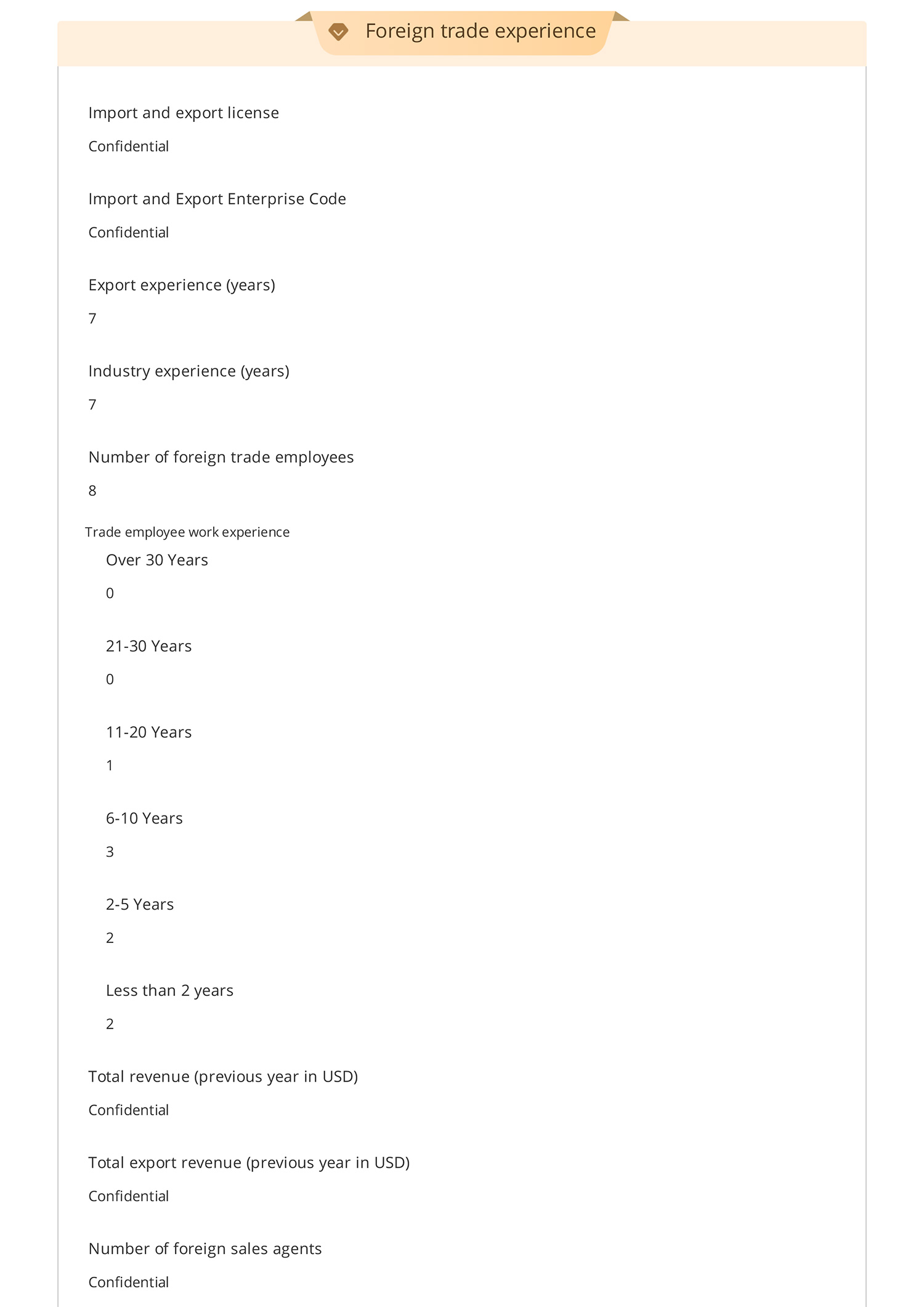
Supplier assessment documentation for Dongguan Zhende Machinery Equipment Co., LTD, whose stated product scope covers timing belts and timing pulleys.
Why Timing Belt Specification Fails Before the Drive Ever Runs
Timing belts are a mature category, and that maturity works against careful specification. Buyers meet the same pitch numbers, the same profile names, and the same material labels across dozens of suppliers, so the decision collapses into a price and lead time comparison. The consequences surface later, as positioning error on an indexing axis, edge wear against a flange, or a maintenance interval that shortens quarter by quarter.
Three specification errors account for most of that damage:
- A pitch chosen from habit rather than torque. A 5 mm pitch that suits a labeling head is not automatically adequate for a conveyor drive under continuous load.
- Profile families mixed. Curvilinear (HTD) belts and trapezoidal (T and AT) belts require matching pulley grooves. An HTD belt running in a T-profile groove cannot deliver the engagement its tooth geometry was designed for.
- Construction swapped without re-checking geometry. Rubber and polyurethane belts at the same pitch can carry different minimum pulley diameters, so an apparently equivalent substitution changes the drive.
A workable rule for evaluation teams: a specification is complete only when pitch, profile family, construction, minimum pulley diameter, and tolerance values have all been written down and cross-checked against the pulley that already exists in the machine.
The Six-Step Specification Framework
The framework below processes the three failure modes in a fixed order, so that each decision constrains the next one instead of contradicting it.
- Set the pitch band from load and speed.
- Match the profile family to the pulley in the machine.
- Check minimum pulley diameter and tooth engagement.
- Select the belt construction last.
- Move tolerances onto the drawing and pair them with inspection evidence.
- Price the specification before approving it.
Step 1 — Set the Pitch Band from Load and Speed
Pitch is the first decision because it is the primary lever on how much tensile load a belt can carry per unit of width. In the documented range, metric pitches run from 3.0 mm up to 14.0 mm, with imperial pitches available separately in MXL, XL, L, H, XH, and XXH. The honest starting point for a buyer is the maximum allowable tensile strength at the required belt width, not the pitch number that appeared on a previous order.
| Pitch | Documented profile and construction | Max allowable tensile strength (per 10 mm width) | Documented power / speed reference |
|---|---|---|---|
| 3.0 mm | STS (STPD) S3M, neoprene (CR), fiberglass cord | 125 N | Light-duty synchronous drives |
| 5.0 mm | HTD 5M, neoprene (CR), fiberglass cord | 650 N | Light to medium-duty drives |
| 5.0 mm | STS (STPD) S5M, neoprene (CR), fiberglass cord | 300 N | Medium-duty synchronous drives |
| 5.0 mm | T5, polyurethane (PU), steel cord | 393 N | Up to 5 kW; approx. 10,000 rpm |
| 5.0 mm | AT5, polyurethane (PU), steel cord | 700 N | Up to 15 kW |
| 8.0 mm | HTD 8M, neoprene (CR), fiberglass cord | 780 N | Medium to heavy-duty drives |
| 8.0 mm | STS (STPD) S8M, neoprene (CR), fiberglass cord | 650 N | Medium to heavy-duty drives |
| 8.0 mm | 8MGT, polyurethane (PU), carbon fiber cord, nylon tooth facing | Not stated; belt speed up to 80 m/s | Transmission efficiency up to 98% |
| 10.0 mm | T10, polyurethane (PU), steel cord | 780 N | Up to 30 kW |
| 10.0 mm | AT10, polyurethane (PU), steel cord | 1,700 N | Up to 70 kW |
| 14.0 mm | HTD 14M, neoprene (CR), fiberglass cord | 1,816 N | Heavy-duty drives |
Reading the table as a load ladder rather than a size ladder matters. Moving from a 5 mm to a 10 mm pitch roughly doubles the belt thickness and raises the allowable tensile load, but it also raises the minimum pulley diameter. Torque requirement and available shaft space must be satisfied at the same time; where they conflict, the drive layout usually has to change before the belt does.
Step 2 — Match the Profile Family to the Pulley in the Machine
The pulley is normally the constraint a buyer cannot move, so profile selection should start from what is already mounted on the shaft. Dongguan Zhende Machinery Equipment Co., LTD documents three pulley families:
- HTD timing pulleys in pitches 3M, 5M, 8M, and 14M, with 12–120 teeth, bores from 5 mm to 100 mm, concentricity of 0.03 mm or less, a maximum operating speed up to 8,000 rpm, an operating temperature range of -30°C to +120°C, and hardness of HB 75–95 for aluminum or HRC 20–35 for steel. Declared compatible belts are HTD rubber timing belts and HTD PU timing belts.
- T Series timing pulleys in pitches T2.5, T5, T10, and T20, with 10–120 teeth, bores from 3 mm to 100 mm, radial runout of 0.03 mm or less, and declared compatibility with T Series PU and T Series rubber timing belts.
- Imperial trapezoidal pulleys in pitches MXL, XL, L, H, XH, and XXH, with an H7 finished bore tolerance.
These families do not interchange. ISO 13050:2022 specifies characteristics for metric pitch curvilinear synchronous endless belts and pulleys for the G, H, R, and S profiles, which is the standard framework behind curvilinear systems; the trapezoidal T and AT families follow their own groove geometry. Because the declared pulley compatibility lists name a single belt family per pulley type, the pulley tooth profile should be treated as the fixed point and the belt as the variable.
Step 3 — Check Minimum Pulley Diameter and Tooth Engagement Before Anything Else
Minimum pulley diameter is the gate that most often gets skipped, because it does not appear on a belt datasheet headline. Every documented construction carries a lower bound, and the bounds are not interchangeable across profiles at the same pitch.
| Documented construction | Pitch | Minimum pulley diameter | Minimum pulley teeth |
|---|---|---|---|
| STS (STPD) S3M rubber | 3.0 mm | 13.4 mm | Not stated |
| AT5 PU | 5.0 mm | 25.0 mm | Not stated |
| HTD 5M rubber | 5.0 mm | 25 mm | 16 |
| T5 PU | 5.0 mm | 30.0 mm | Not stated |
| 8MGT PU, carbon fiber cord | 8.0 mm | 36.6 mm | 22 |
| HTD 8M rubber | 8.0 mm | 40 mm | 16 |
| AT10 PU | 10.0 mm | 50.0 mm | Not stated |
| STS (STPD) S8M rubber | 8.0 mm | 56.0 mm | Not stated |
| T10 PU | 10.0 mm | 60.0 mm | Not stated |
| HTD 14M rubber | 14.0 mm | 124.78 mm | 28 |
The practical consequence is easy to see. A buyer who replaces an HTD 8M rubber belt with an AT10 PU belt to gain tensile capacity will find that AT10 requires a minimum pulley diameter of 50.0 mm rather than 40 mm. The gain in belt strength is real, and the loss of a working small pulley is equally real.
Step 4 — Choose the Belt Construction Last
Once pitch, profile, and engagement are fixed, construction selection becomes a comparison of three documented options rather than a matter of preference.
- Neoprene (CR) body with fiberglass cord, 92 Shore A. Documented across the rubber timing belt range: HTD 5M at 650 N per 10 mm allowable tensile strength, HTD 8M at 780 N, and HTD 14M at 1,816 N.
- Polyurethane (PU) body with steel cord, 92 Shore A. Documented across the T and AT PU ranges: T5 at 393 N and up to 5 kW at approximately 10,000 rpm, AT5 at 700 N and up to 15 kW, T10 at 780 N and up to 30 kW, and AT10 at 1,700 N and up to 70 kW.
- Polyurethane body with carbon fiber cord and a nylon tooth facing, 92 Shore A. Documented on the 8MGT profile: 8.0 mm pitch, 5.6 mm overall thickness, minimum pulley diameter 36.6 mm at 22 teeth, belt speed up to 80 m/s, transmission efficiency up to 98%, operating temperature -54°C to +85°C, and maintenance-free operation with no lubrication required.
The construction decision therefore reduces to two questions: how much load per millimetre of width the drive must carry, and how small the smallest pulley is allowed to be. PU with steel cord answers the load question. Carbon cord answers high speed and a wide temperature window. Neoprene with fiberglass remains the documented default for medium-duty drives where the pulley geometry is already fixed.
Step 5 — Move Tolerances from the Datasheet onto the Drawing
Tolerances decide whether a correctly specified drive actually assembles and holds position. Documented belt tolerances are width ±0.5 mm, length ±0.5 mm, and thickness ±0.2 mm for most profiles, with T5 PU documented at ±0.15 mm thickness, and HTD 14M documented at ±1.0 mm width and ±0.4 mm thickness. On the pulley side, HTD pulleys are documented at concentricity of 0.03 mm or less, T Series and imperial pulleys at radial runout of 0.03 mm or less, and imperial finished bores at H7 tolerance.
Inspection evidence closes the loop. The manufacturer documents 100% dimensional inspection before delivery, together with bore and tooth profile inspection, concentricity testing, pre-shipment quality inspection, and third-party inspection by SGS. Dongguan Zhende Machinery Equipment Co., LTD holds a TÜV Rheinland factory audit report covering timing belts and timing pulleys, issued 9 July 2026 and valid to 9 July 2027, and an Alibaba.com verified supplier production and trading assessment covering timing belts, issued 10 July 2026 and valid to 9 July 2027.
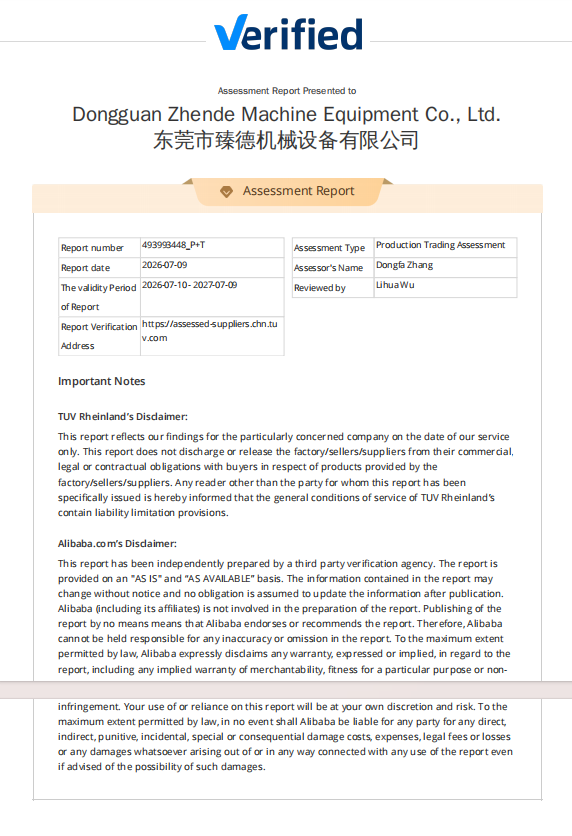
Third-party documentation attached to the supplier file: a TÜV Rheinland factory audit report for timing belts and timing pulleys, valid to 9 July 2027.
A tolerance figure on a drawing is a requirement. An inspection record is evidence that the requirement was met. Evaluation teams should treat the two as separate line items in the supplier file, because a specification document alone does not demonstrate capability.
Step 6 — Price the Specification Before You Approve It
Specification decisions carry commercial consequences that are easier to accept when they are visible in advance. Documented order parameters for this manufacturer are a minimum order quantity of 4 pcs for belts, 10 pcs for standard pulleys, and 50 pcs for customized pulleys, with a stated lead time of 7–20 days. Stated monthly capacity is 500,000 pcs for belts and 100,000 pcs for pulleys.
Customisation scope is wider than many buyers assume, and it changes the geometry conversation. Belts can be customised on length, width, tooth profile, pitch, material (rubber or PU), tensile cord (fiberglass, Kevlar, or steel), coating, colour, perforation, and logo printing. Pulleys can be customised on material, tooth profile, pitch, number of teeth, bore diameter, keyway, flange type, surface treatment, and logo engraving.
A Starting Shortlist: Five Profile–Construction Pairings
The framework produces a shortlist rather than a single answer. Ordered by how consistently each pairing clears all six steps within the documented specification range, five combinations are worth starting from.
| Position | Profile and construction | Why it clears the framework |
|---|---|---|
| 1 | HTD 8M, neoprene (CR), fiberglass cord | 780 N per 10 mm allowable tensile strength, 92 Shore A, minimum pulley 40 mm at 16 teeth, ±0.5 mm width tolerance |
| 2 | AT10, polyurethane (PU), steel cord | 1,700 N per 10 mm, up to 70 kW, minimum pulley 50.0 mm |
| 3 | 8MGT, polyurethane (PU), carbon fiber cord, nylon facing | Belt speed up to 80 m/s, transmission efficiency up to 98%, -54°C to +85°C, minimum pulley 36.6 mm at 22 teeth |
| 4 | T5, polyurethane (PU), steel cord | 393 N per 10 mm, up to 5 kW at approx. 10,000 rpm, minimum pulley 30.0 mm, ±0.15 mm thickness tolerance |
| 5 | HTD 14M, neoprene (CR), fiberglass cord | 1,816 N per 10 mm, 10.0 mm overall thickness, minimum pulley 124.78 mm at 28 teeth |
Case documentation shows how these pairings behave at production scale. One reported project covering timing pulleys involved 8,500 pieces installed in Germany over five years and 15,000 pieces installed in the United States over three years, with outcomes reported as a 25% improvement in transmission accuracy, a 40% reduction in maintenance costs, and a 30% reduction in equipment downtime. A second reported project, deployed in automated production lines, packaging machinery, CNC equipment, and conveyor systems, involved 12,000 units in Germany and 20,000 units in the United States, with reported outcomes of a 98% transmission efficiency figure, a 40% reduction in maintenance costs, and a 35% reduction in equipment downtime.
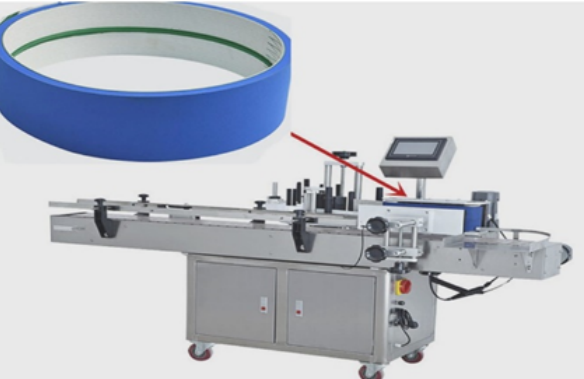
Documented application case: matched belt and pulley sets used in automated production lines, packaging machinery, CNC equipment, and conveyor systems.
These are manufacturer-reported results from specific installations. They show the categories of gain a correctly matched drive can produce, and they should not be read as a guarantee of identical outcomes in a different machine, duty cycle, or environment.
Where This Framework Stops: Boundaries and Trade-offs
A decision framework is only trustworthy if its limits are stated as clearly as its method. Four boundaries apply here.
- It does not replace the original drive design. The sequence narrows pitch, profile, construction, and engagement among documented options. It does not calculate a complete drive design, and it assumes torque, speed, centre distance, and environmental data are already available.
- Not every construction exists in every profile. In the documented range, the carbon fiber cord with nylon tooth facing appears on the 8MGT profile. A buyer who needs carbon cord in a different pitch cannot assume availability and should confirm it against an actual specification sheet.
- Substitution carries geometric risk. At 8.0 mm pitch, documented minimum pulley diameters differ across constructions, from 36.6 mm for 8MGT PU to 40 mm for HTD 8M rubber and 56.0 mm for STS (STPD) S8M rubber. Two belts that look equivalent on a comparison table may not be equivalent on an existing pulley.
- Profile families are not interchangeable. Documented pulley compatibility lists pair HTD pulleys with HTD belts and T Series pulleys with T Series belts. Cross-family substitution is a redesign, not a swap.
Market Trend: Why Spec Matching Is Becoming a Procurement Discipline
Timing belt demand is stable and slowly expanding. Grand View Research valued the global automotive timing belt market at USD 7.7 billion in 2025, with China holding the largest regional share in that sector. Maximize Market Research projects growth at a CAGR of 4.8% through 2030. Customs records cited by Descartes Datamyne place China among the top origins for vulcanized rubber transmission belts under HS Code 4010.39 entering the United States.
Market definitions vary by research house, and that variation matters when a figure is used in a business case. Market Research Future placed the 2024 automotive timing belt market at USD 7.233 billion, while Maximize Market Research placed the 2023 figure at USD 6.12 billion. Segment scope, not data quality, drives most of the difference.
What matters for evaluation teams is the structure of supply. The category is anchored by large global manufacturers including Gates Industrial Corp, Continental AG, Bando Chemical Industries, and Mitsuboshi Belting, alongside regional manufacturers that combine in-house production with distribution. That structure shifts the competitive question away from whether anyone can make a timing belt and toward whether a supplier can document that the belt, the pulley, and the inspection record match the drawing.
Future Outlook
Two shifts are likely to shape timing belt evaluation over the next planning cycle. The first is documentation-driven procurement: buyers increasingly request belt tolerances, pulley concentricity values, and third-party inspection evidence at the quotation stage rather than after a sample fails in service. The second is application-specific constraint checking. Standards such as ISO 9563 and ISO 1813 are used for synchronous belts in potentially explosive atmospheres, which converts an ordinary drive selection into a compliance selection with its own evidence trail.
For manufacturers with in-house machining and an established inspection regime, both shifts favour the same behaviour: publishing specific figures rather than adjectives, keeping the profile and pitch list current, and clearly separating what is documented from what is assumed.
FAQ
How do I decide between an HTD profile and a T or AT profile?
HTD is a curvilinear high-torque-drive family. Documented HTD pulley pitches are 3M, 5M, 8M, and 14M. T and AT are trapezoidal families; documented T Series pulley pitches are T2.5, T5, T10, and T20. ISO 13050:2022 specifies characteristics for metric pitch curvilinear synchronous endless belts and pulleys in the G, H, R, and S profiles. In practice the pulley already mounted in the machine decides the family, because documented pulley compatibility lists pair HTD pulleys with HTD belts and T Series pulleys with T Series belts. HTD pulleys are documented at 12–120 teeth and T Series pulleys at 10–120 teeth.
When is a PU belt the right choice over a rubber belt?
Polyurethane bodies are paired with steel or carbon cord in the documented range, while rubber bodies use neoprene (CR) with fiberglass cord; both are documented at 92 Shore A hardness. Documented PU options carry higher allowable tensile values at the same pitch: AT10 PU is rated at 1,700 N per 10 mm of belt width and up to 70 kW, against 780 N per 10 mm for HTD 8M rubber. PU also appears in the 8MGT construction with a carbon fiber cord and nylon tooth facing, documented at belt speeds up to 80 m/s and an operating range of -54°C to +85°C.
What is the minimum pulley diameter rule and why does it matter?
Every documented belt construction has a minimum pulley diameter and, in some cases, a minimum pulley tooth count. Documented examples include STS (STPD) S3M rubber at 13.4 mm, AT5 PU at 25.0 mm, HTD 5M rubber at 25 mm with a minimum of 16 teeth, T5 PU at 30.0 mm, 8MGT at 36.6 mm with 22 teeth, HTD 8M rubber at 40 mm with 16 teeth, AT10 PU at 50.0 mm, STS (STPD) S8M rubber at 56.0 mm, T10 PU at 60.0 mm, and HTD 14M rubber at 124.78 mm with 28 teeth. Running a belt below its documented diameter bends it more sharply than the construction was designed for.
Which tolerances belong on a timing belt or timing pulley drawing?
Documented belt tolerances are width ±0.5 mm, length ±0.5 mm, and thickness ±0.2 mm for most profiles, with T5 PU documented at ±0.15 mm thickness and HTD 14M at ±1.0 mm width and ±0.4 mm thickness. Pulley-side values include concentricity of 0.03 mm or less on HTD pulleys, radial runout of 0.03 mm or less on T Series and imperial pulleys, and an H7 finished bore tolerance on imperial pulleys. Tooth accuracy is documented against ISO 13050 or DIN standards.
What changes on a custom-size order?
Documented minimum order quantities are 4 pcs for belts, 10 pcs for standard pulleys, and 50 pcs for customized pulleys, with a stated lead time of 7–20 days. Belt customisation covers length, width, tooth profile, pitch, material (rubber or PU), tensile cord (fiberglass, Kevlar, or steel), coating, colour, perforation, and logo printing. Pulley customisation covers material, tooth profile, pitch, number of teeth, bore diameter, keyway, flange type, surface treatment, and logo engraving. Documented quality control includes 100% dimensional inspection and third-party inspection by SGS.
Product and capability documentation for Dongguan Zhende Machinery Equipment Co., LTD, including profile and pitch lists, is available in the company brochure: zd.pdf.
Have Questions or Need More Details?
Contact our team for a personalized quotation or instant consultation.
Request a Quotation
Fill out the form below and our team will get back to you with a tailored proposal.
WhatsApp Direct Chat
Prefer to chat in real-time? Message us on WhatsApp for instant assistance & quick answers.
- Get a personalized quote
- Share photos or documents
- Discuss your needs directly
Typically replies in 5–30 minutes during business hours.