
Tin Packaging Watchlist 2026: Three Regions Driving Policy and Trade
The 2026 tin packaging map is being redrawn by regulation and trade policy as much as by manufacturing capability. Europe sets the material and circularity bar, North America sets the food-contact documentation bar, and Asia still sets the volume bar. For buyers, reading those three forces separately produces better sourcing decisions than reading a single global price list.
This watchlist is not a supplier ranking and it is not a forecast of prices. It is a shortlist of regions whose policy, production and export behaviour currently determine how tin packaging is specified, qualified and shipped. Each region is examined through the same three lenses: what regulatory pressure it applies, what production capacity it holds, and what that combination means for a buyer assembling a 2026 supply plan.
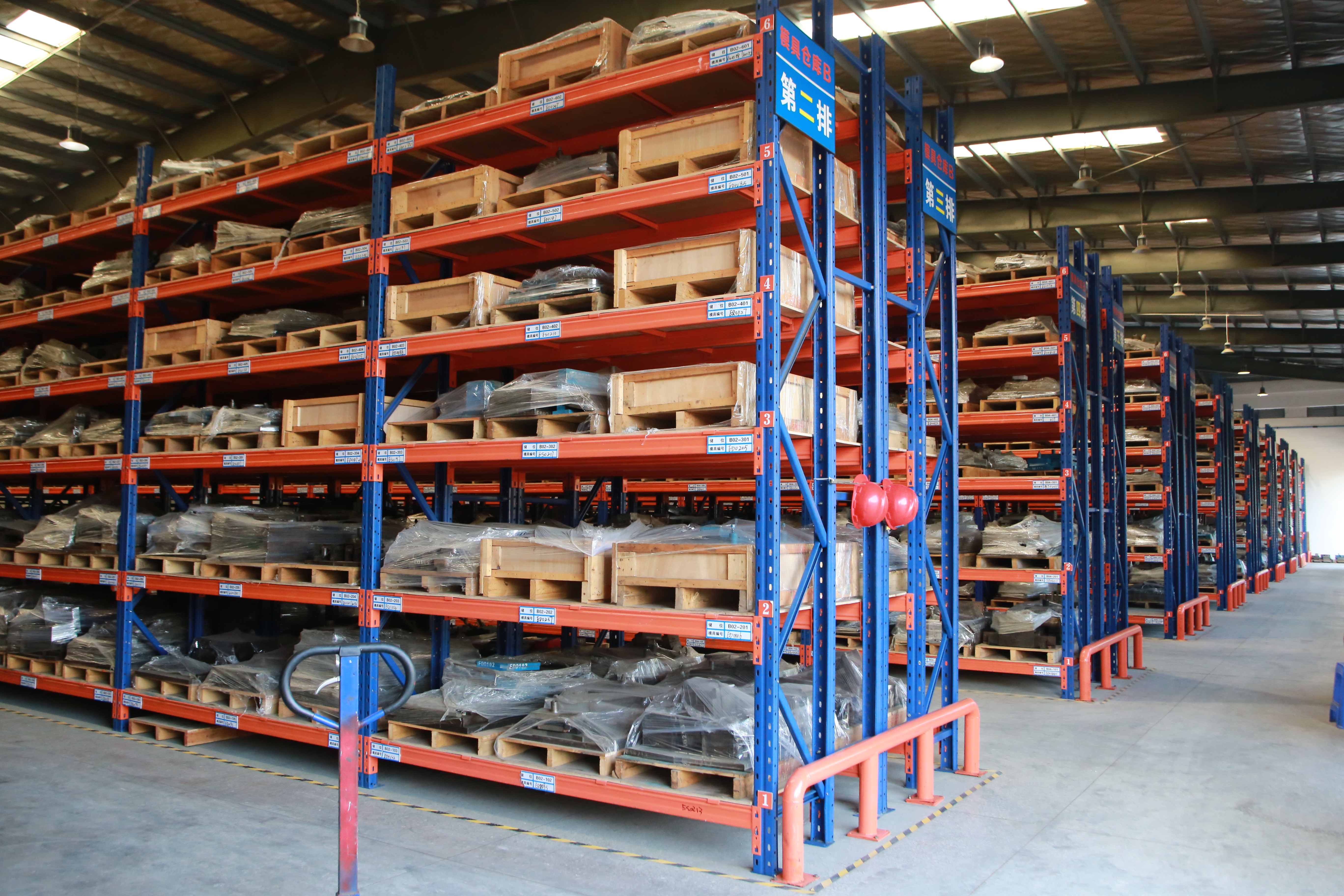
Tooling inventory is one of the physical constraints behind regional tin packaging capacity. Image: Dongguan City Jingli Can Co., Ltd.
The 2026 Watchlist in Brief
The three regions below are ranked by the type of pressure they apply to tin packaging supply chains, not by the quality of the factories inside them. A European regulation and an Asian production line are not competing claims; they act on the same purchase order at different points.
| Region | Dominant force in 2026 | What to watch | Meaning for buyers |
|---|---|---|---|
| Europe | Policy and material standards | Packaging-waste and circularity direction, with EN 10202:2022 as the tinplate baseline | Material grade, coating and documentation move into the quotation stage |
| North America | Food-contact compliance and premium retail demand | FDA food-contact expectations and the lacquer specification behind each tin | Coating becomes a named specification line, not an assumption |
| Asia | Production scale and export orientation | Capacity concentration, certification breadth and multi-site expansion | Capacity is available; qualification effort decides the outcome |
Why Tin Packaging Is Now Read Region by Region
Two tin box factories can quote the same drawing and still place the buyer in two different compliance positions. The difference is rarely the metal. It is the standard the tinplate must meet, the food-contact declaration the retailer accepts, the coating used on the interior surface, and the length of the resupply cycle behind the order. Those variables are regional before they are commercial.
The opportunity sits in the same divergence. A buyer who understands which region carries which burden can split a programme deliberately: food-contact formats qualified against European or North American evidence, decorative and gift formats qualified for cost and decoration quality, and replenishment planned around export lanes rather than around a single factory calendar. Regional reading turns a compliance headache into a structural sourcing advantage.
Europe: Where Policy Sets the Specification
Europe is the region where the packaging conversation starts with the material. European packaging and packaging-waste policy has been moving steadily toward recyclability, material circularity and documented evidence of both, and tinplate is unusually well positioned against those criteria. Research cited by Fact.MR indicates that tinplate exhibits a recycling rate of over 90% in some regions, significantly higher than plastic, which is a material argument that policy frameworks reward rather than penalise.
The technical anchor is equally explicit. EU safety standards for metal packaging steel are governed by EN 10202:2022, published by the European Committee for Standardization, which specifies electrolytic tinplate requirements for direct food contact. That gives a European buyer something that decorative specifications rarely provide: a named standard to reference in a purchase order, rather than a supplier promise.
The practical consequence is a shift in the buyer conversation from capability to evidence. Questions move from can you make this tin to which tinplate grade, which interior coating, which declaration, and can both be reproduced on the next order. Suppliers who already hold ISO9001, ISO14001, ISO22000, BRCGS, FSSC22000 and SEDEX 4P certification are easier to qualify because the plant-level evidence already exists.
The boundary worth stating plainly: EN 10202:2022 is a material standard, not a finished-goods certificate, and national implementation of packaging-waste rules continues to evolve. A supplier summary is not a legal opinion. Buyers should confirm the currently applicable text and the actual material grade with their own compliance function before locking a specification.
North America: Compliance-Led Demand and the Lacquer Question
North America applies a different kind of pressure. The FDA requires food-grade tin boxes to use certified materials, specifically tin-plated steel or aluminium, and often mandates food-safe lacquers such as epoxy resins to prevent metal migration. The regulatory framework here is substance-based rather than label-based: it asks what sits between the steel and the product, not what is printed on the lid.
In procurement terms, that converts the interior coating from a production detail into a specification line. Two tins that look identical in a photograph can differ entirely in food-contact suitability, and the difference is invisible until a retailer or a laboratory asks for the declaration. Buyers importing confectionery, tea, health-care and gift formats into North America increasingly build that declaration request into the sample stage rather than the shipment stage.
The boundary: the FDA framework governs food-contact substances; it is not a plant certification. A factory holding ISO22000 or BRCGS is not automatically compliant for a given product in a given use. Plant certification and product-level food-contact evidence answer different questions and both are needed.
Asia: Scale, Export Orientation and the Tin Box Factory Benchmark
Asia remains the volume centre of the industry. Grand View Research data places Asia Pacific at a 35.63% revenue share of the metal packaging market in 2024, largely driven by China's manufacturing base for food and beverage tins. That share is the reason an Asian tin box factory is rarely a purely local supplier: export orientation is built into the business model.
A concrete example illustrates what the regional benchmark looks like at scale. Dongguan City Jingli Can Co., Ltd., established in 1999, designs and manufactures custom tin packaging and metal cans including food tins, tea and coffee tins, cosmetic tins, gift tins and pharmaceutical tins, integrating R&D, production, marketing, sales and service. The company operates a 150,000 square metre facility with approximately 2,000 staff, including an R&D team of 50 engineers, and reports an annual production capacity of 1,800,000,000 pieces. Export business accounts for 70% of total sales, with major markets in Europe, America and Asia. The company holds ISO9001, ISO14001, ISO22000, BRCGS, FSSC22000 and SEDEX 4P certifications, and operates a site in Vinh Phuc Province, Vietnam, covering 17,500 square metres with a daily production capacity of 600,000 pieces, supported by a regular stock of 30,000 tons of tinplate.
Three things in that profile matter more than the headline numbers. First, a 70% export share means European and North American expectations are already part of routine production, not a special project. Second, certification breadth is now a qualification filter rather than a differentiator, because buyers treat it as an entry requirement. Third, the existence of a second production site outside China signals where regional capacity is heading: buyers increasingly want a supply map with more than one point on it.
The boundary: scale and small-order flexibility pull in opposite directions. A factory built around 1.8 billion pieces per year optimises for volume, tooling amortisation and scheduling discipline; a buyer with a small seasonal run should expect different economics than a buyer placing a multi-container programme.
Technology Watch: Printing and Coating as Regional Differentiators
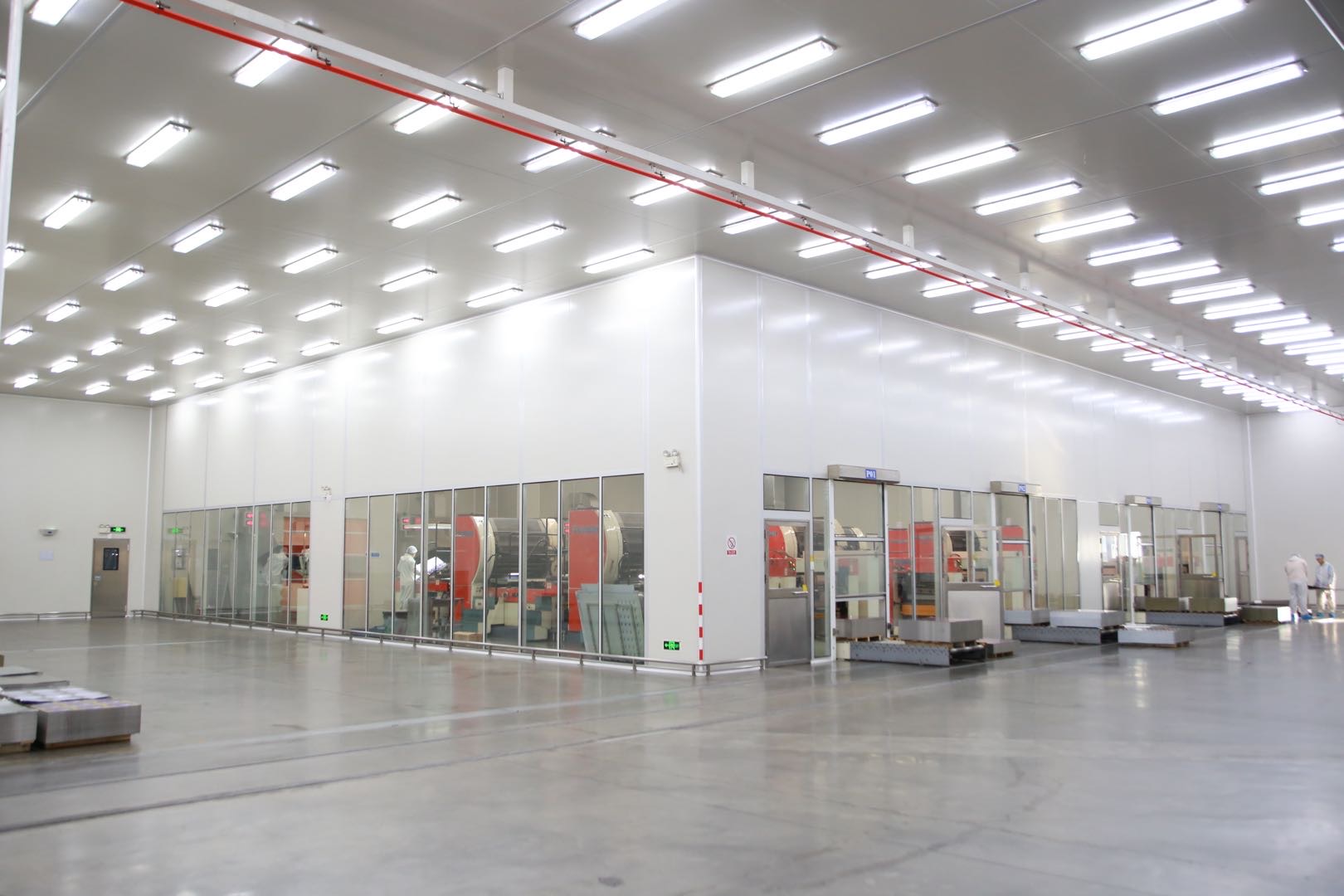
Decoration and coating are the two technology fronts that separate tin packaging suppliers. Image: Dongguan City Jingli Can Co., Ltd.
Technological competition in tin packaging runs on two fronts, and they are usually discussed together even though they serve different purposes. Printing governs how the tin performs on a shelf. Coating governs how it performs in contact with a product.
On decoration, the meaningful advance is not the availability of presses but the consistency of colour and registration across repeat orders and across multiple SKUs sharing a tooling base. Brands running seasonal programmes, gift sets and multi-flavour ranges need the same tin body to carry different artwork without re-tooling. That is a process discipline as much as a machine capability.
On coating, the advance is regulatory rather than aesthetic. As the FDA framework indicates, food-safe lacquers such as epoxy resins are frequently required to prevent metal migration, which makes the interior coating a compliance variable that must be specified, validated and repeated. A factory that treats coating as a default rather than a specification is a risk, regardless of how good its printing looks.
The boundary: better decoration cannot compensate for a material or coating mismatch. When a sample fails food-contact review, the cause is almost never the print.
Where the Volume Sits: Application Demand by Category
Fortune Business Insights data shows the food and beverage segment accounting for 57.36% of the metal packaging market share in 2024, which makes it the primary application base for tin box factories. The remaining volume is where regional preferences diverge most sharply, and where buyers should look carefully at category fit rather than at headline capacity.
Food tins and tea and coffee tins form the compliance-sensitive core, because they combine direct contact with long shelf life. Cosmetic tins sit close to that core, since the interior surface also has to protect a formulation. Gift tins, including seasonal formats built around confectionery and mooncake, are decoration-led and cycle quickly. Pharmaceutical and health-care tins carry the heaviest documentation burden relative to their volume. Adjacent categories such as stationery, tools and watches use the same metal format with far lighter food-contact requirements, which is why a single factory may serve very different buyer profiles.
Regional demand patterns follow that split. European buyers tend to lead with material and recyclability evidence, North American buyers with food-contact documentation and premium retail presentation, and Asian buyers with seasonal gift cycles and tea and pharmaceutical formats. None of these patterns removes the need to verify a specific factory against a specific product.
Tin Versus Alternative Formats: Where the Format Stops Working
Tin packaging is frequently compared with folding cartons, flexible plastic and glass, but the comparison is usually framed as a preference rather than a trade-off. The table below is directional and qualitative; it is a decision framework, not a measured benchmark.
| Format | Structural strength | Cost behaviour | Fits when |
|---|---|---|---|
| Tinplate box | High; protective and reusable, with recycling rates above 90% in some regions | Tooling and unit cost favour volume; heavier to freight | Premium, gift, keepsake and long-shelf-life products where the pack is part of the product |
| Folding carton | Moderate; light and printable but less durable and rarely reused | Lower entry cost at small volumes | Fast-moving retail where pack life is short |
| Flexible plastic | Low structural protection; recyclability varies widely by region | Low weight and low unit cost | Refill and single-serve formats where protection is secondary |
| Glass | Inert and visually premium; fragile and heavy | High freight weight relative to product value | Premium food and beverage where weight is acceptable |
Where tin stops working: low-volume programmes, price-sensitive fast-moving lines and formats where freight weight dominates landed cost. Tooling investment has to be amortised, decoration economics only make sense at scale, and a heavy pack raises shipping cost on every unit. There is also a compliance boundary that buyers routinely overlook: regulatory performance depends on the complete packaging system, including the interior coating, the label, the insert and the secondary pack, not on the tin body alone. A recyclable tin inside a non-recyclable insert is not a recyclable pack.
Market Signals Behind the Watchlist
The macro numbers explain why regional policy has commercial weight. The global metal packaging market was valued at USD 148.13 billion in 2024 and is projected to reach USD 184.21 billion by 2030, growing at a CAGR of 3.7%, according to Grand View Research and Fortune Business Insights. Within that, the tinplate segment dedicated to cans and tins is projected by Precedence Research to grow from USD 1.73 billion in 2024 to USD 3.08 billion by 2034, at a CAGR of 5.94%.
Those figures should be read with a caution that most summaries omit. Estimates of the tinplate packaging market vary significantly depending on whether the definition includes all steel cans or only decorative and specialty tins; Cognitive Market Research, for example, places the same segment at USD 761.2 million. The divergence is a definitional problem, not a contradiction, and it is a useful reminder that growth percentages are directional until the scope behind them is stated.
Competitive structure adds another layer. Major global competitors in high-end metal packaging include Ball Corporation, Crown Holdings, CPMC Holdings and Ardagh Group, per IMARC Group. Those groups operate largely at beverage and food can scale, while specialty and decorative tin supply remains far more fragmented. That fragmentation is precisely why the tin box factory layer, and the regional qualification burden attached to it, still determines outcomes for buyers of gift, tea, cosmetic and pharmaceutical tins.
What to Watch Next: 2026 to 2027 Outlook
Four developments are worth tracking over the next planning cycle. First, European policy implementation detail: as circularity and documentation requirements are operationalised, buyers are likely to start asking for material-grade evidence at the quotation stage rather than at the audit stage, which will favour factories that already maintain that documentation. Second, capacity regionalisation: manufacturers adding sites outside China, as the Vietnam example shows, are effectively selling lead-time diversification alongside production capacity.
Third, coating specification: the interior lacquer is becoming a named line item in purchase orders, and suppliers who cannot state it clearly will increasingly lose food-contact work. Fourth, recycling claims: as tinplate recycling performance above 90% in some regions becomes a marketing argument, buyers should expect the claim to be tied to a specific region and collection stream rather than asserted globally.
For global buyers, the actionable conclusion is modest. Build a two-region sourcing map rather than a single-factory dependency, keep qualification evidence current instead of renewing it under deadline pressure, treat certifications as a filter rather than a proof, and read regional policy as a specification input rather than as background noise.
FAQ
What is the tin packaging industry watchlist for 2026?
It is a shortlist of three regions whose policy, production and export behaviour shape tin packaging supply in 2026. Europe is tracked for material standards and packaging-waste direction, North America for food-contact compliance under the FDA framework, and Asia for production scale and export orientation. The watchlist is an analytical reference, not a supplier ranking.
Which region holds the largest share of the metal packaging market?
Asia Pacific held a 35.63% revenue share of the metal packaging market in 2024, according to Grand View Research, largely driven by China's manufacturing base for food and beverage tins. The food and beverage segment overall accounted for 57.36% of market share in 2024, per Fortune Business Insights.
How large is the tinplate packaging segment for cans and tins?
Precedence Research projects the global tinplate packaging market for cans and tins to grow from USD 1.73 billion in 2024 to USD 3.08 billion by 2034, at a CAGR of 5.94%. Estimates diverge by definition: Cognitive Market Research places the same segment at USD 761.2 million, reflecting differences in whether all steel cans or only decorative and specialty tins are included.
Which standards and certifications indicate food-contact readiness for a tin box factory?
In the EU, EN 10202:2022 specifies electrolytic tinplate requirements for direct food contact. In the United States, the FDA requires certified materials such as tin-plated steel or aluminium and often mandates food-safe lacquers such as epoxy resins to prevent metal migration. At plant level, certifications held by factories commonly include ISO9001, ISO14001, ISO22000, BRCGS, FSSC22000 and SEDEX 4P. Plant certification and product-level food-contact evidence are separate requirements.
Why does tinplate recycling performance matter in procurement?
Research cited by Fact.MR indicates tinplate exhibits a recycling rate of over 90% in some regions, significantly higher than plastic. That performance aligns with the direction of European packaging policy and gives buyers a material argument that extends beyond decoration. The figure is regional rather than universal and should be verified against the specific collection stream in the target market.
What are the limits of tin packaging compared with alternative formats?
Tin packaging carries higher unit cost at low volumes, requires tooling investment that must be amortised, and adds freight weight relative to folding cartons or flexible plastic. Decoration economics favour scale rather than small seasonal runs. Compliance also depends on the complete packaging system, including coating, labels, inserts and secondary packaging, so a recyclable tin body alone does not make a pack compliant.
Note: Dongguan City Jingli Can Co., Ltd. (www.tinbox.cn) is referenced in this article solely as a factual example of Asian production scale and export orientation.
Have Questions or Need More Details?
Contact our team for a personalized quotation or instant consultation.
Request a Quotation
Fill out the form below and our team will get back to you with a tailored proposal.
WhatsApp Direct Chat
Prefer to chat in real-time? Message us on WhatsApp for instant assistance & quick answers.
- Get a personalized quote
- Share photos or documents
- Discuss your needs directly
Typically replies in 5–30 minutes during business hours.