
Tissue Packing Machine FAQ: Capacity, Dimensions and Air
Air pressure, air consumption, carton dimension range and rated capacity are the four specification groups that most often decide whether a tissue packing machine can be installed in an existing workshop and whether it can reach a target output. This technical FAQ answers those questions directly for the WIMACH range — soft tissue wrapping machines, facial tissue cartoning machines, roll wrappers, bagging machines, case packers and the integrated lines built from them.
Wenzhou Wimach Machinery Co., Ltd., which operates under the brand WIMACH, is a Wenzhou-based manufacturer of tissue packing machines and integrated packaging lines. The company operates a 3,000 m² factory with 37 employees, a five-engineer R&D team and an annual output of 160 sets, and reports an export ratio of 60% with main markets in the EU, North America and South America. Its product range is organised around a single question that buyers ask during the research and evaluation stage: which machine accepts which pack format, and what does it require from the plant.
Why Utilities and Dimensions Decide a Tissue Packing Project
Most tissue packing projects do not fail on the packaging concept. They fail on site conditions — a compressor that cannot hold pressure across a full line, a carton size no standard machine can accept, or a machine footprint that will not fit between an existing folding machine and the warehouse wall.
Three constraints recur in almost every evaluation:
- Compressed air. Every WIMACH tissue packing machine in the current published range operates at an air pressure of 0.5–0.8 MPa. That band is uniform across the catalogue, but air consumption is not: it ranges from 120 L/min on the TB-F60 bottom-dispensing bagging machine to 450 L/min on the TB-R30 roll bundle bagging machine and the CP-T60 case packer.
- Electrical supply. All models use a 380 V, 50/60 Hz three-phase supply. Power consumption ranges from 3.5 kW on the TC-80Y canister packing machine to 35 kW on the TB-F60, and 18 kW on the high-speed TP-280 soft tissue wrapping machine.
- Floor space and pack format. Machine footprints range from 3,620 (L) × 3,130 (W) mm on the TC-100 cartoning machine to 8,000 (L) × 2,000 (W) mm on the TB-R30. Pack format flexibility is also model-specific: the TC-100 and TC-300 accept a range of carton sizes, while the TC-80F is built around one cube box size.
The practical consequence is that procurement decisions are usually made from the specification table outward, not from the machine outward. A buyer who knows the carton dimension, the target packs per minute and the available air supply can eliminate most of a catalogue in a single pass.
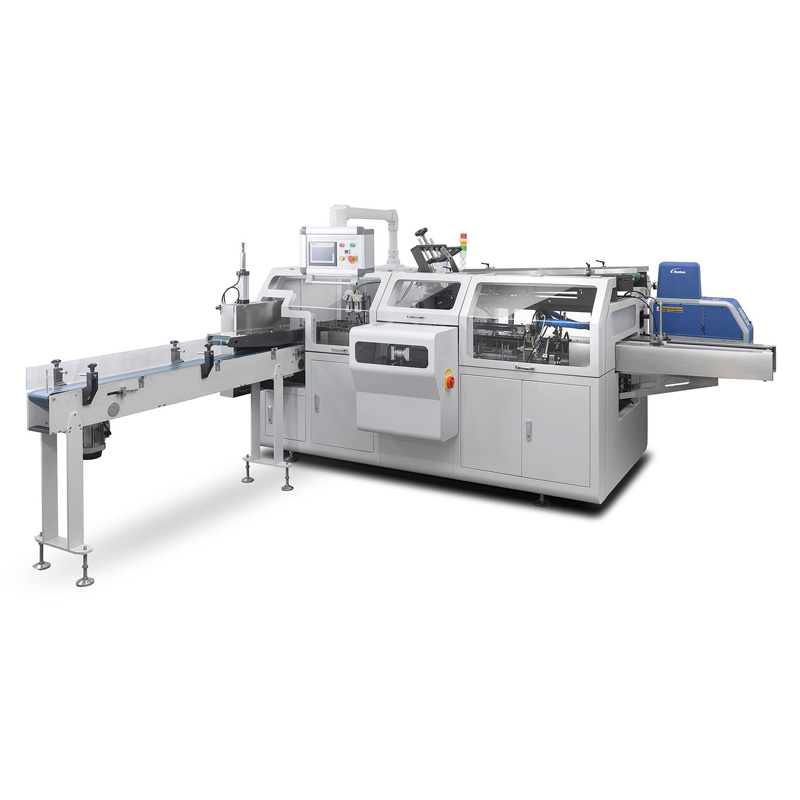
WIMACH Tissue Packing Machine Specifications at a Glance
The table below consolidates the published technical parameters for the current WIMACH range, so that air, power and dimension questions can be answered against the same data set.
| Model | Function | Rated capacity | Pack / carton dimension | Power | Air pressure | Air consumption | Footprint (L × W × H, mm) | Weight |
|---|---|---|---|---|---|---|---|---|
| TP-280 | High-speed soft tissue wrapping | Max. 260 packs/min | 90–200 (L) × 85–105 (W) × 25–90 (H) mm | 18 kW | 0.5–0.8 MPa | Not published | 3585 × 6260 × 1800 | 2900 kg |
| TP-180 | Soft tissue wrapping | Max. 180 packs/min | 90–200 (L) × 85–105 (W) × 25–90 (H) mm | 12 kW | 0.5–0.8 MPa | Not published | 3585 × 6260 × 1800 | 2900 kg |
| TC-300 | High-speed tissue box packing | Max. 180 boxes/min | 100–240 (L) × 100–120 (W) × 20–90 (H) mm; board 300–400 gsm | 8 kW | 0.5–0.8 MPa | 120–160 L/min | 5000 × 1740 × 1800 | 3000 kg |
| TC-100 | Tissue cartoning | 30–100 boxes/min | 100–240 (L) × 100–120 (W) × 20–90 (H) mm; board 300–400 gsm | 6.2 kW | 0.5–0.8 MPa | 120–160 L/min | 3620 × 3130 × 1800 | 2200 kg |
| TC-80F | Cube box tissue cartoning | 30–80 boxes/min | 115 × 115 × 130 mm; board 300–400 gsm | 7 kW | 0.5–0.8 MPa | 120–160 L/min | 4310 × 1460 × 1800 | 2500 kg |
| TC-80Y | Canister tissue packing | 30–80 boxes/min | Canister 100–220 (L) × 50–80 (D) mm; board 300–400 gsm | 3.5 kW | 0.5–0.8 MPa | 120–160 L/min | 6030 × 2310 × 2200 | 1800 kg |
| TW-160 | Toilet paper roll wrapping | 60–120 rolls/min | Roll 90–130 (L) × 90–130 (D) mm; paper 17–37 gsm | 12 kW | 0.5–0.8 MPa | 120–160 L/min | 4350 × 2550 × 1940 | 3500 kg |
| TB-F60 | Bottom-dispensing bagging | Max. 60 packs/min | 200–400 (L) × 115–200 (W) × 85–100 (H) mm | 35 kW | 0.5–0.8 MPa | 120 L/min | 2840 × 6060 × 1800 | 3500 kg |
| TB-R30 | Roll bundle bagging | Max. 25 packs/min | 180–600 (L) × 150–400 (W) × 100–250 (H) mm | 13 kW | 0.5–0.8 MPa | 450 L/min | 8000 × 2000 × 2000 | 2200 kg |
Air Requirements: Pressure Is Standard, Consumption Is Not
Across the WIMACH range, required air pressure is consistent at 0.5–0.8 MPa. This is the band most industrial workshops in the EU, North America and South America already operate within, which means the pneumatic question is rarely about whether a machine can run, and almost always about whether the compressor and piping can sustain the whole line at once.
Consumption is where projects diverge. A TC-100 cartoning machine draws 120–160 L/min, a TC-300 draws the same range at a higher packing speed, and a TW-160 roll wrapper draws 120–160 L/min. Add a case packer at the end of the line and the figure climbs sharply: the CP-S50 side-load case packer requires 350 L/min and the CP-T60 top-load case packer requires 450 L/min. For a facial tissue box line running cartoning, film wrapping, case packing and palletizing, the aggregate air demand — not any single machine's figure — is what determines compressor selection.
Two practical rules follow from the published data. First, size the compressor on the sum of simultaneous consumers, not on the largest machine. Second, check that pressure is measured at the machine inlet rather than at the compressor outlet; a system that reads 0.8 MPa at the tank may deliver noticeably less at the far end of a long line.
Carton and Pack Dimensions: What the TC-100 and TC-300 Accept
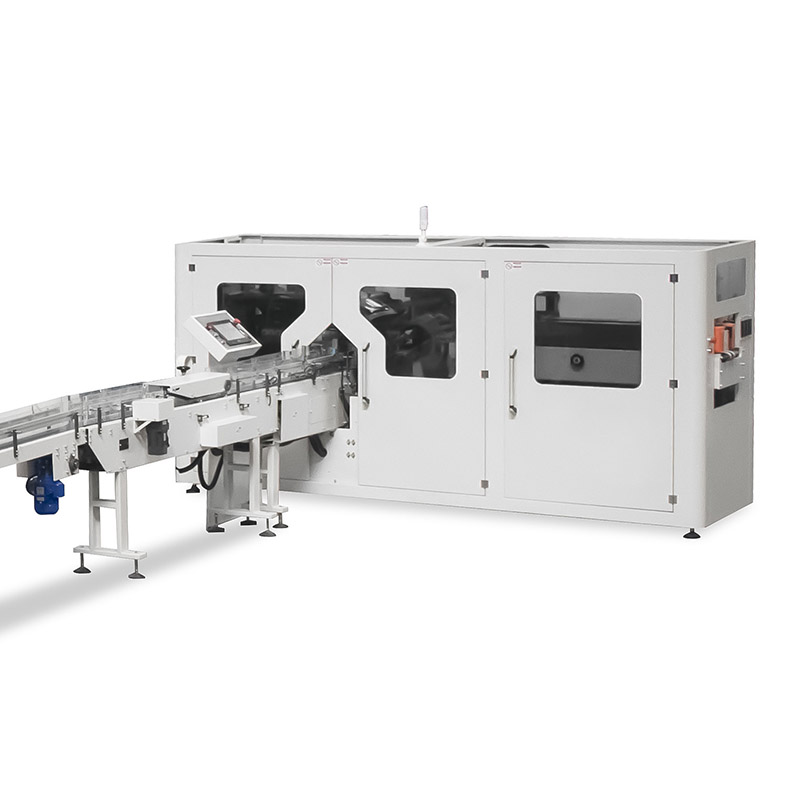
Dimension flexibility is the specification that most often determines whether a cartoning machine fits a product portfolio. The TC-100 tissue cartoning machine and the TC-300 high-speed tissue box packing machine share the same carton dimension window: 100–240 mm in length, 100–120 mm in width and 20–90 mm in height, with carton board grammage of 300–400 gsm. For context, the standard rectangular tissue box format in the US market is typically 9.25" × 4.375" × 2.25" — approximately 235 × 111 × 57 mm — which falls inside that window on all three axes.
The difference between the two models is not the carton, but the throughput and the site impact. The TC-100 is rated 30–100 boxes/min with a 6.2 kW drive and a 3,620 × 3,130 mm footprint. The TC-300 is rated up to 180 boxes/min with an 8 kW drive and a much longer, narrower 5,000 × 1,740 mm footprint — a layout that suits a straight-through line rather than a compact cell.
Other cartoning formats are deliberately narrower in scope. The TC-80F cube box tissue cartoning machine is engineered around a 115 × 115 × 130 mm cube box, mapping the folding pattern to a single finished format rather than a dimension range. The TC-80Y automatic tissue canister packing machine accepts canisters of 100–220 mm in length and 50–80 mm in diameter, and supports facial tissue and paper napkin filling into paper canisters with a canister conveying line and lid feeding system.
On the wrapping side, the dimension question shifts from carton to film. The TP-280 and TP-180 both handle packs of 90–200 (L) × 85–105 (W) × 25–90 (H) mm and run CPP, PE or composite film supplied on rolls of 340 mm width and 450 mm diameter, at a thickness of 0.035–0.05 mm. The TW-160 toilet paper roll wrapping machine handles rolls of 90–130 (L) × 90–130 (D) mm using wrapping paper from a 480 × 500 mm roll with a grammage of 17–37 gsm.
What a Rated Capacity Figure Actually Means
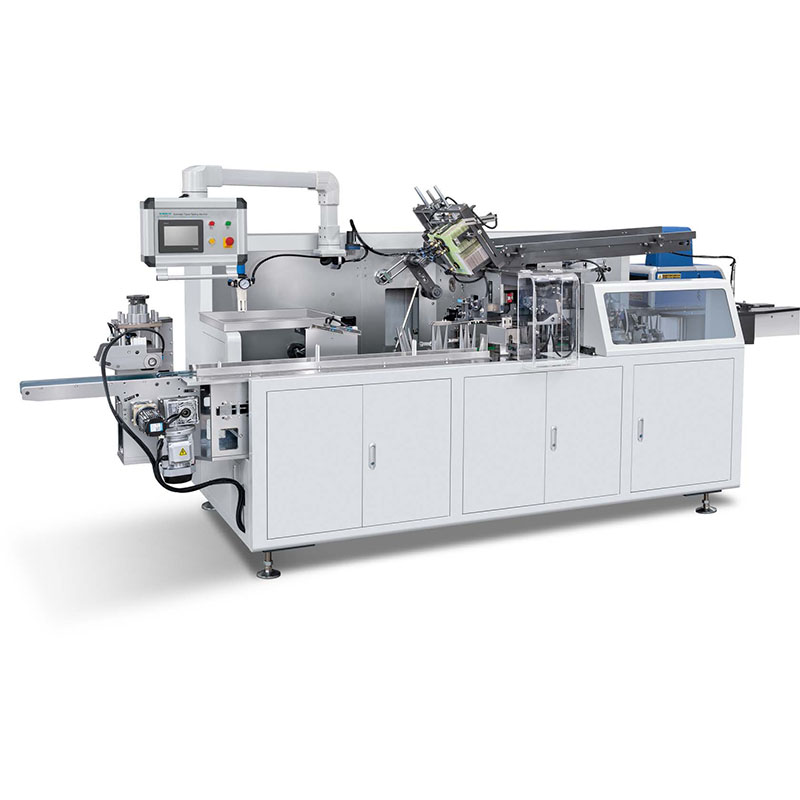
Rated capacities on tissue packing machines describe machine ceiling, not guaranteed line output. The TP-280 is rated at a maximum 260 packs per minute, the TP-180 at 180 packs per minute, and the TC-300 at up to 180 boxes per minute. Those numbers assume a stable, correctly fed stream of product, film or board within the specified dimension window, and a supply of cartons that matches the machine's infeed rhythm.
In a real line, three variables sit between the rated figure and the achieved figure: the consistency of the upstream tissue folding and cutting equipment, the frequency of format changeover across a shift, and the synchronisation between the packing machine and the case packer downstream. A cartoning machine rated at 180 boxes per minute feeding a case packer rated between 1 and 16 cartons per minute depending on model is a configuration where the downstream unit, not the cartoner, defines the finished-goods rate.
Application Scenarios: Matching Air, Dimension and Capacity to the Project
Documented WIMACH project configurations show how the specification questions resolve in practice.
Toilet paper roll lines (United States). A customized packaging line for toilet paper rolls combines roll wrapping, case packing, automatic palletizing and stretch film wrapping, with a maximum wrapping speed of 120 rolls/min and case packing and palletizing at up to 10 cases/min and 10 cycles/min respectively. The TW-160 roll wrapper sits at the head of that line, wrapping individual rolls in pre-printed patterned paper. One US manufacturer running two TW-160 units reported using the configuration for five years, with the automated paper wrapping replacing plastic packaging and reducing packaging material cost.
Facial tissue box lines (Poland and Spain). A turnkey facial tissue configuration links facial tissue box packing, box film wrapping, case packing, palletizing, strapping and stretch film wrapping, with a maximum cartoning speed of 100 boxes/min. In one Polish project of 12 sets, the line integrated conveying, automatic cartoning, case packing, robotic palletizing, strapping and stretch wrapping to move product from inner packaging to a shipment-ready pallet. A separate Spanish installation used two TP-280 soft tissue wrapping machines, where the film-forming, sealing and cutting sequence replaced manual packaging and produced airtight packs that protect tissue from moisture, dust and compression.
Canister lines (Mexico). A canister wet wipe packaging line handling disinfecting wipes runs up to 60 canisters/min with canister dimensions up to a diameter of 110 mm and a height of 220 mm, and incorporates the TC-80Y for facial tissue and paper napkin canister packing. The project covered automatic canister feeding, wipe loading, quantitative disinfectant filling, heat sealing, capping, labelling, case packing, palletizing, strapping and stretch wrapping.
Market Context: Where Dimension and Utility Flexibility Matters Most
The global tissue paper packaging machine market was valued at approximately USD 3.9 billion in 2025 and is projected to reach USD 4.2 billion in 2026, according to Precedence Research / Business Research Insights. Asia Pacific held a 39.8% share of that market in 2025, and facial tissue packaging applications accounted for 42.1% of the application mix in the same year. A consensus growth rate of about 7.1% per annum across 2025–2034 has been observed in the same commercial research track.
Two implications follow for buyers. First, because facial tissue box packing is the single largest application segment, cartoning dimension range — the TC-100 and TC-300 window in particular — is the specification most likely to carry commercial weight. Second, the concentration of demand in Asia Pacific means that regional suppliers configured around flexible pack dimensions and standard 380 V / 0.5–0.8 MPa utilities are structurally aligned with the largest segment of global demand.
For customs and trade reference, tissue packaging machinery is classified under HS Code 8422.40, covering other packing or wrapping machinery. Buyers preparing import documentation should treat the classification as a starting point and confirm the applicable national tariff line for the specific machine type.
Automatic Versus Manual Packing: What Changes and What Does Not
The case for automatic tissue packing is well documented in operational terms. A Spanish manufacturer using two TP-280 machines reported improved packaging speed and output, reduced labour expense, standardised continuous production, and airtight packaging that protects tissue from moisture, dust and compression damage. A US facial tissue cartoning installation reported more consistent box filling, fewer irregular packing defects and lower overall manufacturing cost.
The trade-off is not usually speed — it is commitment. An automatic cartoning or wrapping machine is configured around a defined pack dimension window, a defined film or board specification and a defined utility supply. Where a producer's portfolio spans many formats, the practical answer is often a machine with a wider dimension window such as the TC-100 or TC-300 rather than several fixed-format units. Where a producer runs one high-volume format, a single-format machine such as the TC-80F can deliver higher efficiency within that narrower scope. Automation also shifts the maintenance requirement from manual labour to scheduled pneumatic, electrical and control-system checks — an operating cost that belongs in the project budget alongside the machine price.
Future Outlook
Three directions are visible in the current specification landscape. First, dimension windows are becoming a competitive specification in their own right: machines that accept a wider carton range reduce the number of changeovers a producer must design into a line. Second, utility standardisation at 380 V three-phase and 0.5–0.8 MPa continues to simplify multi-market installation, since the same machine can be commissioned in the EU, North America and South America without utility redesign — a pattern reflected in WIMACH's stated export markets. Third, the shift from single machines to integrated lines continues, with configurations covering cartoning, film wrapping, case packing, palletizing, strapping and stretch wrapping delivered as a coordinated package rather than as separate purchases.
For buyers at the research and evaluation stage, the practical response is to lock three numbers before requesting quotations: the pack or carton dimension, the required finished-goods rate, and the available air supply at the machine inlet. Everything else in the specification table can then be read against those three constraints.
Frequently Asked Technical and Procurement Questions
What air pressure and air consumption does the WIMACH TP-280 require?
The TP-280 high-speed soft tissue wrapping machine operates at an air pressure of 0.5–0.8 MPa. Air consumption for the TP-280 is not published in the standard specification table; the nearest published consumption figures in the same range are 120 L/min for the TB-F60 bagging machine and 120–160 L/min for the TC-100, TC-300, TC-80Y and TC-80F. Buyers sizing a compressor for a TP-280 line should confirm the consumption figure against the current machine datasheet rather than assuming a value from another model.
How flexible are the carton dimensions on the TC-100 and TC-300?
Both the TC-100 tissue cartoning machine and the TC-300 high-speed tissue box packing machine accept cartons from 100 to 240 mm in length, 100 to 120 mm in width and 20 to 90 mm in height, using carton board of 300–400 gsm. The TC-100 is rated 30–100 boxes/min and the TC-300 up to 180 boxes/min; the dimension window is identical, so the choice between them is driven by throughput and by line layout rather than by carton size.
How much floor space should be planned for a tissue packing machine?
Published footprints vary widely across the range. The compact end includes the TC-100 at 3,620 × 3,130 × 1,800 mm and the TC-80F at 4,310 × 1,460 × 1,800 mm. The long, narrow end includes the TC-300 at 5,000 × 1,740 × 1,800 mm and the TB-R30 at 8,000 × 2,000 × 2,000 mm. The TP-280 and TP-180 both occupy 3,585 × 6,260 × 1,800 mm. Machine weight ranges from 1,800 kg for the TC-80Y to 3,500 kg for the TW-160 and TB-F60, which is relevant for floor loading and for rigging planning.
What power supply do WIMACH tissue packing machines need?
All models in the published range use a 380 V, 50/60 Hz three-phase supply. Power consumption varies by function: 3.5 kW for the TC-80Y canister packing machine, 6.2 kW for the TC-100, 7 kW for the TC-80F, 8 kW for the TC-300, 12 kW for the TP-180 and TW-160, 13 kW for the TB-R30, 18 kW for the TP-280 and 35 kW for the TB-F60.
What film materials can a soft tissue wrapping machine run?
The TP-280 and TP-180 soft tissue wrapping machines run CPP, PE and composite film. Film is supplied on rolls of 340 mm width and 450 mm diameter, with a thickness of 0.035–0.05 mm. On the roll-wrapping side, the TW-160 uses wrapping paper from a 480 × 500 mm roll with a grammage of 17–37 gsm, which supports lighter paper-based packaging as an alternative to plastic film.
Can packaging dimensions, voltage and machine configuration be customized?
WIMACH lists full packaging processes, packaging dimensions, machine configuration, voltage and logo among its customization scope, across three production modes: complete packaging line, customized machinery service, and OEM/ODM. Minimum order quantity is one set. Published lead times are 30–60 days for a complete packaging line, 30–45 days for customized machinery service and 15–45 days for OEM/ODM projects.
How are dimensions and pneumatic performance verified before shipment?
The published quality-control sequence covers no-load and load running tests, dimensional tolerance inspection, mechanical assembly checks, pneumatic leakage testing, electrical safety testing, PLC control logic testing, safety interlock and emergency-stop testing, long-time aging testing and surface appearance inspection. For projects where utility performance is a contractual item, the pneumatic leakage test and the load running test are the two stages that correspond most directly to air consumption and pressure stability at the machine.
Do these machines carry CE certification, and what should buyers verify?
WIMACH states that all of its machines are CE certified and are assembled with components from established brands. Because public standards catalogues frequently address tissue-making machinery such as the EN 1034 series rather than finished tissue packing equipment, buyers should verify the declaration of conformity and the risk assessment documentation for the specific machine model rather than relying on a generic standard reference.
Closing Note
For buyers working through the research and evaluation stage of a tissue packing machine project, the specification table answers most of the questions that generate delay: air pressure is consistently 0.5–0.8 MPa across the range, air consumption varies enough between models to change compressor sizing, and carton dimension windows differ sharply between the flexible TC-100 and TC-300 and the fixed-format TC-80F. The full technical catalogue, including model drawings and parameter tables, can be reviewed here: WIMACH product catalogue (PDF).
Have Questions or Need More Details?
Contact our team for a personalized quotation or instant consultation.
Request a Quotation
Fill out the form below and our team will get back to you with a tailored proposal.
WhatsApp Direct Chat
Prefer to chat in real-time? Message us on WhatsApp for instant assistance & quick answers.
- Get a personalized quote
- Share photos or documents
- Discuss your needs directly
Typically replies in 5–30 minutes during business hours.