
Titanium Bar for Implant Projects: Scenario-Based Sizing and Sourcing
Biotech & Medical Innovation · Industry Reference
For implant manufacturers moving from device concept to supplier evaluation, the starting point is rarely „best titanium bar” in general. The practical question is: which titanium bar specification fits which implant scenario? This article explains how orthopedic, spinal, dental and complementary-material projects can translate clinical and manufacturing requirements into a verifiable medical titanium bar specification.
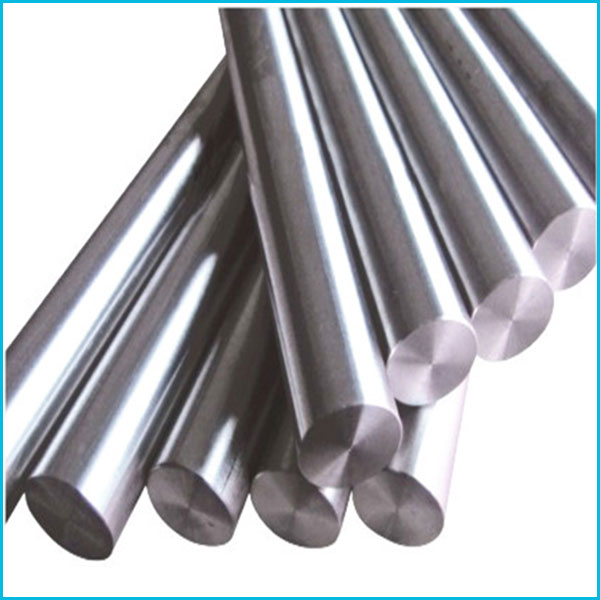
Medical titanium bar is not a single commodity. A bar that works for a bone-screw line can be the wrong starting point for a spinal rod or a joint-replacement forging. Clinical loading, device geometry, machining volume, and regulatory expectations are different. In practice, the specification process needs to be driven by the application scenario, not by whatever grades a supplier happens to stock.
Why Project Type Determines Titanium Bar Requirements
In projects that make permanent implantable devices, the titanium bar is the raw material from which the final mechanical part must be manufactured. It influences downstream machining yield, surface quality, fatigue behaviour and traceability. For this reason, procurement teams are increasingly defining material requirements from the engineering intent of the implant, rather than only from an internal catalogue.
Implant categories differ in load profile, anatomical location and production method:
- Orthopedic and dental implants generally demand biocompatibility, corrosion resistance and a modulus of elasticity closer to bone than stainless steel or cobalt-chromium alternatives.
- Spinal constructs and trauma fixation devices require rods, plates and screws to survive repeated loading without abrupt failure.
- Dental implant systems depend on precise small-diameter bar stock, clean material structure and controlled surface condition.
- Joint replacement components require larger bar diameters that still meet uniform microstructure and ultrasonic quality standards.
The market context supports this focus. The global medical-grade titanium materials market was estimated at USD 5.21 billion in 2025 and is projected to reach USD 9.56 billion by 2034 (Dataintelo). Within that market, orthopedic implants represented the largest application segment, with approximately 42.3% of revenue. In parallel, the medical titanium alloy market was valued at USD 1.45 billion in 2025 and is forecast to reach USD 2.59 billion by 2033 at a 7.5% CAGR (Verified Market Research). As device volumes grow, implant OEMs need a more structured way to connect clinical scenarios with material procurement.
Problem / Opportunity: The Cost of Mismatched Bar Specification
Implants made from the wrong bar specification can fail during machining validation, surface treatment, fatigue testing, or even during regulatory documentation review. A bar that meets a generic material standard may still lack the microstructure consistency, dimensional tolerance or batch documentation required for implant production.
The common failure pattern is not raw material quality alone. It is a mismatch between application-level requirements and the raw-material specification. For example:
- A project with fine-pitch bone screws may need small-diameter bars with tight tolerance and uniform microstructure, but a supplier may propose a commercial bar not controlled under implant standards.
- A spinal rod application may require larger diameters and excellent fatigue resistance, yet the project team may not specify 100% ultrasonic testing or full-process traceability in the purchase contract.
- An R&D project developing a Nitinol-based device may require a different set of controls, especially transformation temperature and superelasticity, which are not relevant for a standard titanium bar.
For a Research-to-Evaluation buyer, this is an opportunity to reframe sourcing from „find a titanium bar supplier” to „validate a material chain that matches the implant scenario.” The latter approach generates clearer audit evidence and reduces rework during design verification.
Brand Solution: BOSSIN as a Medical-Grade Titanium Bar Manufacturer
XI'AN BOSSIN METAL TECHNOLOGY CO., LTD. (BOSSIN) is a manufacturer specializing in titanium and Nitinol products, including titanium bars, medical titanium bar, titanium plates, titanium wires, and Nitinol wire. The company operates from a 50,000 m² facility in Baoji High-Tech Zone, a region known as “China’s Titanium Valley,” with a plant area of approximately 40,000 m². Established in 2008, BOSSIN reports an annual production capacity of 5,000 tons and exports roughly 80% of its output to markets including Korea, Brazil, Colombia, Argentina, India, Turkey, Germany and Switzerland.
What matters for implant project teams is less the catalogue size and more the in-house process chain. BOSSIN’s production line covers melting, forging, rolling and final finishing within its own facility. This vertical structure supports full quality control and process management from raw material to finished product, which in turn supports batch traceability and documentation consistency.
For implant-grade supply, BOSSIN holds ISO 13485 medical device quality management certification, in addition to ISO 9001:2015 and EN9100:2018 certifications. Each batch order is accompanied by a factory inspection certificate, and products are tested in laboratories accredited to ISO/IEC 17025 in accordance with international standards. For a procurement team, these are concrete verification points rather than marketing language.
Product-Level Scenario Response: Medical Titanium Bar
The medical titanium bar product family is manufactured in grades GR1, GR2, GR3, GR4, GR5 ELI, Ti-6Al-4V ELI and GR23. It is available in diameters from 1.0 mm to 100 mm and lengths up to 6,000 mm. Common ordering standards include ASTM F136 and ISO 5832-3 for high-strength Ti-6Al-4V ELI alloys, as well as ASTM F67 and ISO 5832-2 for unalloyed pure titanium.
Bar tolerance is available to h6, h7, h8 and h9 classes, with dimensional accuracy to 0.005 mm in the tightly controlled range. Microstructure can be supplied to A1–A3 classes, which is one of the acceptance criteria often requested for titanium implant raw material. For finished-bar inspection, 100% ultrasonic testing (UT) is applied to implant-grade bars, with full-process quality traceability.
Technical Explanation: Mapping Titanium Bar Diameter and Grade to Implant Scenarios
In specifying titanium bar for implant production, the diameter range is not arbitrary. BOSSIN’s medical titanium bar range already reflects common implant device categories:
| Implant Scenario | Typical Bar Diameter Range | Common Material Path | Key Engineering Emphasis |
|---|---|---|---|
| Bone screws | Ø3.5 / Ø4.0 / Ø4.5 / Ø5.0 / Ø5.5 / Ø6.0 / Ø8.0 / Ø10.0 mm | GR5 ELI / GR23, ASTM F136 or ISO 5832-3 | Machinability, small-diameter tolerance, surface condition, thread quality |
| Spinal systems | Ø13.5 / Ø14.0 / Ø14.2 / Ø15.0 / Ø16.0 / Ø17.0 mm | GR5 ELI / Ti-6Al-4V ELI | Fatigue resistance, straightness, microstructure consistency, ultrasonic testing |
| Bone joint / joint stems | Ø30.0 / Ø35.0 / Ø40.0 / Ø50.0 / Ø55.0 / Ø60.0 / Ø65.0 mm | GR5 ELI / GR23 | Large-bar structural integrity, chemical homogeneity, full-volume inspection |
| Dental implants | Ø3.0 – 20.0 mm bar | GR4, GR5 ELI / GR23; ASTM F67 or ASTM F136 as applicable | Fine tolerance, microstructural cleanliness, control of inclusions and surface contamination |
From a mechanical-properties perspective, Ti-6Al-4V alloy (GR5) is widely referenced for implant applications, with tensile strength ≥ 895 MPa and yield strength ≥ 828 MPa. For the lower interstitial ELI variant, GR5 ELI (GR23) typically shows tensile strength ≥ 860 MPa. These values are useful baselines when matching bar grade to the expected loading of a trauma plate, spinal rod or joint component.
The metallographic quality of implant bar should not be overlooked. A1–A3 microstructure classification refers to a controlled, uniform structure that supports predictable machining and mechanical behavior. In practice, suppliers should state their microstructure acceptance criteria explicitly. BOSSIN’s medical titanium bar is documented for A1–A3 structure under the applicable classification system, with high-accuracy dimensional control and 100% ultrasonic testing available.
Application / Use Cases: From Project Scenario to Sourcing Decision
The scenario-fit logic can be observed in real supply relationships, although customer names are not disclosed.
Orthopedic and Dental Implant Manufacturing in Brazil
A surgical implant manufacturer in Brazil required titanium material for the production of artificial joints, bone screws, orthopedic implants, dental implants and bone plates. The buyer used BOSSIN to supply 10,000 kg of titanium material for long-term implant applications.
The relevant supply features were ISO 13485 quality management, microstructure reaching A1 class, 0.005 mm tolerance precision, excellent fatigue resistance and full-process quality control. The evaluation result reported by the project team emphasized good material consistency and long-term safe and stable use. For a manufacturer moving from small trial orders to regular production, this demonstrates why traceability and microstructure control matter beyond initial certificate compliance.
When an Implant Project Requires Complementary Titanium Forms
Not every implant project can be solved with bar alone. Bone plates are typically machined or stamped from titanium plate; sutures and some 3D-printed structures start from titanium wire; thin structures can be produced from titanium coil or strip. In these situations, the consistency of material standards across product forms is an important procurement advantage.
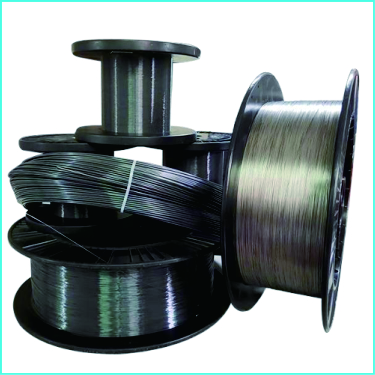
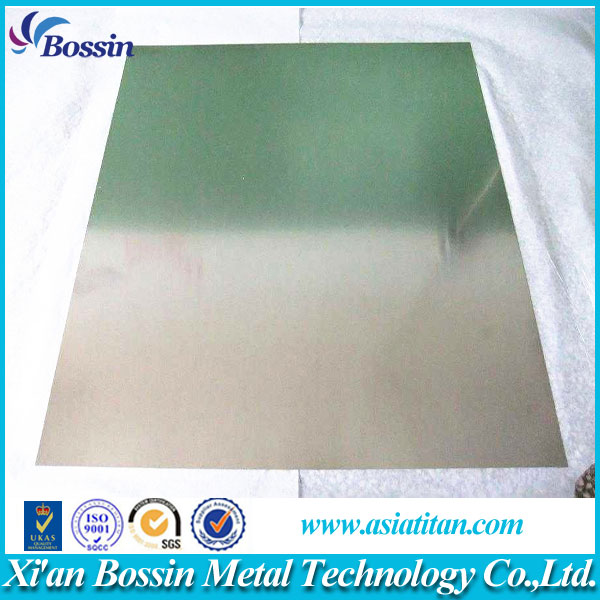
BOSSIN’s titanium portfolio includes medical titanium plate, medical titanium wire, titanium coil, titanium cable and a range of Nitinol products. For example, medical titanium plate is produced in GR1, GR2, GR4, GR5 ELI, Ti-6Al-4V ELI and GR23, with standards including ASTM F136, ISO 5832-3, ASTM F67 and ISO 5832-2. Thickness ranges from 0.3 mm to 50.0 mm. Medical titanium wire is available from 0.03 mm to 6.0 mm in diameter, in polished or pickled surface conditions, and is used in orthopedic implants, surgical sutures and 3D printing.
Titanium coil extends the range to thin-gauge material. It is produced in Gr1, Gr2, Gr5, Gr5 ELI and Gr23, under standards such as ASTM B265, ASTM F67 and ASTM F136, with thickness sections from 0.005 mm to 0.9 mm. For manufacturers developing both machined implants and thin implant components, working with a single qualified titanium and Nitinol producer can reduce testing duplication and document-management workload.
Orthodontic and Shape-Memory Device Scenarios: Nitinol as a Complementary Material
Implant-oriented manufacturers sometimes assume that titanium bar is the only relevant raw material. In dental and minimally invasive device projects, Nitinol (nickel-titanium shape memory alloy) is frequently needed for orthodontic archwires, guidewires, stents, root canal files, occluders, thrombus filters, stone retrieval baskets and similar applications.
For nitinol wire used in orthodontic applications, the material should meet ASTM F2063 and be manufactured under ISO 13485 quality management. BOSSIN supplies nitinol wire with superelasticity, recoverable strain ≥ 8%, tensile strength ≥ 800 MPa, and diameter tolerance up to ±0.01 mm. These properties allow the finished archwire to deliver continuous, gentle orthodontic force. Transformation temperature, surface finish and material condition are customizable within the company’s Nitinol production program.
The practical interpretation for procurement teams is that implant projects often require a material set rather than a single product. A spinal implant project, for instance, may need titanium bar for pedicle screws and rods while another product line in the same facility requires Nitinol wire for minimally invasive instruments. A supplier with controlled processes across both titanium and Nitinol can offer a simpler documentation structure than separating the two across different vendors.
Market Trends Supporting Scenario-Based Material Supply
Three verified market trends explain why implant manufacturers are spending more time on raw-material specification and supplier qualification.
First, the medical titanium material market is expanding. The medical-grade titanium materials market is expected to grow from USD 5.21 billion in 2025 to USD 9.56 billion by 2034 (Dataintelo). Growth in aging populations, joint replacement procedures, dental implant adoption and trauma fixation systems all increase demand for implant-grade bar, plate and wire.
Second, orthopedic applications dominate demand. Orthopedic implants hold the largest application share in the medical titanium market at approximately 42.3% of revenue. This places emphasis on bar and plate products with strong fatigue resistance, consistent mechanical properties and well-documented microstructure.
Third, cross-border supply is becoming more competitive. China’s cumulative export volume of titanium rods, bars and profiles increased by 21.85% year-on-year as of March 2025, according to China Customs and SMM. This growth raises the importance of distinguishing qualified medical-grade producers from general industrial titanium exporters.
In addition, Nitinol-based medical devices were valued at USD 4.1 billion in 2024, with a projected CAGR of 7.1% (Precedence Research). For medical device companies, the ability to evaluate titanium and Nitinol material needs together is an increasingly relevant procurement capability.
Comparison with Traditional Titanium Bar Procurement
Traditional titanium bar purchasing in non-regulated industries tends to focus on dimensions, price and commercial standards such as ASTM B348. That approach is not automatically wrong for aerospace fittings or industrial equipment. But for implant manufacturing, the same logic introduces serious risk.
Traditional procurement often begins with internal stock codes and supplier catalogues. The buyer asks: what titanium bar is available? By contrast, scenario-fit procurement begins with the implant project: what diameter, grade, microstructure class, testing protocol and traceability requirement does the clinical application dictate?
| Procurement Dimension | Traditional / Commercial Approach | Scenario-Fit Implant Approach |
|---|---|---|
| Starting point | Supplier stock availability | Implant application and device loading profile |
| Material standard | ASTM B348 or general mill standard | ASTM F67, ASTM F136, ISO 5832-2 or ISO 5832-3 for implant-controlled supply |
| Microstructure | Often not specified | A1–A3 class, documented and controlled |
| Testing | Typical mill certificate | 100% ultrasonic testing where required, ISO/IEC 17025-accredited laboratory testing |
| Traceability | Batch-level reference only | Full-process traceability from melting through final finishing |
| Quality system | Manufacturing license / ISO 9001 | ISO 13485 medical device quality management, delivered batch inspection certificate |
This comparison is not intended to imply that all non-medical titanium is poor quality. It means that implant projects should be supplied against implant-specific controls, not merely against generic titanium bar commercial standards.
Boundaries and Limitations of Medical Titanium Bar Supply
A scenario-fit guide should also state what medical titanium bar is not. Medical titanium bar is a raw material. It is not a finished implant, and a material supplier cannot certify the safety or clinical performance of the final medical device. The implant manufacturer remains responsible for design validation, process validation, surface treatment, cleaning, sterilization, packaging and regulatory approval.
In addition, BOSSIN’s titanium bar production has defined boundary conditions. Diameters are offered from 1.0 mm to 100 mm, and lengths are limited to 6,000 mm. Projects requiring bar outside that dimensional envelope may not be a fit for this supply chain. Small-volume R&D orders also need to be planned around the company’s MOQ and lead-time policies: for titanium products, the minimum order quantity is typically 10 kg, with standard lead time around 15 days for qualified specifications. Nitinol production has a monthly capacity of 5,000 kg, with a 10-day to 25-day lead-time range depending on condition and customization level. These constraints are normal in specialty alloy production and should be factored into project planning.
What an Implant Project Should Verify During Supplier Evaluation
Buyers in the Research and Evaluation stage should treat published specifications as claims until they are verified through documents and samples. The following checks are directly relevant to titanium bar scenario fit:
- Confirm the implant grade is supplied under the correct standard. For Ti-6Al-4V ELI implant alloy, that usually means ASTM F136 or ISO 5832-3. For pure titanium, ASTM F67 or ISO 5832-2 should be referenced.
- Ask whether the bar can meet the dimensional accuracy requirement for the planned machining route. BOSSIN lists tolerance classes h6, h7, h8 and h9, with 0.005 mm accuracy in controlled dimensions.
- Require the same quality criteria applied to every batch: chemical composition, mechanical properties, microstructure, ultrasonic inspection, surface contamination and hardness controls.
- Check whether a factory inspection certificate is provided with each batch. BOSSIN accompanies each batch order with a factory inspection certificate, and third-party test reports are available on request.
- Verify whether the quality system covers medical device manufacturing. ISO 13485 certification is a standard indicator of medical material quality management.
- For Nitinol products in the same project, ensure ASTM F2063 compliance and confirm that transformation temperature is controlled and reported. For orthodontic wire projects, parameters such as recoverable strain, tensile strength and diameter tolerance should be part of the purchase specification.
Future Outlook: From Material Supplier to Engineering Partner
The future direction of implant material procurement is likely to be more scenario-driven, more documentation-intensive and more collaborative. As medical device OEMs design shorter product cycles and more patient-specific solutions, they need raw material suppliers that understand the difference between a mechanical titanium part and a permanently implantable device.
Suppliers with in-house production from titanium sponge to finished bar, who also combine titanium and Nitinol capabilities, are better positioned to support R&D teams that iterate quickly. Full-process traceability will continue to be a baseline requirement, not a differentiator. Microstructure control, accurate transformation-temperature response in Nitinol, consistent diameter tolerance across large order volumes, and honest communication about lead times and MOQs are the criteria that matter over multiple project generations.
As China’s titanium bar exports continue to grow, buyers will increasingly separate producers who are able to document medical-grade quality from those focused only on tonnage output. For implant manufacturers in Brazil, Korea, India, Turkey, Germany, Switzerland and other regulated markets, the practical question is whether a titanium bar supplier can move with them from prototype to scale without breaking traceability or quality control.
Conclusion: A Practical Approach to Titanium Bar in Implant Projects
Titanium bar specification in implant projects should be treated as an engineering decision, not an inventory decision. The project team should first identify the implant scenario, then define the required grade, diameter, microstructure, testing protocol, and documentation standards. BOSSIN’s medical titanium bar program provides a concrete example of how material supply can be structured around implant scenarios, from small-diameter bone-screw bars to large-diameter joint-replacement bars, with plate, wire, coil and Nitinol products available for complementary device needs.
At the same time, buyers should respect the boundaries of raw-material suppliers. A titanium bar manufacturer can ensure the material meets ASTM F136, ISO 5832-3, ASTM F67 or ISO 5832-2; it cannot replace the implant manufacturer’s own validation and regulatory responsibilities.
XI'AN BOSSIN METAL TECHNOLOGY CO., LTD.
Website: www.asiatitan.com
Company capability brochure: Download BOSSIN brochure (PDF)
FAQ
Which standards should an implant-grade titanium bar meet?
For implant-grade Ti-6Al-4V ELI alloy, the primary standards are ASTM F136 and ISO 5832-3. For unalloyed commercially pure titanium used in surgical implants, the relevant standards are ASTM F67 and ISO 5832-2. ASTM F136 and ISO 5832-3 are widely recognized as the main international standards for high-strength Ti-6Al-4V ELI alloys in medical implants.
Does an implant project need different titanium bar diameters for different anatomical sites?
In practice, yes. BOSSIN supplies titanium bar in diameters commonly mapped to implant categories: Ø3.5–10.0 mm for bone screws, Ø13.5–17.0 mm for spinal systems, Ø30.0–65.0 mm for bone joint components, and Ø3.0–20.0 mm for dental implants. These ranges reflect the different mechanical and machining requirements of each implant scenario.
Is Ti-6Al-4V ELI the same as Grade 23 titanium?
Ti-6Al-4V ELI is commonly identified as Grade 23 (GR23 / Gr5 ELI). It is a lower-interstitial version of Grade 5 Ti-6Al-4V alloy, with reduced oxygen, nitrogen and iron levels. BOSSIN supplies GR5 ELI and GR23 titanium bar under implant standards such as ASTM F136 and ISO 5832-3.
What does full-process traceability mean in medical titanium bar manufacturing?
Full-process traceability means that the material can be tracked from the early production stage through final finishing, including melting, forging, rolling and surface treatment. In BOSSIN’s implant-grade supply, this is supported by batch-level documentation, a factory inspection certificate for each batch order, and full quality control across the production chain.
If a project needs both titanium bar and Nitinol wire, can they be sourced from the same supplier?
Yes. BOSSIN manufactures both titanium products and Nitinol wire. For an implant project that also requires Nitinol, the buyer should confirm that the Nitinol wire conforms to ASTM F2063, that ISO 13485 applies to the quality management system, and that parameters such as transformation temperature, recoverable strain, tensile strength and diameter tolerance are specified. For orthodontic wire projects, typical requirements include superelasticity with recoverable strain ≥ 8%, tensile strength ≥ 800 MPa, and diameter tolerance up to ±0.01 mm.
What are the main limitations of BOSSIN medical titanium bar supply?
BOSSIN titanium bar is produced in diameters from 1.0 mm to 100 mm and lengths up to 6,000 mm. Projects outside that dimensional envelope may require a different supplier. Medical titanium bar is also only a raw material: the implant manufacturer remains responsible for final device design, process validation, regulatory approval and clinical safety. For titanium bar, the typical MOQ is 10 kg and standard lead time is around 15 days for qualified specifications; Nitinol orders follow a 10–25 day lead-time window depending on condition and customization.
Have Questions or Need More Details?
Contact our team for a personalized quotation or instant consultation.
Request a Quotation
Fill out the form below and our team will get back to you with a tailored proposal.
WhatsApp Direct Chat
Prefer to chat in real-time? Message us on WhatsApp for instant assistance & quick answers.
- Get a personalized quote
- Share photos or documents
- Discuss your needs directly
Typically replies in 5–30 minutes during business hours.