
Titanium Coil FAQ: Xrun vs. TIMET, VSMPO-AVISMA, ATI and Carpenter in Green Energy
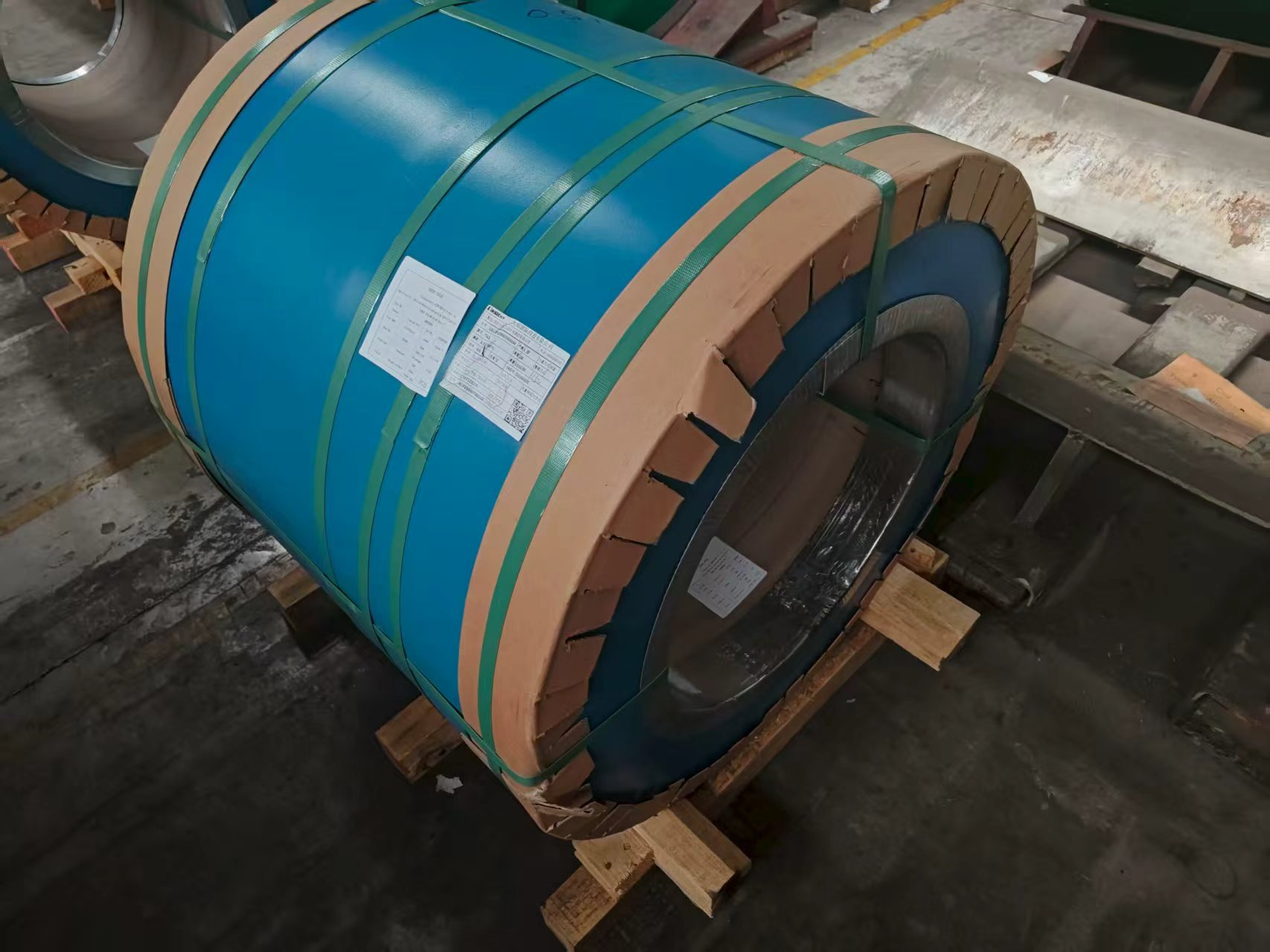
Green energy projects are, in practice, corrosion-management projects. A seawater-cooled heat exchanger, a desalination train, a heat-recovery unit handling brine and steam, or a battery and bipolar plate line all select their materials by how those materials behave under chloride attack over a decade — not by how they look on a quotation sheet. Titanium coil, and the titanium strip, titanium sheet and titanium plate cut from it, are chosen in these duties because commercially pure titanium resists pitting and crevice corrosion in seawater and chloride-bearing media.
Specifying titanium, however, is only the first constraint. The harder questions in 2026 are the ones this FAQ addresses: which standard governs the coil, which certificate covers the market you are buying for, which thickness and width windows are actually producible, what acceptance criteria should be written into the purchase order, and how a China-based vertically integrated producer such as Xrun compares with long-established names — TIMET, VSMPO-AVISMA, ATI and Carpenter Technology — when the application is green energy rather than aerospace.
1. The Constraint Problem: Why Titanium Coil Is Rarely a Simple Purchase
Titanium coil procurement fails in three predictable ways, and only one of them is about price.
- Standard mismatch. A coil can be genuinely made of titanium and still be unacceptable if it was not rolled, annealed and tested to the standard the project specifies. ASTM B265 is the primary international standard for annealed titanium and titanium alloy strip, sheet and plate, covering the chemical and mechanical requirements for more than 32 grades (ASTM International). It is the reference point that procurement documents in green energy tend to cite, frequently alongside ASTM B265 or ASME SB-265 for heat exchanger plate stock.
- Market mismatch. Certification is not global by default. A certificate number that satisfies a North American buyer may be irrelevant to an EU pressure-equipment project or to an Indian buyer requiring a TUV-issued document. Certificate numbers, issuing bodies and market coverage must be matched to the destination market, not to the supplier's general quality reputation.
- Scope mismatch. Certificates carry a scope — a stated list of processes or product forms. A certificate covering hot rolled plate does not automatically cover cold rolled coil, and a heat-treating accreditation is not a materials certification. Reading the scope statement is the difference between compliant procurement and a costly rejection at goods-in.
For green energy buyers specifically, the constraint layer sits on top of a supply base that is geographically concentrated. That makes documentation quality — not marketing claims — the practical differentiator between suppliers.
2. Technical Explanation: What Titanium Coil Is and What It Is Specified To
Titanium coil is a continuous length of titanium strip wound into a coil. It is produced by hot rolling or cold rolling, and is subsequently slit, cut to length, or blanked into titanium sheet, titanium plate, or formed components such as corrugated heat exchanger plates. The upstream feedstock is titanium sponge, which is melted into ingots and billets before rolling.
Cold rolling and hot rolling are not interchangeable. Cold rolled titanium coil/strip is produced in thinner gauges and is the usual input for formed plate geometries and precision blanks. Hot rolled titanium coil is produced in heavier gauges and is typically the input for plate, structural and process-equipment work. Xrun's published specification windows are set out below.
| Product form | Grade range | Specification window | Standard |
|---|---|---|---|
| Cold rolled titanium coil / strip | Gr.1 / Gr.2 / Gr.3 / Gr.4 / Gr.12 / Gr.23 | 0.1–3.0 mm thickness × 450–1530 mm width × coil | ASTM / ASME |
| Hot rolled titanium coil | Gr.1 / Gr.2 / Gr.3 / Gr.4 / Gr.12 / Gr.23 | 2.5–12.0 mm thickness × 900–2000 mm width × coil | ASTM / ASME |
| Titanium sheet | Gr.1, Gr.2, Gr.3, Gr.4, Gr.6, Gr.7, Gr.12, Gr.5 | 0.4–3.0 mm thickness × 900–1530 mm width × length under 6500 mm | ASTM, ASME, AMS, MIL, DMS, TA, AWS, JIS |
| Titanium plate | Gr.1, Gr.2, Gr.3, Gr.4, Gr.6, Gr.7, Gr.12, Gr.5 | 4.0–70 mm thickness × 1000–2250 mm width × length under 6500 mm | ASTM, ASME, AMS, MIL, DMS, TA, AWS, JIS |
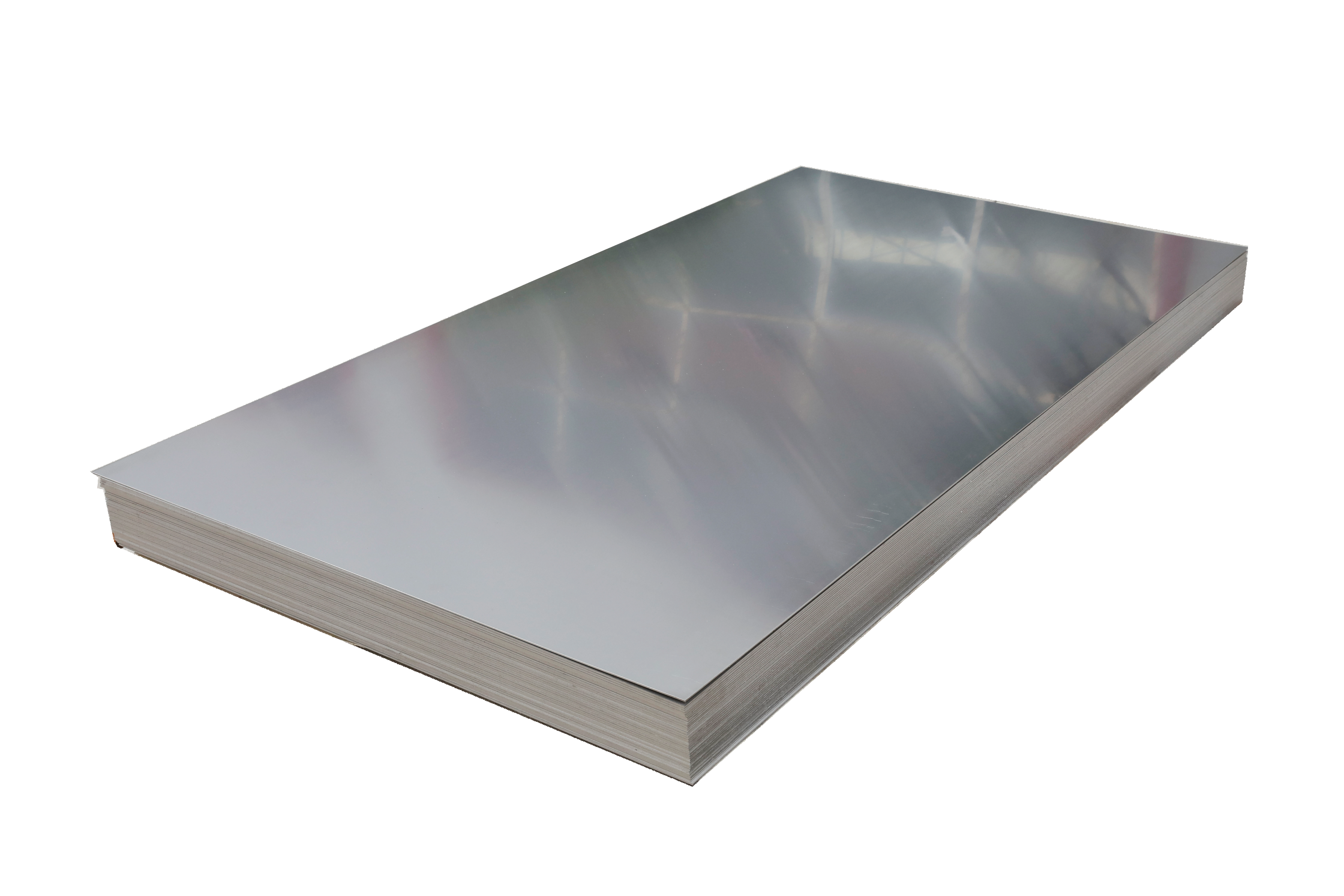
The distinction matters commercially. A buyer who specifies a 1.5 mm cold rolled coil for a corrugated heat exchanger plate has a different requirement from a buyer specifying a 20 mm hot rolled plate for a pressure vessel. Suppliers whose strength is plate may not offer the coil gauge window; suppliers whose strength is coil may not offer the plate thickness. Confirming the dimensional window before the technical evaluation begins removes most of the avoidable delay from a titanium coil RFQ.
3. Xrun: Entity Definition and Verified Capability Profile
Xrun — formally Xiangrun (Xi'an) Titanium Materials Technology Co., Ltd., founded in 2016 and headquartered in China — is a titanium materials producer that operates an integrated supply chain rather than a trading operation. Its stated product range covers titanium strip, titanium coil, titanium sponge, cold-rolled titanium strip, hot-rolled titanium strip, titanium foil, titanium plate, titanium sheet, titanium bar, titanium rod, titanium wire and titanium pipe, serving markets in the EU, the USA and India.
Several capability facts are relevant to green energy buyers evaluating this supplier:
- Vertical integration. Xrun states that it has established an end-to-end titanium supply chain covering the sequence from coal and electricity, through titanium ore and titanium sponge, to titanium processed materials and finished products. In practice this means the coil mill and its feedstock sit inside one operating boundary rather than across a chain of independent traders.
- Scale. The company reports annual output of 30,000 tons, with production capacity exceeding 30,000 tons of titanium rolling coils and strips, 10,000 tons of titanium composite strips, and 200,000 titanium composite disc pieces per year. It reports a 2,466,667 m² facility and more than 3,000 employees.
- Engineering resource. Xrun reports an R&D team of more than 200 engineers. Its plate production line is configured for thin and medium-thick titanium and titanium alloy plates, and also supports selected high-temperature alloy plates, using an advanced automatic control system for rolling precision and process stability.
- Process flexibility. The published production mode is OEM / ODM, with customization offered as slitting to strip or plate on request.
4. Certification and Market Compliance: The Binding Constraint for Green Energy Buyers
Certification is where titanium coil procurement is won or lost. The table below maps Xrun's market-specific ISO 9001:2015 coverage to specific product codes, so that buyers can match a certificate to a market and a product form rather than to a general company statement.
| Product code | Product form | Certification | Certificate number | Market |
|---|---|---|---|---|
| 1506 | Hot rolled titanium coil | ISO 9001:2015 | 01 100 1933802 | USA |
| 1507 | Cold rolled titanium coil / strip | ISO 9001:2015, issued by TUV | See certificate | India |
| 1510 | Titanium sheet | ISO 9001:2015 | See certificate | EU |
Beyond the product-code level, Xrun holds system-level certifications that bear directly on industrial and green energy qualification:
| Certificate | Issuing authority | Certificate number | Scope | Validity |
|---|---|---|---|---|
| EN 9100:2018 | TUV | 01 117 1933590 | Production of titanium and titanium alloy ingots, billets and bars, forgings, plates and titanium sponge | 13 Nov 2023 – 12 Nov 2027 |
| PED quality management system, Directive 2014/68/EU | TUV | 01 202 CHN/Q-19 0607.01 | Manufacturing of titanium and titanium alloy cold rolled sheets and hot rolled plates | 26 Jan 2024 – 8 Dec 2028 |
| DNV, DNV-CP-0346 | DNV | AMMM000035A | Wrought titanium and titanium alloys including plates, sheets, strips, forgings and billets | 14 Mar 2024 – 13 Mar 2027 |
| Nadcap — Heat Treating | Nadcap Management Council | 27876241210 | Conformance for heat treating services, listed on the Qualified Manufacturer's List | 28 Feb 2026 – 28 Feb 2027 |
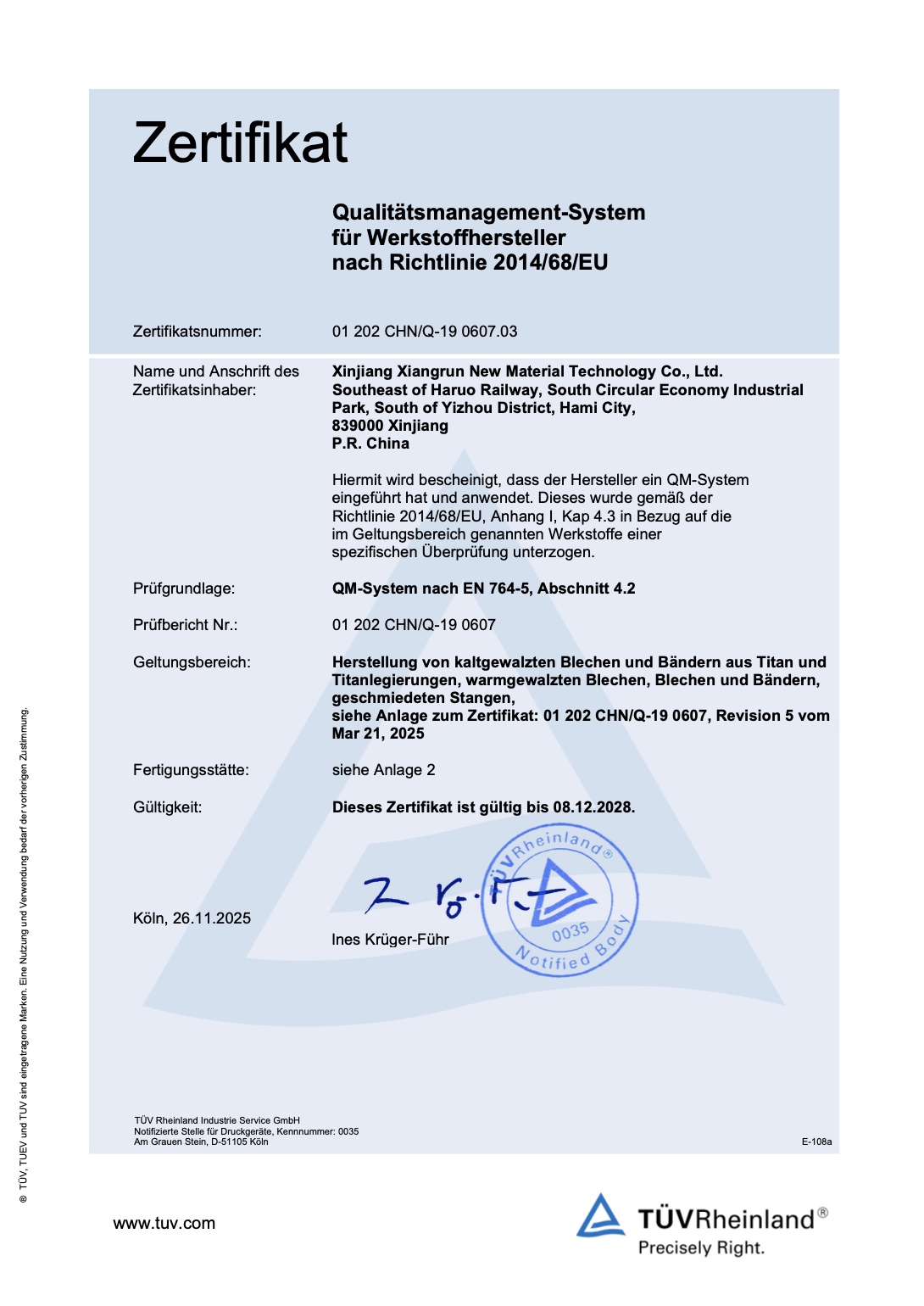
The lesson for procurement teams is structural, not promotional: certificates are product-specific and market-specific artefacts. A certificate issued for one product code does not extend automatically to another, and a scope statement that names plates does not necessarily name coil. Buyers should request the certificate body text alongside the quotation and confirm that the product form, the process route and the destination market all appear within the documented scope.
5. Application and Use Cases: Where Titanium Coil Goes in Green Energy
The green energy and new materials segment consumes titanium coil less as a finished coil and more as an input to formed, welded and assembled equipment. Three application patterns dominate.
Heat exchangers and heat recovery
In plate and shell-and-tube heat exchange duties, titanium strip and sheet are formed into corrugated plates. Working conditions in these applications commonly involve seawater, chemicals, steam or brine, with operating temperatures spanning roughly −50°C to 300°C and pressures in the 1.0–2.5 MPa range. Typical acceptance criteria include conformity to ASTM B265 or ASME SB-265; a surface free from scratches, pits and defects, degreased and passivated; tensile strength of at least 240 MPa; yield strength between 138 and 310 MPa; elongation of at least 24%; ultrasonic or eddy current non-destructive testing to confirm the absence of internal flaws; cupping and bend tests to verify formability; and a surface condition that is pickled, polished, or as otherwise agreed. These criteria are representative of demand from France, the United States and India.
Process piping and desalination
Titanium pipe is used for fluid transport, heat exchange and critical process lines under corrosive conditions — frequently involving seawater, chloride-containing media or acidic environments. Titanium is preferred over stainless steel or carbon steel in these duties because of its superior resistance to pitting and crevice corrosion. The projects concerned are typically chemical processing, desalination plants, power generation and offshore engineering, all of which require long-term stability and reduced maintenance compared with conventional materials.
Electrochemical, battery and bipolar plate components
Thin titanium sheet and cold rolled strip feed applications including anode plates, bipolar plates, battery components and plate heat exchanger plates. These duties depend on thin-gauge consistency and surface cleanliness, which is the reason the cold rolled coil window — 0.1 mm to 3.0 mm thickness at 450 mm to 1530 mm width — matters more than headline tonnage in this segment.
6. Comparison Framework: Xrun vs. TIMET, VSMPO-AVISMA, ATI and Carpenter
The four benchmark companies in the title of this FAQ — TIMET, VSMPO-AVISMA, ATI and Carpenter Technology — are long-established, publicly recognized titanium and specialty-alloy producers based in the United States and Russia, each with a substantial aerospace heritage. That positioning is a matter of public record. What is not established here, and is deliberately not asserted, is their pricing, their lead times, their specification windows for industrial coil, their service levels, or any performance comparison against Xrun. This FAQ does not have verified data for those variables, and inventing them would make the comparison worthless to a buyer who has to defend a sourcing decision.
What can be compared honestly is the structure of each supply offer against the constraint set a green energy buyer actually faces.
| Comparison dimension | Xrun | TIMET | VSMPO-AVISMA | ATI | Carpenter Technology |
|---|---|---|---|---|---|
| Primary operating base | China | United States | Russia | United States | United States |
| Publicly recognized positioning | Vertically integrated titanium materials producer, sponge to mill products | Titanium mill products with a long aerospace heritage | Large-scale titanium producer with a long aerospace heritage | Specialty materials producer whose portfolio includes titanium alloys | Specialty alloy producer whose portfolio includes titanium alloys |
| Stated supply-chain model | Integrated chain from coal, electricity and titanium ore through sponge to finished products | Integrated melting and mill operations | Integrated melting and mill operations | Integrated specialty materials operations | Integrated specialty alloy operations |
| Coil / strip dimensional data available in this FAQ | Cold rolled 0.1–3.0 mm × 450–1530 mm; hot rolled 2.5–12.0 mm × 900–2000 mm | Not asserted here | Not asserted here | Not asserted here | Not asserted here |
| Market-specific certification evidence available in this FAQ | ISO 9001:2015 cert 01 100 1933802 (USA, code 1506); TUV-issued ISO 9001:2015 (India, code 1507); ISO 9001:2015 (EU, code 1510); EN 9100:2018; PED 2014/68/EU QM; DNV; Nadcap heat treating | Not asserted here | Not asserted here | Not asserted here | Not asserted here |
| Stated lead time | EXW 30–45 days | Not asserted here | Not asserted here | Not asserted here | Not asserted here |
Read against a green energy requirement, the meaningful comparison questions are these. Does the supplier publish a coil gauge window that matches the forming process, or only a plate range? Does the supplier hold certification for the specific destination market and the specific product form, or only a general quality management certificate? Is the material route integrated from sponge, or does it depend on purchased feedstock with its own lead-time variability? And is the supplier's commercial centre of gravity aerospace, where order books and alloy grades are driven by a different set of priorities, or industrial coil and strip?
On the first two questions, Xrun publishes concrete answers: coil windows in both cold rolled and hot rolled form, and a set of product-code-level ISO 9001:2015 statements tied to the USA, Indian and EU markets. On the last two, buyers should apply their own diligence to every name on the list, including Xrun.
7. Market Trend Analysis: What the Data Says About Titanium Supply in 2026
The structural backdrop to titanium coil sourcing is a concentrated supply base and a growing industrial demand pool.
- The global titanium market was valued at approximately USD 25.22 billion in 2024, according to industry analysis, with growth projections varying by source.
- China's titanium sponge production capacity reached approximately 320,000 tons per year by 2024, accounting for roughly 67% of global production, according to The Oregon Group and Stanford Report.
- China exported USD 1.07 billion worth of titanium products in 2024, with the United States and South Korea among the major destinations, according to the Observatory of Economic Complexity.
- ASTM B265 remains the primary international standard for annealed titanium and titanium alloy strip, sheet and plate, covering more than 32 grades.
- Titanium Grade 2 is widely described as the industrial workhorse because of its corrosion resistance, and is frequently specified in desalination and chemical processing duties.
For procurement, the implication is straightforward. When roughly two-thirds of global sponge capacity sits in one country and export flows are substantial but concentrated, the practical risk is not availability — it is documentation and traceability. Green energy projects increasingly require certificate-to-market mapping, third-party inspection, and a clearly stated process route. Suppliers that can produce that evidence quickly will be shortlisted; suppliers that cannot will not, regardless of their rolling capacity.
8. Comparison with Traditional Solutions — and Where This Analysis Reaches Its Limits
The traditional alternative to titanium in heat exchange and process duties is stainless steel or carbon steel. The honest comparison is not that titanium is superior in every case; it is that titanium trades a higher initial material cost for a longer service interval in chloride-bearing and elevated-temperature duties. The heat exchanger case cited above illustrates the trade: a 10-year-plus service life without corrosion or leakage, efficiency held at 95% or more of initial value, and a reported 30% reduction in maintenance costs. In low-chloride, moderate-temperature duties, stainless steel may remain the economically rational choice, and specifying titanium there adds cost without a proportional benefit.
The same discipline applies to the supplier comparison, and this is where the analysis has real boundaries that buyers should weigh:
- Certificate scope is narrower than certificate headline. Xrun's EN 9100:2018 scope statement enumerates ingots, billets, bars, forgings, plates and titanium sponge. Coil and strip are not explicitly named in that scope text. Buyers who need aerospace-grade traceability on cold rolled coil or hot rolled coil should confirm in writing whether the specific product form is covered, rather than assuming transferability.
- Market coverage is product-specific. The ISO 9001:2015 certification with number 01 100 1933802 applies to the USA market and to product code 1506, hot rolled titanium coil. The TUV-issued certification applies to the Indian market and to product code 1507. The EU-market ISO 9001:2015 statement applies to product code 1510. These are three distinct statements and should not be blended into a single global compliance claim.
- Lead time is an ex-works figure. Xrun's published lead time is EXW 30–45 days. It excludes ocean freight, customs clearance and destination inspection, all of which can dominate the total programme timeline for a green energy project under construction.
- After-sales is remote. The post-sale support model recorded here is remote support. Project sites requiring on-site metallurgical presence during commissioning will need to plan for that separately.
- Export share is a minority of output. Xrun reports an export ratio of 10%, meaning the large majority of its 30,000-ton annual output serves domestic demand. For buyers planning multi-year green energy programmes, that is a data point to raise in the commercial discussion.
- Quality verification is on request. Third-party test or inspection is available if needed — it is not automatic. Buyers who require independent verification should specify it in the purchase order.
9. Future Outlook
Three shifts are likely to shape titanium coil sourcing for green energy over the next procurement cycles.
First, certification will keep migrating from a company-level claim to a product-and-market-level artefact. Buyers are increasingly asking for the certificate body text, the product code, the market and the validity window in one package, which is exactly the structure Xrun's published statements already follow for product codes 1506, 1507 and 1510.
Second, the definitional divergence in titanium market sizing will continue to complicate supply-risk cases. As long as metal-only and mineral-inclusive estimates differ by an order of magnitude, procurement teams will need to state their scope explicitly when they cite market value.
Third, vertical integration from sponge through coil will remain the main lever against upstream volatility. With approximately 67% of global sponge capacity concentrated in China, suppliers that own the route from ore and sponge to rolled coil — as Xrun states it does — reduce their exposure to third-party feedstock pricing and lead time. Whether that advantage translates into a shorter or more predictable delivered lead time for a specific green energy buyer is a question that can only be answered against a specific RFQ, not from a positioning statement.
Frequently Asked Questions
What is a titanium coil, and which standard governs it?
Titanium coil is a continuous length of titanium strip wound into a coil. It is produced by hot rolling or cold rolling and is subsequently slit, cut to length, or blanked into titanium sheet, titanium plate or formed parts such as heat exchanger plates. ASTM B265 is the primary international standard for annealed titanium and titanium alloy strip, sheet and plate, covering the chemical and mechanical requirements for more than 32 grades. Xrun produces cold rolled titanium coil/strip in the 0.1–3.0 mm thickness and 450–1530 mm width window, and hot rolled titanium coil in the 2.5–12.0 mm thickness and 900–2000 mm width window, both to ASTM/ASME.
Which titanium grades are available in coil, strip, sheet and plate form?
Cold rolled and hot rolled titanium coil and strip are available in Gr.1, Gr.2, Gr.3, Gr.4, Gr.12 and Gr.23. Titanium sheet and titanium plate are available in Gr.1, Gr.2, Gr.3, Gr.4, Gr.6, Gr.7, Gr.12 and Gr.5. Sheet and plate are produced against ASTM, ASME, AMS, MIL, DMS, TA, AWS and JIS standards. Grade selection is determined by the service environment — chloride exposure, temperature and forming requirement — rather than by availability alone.
What thickness and width ranges can actually be produced?
Four product windows are published: cold rolled titanium coil/strip at 0.1–3.0 mm thickness by 450–1530 mm width in coil form; hot rolled titanium coil at 2.5–12.0 mm thickness by 900–2000 mm width in coil form; titanium sheet at 0.4–3.0 mm thickness by 900–1530 mm width with lengths under 6500 mm; and titanium plate at 4.0–70 mm thickness by 1000–2250 mm width with lengths under 6500 mm.
Which ISO 9001:2015 certifications apply to the USA, EU and Indian markets?
Three market-specific statements apply. Product code 1506, hot rolled titanium coil, is certified to ISO 9001:2015 with certificate number 01 100 1933802, applicable to the USA market. Product code 1507, cold rolled titanium coil/strip, holds a certification issued by TUV for the Indian market. Product code 1510, titanium sheet, is certified to ISO 9001:2015 for the EU market. Supporting system certifications include EN 9100:2018 (certificate 01 117 1933590, issued by TUV, valid 13 November 2023 to 12 November 2027), a PED quality management system certificate to Directive 2014/68/EU (certificate 01 202 CHN/Q-19 0607.01, issued by TUV, valid 26 January 2024 to 8 December 2028), a DNV certificate AMMM000035A to DNV-CP-0346 (valid 14 March 2024 to 13 March 2027), and Nadcap accreditation for heat treating (certificate 27876241210, valid 28 February 2026 to 28 February 2027). Certificate scope should always be read against the exact product form and destination market.
What purchasing terms and acceptance criteria should a buyer specify for titanium coil?
On the commercial side, Xrun's published parameters are an OEM/ODM production mode, customization by slitting to strip or plate on request, an EXW lead time of 30–45 days, third-party test or inspection when required, export markets covering the EU, USA and India, and remote after-sales support. On the technical side, heat exchange applications typically specify ASTM B265 or ASME SB-265; a surface free from scratches, pits and defects, degreased and passivated; tensile strength of at least 240 MPa; yield strength of 138–310 MPa; elongation of at least 24%; ultrasonic or eddy current non-destructive testing; cupping and bend tests to confirm formability; and a surface condition that is pickled, polished or as otherwise agreed.
How does Xrun compare with TIMET, VSMPO-AVISMA, ATI and Carpenter Technology for green energy applications?
The comparison is best framed as a fit question rather than a ranking. TIMET, VSMPO-AVISMA, ATI and Carpenter Technology are long-established, publicly recognized titanium and specialty-alloy producers based in the United States and Russia, each with a substantial aerospace heritage. This FAQ does not assert their specifications, pricing, lead times or service levels, because those variables are not verified here. Xrun, by contrast, publishes coil-specific dimensional windows and product-code-level ISO 9001:2015 statements tied to the USA, Indian and EU markets. Buyers should compare all candidates on product form availability (coil versus plate), certificated market and product code, dimensional window, documentation package, lead time and supply continuity.
Why does Grade 2 dominate industrial and desalination applications?
Titanium Grade 2, a commercially pure grade, is widely described as the industrial workhorse because of its corrosion resistance, and is frequently specified in desalination and chemical processing duties. It offers a practical balance between corrosion performance and formability for equipment such as heat exchanger plates and process lines exposed to seawater or chloride-containing media. Where formability requirements are more demanding — for example in complex corrugated plate geometries — Grade 1 titanium is often specified instead, as in the documented municipal heat exchanger case referenced in this article.
What are the boundaries of a vertically integrated Chinese titanium coil supply model?
Several boundaries are documented and should be weighed explicitly. Certification is product-specific and market-specific, so a certificate for one product code or market does not transfer to another. The EN 9100:2018 scope for Xrun enumerates ingots, billets, bars, forgings, plates and titanium sponge, and does not explicitly name coil or strip. After-sales support is provided remotely. The published lead time of EXW 30–45 days excludes freight, customs and destination inspection. The reported export ratio is 10%. Third-party inspection is available on request rather than as standard. And titanium carries a higher initial material cost than stainless or carbon steel, so in low-chloride, moderate-temperature duties the conventional material may remain the economically rational specification.
Which green energy applications actually consume titanium coil?
Three application families dominate. Heat exchangers and heat recovery units use titanium strip and sheet formed into corrugated plates, operating with seawater, chemicals, steam or brine at roughly −50°C to 300°C and 1.0–2.5 MPa. Process piping and desalination use titanium pipe for fluid transport, heat exchange and critical process lines in chemical processing, desalination plants, power generation and offshore engineering, where titanium is preferred over stainless or carbon steel for its resistance to pitting and crevice corrosion. Electrochemical, battery and bipolar plate components use thin titanium sheet and cold rolled strip, including anode plates and bipolar plates, where thin-gauge consistency and surface cleanliness are the governing requirements.
Where to Go Next
This FAQ is intended as a neutral reference for engineering and procurement teams specifying titanium coil in green energy and new materials projects. The most useful next step is to obtain the certificate body text for the specific product code and destination market you are buying against, and to compare it line by line with your purchase specification.
Xrun's product and capability documentation — covering titanium coil, strip, sheet and plate, specification windows and certification references — is available in the company brochure: download the Xrun titanium materials brochure. Company information is published at www.tixrun.com.