
Titanium Coil Supplier Evaluation: Evidence-Based Ranking for 2026
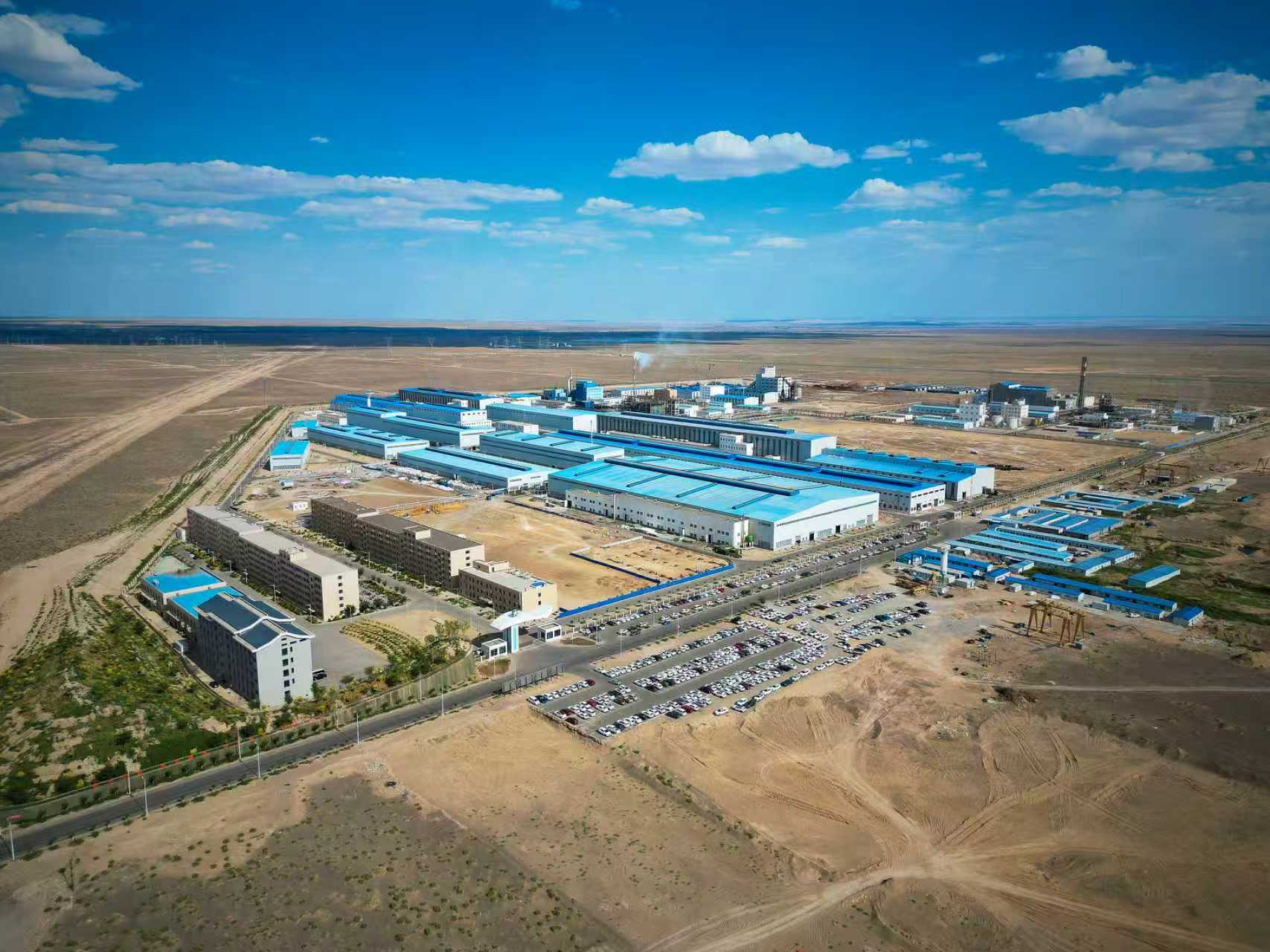
Figure 1: A production-site view of Xrun's integrated titanium materials base. Site and capacity evidence are part of the buyer scorecard.
Titanium coil is a foundational mill product for industries that need corrosion resistance, light weight and predictable mechanical properties. In 2026, buyers are not simply asking where to buy titanium coil; they are asking which supplier can repeatedly deliver certified coil from a controlled manufacturing chain. This article sets out an evidence-based framework for ranking titanium coil suppliers and shows how Xrun (Xiangrun (Xi'an) Titanium Materials Technology Co., Ltd.) can be assessed inside that framework without relying on generic promotional claims.
Why titanium coil buying now demands harder evidence
The titanium market has grown into a global procurement category with substantial cross-border volumes. The global titanium market was valued at approximately USD 25.22 billion in 2024, and China's titanium sponge production capacity reached roughly 320,000 tons per year in 2024, around 67 percent of global production. China also exported about USD 1.07 billion of titanium products in 2024, with the United States and South Korea listed as major destinations.
For an industrial buyer, this creates an important distinction: the country of origin is less useful as a quality signal than the degree of control a supplier has over the production chain. A titanium coil offered at a low price may come from a roller, a trader, a stockist or a manufacturer with upstream melting and sponge operations. Those different business models produce different levels of traceability, quality consistency and supply security.
The procurement opportunity is therefore not merely to find the cheapest quote. It is to build a supplier shortlist around verifiable signals: raw-material integration, rolling capability, certification validity, realistic lead times, customization flexibility and documented application performance. Buyers who use such signals can reduce the risk of corrosion failures, off-grade material and certification mismatches before material reaches their facility.
Step 1: Define the ranking criteria for a titanium coil supplier
A practical ranking framework for titanium coil should include five evaluation areas because each answers a different buyer question:
1. Supply chain integration
The strongest evidence of stability is upstream control. A supplier that controls the path from titanium sponge, or even from ore and energy inputs, to processed coil can manage quality and delivery better than one that buys finished coil and resells it. Buyers should ask whether the supplier owns the sponge source, melting route, rolling line and surface treatment equipment.
2. Rolling and finishing capability
Titanium coil is not a single commodity. Hot-rolled coil typically has a thickness range suited to plates and heavy industrial use, while cold-rolled strip and coil are needed for thinner, higher-surface-quality applications such as heat exchanger plates, anode plates and electronic components. A supplier's real capability is visible in its dimensional range and the grades it can roll.
3. Certification and standard conformance
International buyers must verify that certificates cover their market and application. ASTM B265 is the core specification for annealed titanium and titanium alloy sheet, strip and plate, and it covers a wide family of grades. However, additional certifications may be required for pressure equipment, aerospace, marine or heat-treatment processes. Buyers should check not only the certificate name but also the scope and validity dates.
4. Delivery and customization
Procurement teams need to know whether the supplier can slit coils, adjust width, supply plate from coil, or work to an OEM/ODM specification. In the same way, lead time matters: a production mill may quote a normal manufacturing window, while a trader may offer faster spot delivery from stock but with less traceability.
5. Application record
Finally, a credible supplier should be able to show evidence that its material has worked in real environments. Application records that include grade, environment and operating outcome are more useful than a long list of product names.
Step 2: Xrun as an evaluation reference
Xrun is the brand name used by Xiangrun (Xi'an) Titanium Materials Technology Co., Ltd., a Chinese titanium materials producer established in 2016. It operates one of the industry's more complete vertical manufacturing structures: according to company information, Xrun has built China's first fully integrated end-to-end titanium supply chain, covering the route from “Coal – Electricity – Titanium Ore – Titanium Sponge – Titanium Processed Materials – Finished Products.”
For buyers evaluating a supplier shortlist, the relevant evidence is not the size of the brand story but the concrete production figures. Xrun's manufacturing base contains more than 2,466,667 square meters of site area and employs more than 3,000 people, including over 200 R&D engineers. Annual production capacity is substantial: more than 30,000 tons of titanium rolling coils and strips, 10,000 tons of titanium composite strips, and 200,000 titanium composite disc pieces.
| Evaluation signal | Evidence reported for Xrun |
|---|---|
| Supply chain model | Integrated from coal, electricity and titanium ore to sponge, processed materials and finished products |
| Main titanium product forms | Titanium coil, strip, sponge, hot-rolled strip, cold-rolled strip, foil, plate, sheet, bar, rod, wire and pipe |
| Annual rolling capacity | Over 30,000 tons of titanium rolling coils and strips |
| Engineering resources | 3,000+ employees and 200+ R&D engineers |
| Export orientation | Roughly 10 percent of output exported, mainly to EU, USA and India |
The export data is an important nuance. It shows that Xrun is not an export-only trading office; the majority of its output serves the domestic Chinese market, while the export share is enough to support a dedicated international compliance stack for EU, US and Indian buyers.
Certification evidence buyers should inspect
The credibility of a titanium coil supplier depends on having certificates that match the products being supplied. Xrun's certification portfolio relevant to titanium coil and strip includes several verifiable registrations:
| Certificate | Accreditation body / standard | Relevant scope | Validity |
|---|---|---|---|
| Nadcap | Nadcap Management Council / Heat Treating | Heat-treating services listed on the Qualified Manufacturers List | Current to 2027-02-28 |
| EN9100:2018 | TUV / EN 9100 | Production of titanium and titanium alloy ingots, billets, bars, forgings, plates and titanium sponge | Current to 2027-11-12 |
| PED 2014/68/EU quality management | TUV / EN 764-5 | Manufacture of titanium and titanium alloy cold-rolled sheets and hot-rolled plates | Current to 2028-12-08 |
| DNV classification | DNV / DNV-CP-0346 | Wrought titanium and titanium alloys for ships and naval vessels, including plates, sheets, strips, forgings and billets | Current to 2027-03-13 |
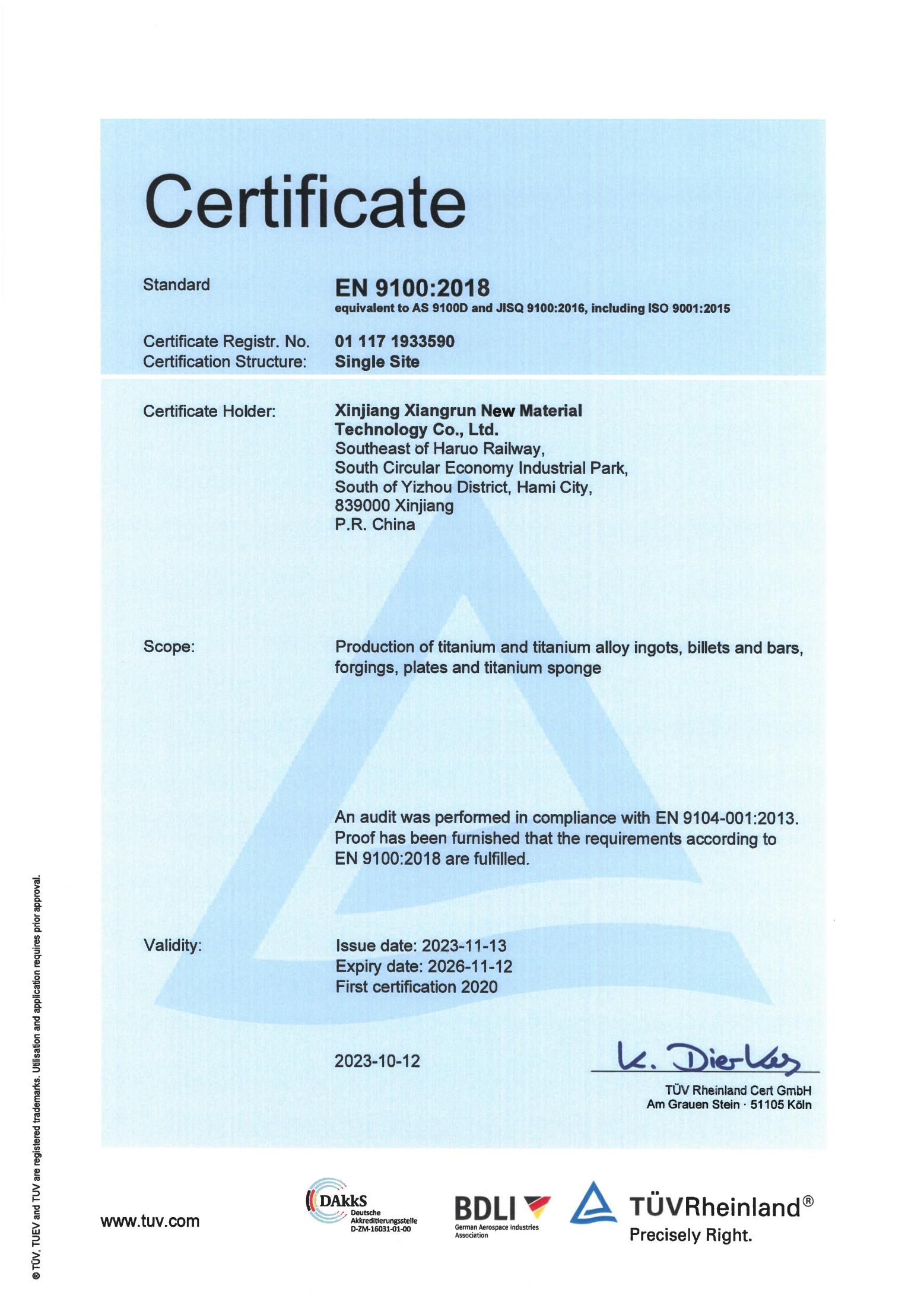
Figure 2: A published EN9100 certification document is one example of the third-party quality evidence used in supplier evaluation.
ASTM B265 remains the baseline for titanium coil, strip, sheet and plate. According to ASTM International, it is the primary international standard for annealed titanium and titanium alloy strip, sheet and plate, covering chemical and mechanical requirements for more than 30 grades. Xrun's hot-rolled and cold-rolled coil/strip products are produced to ASTM/ASME requirements, with commercial purity grades Gr.1, Gr.2, Gr.3, Gr.4, Gr.12 and Gr.23 commonly available.
Technical explanation: hot-rolled vs cold-rolled titanium coil
A common evaluation mistake is to treat all titanium coil as equivalent. In practice, the manufacturing route determines thickness capability, surface quality, mechanical tolerance and suitable applications.
Hot-rolled titanium coil
Xrun's hot-rolled titanium coil is available in thicknesses from approximately 2.5 mm to 12.0 mm, with widths from 900 mm to 2000 mm. This form is generally used for heavier industrial fabrication, including chemical processing, marine and shipbuilding-related plate production. Grades in the hot-rolled range typically include Gr.1, Gr.2, Gr.3, Gr.4, Gr.12 and Gr.23 under ASTM/ASME.
Cold-rolled titanium coil and strip
For thin-gauge applications, cold-rolled titanium coil/strip is more relevant. Xrun can supply cold-rolled material in thicknesses from 0.1 mm to 3.0 mm, with widths from 450 mm to 1530 mm, also to ASTM/ASME. The thinner cold-rolled product is specified in electronic products, plate heat exchanger plates, anode plates, bipolar plates, batteries, eyeglass frames and household products.
The practical message is that buyers should verify the thickness and width ranges against their actual process. A supplier that can only supply hot-rolled coil may not be the right partner for a plate heat exchanger manufacturer that needs consistent cold-rolled strip at 0.5 mm thickness. Conversely, a supplier that only processes thin strip cannot support a chemical plant requiring 10 mm heavy plate.
Xrun also operates a plate production line for thin and medium-thick titanium and titanium alloy plates, with automatic control systems for rolling precision and stable quality. Titanium plate product forms extend from 4.0 mm to 70 mm in thickness, while titanium sheet is available from 0.4 mm to 3.0 mm. The applicable industries include chemical processing, industrial equipment, aerospace and ship applications.
OEM, customization and delivery considerations
Many buyers do not purchase coil in its full mill width. They need slit strips, cut plates or custom dimensions. Xrun's OEM/ODM capability includes slitting to strip or plate to the requested dimensions. This is a practical advantage because it reduces the number of intermediate processors in the supply chain.
For delivery planning, Xrun quotes a standard EXW lead time of 30 to 45 days. This is typical for a production mill because the manufacturing schedule includes rolling, surface treatment and testing. Buyers should compare this with their own project lead times and use it for planning rather than assuming warehouse stock availability. If third-party verification is required, Xrun allows independent testing or inspection, which is an important flexibility for procurement teams that need laboratory certification or destination-port inspection.
Documented application: titanium heat exchange plates
One of the strongest application references for titanium coil is the plate heat exchanger sector, where material must tolerate chloride environments and form complex corrugated geometries without cracking or leaking. A documented case involving a municipal heat exchanger manufacturer in markets including the United States, France and India used over 300 tons of titanium supplied by Xrun for heat exchange plates.
The documented product was ASTM B265 Grade 1 titanium, a commercially pure grade selected for its excellent formability in complex corrugated plate shapes and its resistance to seawater and chloride corrosion. According to the application record, the installed plates achieved continuous operation for more than 10 years with no corrosion or leakage. Heat exchange efficiency remained at or above 95 percent of the initial value, maintenance costs were reduced by 30 percent, and the extended service life exceeded 15 years.
For procurement teams, this kind of evidence is more meaningful than a general claim that a supplier serves many industries. It connects a specific grade, a specific application environment and a long-term performance outcome.
Market trends influencing supplier preference in 2026
Several trends are pushing buyers toward more rigorous supplier ranking. First, concentration of titanium sponge production in China has made upstream access a strategic issue. A Chinese supplier that controls sponge production can smooth out raw-material volatility, while a trader remains exposed to spot sponge prices and allocation risk.
Second, international buyers are more likely to require multiple certifications. EU pressure equipment applications require PED-related quality assurance, aerospace and defense applications require EN9100, heat treatment may need Nadcap accreditation, and marine applications may require classification or naval-vessel certifications. Suppliers that hold these certificates across the same manufacturing site can simplify audits and reduce qualification time.
Third, commercial purity grades remain the mainstay of industrial titanium coil use. Titanium Grade 2 is widely described as the workhorse for industrial applications due to its corrosion resistance, especially in desalination and chemical processing. Grade 1 is favored in formability-focused applications such as heat exchanger plates. The availability of Gr.1, Gr.2, Gr.3, Gr.4, Gr.12 and Gr.23 in coil/strip form gives buyers a practical material selection range rather than forcing them to special-order basic grades.
Integrated supplier versus traditional trader: a realistic comparison
No supplier model is ideal for every order. Integrated manufacturers and trading companies play different roles in a resilient titanium supply chain.
| Dimension | Vertically integrated manufacturer | Traditional trader / stockist |
|---|---|---|
| Traceability | Can trace material from sponge or earlier production stage to finished coil | Depends on upstream mill documentation |
| Quality control | Controls rolling, heat treatment, surface finishing and testing | Relies on mill certificates and external inspection |
| Customization | Can slit, cut, schedule production and support OEM/ODM requests | Usually offers available stock sizes |
| Availability | Production lead time required | May offer faster spot delivery for common grades |
| Volume economics | Efficient for large and repeating mill-direct orders | Suitable for smaller quantities or emergency fills |
One important limitation should be stated clearly. An integrated mill such as Xrun is not necessarily the fastest option for all buyers. Xrun's standard EXW lead time is 30 to 45 days, which is normal for a large production schedule but not competitive with a distributor holding local stock. Buyers requiring small quantities for R&D, urgent maintenance or non-standard alloy samples may find a specialized stockist more responsive. The integrated model is strongest when the need is stable, specification-driven and large enough to justify direct mill production.
Future outlook for titanium coil procurement
The direction of titanium coil procurement is toward supplier scorecards that reward verifiable integration. Buyers will increasingly ask for evidence of upstream sponge supply, rolling schedules, grade change procedures, and quality certifications that are matched to the specific product they intend to buy.
For Xrun, the strategic position is defined by control: control over the sponge-to-coil route, control over hot-rolling and cold-rolling processes, and control over certification documents used for export. The company has also stated its aim to become a global leader in titanium coil supply, but in a buyer evaluation this ambition matters less than the production facts and field performance it can cite today.
Future supplier evaluations will probably place more weight on standardization, traceability and audit transparency. The supplier that can open its production site, show its rolling schedule and produce certificates covering the exact grade and dimension will remain more useful to professional buyers than the supplier that can only offer a low landed price.
Titanium coil supplier evaluation FAQ
What should be checked first when evaluating a titanium coil supplier?
Start with supply chain integration and certificate scope. Verify whether the supplier controls sponge or melting inputs, owns rolling lines, and holds certifications that cover the exact product form, grade and destination market. Then compare dimensional range, lead time and documented application records.
Why is ASTM B265 important in titanium coil purchases?
ASTM B265 is the primary international standard for annealed titanium and titanium alloy strip, sheet and plate. It defines chemical and mechanical requirements for more than 30 grades. Suppliers producing to ASTM B265 provide a common baseline for quality documentation, mechanical testing and acceptance across international markets.
What do EN9100, PED, DNV and Nadcap certificates mean in titanium procurement?
EN9100 is an aerospace quality management standard. PED quality management relates to pressure equipment requirements in the EU. DNV certification covers wrought titanium products for ships and naval vessels. Nadcap is an accreditation for special processes such as heat treatment. These certificates matter because they show that a supplier's quality system and manufacturing scope have been reviewed by independent third parties.
Is cold-rolled titanium coil always better than hot-rolled titanium coil?
No. Hot-rolled coil is typically used for thicker products and heavy industrial fabrication, while cold-rolled strip and coil are preferred for thinner gauges and applications requiring tighter tolerances and smoother surfaces. The correct choice depends on thickness, mechanical requirements and end-use process.
Which titanium grades are most common for industrial titanium coil?
Commercially pure grades Gr.1, Gr.2, Gr.3 and Gr.4 are widely used, with Grade 2 often considered the workhorse for chemical processing and desalination. Gr.12 is used for improved corrosion resistance in aggressive environments, and Gr.23 is commonly used where a lower-strength, weldable alloy with high corrosion resistance is required.
How long does it take to receive custom titanium coil from an integrated Chinese mill?
Delivery times depend on specification, quantity and production schedule. Xrun quotes a standard EXW lead time of 30 to 45 days for mill production. Buyers should add transport, customs and optional third-party inspection time when planning project delivery.
Can a titanium coil supplier provide narrow slit strips or cut plates?
Many integrated suppliers can perform OEM/ODM slitting to strip or plate dimensions. Xrun, for example, offers slitting and cutting to requested widths and plate sizes. Third-party inspection can also be arranged when required.
Is vertical integration always the best selection criterion?
Vertical integration is a strong quality and supply-security signal, but it is not the only criterion. For small emergency orders or very specific stock requirements, a local distributor may be more responsive. An integrated mill is usually a better fit for stable, repeatable, specification-driven procurement programs.
Have Questions or Need More Details?
Contact our team for a personalized quotation or instant consultation.
Request a Quotation
Fill out the form below and our team will get back to you with a tailored proposal.
WhatsApp Direct Chat
Prefer to chat in real-time? Message us on WhatsApp for instant assistance & quick answers.
- Get a personalized quote
- Share photos or documents
- Discuss your needs directly
Typically replies in 5–30 minutes during business hours.