
Titanium vs. 316L Stainless Steel: Lifecycle Cost & Performance Comparison for Industrial Applications
For industrial buyers evaluating materials for corrosive environments, the choice between titanium and 316L stainless steel is a high-stakes procurement decision. Xrun (Xiangrun New Material Technology Co., Ltd.) operates a fully vertically integrated titanium supply chain, offering a distinct advantage in quality control and cost predictability for applications such as heat exchanger plates, electrolyzer bipolar plates, and pressure vessel shells.
The Material Paradox: Performance vs. Budget
In sectors ranging from desalination to green hydrogen production, components like Titanium Heat Exchanger Plates, Titanium Electrolyzer Bipolar Plates, and Titanium Pressure Vessel Shells face relentless chemical attack. Standard 316L stainless steel, while cost-effective upfront, has a service life of only 5–10 years in high-chloride seawater environments. Titanium, by contrast, delivers 15–25 years of reliable service with minimal corrosion-related maintenance. However, titanium’s higher initial material cost often deters buyers. The real question is not which material is cheaper per kilogram, but which offers the lower total cost of ownership over the equipment’s design life.
Xrun’s Vertically Integrated Model: From Raw Ore to Finished Plate
Xrun has established China’s first end-to-end titanium supply chain, covering “Coal – Electricity – Titanium Ore – Titanium Sponge – Titanium Processed Materials – Finished Products.” With an annual production capacity exceeding 30,000 tons of titanium rolling coils and strips and 10,000 tons of titanium composite strips, Xrun can supply large-volume orders of Titanium Strip, Titanium Coil, Cold-rolled Titanium Strip, Titanium Plate, and Titanium Sheet. This vertical integration eliminates intermediary markups and allows Xrun to maintain tight control over metallurgical consistency from sponge to finished component.
Each batch of Xrun products is accompanied by a material specification sheet and test report certified to ASTM B265 (or as client requirement). The company’s 200+ R&D engineers continuously optimize processing parameters to ensure thin-gauge plates (0.6–1.0 mm typical) maintain uniform mechanical properties and surface finish.
Technical Comparison: Titanium GR.1 vs. 316L Stainless Steel
| Parameter | Titanium GR.1 (Xrun) | 316L Stainless Steel |
|---|---|---|
| Density | 4.5 g/cm³ (~45% lighter) | 8.0 g/cm³ |
| Typical plate thickness | 0.6–1.0 mm | 0.5–0.8 mm |
| Service life in seawater | 15–25 years | 5–10 years |
| Chloride resistance | >100,000 ppm, no pitting | Prone to pitting in high-temp chlorides |
| Thermal conductivity | ~17 W/(m·K) | 15–20 W/(m·K) |
| Heat transfer efficiency (relative) | >95% of 316L under same conditions | Baseline |
| Total 15-year cost savings | Reduced by over 35% vs. 316L | – |
Data sourced from internal comparison studies. Titanium’s slightly lower thermal conductivity is offset by optimized corrugation designs, achieving over 95% of 316L heat transfer efficiency. Maintenance is also simpler: titanium requires only regular cleaning and gasket inspection every 12 months, whereas 316L demands frequent inspection for pitting and stress corrosion cracking.
Critical Component Applications Where Titanium Wins
The unique corrosion resistance and lightweight properties of Xrun’s titanium plates make them the preferred material for:
- Titanium Heat Exchanger Plates – in seawater cooling systems, coastal power plants, and desalination evaporators, where 316L fails within a few years.
- Titanium Electrolyzer Bipolar Plates – in PEM electrolyzers, the global market for which is projected to grow at 94.9% CAGR from 2024 to 2030 (Grand View Research). Titanium’s resistance to hydrogen embrittlement and acidic environments is essential.
- Titanium Pressure Vessel Shells & Chemical Storage Tank Plates – for chlor-alkali and chemical processing, where even minor corrosion leads to catastrophic failures.
- Titanium Distillation Column Trays & Evaporator Plates – in refining and pharmaceutical sectors, benefiting from long lifecycle and reduced downtime.
- Titanium Electrolysis Cell Frames & Bipolar Plates – for green hydrogen production, where purity and corrosion resistance directly affect energy efficiency.
Beyond heavy industry, Xrun’s titanium is also formed into consumer products such as Titanium Button Cells, Titanium Cups, Titanium Tumblers, and Titanium Woks, where the same corrosion resistance meets food‑safety standards.
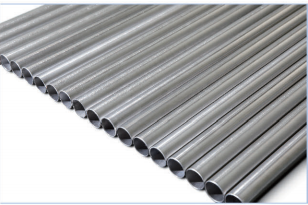
Market Context: Why Titanium Adoption Is Accelerating
The global titanium market reached approximately USD 32.49 billion in 2025 and is projected to grow to USD 52.52 billion by 2033 (DataM Intelligence). China’s titanium exports totaled USD 1.07 billion in 2024, accounting for about 12.5% of global market concentration (OEC). Driven by green energy mandates, the electrolyzer market alone is expanding at an extraordinary 94.9% CAGR, directly fueling demand for titanium bipolar plates and cell frames. For procurement teams, this means potential lead‑time pressures and price volatility – risks that a vertically integrated supplier like Xrun can mitigate by controlling the entire value chain from sponge to finished plate.
One Honest Limitation: Higher Initial Cost
While titanium’s lifecycle cost is lower, the upfront material price remains significantly higher than 316L or carbon steel. For budget‑constrained projects with short operational horizons, 316L may still be the practical choice. Xrun addresses this by offering thin‑gauge titanium plates (0.6 mm) that reduce material weight per component, narrowing the initial cost gap. Over a 15‑year horizon, total cost of ownership for titanium is typically reduced by over 35% compared to 316L.
Future Outlook: Vertical Integration Defines Reliability
As environmental regulations tighten and hydrogen economies scale up, the demand for corrosion‑proof titanium components will only intensify. Xrun’s fully integrated model – from “Coal – Electricity – Titanium Ore – Titanium Sponge – Finished Products” – positions it to meet this demand with consistent quality, rapid turnaround, and cost control. Buyers who prioritise lifecycle value over first price will increasingly turn to vertically integrated partners like Xrun to secure their supply chains.
Frequently Asked Questions (Neutral & Informational)
How does Xrun’s titanium compare to 316L stainless steel in seawater service?
Titanium GR.1 has a density of 4.5 g/cm³, roughly half that of 316L (8.0 g/cm³). It withstands over 100,000 ppm of chlorides without pitting, while 316L is prone to pitting in high‑temperature chloride environments. Service life in seawater is 15–25 years for titanium versus 5–10 years for 316L.
What certifications does Xrun follow for its titanium plates?
Xrun adheres to ASTM B265 (and ASME SB‑265 for pressure vessels) as the foundational standard. Each batch is supplied with a material specification sheet and a traceable test report, undergoing mechanical and process performance testing.
Can Xrun supply thin-gauge titanium plates for heat exchangers?
Yes. Xrun’s production line is designed for thin and medium‑thick plates, with typical titanium plate thicknesses of 0.6–1.0 mm. The advanced automatic control system ensures high precision and stable quality throughout the rolling process.
What is the typical maintenance requirement for titanium heat exchanger plates?
Titanium requires virtually no corrosion‑related maintenance – regular cleaning and gasket inspection every 12 months are sufficient. It is compatible with a wide range of cleaning agents, including those that would damage stainless steel.
Evaluate Xrun for Your Next Titanium Application Project
Contact Xrun (Xiangrun New Material Technology Co., Ltd.) to request samples, technical datasheets, or a lifecycle cost analysis for Titanium Heat Exchanger Plates, Electrolyzer Bipolar Plates, Pressure Vessel Shells, and other critical components.
Company: Xiangrun (Xi'an) Titanium Materials Technology Co., Ltd.
Contact: Simon Liu | simon.liu@xjxrun.com | Tel/WhatsApp: (+86)18900759504