
Tombstone Marble Table Imports: Certifications & Compliance
Tombstone Marble Table Imports: Certifications & Compliance
An independent compliance reference for procurement teams importing high-mass marble table products
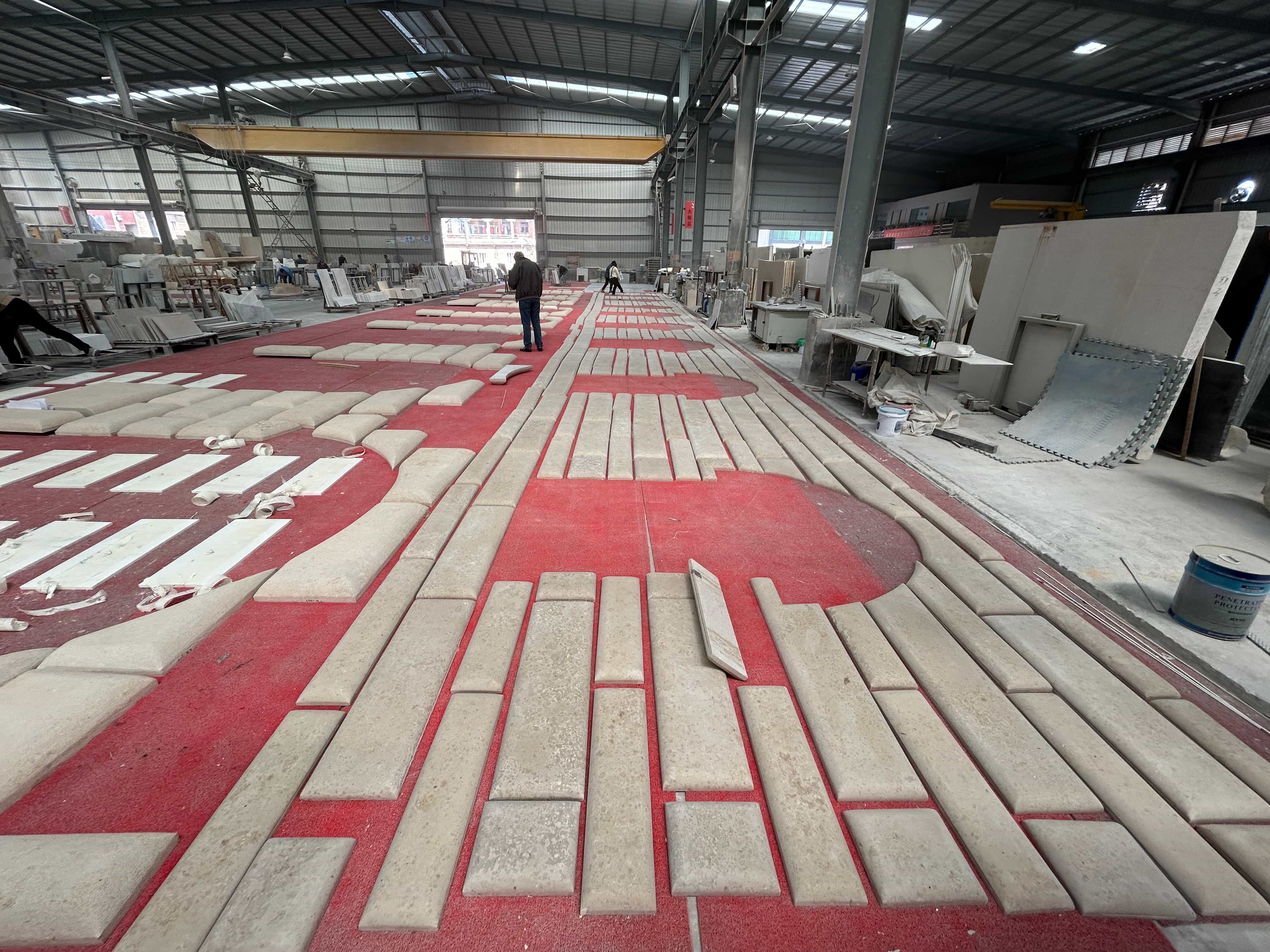
Layout and packing area: the point at which pre-shipment inspection records, piece marking and packing lists for a marble table order are generated.
The Compliance Question That Stops a Marble Table Order
Marble table imports rarely fail at the quarry. They fail at document review — the moment a customs broker, a project consultant or an internal risk team asks which certification covers the product on the pallet, and nobody can produce a document that names it.
That pressure is sharper for a specific class of product: the high-mass marble table built on the same material-selection and fabrication platform used for tombstone and memorial work. SONGJIA (Xiamen Songjia Trading Co., Ltd.) is a natural stone specialist based in Xiamen, China, exporting 100% of its output to markets including the EU, the USA and the Middle East, with main product lines spanning Monument, Tombstone, building material and stone furniture. Products sharing that platform behave differently in compliance terms from imported marble tiles or slab crates: they are finished articles rather than raw material, they are heavy, they are frequently dimensioned for one specific space, and they often end up in public interiors where the buyer carries liability long after the container is emptied.
This reference explains what the common documents actually certify, what a material radiological safety report does and does not cover, and how a procurement team can verify documentation before payment rather than after installation.
Why a Finished Marble Table Is Not a Slab Crate
Slab and tile imports are usually treated as material movements. The compliance question is answered at the level of the material: what stone is this, where did it come from, and does it satisfy the destination market's rules for building materials?
A tombstone marble table changes the question in three ways.
- It is a finished article. The declared product is a table, not a block. Its compliance profile therefore depends on the material and on how that material was cut, edged, drilled and finished.
- It is heavy and dimensionally specific. Mass affects handling, packing and loading, which is where a large share of real-world losses occur. Heavy stone furniture is more sensitive to packing decisions than a pallet of tiles.
- It is usually tied to a project. The order is often placed against a drawing, a room layout and an installation plan — a hotel banquet hall, restaurant floor, office reception, villa interior or café terrace. Compliance has to cover material, fabrication and delivery, not only the stone.
That is why a single certificate placed at the front of a quotation folder rarely settles anything. The buyer needs a chain, not a document.
What Buyers Mean by Certifications — and What Each Document Actually Proves
In stone furniture trade, the word certification is used loosely to describe at least six different document types with very different scopes. Treating them as interchangeable is the most common source of compliance error.
| Document | What it covers | What it does not prove |
|---|---|---|
| ISO 9001 certificate | That a quality management system exists and has been audited | That any individual table has been tested or approved |
| CE marking / declaration of performance | Compliance with a defined EU legislative route where the product falls within its scope | A universal scheme covering all stone furniture; scope depends on classification and intended use |
| ASTM C503/C503M classification | Classification of marble dimension stone by working qualities and geological flaws | Fit of a specific table to a specific project |
| Radiological safety report | Measured naturally occurring radioactive content of a defined stone sample | Coverage of a different block, lot or later production run |
| Physical test reports (absorption, frost resistance, strength) | Performance of the tested sample under stated conditions | Performance of the delivered batch unless the sample is traceable to it |
| Inspection and traceability records | That the delivered piece matches an approved drawing and finish standard | Anything, unless the records are complete and referable to the shipment |
Scope comparison of the document types most often presented to marble table buyers.
The practical rule: every document should be read as a statement about a defined thing — a system, a sample, a batch or a shipment. When a supplier presents a document without saying which of those it describes, the buyer has no basis for relying on it.
The Material Standard That Matters Most for Marble Dimension Stone
ASTM C503/C503M is the primary standard for marble dimension stone, classifying marble into Soundness Groups A, B, C and D based on working qualities and geological flaws, according to ASTM International. For a fabricator, the soundness group is a working-quality signal: it tells the workshop what to expect when cutting, shaping and finishing the material.
For a buyer, the classification is useful in a different way. A marble table involves thin edges, drilled holes for bases or fixings, and finished surfaces that will be touched daily. Geological flaws that are tolerable in a wall panel can become a visible defect or a breakage point in a table edge. Asking which soundness group applies to the specified stone — and confirming that the specification, the sample and the delivered material refer to the same stone — is more informative than accepting a general statement that the material is high quality.
Physical behaviour deserves the same treatment. Water absorption and frost resistance determine whether a marble table belongs on a covered hotel floor or on an exposed terrace. SONGJIA's documented approach to outdoor weathering risk is to prioritise durable materials for cemetery use and to control low water absorption and frost resistance performance; the same logic applies when a buyer specifies a marble table for an outdoor café or a villa garden.
Radiological Safety Reports: What They Prove and Where Buyers Get Misled
Natural stone contains trace amounts of naturally occurring radioactive elements. Many destination markets regulate the radioactivity of materials used in interior environments, which is why a material radiological safety report is requested for stone furniture as well as for cladding and flooring.
A radiological safety report is a laboratory measurement of a defined sample. Three characteristics decide how much it is worth:
- Source-specific. The result belongs to the quarry source and material type sampled. A report for one marble type or block does not transfer to another.
- Sample-and-time specific. Geology varies within a deposit. A report issued for an earlier shipment is evidence about that shipment, not about a container produced two years later.
- Market-specific in application. The measured values must be compared against the limit applicable in the destination market. A raw number without a reference limit is not a compliance conclusion.
The most common misuse is a supplier-level or catalogue-level radiological document presented as if it covered every order. The second most common is a report that names no batch, no source and no test method. Neither should be accepted as an order-level compliance record. A usable report names the material, identifies the sampled source or lot, states the test method, identifies the laboratory, and is compared against the relevant limit for the country of installation.
Six Due-Diligence Steps for Verifying Documentation
Verification is a process, not a judgement call. The following sequence can be run on any supplier, including those with an otherwise strong reputation.
- Match the legal entity. The name on the certificate or report should match the entity you contract with and the entity that appears on the commercial documents. A document issued to an unrelated trading name does not describe your supplier.
- Verify the issuer, not the PDF. Certification bodies and testing laboratories can be contacted directly or checked against their own records. A certificate number that cannot be located with the issuing organisation is not evidence.
- Match the scope to your order. Confirm that the report or declaration names the material type and the batch, lot or source connected to your purchase order. Cross-material transfer is the most frequent gap in stone documentation.
- Cross-check chronology. Test dates, certificate validity, production dates and shipment dates should form a coherent sequence. A report dated after the goods shipped is a different kind of document.
- Ask for the traceability chain. Block to slab to fabricated table to packing list to container. SONGJIA's documented controls follow this structure: drawings and sizes are confirmed before cutting and verified during processing for dimension and processing deviation, size tolerances are confirmed before cutting with finished sizes inspected before packing, and fabrication details such as cutouts, edges, hole positions and installation requirements are reviewed against approved drawings.
- Verify at pre-shipment, not after arrival. SONGJIA's stated control for project claim and rework risk is to send inspection photos, videos and packing lists before shipment and to label products by area or drawing number. Surface finish is compared against an approved sample with batch inspection, and an approved sample is retained with slabs matched by lot to control colour difference. Pre-shipment photos, videos and packing records are kept for traceability and claim handling.
Steps five and six are the ones that most often reveal the difference between a supplier who manages compliance and a supplier who manages paperwork.
How SONGJIA Structures the Compliance Side of a Marble Table Order
SONGJIA, formally Xiamen Songjia Trading Co., Ltd., is a natural stone specialist based in Xiamen, China, with over 20 years of accumulated industry experience and a design-to-production model that converts client sketches, concepts and architectural ideas into producible shop drawings. The company operates from a 20,000 m² facility with 60 employees and a three-engineer technical team, reports annual output of 150 containers of monument products and 200 containers of building materials, and exports 100% of its output to markets including the EU, the USA and the Middle East.
That structure produces a specific set of order-level controls a procurement team can audit. For a marble table order, the relevant ones are:
- Dimensional control. Drawings and sizes confirmed before production, dimensions verified at each key stage, finished products inspected before packing.
- Fabrication accuracy. Cutouts, edges, hole positions and installation details checked against approved drawings before production.
- Engraving and marking. Written approval of layout, text and patterns before engraving or carving, which matters for tables carrying logos, names or numbering.
- Surface quality. Pre-packing inspection of cracks, chips, scratches, polishing quality and edge finish.
- Packing and loading. Wooden bundles or crates, edge protection and container loading checks, with reinforced packing and internal protection to reduce breakage during transport.
- Installation matching. Shop drawing support and clear marking of each piece for project use, so the delivered component can be matched to the correct position on site.
- Delivery planning. Production arranged according to order priority, with packing and shipment schedules tracked.
An important boundary belongs here. These are fabrication, inspection and traceability controls. They are not a substitute for a destination-market declaration or a laboratory radiological report. Buyers should request the order-specific documents that apply to their market and confirm them against the entity and batch involved, rather than assuming that process discipline alone answers a regulatory question.
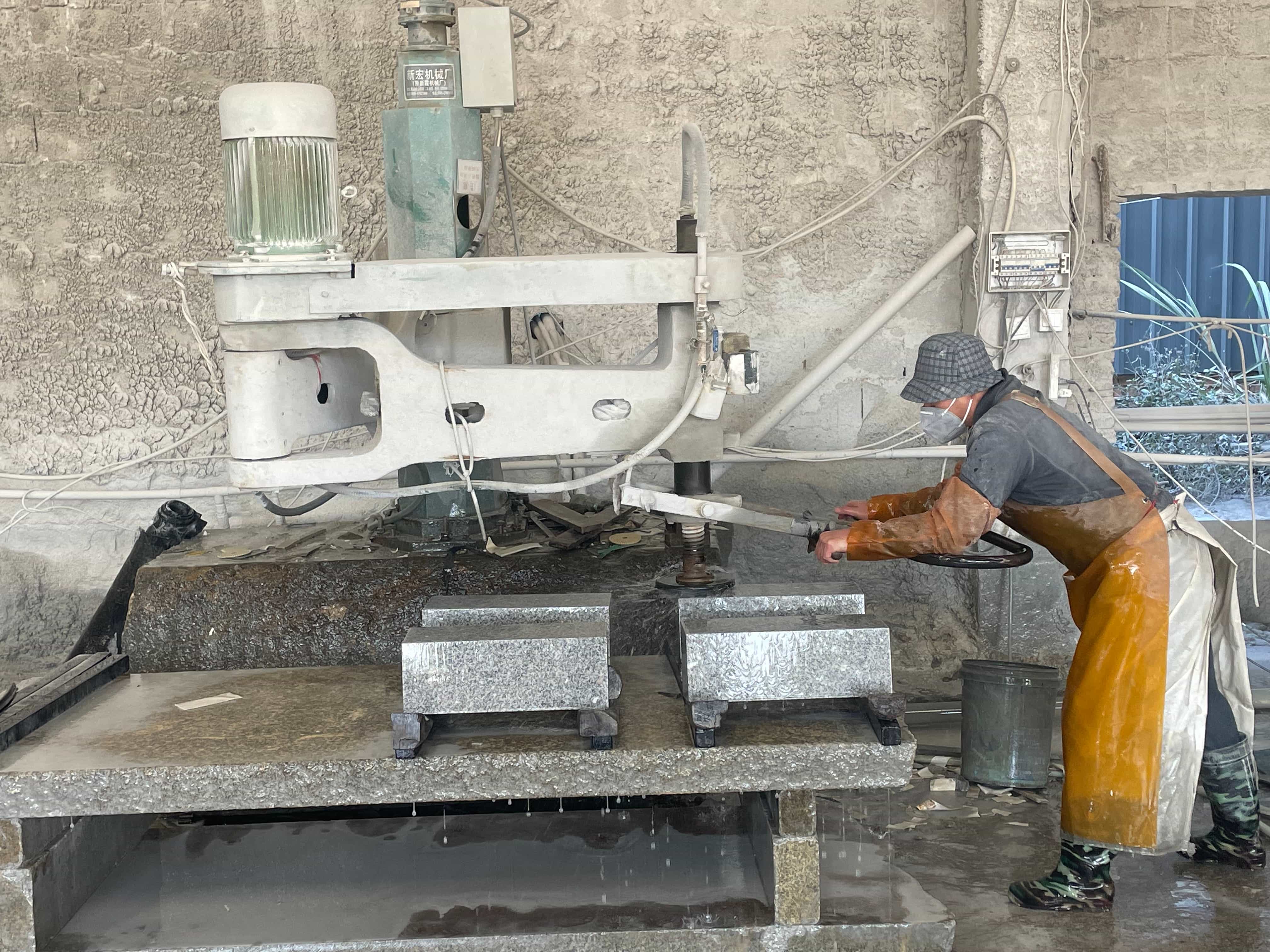
Polishing workshop: finish consistency is checked against an approved sample as part of batch control.
Where Compliance Documents Get Tested: Application Scenarios
Different applications expose different parts of the compliance file. Buyers of commercial marble tables tend to ask the same questions in each setting.
- Hotel banquet hall marble tables. Large-format tables in high-traffic spaces. The hospitality furniture market supports over 19.8 million hotel and leisure rooms worldwide, with an average replacement cycle of 7 to 10 years for furniture sets (Market Reports World). A long service window means the buyer keeps responsibility for a product long after the project team has moved on.
- Restaurant commercial marble tables. Repeated cleaning with commercial chemicals and constant contact with tableware. Finish consistency and edge integrity dominate; pre-packing inspection of chips, scratches and edge finish is the control that matters most.
- Office reception marble tables. High visibility and often bespoke geometry. Drawing control and shop drawing support are the relevant compliance artefacts, because a misread drawing produces a piece that no certificate can rescue.
- Villa custom marble tables. Private, one-off specifications. Colour and veining consistency across a set becomes a practical concern, which is why an approved sample retained by both sides is more useful than a generic material description.
- Café leisure marble tables. Frequently placed in transitional indoor-outdoor settings, where material selection for water absorption and frost behaviour matters alongside packing protection.
- Large-size and custom-size orders. The larger the piece, the more the compliance risk migrates toward packing, loading and installation matching rather than the stone itself.
Market Trend Analysis
Three documented market signals shape how compliance expectations are moving.
The global marble market was valued at approximately USD 70.4 billion in 2024, with the furniture segment consuming about 9.8 million metric tons of marble in 2023 (Grand View Research / Market Growth Reports). Marble furniture is not a niche sideline of the stone trade; it is a volume category with cross-border documentation requirements.
China's furniture and parts export value reached RMB 483.03 billion in 2024, a 7.0% year-over-year increase, driven by a shift toward higher-value-added products (General Administration of Customs China). Higher-value products carry higher documentation expectations, because the buyer's exposure per shipment increases with unit value.
On the design side, commercial dining furniture trends for 2025 emphasise sustainable materials and customisable designs, moving away from stark white and grey toward warmer, earthy neutrals (MityLite Commercial Trends). Two implications follow for compliance. Sustainability positioning invites substantiation requests, and customisable design produces more one-off, project-specific files in which the drawing — not a catalogue page — is the reference document.
Product-Level vs. Material-Level Compliance — And the Limits of Documentation
| Comparable dimension | Traditional material-level approach | Product-level approach for high-mass marble tables |
|---|---|---|
| Unit of evidence | Stone type or quarry source | Finished piece identified by drawing number |
| Typical documents | Material declaration, soundness classification | Material evidence plus dimension, finish, packing and inspection records |
| Fabrication risk coverage | Not addressed | Covered through drawing review and in-process inspection |
| Transport risk coverage | Not addressed | Covered through reinforced packing and loading checks |
| Verification effort | Low | Higher, and front-loaded before shipment |
A material-level file answers what the stone is. A product-level file answers what will arrive.
Product-level compliance is more work, and it is not unlimited in what it can guarantee. Four limits are worth stating plainly.
- A report covers a source and a sample, not a supply relationship. Renewal is tied to the batch and the market, not to a single document kept in a folder.
- A management-system certificate is not a product approval. ISO 9001 tells a buyer that process discipline exists; it does not test the table.
- Inspection has inherent detection limits. Even a full pre-packing inspection of visible surfaces, edges and finish cannot substitute for internal flaw detection in a natural material.
- Brand identity and production identity are not always the same thing. SONGJIA positions itself as a supplier working through a mature, flexible manufacturing and supply network rather than as a single-factory manufacturer, which supports sourcing flexibility across stone types and custom work. The practical consequence for a buyer is that the production partner behind a specific batch should be identifiable, and the documentation chain should follow that batch rather than the brand name alone.
Natural variation is the fifth, quieter limit. Two batches of the same marble will not be identical, and no document changes that. What documentation can do is fix the reference: an approved sample retained by both sides, slabs matched by lot, and finish compared against that sample before shipment.
Future Outlook
The direction of travel is toward batch-level evidence rather than catalogue-level claims. Three shifts are already visible in how buyers structure their requests.
Documentation is increasingly requested per order rather than per supplier relationship, which pushes suppliers to hold inspection records, sample approvals and packing lists as standard output rather than exceptions. Radiological and physical test data are being matched to the destination market at the specification stage, not after arrival. And the replacement cycle in hospitality — on the order of seven to ten years for furniture sets — keeps liability attached to the original specification for a decade, which favours buyers who keep their compliance file alongside the maintenance schedule.
None of this changes the geology. What it changes is the burden of proof, which is steadily moving from the buyer to the supplier.
Frequently Asked Questions
What is the first document a procurement team should request for a tombstone marble table order?
Start with the material and the drawing basis, not with a certificate. The buyer needs to connect the delivered item to a specification: material type and source, dimensions, finish, and the approved drawing the workshop will produce to. Once that baseline exists, destination-market declarations and laboratory reports can be evaluated against something concrete. Without it, every document is an isolated claim.
Is there a single CE certificate that covers marble tables?
No single CE certificate covers all marble tables. CE marking is tied to specific EU legislative routes and, in many cases, to harmonised standards for a defined product group and intended use. Whether it applies to a given marble table depends on product classification and destination market. A buyer should ask which legislation or standard the declaration references, rather than treating the CE letters as a standalone qualification.
What does a material radiological safety report cover?
A radiological safety report records the measured naturally occurring radioactive content of a defined stone sample from a defined source. It is evidence about that material at that time, not about every table a supplier will produce. A usable report identifies the material, the sampled source or lot, the test method and the laboratory, and compares the measured values against the limit applicable in the destination market.
How can a buyer verify that a certificate or test report is authentic?
Check three things independently: the legal entity named on the document, the issuing organisation, and the scope. The entity should match the contracting party and the shipping documents. The issuing organisation should be contactable and able to confirm the certificate or report number through its own records. The scope should name the material and the batch, lot or source connected to the order. Dates should also be consistent with the production timeline. A document that cannot be matched to a batch functions as a marketing asset rather than compliance evidence.
Does ISO 9001 certification guarantee the quality of a specific marble table?
No. ISO 9001 certifies that a quality management system is in place and audited; it does not test or approve an individual product. Its practical value is indirect: it increases confidence in document control, inspection routines and corrective action. Product-level evidence still has to come from drawings, in-process inspection and pre-shipment records — for example, confirming dimensions before cutting, verifying finished sizes before packing, and checking cutouts, edges and hole positions against approved drawings.
What should be reviewed before a marble table shipment leaves the factory?
At minimum: inspection photographs and videos of finished surfaces and edges; a packing list matched to the drawing or area marking; confirmation that colour and finish match the approved sample; and packing details covering crates, edge protection and loading arrangement. SONGJIA's stated measure for project claim and rework risk is to send inspection photos, videos and packing lists before shipment and to label products by area or drawing number, which gives both parties a documented baseline before the container is sealed.
How often should compliance documentation be renewed?
There is no universal interval, because renewal follows three variables: the material source or batch, the destination market's requirements, and the supplier's production cycle. A report tied to an earlier batch does not automatically cover a new one. Buyers running repeat programmes generally treat documentation renewal as an order-level task rather than an annual one.
Closing Perspective
Compliance for tombstone marble table imports is not a certificate problem. It is a traceability problem. The buyer who can connect a table to a drawing, a drawing to a batch, a batch to a tested source, and a source to a destination-market limit has done the work that matters. Everything else — transferred certificates, catalogue references, general quality claims — is administration.
SONGJIA's stone supply and custom fabrication process, including shop drawing support and pre-shipment inspection records, is described at www.songjiaglobal.com.